

GC in the Tour de France Femmes means general classification. It is the overall race standings, calculated by adding up each rider’s time across every stage. The rider with the lowest total time leads the race, wears the yellow jersey and, if still leading after the final stage, wins the Tour de France Femmes.
That is the simplest way to understand the race. Stage wins matter, the green jersey matters, the polka-dot jersey matters, but the GC is the main prize. It decides the overall champion.
For new viewers, our beginner’s guide to the Tour de France Femmes 2026 explains the wider race format, while the Tour de France Femmes 2026 route guide shows where the overall battle is most likely to be decided.
 Photo Credit: Getty
Quick answer: what does GC mean in the Tour de France Femmes?
GC means general classification. It is the overall standings in the Tour de France Femmes, based on total time across all stages. The rider with the lowest accumulated time wears the yellow jersey. The rider still top of GC after the final stage wins the race.
| Term | Meaning |
|---|---|
| GC | General classification |
| What it measures | Total race time |
| Who leads it | The rider with the lowest overall time |
| Jersey | Yellow jersey |
| Final winner | Rider leading GC after the last stage |
| Main threats | Crashes, time losses, mountains, time trials, penalties, poor positioning |
How does the general classification work?
The general classification is based on time, not points.
At the end of each stage, every rider receives a finishing time. Those times are added together across the race. If a rider finishes stage 1 in 3hr 10min and stage 2 in 3hr 20min, her GC time is 6hr 30min before any bonuses or penalties are applied.
That is why a rider can win the Tour de France Femmes without winning a stage. Stage wins are valuable, but GC is about being consistently fast across the whole race.
The rider at the top of the classification does not always have to be the most spectacular rider every day. She has to lose less time than everyone else across the full race.
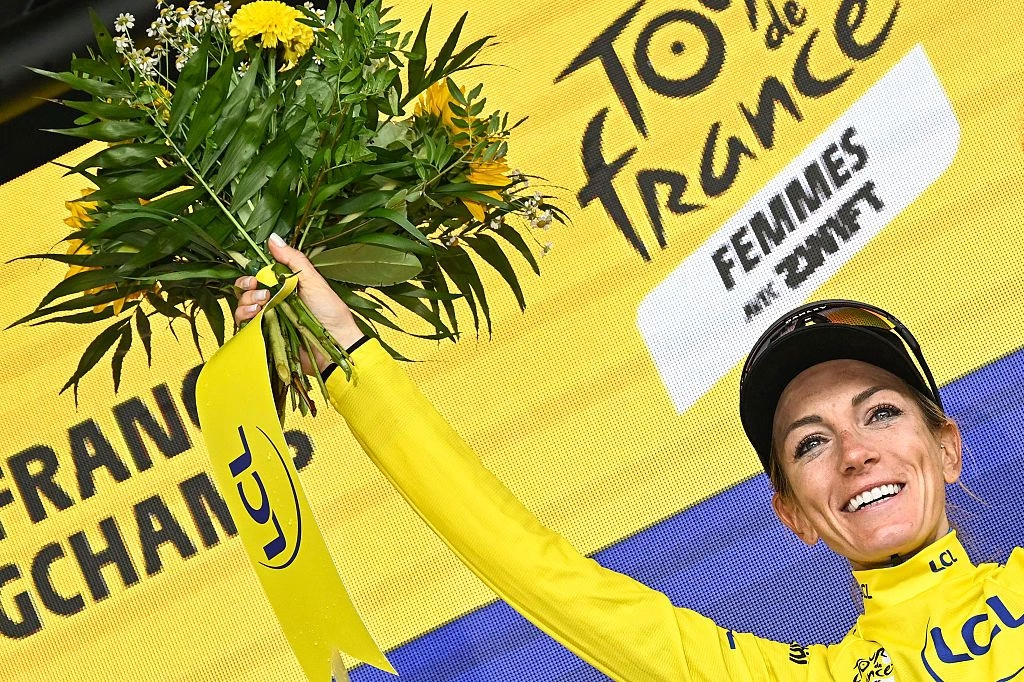
Why does the GC leader wear yellow?
The yellow jersey is worn by the leader of the general classification.
In the Tour de France Femmes, as in the men’s Tour de France, yellow is the most important jersey because it shows who is currently winning the race overall.
The yellow jersey can change hands during the race. A sprinter might take it after a flat opening stage. A puncheur might move into yellow after a hilly finish. A climber might take control in the mountains. A time trial specialist might gain time against rivals in the individual time trial.
By the end, though, the yellow jersey usually belongs to the rider who has combined climbing, consistency, positioning, recovery and team support better than anyone else.
For previous examples of how the race has been won, see our Tour de France Femmes winners list.
GC is not the same as stage wins
This is the first thing beginners need to understand.
A rider can win a stage and still be nowhere near the top of GC. That often happens when a breakaway is allowed to take a stage because the riders in the move are already far behind overall. It also happens in sprints, where the fastest finisher wins the day but may not be a realistic overall contender.
The GC rider has a different job. She is not trying to win every stage. She is trying to avoid bad days, follow the other favourites, gain time when the route suits her, and lose as little as possible when it does not.
That means the most important rider in the race is not always the rider crossing the line first. Sometimes the biggest story is 30 seconds behind, where the GC contenders are sprinting for time gaps, bonus seconds or psychological advantage.
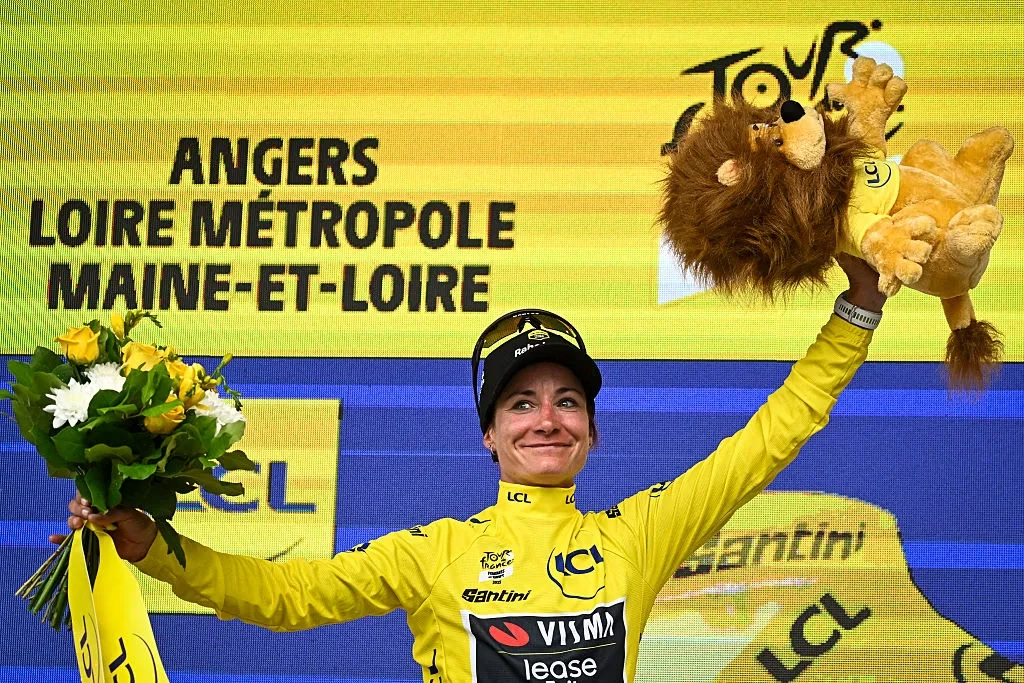 Photo Credit: Getty
How time gaps affect GC
Time gaps are the currency of the general classification.
If a GC contender finishes 20 seconds ahead of another rider, she gains 20 seconds in the overall standings. If she loses two minutes on a mountain stage, she drops two minutes in GC. Over nine stages, those gaps can build quickly.
Some gaps come from obvious attacks. Others come from small mistakes: being badly positioned before a climb, caught behind a crash, distanced in crosswinds, or losing contact on a technical descent.
That is why GC teams spend so much effort keeping their leader near the front. They are not just trying to win stages. They are trying to prevent avoidable time losses.
How bonus seconds can change the GC
Bonus seconds can also affect the Tour de France Femmes GC.
These are small time rewards given to riders at certain stage finishes, and sometimes at selected points on the route. They are subtracted from a rider’s total time, so they can move a rider up the overall standings.
That can matter a lot in a shorter stage race. The Tour de France Femmes is not three weeks long like the men’s Tour. It is a compact race, which means a handful of bonus seconds can shape the yellow jersey battle, especially early on or when the top riders are closely matched.
A puncheur with a fast finish can use bonus seconds to take yellow. A climber can gain them at the top of a key climb. A GC rider who keeps finishing second or third can quietly build an advantage even without a spectacular solo attack.
 Photo Credit: Getty
What types of rider can win GC?
A Tour de France Femmes GC winner usually needs to be a strong climber, but she cannot only climb.
The winner needs:
| Skill | Why it matters |
|---|---|
| Climbing | Major time gaps usually come in the mountains |
| Time trialling | The individual time trial can create big differences |
| Positioning | Avoids crashes, splits and wasted energy |
| Recovery | The race gets harder as fatigue builds |
| Team support | Domestiques protect, pace and position the leader |
| Tactical control | Knowing when not to chase is as important as attacking |
The exact rider profile depends on the route. If the race has a decisive summit finish, pure climbing matters more. If there is a longer time trial, riders who can climb and time trial become more dangerous. If there are several hilly stages, punchy GC riders who can take bonus seconds may stay in contention deeper into the race.
Why the 2026 route matters for GC
The Tour de France Femmes 2026 calendar gives the GC battle several layers.
The race runs from 1 to 9 August, starts in Lausanne and finishes in Nice. It includes flat stages, hilly stages, mountain stages and a 21km individual time trial. The full distance and format are broken down in our guide to how long the Tour de France Femmes 2026 is.
That means the GC is unlikely to be decided by one type of rider alone. The time trial can create early gaps. The hilly stages can punish poor positioning. The mountains can break the race apart. Mont Ventoux, in particular, should be a major test because long climbs do not just reward explosive attacks. They expose weakness.
The shorter format also matters. Our explainer on why the Tour de France Femmes is only nine stages looks at how the race’s compact structure changes tactics, recovery and risk.

How teams ride for GC
A GC leader rarely wins alone.
Her team will try to protect her from wind, keep her near the front, bring back dangerous moves, help her after mechanical problems, and pace climbs at the right speed. On mountain stages, the strongest domestiques may ride until only a small group of favourites remains.
A team with several strong riders can also use tactical options. One rider can attack early, forcing rivals to chase. Another can sit in the group and wait. A domestique can drop back for bottles, pace across a valley, or help limit losses on a bad day.
In the Tour de France Femmes, this is especially important because teams are smaller than in the men’s Tour. With fewer riders, there is less margin for error. If a GC leader loses support early, she can become exposed very quickly.
For wider context on where the race sits in the women’s calendar, see our guide to the 2026 Women’s WorldTour.
GC compared with the other jerseys
The Tour de France Femmes has several classifications, but they measure different things.
| Jersey | Classification | How it is won |
|---|---|---|
| Yellow | General classification | Lowest total time |
| Green | Points classification | Points from stage finishes and intermediate sprints |
| Polka dot | Mountains classification | Points over categorised climbs |
| White | Young rider classification | Best-placed eligible young rider on GC |
| Team classification | Team standings | Combined times of each team’s best riders |
The green jersey is often for sprinters and consistent finishers. The polka-dot jersey rewards climbing points. The young rider classification is tied to GC, but only for eligible riders. The team classification is based on team times rather than one rider.
The yellow jersey remains the main race. It is the answer to the question: who is winning the Tour de France Femmes overall?

What does it mean to be a GC contender?
A GC contender is a rider expected to challenge for the overall win, or at least finish high in the final standings.
That does not always mean she attacks every day. In fact, many GC contenders ride quietly for long periods. They save energy, stay protected and wait for the stages where the race can truly change.
A GC contender’s day can be successful even if she finishes 15th on the stage. If she finishes with the other favourites, avoids crashes and loses no time, she has done her job. On another day, she may need to attack and take minutes.
That rhythm is what makes GC racing different from sprinting or stage hunting. It is not about one finish line. It is about every finish line.
Can the Tour de France Femmes be won before the final stage?
Yes, but it is not official until the race is over.
A rider can build a big enough lead before the final stage that the race feels nearly decided. That can happen after a dominant mountain performance, a strong time trial, or repeated small gains across several days.
But GC is only won once the rider crosses the final finish line. Crashes, illness, mechanical problems, bad weather and time penalties can still change a race. The shorter format of the Tour de France Femmes also makes every day feel more concentrated. There is less time to recover from one bad stage.
How is the Tour de France Femmes GC different from the men’s Tour?
The basic idea is the same. The rider with the lowest total time leads GC and wears yellow.
The difference is the race structure. The men’s Tour de France is a three-week Grand Tour with 21 stages and rest days. The Tour de France Femmes is shorter, more compressed and currently built around nine consecutive stages.
That does not make the women’s GC less important. It changes how it is raced. There is less time to recover from mistakes, fewer opportunities to claw back a major loss, and more pressure on every hilly, mountainous or technical stage.
For a fuller comparison, see our guide to the key differences between the Tour de France Femmes and the Tour de France.
-
 Photo Credit: Getty



Why GC matters to new viewers
GC is the storyline that links every stage together.
Without the general classification, each day would simply be a separate bike race. With GC, every stage changes the bigger picture. A sprint day can be about time gaps in the final kilometres. A hilly day can be about bonus seconds. A mountain day can reshape the entire race. A time trial can expose differences that were hidden in the bunch.
That is why commentators keep talking about riders who are not winning the stage. They are watching the race inside the race.
FAQs
What does GC stand for in the Tour de France Femmes?
GC stands for general classification. It is the overall race standings based on total time across all stages.
Is the yellow jersey the same as GC?
Yes. The yellow jersey is worn by the leader of the general classification.
Can a rider win the Tour de France Femmes without winning a stage?
Yes. A rider can win the overall race by being consistently fast and avoiding major losses, even without taking a stage victory.
Do bonus seconds count towards GC?
Yes. Bonus seconds are subtracted from a rider’s total time, so they can improve her general classification position.
Is the white jersey also GC?
The white jersey is linked to GC. It is awarded to the best young rider in the general classification, but only among eligible riders.
What decides the Tour de France Femmes overall winner?
The rider with the lowest total time after the final stage wins the Tour de France Femmes. That total can include stage times, bonus seconds and penalties.

