
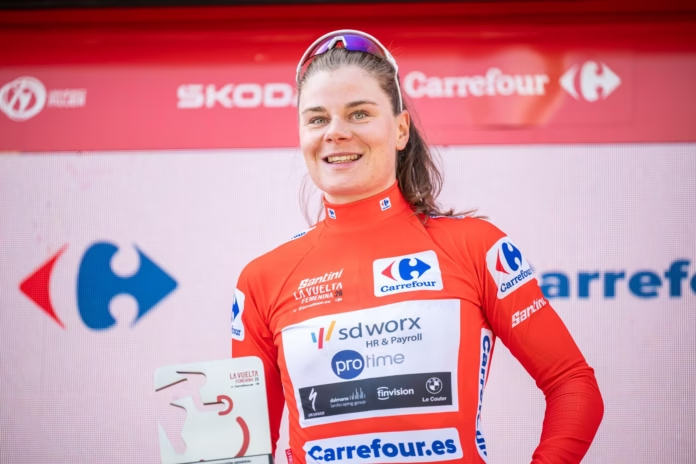
Lotte Kopecky goes into the Tour de France Femmes 2026 with a very different objective from the one that briefly seemed possible three years ago.
In 2023, Kopecky finished second overall after winning the opening stage and spending six days in the yellow jersey. It was an extraordinary performance from a rider already established as one of the best Classics racers, sprinters and track cyclists in the world, and it inevitably raised a bigger question: could Kopecky eventually win the Tour?
The answer looked plausible enough for SD Worx-Protime and Kopecky to explore it seriously. By 2025, the Tour had become a major GC objective. That experiment ended painfully. A disrupted build-up because of back pain was followed by a 1:04 loss on the opening stage, almost three minutes lost by Stage 3 and an early end to any realistic yellow jersey challenge.
That context is important for 2026.
Kopecky can still wear yellow. She can win several stages. She can take time on GC contenders in the 21km Dijon time trial and remain high overall for much of the race.
What she does not need to do is build another Tour around protecting a GC position all the way to Mont Ventoux.
The more interesting 2026 Kopecky is the one allowed to race like Lotte Kopecky again.
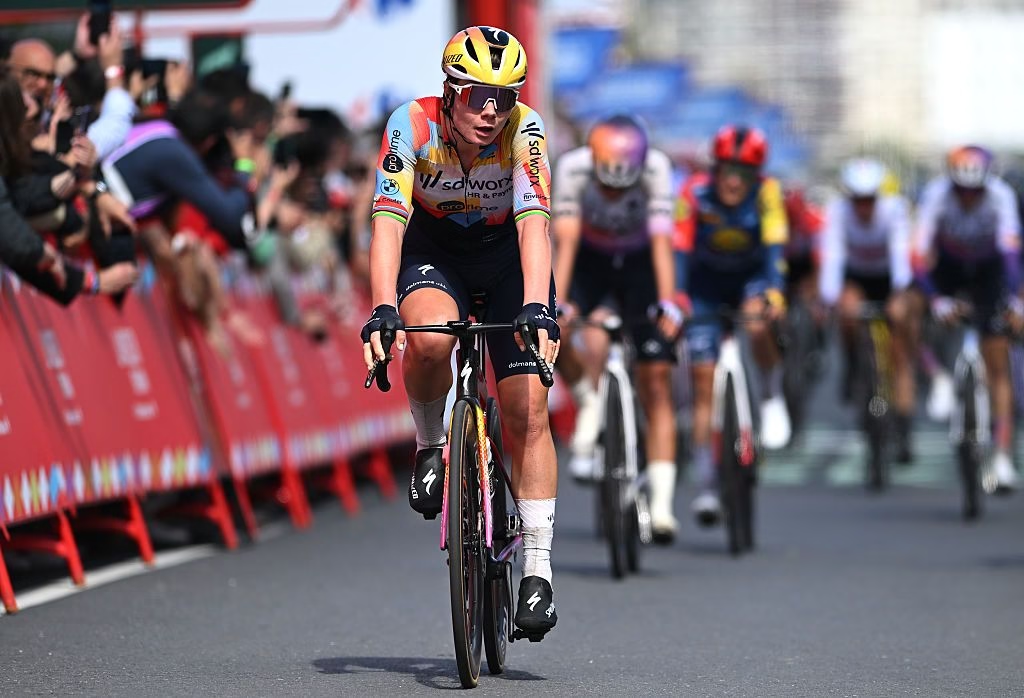
The 2023 podium changed what looked possible
Kopecky’s 2023 Tour de France Femmes remains one of the great examples of a rider exceeding the limits people had placed around her.
She won Stage 1 in Clermont-Ferrand with a powerful attack over the Côte de Durtol and rode alone to the finish, taking yellow at the first opportunity. Our report from that opening stage captured a rider achieving an ambition she had openly talked about before the race.
Kopecky then kept the jersey.
And kept it.
Terrain that should progressively have moved the race towards the pure climbers failed to remove her until the Tourmalet on the penultimate road stage.
Even there, she limited the damage well enough to remain on the podium before producing another strong ride in the final Pau time trial.
Second overall suddenly made winning the Tour look like a logical next target.
Second place made first look much closer than it really was
That podium changed the discussion around Kopecky.
She could already sprint.
She could time trial.
She could race cobbles and crosswinds.
She could win on short climbs.
She could collect bonus seconds.
Now she had shown she could climb well enough to finish second in the Tour.
The temptation was obvious.
Improve the climbing a little further and perhaps second becomes first.
But there was always a difference between Kopecky producing the perfect Tour for her characteristics and Kopecky becoming the best pure stage racer in the peloton.
Her 2023 advantage had been built through exactly the areas where she excels. She won the opening stage, collected time before the decisive mountain and then defended brilliantly.
The Tourmalet still showed what happened once the race became a sustained watts-per-kilogram contest against a rider such as Demi Vollering.
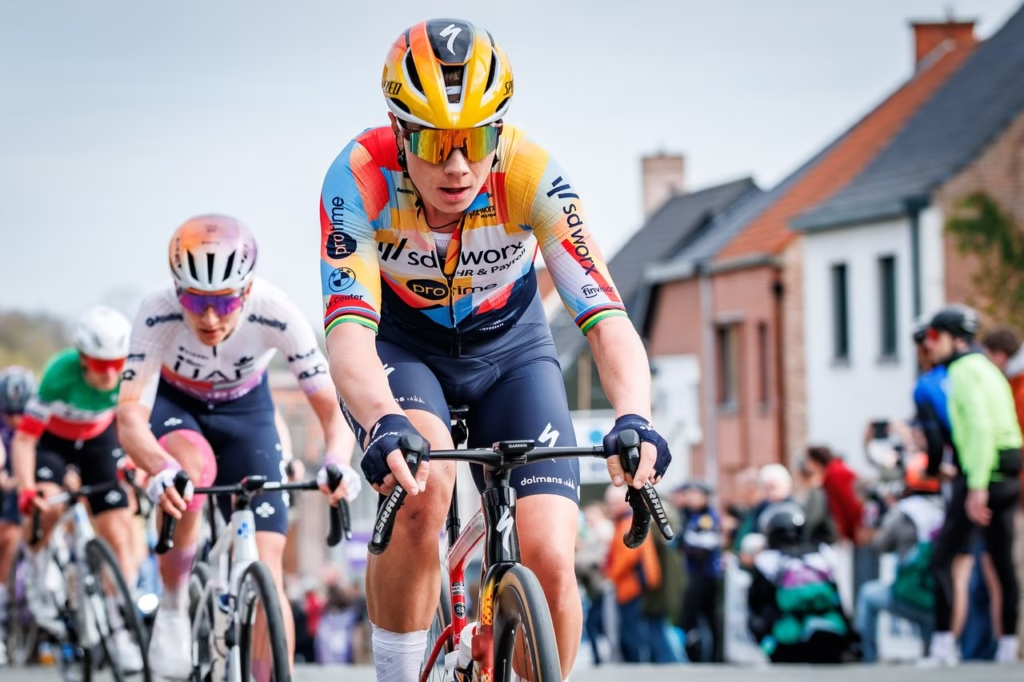
The GC experiment became real in 2025
Kopecky missed the 2024 Tour while prioritising the Paris Olympics, so 2025 became the real attempt to test whether the 2023 podium could be developed into something more.
The Tour became one of her central objectives.
The preparation changed accordingly.
There was much more attention on climbing, altitude work and shaping the season around the demands of nine difficult stages.
Even before the race began, though, the plan had started to unravel.
Lower back pain forced Kopecky to leave the Giro d’Italia Women early. By the eve of the Tour, she publicly acknowledged that SD Worx-Protime had already stepped back from making her the outright GC leader.
Our pre-race piece on Kopecky resetting her 2025 Tour goals reflected the awkward position she was in. Yellow was no longer the formal objective, but after spending a season preparing for it, the possibility had not disappeared psychologically.
Then Stage 1 effectively settled the matter.
The opening day of 2025 was a brutal reality check
The first stage into Plumelec should have suited Kopecky.
Instead, she was dropped on the Côte de Cadoudal and finished 1:04 behind.
It caught SD Worx-Protime by surprise.
Our report on Kopecky’s unexpected Stage 1 time loss covered how quickly the team’s ambitions changed.
By Stage 3, Kopecky was nearly three minutes behind and the GC campaign was effectively over.
She shifted into working for Lorena Wiebes and Anna van der Breggen instead.
Later in the race, SD Worx-Protime admitted that the whole project would need evaluating. Our piece on the team standing by Kopecky as her 2025 Tour campaign faltered captured the central problem: enormous effort had gone into trying to make the Tour GC project work, but the result had moved Kopecky away from the rider everyone already knew she could be.
That experience should matter in 2026.
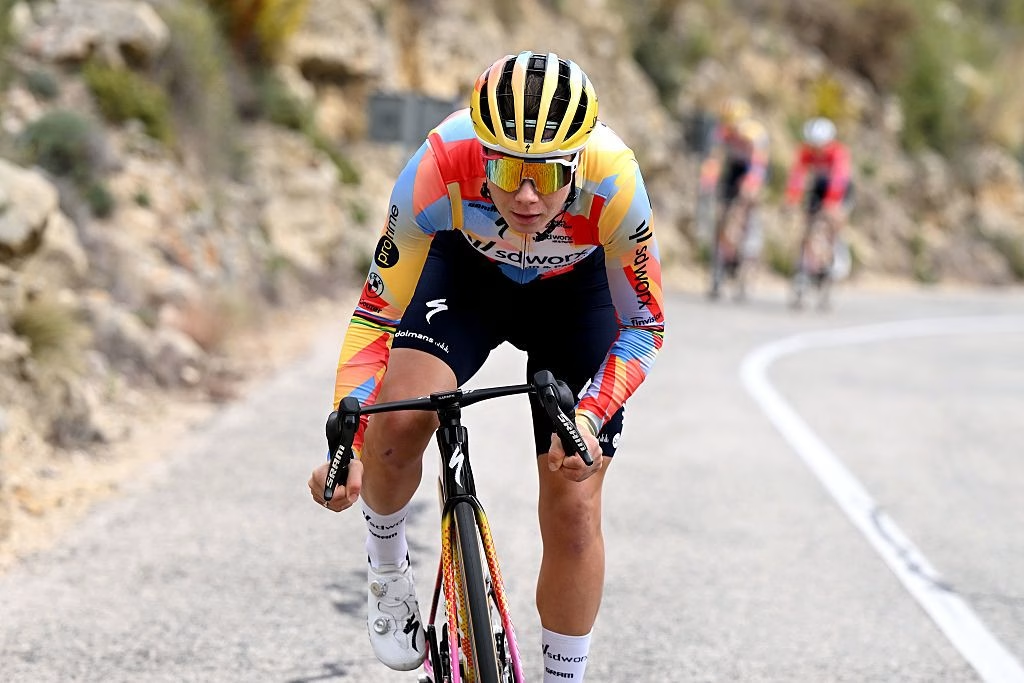
Kopecky does not need another Tour built around GC
The 2026 route is harder than the one Kopecky finished second on in 2023.
The Tour de France Femmes 2026 route contains 1,175km and a record 18,795 metres of climbing, with three hilly stages, a 21km individual time trial, Mont Ventoux and a final mountain stage around Nice.
It offers Kopecky plenty.
It just does not offer an obvious route to winning yellow.
The key distinction is between allowing her GC position to develop naturally and racing specifically to protect it.
If Kopecky is second overall after four stages, there is no reason to throw that away deliberately.
There is equally no reason to spend the next three days sacrificing stage opportunities simply because the standings say she is second.
The race should serve Kopecky.
Kopecky should not serve the GC table.
Being a good climber is not the same as being a Tour-winning climber
Kopecky climbs exceptionally well for the type of rider she is.
That qualification matters.
She is a powerful all-rounder with elite sprint speed, huge absolute power and the ability to repeat short climbing efforts that remove most pure sprinters.
On rolling roads and steep punchy climbs, that makes her extremely difficult to beat.
A long mountain such as Mont Ventoux asks a different question.
The decisive Stage 7 ascent is 15.7km at 8.8%, long enough for power-to-weight to dominate almost everything else.
Our Tour de France Femmes Mont Ventoux guide explains why the forest section from Bédoin should turn the stage into the purest climbing test of the race.
There is no tactical shortcut through nearly an hour of sustained climbing.
Kopecky might survive deep into the ascent.
She does not need to design her Tour around proving that she can.
Trying to become a GC rider comes with trade-offs
The other question is what Kopecky gains by chasing that marginal improvement.
She has already been world champion.
She has won the Tour of Flanders.
She has won Paris-Roubaix Femmes.
She has been one of the fastest sprinters in the peloton and one of the best track riders in the world.
Those qualities come from an unusual combination of power, speed, tactical intelligence and endurance.
Trying to optimise everything around surviving long mountains risks pushing her away from the attributes that make her exceptional.
A slightly lighter Kopecky who finishes fifth in the Tour is not automatically a better rider than the version capable of destroying a Classics field and winning several Tour stages.
The 2025 experiment provided enough evidence to stop treating GC as something she has to solve.
Could Lotte Kopecky wear yellow in 2026?
Absolutely.
In fact, the opening stage makes it a very realistic objective.
Stage 1 around Lausanne is officially classified as flat, but the final Côte Saint-François rises for approximately 2.3km at 5.4%.
That immediately favours riders who combine climbing with finishing speed.
Kopecky is almost the definition of that profile.
The Tour de France Femmes 2026 Grand Départ guide identifies Lausanne as a much more selective opening day than a conventional bunch sprint.
Kopecky can win from a reduced group.
She can attack.
She can follow another puncheuse and beat her at the finish.
Stage victory would also mean yellow.
None of that requires committing to winning the race overall.
Wearing yellow and targeting GC are not the same thing
Kopecky already demonstrated this distinction beautifully in 2023.
Yellow can become an objective because a rider wins a stage.
Then the jersey becomes worth defending.
There is no reason SD Worx-Protime should refuse that opportunity in 2026 simply because Kopecky is not targeting the final GC.
If she takes yellow in Lausanne, defend it while doing so makes sense.
Use the team when the cost is reasonable.
Enjoy the visibility and sporting value.
But if defending it later requires compromising the team’s actual mountain strategy or forcing Kopecky to ride conservatively on stages she could win, the calculation changes.
A Tour in which Kopecky wins Stage 1 and spends four days in yellow is already a successful Tour.
She does not then owe the race a failed attempt at Mont Ventoux.
Stage 1 is one of her biggest opportunities
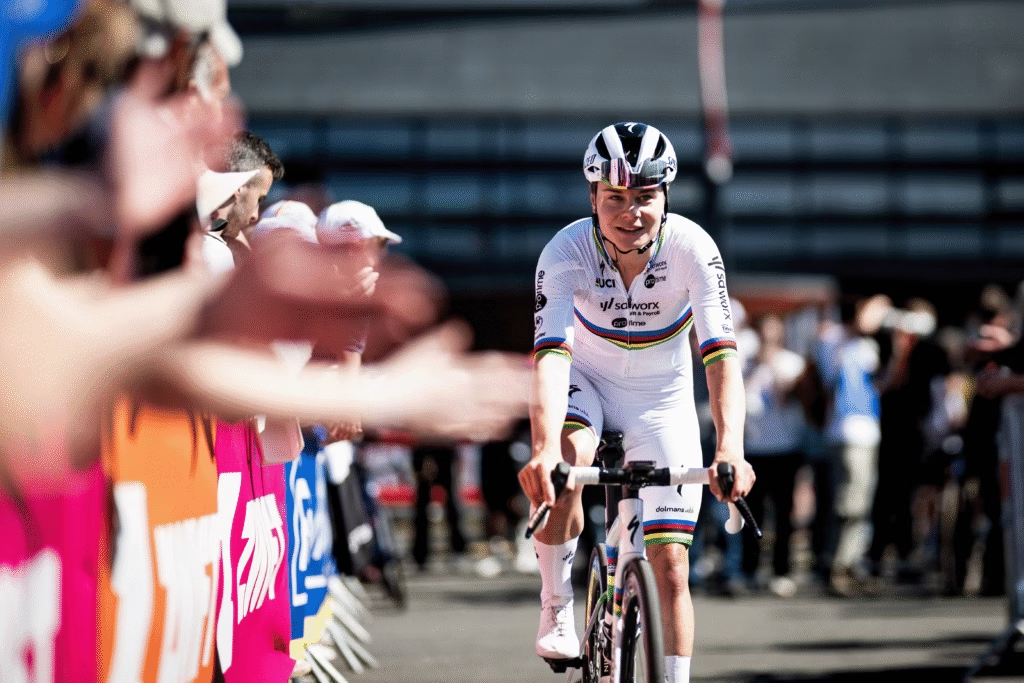
Lausanne may be the single most obvious target for Kopecky.
The uphill city finish reduces the advantage of the pure sprinters without becoming difficult enough for the lightweight climbers to take control.
That leaves exactly the middle ground Kopecky dominates.
A hard pace into the final climb can remove riders who would beat her in a flat sprint.
If the race becomes more aggressive, she is strong enough to follow attacks.
If nobody attacks, she has the finishing speed.
Add the first yellow jersey and this becomes a stage worth building the opening day around.
Stage 2 can be approached much more selectively
Aigle to Geneva is more likely to produce a conventional sprint.
Kopecky can sprint, but SD Worx-Protime has Lorena Wiebes.
There is little value in turning every flat stage into a leadership discussion when the team already has arguably the strongest pure sprinter in the peloton.
If Kopecky is wearing yellow, her role becomes staying safe and finishing with the main group.
If she is not, she can contribute tactically without needing to expend the energy required to contest a full bunch sprint against her own teammate’s strengths.
This is another advantage of removing the GC obsession.
Not every stage has to be about Kopecky.
The stages that suit her can be.
Stage 3 through the Jura is much more interesting
Geneva to Poligny should suit Kopecky significantly better.
The stage crosses into France through the Jura, with the Col de la Faucille introducing the first serious climbing of the Tour.
It is difficult enough to remove some sprinters without becoming a sustained mountain-stage contest.
That creates several possibilities.
Kopecky can attack.
She can follow a move.
She can help make the stage hard enough to reduce the finishing group.
Or she can wait and rely on her sprint once the faster riders have been removed.
A GC-focused Kopecky might hesitate because every acceleration costs energy.
A stage-focused Kopecky has very little reason to hesitate.
That difference should make her more dangerous.
Dijon could put Kopecky high on GC again
Stage 4 is the complication.
The 21km individual time trial from Gevrey-Chambertin to Dijon is very well suited to Kopecky.
She has the absolute power and aerodynamic ability to compete with the strongest riders against the clock and has already produced a Tour time trial podium.
Our 2026 Dijon time trial contenders guide ranks Kopecky among the leading contenders for the stage, alongside Marlen Reusser, Demi Vollering and Anna van der Breggen.
The result could place Kopecky extremely high overall.
Possibly even in yellow.
That should not automatically restart the 2025 experiment.

A strong GC position can become a weapon instead of a burden
Imagine Kopecky reaches Stage 5 sitting second overall, 15 seconds behind yellow.
Every rival team has to respect her.
If she attacks, she cannot simply be given three minutes.
If she joins a dangerous group, somebody has to chase.
If another SD Worx-Protime rider attacks first, Kopecky can sit behind while rivals do the work.
Her GC position creates tactical leverage.
That is much more valuable than treating second overall as something to defend at all costs.
Once Kopecky stops being a GC project, the overall standings can work for her rather than dictate her behaviour.
Stage 5 is almost purpose-built for Kopecky
Mâcon to Belleville-en-Beaujolais is officially hilly.
That should immediately put it among her most important targets.
The repeated climbing creates the opportunity to remove pure sprinters, but there is no huge summit finish where sustained climbing ability becomes decisive.
It becomes a question of repeated efforts.
Positioning.
Power.
Timing.
Finishing speed.
That combination strongly favours Kopecky.
If a reduced group reaches the finish, she may be the fastest rider in it.
If the race becomes more selective, she has the power to make the decisive move herself.
A Kopecky riding entirely for GC might conserve energy here.
That would feel like wasting one of her best opportunities.
Stage 6 gives her another reason to attack
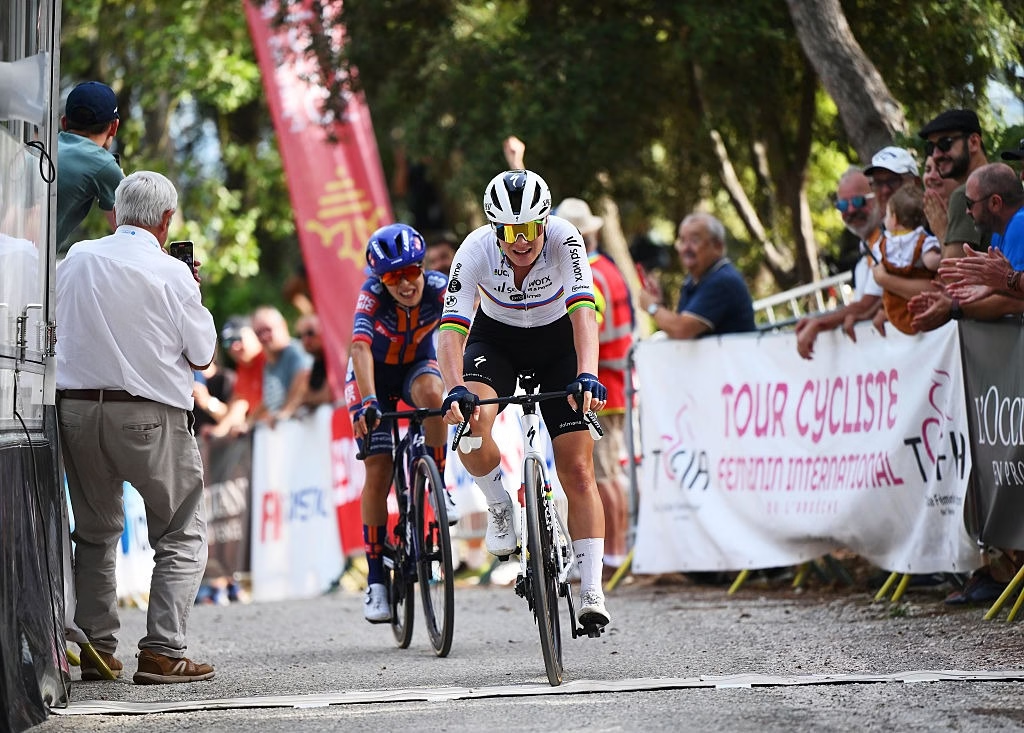
Montbrison to Tournon-sur-Rhône is the final hilly stage before Ventoux.
That timing creates a useful tactical opportunity.
The pure GC riders will already be thinking about the queen stage.
Kopecky does not need to.
If rivals want to save energy, make them choose between chasing her and preserving themselves.
A late attack could work.
A selective group sprint could work.
Sending teammates ahead and forcing other teams to chase could work.
This is exactly where SD Worx-Protime should benefit from having a rider of Kopecky’s quality free from the obligation to protect a fifth place overall.
Mont Ventoux should be allowed to settle the GC argument
Stage 7 is where the Tour becomes a completely different race.
The Mont Ventoux summit finish should favour Vollering, Pauline Ferrand-Prévot and the strongest pure climbers.
Kopecky should climb as well as she can.
She should not have to destroy herself protecting an incidental GC position.
If she reaches the final kilometres with the favourites, that is an exceptional ride.
If the pace becomes too high much earlier, there is little value in spending everything trying to turn sixth overall into fifth.
Losing time may actually improve her Tour.
Dropping out of GC can create freedom
This is one of the biggest advantages of accepting that yellow in Nice is not the objective.
A rider sitting sixth overall at four minutes remains dangerous enough that GC teams will chase her.
A rider 15 minutes down can attack.
That matters after Ventoux.
If Kopecky loses substantial time while the overall contenders fight for yellow, she can arrive on Stage 8 with far more tactical freedom than she would have had while protecting a top ten.
For a rider capable of winning stages from breaks, reduced groups and sprints, that freedom has real value.
There should be no stigma in using it.
Stage 8 could become a major target
Sisteron to Nice is the longest stage of the race and comes immediately after Ventoux.
Although officially flat, its position makes it unpredictable.
The sprinters will be tired.
The GC teams will be conserving energy before the final mountain stage.
Breakaways may be difficult to control.
Kopecky can win this kind of race in several ways.
She can sprint if the peloton comes back together.
She can join a strong break.
She can attack late if the final kilometres become tactical.
If Ventoux has removed her from GC calculations, Stage 8 becomes even more attractive.
Nice still gives Kopecky a role
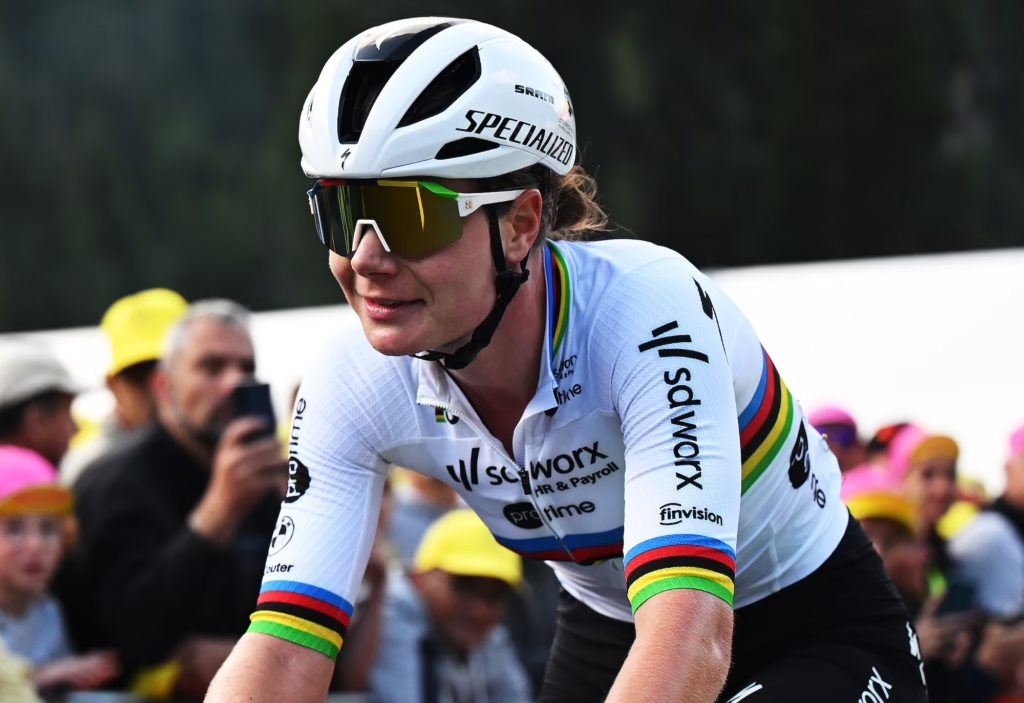
The final mountain stage around Nice is not an obvious Kopecky stage in the way Lausanne or Beaujolais is.
But it is not Mont Ventoux either.
The race repeatedly climbs towards the Col d’Èze before the harder final approach through the Col des Quatre Chemins.
That means repeated shorter efforts, descents and tactical resets rather than one enormous sustained climb.
If Kopecky is out of GC, she could attack early.
She could become a satellite rider for a teammate.
She could put pressure on another team’s yellow jersey defence.
The stage is difficult enough that winning would still be a major ask.
Her presence can still change how it is raced.
Which Tour de France Femmes 2026 stages suit Kopecky?
| Stage | Route | Kopecky opportunity |
|---|---|---|
| 1 | Lausanne to Lausanne | Very high |
| 2 | Aigle to Geneva | Sprint option, likely Wiebes-focused |
| 3 | Geneva to Poligny | Very high |
| 4 | Gevrey-Chambertin to Dijon ITT | Strong stage and yellow chance |
| 5 | Mâcon to Belleville-en-Beaujolais | Very high |
| 6 | Montbrison to Tournon-sur-Rhône | High |
| 7 | Mont Ventoux | Low for stage, likely end of GC relevance |
| 8 | Sisteron to Nice | Good, particularly with breakaway freedom |
| 9 | Nice to Nice | Tactical or team role |
For a rider supposedly moving away from GC, this is hardly a Tour lacking opportunities.
Kopecky can realistically target four stages before the race even reaches Ventoux.
The green jersey is a more natural classification target
If Kopecky wants an objective that lasts for nine stages, the points classification fits her far better than the general classification.
She can score in sprints.
She can score on hilly finishes where pure sprinters are dropped.
She can collect intermediate points on difficult stages.
She may even take significant points in Dijon.
That variety allows her to build a green jersey challenge without turning herself into a different kind of rider.
Wiebes complicates the picture because SD Worx-Protime cannot simultaneously build every sprint around both riders.
That means any points strategy would have to emerge naturally rather than begin as the team’s primary goal.
Even so, green fits Kopecky’s actual strengths much better than trying to survive Ventoux simply because she once finished second overall.
 Photo Credit: Getty
SD Worx-Protime should make Kopecky difficult to predict
A GC version of Kopecky is relatively easy to understand.
She sits with the favourites.
Her teammates protect her.
She conserves energy.
She waits for the decisive part of the stage.
That removes much of what makes her dangerous.
A stage-hunting Kopecky can attack almost anywhere.
She is too strong to give freedom to.
Too fast to take comfortably to a reduced sprint.
Too good against the clock to allow an early advantage.
Too capable on short climbs to dismiss on hilly stages.
That uncertainty is tactical value.
SD Worx-Protime should use it.
Her best Tour could end with a much worse GC result than 2023
The overall classification can be misleading here.
Kopecky finished second in 2023.
If she finishes 18th in 2026, the obvious conclusion might be that her Tour was much worse.
Not necessarily.
Two stage victories, several days in yellow and a major tactical role for the team would be an excellent Tour.
Finishing fifth overall without winning anything might look stronger in a results database but say far less about the impact she had on the race.
That is why the 2026 Tour should not become another attempt to recreate 2023 through increasingly GC-specific preparation.
The 2023 race worked because Kopecky raced brilliantly as Kopecky.
-
 Photo Credit: quentinphotographiebe
 -
 Photo Credit: Getty

The podium does not need to become unfinished business
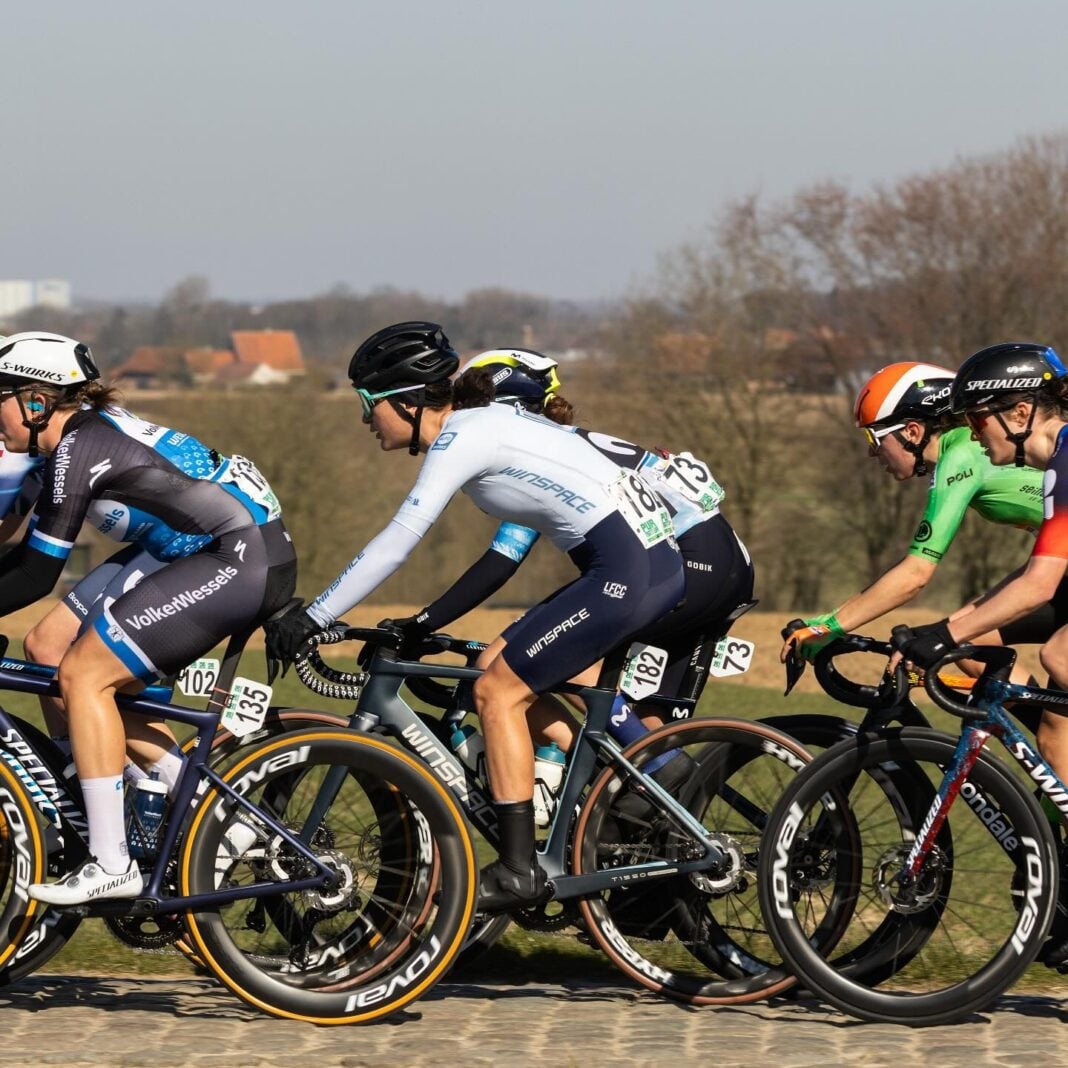
There is a tendency in elite sport to turn every breakthrough into a new minimum expectation.
Kopecky finished second in the Tour, therefore she should try to win it.
But second place in 2023 does not have to represent a failed first attempt.
It can simply be an exceptional achievement.
She attacked to win the opening stage.
She took yellow.
She defended it for six days.
She survived the Tourmalet well enough to remain on the podium.
She then reinforced the result in the time trial.
That performance showed the extraordinary breadth of her abilities.
The 2025 campaign showed the danger of treating it as evidence that the rest of her career needed to become an attempt to turn a Classics champion into a pure Grand Tour rider.
The best 2026 Kopecky is the one allowed to race
The 2026 Tour route gives Lotte Kopecky plenty to chase.
Lausanne could give her the first yellow jersey.
The Jura suits her aggressive racing.
Dijon rewards her power.
Beaujolais gives her another obvious stage opportunity.
Stage 6 can be raced without the GC favourites necessarily wanting to follow every move.
Even the long day into Nice becomes more interesting if Ventoux has given Kopecky freedom.
That is a much more compelling Tour than asking one question for nine days: can she hang on until the next mountain?
She has already finished second overall.
She has already tried to build towards winning the race.
She has also experienced how quickly that project can collapse when form, injury and sustained climbing move in the wrong direction.
The lesson for 2026 should not be that Kopecky cannot race the Tour.
It should be that she does not need the general classification to define it.
Let her chase stages.
Let her take yellow if she earns it.
Let her use a strong time trial to make the GC teams nervous.
And when Mont Ventoux arrives, let the riders targeting the overall victory worry about the overall victory.
Lotte Kopecky has more interesting ways to win.

