
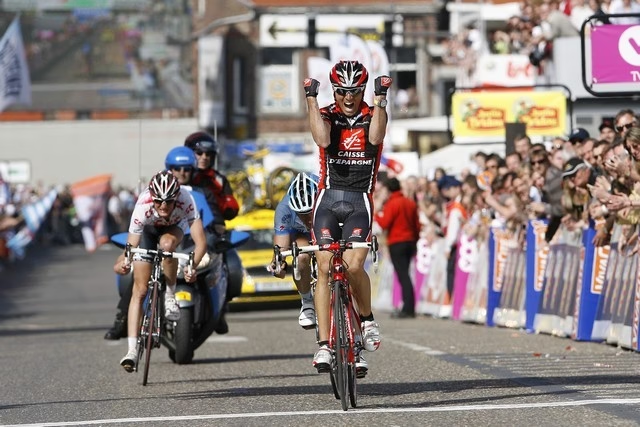
A puncheur is a rider who specialises in short, steep climbs and explosive efforts.
They are not usually the strongest riders on long Alpine ascents, nor are they always fast enough to beat pure sprinters on a flat finishing straight. Their strength sits between those two extremes. Give them a sharp hill, a reduced peloton and a finish demanding several minutes of intense effort, and they become some of the most dangerous riders in professional cycling.
Puncheurs thrive on rolling terrain, repeated accelerations and climbs steep enough to remove the fastest sprinters without giving lightweight climbers enough distance to establish their usual advantage. They can attack near the summit, follow a sudden acceleration and still produce a powerful finish.
This is why hilly stages are often described as puncheur territory. They reward riders who can repeatedly move above their sustainable pace, recover quickly and then accelerate again when the race reaches its decisive point.
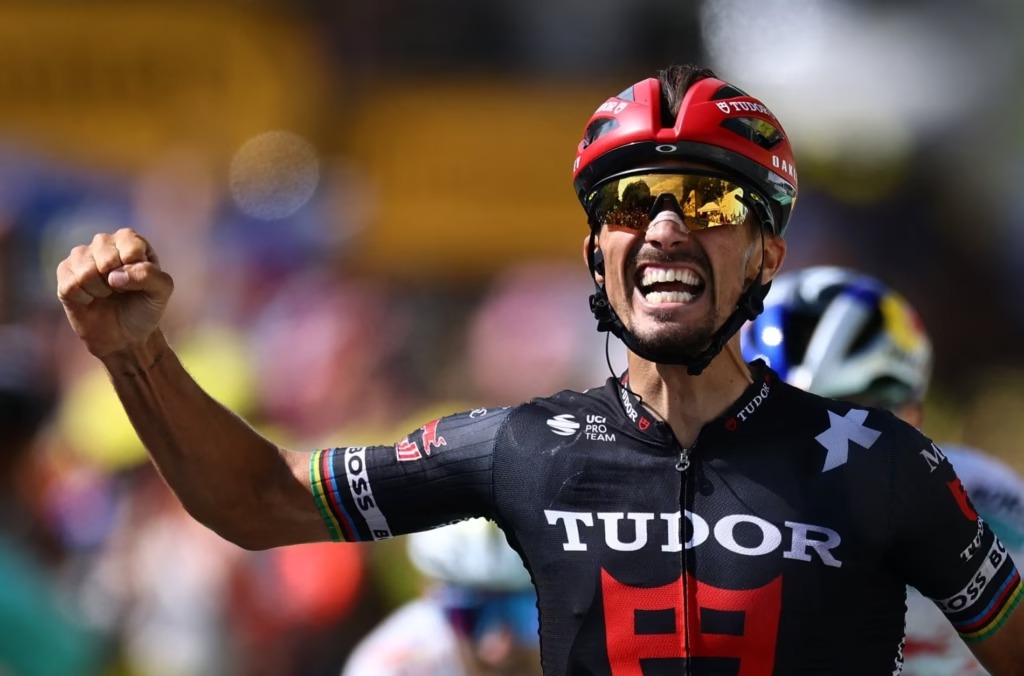 Photo Credit: Sarah Meyssonnier/Reuters
What does puncheur mean in cycling?
The word puncheur comes from French and describes a rider with a strong punch.
In cycling terms, that punch is an explosive acceleration on a short climb. A puncheur can increase the pace suddenly, create a gap and maintain a high effort long enough to reach the summit or finish before rivals can respond.
The women’s equivalent is sometimes written as puncheuse, although puncheur is also widely used as a general description of the rider type. It is one of several French cycling terms that remain central to the language of professional racing.
There is no official definition based on height, weight, power output or race results. It is a descriptive term used by riders, teams, commentators and supporters to explain a particular combination of strengths.
A typical puncheur is:
- Strong on climbs lasting between one and ten minutes
- Comfortable on steep and irregular gradients
- Capable of producing repeated attacks
- Fast in a reduced-group sprint
- Technically confident on twisting roads
- Strong enough to survive a long, rolling race
- More explosive than a pure climber
- Better uphill than a conventional sprinter
The best puncheurs combine climbing ability with acceleration. They do not simply ride steadily uphill. They change speed quickly and force everyone else to respond.
What is the difference between a puncheur and a climber?
The main difference is the duration and style of effort.
A pure climber is usually at their best on long ascents lasting 20, 30 or even 50 minutes. They tend to be light, efficient and capable of maintaining an exceptional power-to-weight ratio over an extended period.
A puncheur is generally more explosive. They may be slightly heavier or more muscular, giving them greater power over a shorter effort. They can attack hard on a two-kilometre climb but may struggle to match the best general classification riders on a long mountain pass.
On a climb such as Alpe d’Huez, the advantage usually moves towards the pure climbers. The gradient is sustained and there is enough time for aerobic endurance and low body weight to become decisive.
On a climb lasting three minutes at 10%, the balance changes. A puncheur can use raw power, accelerate repeatedly and potentially reach the summit before the pure climber has time to establish a steady rhythm.
The dividing line is not absolute. Some riders can perform both roles, while others develop from puncheurs into stronger mountain riders as their careers progress. The wider Tour de France climbers guide shows how differently riders can approach long mountains, steep ramps and repeated breakaway efforts.
 Photo Credit: Getty
What is the difference between a puncheur and a sprinter?
Pure sprinters produce enormous power over a very short period, usually during the final 10 to 20 seconds of a stage.
A puncheur cannot normally match that maximum speed on a flat finishing straight. Their advantage is that they can survive terrain that removes the pure sprinters before the finish.
A steep climb near the end of a stage forces sprinters to carry their greater body mass uphill. Even if the climb is short, repeated efforts can leave them too fatigued to contest the final sprint.
Puncheurs are then left in a reduced group containing climbers, attackers and other versatile riders. Against that smaller and generally slower group, their finishing speed becomes far more effective.
This is why the same rider can look ordinary in a full bunch sprint but exceptionally fast at the end of a hilly race. They have not suddenly become a pure sprinter. The race has removed the riders who would normally beat them.
What type of climb suits a puncheur?
Puncheurs usually prefer climbs that are short, steep and placed close to the finish.
The ideal ascent may last between two and eight minutes, although the exact range depends on the rider. Gradients above 7% are useful because they make positioning and power-to-weight more important, while steeper ramps create opportunities for sudden attacks.
A puncheur-friendly climb often includes one or more of the following features:
- A steep lower section that immediately stretches the peloton
- Irregular gradients that repeatedly disrupt rhythm
- A narrow road that makes positioning difficult
- Sharp bends followed by fresh accelerations
- A summit within the final ten kilometres
- A finish positioned directly at the top
- A short descent followed by another rise
- Limited time for dropped sprinters to return
The Mur de Huy at La Flèche Wallonne is the clearest example. It is steep, irregular and positioned at the finish, giving riders no opportunity to recover after making their effort.
The Côte de la Redoute at Liège-Bastogne-Liège and the repeated hills of Amstel Gold Race create a different test. They require explosive power, but that effort must be produced after several hours of attritional racing.
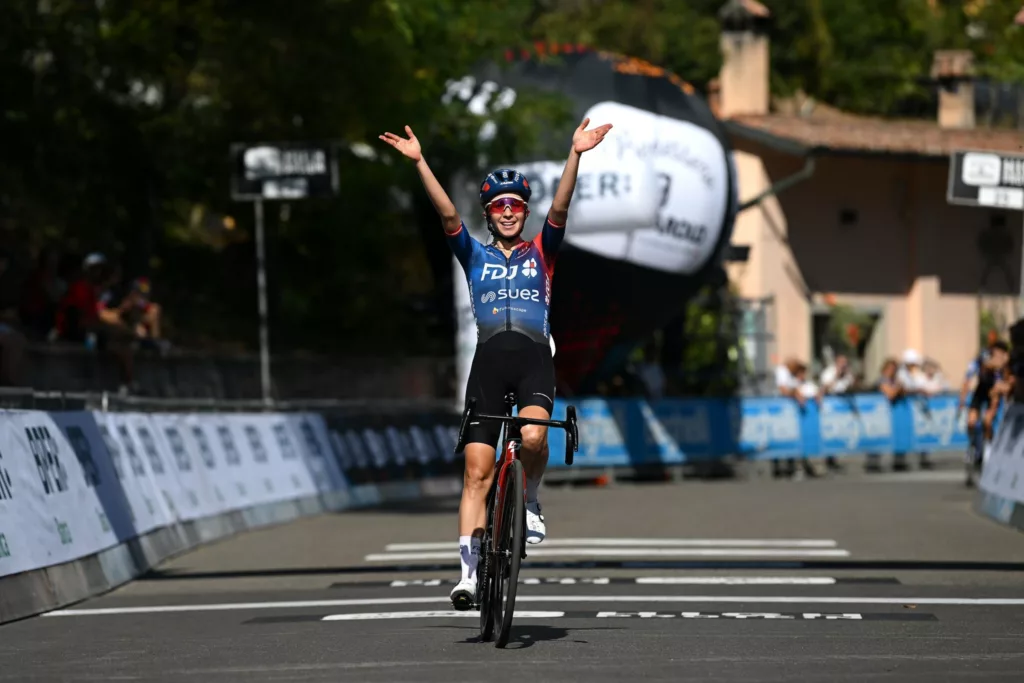
Why hilly stages favour explosive riders
Hilly stages create repeated changes in speed.
The peloton climbs, descends, accelerates out of corners and fights for position before the next ascent. Riders rarely settle into one stable effort for long.
That pattern suits puncheurs because they are good at moving repeatedly above their sustainable pace. They can attack, recover briefly and then accelerate again.
Pure climbers may prefer a more controlled race where the pace gradually increases on one long ascent. Sprinters prefer flatter roads where their teams can regulate the breakaway and prepare a lead-out.
Hilly terrain disrupts both models.
The climbs may be too short for general classification teams to establish a steady mountain pace, yet too difficult for sprint teams to maintain complete control. That creates a more open race in which positioning, timing and tactical instinct become decisive.
Puncheurs are particularly effective in this uncertainty. They can follow attacks, launch their own move or wait for a reduced sprint.
Repeated hills can matter more than one steep climb
A single short climb may not be enough to remove the fastest sprinters.
Repeated climbs create cumulative fatigue. Each ascent forces riders to produce a hard effort, while the descents and flatter sections offer only partial recovery.
By the final hill, riders are responding with tired legs rather than fresh ones. A sprinter who survives one climb comfortably may lose contact after the fourth or fifth acceleration of the day.
This is where puncheurs often separate themselves. They can repeat high-intensity efforts more effectively than heavier sprinters and may still possess enough acceleration to attack late.
The stage profile can look relatively modest on paper. It may contain no major mountain and only a collection of category-three or category-four climbs. Yet the combined effect can be severe if the roads are narrow, the pace remains high and the hills arrive close together.
That is why a rolling Ardennes race can become more selective than a longer route containing one isolated climb. The beginner’s guide to Amstel Gold Race Women explains how short, repetitive climbs can gradually reduce a peloton even when no single ascent looks decisive.
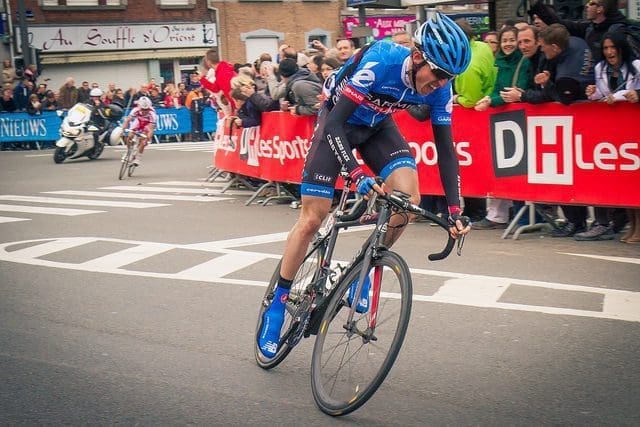
Positioning is central to puncheur racing
Explosive ability is only useful if the rider reaches the decisive climb near the front.
Short climbs provide little time to recover from poor positioning. A rider beginning 40 places back may already be several seconds behind when the leaders accelerate.
The road can also narrow rapidly. Once gaps open, overtaking becomes difficult and riders are forced to spend additional energy moving around those who are losing contact.
Puncheur teams therefore fight for position before the climb rather than waiting for the gradient itself. The approach can resemble a sprint lead-out, with domestiques moving their leader towards the front at high speed, protecting them through corners and delivering them near the foot of the ascent.
That battle may begin ten kilometres before the climb. A rider can have the strongest legs in the race and still lose because they entered the decisive section too far back.
Why irregular gradients suit puncheurs
Steady climbs allow riders to establish a rhythm. Irregular climbs repeatedly disturb it.
A road may rise at 5%, flatten briefly and then kick towards 12%. Each change in gradient creates another acceleration.
Puncheurs are comfortable with those variations because their strength is not limited to maintaining one stable power output. They can increase the effort sharply, carry speed through a flatter section and then attack again when the road steepens.
These climbs also create tactical hesitation. A rider may not want to attack on the first steep ramp if a flatter section follows, while another can use that indecision to create a gap before the final pitch.
Knowing the road becomes extremely important. The best puncheurs understand where momentum matters, where the gradient briefly eases and where their rivals are likely to be most vulnerable.
How does a puncheur win a race?
There is no single method, but most puncheur victories follow one of four broad patterns.
A direct attack on the final climb
The rider waits until the gradient becomes difficult, accelerates sharply and opens a gap.
The move must be hard enough to prevent rivals from immediately reaching the wheel. Once the separation is created, the rider attempts to maintain it to the summit or finish.
This is the clearest expression of puncheur ability. It relies on timing, acceleration and the confidence to commit before knowing whether rivals can respond.
A late attack over the summit
The rider follows the strongest climbers and attacks just before or immediately after the top.
This can work when the finish follows a short descent or flatter section. The chasing riders may hesitate because nobody wants to sacrifice their own winning chance by doing all the work.
A gap of only a few seconds can survive if the group behind lacks cooperation.
A reduced-group sprint
The puncheur survives the climbs with a small group and uses their finishing speed at the line.
This is particularly effective against pure climbers, who may possess similar uphill strength but less acceleration in the final 200 metres.
The rider does not need to be the fastest sprinter in the race. They only need to be the quickest among the riders who have survived.
Repeated attacks that wear down rivals
Some riders do not rely on one decisive move. They attack several times, forcing rivals to chase until the group becomes smaller and more fatigued.
The final acceleration may not be their strongest effort of the day. It succeeds because everyone else has already spent too much energy responding.
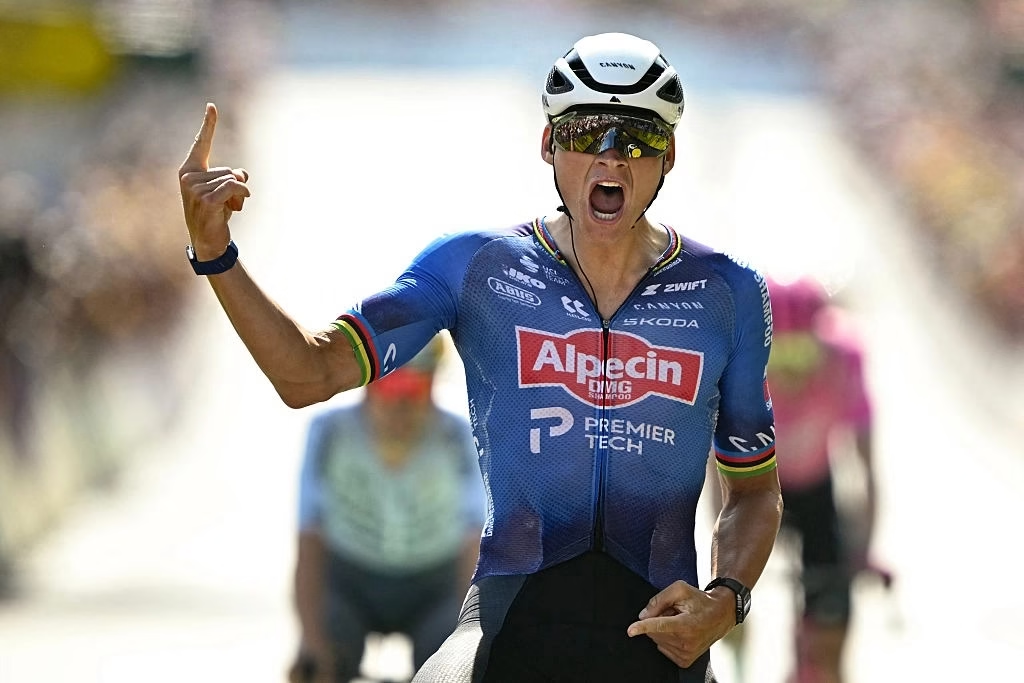 Photo Credit: Getty
Which races suit puncheurs?
The Ardennes Classics are the traditional home of the puncheur.
Amstel Gold Race
Amstel contains numerous short climbs, narrow roads and constant changes of direction.
The climbs are not individually enormous, but their repeated nature creates fatigue and tactical uncertainty. Riders need acceleration, positioning and the ability to race aggressively over several hours.
The race can suit an explosive climber, a fast Classics rider or someone strong enough to attack before the final climb sequence and resist the chase.
La Flèche Wallonne
The Mur de Huy provides one of cycling’s clearest puncheur tests.
Its steep final gradients reward riders capable of delaying their effort, maintaining position and producing an explosive acceleration close to the finish. Starting too early can be disastrous because the climb becomes progressively harder towards the top.
The beginner’s guide to La Flèche Wallonne Femmes shows why the race is built so heavily around one short, severe finishing effort.
Liège-Bastogne-Liège
Liège is longer and more demanding, requiring greater endurance than Flèche Wallonne.
Its late climbs still favour explosive riders, but only those capable of surviving a long race and repeated elevation gain. The ideal winner is often a puncheur-climber or versatile all-rounder rather than a specialist relying entirely on one short acceleration.
Strade Bianche
Strade Bianche combines gravel sectors, steep hills and technical racing.
The final climb through Siena is short and severe, rewarding riders with climbing power, bike handling and acceleration. The rough roads also create fatigue before the decisive effort begins.
Hilly Grand Tour stages
Puncheurs also target selected stages at the Tour de France, Giro d’Italia, Vuelta a España and Tour de France Femmes.
These stages often finish on a short climb, cross rolling terrain or include steep ascents late enough to remove the sprinters. They can also favour a breakaway because repeated hills make it difficult for the peloton to organise a consistent chase.
Famous examples of puncheurs
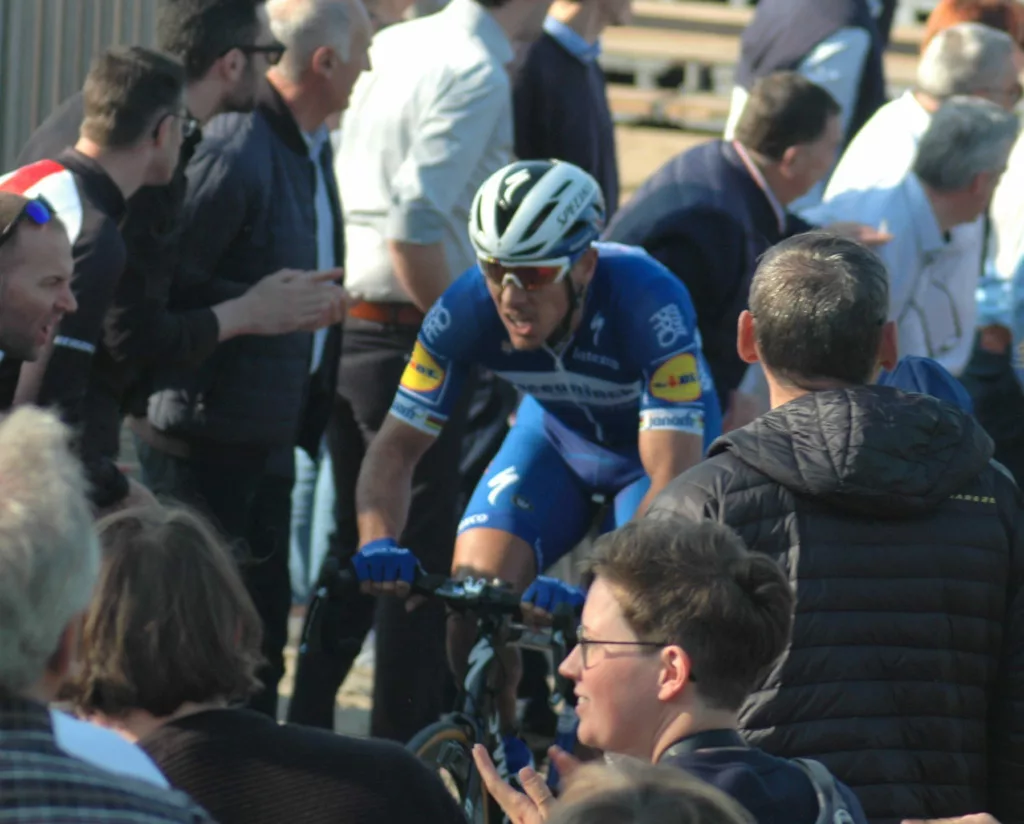
Philippe Gilbert is one of the clearest modern examples. He combined explosive climbing, tactical intelligence and a strong finish, winning all five Monument Classics during his career.
Julian Alaphilippe built many of his biggest victories around sharp accelerations on short climbs. His ability to attack, descend and sprint from reduced groups made him exceptionally difficult to control.
Peter Sagan was not a conventional puncheur, but his climbing strength and sprint speed allowed him to dominate hilly one-day races and selective Tour stages.
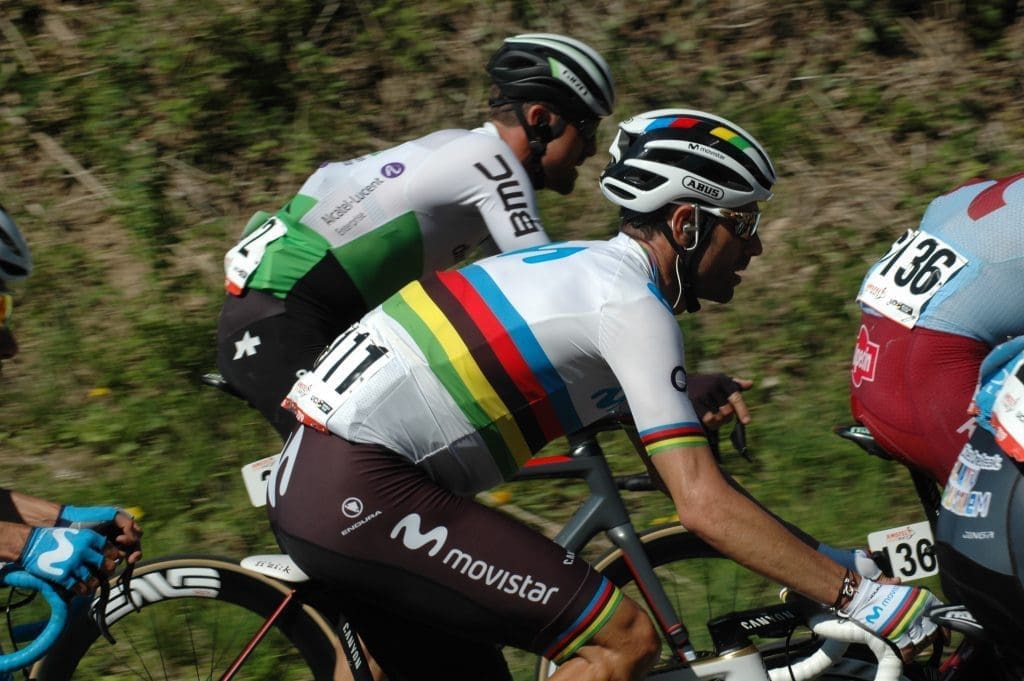
Alejandro Valverde combined puncheur acceleration with exceptional endurance. His record at La Flèche Wallonne demonstrated how effectively he could position himself and time an effort on a steep finish.
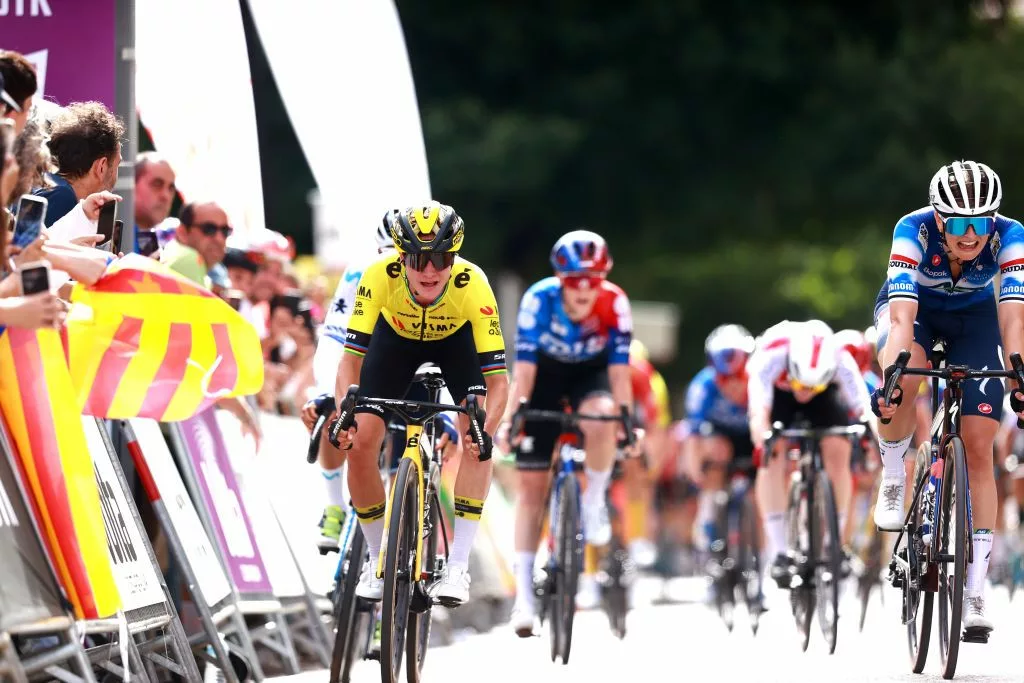
In women’s cycling, Marianne Vos has repeatedly displayed puncheur qualities alongside her sprinting and cyclocross abilities. Her combination of acceleration, race intelligence and finishing speed has allowed her to win across an extraordinary range of terrain.
Anna van der Breggen, Demi Vollering, Kasia Niewiadoma-Phinney and Elisa Longo Borghini have also shown the ability to decide races through powerful attacks on short climbs, although each has a broader skillset extending into longer mountain efforts.
Rider types are not fixed labels. A champion may be described as a puncheur in one race, a climber in another and an all-rounder across an entire season.
Is Tadej Pogačar a puncheur?
Pogačar has exceptional puncheur qualities, but describing him only as a puncheur would be too restrictive.
He can produce explosive attacks on short climbs, sprint from reduced groups, compete on cobbled roads, win long mountain stages and perform at an elite level in time trials.
A conventional puncheur is usually limited somewhere else. They may struggle in the high mountains, lose time in long individual tests or lack the efficiency required to contest a three-week general classification.
Pogačar combines the uphill punch of a Classics specialist with the sustained climbing and recovery needed to win Grand Tours. He is better understood as a complete all-rounder who possesses puncheur acceleration.

Can a puncheur win a Grand Tour?
A pure puncheur is unlikely to win a Grand Tour unless they also possess strong climbing and time-trial ability.
Three-week races are normally decided on long mountain stages and individual time trials. Short, explosive climbs can create useful seconds, but they are rarely enough to compensate for larger losses in the high mountains.
Some general classification riders possess outstanding puncheur qualities. Pogačar is the clearest modern example, while other GC contenders may also use short finishing climbs to take bonus seconds.
That does not make every strong Grand Tour rider a puncheur. It means the most complete riders often possess several specialist qualities at once.
For a conventional puncheur, the Grand Tour objectives are more likely to include stage victories, breakaway success, a spell in a leader’s jersey or support for a team leader.
Why bonus seconds matter to puncheurs
Many stage races award time bonuses at finishes and selected intermediate points.
A puncheur who repeatedly finishes in the top three on hilly stages may gain several seconds without ever distancing their rivals significantly on the road. This can be crucial in short stage races where the overall gaps remain small.
A rider may lose slightly in a time trial but recover that deficit through several uphill finishes. Teams can also control stages specifically to give their leader access to bonus seconds.
Puncheurs are well suited to this because they can climb with the leading group and still possess enough speed to contest the finish.
Why breakaways suit puncheurs
A puncheur can be especially dangerous in a breakaway because fewer teams are available to control their attacks.
In the peloton, a move may be immediately answered by several domestiques. In a small escape, each rider must decide whether to chase personally.
That hesitation creates opportunities.
A puncheur can attack on a short climb, force rivals to close the gap and then accelerate again. If the group contains heavier rouleurs or pure climbers, the repeated changes of speed can gradually remove them.
The ideal breakaway stage contains rolling roads, limited flat terrain and a steep climb near the finish. That allows the puncheur to use their strengths without being caught by a large organised chase.
The Tour de France breakaway specialists guide includes several different rider types, from powerful rouleurs to punchy climbers capable of using this terrain.
Can a heavier rider be a puncheur?
Yes.
Puncheurs are often heavier than pure climbers because short efforts reward absolute power as well as power-to-weight ratio.
A rider carrying more muscle can still climb extremely quickly for several minutes, particularly when the ascent is approached at high speed. Their greater power may also help on flatter sections, descents and reduced sprints.
The disadvantage becomes clearer as the climb gets longer. Carrying additional mass becomes increasingly costly over a sustained ascent.
There is no ideal puncheur body type. Some are compact and muscular, while others are relatively light but unusually explosive.
The defining feature is how they produce and repeat power, not how they look.
What is the difference between a puncheur and an all-rounder?
An all-rounder performs well across several types of terrain.
They may climb, time trial, sprint from small groups and contribute tactically without being the absolute best in one specialist area.
A puncheur has a more specific strength in short, explosive climbing.
The categories overlap. A rider can be both an all-rounder and a puncheur, particularly if short-climb acceleration is one part of a broader skillset.
The label used often depends on the race being discussed. A rider attacking on the Mur de Huy may be described as a puncheur, while the same rider competing for a week-long stage race may be called an all-rounder.
What is the difference between a puncheur and a rouleur?
A rouleur specialises in sustained power on flatter or rolling roads.
They are often strong time triallists, breakaway riders and domestiques capable of riding at the front for long periods.
A puncheur is more explosive and usually better on steep gradients. They may not be able to maintain the same power for an hour, but they can produce a much sharper effort for several minutes.
On a flat, windy stage, the rouleur is likely to be more useful. On a short climb near the finish, the advantage shifts towards the puncheur.
Some riders combine both qualities, particularly powerful Classics specialists who can ride strongly on flat roads before attacking on a hill.
How can you identify a puncheur during a race?
Look at when and where the rider becomes active.
A puncheur will often move towards the front before a short climb, follow attacks on steep ramps and remain dangerous after the summit. They may struggle on the longest mountain stages but repeatedly appear near the front on rolling days.
Other signs include:
- Strong results in the Ardennes Classics
- Success on short uphill finishes
- Fast sprints from groups of 10 to 30 riders
- Frequent attacks on steep ramps
- The ability to bridge small gaps quickly
- Strong performances on technical, rolling circuits
- Repeated acceleration rather than one sustained climbing pace
Commentators may also describe the same rider as explosive, punchy or powerful uphill.
Why hilly stages are difficult to control
Hilly stages create too many possible winners.
A sprint team may attempt to control the breakaway, but its lead-out riders can be dropped on the climbs. A GC team may set the pace, but its leader may not want to spend energy chasing a stage victory.
Meanwhile, attackers can use the terrain to escape, while puncheurs can wait for the final climb.
The uncertainty increases when the stage contains a descent after the last major ascent. A rider can attack over the top, while a small group behind struggles to organise a chase.
This creates the classic hilly-stage tension. The breakaway may still be ahead, the favourites may attack behind and a reduced peloton may remain close enough to catch everyone.
Puncheurs are valuable because they can adapt to each version of the race.
Why timing matters more than maximum power
The strongest acceleration does not always win.
A rider who attacks too early may create a gap but fade before the summit. Another who waits too long may never find enough road to pass.
Puncheur racing is therefore highly tactical.
The rider must judge how much energy their rivals have left, where the gradient becomes steepest and whether a headwind makes waiting more valuable. They must also understand how far the finish sits beyond the summit and whether the chasing group is likely to cooperate.
The best puncheurs can appear instinctive, but their decisions are usually supported by route knowledge, reconnaissance and detailed team planning.

Why puncheurs are among cycling’s most entertaining riders
Puncheurs create uncertainty.
Their attacks are sudden, the roads are often narrow and the race can change in a matter of seconds. They can win alone, from a small group or through a late sprint.
They also make stages difficult to predict. A pure sprint stage normally moves towards one obvious type of finish. A long summit stage tends to favour the established climbers.
A puncheur stage can produce almost anything.
The breakaway may survive. A GC rider may attack. A Classics specialist may escape over the final climb. A reduced peloton may regroup before the line.
That variety is why short climbs often produce some of the most watchable racing in professional cycling.
Frequently asked questions
What is a puncheur in cycling?
A puncheur is a rider who specialises in short, steep climbs and explosive accelerations. They usually combine uphill power with enough finishing speed to win from a reduced group.
What type of stage suits a puncheur?
Puncheurs prefer hilly stages containing repeated short climbs, irregular gradients and an uphill finish or decisive ascent close to the line.
Is a puncheur the same as a climber?
No. Climbers are generally stronger on long mountain ascents, while puncheurs are more explosive on shorter climbs.
Is a puncheur the same as a sprinter?
No. A puncheur usually lacks the maximum speed of a pure sprinter but can survive hilly terrain that removes the fastest finishers.
Can a puncheur win a bunch sprint?
A puncheur is unlikely to beat elite sprinters in a full peloton. They are more dangerous in a reduced sprint after the race has become selective.
Why do puncheurs attack on steep climbs?
Steep gradients reduce the benefit of drafting and make acceleration more effective. A sudden increase in power can create a gap before rivals settle into their own pace.
Can a puncheur win in the mountains?
They can win mountain stages from a breakaway or on shorter summit finishes, but pure climbers usually have the advantage on long, sustained ascents.
What are the best races for puncheurs?
Amstel Gold Race, La Flèche Wallonne, Liège-Bastogne-Liège and Strade Bianche all reward riders with puncheur qualities.
What is a female puncheur called?
The French feminine form is puncheuse, although puncheur is also commonly used as a general cycling term.
Why do hilly stages suit explosive riders?
Hilly stages require repeated accelerations and short high-power efforts. That pattern suits riders who can attack hard, recover quickly and still sprint after the final climb.

