

Amstel Gold Race Women is one of the most important one-day races in the women’s spring calendar and one of the clearest entry points for new fans trying to understand how the season shifts from cobbles to climbs. Held in the hills of Limburg in the Netherlands, it brings together short sharp ascents, technical roads, and a finale that often stays open right to the line.
For beginners, that is a big part of the appeal. This is not a race built around one huge mountain or one iconic cobbled sector. Instead, it is shaped by repeated efforts, constant positioning, and the ability to keep making hard decisions deep into the final hour. If you want to understand why the Ardennes-style classics look and feel different from races such as Paris-Roubaix Femmes or the Tour of Flanders Women, this is one of the best places to start.
What is Amstel Gold Race Women?
Amstel Gold Race Women is the Dutch Women’s WorldTour hill Classic. It is part of the same late-April block of racing that leads into La Flèche Wallonne Féminine and Liège-Bastogne-Liège Femmes, and it marks a clear turning point in the spring season.
Earlier spring races often revolve around cobbles, crosswinds or sprint survival. Amstel Gold Race Women asks different questions. Can a rider cope with repeated climbs? Can she hold position on narrow roads? Can she respond to attacks over and over again, then still have the strength to make the winning move or sprint from a reduced group?
That is why it tends to reward puncheurs and strong all-rounders rather than pure sprinters or long-climb specialists. It is one of the key races in the broader 2026 Women’s WorldTour and one that often tells us a lot about who is coming into form for the rest of the Ardennes week.
 Photo Credit: Getty
When is Amstel Gold Race Women 2026?
The 2026 edition is scheduled for Sunday the 19th April. It sits in its familiar place in the calendar, after the biggest cobbled races and before the rest of the Ardennes classics.
That timing matters because the race often resets the spring conversation. Riders who looked comfortable on the cobbles are not always the same riders who thrive here, and Amstel Gold Race Women often brings a new set of favourites into sharper focus.
What does the 2026 route look like?
The 2026 route is set at 158.2km, starting in Maastricht and finishing in Berg en Terblijt. The women’s race includes 22 climbs, with the early part of the route already taking in a series of Limburg hills before the race settles into the decisive local circuits.
Those early climbs include roads such as the Maasberg, Kruisberg, Eyserbosweg, Fromberg and Keutenberg. None of them is an Alpine test on its own, but that is not the point. The difficulty comes from the accumulation of effort and the lack of any real chance to relax.
From there, the race moves onto the finishing circuits, where the riders repeatedly tackle the Cauberg, Geulhemmerberg and Bemelerberg. The final climb of the Cauberg comes close to the finish, but not right on top of it, which is one of the reasons this race stays tactically interesting.
If you are new to the route, think of it less as a single defining climb and more as an attritional sequence. The road keeps asking for another effort, and the riders who can stay sharp the longest are the ones who usually shape the finale.

Why is the Cauberg so important?
The Cauberg is the climb most people associate with Amstel Gold Race, and for good reason. It has long been the race’s signature landmark and it remains central to the women’s finale too.
But the easiest mistake for a beginner is to think the whole race boils down to the Cauberg alone. In reality, the race is usually softened up long before then. The repeated climbs and constant fighting for position wear riders down, so when the bunch reaches the final Cauberg the selection is often already underway.
That final passage is still crucial because it is steep enough to provoke attacks and close enough to the finish to make those moves dangerous. Yet it is not always decisive in a simple way. Riders can crest the climb with a gap and still get caught, or a small group can reform and play for the line. That uncertainty is part of what makes the race so compelling.
For a more detailed look at one of the key roads in the finale, Geulhemmerberg has its own tactical significance too.
Is it a climber’s race or a puncheur’s race?
It is much more a puncheur’s race than a pure climber’s race. The climbs are short, steep and repetitive rather than long mountain ascents. The ideal contender is someone who can produce hard explosive efforts multiple times, hold position well, and still finish strongly after nearly four hours of racing.
That opens the door to several kinds of winners. A rider can attack late and stay away. A small elite group can reach the finish together. Sometimes, a fast finisher survives the hardest moves and takes it in a reduced sprint. That blend of possibilities is one reason the race remains so watchable.

What is the history of the women’s race?
The women’s race has a slightly unusual history, which is part of what makes it interesting. It was first held from 2001 to 2003 before disappearing from the calendar for a number of years. It then returned in 2017 and has been a major fixture in women’s cycling ever since.
That means Amstel Gold Race Women feels both established and modern at the same time. It has enough past winners and memorable editions to carry real weight, but its current identity has largely been built in the modern Women’s WorldTour era. For new fans, that makes it easier to connect the current stars with the race’s bigger story.
There is also a wider historical importance here. The return of the race helped strengthen the women’s spring classics calendar in the Netherlands and gave the peloton a true Ardennes-style Dutch benchmark again.
For broader background, the race’s longer development also fits into the story of the greatest spring classics races and how women’s one-day racing has expanded in depth and prestige.
Which riders usually suit Amstel Gold Race Women?
The recent winners tell the story quite well. Marianne Vos, Demi Vollering, Marta Cavalli, Katarzyna Niewiadoma and Mischa Bredewold are all different types of rider in some respects, but they share a few core qualities. They can climb short hills explosively, they race intelligently, and they know how to handle a tactical finale.
That is why this race usually belongs to punchy all-rounders rather than specialists. Riders who can survive repeated climbs and still make good decisions in the final few kilometres are usually the ones who matter most.
If you are trying to learn the sport as a new fan, this is a useful race because it shows how many different forms strength can take. It is not just about raw climbing power. Timing, positioning, race reading and composure all matter here.
 Photo Credit: Getty
What happened in the last edition?
The 2025 race was won by Mischa Bredewold after a smart and well-timed attack on the final Cauberg. The finale was not decided by one straightforward move far from the finish. Instead, it developed in layers, with repeated selections and tactical hesitation before Bredewold judged the moment best.
That was a very good example of what Amstel Gold Race Women often looks like at its best. Riders attack on the climbs, small groups form and split, and the strongest rider does not always win in the most obvious way. Often it is the rider who best understands when to commit.
You can read more about that edition in the 2025 Amstel Gold Race Women race preview and the report on Mischa Bredewold’s victory.
What should beginners watch for during the race?
The easiest way to follow Amstel Gold Race Women is to focus on a few simple markers.
First, watch the team numbers in the final hour. If a team still has multiple riders in contention on the circuits, that can shape everything. One rider can attack, another can sit on, and stronger teams often gain a huge tactical advantage from that depth.
Second, pay attention to positioning before the climbs. Because the roads are narrow and twisting, riders who enter a key sector too far back may have to waste energy just to get back into contention.
Third, do not assume the race is over at the top of the final Cauberg. There is still enough road left for regrouping, hesitation or one last well-timed move. That is why the finale often remains tense right to the end.
-
 Photo Credit: quentinphotographiebe
 -
 Photo Credit: Getty
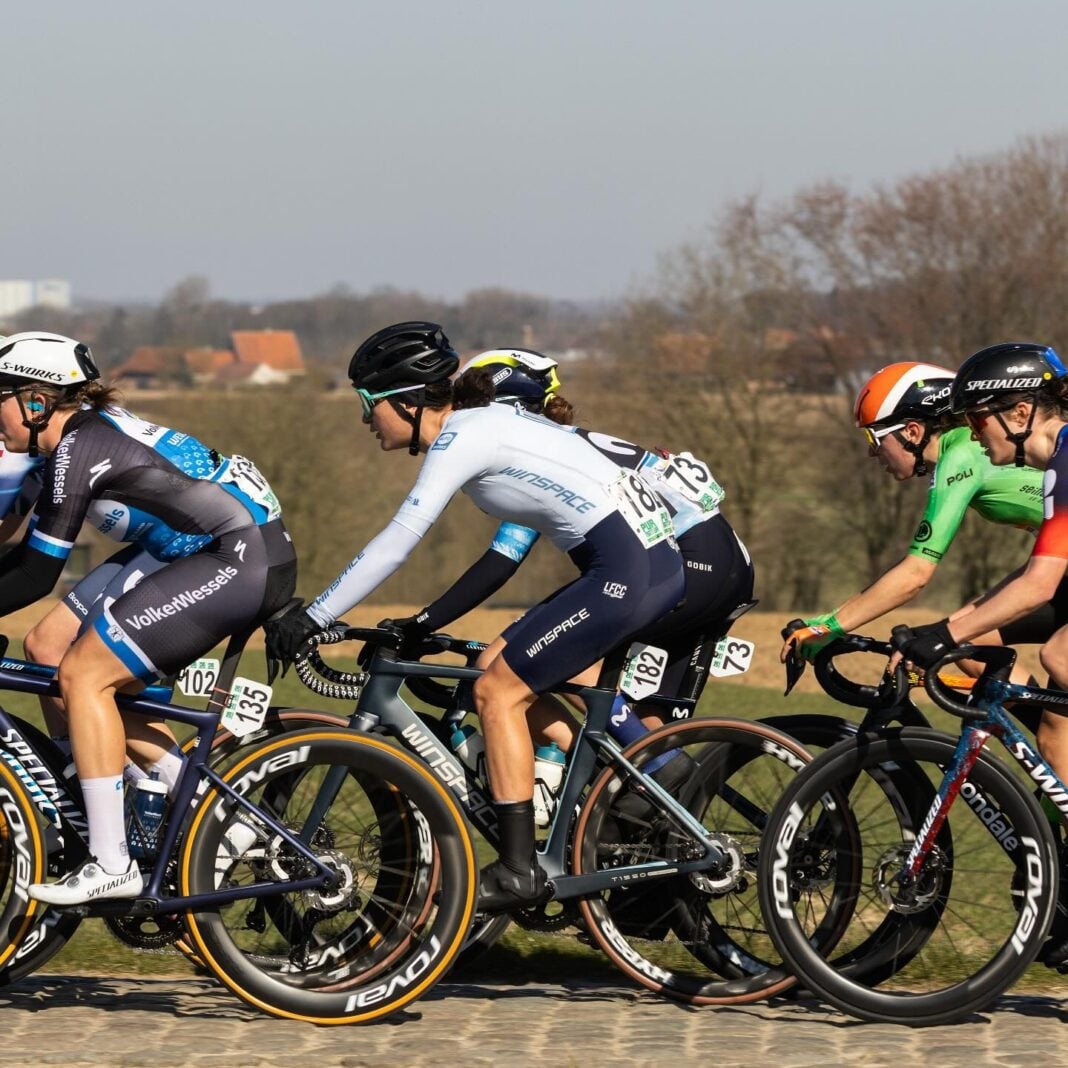


Why does this race matter so much in spring?
Amstel Gold Race Women matters because it opens the Ardennes phase of the spring and starts to sort the cobbled specialists from the puncheurs. A rider who looks sharp here immediately becomes a serious name for the rest of the week.
It is also one of the clearest races for showing the range within women’s cycling itself. The sport does not just move from sprint stage to sprint stage or from one big mountain finish to the next. Races like this sit in the middle, rewarding strength, intelligence and repeatability rather than one single dominant skill.
That wider context is one reason Amstel Gold Race Women belongs on any list of the best women’s cycling races for new fans.
Why is Amstel Gold Race Women a good race for beginners?
For new viewers, this is one of the best races to learn from because the action is easy to understand once you know what to look for. The climbs are constant enough to make the race selective, but not so extreme that only pure climbers can compete. The local circuit gives the finale a clear shape, and the Cauberg provides a recognisable focal point.
It also tends to produce racing that is tactical without becoming confusing. Attacks matter. Team depth matters. Positioning matters. Yet the race still often comes down to a visible and understandable contest between a handful of riders in the closing kilometres.
That is what makes Amstel Gold Race Women 2026 such a strong beginner’s race. It offers the tension of a major spring Classic, the clarity of a recognisable finale, and enough tactical variety to show why one-day racing can be so addictive.

