
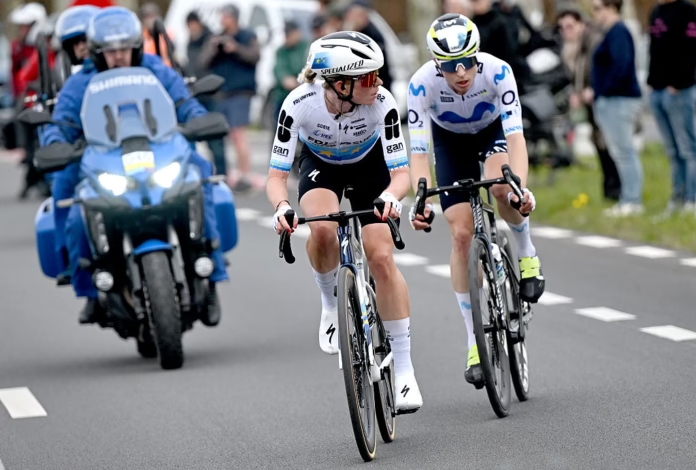
The bikes used at the Tour de France Femmes are among the most advanced road machines available, but they are not all the same.
Some teams race on Specialized. Others use Canyon, Trek, Cervélo, Colnago, Cannondale, Factor, Liv, Lapierre or Ridley. Groupsets are split mainly between Shimano Dura-Ace Di2 and SRAM Red AXS, while wheel sponsors vary again.
Then there is the setup.
The bike used for a fast opening stage in Lausanne may not be the one chosen for Mont Ventoux. Some riders favour aero road bikes almost everywhere. Others switch to lighter climbing models when the gradients become decisive. The 21km Stage 4 individual time trial introduces another category completely, with dedicated TT bikes, deeper wheels and much more aggressive aerodynamic positions.
At this level, the broad equipment package is determined by sponsorship, but the final bike is still built around the rider and the stage.
Tour de France Femmes team bikes at a glance
The Women’s WorldTour equipment picture in 2026 is split across several of cycling’s biggest manufacturers.
FDJ United-Suez and SD Worx-Protime both use Specialized, while Visma | Lease a Bike race on Cervélo. Canyon supplies Canyon SRAM and Movistar, Lidl-Trek use Trek and UAE Team L’IMAD race on Colnago.
EF Education-Oatly use Cannondale, Human Powered Health use Factor, Liv-AlUla-Jayco use Liv, Picnic PostNL are on Lapierre and Uno-X Mobility use Ridley.
That immediately explains why two riders standing next to one another on the start line can have completely different equipment despite racing the same stage.
Teams do not simply choose whichever bike they think is fastest each morning. Equipment partnerships dictate the manufacturer and much of the component package across the season.
The interesting part comes in how riders use the options within that range.
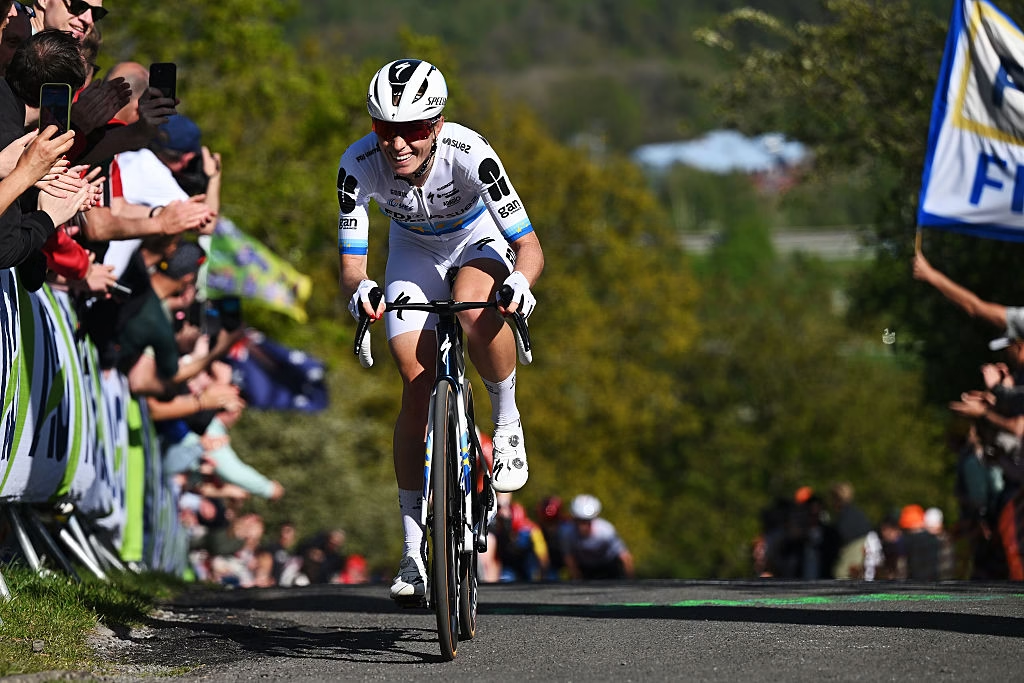 Photo Credit: Getty
What bike does Demi Vollering use?
Demi Vollering races for FDJ United-Suez, who use Specialized.
The team’s main road platform is the S-Works Tarmac, paired with Shimano Dura-Ace Di2 and Roval wheels.
That gives Vollering an all-round race bike rather than forcing the team to choose between a heavily aero-focused machine and a traditional lightweight climbing model for every stage.
It is particularly useful on a race as varied as the 2026 Tour de France Femmes route, where riders can move from high-speed valley roads to substantial climbing within the same day.
For Vollering, that means the same basic platform can work across much of the Tour.
Stage 4 is the major exception, when the road bikes are replaced by dedicated time trial machines.
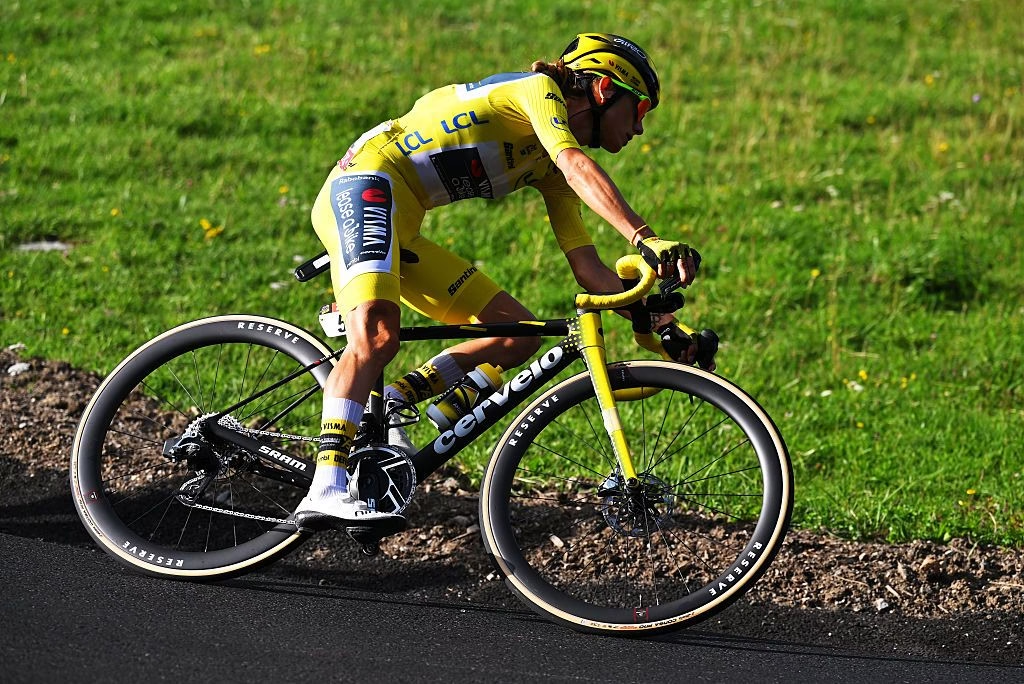
What bike does Pauline Ferrand-Prévot use?
Pauline Ferrand-Prévot races on Cervélo with Visma | Lease a Bike.
Visma have access to the Cervélo S5 and R5 road bikes, plus the P5 for time trials. Their bikes use SRAM Red AXS, Reserve wheels and Vittoria tyres.
The distinction between the S5 and R5 is a good example of how Tour equipment choices work.
The S5 is the more aerodynamic option and is particularly suited to fast racing where reducing drag carries a large benefit.
The R5 is the lighter climbing-focused alternative.
That means the decision is not simply about which bike is theoretically fastest in a wind tunnel. Weight, handling, stage profile and rider preference all matter.
On Mont Ventoux, that calculation becomes particularly relevant.
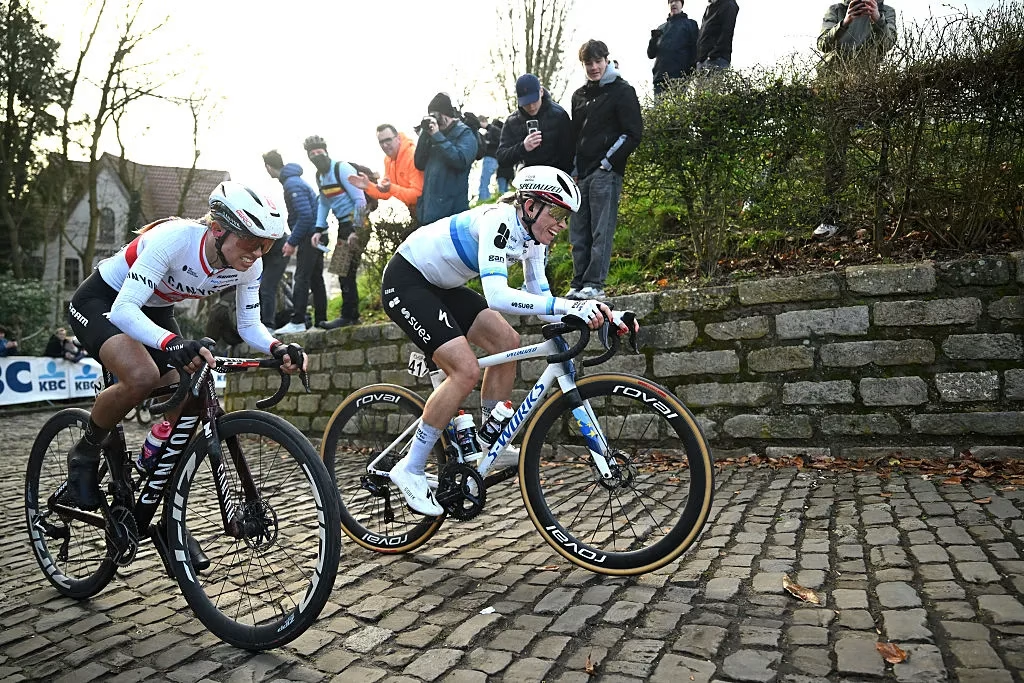
What bike does Kasia Niewiadoma-Phinney use?
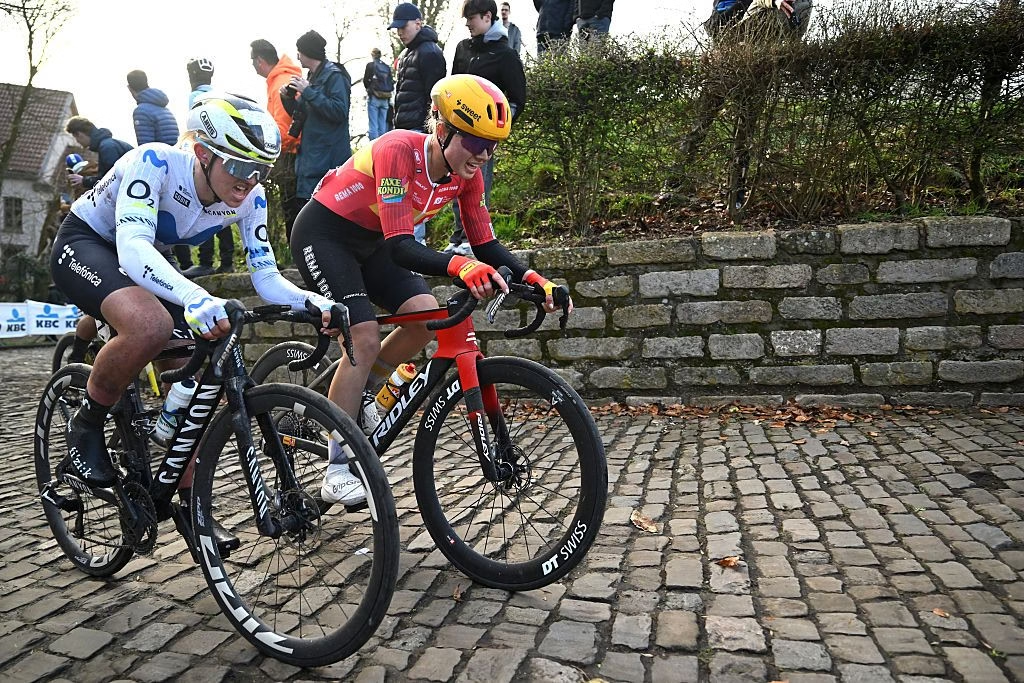
Kasia Niewiadoma-Phinney rides for Canyon SRAM.
The team have access to the Canyon Aeroad CFR, Ultimate CFR and Speedmax time trial platform, with SRAM Red AXS and Zipp wheels forming key parts of the equipment package.
Again, there is a clear aero-versus-weight decision.
The Aeroad is designed around aerodynamic efficiency but has become sufficiently light and versatile to work across far more than flat stages.
The Ultimate is the more traditional lightweight climbing option.
For a rider such as Niewiadoma-Phinney, both can make sense during the Tour.
A rolling stage with fast descents and long sections at high speed may favour the Aeroad. A mountain day finishing with prolonged climbing gives the Ultimate a stronger argument.
The Tour de France Femmes 2026 mountain stages mean those decisions become increasingly important in the second half of the race.
What bikes do SD Worx-Protime use?
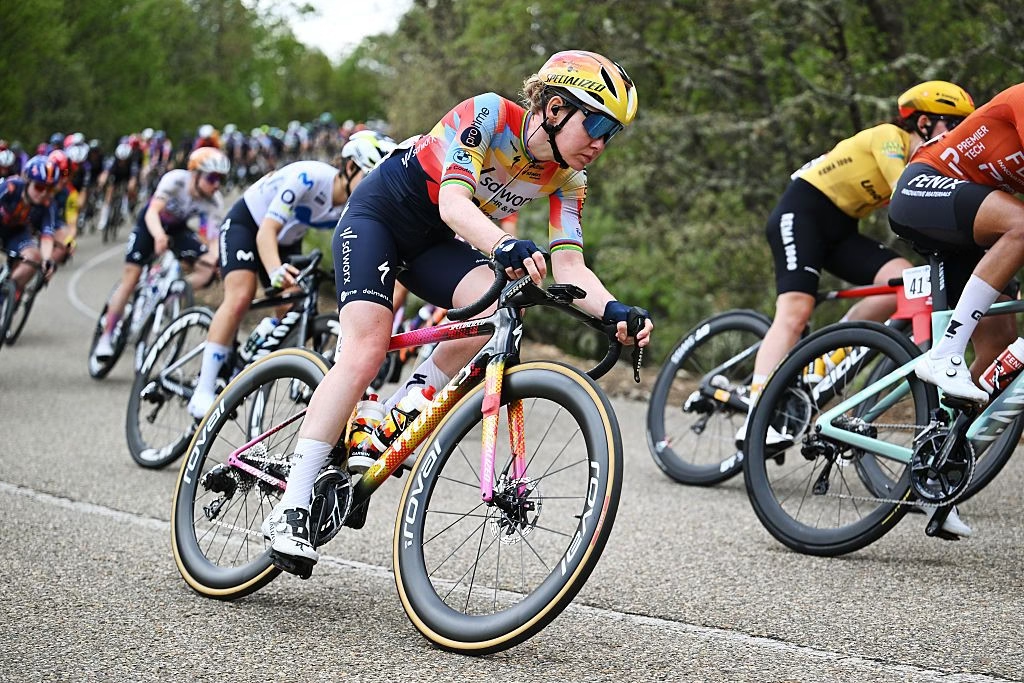
SD Worx-Protime also race on Specialized.
That means riders with very different responsibilities, including Lorena Wiebes, Lotte Kopecky and Anna van der Breggen, can all use the same fundamental road-bike platform while configuring it differently.
Wiebes needs equipment capable of coping with the enormous peak power of a sprint.
Kopecky needs a fast aerodynamic setup that still works when races become selective.
Van der Breggen needs something suitable for GC racing and major mountain stages.
The frame can be broadly the same while wheel depth, gearing, tyre pressure and fit differ significantly.
That is why looking only at the bike model does not reveal the complete setup.
What bikes do UAE Team L’IMAD use?
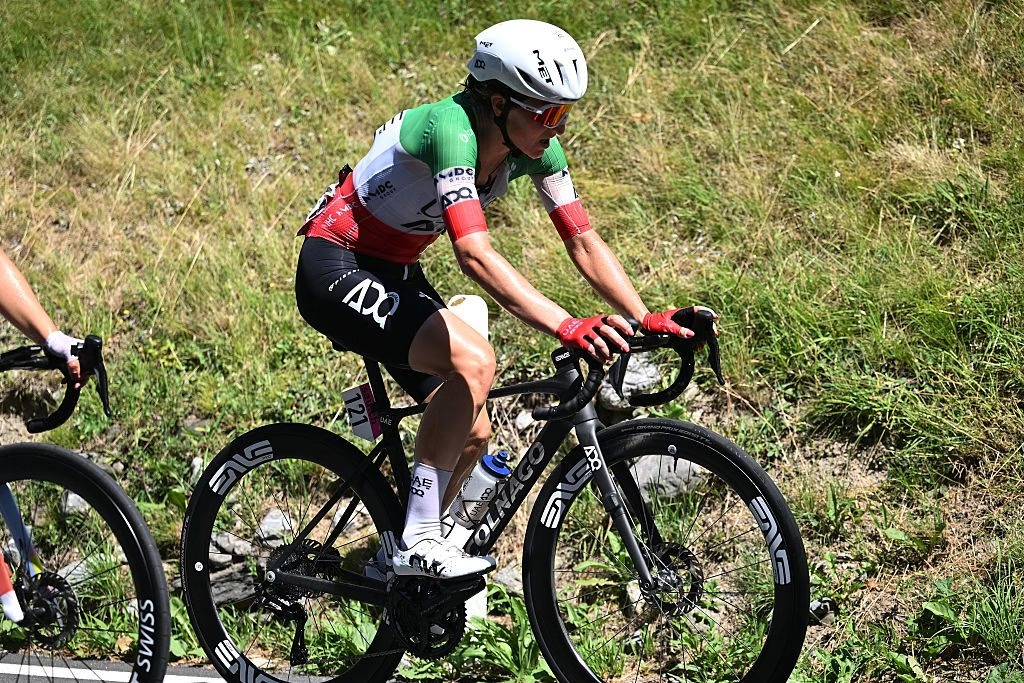
UAE Team L’IMAD race on Colnago.
Their equipment package pairs Colnago frames with Shimano Dura-Ace Di2 and Enve wheels.
For riders such as Elisa Longo Borghini and Paula Blasi, the significant part is not simply the Colnago name on the frame but how the bike is configured for their job.
Blasi’s requirements on Ventoux are different from those of a rider preparing for a flat sprint stage. Longo Borghini may place greater emphasis on aerodynamic efficiency across rolling terrain and has different requirements again for the time trial.
The team can make those adjustments within the equipment supplied by its sponsors.
Why do some teams use Shimano and others SRAM?
Two electronic groupset manufacturers dominate the Women’s WorldTour in 2026.
Shimano Dura-Ace Di2 and SRAM Red AXS are both flagship electronic shifting systems used across the professional peloton.
The choice is largely determined by team partnerships rather than riders being free to switch between the two.
At this level, both provide extremely fast electronic shifting, hydraulic disc braking and substantial flexibility in gearing.
The practical differences matter to mechanics and riders, particularly around ergonomics and component choice, but neither automatically makes one team faster than another.
Equipment is only one part of the performance equation.
Do women use different bikes from the men’s Tour?
Usually, no.
The top women’s teams use the same flagship frames, groupsets, wheels and tyre technology seen at the highest level of men’s professional cycling.
What changes is the fit.
Frame size, handlebar width, stem length, crank length, saddle position and gearing are tailored to the individual rider.
A smaller rider may therefore have a dramatically different-looking setup from a taller teammate despite both riding exactly the same model.
This is important because there is no special category of women’s Tour racing bike that sits below the equipment used by the men’s peloton.
These are the manufacturers’ top competition platforms.
Why handlebar width matters
Professional handlebars have become noticeably narrower over recent years.
Aerodynamics is the main reason.
Narrower bars can reduce the rider’s frontal area and bring the shoulders into a more compact position, which matters when the peloton is travelling at the speeds explored in our guide to how fast Tour de France Femmes riders go.
But there is a practical limit.
The handlebars still need to give the rider enough control in bunch racing, technical descents and crosswinds.
A rider comfortable on very narrow bars may choose a more aggressive setup than a teammate who values stability.
The compromise is individual.
What tyres do Tour de France Femmes riders use?
Tubeless tyres now dominate elite road racing.
Instead of relying on a conventional inner tube, the tyre seals against the rim and normally contains liquid sealant capable of closing small punctures.
The advantages include lower rolling resistance, improved grip and the ability to use lower pressures without the same risk of traditional pinch punctures.
Teams use different tyre suppliers depending on sponsorship.
Pressure is then adjusted according to rider weight, tyre width, road surface and weather.
There is no single Tour de France Femmes tyre pressure.
A lighter rider on rough or wet roads can use considerably less pressure than a heavier rider on smooth dry asphalt.
Those choices can change from one stage to the next.
Why wheel choice changes from stage to stage
Wheel depth is one of the easiest equipment changes to notice.
Deep-section carbon wheels reduce aerodynamic drag and are particularly valuable on faster stages.
Shallower wheels can be lighter and easier to handle, especially when wind becomes an issue.
The compromise changes according to the route.
A flat stage allows aerodynamic performance to dominate the decision.
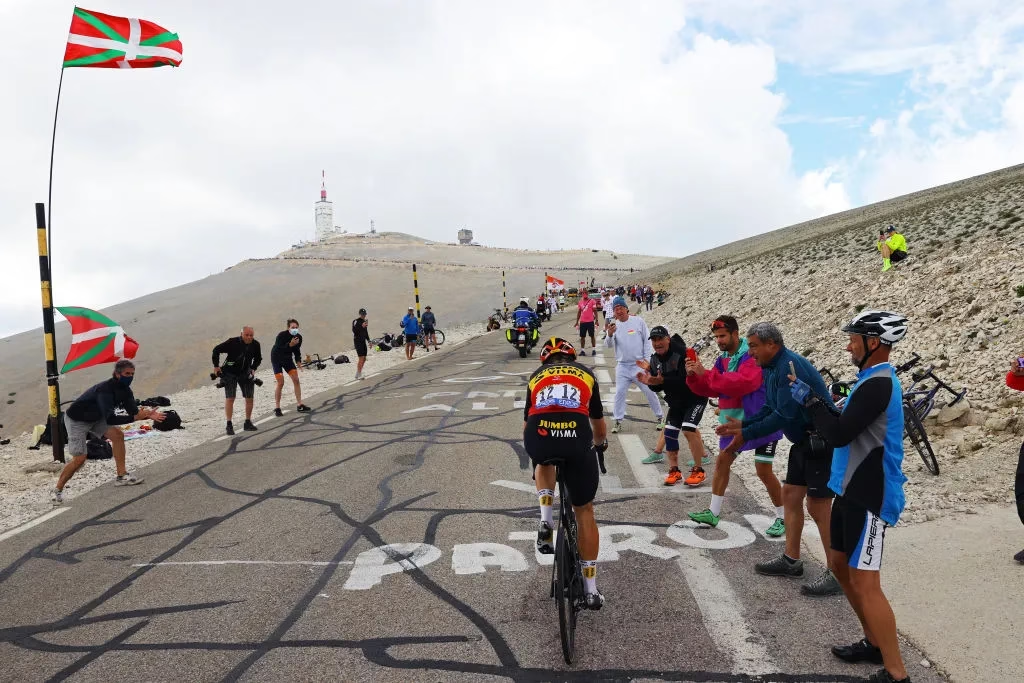
Mont Ventoux creates a more complicated calculation. Weight matters considerably during a long climb, but the rider still has to reach the mountain after well over 100km of racing.
That means teams do not optimise only for the final ascent.
They build the bike for the complete stage.
Gearing becomes critical on Mont Ventoux
One of the most noticeable mechanical changes for mountain stages can be gearing.
A fast stage allows riders to use larger gears because speeds remain high.
The Mont Ventoux stage of the 2026 Tour de France Femmes requires something very different.
The final climb is long and steep enough that riders need gears that allow them to maintain their preferred cadence without wasting energy pushing an unnecessarily large ratio.
Modern electronic groupsets give mechanics considerable flexibility over chainring and cassette combinations.
The GC favourites are unlikely to use identical gearing.
A rider who prefers spinning at a higher cadence may make a different choice from someone comfortable producing more torque at lower revs.
Those decisions are made around the rider rather than simply applying one setup to an entire team.
Stage 4 brings out the time trial bikes
The 21km individual time trial from Gevrey-Chambertin to Dijon produces the most dramatic equipment change of the Tour.
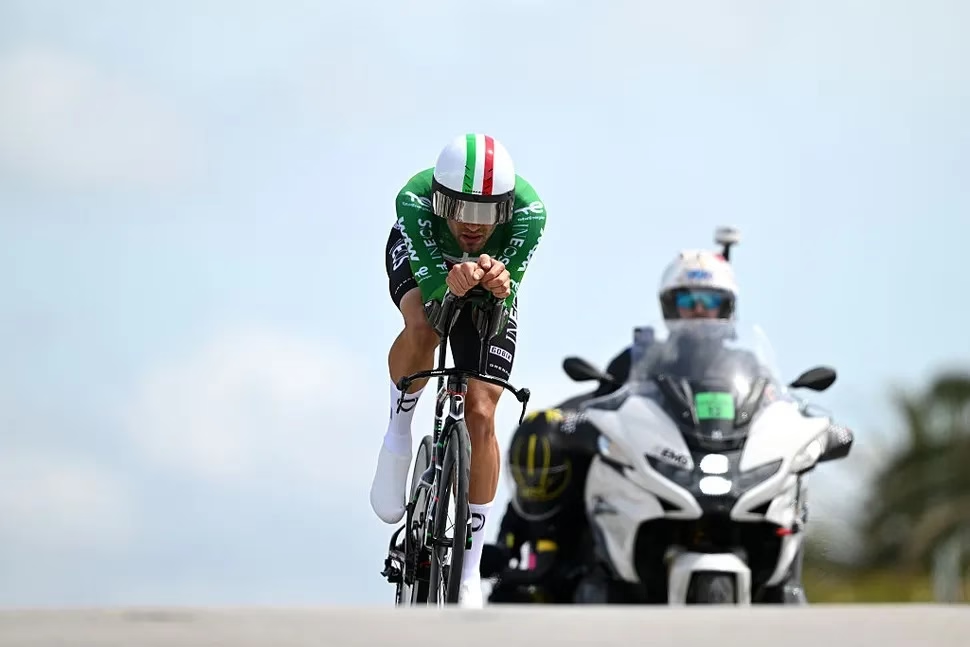
Road bikes are replaced by dedicated time trial machines.
Canyon SRAM have the Canyon Speedmax. Visma | Lease a Bike use the Cervélo P5. Specialized-sponsored teams have access to the Shiv, while the other teams use the time trial platforms provided by their respective manufacturers.
Time trial bikes place the rider in a much more aerodynamic position.
Instead of riding on conventional drop handlebars, the rider supports her forearms on extensions and brings the upper body lower and narrower.
The frames themselves are shaped around reducing aerodynamic drag, while teams can use extremely deep front wheels and rear disc wheels when conditions permit.
Across 21km, those gains matter.
For Vollering, Ferrand-Prévot, Marlen Reusser and the other GC contenders, Stage 4 is partly a test of power and partly a test of how efficiently rider and machine can move through the air.
The stage could have a major effect on the overall classification before the race reaches the mountains.
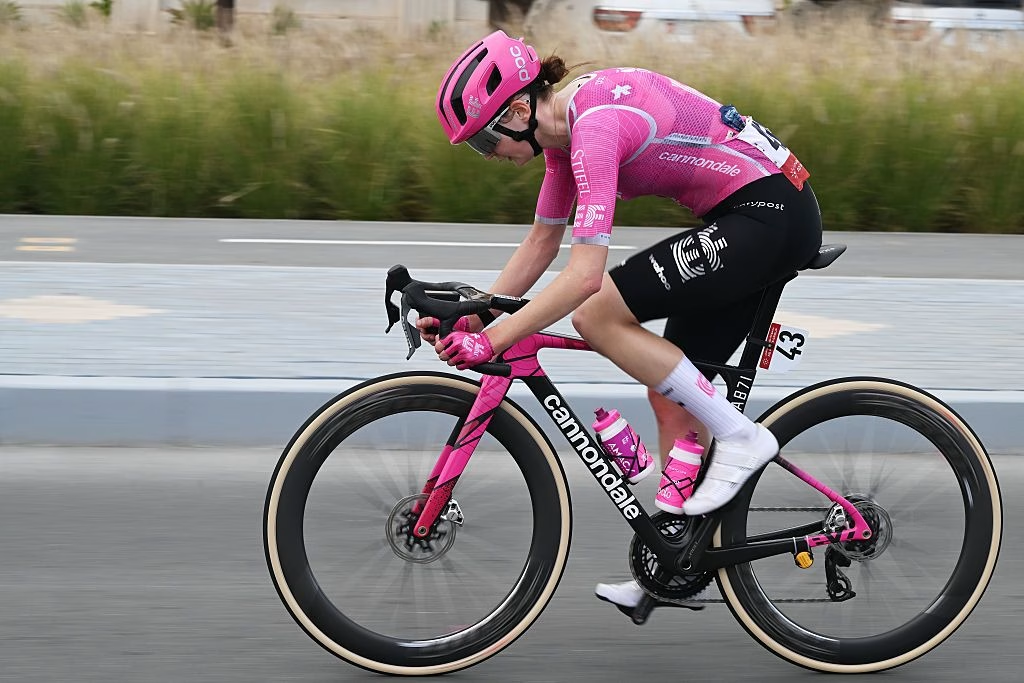
Why aero bikes are used on climbing stages
The old assumption was simple.
Flat stage equals aero bike.
Mountain stage equals lightweight bike.
Modern professional cycling is more complicated.
Aerodynamic drag still matters for most of a mountain stage. Riders can spend hours travelling quickly through valleys, descents and approach roads before reaching the decisive climb.
An aero bike that weighs slightly more may therefore save more energy during the first 130km than the lighter bike saves during the final ascent.
That calculation changes according to the route.
A stage dominated by one long uphill finish may move the balance towards weight.
A mixed mountain stage containing long descents and fast transitional sections can still favour a more aerodynamic machine.
This is one reason aero bikes have become increasingly common even on days traditionally associated with climbing bikes.
How much do Tour de France Femmes bikes cost?
A complete professional Tour-level setup can comfortably reach five figures at retail prices.
The frames sit at the top of manufacturers’ ranges. Add flagship electronic groupsets, carbon wheels, power meters, premium tyres and integrated cockpits and the cost rises quickly.
Time trial bikes can be even more specialised.
But the bikes ridden by professionals should not be treated simply as showroom builds with race numbers attached.
Teams can use prototype parts, unreleased equipment and highly specific combinations that are not sold as identical complete packages to consumers.
The value of a Tour bike is therefore difficult to reduce to one retail price.
Do riders choose their own bike?
Within limits.
A rider cannot decide she would rather race a Trek if her team is sponsored by Cervélo.
She can have substantial input into how the sponsored bike is set up.
That includes position, handlebar dimensions, stem length, crank length, gearing and saddle setup within the team’s sponsorship agreements.
Where manufacturers provide both aero and lightweight road models, riders and teams can also decide which platform best suits a particular stage.
Professional bike fit is extremely individual.
Small changes that look insignificant can affect comfort, aerodynamics and power production across several hours of racing.
Why teams carry so many spare bikes
A Tour de France Femmes team does not arrive with one bicycle per rider and hope nothing goes wrong.
Riders have spare machines, while mechanics carry replacement wheels and substantial stocks of components.
There is also the separate time trial equipment to prepare.
Ahead of Stage 4, mechanics effectively have another specialist fleet to maintain and configure.
That work continues every evening.
Bikes are cleaned and inspected after each stage. Tyres are checked, drivetrains serviced and damaged components replaced. Setups can then be changed according to the following day’s profile.
A crash can create hours of additional work after the riders have already returned to the hotel.
The equipment story of the Tour therefore extends far beyond the bikes seen during television coverage.
The fastest bike depends on the stage
There is no single best bike at the Tour de France Femmes.
A lightweight setup designed around Mont Ventoux is not necessarily optimal on a fast exposed stage.
A deep aerodynamic wheel may save energy on one day and become harder to control in strong winds the next.
A time trial bike can be dramatically faster against the clock but is unsuitable for normal bunch racing.
That is why the equipment changes even when the sponsor logos remain the same.
The manufacturer provides the platform. The mechanics configure it. The rider’s fit and preferences determine the final details.
Across nine stages ranging from Lausanne to the Dijon time trial, Mont Ventoux and Nice, the fastest bike is ultimately the one best suited to the job that rider needs to perform that day.

