

The Tour de France 2026 route gives breakaway riders plenty to work with. The headline stages will belong to the GC contenders and sprinters, but the middle of the race is full of days where the peloton may not want full control. That is where the strongest stage hunters can turn the race inside out.
The 2026 route has early Pyrenean pressure, a hilly run through the Massif Central, a difficult Vosges and Jura block, then a final Alpine sequence where the yellow jersey battle should dominate. That creates several different breakaway windows. Some stages will favour rouleurs who can hold a gap on rolling terrain. Others will suit punchy climbers, classics riders, technical descenders or experienced mountain stage hunters.
The startlist also gives the race an unusually strong attacking field. Mathieu van der Poel, Matej Mohorič, Ben Healy, Tom Pidcock, Julian Alaphilippe, Mads Pedersen, Toms Skujiņš, Tim Wellens, Magnus Cort, Marc Hirschi, Victor Campenaerts, Kasper Asgreen, Krists Neilands and Anthony Turgis are all riders who can shape the race from outside the GC battle. Some will have to balance team duties, but if given freedom, they are exactly the type of riders who can make the awkward days matter.
For the route context, see our Tour de France 2026 full route guide, Tour de France 2026 route: best days for breakaways and Tour de France 2026 breakaway stages ranked.
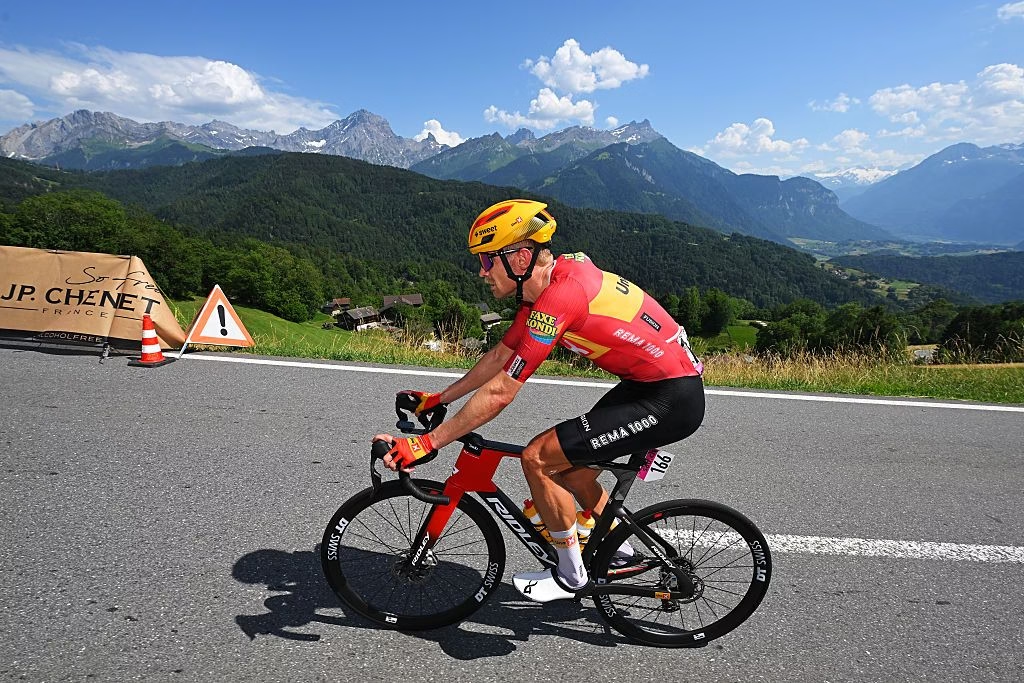 Photo Credit: Getty
What makes a good Tour de France breakaway rider?
A good Tour de France breakaway rider needs more than strength. The Tour is too controlled, too tactical and too selective for riders to win simply by attacking early and hoping.
The best breakaway specialists usually have five things: timing, repeatability, tactical instinct, descending confidence and enough finishing speed to win from a small group. Some are pure engines. Some are punchy climbers. Some are classics riders who can survive hard terrain and still sprint. Some are experienced attackers who know which moves are worth following and which ones are doomed.
Team context matters too. A rider on a squad with a GC leader may not always have freedom. A rider working for a sprinter may be used in chase or lead-out duties. A rider on a team without an obvious GC objective may have more room to attack.
That is why this list is not simply about the strongest riders. It is about who is likely to get chances, where those chances might come, and what kind of stage best suits them. For more on how those roles work inside a squad, see our explainer on how Tour de France teams work.
The best breakaway stages at the 2026 Tour
The route should give attackers several types of opportunity. The opening team time-trial and early mountain days may keep the GC fight tight, but from there the race opens into more varied terrain.
Stages around Foix, Ussel and Le Lioran should interest punchy climbers and classics-style stage hunters. The Belfort, Le Markstein and Plateau de Solaison block should suit stronger climbers, mountain breakaway riders and riders chasing the polka-dot jersey. Stage 17 to Voiron could be a late race chance if sprint teams are tired and GC teams are thinking about Orcières-Merlette and Alpe d’Huez. Even some flat days can become breakaway opportunities if the sprinter teams are weakened by the mountains.
The best breakaway specialists will not chase every move. They will pick days where the peloton has conflicting interests. If GC teams do not need to chase and sprint teams cannot chase, a strong breakaway can build enough time to survive.
For the bigger race structure, see our Tour de France 2026 route analysis, Tour de France 2026 Massif Central guide and Tour de France 2026 Vosges and Jura guide.
Top 10 breakaway specialists to watch
| Rank | Rider | Team | Best terrain |
|---|---|---|---|
| 1 | Mathieu van der Poel | Alpecin-Premier Tech | Hilly classics-style stages |
| 2 | Matej Mohorič | Bahrain Victorious | Long-range attacks and descents |
| 3 | Ben Healy | EF Education-EasyPost | Hilly and mountain breakaways |
| 4 | Tom Pidcock | Pinarello-Q36.5 Pro Cycling Team | Technical mountain stages |
| 5 | Julian Alaphilippe | Tudor Pro Cycling Team | Punchy uphill finishes |
| 6 | Mads Pedersen | Lidl-Trek | Rolling stages and reduced sprints |
| 7 | Tim Wellens | UAE Team Emirates-XRG | Hilly breakaways |
| 8 | Toms Skujiņš | Lidl-Trek | Rolling, windy and attritional stages |
| 9 | Magnus Cort | Uno-X Mobility | Breakaways with a sprint finish |
| 10 | Marc Hirschi | Tudor Pro Cycling Team | Punchy climbs and reduced groups |
That top 10 is not a prediction of who will win the most stages. It is a ranking of riders with the strongest combination of ability, route fit and breakaway profile.
Some riders, especially Pidcock, Wellens and Pogačar’s UAE teammates, may have role constraints depending on team strategy. Others, such as Van der Poel, Mohorič, Healy, Alaphilippe and Cort, should be among the most obvious names whenever a hilly stage becomes too hard for sprinters but not hard enough for pure GC control.
For a wider list of riders likely to target stage wins, see our Tour de France 2026 stage hunters to watch.
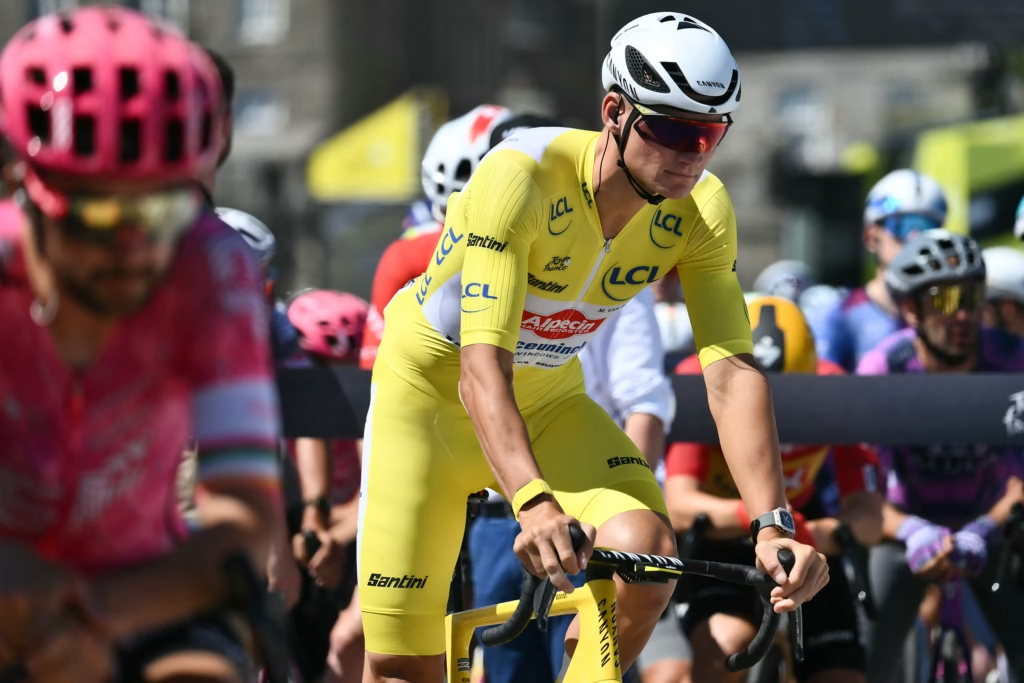
Mathieu van der Poel – Alpecin-Premier Tech
Mathieu van der Poel is the most obvious breakaway threat in the race if Alpecin-Premier Tech gives him freedom. The question is not whether he has the ability. It is how often the team allows him to use it.
With Jasper Philipsen in the same squad, Van der Poel will have sprint support responsibilities on flat stages. He may be used to position Philipsen, control the final kilometres and help deliver the lead-out. That reduces his freedom compared with a race where he is the sole leader.
But on the right terrain, he is still one of the most dangerous riders in the peloton. The best Van der Poel breakaway stage is not a high mountain stage. It is a hard, rolling, classics-style day where repeated climbs, positioning and raw power matter. If the sprinters are dropped and the GC teams hesitate, he can attack from far out or win from a small group.
The route days around the Massif Central and transitional stages should suit him best. He does not need a stage to be mountainous. He needs it to be hard enough that pure sprinters disappear and controlled enough that he can use his acceleration at the right moment.
Van der Poel’s danger is that everyone knows the move when he makes it. His advantage is that he can still make it work. For the sprint-team context around Alpecin-Premier Tech, see our Tour de France 2026 sprinters guide.
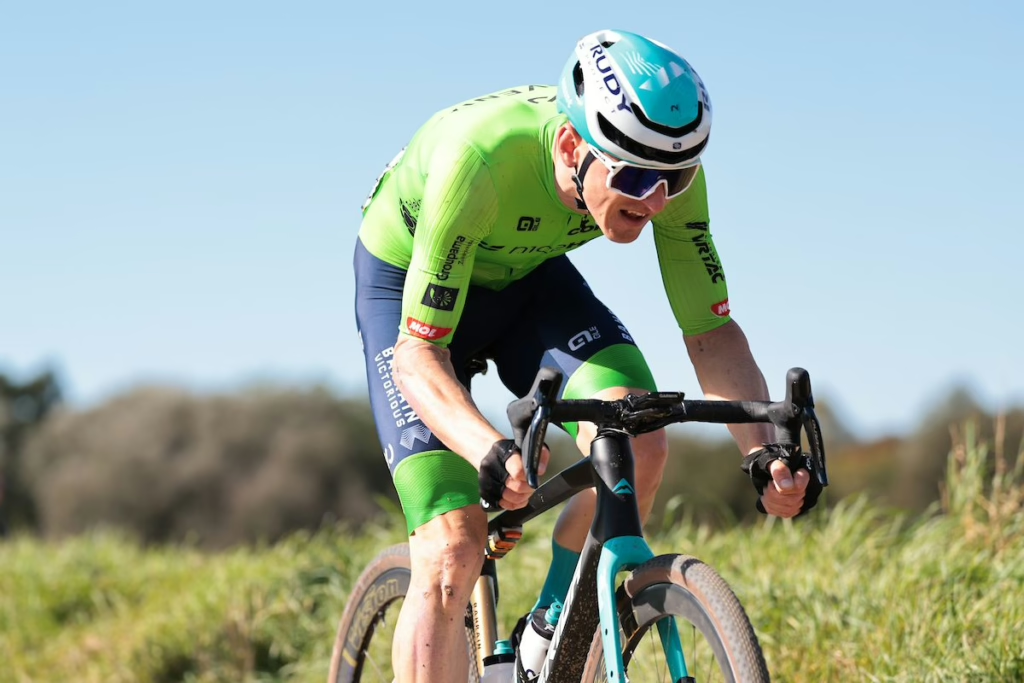 Photo Credit: Getty
Matej Mohorič – Bahrain Victorious
Matej Mohorič is one of the purest Tour breakaway specialists on the startlist. He has the engine, descending skill, tactical instinct and nerve to win stages that other riders misjudge.
The 2026 route has several days where Mohorič should be dangerous. He does not need a summit finish. He needs a stage with climbs, descents and indecision behind. If a breakaway forms on rolling terrain and then hits a technical finale, he becomes one of the hardest riders to beat.
Bahrain Victorious also have GC interests through Antonio Tiberi and Lenny Martinez, while Damiano Caruso gives the team another experienced mountain option. That could limit Mohorič if Bahrain need him for protection or positioning. But on days where the GC riders want to save energy, Mohorič should have space to hunt stages.
He is at his best when the race becomes hard to read. A downhill attack, a move just before a climb, a split after a descent, a long-range commitment when others hesitate – these are all Mohorič situations.
If there is one rider on this startlist who can win from a breakaway by understanding the road better than everyone else, it is Mohorič.
Ben Healy – EF Education-EasyPost
Ben Healy looks made for this kind of Tour route. He is aggressive, durable and willing to make the race hard from distance. EF Education-EasyPost have several stage-hunting options, but Healy is the rider who most naturally fits the long-range breakaway profile.
His best stages will be hilly and mountainous rather than flat. He can survive repeated climbs, attack before the final selection and keep riding when a breakaway starts to break apart. He is also awkward to race against because he does not need to wait for a sprint. He can win by attrition.
EF’s squad is one of the most interesting for breakaways. Kasper Asgreen gives them a rouleur engine, Richard Carapaz offers mountain-stage danger if he is not chasing GC, Georg Steinhauser can attack in the high mountains, and Michael Valgren brings experience on hard rolling stages. That gives the team several cards.
Healy’s challenge will be timing. If he attacks too early, stronger GC teams can use him as a marker. If he waits too long, faster riders may come back. His best chance is a stage where the breakaway is given a long leash and the final hour becomes selective.
If the Tour produces a wild stage through the Massif Central, Vosges or Jura, Healy will be one of the first names to watch. For the best route matches, see our Tour de France 2026 breakaway stages ranked.
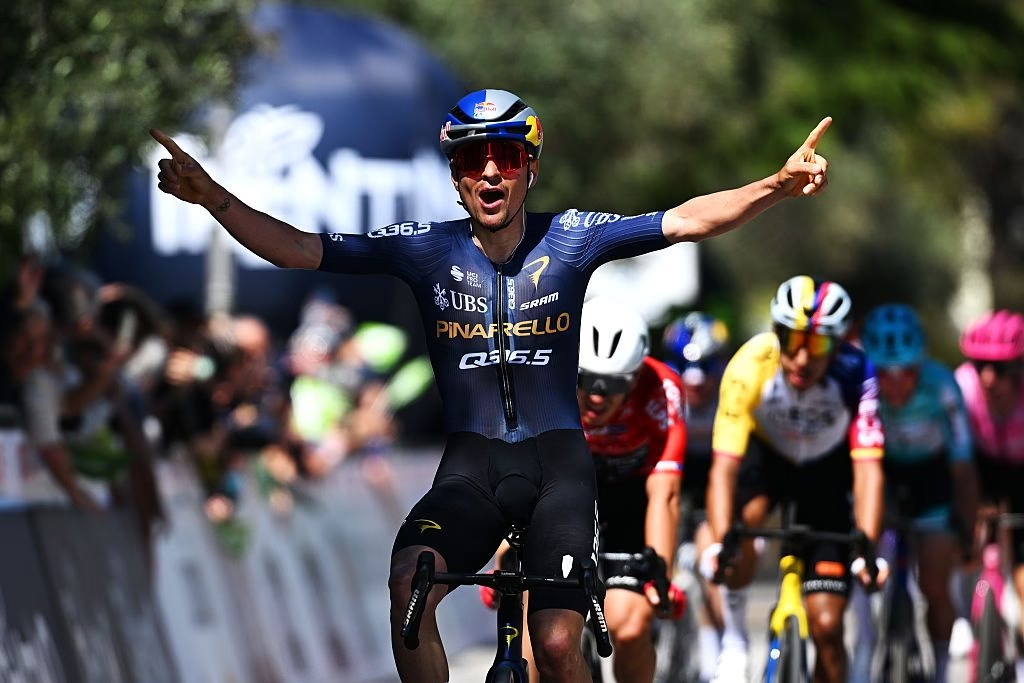 Photo Credit: Getty
Tom Pidcock – Pinarello-Q36.5 Pro Cycling Team
Tom Pidcock is one of the most exciting stage hunters on the list because his strengths are so varied. He can climb, descend, handle technical roads and finish from a reduced group. That makes him dangerous on stages that are too complicated for pure climbers and too hard for rouleurs.
His 2026 Tour role will decide everything. If Pinarello-Q36.5 Pro Cycling Team allow him full freedom, he can target mountain and hilly breakaways. If the team tries to keep him close on GC, his attacking freedom may be more limited. But Pidcock’s best Tour value still looks like stage hunting.
The ideal Pidcock day is a hard mountain stage where the breakaway gets clear and the final descent or technical section matters. He does not need to be the strongest climber in the Tour. He needs a route where bike handling and timing reduce the gap to the pure mountain riders.
That is why the Vosges, Jura and some Alpine approach stages should interest him. He can also be dangerous on days where a breakaway has to descend quickly before a final rise or rolling finish.
Pidcock is not a predictable breakaway rider. That is exactly why he is dangerous.
For a wider look at his role, see our Tom Pidcock at the Tour de France 2026 and best British riders to watch at the Tour de France 2026.
 Photo Credit: Getty
Julian Alaphilippe – Tudor Pro Cycling Team
Julian Alaphilippe remains one of the most natural Tour stage hunters in the peloton. He is no longer the rider who could bend almost every punchy stage around himself, but he still has the instinct, acceleration and race intelligence to turn the right day into a major opportunity.
Tudor Pro Cycling Team have a strong attacking squad around him. Marc Hirschi, Michael Storer, Matteo Trentin, Quinten Hermans and Yannis Voisard all give the team options, but Alaphilippe still carries the biggest Tour stage-hunting aura.
His best terrain is clear: short climbs, rolling stages, hard approaches and finishes where timing matters more than pure sustained climbing. If the breakaway arrives at the final 10km with a small group and an uphill kick remaining, Alaphilippe will be one of the riders everyone watches.
He may not be the safest pick for the high mountain stages, but he does not need them. His Tour is likely to be about picking one or two days where instinct and acceleration can still decide the stage.
If the race gives him the right platform, Alaphilippe can still turn a breakaway into a headline. For the wider French angle, see our best French riders to watch at the Tour de France 2026.
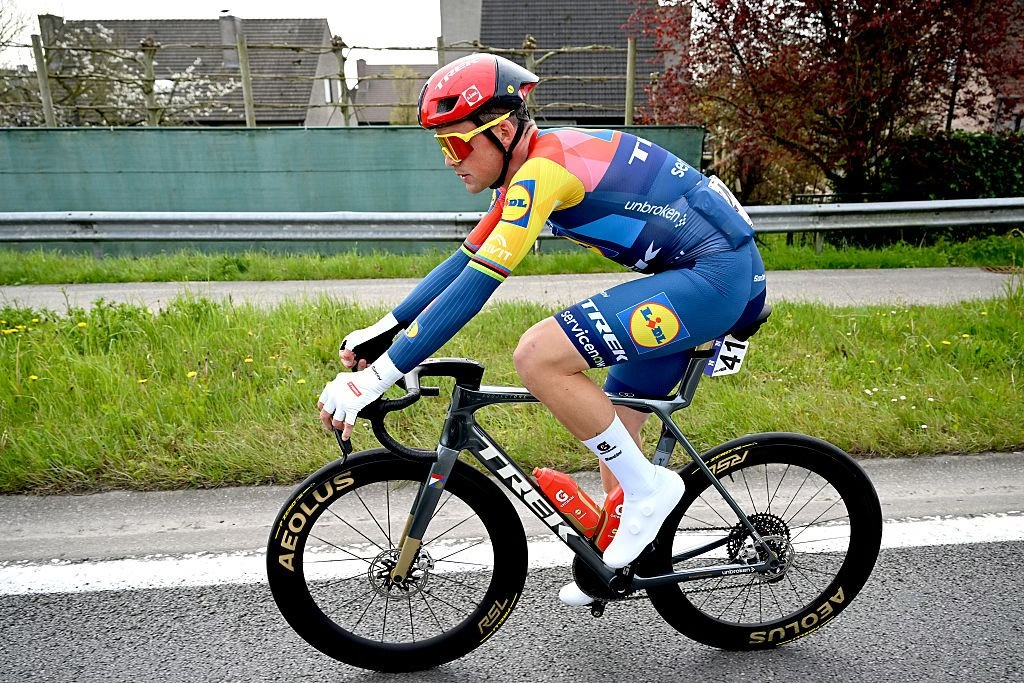 Photo Credit: Getty
Mads Pedersen – Lidl-Trek
Mads Pedersen is not a conventional breakaway climber, but he is one of the most dangerous riders in any hard rolling stage. He can survive terrain that removes pure sprinters, contribute huge power to a break and finish faster than almost anyone from a reduced group.
His role inside Lidl-Trek will be interesting. Juan Ayuso and Mattias Skjelmose give the team GC and climbing options, while Quinn Simmons, Toms Skujiņš, Mathias Vacek and Carlos Verona add stage-hunting depth. Pedersen may also have points classification ambitions depending on how the race unfolds.
That could make him both more and less dangerous. More dangerous because he has multiple reasons to enter moves and score points. Less dangerous because teams will be reluctant to let him go if he becomes a green jersey threat.
His best breakaway chances are not the biggest mountain stages. They are days where the race is hard enough to drop the pure sprinters but controlled enough that Pedersen can remain one of the strongest finishers in the front group.
A breakaway containing Pedersen has a simple problem: if he is still there at the finish, everyone else probably needs to attack him before the sprint.
For more on his Tour fit, see our Mads Pedersen at the Tour de France 2026 and Tour de France 2026 route: best days for sprinters.
Tim Wellens – UAE Team Emirates-XRG
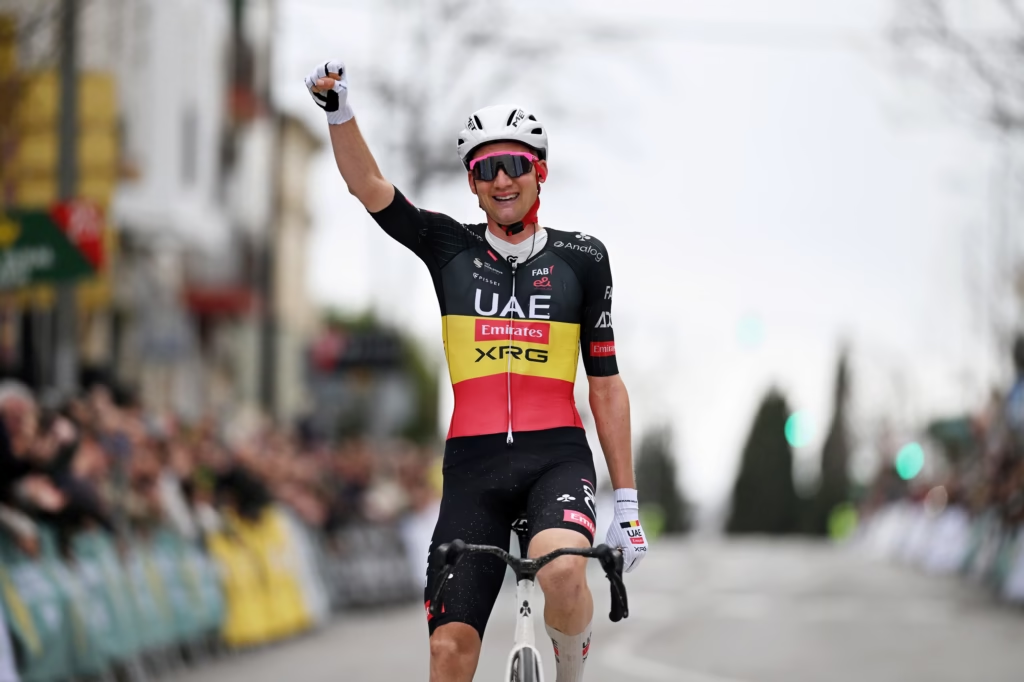
Tim Wellens is one of the best hilly breakaway riders on the startlist, but his freedom will depend heavily on UAE Team Emirates-XRG’s GC strategy. With Tadej Pogačar, Isaac del Toro, Adam Yates, Brandon McNulty and Felix Großschartner in the same team, UAE have major overall ambitions.
That means Wellens may often be used as support, protection or a tactical satellite rider rather than a free stage hunter. But that does not reduce his danger. In fact, it may make him harder to read.
Wellens can win from breakaways, but he can also be placed ahead of Pogačar as a tactical option. If he gets into a move on a hilly or mountain stage, rival teams have to decide whether it is a stage-hunting move or a UAE strategic move. That uncertainty is useful.
His best terrain is rolling and hilly, especially in poor weather or attritional races. He has the power to go long, the experience to choose the right move and the climbing ability to survive when the break splits.
The main question is opportunity. If UAE are controlling the Tour, Wellens may sacrifice personal chances. If the race opens, he is one of their most dangerous secondary cards. For Pogačar’s broader race context, see our Tadej Pogačar at the Tour de France 2026.
Toms Skujiņš – Lidl-Trek
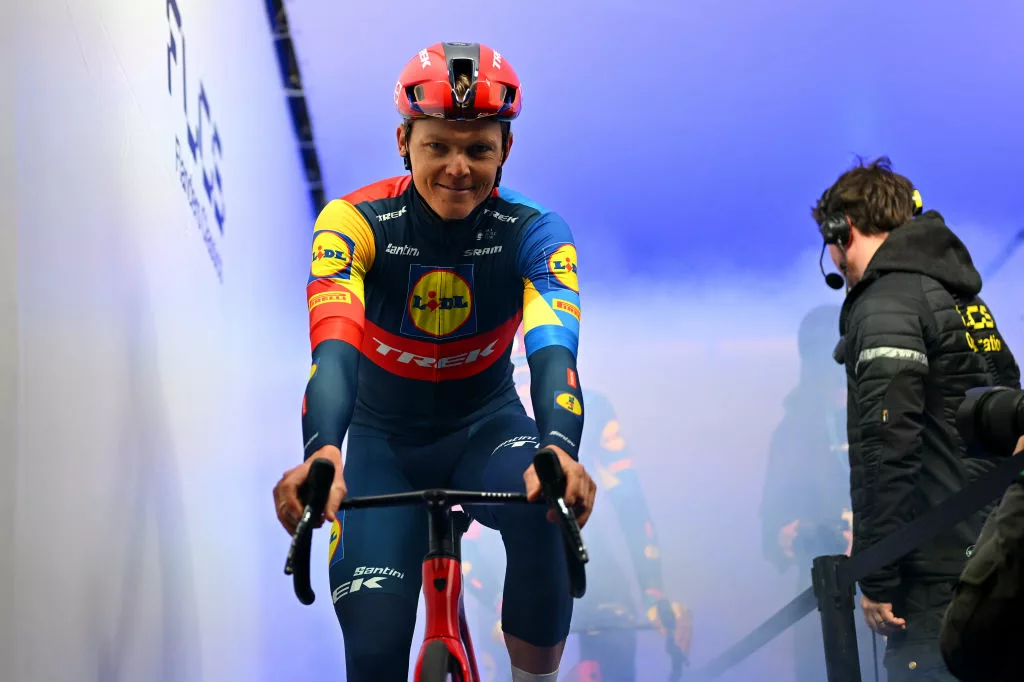
Toms Skujiņš is one of the best value breakaway riders in this field. He is strong, tactically sharp and well suited to the kind of rolling, awkward stages that often decide Tour stage-hunting days.
Skujiņš does not need the stage to be perfectly tailored to him. He can work in a break, survive hills, attack late or help shape the move for a teammate. That flexibility makes him extremely useful for Lidl-Trek, especially with Pedersen, Simmons, Vacek, Skjelmose and Ayuso also in the squad.
His best chances may come on days where the breakaway is strong but not full of pure climbers. If the stage contains repeated climbs but a flatter or rolling finish, Skujiņš can be a serious threat. He is also the kind of rider who can win because others underestimate how hard he is to bring back.
Lidl-Trek should be one of the most active teams in the race outside pure sprint and GC control. Skujiņš is central to that.
Magnus Cort – Uno-X Mobility
Magnus Cort is almost the perfect breakaway finisher. He can climb better than most sprinters, sprint better than most climbers and read a stage well enough to know when to gamble.
Uno-X Mobility have a strong group for stage hunting, including Jonas Abrahamsen, Søren Wærenskjold, Anthon Charmig, Torstein Træen and the Johannessen brothers. Cort is the rider who gives them a proven Tour-winning edge from a breakaway.
His best stages are rolling or hilly rather than high mountain slogs. He wants enough climbing to remove the pure sprinters but not so much that the pure climbers drop him. If the front group reaches the finish with five to 15 riders, Cort becomes a major problem.
He is also valuable because he can win in different ways. He can follow, sprint, attack late or use experience in a messy finale. That makes him hard to race against. If he is in the break, others cannot simply assume one tactic will work.
Cort may not be the strongest rider in every move, but he is one of the riders most likely to turn the right move into a stage win.
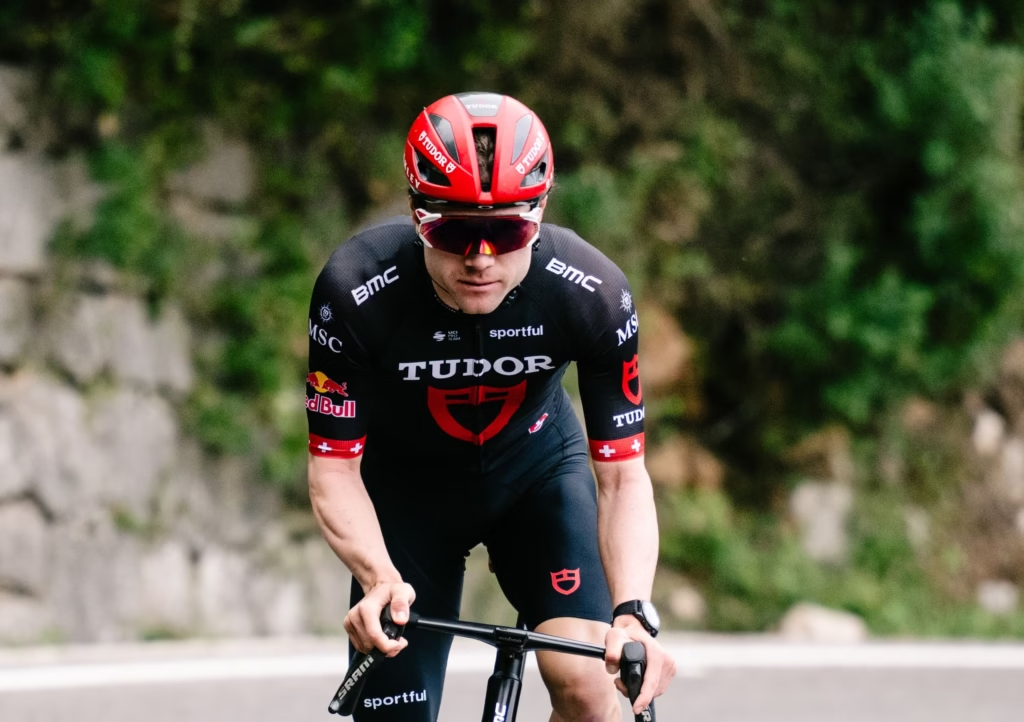 Photo Credit: Getty
Marc Hirschi – Tudor Pro Cycling Team
Marc Hirschi gives Tudor Pro Cycling Team another major stage-hunting card alongside Alaphilippe. On the right route, Hirschi may actually be the more efficient option.
His strengths are well suited to Tour breakaways: punchy climbing, good positioning, a strong finish from reduced groups and the ability to make hard stages count without needing the highest mountains. If the race hits a short steep climb near the finish, Hirschi becomes one of the most dangerous riders in the move.
The challenge is tactical overlap. Tudor have Alaphilippe, Storer, Trentin, Hermans, Voisard and Hirschi, so they will need to decide who gets freedom on which days. That is a good problem, but it means Hirschi may not be the designated card every time.
His best chances should come on hilly stages where the breakaway survives and the final selection is small. He is not a rider many rivals will want to tow to the finish, so he may need to attack before the sprint or use team numbers if Tudor get more than one rider into the move.
Hirschi is not the loudest breakaway name on the startlist, but he may be one of the most dangerous if the route gives him the right finale.
The strongest rouleur breakaway riders
Some breakaway days are not won by climbers. They are won by engines. The Tour always needs riders who can hold a gap for hours, keep the speed high and still produce a late attack after everyone else has been softened.
| Rider | Team | Best use |
|---|---|---|
| Kasper Asgreen | EF Education-EasyPost | Long flat or rolling breakaways |
| Victor Campenaerts | Team Visma | Lease a Bike | Long-range power moves |
| Filippo Ganna | Netcompany INEOS | Time-trial-style attacks |
| Nils Politt | UAE Team Emirates-XRG | Flat and rolling breakaways |
| Quinn Simmons | Lidl-Trek | Hard hilly raids |
| Fred Wright | Pinarello-Q36.5 Pro Cycling Team | Rolling attacks and late moves |
| Florian Vermeersch | UAE Team Emirates-XRG | Cobbled/classics-style terrain |
| Luke Durbridge | Team Jayco-AlUla | Control-breaking moves |
| Silvan Dillier | Alpecin-Premier Tech | Workhorse breakaways |
| Mattia Cattaneo | Red Bull-BORA-hansgrohe | Rolling terrain and tactical moves |
Asgreen is the clearest pure rouleur-stage threat. If a breakaway needs power rather than climbing finesse, he is one of the first riders to mark. Campenaerts has a similar profile, although Visma’s GC priorities around Jonas Vingegaard may limit his freedom. Ganna is always dangerous if allowed up the road, but Netcompany INEOS may need him for team structure around Carlos Rodríguez and Kévin Vauquelin.
Wright is one of the best British breakaway options on the list. He can handle hard rolling terrain, race aggressively and keep working deep into a stage. Simmons is more explosive and may be better on hillier days, while Politt and Vermeersch could be valuable either in UAE strategy or from their own moves if the race situation allows.
These riders are especially dangerous on days when the peloton hesitates. If the break has too many pure climbers, they can be exposed on flatter sections. If it has a rider like Asgreen, Campenaerts, Ganna or Politt, the group can stay away for much longer than the peloton expects.
For more on the stage-type contrast, see our Tour de France 2026 route: best days for breakaways.
 Photo Credit: Getty
The best mountain breakaway riders
The mountain breakaways will require a different profile. These stages are not just about getting into the move. Riders need to survive repeated climbs and still have something left when the breakaway starts attacking itself.
| Rider | Team | Best terrain |
|---|---|---|
| Richard Carapaz | EF Education-EasyPost | High mountain breakaways |
| Georg Steinhauser | EF Education-EasyPost | Mountain stage attacks |
| Warren Barguil | Team Picnic PostNL | Alpine and Vosges breakaways |
| Michael Storer | Tudor Pro Cycling Team | Repeated climbing days |
| Aurélien Paret-Peintre | Decathlon CMA CGM Team | Mountain breakaways |
| Valentin Paret-Peintre | Soudal Quick-Step | Mountain breakaways |
| Krists Neilands | NSN Cycling Team | Hilly and mountain raids |
| Georg Zimmermann | Lotto-Intermarché | Rolling mountain stages |
| Harold Tejada | XDS Astana Team | Climbing breakaways |
| Jordan Jegat | Team TotalEnergies | French mountain attacks |
Carapaz is the most proven high mountain breakaway name here, but his freedom depends on EF’s wider race plan. If he is not tied to GC, he can be a major threat in the Pyrenees, Vosges, Jura or Alps. Steinhauser gives EF another strong option on climbing days.
The Paret-Peintre brothers are both strong fits for mountain breakaways. Aurélien at Decathlon CMA CGM Team may have to balance team duties around Paul Seixas and Matthew Riccitello, while Valentin at Soudal Quick-Step could be useful on days where the team is not riding for Tim Merlier. Barguil, Storer and Neilands all have the profile to make repeated climbs count.
Jegat is an interesting French option for TotalEnergies. He may not be the biggest name, but this is exactly the type of race where French ProTeam riders can animate mountain stages if GC teams let the break go.
For more on the mountain side of the route, see our Tour de France 2026 mountain stages ranked by difficulty, Tour de France 2026 climbers guide and Tour de France 2026 summit finishes guide.
 Photo Credit: Getty
The best hilly stage hunters
The hilly stages may be the richest part of the race for breakaway specialists. They are hard enough to tempt attackers but not always hard enough for GC teams to control from start to finish.
| Rider | Team | Why they fit |
|---|---|---|
| Alex Aranburu | Cofidis | Fast finish after hard terrain |
| Romain Grégoire | Groupama-FDJ United | Punchy climbs and reduced groups |
| Mauro Schmid | Team Jayco-AlUla | Aggressive all-rounder |
| Michael Matthews | Team Jayco-AlUla | Durable fast finisher |
| Tiesj Benoot | Decathlon CMA CGM Team | Hard rolling days |
| Jenthe Biermans | Cofidis | Reduced bunch and breakaway finishes |
| Anthony Turgis | Team TotalEnergies | Classics-style breakaways |
| Quinten Hermans | Pinarello-Q36.5 Pro Cycling Team | Punchy terrain |
| Georg Zimmermann | Lotto-Intermarché | Hilly attritional stages |
| Roger Adrià | Movistar Team | Opportunistic hilly attacks |
Aranburu is a strong candidate on awkward finishes where the pure sprinters are gone but the climbers do not have a decisive advantage. Grégoire is one of the most interesting French riders in the field, especially on punchy terrain where he can use acceleration rather than long climbing endurance.
Matthews and Schmid give Jayco-AlUla strong options. Matthews may target reduced sprints, while Schmid can be used more aggressively. Turgis is another rider to watch on rolling days, especially if TotalEnergies are looking for visibility and stage chances.
These are the riders who make breakaway stages hard to control. They are not always pure climbers or pure sprinters. They live in the middle, where many Tour stages are actually decided.
For a closer look at the French options in this section, see our best French riders to watch at the Tour de France 2026.
ProTeam riders who could animate the race
The invited and lower-budget squads will not have the same obligation to control the race as the biggest GC and sprint teams. That often gives them more freedom to attack.
Caja Rural-Seguros RGA have several riders who could get up the road, including Alex Molenaar, Stefano Oldani, Sebastian Berwick and José Félix Parra. They will need to be aggressive because waiting for controlled stages is unlikely to suit them. Oldani gives them experience and finishing speed from a break, while Berwick and Parra are better suited to climbing days.
Team TotalEnergies should be visible through Anthony Turgis, Jordan Jegat, Mathis Le Berre and Mattéo Vercher. Turgis is the headline breakaway name, but Jegat may be better suited to harder mountain terrain.
Tudor Pro Cycling Team are closer to a top-level stage-hunting machine, with Alaphilippe, Hirschi, Storer, Trentin, Hermans and Voisard all capable of shaping breaks. Uno-X Mobility also have depth through Cort, Abrahamsen, Wærenskjold, Træen and the Johannessen brothers.
These teams will not want the race to become a closed battle between UAE, Visma, Red Bull-BORA-hansgrohe and the sprint squads. Their best chance is to make the race untidy.
For the broader squad picture, see our Tour de France 2026 team-by-team guide and full start list for Tour de France 2026.
Team-by-team breakaway threats
| Team | Main breakaway threats |
|---|---|
| Alpecin-Premier Tech | Mathieu van der Poel, Silvan Dillier, Edward Planckaert, Emiel Verstrynge |
| Bahrain Victorious | Matej Mohorič, Damiano Caruso, Robert Stannard, Lenny Martinez |
| Caja Rural-Seguros RGA | Alex Molenaar, Stefano Oldani, Sebastian Berwick, José Félix Parra |
| Cofidis | Alex Aranburu, Ion Izagirre, Benjamin Thomas, Jenthe Biermans |
| Decathlon CMA CGM Team | Tiesj Benoot, Aurélien Paret-Peintre, Nicolas Prodhomme, Matthew Riccitello |
| EF Education-EasyPost | Ben Healy, Kasper Asgreen, Richard Carapaz, Georg Steinhauser |
| Groupama-FDJ United | Romain Grégoire, Quentin Pacher, Clément Berthet, Ewen Costiou |
| Lidl-Trek | Mads Pedersen, Toms Skujiņš, Quinn Simmons, Mathias Vacek |
| Lotto-Intermarché | Georg Zimmermann, Jenno Berckmoes, Lennert Van Eetvelt, Baptiste Veistroffer |
| Movistar Team | Roger Adrià, Pablo Castrillo |
| Netcompany INEOS | Filippo Ganna, Michal Kwiatkowski, Dorian Godon, Kévin Vauquelin |
| NSN Cycling Team | Krists Neilands, Matis Louvel, Marco Frigo, Jake Stewart |
| Pinarello-Q36.5 Pro Cycling Team | Tom Pidcock, Fred Wright, Quinten Hermans, Xandro Meurisse |
| Red Bull-BORA-hansgrohe | Jan Tratnik, Maxim Van Gils, Mattia Cattaneo, Nico Denz |
| Soudal Quick-Step | Jasper Stuyven, Valentin Paret-Peintre, Ilan Van Wilder, Mikel Landa |
| Team Jayco-AlUla | Michael Matthews, Mauro Schmid, Luke Plapp, Luke Durbridge |
| Team Picnic PostNL | Warren Barguil, Frank van den Broek, Julius van den Berg, John Degenkolb |
| Team TotalEnergies | Anthony Turgis, Jordan Jegat, Mathis Le Berre, Mattéo Vercher |
| Team Visma | Lease a Bike | Victor Campenaerts, Matteo Jorgenson, Bruno Armirail, Per Strand Hagenes |
| Tudor Pro Cycling Team | Julian Alaphilippe, Marc Hirschi, Michael Storer, Matteo Trentin |
| UAE Team Emirates-XRG | Tim Wellens, Nils Politt, Florian Vermeersch, Brandon McNulty |
| Uno-X Mobility | Magnus Cort, Jonas Abrahamsen, Søren Wærenskjold, Torstein Træen |
| XDS Astana Team | Harold Tejada, Sergio Higuita, Simone Velasco, Davide Ballerini |
The teams with the strongest breakaway depth are EF Education-EasyPost, Lidl-Trek, Tudor Pro Cycling Team, Uno-X Mobility and UAE Team Emirates-XRG. EF have the most obvious aggressive balance. Lidl-Trek have a mix of engines and finishers. Tudor have punchy stage hunters. Uno-X have multiple riders who can attack in different terrain. UAE have the strongest support names, though their freedom depends on Pogačar’s race.
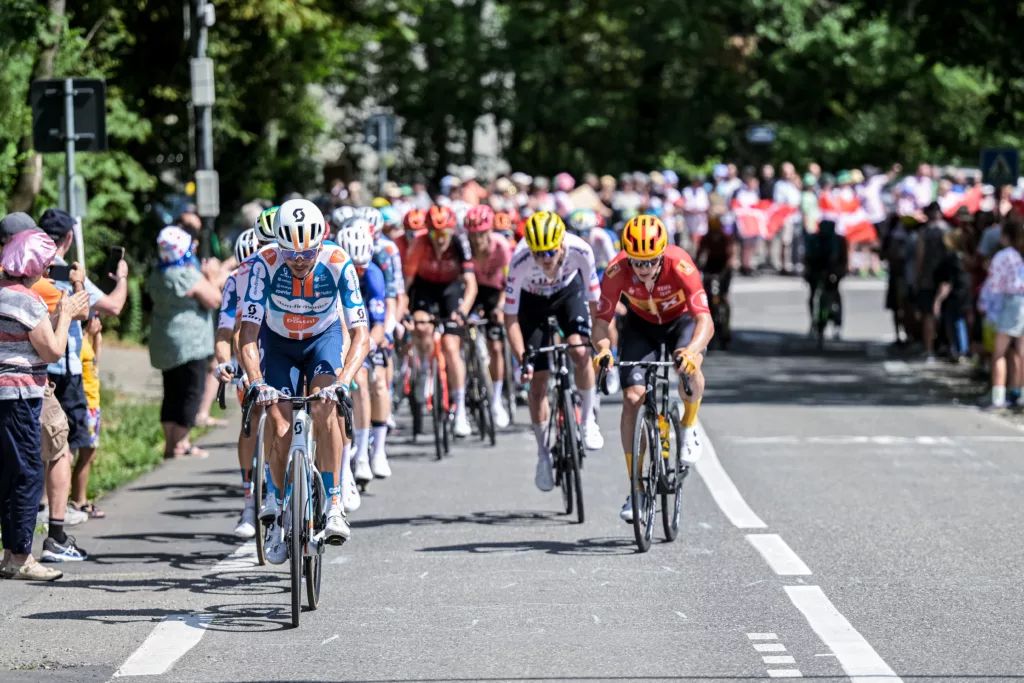 Photo Credit: A.S.O./Charly Lopez
Riders whose team role could limit their freedom
Not every good breakaway rider will be allowed to chase stages whenever they want. Team roles matter.
Van der Poel may spend several stages working for Jasper Philipsen. Wellens, Politt, Vermeersch and McNulty may be used around Pogačar. Campenaerts, Jorgenson and Armirail may be tied to Vingegaard. Ganna, Kwiatkowski and Godon may be needed around Carlos Rodríguez and Kévin Vauquelin. Stuyven may have responsibilities around Tim Merlier on sprint days.
That does not mean these riders cannot win from breakaways. It means their opportunities will be selective. They may only get freedom when the team’s main leader is safe, when the stage does not suit the primary objective, or when a tactical move can serve both personal and team goals.
The most dangerous breakaway riders are often those with freedom and form. A slightly less famous rider with a free role can be more threatening than a star rider tied to a leader.
That is why riders like Healy, Mohorič, Cort, Skujiņš, Turgis, Neilands, Barguil and Zimmermann stand out. Their teams are more likely to need them to attack rather than control.
For more on team role logic, see our how Tour de France teams work, what is a domestique at the Tour de France? and Tour de France 2026 domestiques who could decide the race.
Best riders for the Massif Central stages
The Massif Central should be one of the best areas for hilly breakaways. These stages are often too difficult for pure sprinters but not always decisive enough for GC teams to ride all day. That is the ideal space for stage hunters.
The riders who stand out here are Van der Poel, Mohorič, Healy, Pedersen, Skujiņš, Alaphilippe, Hirschi, Wellens, Cort, Matthews, Aranburu, Schmid, Turgis and Grégoire.
A stage like Le Lioran can reward riders who climb well but also have punch at the end. It is not only about watts per kilogram. Positioning, descending and knowing when to attack can matter just as much.
The Massif Central could also be where teams without GC ambitions become most aggressive. If sprint teams cannot control and GC teams want to save energy, the breakaway can become the main race.
For more detail, see our Tour de France 2026 Massif Central guide and where the Tour de France 2026 can be won before the Alps.
Best riders for the Vosges and Jura stages
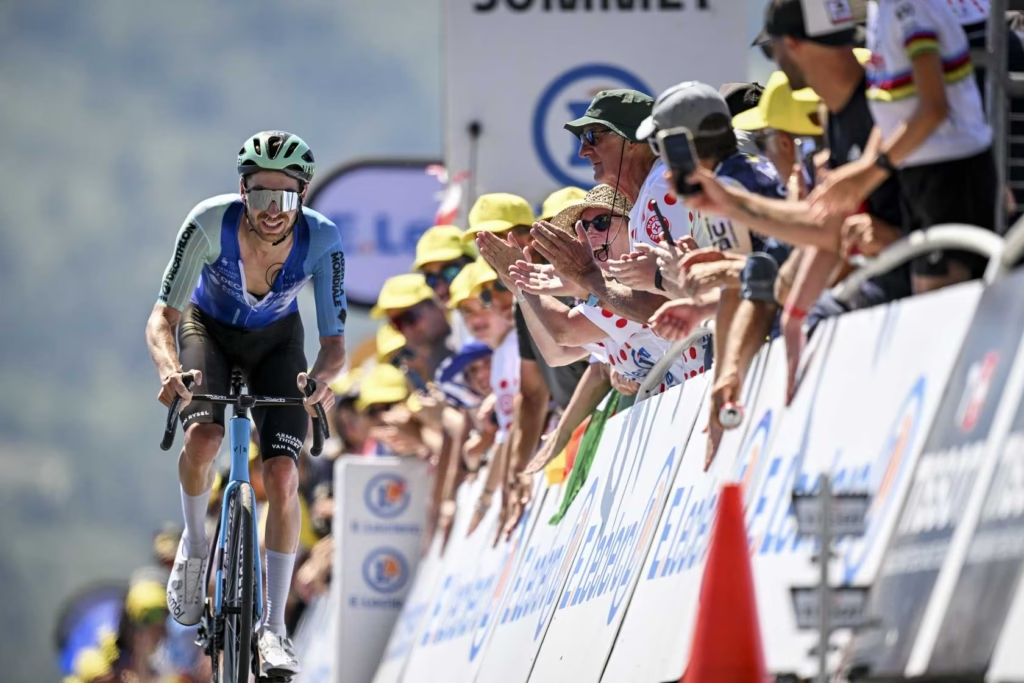
The Vosges and Jura block should be one of the strongest parts of the race for breakaway specialists. Stage 14 to Le Markstein and Stage 15 to Plateau de Solaison are hard enough to attract climbers and polka-dot contenders, but they also come before the final Alpine block, when GC teams may have to choose how much energy to spend.
Le Markstein should suit riders like Healy, Mohorič, Pidcock, Storer, Neilands, Barguil, Paret-Peintre, Wellens, Skujiņš and Carapaz. If the breakaway survives, it will need riders who can handle repeated climbs rather than one clean summit effort.
Plateau de Solaison is more demanding and may pull the GC contenders into the race. That makes it harder for the breakaway, but not impossible. A strong mountain move with riders already far down on GC could still get enough freedom if the yellow jersey teams wait too long.
The Jura and Vosges are where the line between stage hunting and GC racing becomes blurred. A breakaway may win the stage, but the GC contenders could still attack behind.
For more, see our Tour de France 2026 Vosges and Jura guide and history of Le Markstein at the Tour de France.
Best riders for the Alpine breakaways
The final Alpine block is harder for breakaway specialists because the GC battle should be intense. Orcières-Merlette, Alpe d’Huez and the queen stage are likely to keep the yellow jersey contenders involved. That reduces the chance of a breakaway being given huge freedom.
Still, the right riders can win in the Alps if they are far enough down on GC and strong enough to survive the early climbs. The names to watch are Carapaz, Pidcock, Storer, Barguil, Steinhauser, Paret-Peintre, Neilands, Tejada, Jegat, Jorgenson, Kuss and Træen, depending on team freedom.
A rider like Pidcock could be dangerous if the stage has a technical descent or a breakaway is allowed to fight for the win before the GC group arrives. Carapaz and Storer are more obvious mountain-stage options. Barguil and Neilands fit the aggressive climbing-break profile.
The problem is that the Alps may be too important for the GC teams to let the day go. Stage 20, with the Galibier, Sarenne and Alpe d’Huez, looks especially likely to be controlled by the yellow jersey contenders.
For the final mountain block, see our Tour de France 2026 Alps guide, Tour de France 2026 queen stage guide and A history of Alpe d’Huez at the Tour de France.
Best French breakaway hopes
French riders should have plenty of chances to animate the 2026 Tour. Julian Alaphilippe is still the headline stage-hunting name, but he is not the only one.
Romain Grégoire is one of the most interesting options on punchy stages. He has the acceleration and race style to make a reduced group finish dangerous. Quentin Pacher and Clément Berthet also give Groupama-FDJ United breakaway depth, especially on rolling and climbing days.
Kévin Vauquelin may be a GC or high overall option depending on Netcompany INEOS strategy, but if given stage freedom, he would be dangerous on hilly terrain. Dorian Godon can also be effective in reduced finishes and hard rolling stages.
TotalEnergies should be active through Anthony Turgis, Jordan Jegat, Mathis Le Berre and Mattéo Vercher. Turgis has the clearest classics-style stage profile, while Jegat looks more suited to climbing days.
Aurélien Paret-Peintre and Valentin Paret-Peintre are both strong mountain breakaway options, although their team roles differ. Aurélien may be tied to Decathlon CMA CGM’s wider French GC story around Paul Seixas, while Valentin could have more freedom at Soudal Quick-Step when the team is not focused on Merlier.
For more, see our best French riders to watch at the Tour de France 2026 and Paul Seixas and the next French Tour de France generation.
Best British breakaway hopes
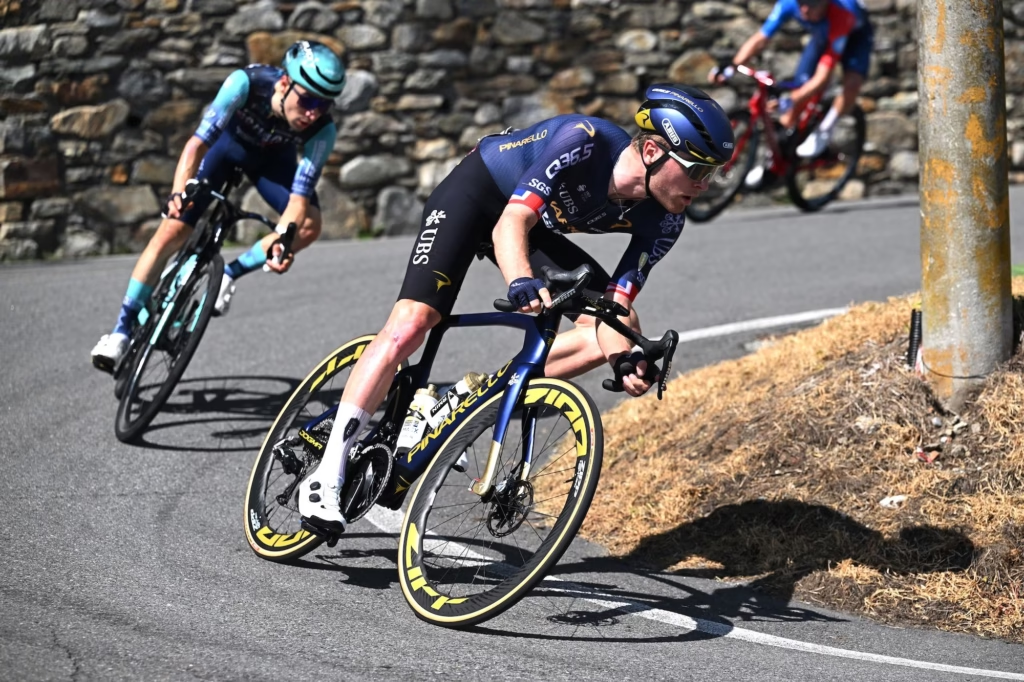
Tom Pidcock is the standout British breakaway option. If Pinarello-Q36.5 Pro Cycling Team use him as a stage hunter rather than a GC outsider, he has the skill set to win on several types of terrain.
Fred Wright is another strong British name. He is well suited to rolling breakaway stages, especially those where a front group needs riders willing to work all day. He may not be the fastest finisher in every move, but he is durable, aggressive and tactically useful.
Jake Stewart could be dangerous in reduced finishes if NSN Cycling Team give him freedom on rolling stages. Lewis Askey also has the kind of profile that can put him into early moves, although the route will decide how many stages suit him.
The broader British angle depends on team roles. Pidcock has the highest winning ceiling. Wright may have the clearest breakaway engine. Stewart is more of a reduced-finish option. All three can make the race visible if they get the right day.
For more, see our best British riders to watch at the Tour de France 2026.
Riders who could chase the polka-dot jersey from breakaways
The polka-dot jersey can still pull riders into breakaways, especially on stages with multiple categorised climbs. The 2026 route has enough mountain days for the jersey to become a serious tactical battle.
The best breakaway-style polka-dot candidates include Healy, Carapaz, Barguil, Storer, Neilands, Paret-Peintre, Steinhauser, Tejada, Jegat, Træen and maybe Abrahamsen if he targets mountain points from early moves.
The challenge is GC interference. On summit finishes, the main contenders can take the biggest points by default. That makes the early and mid-stage climbs important for breakaway riders. A rider chasing polka dots may need to enter moves repeatedly, score early, then survive as long as possible.
Le Markstein, Plateau de Solaison and the earlier Pyrenean stages could all shape the classification. The Alps may then decide whether a breakaway rider can hold off the GC favourites.
For the jersey context, see our Tour de France 2026 jerseys explained, Tour de France 2026 climbers guide and best climbers at the Tour de France 2026.
Dark horse breakaway names
The Tour always produces surprise stage hunters. Not every breakaway winner comes from the obvious list, especially when teams with less control freedom get into the right move.
Ramses Debruyne and Emiel Verstrynge could be useful for Alpecin-Premier Tech on hard days if the team is not riding for Philipsen or Van der Poel. Robert Stannard gives Bahrain Victorious another hilly option. Benjamin Thomas can be dangerous for Cofidis in rolling or tactical moves.
Afonso Clément Braz and Ewen Costiou are interesting Groupama-FDJ United names if the team wants energy in the break. Jenno Berckmoes and Baptiste Veistroffer could be useful Lotto-Intermarché attackers. Marco Frigo and Matis Louvel can give NSN Cycling Team presence in the right move.
Frank van den Broek is one of the more interesting Team Picnic PostNL options for hard breakaway days, especially if he gets freedom on rolling or hilly terrain. Simone Velasco and Davide Ballerini give XDS Astana Team options in breakaways that are not too mountainous.
These riders may not be favourites, but the Tour often rewards exactly this kind of profile: strong enough to make the move, low enough on GC to be allowed freedom, and dangerous if the bigger teams hesitate.
-
 Photo Credit: Getty

Breakaway specialists most likely to win a stage
If picking the most likely breakaway stage winners from the startlist, the strongest shortlist would be:
| Rider | Why they stand out |
|---|---|
| Mathieu van der Poel | Best one-day engine if given freedom |
| Matej Mohorič | Perfect for long-range and technical stages |
| Ben Healy | Aggressive, durable and suited to hilly routes |
| Tom Pidcock | Technical skill plus climbing ability |
| Julian Alaphilippe | Punchy finishes and Tour instinct |
| Mads Pedersen | Fastest finisher from hard reduced groups |
| Magnus Cort | Ideal breakaway finisher |
| Tim Wellens | Proven hilly-stage attacker |
| Marc Hirschi | Dangerous in punchy reduced groups |
| Richard Carapaz | Best high mountain breakaway option |
The next group is just as interesting: Skujiņš, Simmons, Asgreen, Campenaerts, Neilands, Barguil, Storer, Paret-Peintre, Turgis, Wright, Matthews, Schmid, Aranburu, Grégoire and Jorgenson.
The final answer may come down to freedom. A rider like Van der Poel may be the strongest breakaway force in the race, but if he spends key days working for Philipsen, he will have fewer chances. A rider like Healy or Mohorič may have more room to make the Tour messy.
Breakaway specialists verdict
The Tour de France 2026 startlist is packed with stage hunters, but the route should split them into different groups.
The hilly classics-style days suit Van der Poel, Mohorič, Healy, Pedersen, Skujiņš, Alaphilippe, Hirschi, Wellens, Cort and Matthews. The mountain breakaways suit Carapaz, Pidcock, Storer, Barguil, Paret-Peintre, Steinhauser, Neilands and Jegat. The long rolling moves suit Asgreen, Campenaerts, Ganna, Wright, Politt, Simmons and Durbridge.
The biggest question is not who can attack. It is who will be allowed to attack. UAE, Visma, Red Bull-BORA-hansgrohe and Netcompany INEOS may use some of their best breakaway riders as support for GC leaders. Teams like EF Education-EasyPost, Tudor Pro Cycling Team, Uno-X Mobility, TotalEnergies and Caja Rural-Seguros RGA may have more reason to chase the race from the front.
If the 2026 Tour opens up the way the route suggests, the breakaway battle could be one of the strongest subplots of the race. The GC riders will decide the yellow jersey, but the stage hunters may decide much of the race’s personality.
For more Tour de France 2026 coverage, visit our Tour de France hub, Tour de France 2026 stage hunters to watch and how to watch Tour de France 2026 in the UK.

