

The Tour de France 2026 may be built towards its spectacular Alpine finale, but the yellow jersey can be shaped long before the race reaches Orcières-Merlette, Alpe d’Huez and the Col de Sarenne. The final week has the biggest visual landmarks, yet the first two weeks contain enough traps, summit finishes, time-trial pressure and medium-mountain stages to leave several contenders already chasing the race.
That is the defining tension of the 2026 route. The Alps may deliver the final verdict, but they may not provide the first real separation. Barcelona gives the race a team time-trial on the opening day. The Pyrenees arrive early, first through Les Angles and then more seriously through Gavarnie-Gèdre. The Massif Central comes after the first rest day. The Vosges and Jura then stack two heavy mountain days together before the race pauses in Haute-Savoie. By the time the riders reach the final Alpine block, the Tour should already have a clear hierarchy.
The key question is not whether the Alps matter. They clearly do. The question is how much damage can be done before then. A rider who waits until Alpe d’Huez to rescue the Tour may already be too far behind.
For the complete stage-by-stage structure, see our Tour de France 2026 full route guide. For the broader tactical breakdown, our Tour de France 2026 route analysis looks at the full race arc, while the official Tour de France 2026 route confirms the balance of 7 flat stages, 4 hilly stages, 8 mountain stages, 5 summit finishes, 1 team time-trial and 1 individual time-trial.
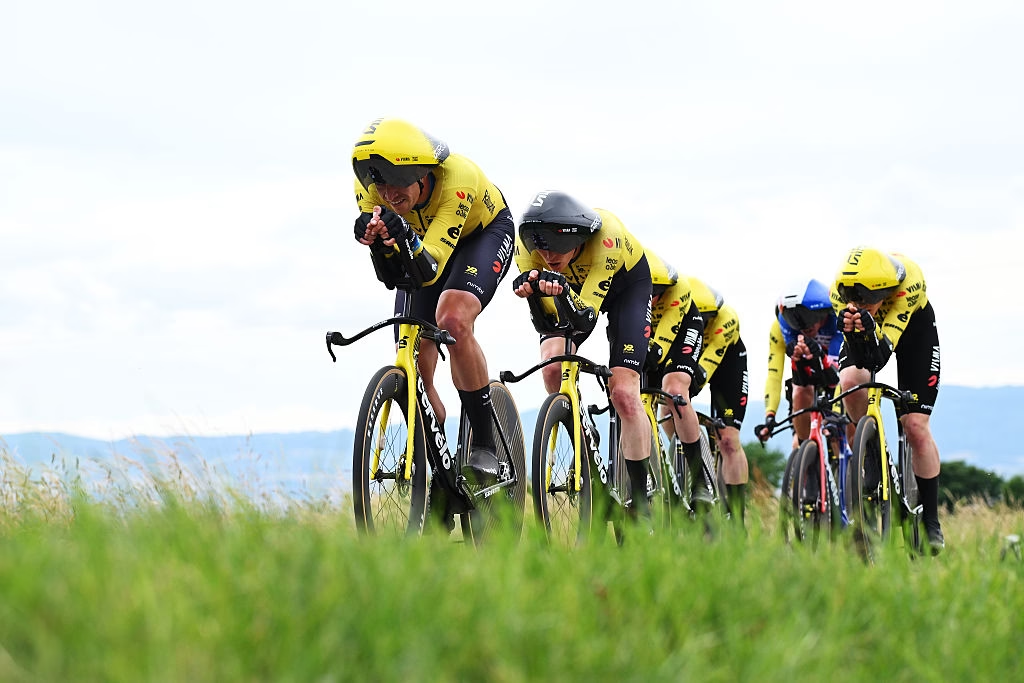
The Barcelona team time-trial can create the first hierarchy
The first place the Tour de France 2026 can be won before the Alps is Barcelona. Stage 1 is a 19.6km team time-trial around the Catalan capital, finishing on Montjuïc, and it is much more than a ceremonial opener.
A team time-trial at the start of a Grand Tour immediately rewards collective strength. It also punishes weak team depth before any rider has had a chance to settle into the race. The distance is not enormous, but the timing is brutal. There is no warm-up stage, no quiet day for nerves to disappear, and no chance for weaker time-trial squads to hide inside the peloton.
The Montjuïc finish adds another layer. It is not a flat power course where the biggest rouleurs can simply line up, hold speed and minimise technical risk. The climb to the Olympic Stadium means teams will need to pace the effort carefully, keep enough riders together and avoid losing structure just as the road begins to bite. The official stage 1 details list the opener as a team time-trial with 200m of elevation gain, finishing on the Côte du Stade Olympique de Montjuïc.
For GC riders, this is the first danger point. A strong team can put a leader into the race with a buffer before the road stages begin. A weaker team can leave its leader already chasing. That does not decide the Tour by itself, but it changes the behaviour of the race. A rider who loses time on stage 1 may have to race earlier in the Pyrenees. A rider who gains time can choose when to respond rather than when to gamble.
The opening team time-trial also gives a clue about which squads can control the rest of the race. The Tour is not won by seven riders at once, but it is often lost when a leader is isolated too early. Barcelona will show which teams arrive with the discipline, power and technical confidence needed for three weeks.
For more detail on how the format works, see our Tour de France 2026 team time-trial explained guide. The opening weekend is also covered in our Tour de France 2026 Grand Départ guide.
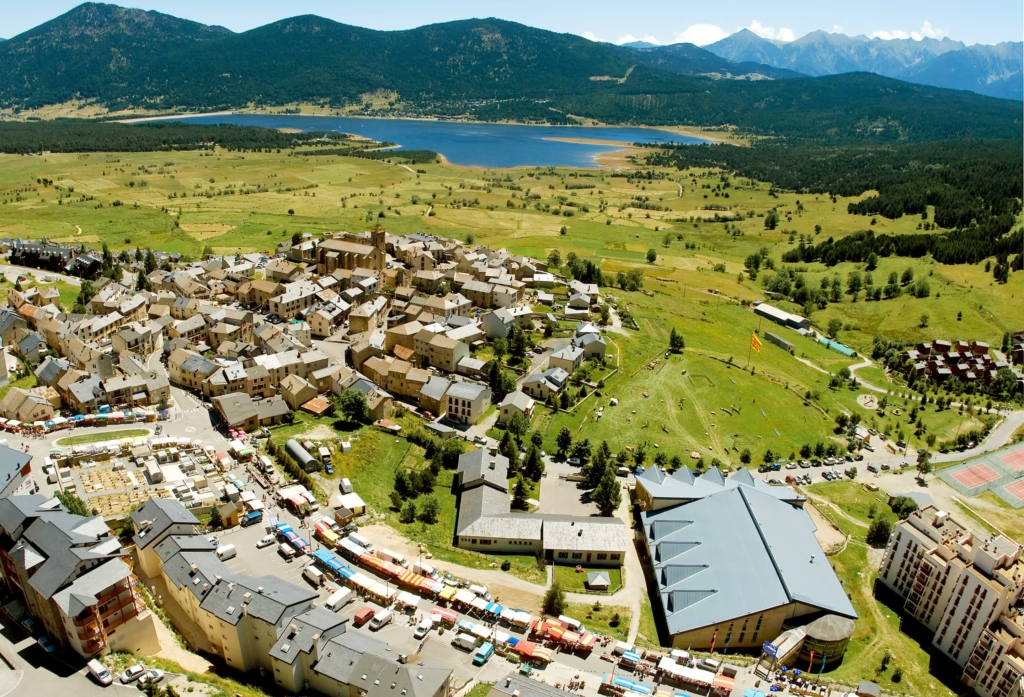
Montjuïc and Les Angles make the first week dangerous
The first road stages can also shape the race before the Alps. Stage 2 returns to Barcelona with hilly terrain and the Montjuïc circuit in play again, while stage 3 takes the race from Granollers to Les Angles over 195.9km and 3,850m of climbing.
That stage 3 profile is a major warning. It arrives on Monday, 6th July, before the race has even left the opening Spanish block, and it gives the GC riders their first mountain-stage environment. Les Angles is not Alpe d’Huez, but it still asks a serious question: who can cope when the Tour becomes hard before the race has properly settled?
Early mountain stages are often more revealing than they look. Some riders are still riding into form. Some teams are still finding their race rhythm. Some contenders arrive with excellent preparation but not yet the race sharpness needed to handle repeated climbs, heat, technical positioning and the pressure of the first GC selection.
Stage 3 is also dangerous because it comes after the team time-trial and the hilly return to Barcelona. There is no gentle rhythm into the race. Riders who start the Tour slightly undercooked may already be exposed. Those who start well could put rivals under pressure before the first rest-day recalibration.
This is not necessarily where the Tour is fully won, but it is absolutely where the list of possible winners can shrink. If a GC rider loses a minute here, the race becomes reactive. If a team shows weakness here, other squads will remember it.
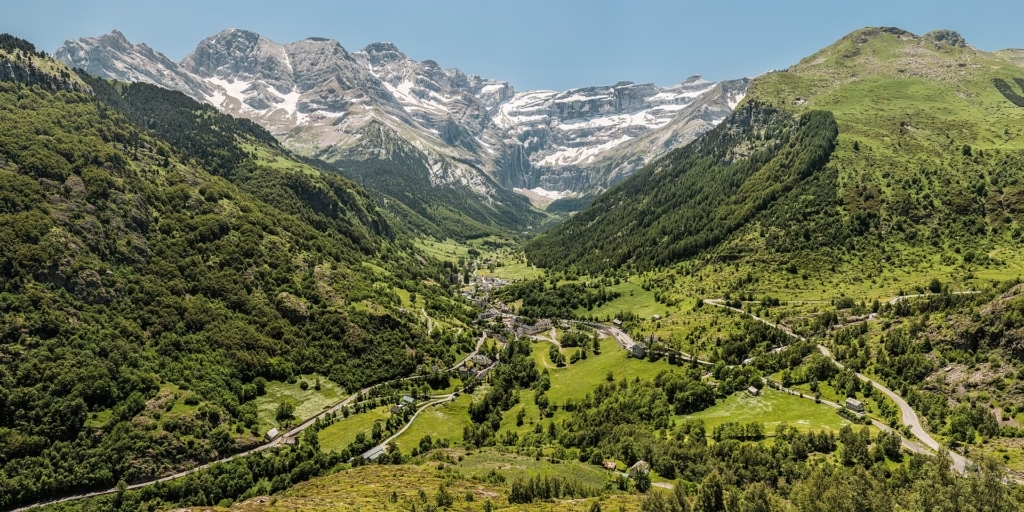
Gavarnie-Gèdre is the first summit-finish checkpoint
Stage 6 is the first official summit finish of the Tour de France 2026 and one of the clearest places where the race can be won before the Alps. Pau to Gavarnie-Gèdre is 186.2km with 4,100m of climbing, and the stage includes the Col d’Aspin, the Col du Tourmalet and the final climb towards Gavarnie-Gèdre.
This is the first true high-mountain checkpoint. The Tourmalet gives the stage historic weight, but its tactical role is just as important. A hard pace over the Tourmalet can isolate leaders, strip away domestiques and make the final climb far more selective than its average gradient might suggest.
Gavarnie-Gèdre is not the steepest finish in the race, but it comes after a heavy day. That is where time can be won. If the strongest teams make the Tourmalet hard and then keep pressure on through the valley and final ascent, the stage becomes much more than a scenic Pyrenean finish. It becomes the first real sorting point of the 2026 Tour.
The timing also matters. Stage 6 arrives early enough that a rider can still recover from a bad day, but not without consequences. A leader dropped here may spend the rest of the race trying to repair the damage. A rider who gains time here can use the following sprint and transition stages with less pressure.
This is also the first major test of climbing hierarchy. The Barcelona team time-trial might show team strength. Les Angles might show early readiness. Gavarnie-Gèdre should show who actually has the climbing level to win the Tour.
For more on how the high mountains fit into the full route, see our Tour de France 2026 summit finishes guide and our Tour de France 2026 climbers guide.
The Massif Central can punish riders who think the race has calmed down
After the first rest day, stage 10 from Aurillac to Le Lioran brings the race into the Massif Central. It is 166.6km with 3,800m of climbing, and it sits in exactly the kind of place where Tour favourites can make mistakes.
This is not a grand Alpine summit finish. That can make it more dangerous. Riders know the Tour will still head to the Vosges, Jura and Alps. Teams know the final week is loaded. That can create hesitation. Nobody wants to spend too much, but nobody can afford to be badly placed when the race ignites.
Le Lioran stages tend to reward riders who can handle changing gradients, repeated climbs and fast transitions between uphill and downhill sections. They are not clean, simple mountain tests. They are messy, tactical and physically draining. The kind of stage where a rider can lose 30 seconds through legs, positioning or poor timing rather than a dramatic collapse.
The Massif Central also comes immediately after a rest day. That changes the physical rhythm. Some riders respond well after a pause, others do not. A contender who needs a few kilometres to wake up can find the race already split. A team that expects a controlled start may be forced into chasing before the stage has fully settled.
If one rider arrives at the Tour with a clear advantage in explosiveness, descending and repeated efforts, Le Lioran is a place to use it. If one team spots weakness, it is a stage where pressure can be applied without the symbolic weight of an Alpine showdown.
Our Tour de France 2026 mountain stages ranked by difficulty places these middle-race days in the wider climbing hierarchy, which is important because not all race-winning stages arrive with the most famous names attached.
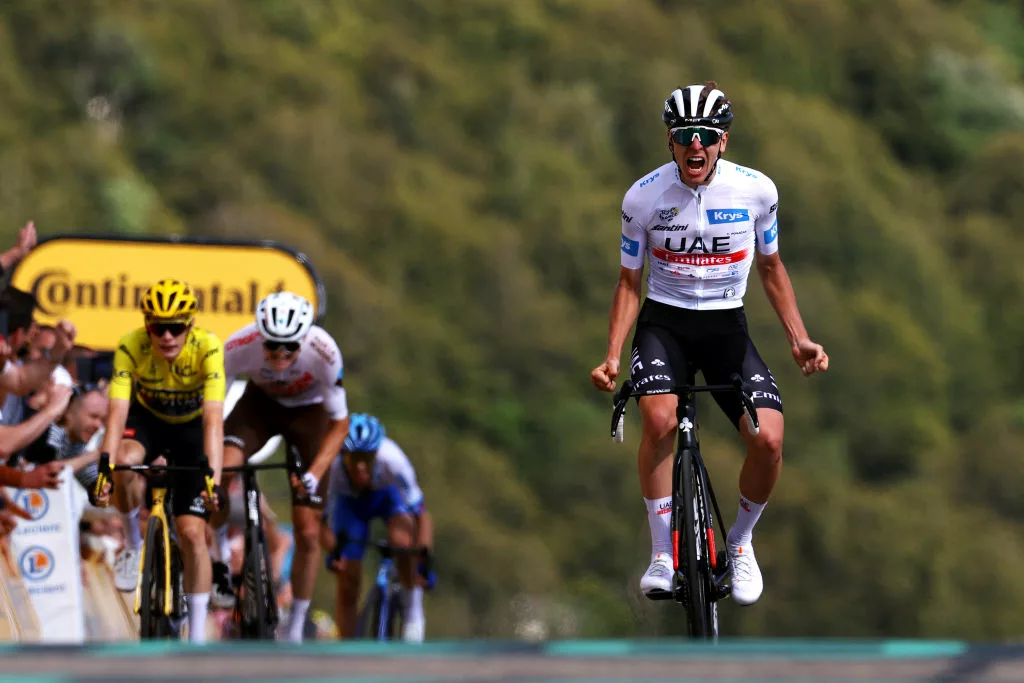 Photo Credit: Getty
The Vosges stage to Le Markstein Fellering can break teams
Stage 14 from Mulhouse to Le Markstein Fellering is one of the most important pre-Alps stages. At 155.3km with 3,800m of climbing, it sits on Saturday, 18th July, and gives the race a mountain day that can hurt teams as much as individual leaders.
The Vosges are not always treated with the same fear as the Alps or Pyrenees, but that can be misleading. Repeated climbs, changing rhythm and limited recovery can make a stage like this extremely difficult to control. A team that has already spent heavily in Barcelona, the Pyrenees and Massif Central may arrive here with fewer resources than expected.
Le Markstein Fellering is not one of the five official summit finishes, but the stage still has serious GC potential. The climb-heavy profile can strip the race down, especially if a strong team starts early. The danger is not only the finish. It is the cumulative pressure before it.
This is where the Tour can be won by making rivals work. A leader does not necessarily need to attack solo and take minutes. Instead, a team can make the stage so hard that opponents lose support, burn domestiques and start the next day already weakened. In a race that immediately follows with Plateau de Solaison, that matters.
Stage 14 is the beginning of a two-day pre-Alpine stress test. Riders who survive it but spend too much may pay the price on stage 15. Riders who control it efficiently may enter Plateau de Solaison with a chance to strike.
Plateau de Solaison is the biggest pre-Alpine battleground
If the Tour de France 2026 can be won before the final Alpine block, Plateau de Solaison is the most obvious place. Stage 15 from Champagnole to Plateau de Solaison is 183.9km with 3,950m of climbing, and the final climb is one of the most severe of the entire race.
The climb to Plateau de Solaison is 11.3km at 9.1 per cent. That is not a climb for bluffing. It is steep enough to expose riders who are slightly under their best, and long enough to turn weakness into real time loss. Coming the day after Le Markstein Fellering, it also tests recovery as much as climbing.
This stage arrives before the second rest day, which makes it tactically fascinating. Riders can empty themselves knowing there is a pause afterwards. Teams can commit more aggressively because the race does not immediately roll into another road stage the next morning. That usually encourages harder racing, especially if the GC is close.
Plateau de Solaison could create bigger gaps than some of the Alpine stages if the race is already fatigued. A rider who cracks on a climb averaging above 9 per cent can lose time very quickly. A team with numbers late in the stage can turn the final climb into a pressure chamber.
It is also the moment when the race can become psychologically clear. If one rider wins convincingly at Plateau de Solaison, the rest of the peloton enters the second rest day knowing exactly who must be attacked in the Alps. If the top contenders are still close, the final week remains open. But if someone takes major time here, the Tour can arrive in the Alps already tilted.
The climb’s place in the route is one reason our Tour de France 2026 route analysis treats the middle weekend as more than a bridge between the Pyrenees and the Alps.
The stage 16 time-trial can decide who must attack in the Alps
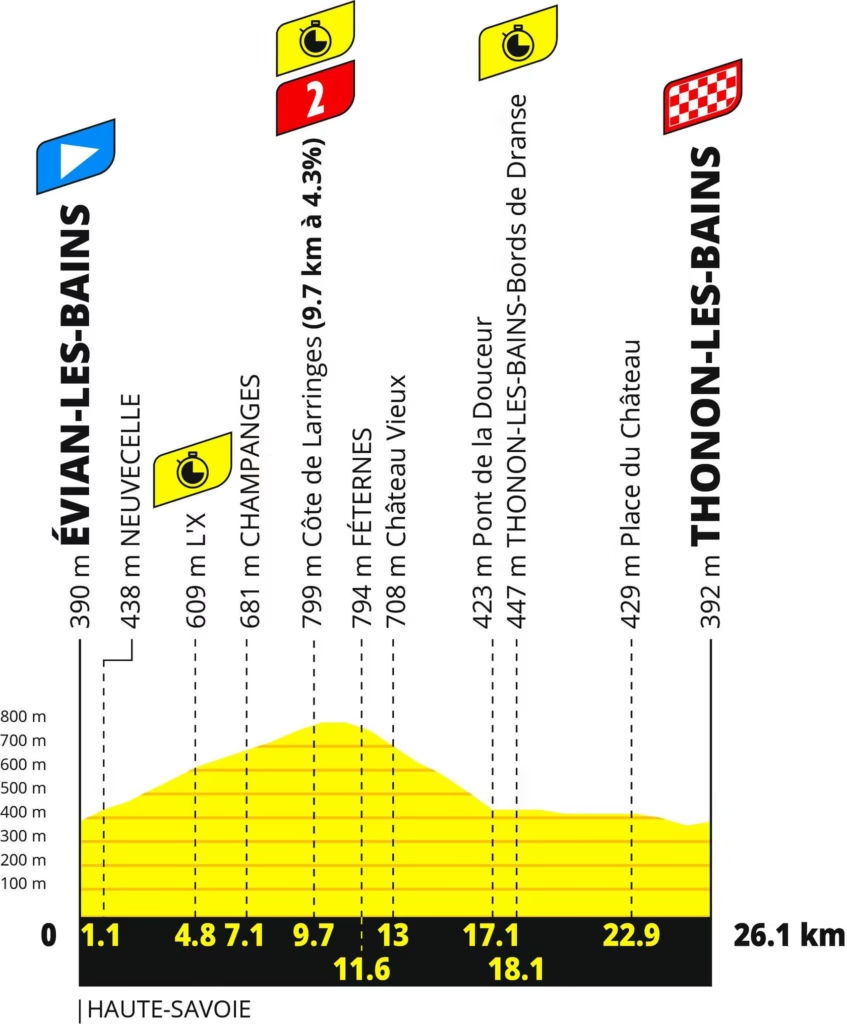
The stage 16 individual time-trial comes after the second rest day and before the final Alpine road stages. It is not part of the high-mountain trilogy, but it may decide how those Alpine stages are raced.
A time-trial at this point in the Tour is very different from an opening test. Riders are already carrying two weeks of fatigue. The strongest specialists are still favoured, but recovery, pacing and mental sharpness become more important. It is a day where a pure climber can lose the freedom to wait, and a stronger time-trialist can force rivals into panic before the Alps.
This is where the yellow jersey battle can change from a close contest into a set of obligations. A rider who loses time on stage 16 knows the Alpine stages must be raced aggressively. A rider who gains time can defend more selectively. That changes everything about stages 18, 19 and 20.
The most important effect may be tactical rather than statistical. If the time-trial creates a clear leader, the Alps become a chase. If it keeps several riders close, the Alps become a duel. If it exposes a favourite, teams will attack that weakness immediately.
The stage 16 time-trial is therefore one of the final places the Tour can be won before the mountains take over completely. It may not deliver the iconic image of the race, but it can write the tactical script for the final week.
For the rider hierarchy most likely to benefit from this route, see our Tour de France 2026 GC favourites ranked.
Where the Tour can be lost before the Alps
The Tour can also be lost before the Alps in less obvious places. That may be the real danger of the 2026 route. It is not only about one rider attacking on a summit finish. It is about repeated days where there is no full reset.
A weak team time-trial in Barcelona can create the first deficit. Poor positioning on stage 2 or stage 3 can turn a hilly finish into a time loss. The Tourmalet and Gavarnie-Gèdre can expose climbing form early. Le Lioran can punish riders who struggle after the first rest day. Le Markstein Fellering can break support teams. Plateau de Solaison can create the first major mountain separation. The stage 16 time-trial can then decide who arrives at the Alps in control and who arrives desperate.
That sequence means the Alpine stages are not isolated. They are the final chapter of a race that has already tested almost everything. If a rider reaches Orcières-Merlette with a damaged team, a time-trial deficit and lost confidence from Plateau de Solaison, the Alps may simply confirm what the first two weeks already showed.
-
 Photo Credit: A.S.O./Billy Ceusters
Which riders benefit from the pre-Alps structure?
The route before the Alps favours complete riders rather than pure final-week climbers. The ideal contender needs a strong team for Barcelona, enough climbing form to handle Les Angles and Gavarnie-Gèdre, durability for the Massif Central and Vosges, and the time-trial ability to avoid being forced into desperation before the final mountain block.
That naturally suits riders who can win the Tour in more than one way. A rider with both climbing and time-trial strength can gain time in Barcelona, defend in the Pyrenees, survive the medium mountains, attack or respond at Plateau de Solaison and then use stage 16 to tighten control. A pure climber may still win, but they would need to be excellent on the early mountain stages and avoid giving away too much against the clock.
Team strength also becomes more important. The 2026 route does not allow a leader to hide behind one summit finish. The opening team time-trial, the hilly early stages, the Pyrenees, the Massif Central and the Vosges all require support. A rider isolated too often before the Alps may reach the decisive climbs physically intact but tactically exposed.
That is also why the Tour’s pre-race build-up will matter. Races such as the Critérium du Dauphiné and Tour de Suisse often give the first clues about who has the climbing legs, who has the team structure and who has the time-trial sharpness for July. The route does not only ask who can win on Alpe d’Huez. It asks who can arrive there already in control.
For the viewing context around the race, see our how to watch Tour de France 2026 in the UK guide.
Verdict: the Alps may decide the winner, but the race can be built before then
The Tour de France 2026 can be won before the Alps in several places, but three stand out above the rest: the Barcelona team time-trial, the first summit finish to Gavarnie-Gèdre, and the brutal stage 15 finish at Plateau de Solaison.
Barcelona sets the opening hierarchy. Gavarnie-Gèdre confirms the first climbing order. Plateau de Solaison has the difficulty, timing and steepness to create the biggest pre-Alps separation. Around those headline days, Les Angles, Le Lioran, Le Markstein Fellering and the stage 16 time-trial add layers of pressure that can leave the final Alpine block much less open than it first appears.
The back-to-back Alpe d’Huez finishes will still dominate the race narrative. They are too hard, too symbolic and too close to Paris not to matter. Our guide to why back-to-back Alpe d’Huez finishes could define the Tour de France 2026 explains why that final weekend remains so important, while the Tour de France 2026 queen stage guide breaks down the Galibier, Sarenne and Alpe d’Huez combination.
But the rider who wins there may not be the rider who first wins control of the Tour. That could happen earlier, through a strong team ride in Barcelona, a first mountain blow in the Pyrenees, a recovery test in the Massif Central, a Vosges squeeze or one brutal final climb before the second rest day.
The Alps may provide the final image of the Tour de France 2026. The race to own that image begins long before then.

