

The Tour de France 2026 route is built around the mountains. The race opens with a team time trial in Barcelona, reaches the Pyrenees early, crosses the Massif Central, Vosges, Jura and Alps, then finishes with back-to-back summit finishes at Alpe d’Huez before the final stage into Paris.
That structure makes the mountain stages more than isolated showpieces. They are spaced across the race in a way that keeps changing the pressure on the general classification. The Pyrenees arrive before the first week has settled. The Massif Central follows immediately after the first rest day. The Vosges and Jura form a difficult second-week block. Then the Alps arrive after the individual time trial, with three mountain stages in a row and two consecutive finishes at Alpe d’Huez.
For the full route context, see our Tour de France 2026 full route guide, Tour de France 2026 route analysis and feature on why back-to-back Alpe d’Huez finishes could define the Tour de France 2026.

How the Tour de France 2026 mountain stages are ranked
This ranking is not based purely on distance or elevation gain. A stage can have huge climbing numbers but still be easier to control if the hardest climb comes too early, or if the final ascent does not force major gaps. Equally, a shorter stage can be brutal if it places steep climbs late, removes recovery sections and comes deep into the race.
The ranking below takes into account:
- Total climbing
- Stage distance
- Steepness of the key climbs
- Placement of the decisive climb
- Whether the stage finishes uphill
- Where the stage falls in the race
- Tactical pressure on GC teams
- Cumulative fatigue from previous days
The result is a practical difficulty ranking, not just which stage looks hard on paper, but which days are most likely to hurt the riders and shape the yellow jersey battle.
Tour de France 2026 mountain stages ranked
| Rank | Stage | Route | Distance | Why it ranks here |
|---|---|---|---|---|
| 1 | Stage 20 | Le Bourg d’Oisans to Alpe d’Huez | 170.9km | The biggest mountain day, with Croix de Fer, Télégraphe, Galibier, Sarenne and Alpe d’Huez on the penultimate stage |
| 2 | Stage 15 | Champagnole to Plateau de Solaison | 183.9km | A savage late pairing of Col de la Croisette and Plateau de Solaison before the second rest day |
| 3 | Stage 19 | Gap to Alpe d’Huez | 127.9km | Short, explosive and finishing on Alpe d’Huez after Col du Noyer and Col d’Ornon |
| 4 | Stage 6 | Pau to Gavarnie-Gèdre | 186.2km | Early high-mountain test with Aspin, Tourmalet and a long summit finish |
| 5 | Stage 14 | Mulhouse to Le Markstein Fellering | 155.3km | Dense Vosges climbing, with the Col du Haag close enough to the finish to invite attacks |
| 6 | Stage 18 | Voiron to Orcières-Merlette | 185.2km | The first Alpine summit finish, difficult but less severe than the two Alpe d’Huez stages |
| 7 | Stage 10 | Aurillac to Le Lioran | 166.6km | Relentless Massif Central terrain after the first rest day, awkward rather than enormous |
| 8 | Stage 3 | Granollers to Les Angles | 195.9km | Long and high early mountain stage, more likely to reveal form than decide the race |
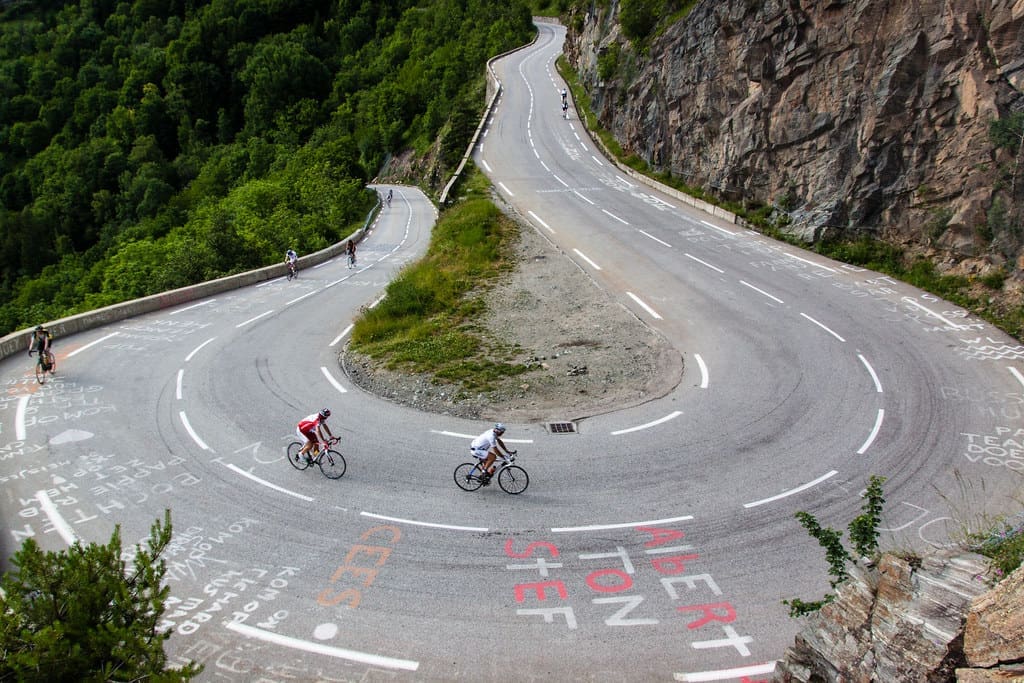
1. Stage 20: Le Bourg d’Oisans to Alpe d’Huez
Stage 20 is the hardest mountain stage of the 2026 Tour de France. It is not especially close.
The final mountain day starts in Le Bourg d’Oisans and finishes at Alpe d’Huez, but the route does not simply take the direct road up the 21 hairpins. Instead, it builds a huge Alpine loop around some of the most demanding climbing terrain in the race. The stage includes the Col de la Croix de Fer, Col du Télégraphe, Col du Galibier, Col de Sarenne and the final climb to Alpe d’Huez.
The numbers make it frightening. The stage is 170.9km long, with around 5,600m of elevation gain. That puts it in true queen-stage territory, but the difficulty is not just the total climbing. It is the sequence.
The Col de la Croix de Fer comes early enough to shape the breakaway and force teams to start spending energy almost from the beginning. The Télégraphe and Galibier combination then drags the race high into the Alps, with the Galibier acting as the roof of the 2026 Tour. From there, the riders still have to deal with the Col de Sarenne, a hard, awkward climb that arrives deep into the stage before the race reaches Alpe d’Huez from the back side.
That is why stage 20 ranks above everything else. It is long, high, attritional and tactically open. It also comes on the penultimate day, when three weeks of fatigue have already stripped away recovery, strength and team depth.
If the yellow jersey is still close, this is the stage where the Tour can be ripped apart.
Why stage 20 is so hard
Stage 20 has almost every ingredient needed for a race-defining day. The climbs are long enough to expose weakness, the altitude is meaningful, the final-weekend position creates desperation, and the back-to-back Alpe d’Huez finish gives the whole race a historic edge.
The Col du Galibier is the obvious landmark, but the Col de Sarenne may be just as important tactically. It comes after a long day of climbing and descending, and before the final run into Alpe d’Huez. If a team wants to isolate the yellow jersey, Sarenne gives them a realistic place to do it before the final kilometres.
This is also the stage where domestiques may disappear early. Even the strongest mountain squads will find it difficult to control Croix de Fer, Télégraphe, Galibier and Sarenne before still having enough riders left for Alpe d’Huez. That makes the stage dangerous for a leader who relies on team protection rather than personal climbing strength.
Stage 20 is not just the hardest mountain stage of the 2026 Tour. It is the one with the greatest chance of deciding the race.
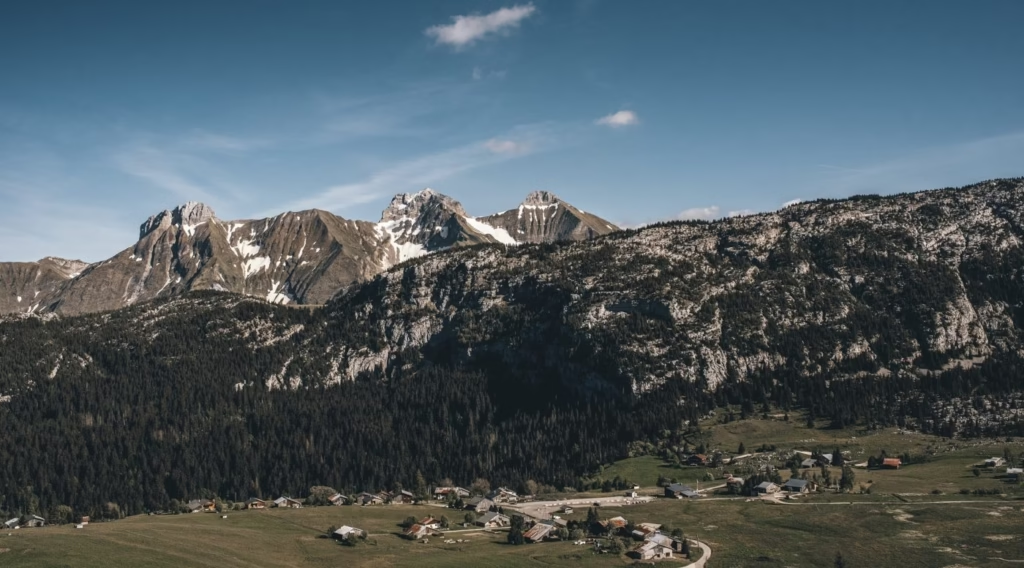
2. Stage 15: Champagnole to Plateau de Solaison
Stage 15 ranks second because of its brutal final structure. It does not have the mythic names of the Alps, and it does not climb as high as the Galibier, but the difficulty is concentrated in a way that makes it extremely dangerous.
The stage runs 183.9km from Champagnole to Plateau de Solaison. It comes at the end of the second week and immediately before the second rest day, which makes it a natural ambush point. Riders will know they have a rest day coming, but they will also be carrying the fatigue of the Vosges stage the previous day.
The decisive section comes late. The route climbs Le Salève – Col de la Croisette, a 4.7km ascent at 11.2 per cent, before the final climb to Plateau de Solaison, 11.3km at 9 per cent. Those gradients are severe enough to create real separation, especially after nearly 184km.
This is the kind of stage where a rider can lose the Tour without one dramatic explosion. The road simply becomes too steep, the legs stop responding, and the time gaps open quickly.
Why stage 15 could be the most selective pre-Alps stage
Plateau de Solaison is a serious summit finish. It does not need altitude or long Tour history to be difficult. An 11.3km climb at 9 per cent after a steep Croisette approach is enough to force a pure climbing test.
The Croisette is the key. Because it is short and steep, it gives aggressive teams a chance to put the race under pressure before the final climb. If a GC contender is isolated there, Plateau de Solaison becomes even harder. If the pace stays high over the top and through the approach, the final climb could begin with the front group already reduced.
Stage 15 is also awkward because it comes before the second rest day. Riders often fear the day before a rest day because everyone knows recovery is close, and that can make the racing more aggressive rather than less.
On paper, stage 20 is harder. In terms of pure gradient pain, stage 15 may be the nastiest summit finish of the race.
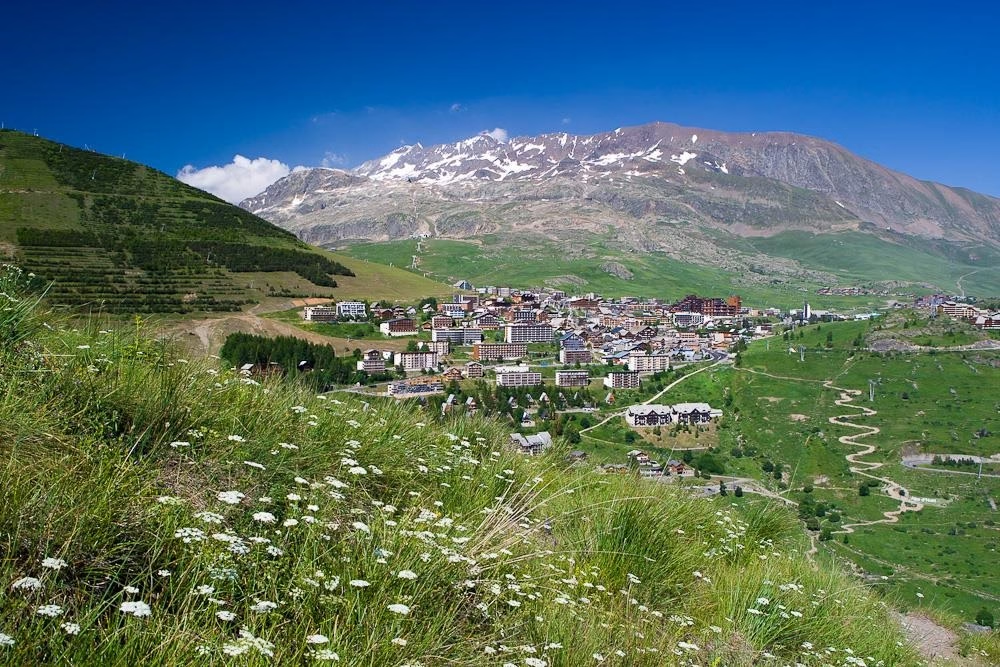
3. Stage 19: Gap to Alpe d’Huez
Stage 19 is short, sharp and dangerous. At 127.9km, it is much shorter than the biggest mountain days, but that is exactly why it ranks so high.
The route starts in Gap and immediately climbs the Col Bayard, then continues towards the Col du Noyer, 7.2km at 8.5 per cent. The Col d’Ornon comes later, before the classic ascent of Alpe d’Huez, 13.7km at 8.1 per cent.
The difficulty is not the elevation gain alone, which is lower than stage 20 or stage 15. It is the way the stage invites racing. Short mountain stages often create aggressive starts, unstable breakaways and early pressure. There is less room for gradual control. If a team wants to attack, the race can be on almost immediately.
The final climb needs no explanation. Alpe d’Huez is one of the Tour’s great stages, not because it is the longest climb in France, but because it is steep enough, famous enough and psychologically heavy enough to change the race.
Why stage 19 is more than a warm-up for stage 20
It would be easy to treat stage 19 as the first half of a two-day Alpe d’Huez finale, but that undersells it. This is a proper GC stage in its own right. The Col du Noyer is steep enough to soften the field, and Alpe d’Huez is long enough to create clear differences.
The other reason stage 19 ranks so highly is its placement. It comes after stage 18 to Orcières-Merlette and before the monster stage 20. That creates a tactical dilemma. Does a team attack here and risk paying for it the next day, or wait for stage 20 and risk missing the chance to weaken a rival?
That uncertainty can make stage 19 even harder. Riders may start conservatively, but if someone strong attacks on Alpe d’Huez, the response has to come immediately. You cannot bluff your way up the final climb.
Stage 19 may not be the queen stage, but it could be the day that sets up the final blow.
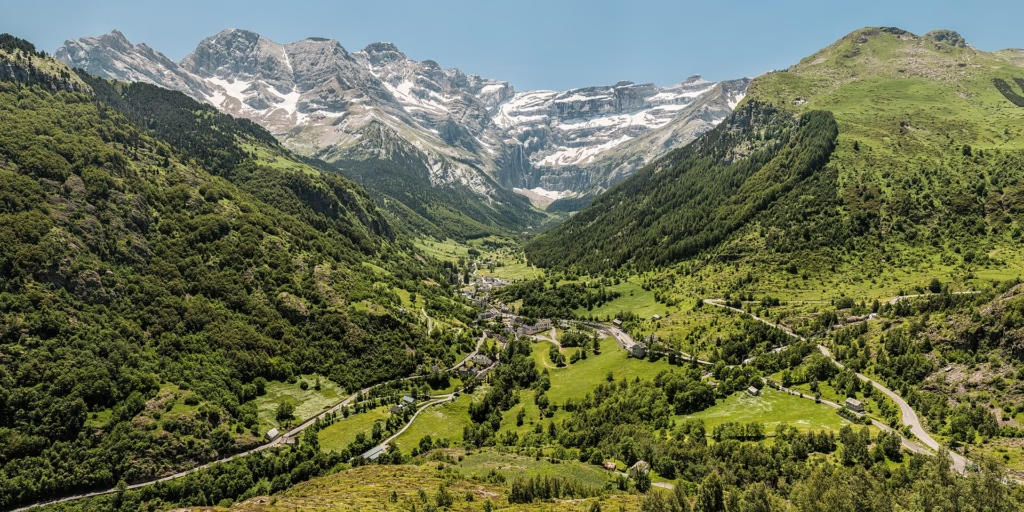
4. Stage 6: Pau to Gavarnie-Gèdre
Stage 6 is the first major mountain test of the 2026 Tour de France and the hardest Pyrenean stage on the route. It runs 186.2km from Pau to Gavarnie-Gèdre, with around 4,100m of climbing.
The route includes the Côte de Loucrup, Côte de Mauvezin, Col d’Aspin, Col du Tourmalet and the long final climb towards Gavarnie-Gèdre. The Tourmalet is the obvious centrepiece: 17.1km at 7.3 per cent, crested with more than 38km still to race. The final climb is less steep, but it is long and arrives after the Tourmalet has already done damage.
Stage 6 ranks fourth because it combines distance, prestige and early-race shock value. It comes in the first week, before the GC has fully settled, and that changes how teams approach it. Some riders may still be trying to find rhythm. Others may already be under pressure after the opening team time trial and the first mountain stage to Les Angles.
The stage is not quite as explosive on the final climb as Plateau de Solaison or Alpe d’Huez, but the Tourmalet gives it real weight.
Why stage 6 matters early in the race
The first true high-mountain confrontation can be more revealing than decisive. Stage 6 may not settle the Tour, but it should show who is already in trouble.
The Tourmalet comes far enough from the finish that it may not produce direct winning attacks from the main favourites, but it can strip away domestiques, force early selections and create fatigue that carries into the final climb. A rider who is already slightly below par can lose time here without the stage becoming a full GC war.
Gavarnie-Gèdre also adds uncertainty because it is a new Tour finish. The climb is long rather than savage, which could favour riders who can sustain tempo rather than those who rely on one violent acceleration. If wind, pacing or team control dulls the finale, gaps may be manageable. If the Tourmalet is raced hard, they will not be.
This is the first stage where yellow jersey ambitions become more than theory.
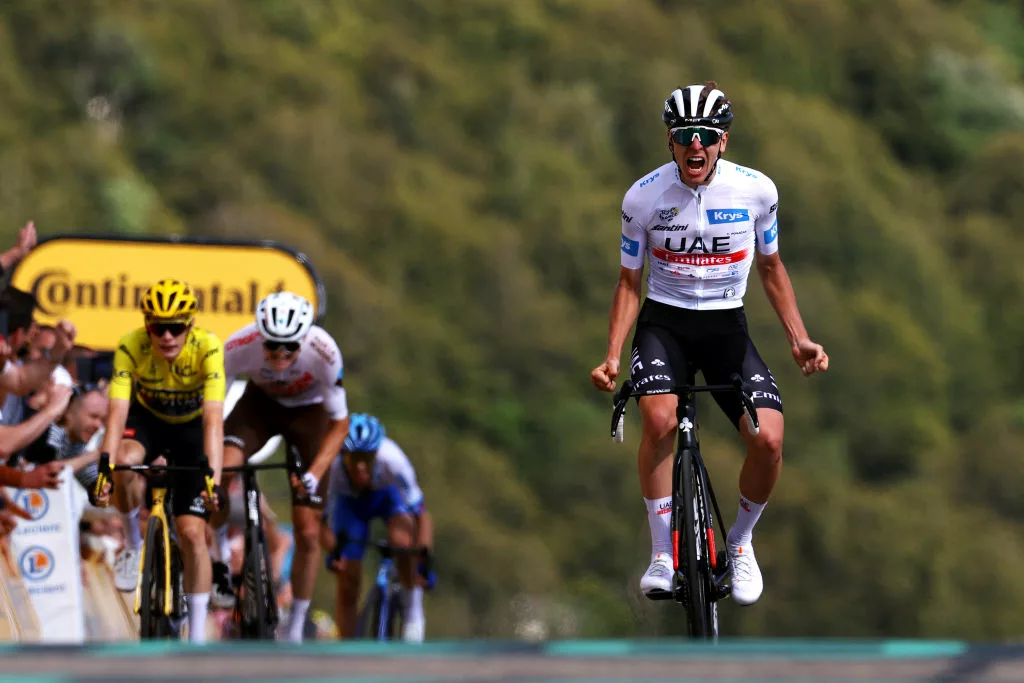 Photo Credit: Getty
5. Stage 14: Mulhouse to Le Markstein Fellering
Stage 14 is the hardest of the Vosges stages and one of the most awkward days of the whole race. It runs 155.3km from Mulhouse to Le Markstein Fellering, with around 3,800m of climbing.
The stage includes the Grand Ballon, Col du Page, Ballon d’Alsace and Col du Haag. The Grand Ballon arrives early, the Ballon d’Alsace adds old Tour weight in the middle, and the Col du Haag, 11.2km at 7.3 per cent, crests less than 6km from the finish.
That late climb is why stage 14 ranks ahead of stage 18 and stage 10. The Col du Haag gives the GC riders a very clear launchpad. It is long enough to force selection, steep enough to hurt, and close enough to the finish that any gap over the summit can stick.
The stage is also hard to control. The Vosges rarely offer the long, clean, predictable climbs of the high Alps. Instead, they create rolling fatigue, narrow roads, repeated accelerations and tactical instability.
Why stage 14 could be more explosive than expected
Stage 14 has the profile of a stage that can be underestimated. It does not finish on a famous summit. It does not have the altitude of the Alps or Pyrenees. But the roadbook is packed with climbs, and the final climb is placed perfectly for aggressive racing.
The Col du Haag is especially important because it is new to the Tour and comes after a long sequence of climbing. If the pace is hard from the Grand Ballon, the final 20km could become very selective. If the GC teams hesitate, attackers may already be up the road. If they chase, domestiques will be burned before the steepest part of the finale.
This is the stage where a rider can gain 20 or 30 seconds through timing and nerve, rather than a full mountain demolition. In a tight Tour, that could be enough to change the shape of the race before Plateau de Solaison the next day.
6. Stage 18: Voiron to Orcières-Merlette
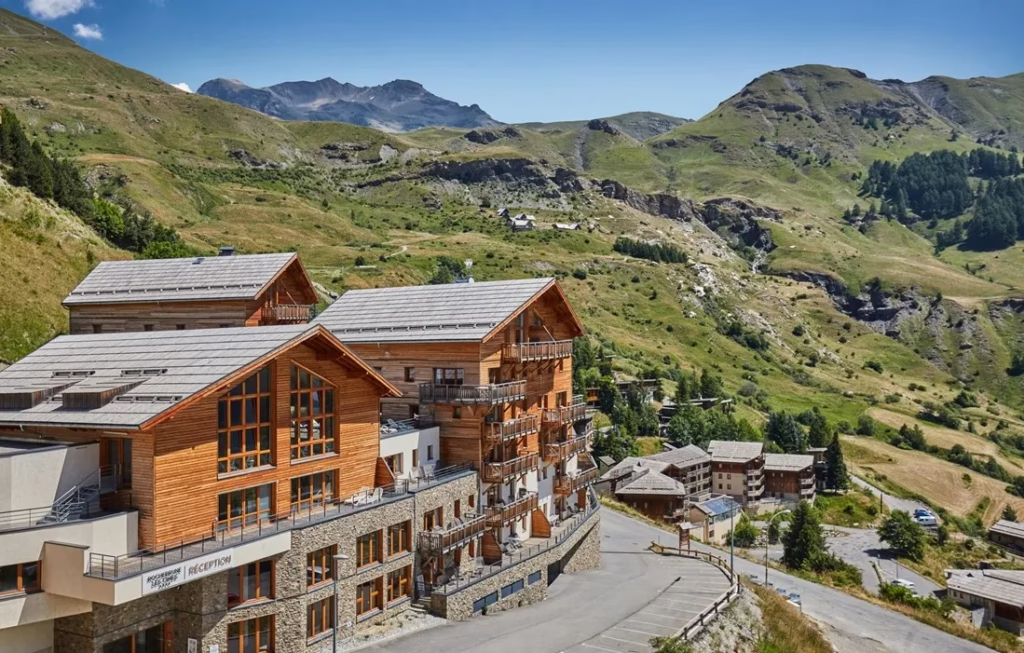
Stage 18 opens the final Alpine trilogy. That alone makes it important, but it ranks sixth because the route is demanding rather than monstrous compared with stages 19 and 20.
The stage runs 185.2km from Voiron to Orcières-Merlette, with around 3,900m of elevation gain. It includes the Côte d’Engins, Côte de Monteynard, Côte des Terrasses, Côte de Saint-Léger-les-Mélèzes and the final climb to Orcières-Merlette, 7.1km at 6.7 per cent.
This is a hard stage, especially after the stage 16 individual time trial and stage 17 transition day, but the final climb is not as brutal as Alpe d’Huez or Plateau de Solaison. The danger is more cumulative. There is a long day of climbing, a summit finish, and the knowledge that two even harder mountain stages follow immediately afterwards.
Teams may race it with restraint. If the GC is close, stage 18 could still matter, but some favourites may prefer to test rather than commit fully.
Why stage 18 is still dangerous
Stage 18’s difficulty comes from context. It is the first mountain stage after the individual time trial, and that changes the psychology of the race. Riders who lost time against the clock may need to attack. Riders who gained time may want to defend. Teams may be tired, but they cannot switch off.
Orcières-Merlette is also historically loaded. It is associated with Luis Ocaña’s famous 1971 victory over Eddy Merckx, and the climb still has enough bite to expose a bad day. A rider who is beginning to fade in the third week will not hide easily on a 7.1km climb at 6.7 per cent after 185km.
Stage 18 is unlikely to be the hardest Alpine day, but it may be the stage where the first cracks of the final week appear.

7. Stage 10: Aurillac to Le Lioran
Stage 10 is a classic Massif Central trap. It is 166.6km from Aurillac to Le Lioran, with around 3,800m of climbing and a dense sequence of medium-length climbs in the second half.
The climbs include the Côte de Pailherols, Col de la Griffoul, Col de Prat de Bouc, Côte de Murat, Puy Mary – Pas de Peyrol, Col de Pertus and Col de Font de Cère. The hardest gradients come late, with the Col de Pertus listed at 4.4km at 8.5 per cent before the final climb towards Font de Cère and Le Lioran.
This is not a high-mountain stage in the Alpine sense, but it is brutally irregular. The Massif Central does not allow riders to settle into one rhythm. The roads rise, dip, kick again and demand repeated accelerations.
It also comes immediately after the first rest day, which can be dangerous. Some riders restart well. Others feel blocked. On this kind of terrain, a bad restart can be costly.
Why stage 10 could catch riders out
Stage 10 ranks seventh because it lacks a major summit finish and does not have the same GC weight as the Alps or stage 15. But it should not be treated as an easy mountain day.
The final 70km are packed with climbs, and the sequence from Puy Mary to Pertus to Font de Cère can create a very hard finale. The gradients are punchy, the descents technical enough to matter, and the stage suits riders who can climb, descend and repeat efforts rather than simply sit at threshold.
This is a day for damage rather than destruction. A favourite is unlikely to win the Tour here, but someone can lose control if they are badly placed, isolated or slow to respond.
8. Stage 3: Granollers to Les Angles
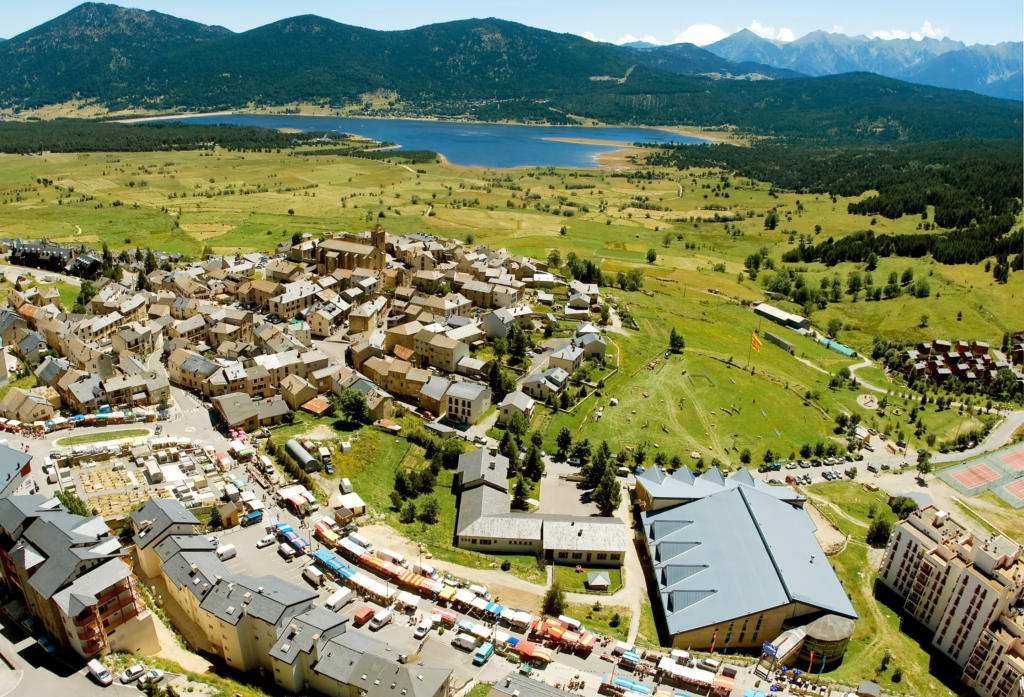
Stage 3 is the lowest-ranked mountain stage, but that does not mean it is easy. It is 195.9km from Granollers to Les Angles, with around 3,850m of climbing, and it comes astonishingly early in the race.
The route includes the Côte de Sant Feliu de Codines, the Col de Toses, the Col du Calvaire and the final climb to Les Angles. The Col de Toses is the main difficulty, 9.3km at 6.5 per cent, while the finish is short but sharp at 1.8km at 6.5 per cent.
Stage 3 ranks eighth because it is more likely to reveal early form than settle the Tour. The climbs are significant, but the route is not as heavily stacked as the later mountain days, and GC teams may be reluctant to burn too many resources so early.
That said, early mountain stages can be chaotic. The race will still be nervous, the team time trial will already have created gaps, and some riders may see an opportunity to take yellow before the race settles into its normal hierarchy.
Why stage 3 still matters
Stage 3’s importance is psychological. It is the first mountain stage of the race, the first real test of climbing form, and the first point where any rider who arrived undercooked can be exposed.
It could suit a strong breakaway if the GC teams do not want to control everything. It could also tempt riders who lost time in the team time trial to attack earlier than expected. The final climb to Les Angles is short enough that gaps may be measured in seconds rather than minutes, but those seconds can still shape the first week.
This is the stage that tells us who is calm, who is sharp and who is already chasing.
Which Tour de France 2026 mountain stage will decide the race?
Stage 20 is the obvious answer. It has the climbing, the altitude, the final-weekend position and the double-Alpe storyline. If the Tour is still close after stage 19, the route from Le Bourg d’Oisans to Alpe d’Huez is the most likely place for the decisive move.
But stage 15 may be the most underrated GC day. The combination of Col de la Croisette and Plateau de Solaison is steep enough to create major differences before the second rest day. If one of the favourites has a bad day there, the entire final week changes.
Stage 19 is the wild card. Short stages can produce big racing, and a classic Alpe d’Huez finish on the day before the queen stage gives riders a difficult tactical choice. Waiting for stage 20 may be logical, but the Tour is often shaped by the rider brave enough to move before everyone expects it.
-
 Photo Credit: Cor Vos
 -
 Photo Credit: Zac Williams/AusCycling

Easiest to hardest summary
The simplest way to understand the mountain stages is to divide them into four tiers.
Tier 1: Race-defining mountain stages
Stage 20: Le Bourg d’Oisans to Alpe d’Huez
Stage 15: Champagnole to Plateau de Solaison
Stage 19: Gap to Alpe d’Huez
These are the three stages most likely to create major time gaps. Stage 20 is the hardest overall, stage 15 has the steepest decisive finale, and stage 19 has the explosive short-stage structure.
Tier 2: Major GC tests
Stage 6: Pau to Gavarnie-Gèdre
Stage 14: Mulhouse to Le Markstein Fellering
These stages should shape the race, even if they may not decide it outright. Stage 6 brings the first high-mountain test with the Tourmalet, while stage 14 creates a difficult Vosges finale before Plateau de Solaison.
Tier 3: Dangerous third-week and rest-day traps
Stage 18: Voiron to Orcières-Merlette
Stage 10: Aurillac to Le Lioran
Stage 18 opens the final Alpine run, while stage 10 restarts the race after the first rest day. Both are difficult enough to punish weakness, even if they are not the two hardest summit finishes.
Tier 4: Early mountain warning shot
Stage 3: Granollers to Les Angles
Stage 3 is still a mountain stage with real climbing, but it should be more about early signals than final conclusions.
Final ranking verdict
The Tour de France 2026 mountain route is unusually balanced. It does not save everything for the final week, but it does build towards a very hard Alpine finish. The early Pyrenees will reveal who is ready, the Massif Central and Vosges will test recovery and positioning, and the Alps will decide whether the strongest climber also has the strongest team and the clearest tactical nerve.
The final ranking is:
- Stage 20: Le Bourg d’Oisans to Alpe d’Huez
- Stage 15: Champagnole to Plateau de Solaison
- Stage 19: Gap to Alpe d’Huez
- Stage 6: Pau to Gavarnie-Gèdre
- Stage 14: Mulhouse to Le Markstein Fellering
- Stage 18: Voiron to Orcières-Merlette
- Stage 10: Aurillac to Le Lioran
- Stage 3: Granollers to Les Angles
The 2026 Tour is not only about one climb or one weekend, but if one stage has to be marked in red, it is stage 20. Croix de Fer, Télégraphe, Galibier, Sarenne and Alpe d’Huez on the penultimate day is the hardest mountain combination of the race, and the most likely place for the yellow jersey to be won, lost or finally confirmed.

