
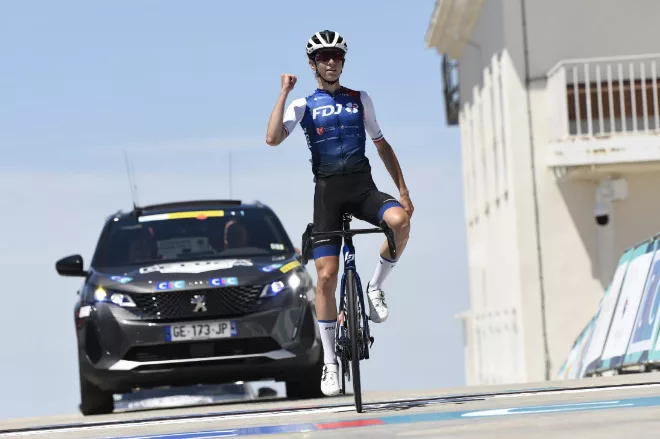
Mont Ventoux finally becomes part of the modern Tour de France Femmes today, but the Giant of Provence already has a small and unusually significant place in women’s cycling history.
Nicole Cooke rode across it alone on the way to winning the 2006 Grande Boucle Féminine Internationale. Anna Kiesenhofer produced an extraordinary climbing performance there a decade later, years before becoming Olympic champion. Marta Cavalli then won the first women’s Mont Ventoux Dénivelé Challenge in 2022 during the finest spring of her career.
What has been missing is the biggest contemporary stage race in women’s cycling.
Stage 7 of the 2026 Tour de France Femmes changes that. For the first time since the modern race was launched in 2022, yellow will be fought over on Mont Ventoux itself, with Marlen Reusser starting only 12 seconds ahead of Demi Vollering and Kasia Niewiadoma-Phinney at 1:17.
The mountain, the different approaches to its summit and its importance to this year’s race are covered in our full Tour de France Femmes 2026 Mont Ventoux guide.
Before today’s riders create the mountain’s next memory, these are the performances that established its women’s racing history.
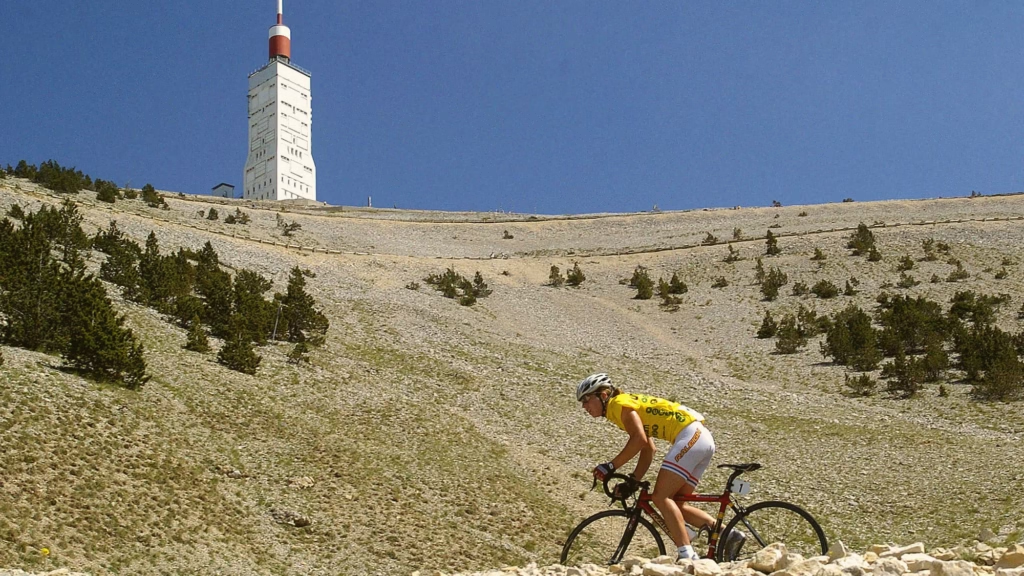
Nicole Cooke conquers Ventoux on the way to the 2006 Grande Boucle
The most important women’s performance on Mont Ventoux before today probably belongs to Nicole Cooke.
Cooke arrived at the 2006 Grande Boucle Féminine Internationale as one of the outstanding riders of her generation, but becoming the first British winner of the race required something exceptional.
She delivered it on Stage 4.
The route crossed Mont Ventoux before continuing towards L’Isle-sur-la-Sorgue. Cooke turned the mountain into the foundation of her overall victory, attacking alone and establishing a huge advantage before continuing her effort beyond the summit.
It was exactly the sort of performance that defined Nicole Cooke’s career: aggressive, physically dominant and delivered during an era when the best women’s racing received only a fraction of the attention it deserved.
Cooke went on to win the Grande Boucle overall, adding another major stage-race success to a career that already included the Giro d’Italia Femminile and would later include Olympic and world road race titles.
The frustrating part is how little her Ventoux ride entered wider cycling mythology.
An equivalent performance in the men’s Tour would have been replayed for years. Women’s cycling in 2006 had nowhere near that visibility, and even one of the defining mountain rides of Cooke’s career was easy for the wider sporting audience to miss.
Twenty years later, the Tour de France Femmes offers an opportunity to put it back into context.
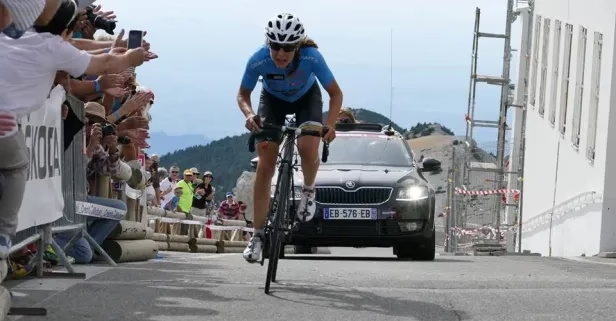
Anna Kiesenhofer wins by almost four minutes in 2016
The next great women’s Ventoux performance produced a name that became considerably more famous five years later.
Anna Kiesenhofer won Stage 3 of the 2016 Tour Cycliste Féminin International de l’Ardèche, long before her extraordinary Olympic road race victory in Tokyo.
The Austrian was not yet an established star.
Yet the Ventoux stage already displayed the qualities that would later make her Olympic victory possible: exceptional pacing, independence, an ability to sustain a long effort and little need for conventional tactical protection.
Kiesenhofer bridged across to the breakaway near the bottom of Mont Ventoux before attacking the group herself.
Nobody came close to following.
She reached the summit 3:53 ahead of the next rider, taking the stage victory and moving into the race lead.
That remains one of the most destructive performances seen in a women’s race on Ventoux.
The margin matters because the mountain did not simply create a reduced group or a late tactical selection. Kiesenhofer dismantled the field through sustained climbing power.
Her wider route from that result to one of the biggest shocks in Olympic cycling is covered in our Anna Kiesenhofer profile.
With hindsight, the Tokyo victory looks slightly less impossible when the Ventoux result is taken into account. A rider capable of producing that kind of controlled solo effort on one of cycling’s hardest climbs had already demonstrated a highly unusual physical and tactical skill set.
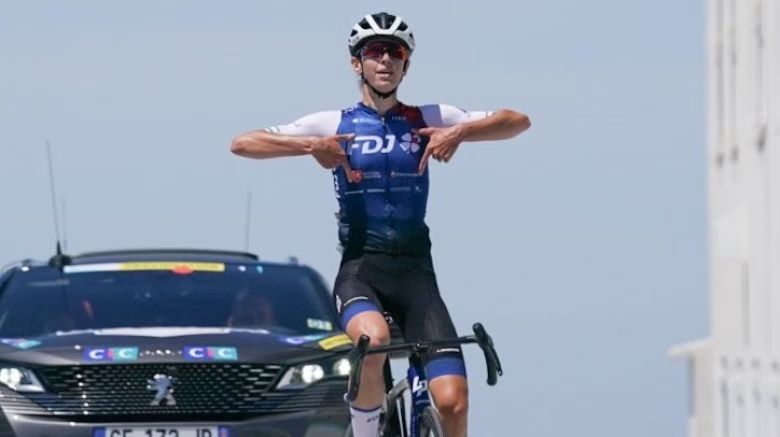
Marta Cavalli wins the first women’s Mont Ventoux Dénivelé Challenge
Mont Ventoux received a dedicated elite women’s one-day race in 2022 when organisers introduced a women’s edition of the Mont Ventoux Dénivelé Challenge.
Marta Cavalli became its first winner.
The timing could hardly have been better.
Cavalli was enjoying the finest period of her career. She had already won Amstel Gold Race and La Flèche Wallonne Féminine during a remarkable Ardennes campaign before arriving in Provence.
That also clears up one point sometimes confused in accounts of women’s racing on Ventoux: La Flèche Wallonne Féminine itself has not climbed Mont Ventoux. Cavalli won Flèche Wallonne and then won on Ventoux later in the same 2022 season.
The Dénivelé Challenge covered 100 kilometres and approximately 2,800 metres of climbing before approaching Ventoux from Sault.
That side is longer and generally less severe than the Bédoin approach being used by the Tour de France Femmes today, but it still finishes with the exposed upper slopes above Chalet Reynard.
A reduced group reached the decisive kilometres before Cavalli attacked with around 2.5 kilometres remaining.
Nobody could follow.
She won alone, 41 seconds ahead of Clara Koppenburg and 53 seconds ahead of Évita Muzic.
Our original report from the day, Cavalli claims inaugural Mont Ventoux Dénivelé Challenge Women’s title, captured a performance that became one of the clearest demonstrations of her climbing strength during that 2022 peak.
The event did not develop into a permanent annual fixture, which has made Cavalli’s victory even more distinctive.
She remains the defining winner of the dedicated women’s Ventoux one-day race.
Three performances, three different ways to win on Ventoux
Cooke, Kiesenhofer and Cavalli each used Mont Ventoux differently.
Cooke turned the mountain into the launchpad for a huge solo raid. Her race did not end at the summit, so she had to convert the climbing advantage into a complete stage victory afterwards.
Kiesenhofer simply overwhelmed the opposition. A winning margin approaching four minutes showed how quickly Ventoux can turn a close race into a hierarchy measured in minutes.
Cavalli waited until late. Her 2022 victory demonstrated that Ventoux does not automatically demand an attack from ten kilometres out. If the strongest riders remain together, the upper mountain is still severe enough for one acceleration to decide the race.
Those three examples also provide three possible templates for today.
Vollering may try to produce something closer to Kiesenhofer, turning sustained climbing superiority into an increasingly large gap.
Niewiadoma-Phinney may need the Cooke approach, attacking before the most obvious moment because simply following the strongest rider is unlikely to remove her 1:17 deficit.
Reusser would probably prefer something resembling Cavalli’s race, with the leading contenders remaining together deep into the final kilometres and the Tour still being decided in seconds rather than minutes.
The full tactical equation between the two riders at the top is explored in Reusser vs Vollering: 12 seconds before Mont Ventoux.
-
 Photo Credit: Getty

Why today matters so much
The significance of Stage 7 is not that women have somehow only now become capable of racing Mont Ventoux.
They have been producing exceptional performances there for decades.
What has been missing is visibility.
Cooke’s 2006 ride happened during an era when even winning the leading women’s French stage race could struggle for meaningful international coverage.
Kiesenhofer’s 2016 victory came in the Tour de l’Ardèche, a race with a long history of producing major climbing performances but nothing approaching the global audience now following the Tour de France Femmes.
Cavalli’s 2022 win came in a newly created one-day event rather than a race with the reach of the Tour.
Today is different.
The 2026 Tour de France Femmes route reaches Ventoux with the yellow jersey separated by 12 seconds and the entire women’s cycling audience focused on one mountain.
It is also definitively the first visit to Mont Ventoux by the modern Tour de France Femmes, which began in 2022.
That distinction matters because women’s Tour history stretches much further back than the current ASO race. Cooke was already winning a major women’s French stage race over Ventoux 20 years ago.
The modern Tour is not creating women’s Ventoux history from nothing.
It is finally giving that history the platform it deserves.
The next great Ventoux performance comes today
Cooke used Ventoux to establish her 2006 Grande Boucle victory.
Kiesenhofer put nearly four minutes into the next rider in 2016.
Cavalli attacked late and won alone in 2022.
Today the mountain gets another opportunity to produce something memorable.
Reusser starts in yellow. Vollering is only 12 seconds away. Niewiadoma-Phinney needs 1:17. Elisa Longo Borghini has moved back towards the podium, while Pauline Ferrand-Prévot returns to the kind of long mountain on which she built her 2025 Tour victory.
The full sporting picture is set out in our Tour de France Femmes Stage 7 preview.
There will almost certainly be more people watching this ascent live than any women’s race on Mont Ventoux before it.
By this evening, the list of the mountain’s greatest women’s cycling moments should have a fourth entry.

