

Demi Vollering finished Stage 7 of the Tour de France Femmes only 1:16 behind Kasia Niewiadoma-Phinney and 30 seconds ahead of Marlen Reusser.
That immediately created the obvious question.
If Vollering could take half a minute out of Reusser in the final kilometre alone, why did she wait so long to make the attack that finally broke the yellow jersey?
The answer is not that Vollering simply lacked the legs earlier. It was a combination of the tactical stalemate with Reusser, the headwind on the exposed part of Mont Ventoux and Niewiadoma-Phinney choosing exactly the right moment to escape while the two riders behind were still more concerned with one another.
The result has left Vollering only 15 seconds from yellow rather than comfortably in the race lead, which is why the tactics on Ventoux may yet become one of the defining moments of the 2026 Tour.
For the climb itself, its gradients and why it was always expected to reshape the GC, see our Tour de France Femmes 2026 Mont Ventoux guide.
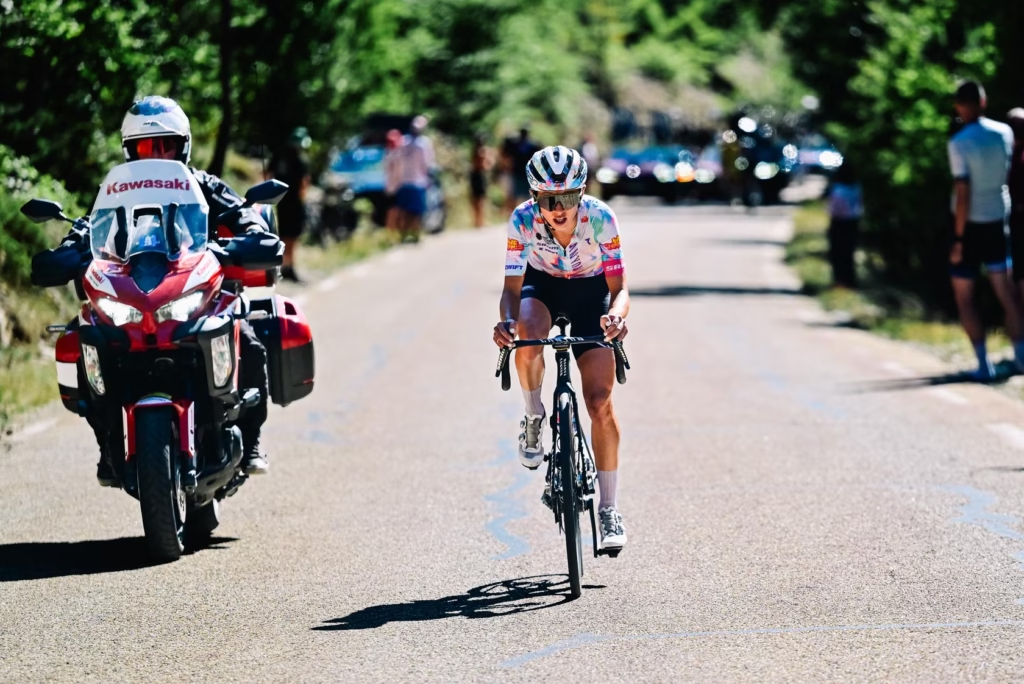 Photo Credit: A.S.O./Billy Ceusters
Niewiadoma-Phinney attacked while Vollering and Reusser were still racing each other
Niewiadoma-Phinney made the decisive move with just over nine kilometres remaining.
At that point the front GC group had been reduced to the same three riders who had already emerged as the central figures of the race: Reusser, Vollering and Niewiadoma-Phinney.
Their incentives were very different.
Reusser started the stage in yellow, 12 seconds ahead of Vollering and 1:17 ahead of Niewiadoma-Phinney.
Vollering’s immediate rival was therefore Reusser.
Niewiadoma-Phinney needed to gain more than a minute on both.
When the Canyon SRAM rider attacked, Vollering and Reusser had a choice. They could immediately treat her as the biggest threat to the Tour or continue the direct duel that had dominated the build-up to Ventoux.
They chose the second option.
That was exactly what Niewiadoma-Phinney needed.
The broader pre-stage arithmetic was already clear in our analysis of what 12 seconds meant between Reusser and Vollering before Mont Ventoux. The danger was always that concentrating too heavily on one another could give a third rider room to change the race.
That is what happened.
Vollering attacked Reusser instead of simply chasing Niewiadoma-Phinney
This is the central tactical issue.
Vollering did not completely sit up and allow Niewiadoma-Phinney to disappear.
She repeatedly accelerated.
The problem was what those accelerations were designed to do.
They were primarily attempts to drop Reusser rather than a sustained effort to reduce the gap to the rider ahead.
Reusser followed.
Vollering eased.
Another acceleration followed.
That repeated stop-start pattern suited neither of them.
There is an important difference between attacking a rider beside you and chasing a rider further up the road.
Vollering was clearly capable of producing short surges. What she did not do early enough was commit to a sustained rhythm that might have stabilised or reduced Niewiadoma-Phinney’s advantage.
The route had always favoured riders able to combine climbing with tactical judgement, one of the reasons all three featured prominently among the Tour de France Femmes 2026 riders to watch.
On Ventoux, Niewiadoma-Phinney made the cleaner tactical decision.
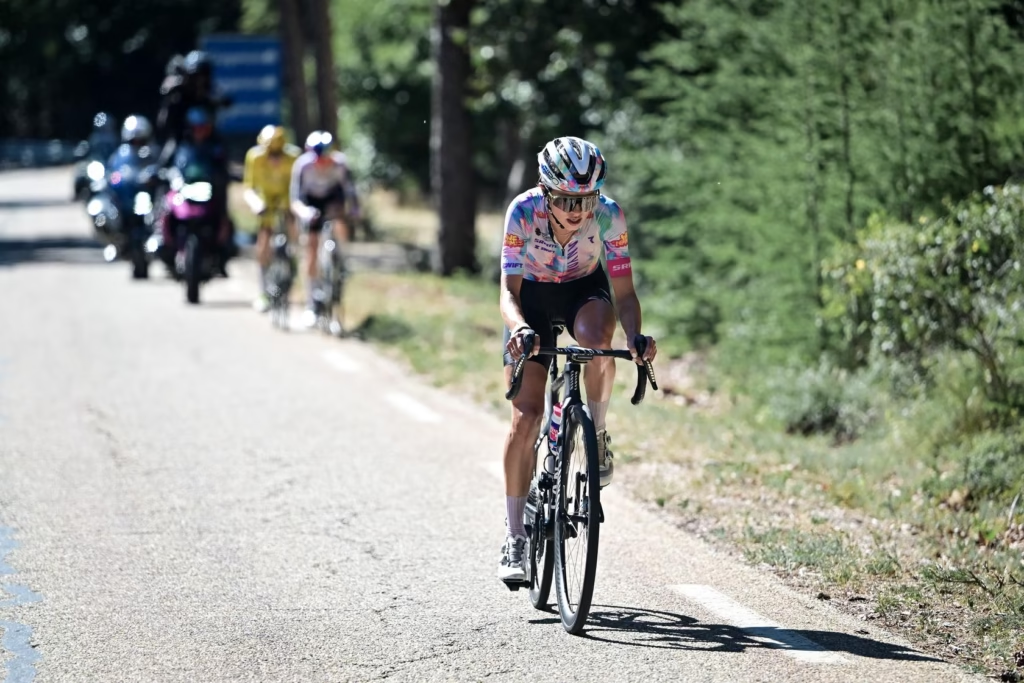 Photo Credit: A.S.O./Billy Ceusters
Why didn’t Vollering simply ride with Reusser?
Because that would have helped Reusser too.
This is what makes the situation more complicated than simply saying Vollering waited too long.
Vollering began the climb only 12 seconds behind the yellow jersey. Her objective was not merely catching Niewiadoma-Phinney. It was winning the Tour.
If she rode several kilometres on the front with Reusser sitting directly behind, she risked doing exactly the work required to preserve Reusser’s yellow jersey.
She could close the gap to Niewiadoma-Phinney and still find Reusser attached after having spent significantly more energy.
From Vollering’s perspective, Reusser needed to contribute.
From Reusser’s perspective, Vollering was the stronger climber and the rider trying to overturn the GC, so there was little reason to give her a free tow towards yellow.
Both positions made sense individually.
Together they were disastrous.
Niewiadoma-Phinney did not need them to stop completely. She only needed them to ride slightly slower than they could have done together.
The headwind made the stalemate worse
The upper slopes of Mont Ventoux were exposed to a headwind.
That added another layer to the tactical problem.
Drafting matters less on a steep climb than it does on flat roads, but it does not stop mattering altogether, particularly once the riders emerge from the forest and speeds begin to rise slightly across the exposed section.
Whoever committed to the chase risked doing more work while their direct GC rival received some aerodynamic benefit behind.
That gave both Vollering and Reusser another reason to hesitate.
Niewiadoma-Phinney was also riding into the wind, but she had one advantage neither of the others possessed.
She had no tactical decision left to make.
She was alone and committed.
The two riders behind were still deciding who should work.
Niewiadoma-Phinney’s timing was almost perfect
It would be easy to frame Stage 7 entirely around what Vollering and Reusser did wrong.
That would undersell what Niewiadoma-Phinney did right.
She attacked before the most exposed upper section rather than waiting until Chalet Reynard.
That gave her time to establish a meaningful advantage while the gradient was still severe and the forest offered more shelter from the wind.
It also forced Reusser and Vollering into their tactical dilemma much earlier than either appeared to want.
By the time the chase became properly urgent, the gap was already large enough to transform the general classification.
That sort of aggressive racing has always been one of Niewiadoma-Phinney’s strongest weapons. Her ability to create races rather than simply respond to them has helped define both her career and the modern Tour de France Femmes winners list.
Ventoux was another example.
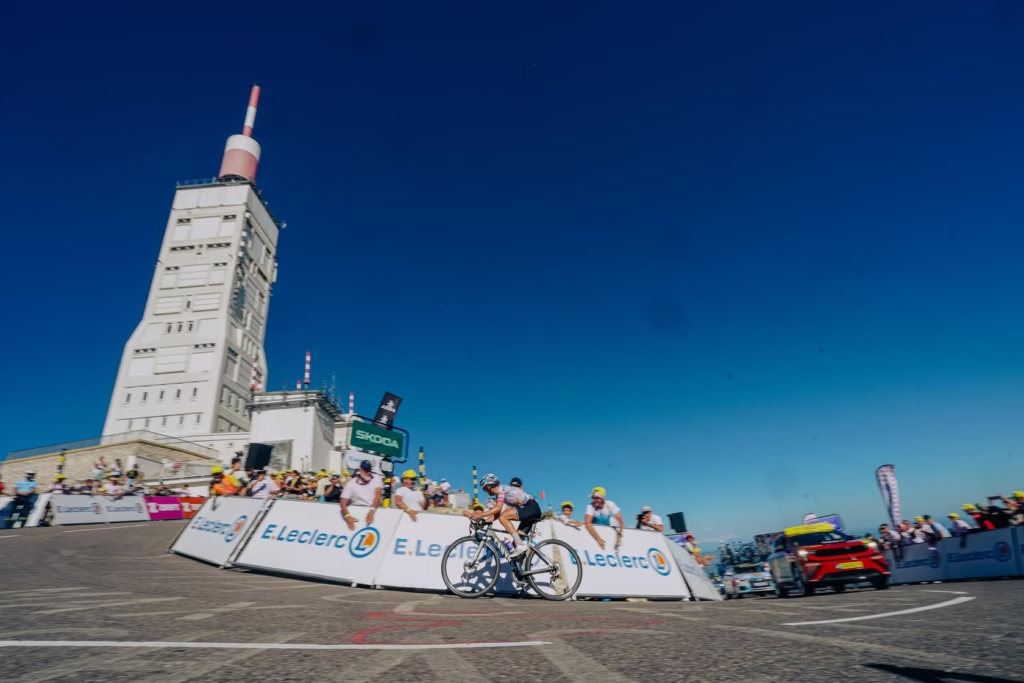 Photo Credit: A.S.O./Gaëtan Flamme
Why did Vollering finally attack in the last kilometre?
Because by then there was almost nothing left to protect tactically.
Niewiadoma-Phinney had already taken yellow on the road.
Reusser was beginning to struggle.
The finish was close enough that Vollering no longer had to worry about sustaining a long solo effort into the wind.
The decision became simple.
Attack.
When she did, Reusser could not follow.
That is the detail that makes the earlier hesitation look so costly.
Vollering gained roughly half a minute on Reusser in the final kilometre and dramatically reduced the deficit to Niewiadoma-Phinney before the summit.
It does not prove she could have maintained that speed for another five kilometres.
It does show that she still had enough left to make a major difference when she finally stopped worrying about the tactical consequences and committed completely.
That is why the post-stage question is legitimate.
Could Vollering have taken yellow by attacking earlier?
Possibly.
There is no way to say definitively that Vollering would be in yellow had she attacked two or three kilometres earlier.
The final-kilometre effort was possible partly because she had conserved energy. Producing the same acceleration with several kilometres remaining would have required sustaining it much longer, including through the headwind.
Niewiadoma-Phinney was also exceptionally strong.
She did not win because the two riders behind simply stopped racing. She still had to ride more than nine kilometres alone on Mont Ventoux and defend the advantage she had created.
But Vollering did not need to catch her.
She only needed to finish 15 seconds closer.
That is the key point.
The margins are small enough that a more efficient chase, less time spent marking Reusser or an attack even one kilometre earlier could plausibly have changed who wore yellow.
That is very different from saying Vollering definitely had the strength to catch Niewiadoma-Phinney.
Reusser may have had even more reason to cooperate
Reusser’s position is arguably the most painful in hindsight.
She started the stage in yellow.
By refusing to commit completely to a chase with Vollering, she allowed Niewiadoma-Phinney enough freedom to take the race lead.
Vollering then dropped her anyway.
The problem for Reusser was that the tactic designed to protect her against her closest rival ultimately failed against both riders.
A steadier chase might still have ended with Vollering attacking later, but it could have kept Niewiadoma-Phinney within a much smaller margin.
Reusser’s Tour had been built around using the time she gained against the clock and then surviving the mountains. That balance between time-trial power and controlled climbing was one of the central questions highlighted in the 2026 Tour de France Femmes route guide.
On Ventoux, the physical part held up longer than the tactics did.
-
 Photo Credit: Getty

Vollering’s mistake was not simply waiting to attack
The more precise criticism is that she waited too long to commit.
Launching one enormous attack with nine kilometres remaining was not necessarily the correct move.
Reusser was still attached. The headwind was waiting. A long solo effort might have failed badly.
The bigger issue was the period after Niewiadoma-Phinney attacked.
Vollering accelerated.
Reusser followed.
They slowed.
They watched one another.
Another effort came.
Every repetition allowed the rider ahead to gain more road.
A sustained chase followed by a later Vollering attack may have been more efficient for both Reusser and Vollering.
Instead they repeatedly spent energy without solving either problem.
Did Vollering cost herself the Tour?
Not necessarily.
That is the most important qualification.
Niewiadoma-Phinney has yellow, but Vollering remains only 15 seconds behind.
Reusser is still close enough to matter as well.
The 2026 route was designed to keep the GC open beyond Ventoux, with the final weekend around Nice providing another opportunity for riders who combine climbing strength with aggressive racing. The complete structure is set out in our Tour de France Femmes 2026 route guide.
Vollering also knows exactly what is required to win this race. She is already a former champion and entered 2026 with regaining yellow as one of the defining objectives of her season, as covered in our Demi Vollering 2026 season guide.
If she overturns the 15-second gap over the final weekend, the Ventoux stalemate becomes an interesting tactical error that ultimately did not decide the Tour.
If she loses by a handful of seconds, Stage 7 will be remembered very differently.
Then the question will no longer be why Demi Vollering waited so long to attack Mont Ventoux.
It will be whether those few minutes of hesitation were where she lost the Tour.

