
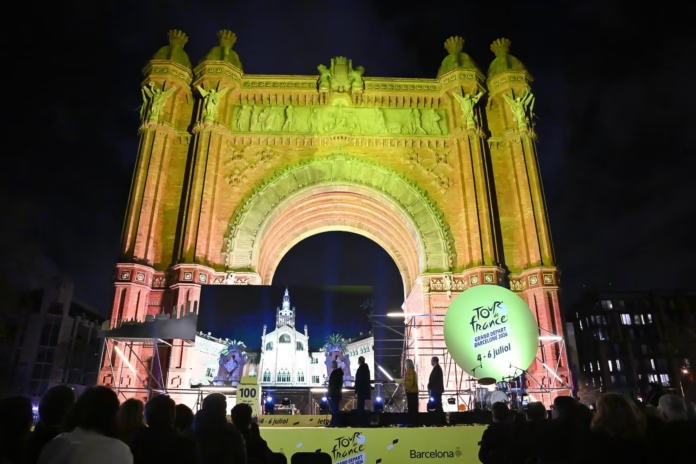
The Tour de France 2026 begins in Barcelona, giving the race one of its most visually striking Grand Départs of the modern era. The 113th edition starts on Saturday, 4th July with a 19.6km team time trial through the city, before the race stays in Catalonia for two more days and reaches the mountains by stage 3.
It is a start with more than ceremonial value. Barcelona will not simply provide a backdrop before the Tour settles into its usual rhythm. The opening team time trial can create early GC gaps, stage 2 returns to Barcelona with a hilly finish on Montjuïc, and stage 3 takes the peloton from Granollers to Les Angles in the Pyrenees. By the time the race enters France properly, the general classification should already have shape.
The wider route is covered in the Tour de France 2026 full route guide, while the Tour de France 2026 route analysis looks at where the race is likely to be won and lost. This guide focuses on the opening weekend and why Barcelona matters.
Why is the Tour de France starting in Barcelona?
The 2026 Tour de France begins in Barcelona as part of the race’s latest international Grand Départ. It will be the first time Barcelona has hosted the official start of the Tour, and the third time the men’s race has begun in Spain.
Grand Départs outside France have become an important part of the modern Tour. They give the race a wider international stage, create new images for television, and allow host cities to frame the opening days around their own geography and identity. Barcelona is a natural fit for that role. It has a strong cycling culture, a global sporting profile, and a cityscape that can carry a major opening weekend.
The route also uses Barcelona properly. This is not a case of the Tour beginning near the city and moving away immediately. Stage 1 is fully urban. Stage 2 finishes back in Barcelona. Montjuïc appears on both of the first two days. The city is built into the sporting shape of the race, not just the publicity around it.
That matters because the Grand Départ should feel like part of the race, not just the launch event. Barcelona’s opening does that. The first yellow jersey will be earned in the city, and the first GC pressure points will come on its streets.
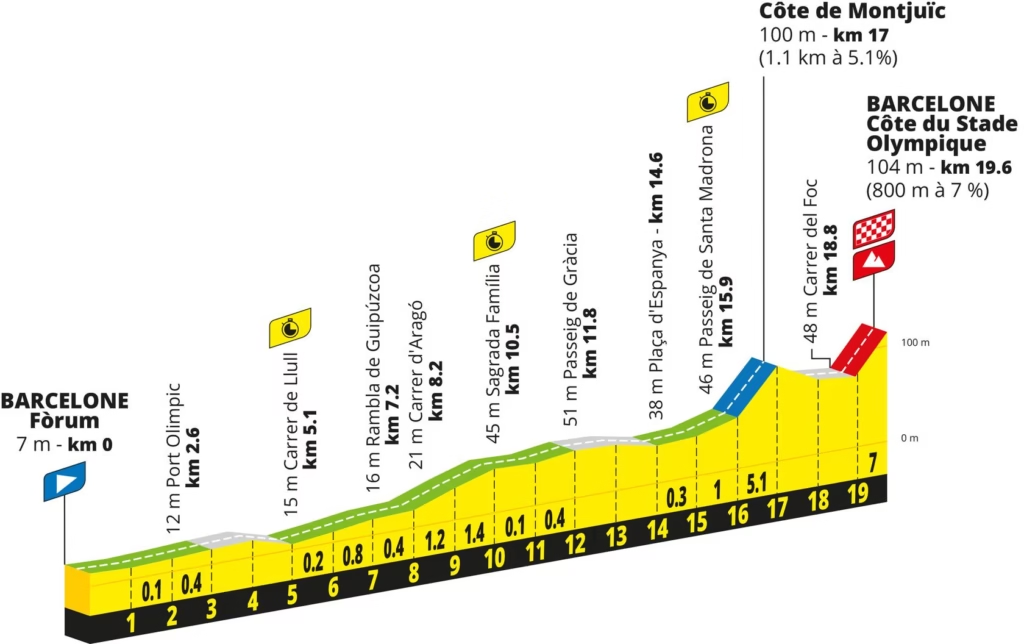
Stage 1: Barcelona team time trial
The Tour begins with a 19.6km team time trial in Barcelona. That immediately makes the opening day more serious than a simple sprint stage or ceremonial rollout.
Team time trials are rare enough in the modern Tour to feel distinctive. They test not only the GC leader, but the quality and organisation of the whole squad around him. Teams need to ride smoothly, rotate cleanly, manage pacing, handle corners and keep enough riders together to finish strongly. A leader can arrive in perfect form, but if his team is not sharp, he can lose time before the first road stage.
Barcelona makes that test more complex. The opening route is urban, taking in the city’s broad roads and famous landmarks, including Sagrada Família and the Montjuïc area. Urban team time trials carry their own stress. They are quick, technical and exposed to small mistakes. One poor corner, one mistimed pull or one rider losing contact at the wrong moment can turn a promising ride into a damaging one.
The format also changes the first yellow jersey battle. This is not simply a question of which individual rider is fastest. It is about which team can combine power and precision under immediate pressure. The strongest collectives can place their leaders high on GC from day one. Weaker squads may already be chasing.
For the contenders, the goal is clear: avoid early damage. The Tour cannot be won outright in 19.6km, but it can be made more difficult. A loss of 20 or 30 seconds in Barcelona would not be fatal, but it would change the first week. It would force decisions earlier than planned, especially with the Pyrenees arriving almost immediately.
Why Montjuïc matters
Montjuïc is one of the key features of the Barcelona Grand Départ. It appears in the opening team time trial and then becomes central again on stage 2, when the race returns to Barcelona from Tarragona.
That gives the opening weekend a very specific identity. Montjuïc is not a long Alpine climb, but it is difficult enough to shape a race when used repeatedly and placed late. The roads around it are familiar from Catalan racing, and they bring a mixture of gradient, positioning pressure and city-centre spectacle.
For stage 1, Montjuïc adds difficulty to the team time trial. Teams cannot simply rely on straight-line power. They need to manage changes in rhythm, technical sections and the pressure of climbing in formation. A strong flat TTT unit that struggles with uphill pacing could lose momentum at exactly the wrong moment.
For stage 2, Montjuïc becomes more openly tactical. The stage from Tarragona to Barcelona includes a tougher second half and a finishing circuit that brings the riders back to the Montjuïc Castle climb multiple times. That makes it more than a standard uphill drag. It is a place where punchy riders, GC contenders and aggressive teams can all influence the race.
Montjuïc matters because it makes Barcelona more than scenery. It gives the Grand Départ a sporting edge.
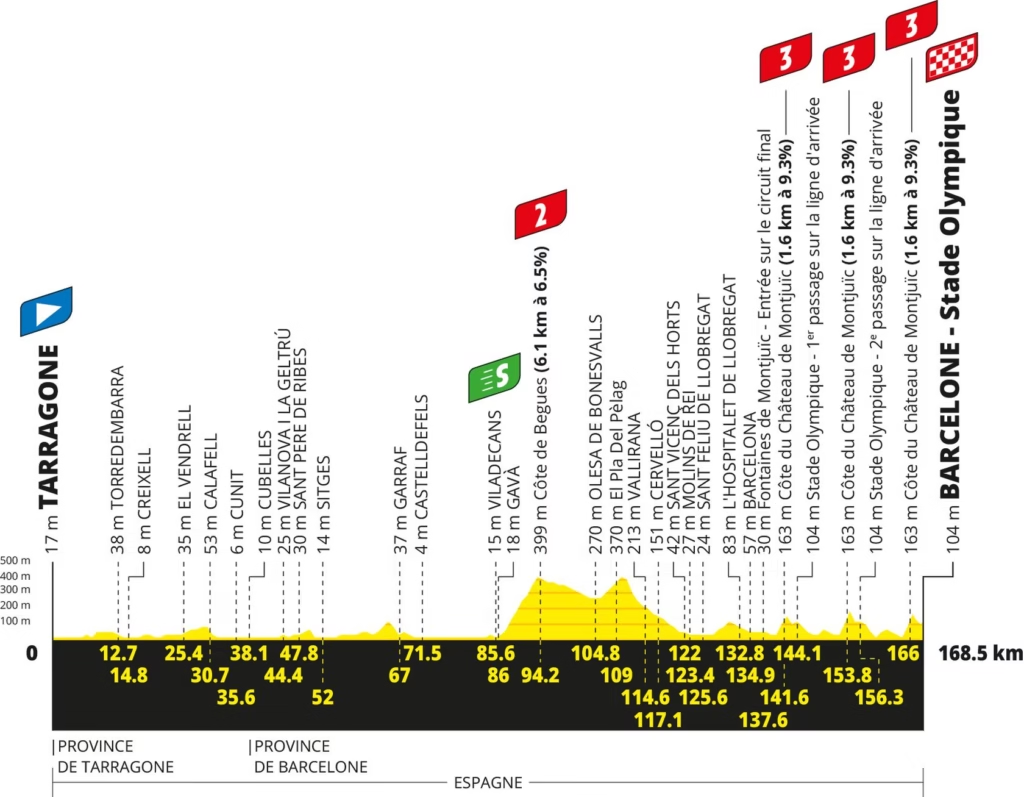
Stage 2: Tarragona to Barcelona
Stage 2 takes the race from Tarragona back to Barcelona. It is a hilly stage rather than a pure sprint day, and that should make it one of the most interesting second stages the Tour has had for a while.
The first part of the route follows flatter coastal terrain, giving the peloton a chance to settle after the opening team time trial. Tarragona brings its own history and seaside setting, while the road towards Barcelona should offer strong television images along the Catalan coast. But the difficulty increases in the second half, especially as the race moves inland and then returns towards the city.
The final circuit around Montjuïc should prevent a routine bunch sprint. The climb towards Montjuïc Castle is short, but the repeated ascents make the finish selective. That could open the door to punchy classics-style riders, reduced sprint contenders or GC riders willing to test the legs early.
It is also a stage that could create small but meaningful GC changes. After the team time trial, some riders may already be under pressure. A tough uphill city finish gives them a chance to respond, but it also gives stronger rivals another opportunity to apply pressure.
The Tour often spends its first road stage trying not to crash. In 2026, stage 2 could be much more active than that.
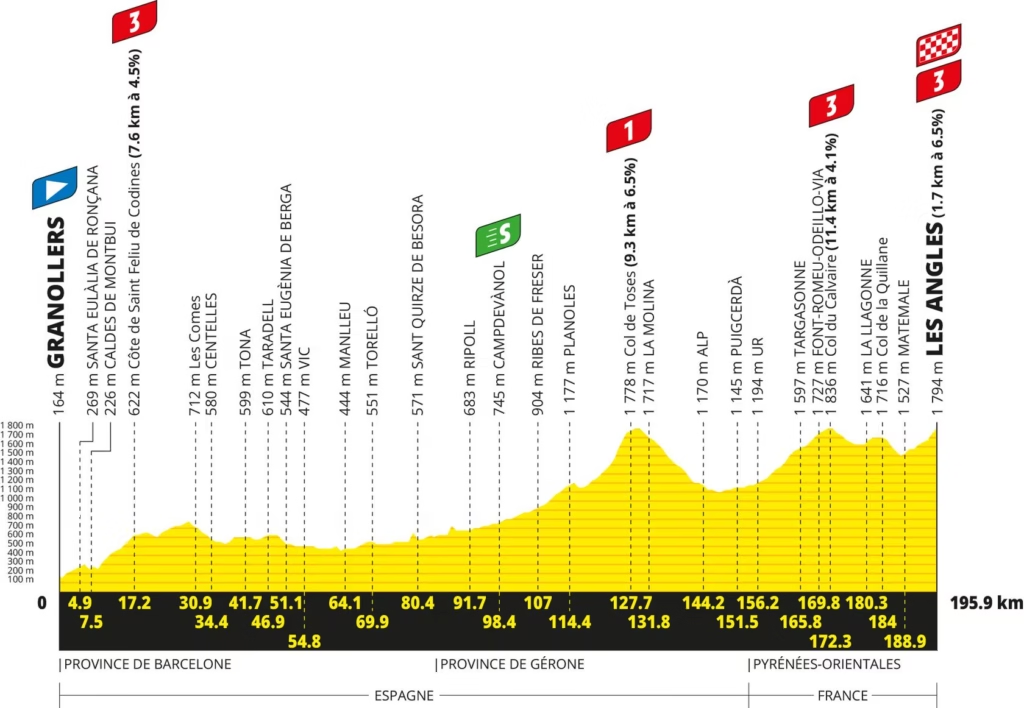
Stage 3: Granollers to Les Angles
Stage 3 is where the Barcelona Grand Départ stops being a city showcase and becomes a genuine early mountain test. The route runs from Granollers to Les Angles over 195.9km, taking the race from Catalonia into the Pyrenees and towards France.
This is a serious stage for the first Monday of the Tour. It is long, mountainous and placed before anyone has had time to ease into the race. The climb to Les Angles should give the general classification its first proper mountain reference point.
That timing matters. A rider who lost time in the Barcelona team time trial will not have to wait long for a chance to respond. A team that looked strong on stage 1 may immediately be asked whether it can support its leader on climbing terrain. A GC contender arriving short of form will find out quickly.
Stage 3 also gives the Grand Départ a natural sporting conclusion. The first two days belong to Barcelona and its urban terrain. The third day uses Catalonia as a launchpad into the mountains. By the time the Tour leaves the Spanish opening phase, the race should already have moved beyond introductions.
For newer fans following the Tour from the start, this is the point where the yellow jersey picture should begin to look more meaningful. The team time trial shows team strength. Montjuïc shows positioning and punch. Les Angles shows climbing readiness.
How the Barcelona start affects the GC battle
The Barcelona Grand Départ is awkward for general classification contenders because it gives them three very different tests in three days.
Stage 1 tests team structure. Stage 2 tests positioning, punch and control on a hilly city finish. Stage 3 tests climbing form in the Pyrenees. That is a demanding opening sequence, especially for riders who prefer to settle gradually into a Grand Tour.
The team time trial is the first pressure point. Strong teams can gain time immediately. Weaker teams may leave their leaders chasing. The gap might only be seconds, but the psychological effect could be bigger. Once a rider is behind, every early climb starts to feel like an opportunity or an obligation.
Stage 2 then adds risk. The finish in Barcelona is not a calm sprint day. The repeated Montjuïc climbing can split the race, especially if teams decide to make it hard. A badly positioned GC rider could lose time or burn energy trying to stay safe.
Stage 3 makes the opening even more demanding. The first mountain stage arrives before the race has reached France fully. That gives the strongest climbers an early chance to test rivals, but it also means teams must be ready from the start. There is no long flat first week to hide poor preparation.
The overall effect is simple: Barcelona makes the Tour start properly from day one.
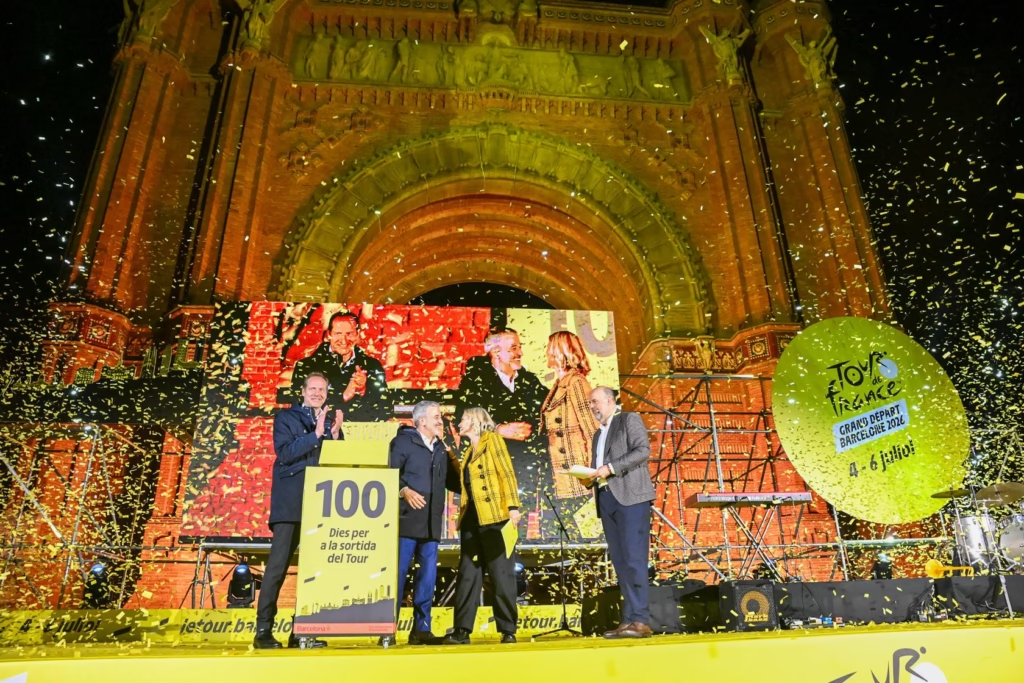 Photo Credit: A.S.O./Barcelona Ciry Council
What kind of riders does the Grand Départ suit?
The Barcelona Grand Départ suits complete riders and strong teams. It is not an opening weekend built purely for sprinters, nor is it one designed only for climbers. It asks for a combination of organisation, power, positioning and climbing readiness.
The opening team time trial favours GC leaders backed by squads with strong engines and technical discipline. Teams with several time-trial-capable riders should be able to limit risk and potentially gain early time. Teams built mainly around climbing domestiques may find the first day more difficult.
Stage 2 suits punchier riders. It could be a day for classics-style attackers, reduced sprint contenders or GC riders willing to take bonus seconds and test legs. It is unlikely to behave like a simple flat stage because Montjuïc changes the finish.
Stage 3 suits climbers and GC contenders who are ready immediately. There is usually a difference between being good enough to survive an early mountain stage and being ready to impose yourself on one. Les Angles should show which leaders are already comfortable and which are waiting for form to arrive.
For sprinters, the opening weekend is complicated. There may be chances later in the race, but Barcelona itself does not offer a straightforward bunch sprint. Fast riders who climb well and handle positioning may still be involved on stage 2, but this is not a Grand Départ built around a pure sprint finish.
Why Barcelona is a strong Grand Départ host
Barcelona gives the Tour something it always wants from a Grand Départ: recognisable images, sporting difficulty and a setting that feels different from the regular French route.
The city offers immediate visual identity. Sagrada Família, Montjuïc, broad avenues, the seafront and the Olympic legacy give the opening stage a clear sense of place. The Tour is a television event as well as a race, and Barcelona is built for that kind of exposure.
It also has enough cycling substance to justify the spotlight. Montjuïc has long been associated with racing, and Catalonia’s roads are already familiar to the professional peloton through training camps and races such as the Volta a Catalunya. The wider region offers coast, city roads, hills and quick access to the mountains, which makes it a natural place for a varied opening sequence.
That variety is the key. A Grand Départ works best when it is more than a parade. Barcelona gives the Tour an opening team time trial, a hilly city finish and a mountain stage within three days. That is a strong sporting package.
-
 Photo Credit: Getty

How UK viewers can watch the Barcelona Grand Départ
UK viewers will be able to watch the Tour de France 2026 live on TNT Sports and HBO Max. The Barcelona Grand Départ should be one of the major early broadcast highlights, especially because stage 1 is a team time trial and stage 2 finishes on the Montjuïc circuit.
The How to watch Tour de France 2026 in the UK guide explains the broadcast picture in more detail, including the move away from full live ITV coverage and the role of HBO Max as the main streaming platform.
For the opening weekend, stage 1 should be worth watching from the start because team time trials are structured around each squad’s run rather than a long road-stage build-up. Stage 2 is likely to be most important in the final hour, especially once the race reaches the Montjuïc finishing circuit. Stage 3 should be treated as an early mountain stage, meaning the final climbs and approach to Les Angles will be the key viewing window.
Why the Barcelona Grand Départ matters
The Barcelona Grand Départ matters because it gives the Tour de France 2026 an opening that can immediately affect the race. It is not only about the prestige of starting in one of Europe’s great cities. It is about the way the first three stages are designed.
The team time trial creates early gaps. Montjuïc offers a hilly, tactical finish. Les Angles brings the first mountain test before the race has properly settled. That combination means the first yellow jersey battle should not feel temporary or decorative. The early leader may be there because his team and legs have already passed serious tests.
It also means the race can begin with tension rather than patience. GC riders will need to be alert from the first kilometre. Teams will need to arrive with form and structure already in place. Sprinters may have to wait for more obvious opportunities. Climbers will be asked to show themselves almost immediately.
That is what makes Barcelona a strong opening host. It gives the Tour a setting with scale, but also a route with bite. The 2026 race will not drift into life. It will begin with pressure, spectacle and the first real questions of the yellow jersey contest.

