
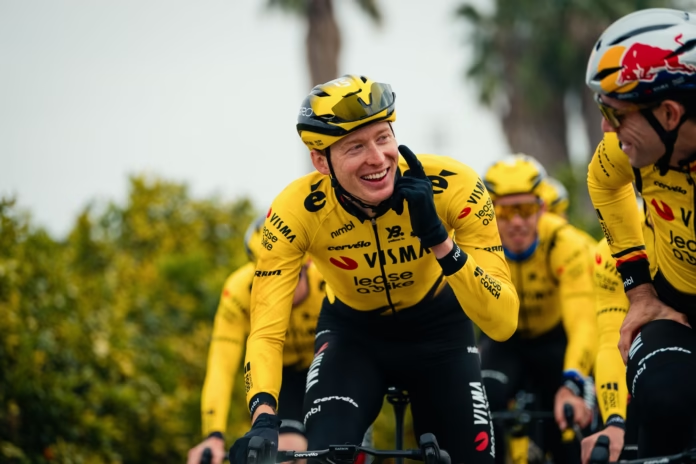
The Tour de France is usually sold through its leaders. Tadej Pogačar, Jonas Vingegaard, Remco Evenepoel, Florian Lipowitz, Isaac del Toro, Paul Seixas and the other general classification names will dominate the build-up, but the 2026 route is not built for isolated stars. It is built for teams that can keep a leader safe in Barcelona, survive the Pyrenees, control the Massif Central, carry numbers through the Vosges and still have climbing support left for the brutal final Alpine weekend.
That makes the domestiques unusually important. Stage 1 is a team time-trial in Barcelona, so the Tour starts with collective strength rather than individual waiting games. The Pyrenees arrive early, with Les Angles and Gavarnie-Gèdre already testing GC legs before the race is a week old. Le Lioran and Le Markstein Fellering then create awkward mid-race terrain where riders can lose support before the headline climbs even appear. Plateau de Solaison comes before the second rest day, stage 16 is an individual time-trial, and the race then finishes its mountain story with Orcières-Merlette and back-to-back Alpe d’Huez stages.
That sequence means the domestique who matters most may not be the one still beside his leader on the final climb. It could be the rider who saves 30 seconds in the Barcelona team time-trial, closes a gap after crosswinds, controls a breakaway before Plateau de Solaison, or drags a leader across the valley before the Col de Sarenne. The Tour de France 2026 will be decided by leaders, but it may be shaped by the riders working one position behind them.
For the full stage-by-stage structure, see our Tour de France 2026 full route guide, our Tour de France 2026 route analysis and the Tour de France 2026 mountain stages ranked by difficulty.
Matteo Jorgenson – Team Visma | Lease a Bike
Matteo Jorgenson may be the most important domestique in the 2026 Tour de France because he is not really a conventional domestique at all. He is a stage-race winner, a high-mountain support rider, a strong time-triallist, a rider capable of surviving deep into hard stages, and one of the few support names who can force rival teams to chase if he is sent up the road.
That matters on this route. Team Visma | Lease a Bike need climbing strength for Vingegaard, but they also need flexibility. The Barcelona team time-trial rewards a powerful unit. The Pyrenees arrive early enough that the team cannot afford to hide. The middle weekend through Le Markstein Fellering and Plateau de Solaison asks whether a leader still has numbers after two weeks of attrition. Jorgenson can help in all of those situations.
His value is highest in the stages where the Tour can become tactically unstable. On Le Lioran, Le Markstein or the approach to Plateau de Solaison, Jorgenson can be used as a bridge rider, a late helper, or a threat who forces UAE Team Emirates-XRG and others to respond. He can also protect Vingegaard if the race becomes chaotic before the final climb.
Wout van Aert’s absence changes the balance of the Visma squad. Without Van Aert’s engine and classics versatility, more responsibility falls on Jorgenson, Sepp Kuss, Edoardo Affini, Victor Campenaerts, Ben Tulett and the remaining support group. Jorgenson becomes even more central because he can cover the widest range of race situations.
If Vingegaard wins the Tour, Jorgenson may have been decisive long before the final Alpe d’Huez weekend. He is the rider who can stop the race becoming a one-against-three contest in the mountains.
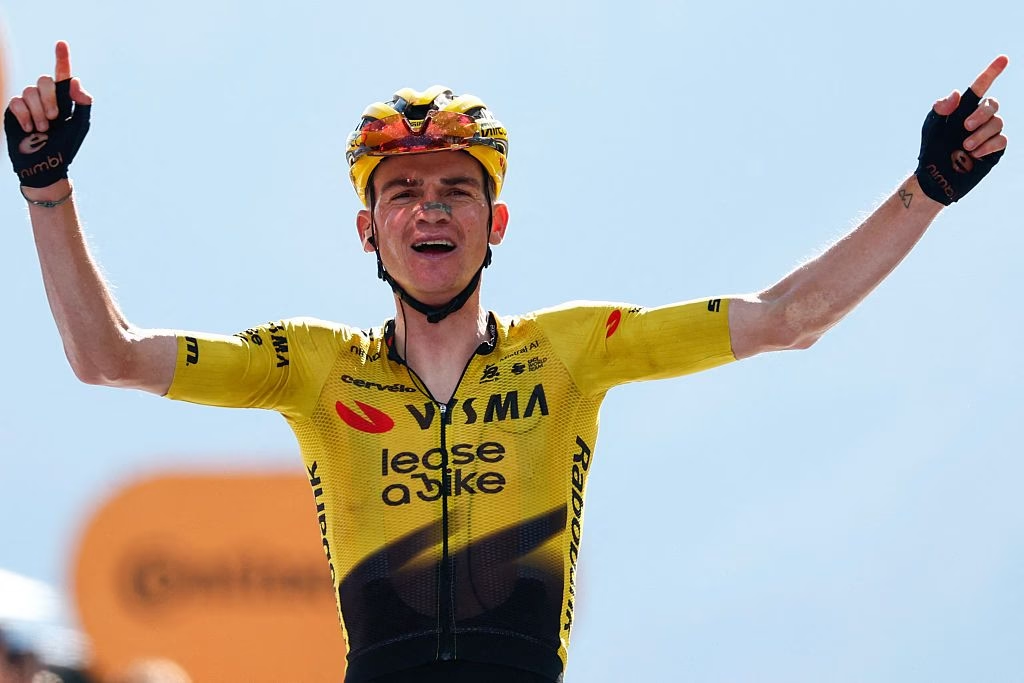
Sepp Kuss – Team Visma | Lease a Bike
Sepp Kuss remains one of the most valuable pure climbing domestiques in the race. On a route with Gavarnie-Gèdre, Plateau de Solaison, Orcières-Merlette, Alpe d’Huez and the queen stage over the Croix de Fer, Télégraphe, Galibier and Sarenne, there are still plenty of moments when the race comes down to who has a final helper in the last 10km of a climb.
Kuss gives Vingegaard a different kind of support to Jorgenson. Jorgenson can be tactical, versatile and dangerous from distance. Kuss is the rider who can sit beside a leader when the road gets steep and the group has already been reduced to the best climbers. That is especially valuable on Plateau de Solaison, where gradients averaging over 9 per cent can turn a small weakness into a full collapse.
His role may also be psychological. If Vingegaard has Kuss and Jorgenson with him when Pogačar or another rival attacks, Team Visma | Lease a Bike can respond calmly. If Vingegaard is isolated, every acceleration becomes more dangerous. The Tour is often decided by legs, but it is also decided by how long a leader can avoid making unnecessary decisions.
The final mountain weekend makes Kuss especially important. Stage 20 to Alpe d’Huez via the Col de Sarenne is long, steep and loaded with altitude. A domestique who can survive the Galibier and still be useful later is rare. Kuss is one of the few who can still matter when most teams are down to their leaders.
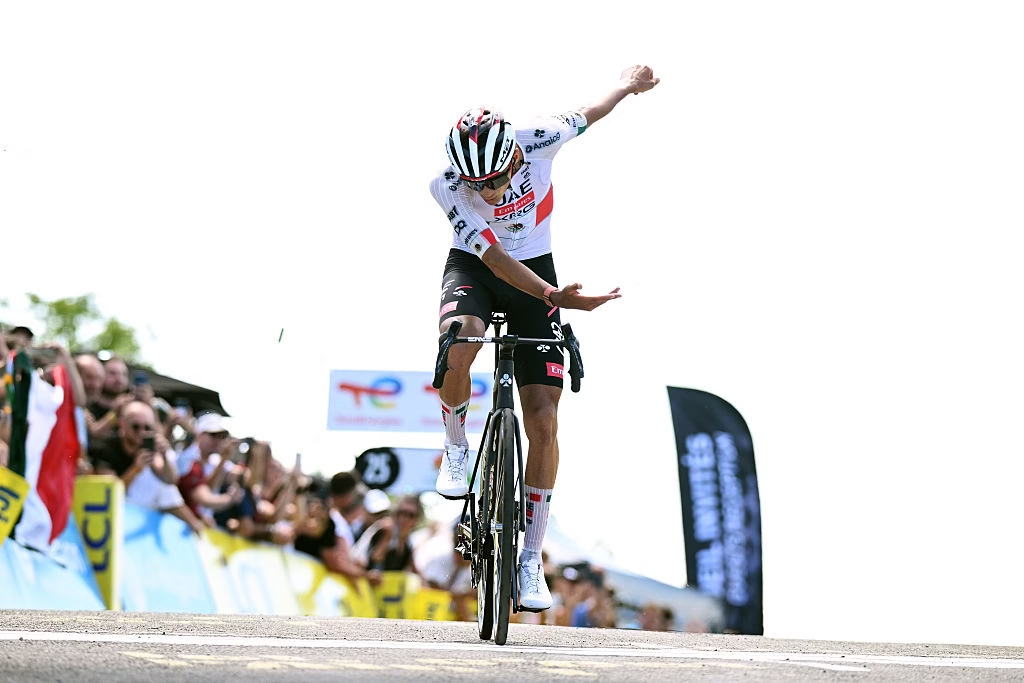
Isaac del Toro – UAE Team Emirates-XRG
Isaac del Toro may be the wildest tactical card in the 2026 Tour. If he is used as a protected rider, he becomes part of the GC story. If he is used as a super-domestique, he becomes a problem for everyone else.
His recent trajectory makes him impossible to treat as ordinary support. He can climb, attack from distance, recover across hard racing and force rivals to make uncomfortable choices. On a route with so many stages where a move before the final climb could matter, Del Toro has exactly the profile to change the race without being the nominal leader.
The obvious use is as a satellite rider. On Le Lioran, Le Markstein Fellering, Plateau de Solaison or even the stage 20 queen stage, UAE could put Del Toro ahead of Pogačar, forcing Team Visma | Lease a Bike and others to chase. If they do not chase, Del Toro becomes a GC threat. If they do chase, they burn riders before the decisive climbs.
That is where he could decide the Tour. Not by riding every kilometre on the front, but by making the race tactically expensive for everyone else. A team with Pogačar, Almeida, Del Toro, McNulty, Sivakov and powerful rouleurs does not need to choose only one method of control. It can press from several angles.
Del Toro’s exact role will depend on UAE’s hierarchy, but his presence alone changes the race. Teams cannot let him go. That makes him one of the most dangerous domestique-adjacent riders in the entire Tour.
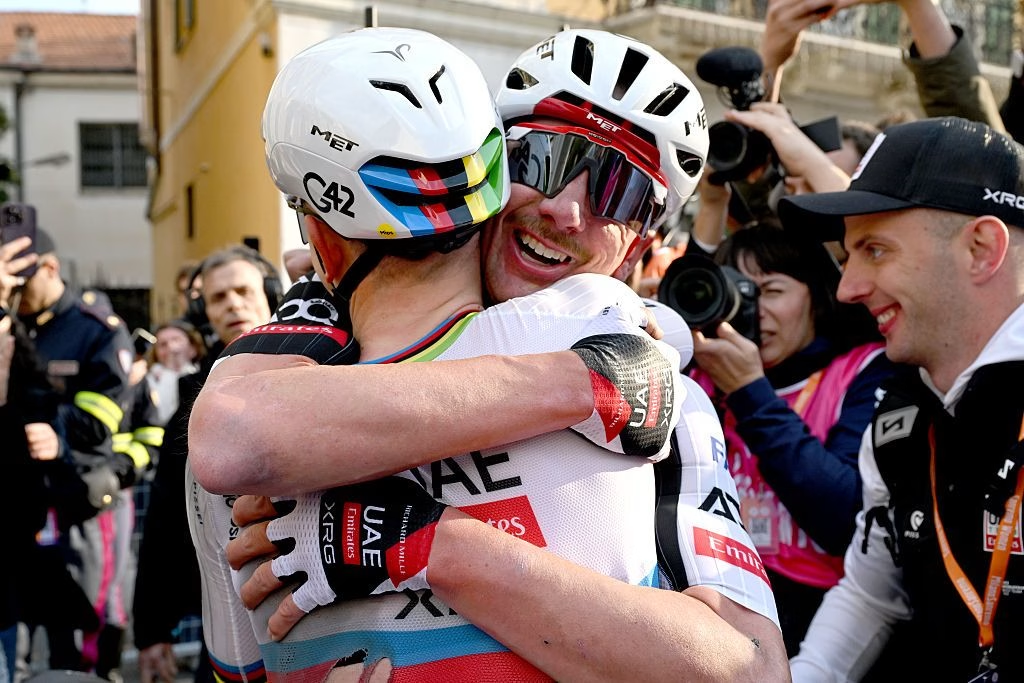
Brandon McNulty – UAE Team Emirates-XRG
Brandon McNulty is one of the riders who can quietly decide the Tour before the cameras focus on the final climb. He has the time-trial strength for Barcelona, the climbing level to last deep into medium and high mountain stages, and the engine to control awkward transition sections where races are often lost.
That matters because the 2026 Tour is not only about summit finishes. The stage 1 team time-trial needs power and discipline. The stage 16 individual time-trial will change the GC shape, but team support before and after that day still matters. The medium mountain stages need riders who can ride hard on rolling terrain, close dangerous moves and keep the leader out of trouble.
McNulty is especially useful in the valleys. On stages like Gavarnie-Gèdre or the final Alpine weekend, a leader can be isolated not only on the climb itself, but in the long sections between climbs. A rider like McNulty can keep pace high, bring back dangerous moves and stop rivals from turning the race into a tactical trap.
For Pogačar, that kind of support is invaluable. UAE have several headline names, but McNulty is the kind of rider who makes the plan work before the fireworks begin.
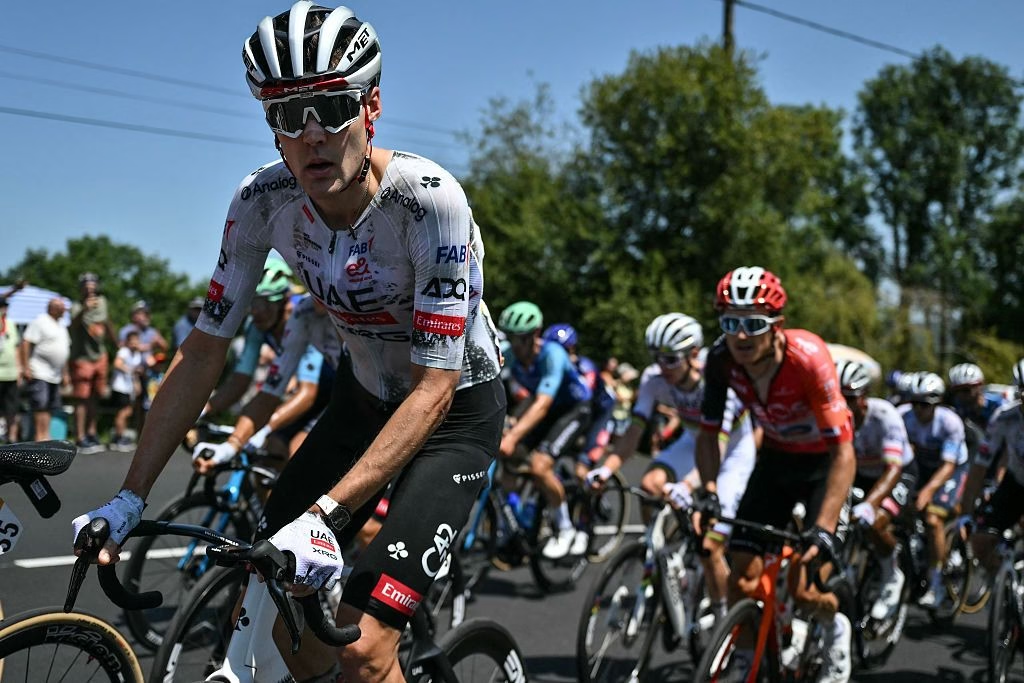 Photo Credit: Getty
Pavel Sivakov – UAE Team Emirates-XRG
Pavel Sivakov gives UAE another climbing layer, and that may matter more than it first appears. In a Tour with repeated mountain blocks, the question is not only whether Pogačar has one elite helper. It is whether he still has two or three riders after the first wave of attacks and tempo riding has removed everyone else.
Sivakov is useful because he can work before the final helper. He can ride the early and middle parts of major climbs, control dangerous groups, and make sure UAE reach the decisive kilometres with structure intact. That role is less glamorous than being the last man in the mountains, but it can be just as important.
Plateau de Solaison is a good example. The final climb is steep enough to create major gaps, but the work before it will shape who starts the climb in control. Sivakov can help UAE manage that entry, close dangerous moves and prevent rivals from attacking before Pogačar is ready.
On stage 20, with the Croix de Fer, Télégraphe, Galibier, Sarenne and Alpe d’Huez all stacked together, Sivakov’s role could be even more valuable. Few riders can remain useful across that kind of stage. If he can, UAE’s mountain depth becomes a race-winning weapon.
Tim Wellens and Nils Politt – UAE Team Emirates-XRG
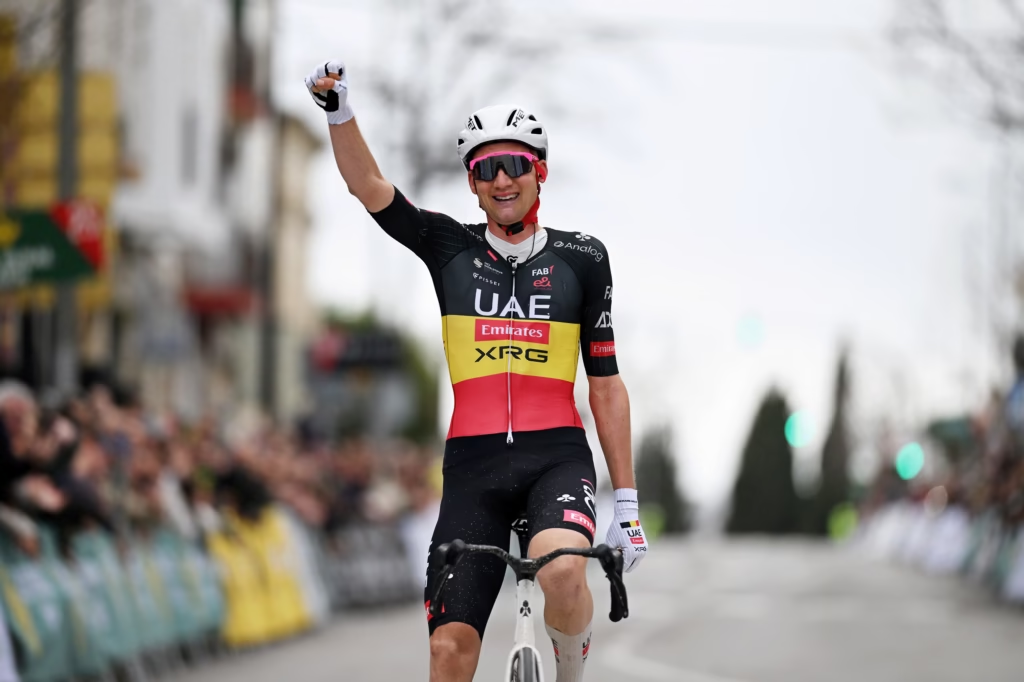
Tim Wellens and Nils Politt matter because the Tour is not won only above 2,000 metres. Pogačar’s mountain helpers are vital, but the riders who keep him safe before the climbs may be just as important.
Politt is the road captain and engine. On flat and rolling stages, he can protect position, control early breakaways, ride in crosswind danger zones and reduce stress before the race reaches the mountains. In the Barcelona team time-trial, a rider with his power and discipline is also valuable. A Tour leader who spends too much energy fighting for position in week one often pays later.
Wellens gives UAE a different kind of protection. He can handle hilly terrain, ride hard in technical finales and act as a tactical buffer on stages where the race is too difficult for pure rouleurs but not yet a high-mountain battle. Stage 2 in Barcelona, Les Angles, Le Lioran and the Vosges all contain roads where a rider like Wellens can stop the race becoming messy for Pogačar.
Their work may not be visible in the final GC standings, but it can decide whether UAE reach the decisive climbs with their leader calm, fresh and correctly positioned. That is often where the Tour begins to tilt.
Mikel Landa – Soudal – Quick-Step
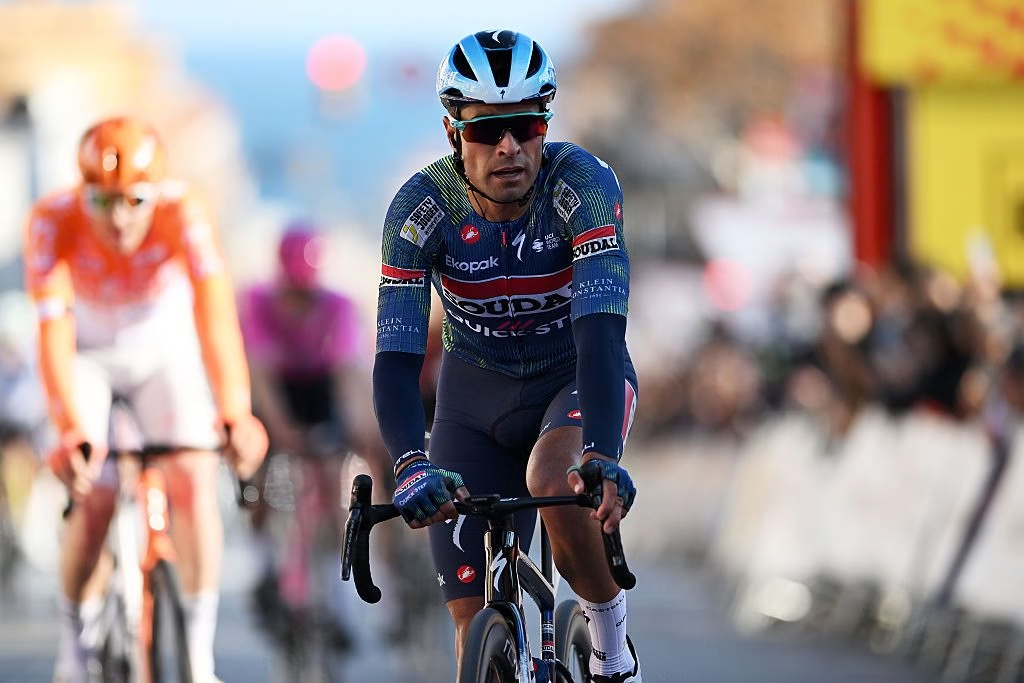
Mikel Landa is the obvious mountain reference point for Remco Evenepoel. If Evenepoel is to stay in the Tour-winning conversation deep into the Alps, he needs more than time-trial strength. He needs support when the climbs become long, repeated and tactically awkward.
Landa’s value comes from credibility. Rivals know he can climb at a very high level. If he is still present late in a mountain stage, Soudal – Quick-Step look much less vulnerable. If he is dropped early, Evenepoel can be forced into solving the race alone.
The 2026 route makes that support essential. Gavarnie-Gèdre comes early, Plateau de Solaison is steep enough to expose any weakness, and the Alpe d’Huez weekend will punish any leader who arrives isolated before the final climb. Landa gives Evenepoel someone who can bridge the gap between the team’s powerful rouleurs and the elite climbing group.
He may also decide whether Evenepoel can race offensively. If Landa is strong enough to follow attacks or sit in a dangerous group, Soudal can use him tactically rather than only defensively. If he is limited to survival, the team’s race becomes narrower.
For Evenepoel, Landa is not just support. He is the rider who can make the mountain stages feel less like damage limitation and more like opportunity.
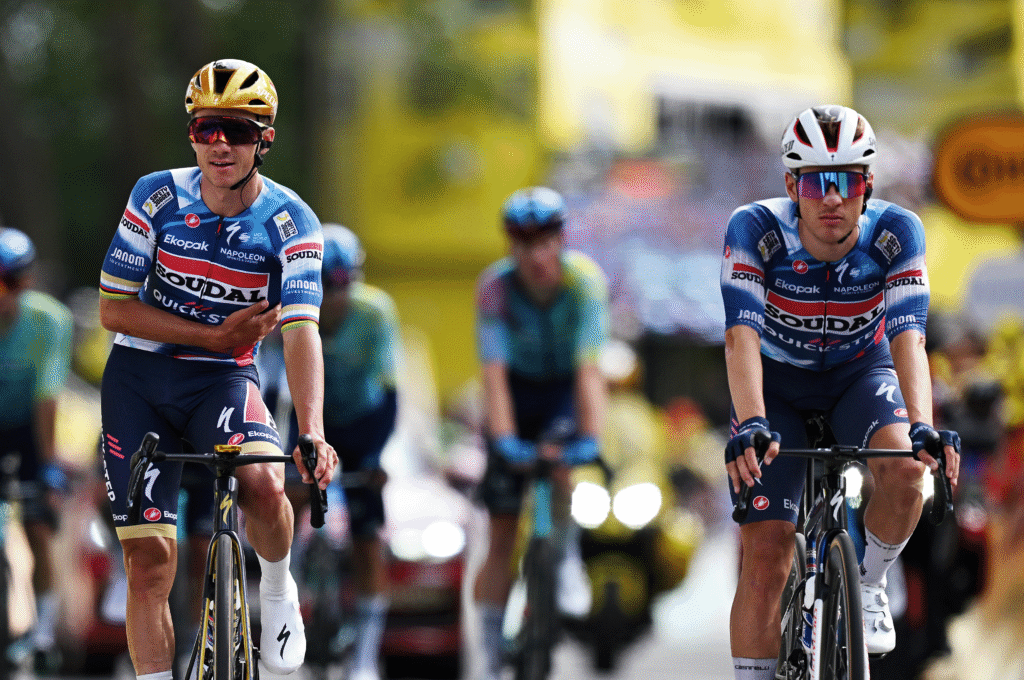 Photo Credit: RCS
Ilan Van Wilder – Soudal – Quick-Step
Ilan Van Wilder may be one of the most important all-round domestiques in the race because he sits between the two parts of Evenepoel’s Tour challenge. Soudal need power for the time-trial and rolling stages, but they also need riders who can survive enough climbing to be useful when the race is selective. Van Wilder offers both.
He can help in the Barcelona team time-trial, protect Evenepoel through awkward hilly stages, and still be present into difficult mountain terrain. That blend is crucial on a route where the GC race does not wait for the final week.
Van Wilder’s role could be especially important on stages where the race is not obviously mountainous but still dangerous. Le Lioran and Le Markstein Fellering are the kind of days where Evenepoel will need riders who understand rhythm, positioning and effort management. A pure rouleur may be gone too early. A pure climber may not control the approach. Van Wilder can bridge that gap.
If Soudal – Quick-Step are to make the Tour more than a defensive time-trial-and-survive project, Van Wilder has to be one of the riders who gives them options.
 Photo Credit: A.S.O./Billy Ceusters
Mattia Cattaneo – Soudal – Quick-Step
Mattia Cattaneo’s importance is clearest in Barcelona. The opening team time-trial is exactly the kind of stage where a rider with his engine can help Evenepoel start the Tour on the front foot rather than already chasing.
Cattaneo’s value goes beyond stage 1, though. He is the kind of rider who can work on long rolling roads, control the early parts of stages, protect a leader before technical finishes and bring order to chaotic moments. That is the less dramatic side of Tour domestique work, but it is essential.
Evenepoel’s Tour challenge will depend on limiting unnecessary losses before he can use his own biggest weapons. Cattaneo can help with that. If Soudal leave Barcelona in a strong position, avoid early splits and manage the first week cleanly, his work will already have mattered.
The mountains will decide how far Evenepoel can go, but riders like Cattaneo decide whether he reaches those mountains with the race still under control.
 Photo Credit: A.S.O./Billy Ceusters
Aleksandr Vlasov – Red Bull-BORA-hansgrohe
Aleksandr Vlasov could be a decisive rider for Red Bull-BORA-hansgrohe because he has the profile of a second leader who can become a domestique when needed. That role can be extremely powerful in a Tour where GC teams need multiple cards.
If Florian Lipowitz is Red Bull’s central GC option, Vlasov gives the team a rider who can stay close on difficult stages, support in the mountains and potentially force other teams to chase if he moves early. He can climb well enough to matter, time-trial well enough not to be a liability, and read stage races with enough experience to keep the team tactically present.
Red Bull’s challenge is not only matching UAE and Visma rider for rider. It is making sure they are not reduced to one leader too early. Vlasov can help prevent that. On Le Lioran, Plateau de Solaison or the Alpine stages, he can be used to stabilise the race around Lipowitz or to make the race more complicated for others.
A strong Vlasov gives Red Bull depth. A weak Vlasov leaves them exposed. That makes him one of the riders who could decide whether Red Bull are genuinely in the yellow jersey fight or merely defending a top-five place.
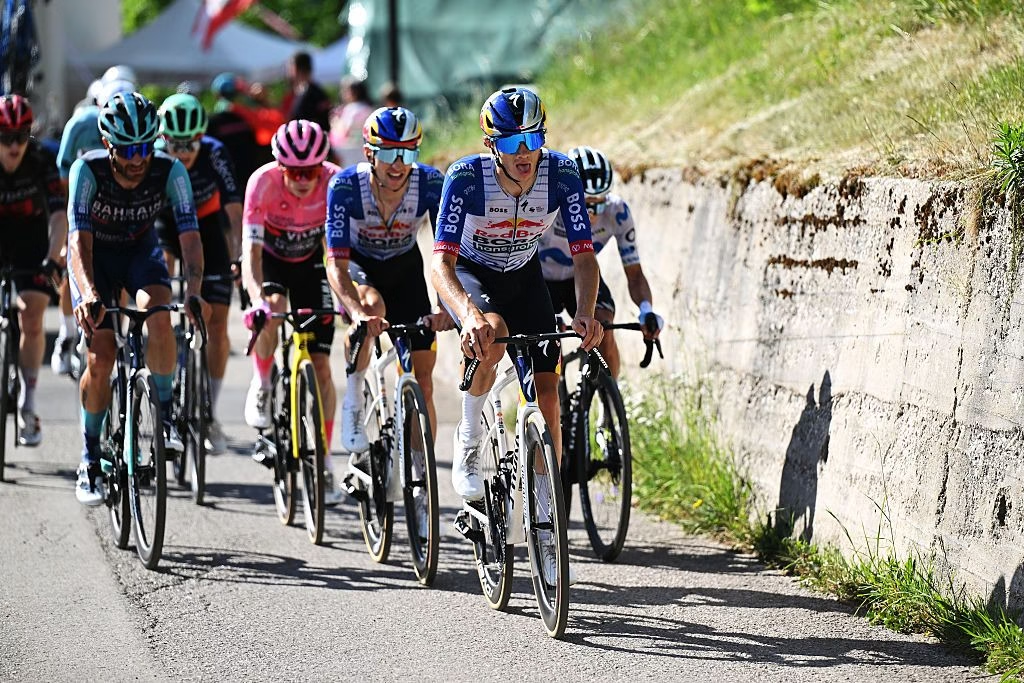
Jai Hindley – Red Bull-BORA-hansgrohe
Jai Hindley is another Red Bull rider who could shape the race if he arrives in a support role. He has Grand Tour-winning pedigree, climbing endurance and the ability to survive long mountain stages where many helpers disappear.
His value is clearest in the final week. Stage 20 to Alpe d’Huez via the Col de Sarenne is exactly the kind of stage where Red Bull will need more than one climber around their leader. Hindley can also matter on Plateau de Solaison, where steady climbing strength and recovery after Le Markstein Fellering will be vital.
The tactical question is how Red Bull use him. If he is protected, he gives them another GC card. If he is committed to support, he can become one of the strongest mountain domestiques in the race. Both roles can help decide the Tour, but only if the hierarchy is clear when the pressure arrives.
In a race where UAE and Visma may both bring multiple elite climbers, Red Bull need Hindley to make the mountain numbers more balanced.
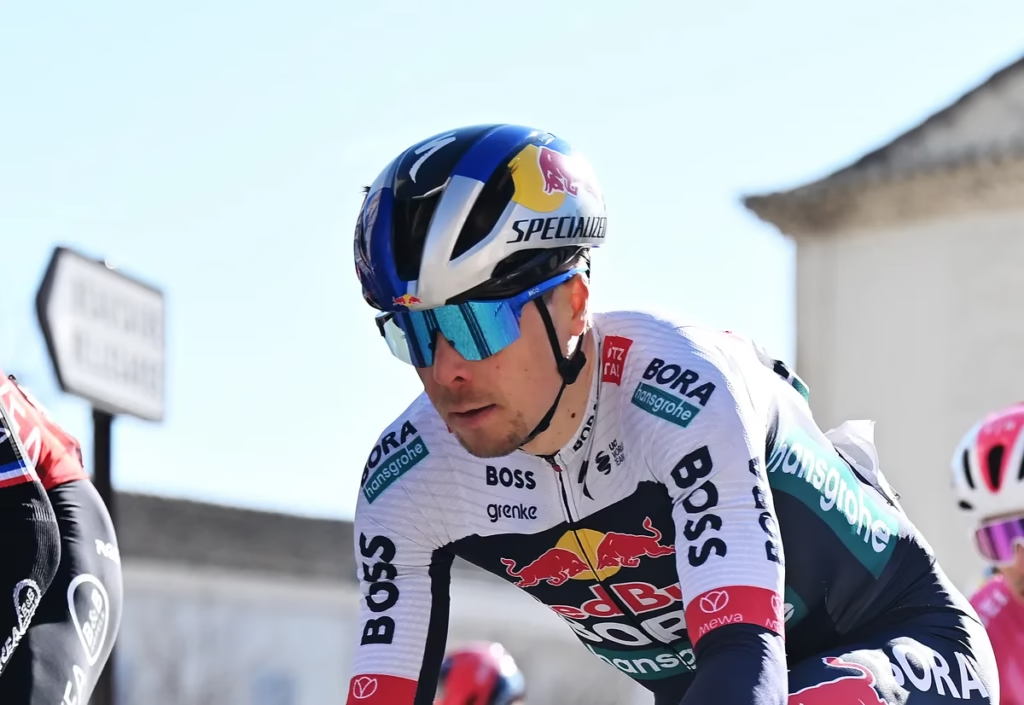
Jan Tratnik – Red Bull-BORA-hansgrohe
Jan Tratnik is the kind of rider whose importance is easy to miss until the race becomes chaotic. He can ride hard on rolling terrain, protect a leader, work in crosswinds, contribute to a team time-trial and survive difficult days well enough to remain useful deeper into the stage.
That matters because the 2026 Tour is full of days where the race can go wrong before the final climb. Barcelona needs team structure. The early Catalan stages need positioning. Le Lioran and the Vosges need experience and calm. Tratnik can provide that.
For a team with GC ambitions, those riders are essential. A leader cannot win the Tour if he is constantly forced to respond to avoidable stress. Tratnik’s job is to remove as much of that stress as possible.
 Photo Credit: Gaetan Flamme
Laurens De Plus – Ineos Grenadiers
Laurens De Plus is the sort of mountain domestique Ineos need if they want to remain relevant in the GC battle. The team’s ambitions may depend on form, selection and the health of their leaders, but De Plus has a clear role if he is in the Tour squad: keep the race manageable when the climbs begin to bite.
He is not a flashy support rider, but he is experienced, strong in the mountains and capable of working late into hard stages. That is important on a route where several GC days are more about cumulative pressure than one obvious attack.
Ineos have often relied on structure, pacing and numbers. De Plus fits that model. On Gavarnie-Gèdre, Plateau de Solaison and the Alpine weekend, he can be the rider who keeps a leader connected when the race is thinning quickly.
If Ineos are to turn uncertainty into a serious Tour challenge, they need riders like De Plus to make their mountain plan credible.
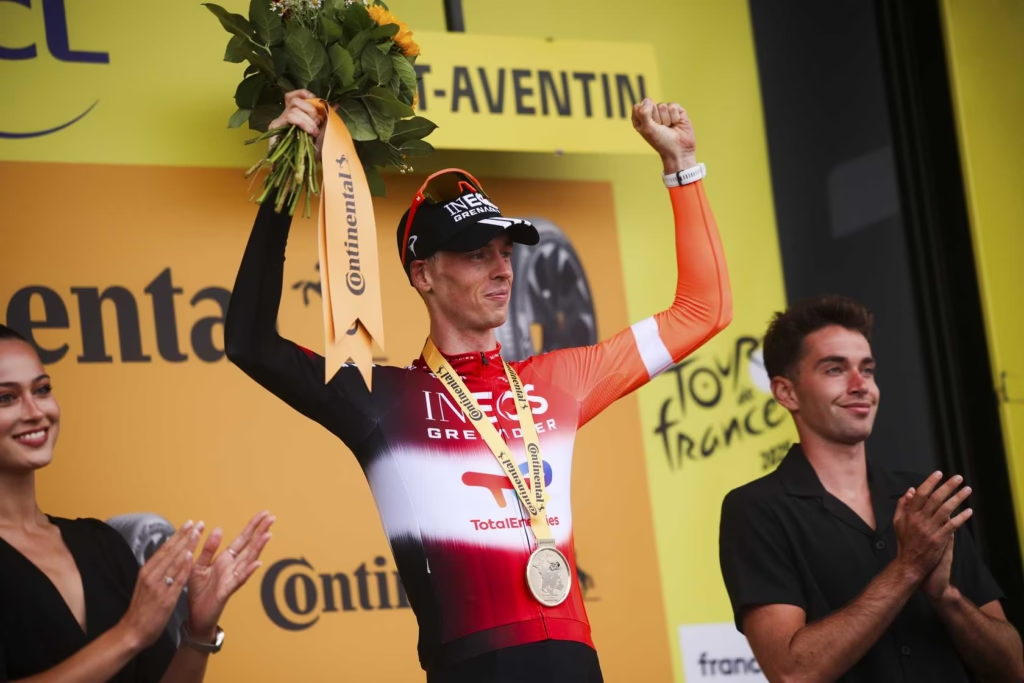 Photo Credit: A.S.O./Maxime Delobel
Thymen Arensman – Ineos Grenadiers
Thymen Arensman could be a significant domestique or secondary GC option depending on Ineos’ final approach. He has the climbing ability and stage-race engine to be more than a simple helper, which is exactly what makes him useful.
On a route with repeated mountain stages, Arensman can help in several ways. He can ride tempo, follow dangerous groups, support a leader in the high mountains and potentially protect his own GC position if the race opens up. That gives Ineos flexibility.
His value may be especially high in the stages where the race becomes attritional rather than explosive. Plateau de Solaison and stage 20 to Alpe d’Huez both require endurance, recovery and the ability to keep riding when the group is already shattered. Arensman has that profile.
Ineos do not look like the team most likely to control the Tour from the front, but with De Plus, Arensman and other strong support riders, they can still influence how the race is managed when the favourites begin to test each other.
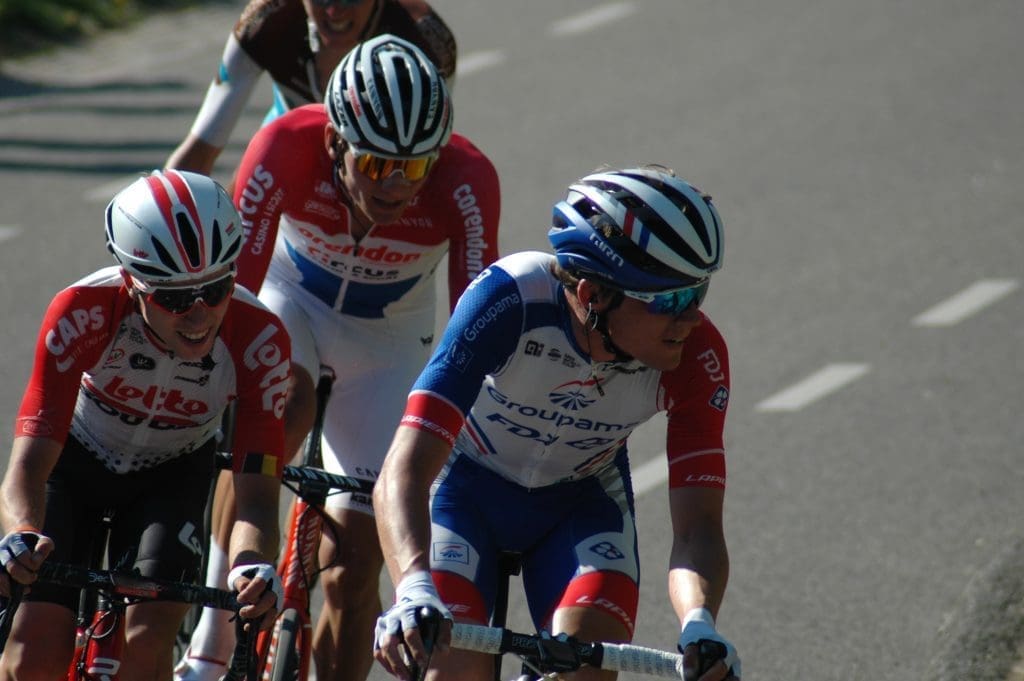
Valentin Madouas – Groupama-FDJ
Paul Seixas’ rise changes the way Groupama-FDJ may be viewed at the Tour. A young GC rider cannot be expected to solve the race alone, and that makes experienced domestiques around him extremely important. Valentin Madouas is one of the riders who can help turn promise into a controlled Tour performance.
Madouas offers experience, climbing strength, classics durability and tactical maturity. He can help on hilly stages, medium mountains and the earlier parts of the big climbing days. That kind of support is vital for a young leader, especially on a route where the pressure starts in Barcelona and never fully relaxes.
His role may be less about riding last man in the Alps and more about protecting Seixas from the Tour’s traps. Positioning, timing, nutrition, wind, descents and early mountain stages can all drain a young GC rider before the decisive days. Madouas can help reduce those costs.
If Seixas is still in the GC picture after Plateau de Solaison and the stage 16 time-trial, the work of riders like Madouas will be one reason why.
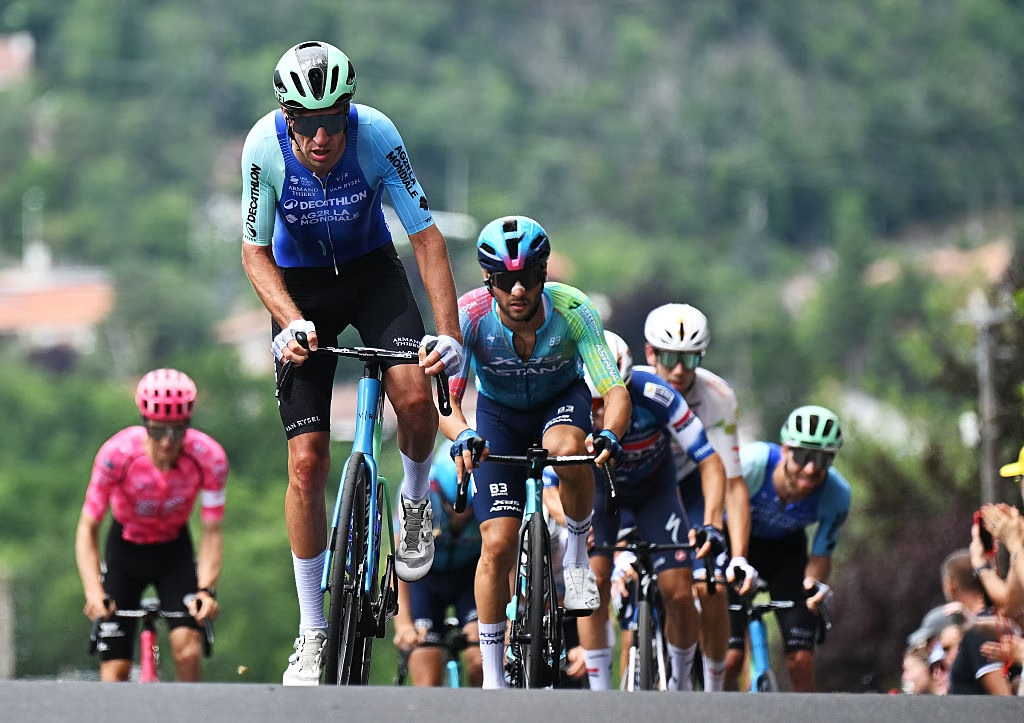 Photo Credit: Getty
Bruno Armirail – Team Visma | Lease a Bike
Bruno Armirail becomes even more interesting after Van Aert’s withdrawal. Team Visma | Lease a Bike still need power, control and road-management outside the pure climbing group, and Armirail can help provide that.
His role is not the same as Jorgenson or Kuss. Armirail is more about structure: team time-trial strength, early-stage control, long pulls, positioning and keeping Vingegaard protected before the road becomes selective. In a Tour that opens with a team time-trial, those traits matter immediately.
He can also be useful in the awkward middle of mountain stages. Not every climb needs a pure climber on the front. Sometimes a team needs a strong engine to manage a valley, chase a dangerous group or hold the race together before the final ascent. Armirail can be that rider.
If Visma are to absorb the loss of Van Aert, their second-line engines have to perform. Armirail is one of the riders who can make that possible.
Victor Campenaerts and Edoardo Affini – Team Visma | Lease a Bike
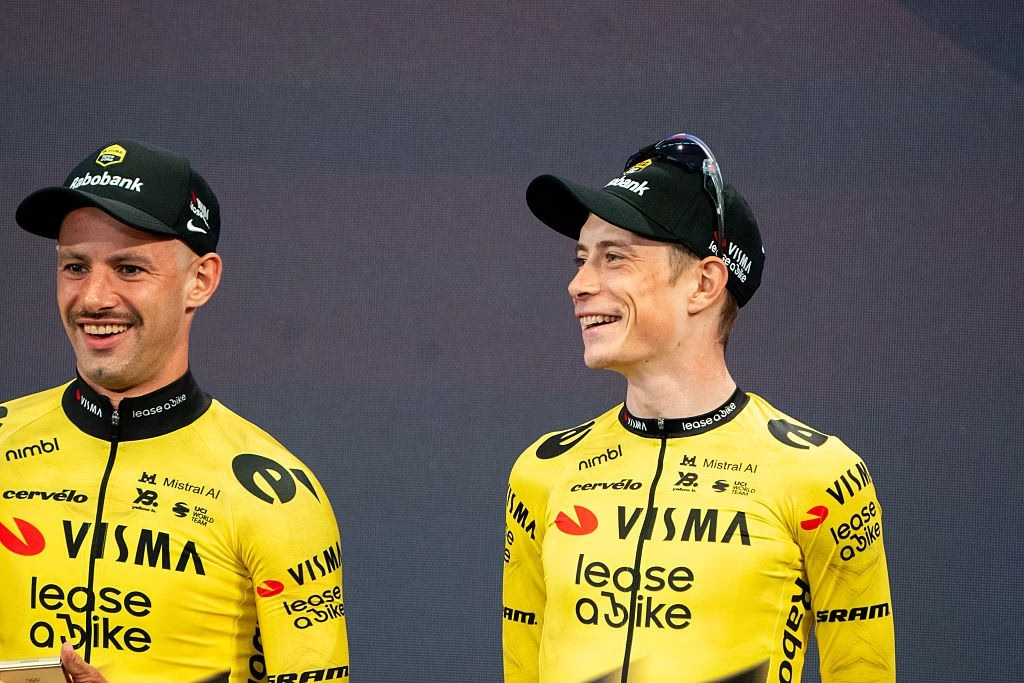
Victor Campenaerts and Edoardo Affini may not be the riders who deliver Vingegaard to the final kilometre of Alpe d’Huez, but they can still influence whether he reaches that point with the race under control.
Affini’s value is obvious in the Barcelona team time-trial. He is a powerful engine, a disciplined rider and exactly the type of domestique who can help limit early losses or create early gains. In a Tour that starts against the clock, he matters from the first day.
Campenaerts brings similar power with tactical sharpness. He can work in rolling terrain, manage breakaway control, help with positioning and bring experience to messy stages. Without Van Aert, that kind of reliability becomes more important.
The Tour is full of days where a GC leader needs protection before the television coverage starts focusing on the climbs. Affini and Campenaerts are the riders who can do that work. If they do it well, Vingegaard’s mountain support starts its job later and fresher.
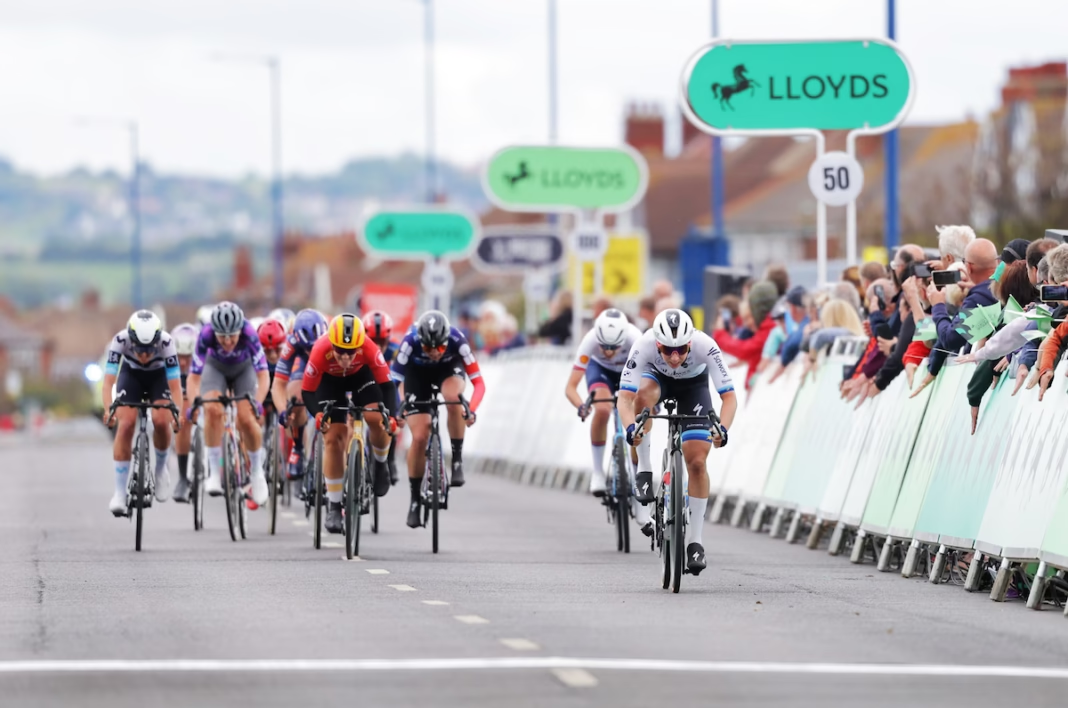
Why domestiques matter more on the 2026 route
The Tour de France 2026 route increases the value of domestiques because it does not offer a simple rhythm. It starts with a team time-trial, reaches the mountains early, uses medium-mountain terrain to create pressure between the headline stages, and then finishes with one of the hardest Alpine weekends in recent memory.
That means the best teams need different types of support:
- time-trial engines for Barcelona
- road captains for the nervous opening week
- rouleurs for valleys and breakaway control
- punchy helpers for hilly stages
- climbers for Gavarnie-Gèdre and Plateau de Solaison
- elite mountain domestiques for Orcières-Merlette and Alpe d’Huez
- tactical riders who can be sent ahead before the final climbs
No team can rely only on one kind of helper. A pure mountain train may lose time in Barcelona or get exposed in the wind. A team packed with rouleurs may disappear on Plateau de Solaison. A team with too many protected riders may lack clarity when the race becomes hard.
That is why domestiques could decide the 2026 Tour. The strongest leader still needs the right riders in the right places. The first week needs discipline. The middle weekend needs depth. The final week needs climbing strength. The team that combines those best may decide the yellow jersey before the leader makes his final attack.
The riders most likely to decide the race
The most important domestique group belongs to UAE Team Emirates-XRG and Team Visma | Lease a Bike. That is where the race is likely to be controlled, attacked and answered. Jorgenson and Kuss could keep Vingegaard in the fight deep into the mountains. Almeida, Del Toro, McNulty and Sivakov could give Pogačar the kind of numerical advantage that makes the hardest stages feel one-sided.
Soudal – Quick-Step’s domestiques may decide whether Evenepoel can turn his Tour into a genuine yellow jersey challenge. Landa, Van Wilder and Cattaneo have to bridge the gap between his time-trial strength and the climbing demands of the route.
Red Bull-BORA-hansgrohe need Vlasov, Hindley and Tratnik to keep their GC project alive against deeper squads. Ineos need De Plus and Arensman to give their leader structure in the mountains. Groupama-FDJ need riders like Madouas to protect Seixas from the repeated costs of a three-week race.
The final image of the Tour de France 2026 may still be a leader alone on Alpe d’Huez. But before that moment, the race will be shaped by the riders who kept the gaps small, closed the dangerous moves, made rivals chase and carried their leaders through the hardest kilometres.
The Tour may be won by Pogačar, Vingegaard, Evenepoel or another GC contender. It may be decided by Jorgenson, Kuss, Almeida, Del Toro, McNulty, Landa or one of the riders who does the work before the winning attack ever comes.

