

Tadej Pogačar arrives at the Tour de France 2026 as the rider everyone else has to dislodge. The route gives him almost every kind of terrain he likes: a technical Grand Départ in Barcelona, an opening team time-trial where UAE Team Emirates-XRG can make an immediate statement, early mountain tests in the Pyrenees, a hard middle section through Le Lioran, Le Markstein Fellering and Plateau de Solaison, then a final Alpine block built around Orcières-Merlette and back-to-back finishes at Alpe d’Huez.
It is not a route that lets a rider hide. That suits Pogačar. He has made a career from turning mixed terrain into pressure, and the 2026 Tour is full of days where the line between a stage-hunter opportunity and a GC danger point is deliberately blurred. The first week is hard enough to create separation before the race has fully settled. The second week gives him repeated chances to attack before the Alps. The final weekend is severe enough to reward the strongest climber in the race, but also comes after three weeks of accumulated fatigue.
His form is already sending the right signals. Pogačar dominated the Tour de Romandie in spring, winning four stages and the overall title on debut, then returned at the Tour de Suisse with a 70km-plus solo victory on stage 1 in Sondrio. That was not a small tune-up effort. It was a reminder that he can still make the hardest parts of a race happen far earlier than rivals expect.
For the full shape of the race, see our Tour de France 2026 full route guide, our Tour de France 2026 route analysis and our Tour de France 2026 GC favourites ranked.
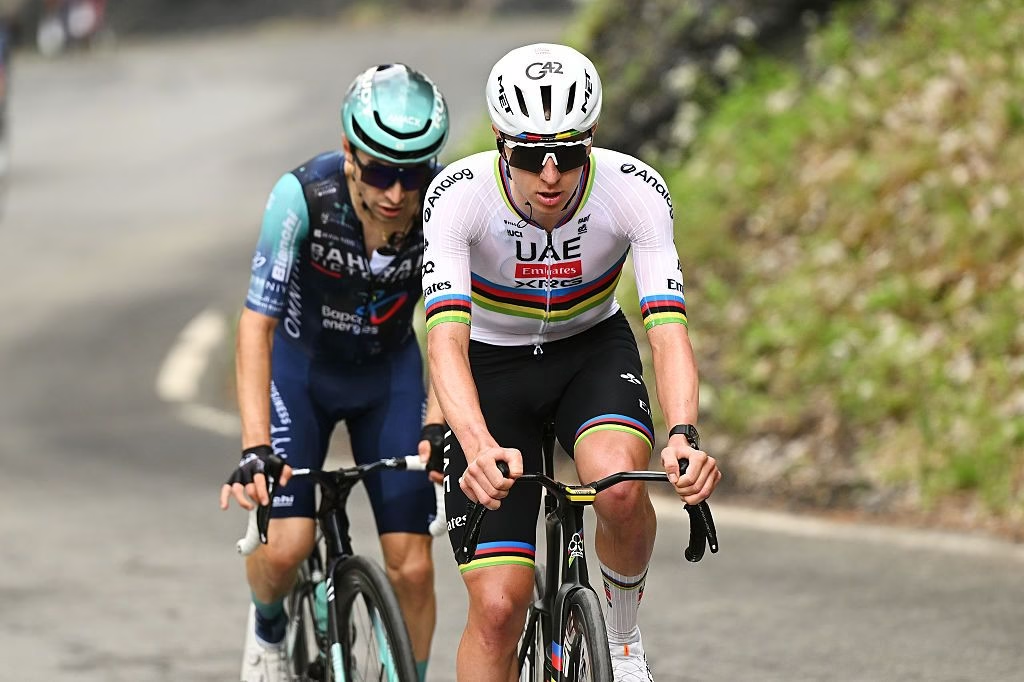
How good is Tadej Pogačar’s form before the Tour de France 2026?
Pogačar’s form looks exactly where it needs to be for a July peak. His Tour de Romandie performance was the first major clue. Four stage wins and the overall classification showed not just climbing strength, but a complete stage-race range: sprinting from reduced groups, controlling the leader’s jersey, attacking on the queen stage and finishing the race with authority.
The Tour de Suisse then added a sharper warning. On stage 1 in Sondrio, Pogačar launched from long range and rode clear alone, taking the stage and the race lead with a performance that immediately changed the tone of the week. It was the kind of win that matters beyond the result. He did not simply beat the other favourites in a final-kilometre acceleration. He forced the race apart early, kept extending the gap and made a high-level field chase a rider who looked completely in control.
That kind of form is difficult to fake. It suggests the base is already there, the climbing acceleration is already sharp, and the recovery from spring has been managed well enough to allow another major build-up. The key question is not whether he is strong now. It is whether he can carry that level into the third week of the Tour.
There is always a balance to strike. Being dominant in Romandie and Suisse is encouraging, but the Tour is longer, deeper and more heavily targeted by every rival. Pogačar has looked almost untouchable at times before July, yet the Tour is rarely won by form alone. It is won by sustaining form through stress, heat, team pressure, crashes, time-trials and repeated mountain stages.
Still, his current trajectory is hard to pick apart. He has wins, he has rhythm, he has team control around him, and he has already shown that his 2026 condition is not built around caution.
Why the 2026 Tour route suits Pogačar
The 2026 route suits Pogačar because it offers him multiple ways to win. He does not need to wait for the final Alpine weekend. He can gain time in Barcelona with UAE’s team time-trial strength, test rivals on the hilly early stages, attack in the Pyrenees, use the Massif Central and Vosges to apply pressure, then arrive at the Alps with the race already tilted in his favour.
That is the danger for his rivals. The 2026 Tour is not built around one decisive climb. It is built around repeated stress points. Pogačar is at his best when he can turn those stress points into attacks before others are ready.
The opening team time-trial is an immediate asset. UAE Team Emirates-XRG have the depth to make Barcelona a productive first day rather than a risk-management exercise. Riders such as João Almeida, Brandon McNulty, Pavel Sivakov, Tim Wellens and Nils Politt give the team a mix of time-trial power, climbing support and road control. If UAE get the opening stage right, Pogačar can start the race with time in hand.
The early road stages also suit him. Montjuïc on stage 2 and Les Angles on stage 3 are not the hardest days of the race, but they are exactly the kind of terrain where Pogačar can make opponents uncomfortable. He does not need to take minutes there. Even a small acceleration, a selective finish or a positioning squeeze can force rivals to spend energy earlier than planned.
Then comes the first real mountain checkpoint at Gavarnie-Gèdre. The stage includes the Col d’Aspin and Col du Tourmalet before the final climb, and that combination is tailor-made for UAE to raise the pace and see who is already under pressure. Pogačar does not need to wait for Alpe d’Huez to attack the race. He can start asking serious questions in the Pyrenees.
For more on the early decisive points, see our guide to where the Tour de France 2026 can be won before the Alps and our Tour de France 2026 Pyrenees guide.
 Photo Credit: Getty
Barcelona gives UAE Team Emirates-XRG an early weapon
The opening stage in Barcelona is a 19.6km team time-trial, and it could be one of the most important days of Pogačar’s Tour. It is not long enough to decide the race outright, but it is long enough to create the first hierarchy.
Pogačar benefits from this more than most GC riders because UAE Team Emirates-XRG should be one of the strongest squads in the discipline. McNulty, Almeida, Politt, Wellens and other powerful support riders give the team a serious engine. The Montjuïc finish also means the stage is not only about flat speed. It requires pacing, climbing strength and control, all areas where UAE should be comfortable.
The team time-trial also changes the psychology of the race. If Pogačar gains time on day one, he can spend the first week choosing when to respond. If rivals lose time, they may have to attack earlier in the Pyrenees or on the hilly Spanish stages. That suits Pogačar because he is usually happier in a race that opens up than in one that stays frozen.
The only risk is technical. A team time-trial on the opening day always carries danger. Crashes, missed turns, poor pacing and a badly timed split inside the team can all cost time before the race has properly begun. But as a route feature, Barcelona looks much more like an opportunity for Pogačar than a problem.
For the specific format, see our Tour de France 2026 team time-trial explained and our Tour de France 2026 Grand Départ guide.
The early mountains let him test rivals before the race settles
Pogačar’s route fit improves again once the race turns towards the mountains early. Stage 3 to Les Angles and stage 6 to Gavarnie-Gèdre both arrive before the Tour has had time to become predictable.
That is significant. Some rivals may want to ride into the race. Pogačar can punish that. He is often at his most dangerous when other leaders are still trying to judge their level, because he is comfortable attacking before the traditional decisive days.
Les Angles gives him the first mountain-stage feel. It may not be where he needs to launch a full assault, but it gives UAE a chance to test who has arrived ready and who still needs time. Gavarnie-Gèdre is more important. With the Tourmalet earlier in the stage and a summit finish to follow, it is the first real opportunity to create a meaningful GC gap.
Pogačar does not need a long-range attack every time the road rises. He can ride selectively. He can make a short acceleration to take bonus seconds, follow moves without stress, or force another team to chase. The point is that he has options. The 2026 route gives him too many chances before the final week for rivals to simply wait him out.
The Pyrenees are also useful because they help reveal the climbing hierarchy early. If Pogačar is stronger than Jonas Vingegaard, Remco Evenepoel, Florian Lipowitz, Isaac del Toro, Paul Seixas and the rest by stage 6, the race changes quickly. If he is level, he still has the time-trials and the Alps ahead. If he is slightly below his best, UAE’s depth can keep him protected while he manages the race.
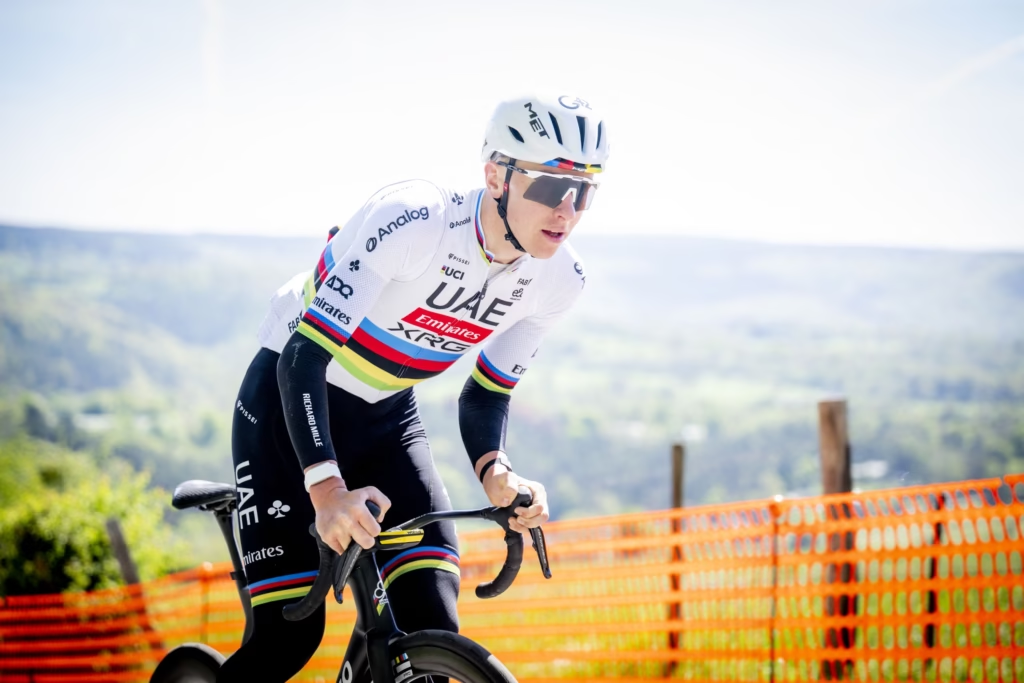
The middle weekend could be where Pogačar breaks the race
The most dangerous section for Pogačar’s rivals may come before the final Alps. Stage 10 to Le Lioran, stage 14 to Le Markstein Fellering and stage 15 to Plateau de Solaison all look like days where he can make the race harder without waiting for the obvious final showdown.
Le Lioran is exactly the kind of stage where Pogačar can hurt riders through repeated climbs, descending pressure and timing rather than one long mountain duel. It is a stage for a rider who reads terrain instinctively. If UAE choose to raise the pace after the first rest day, it could expose riders who have recovered poorly.
Le Markstein Fellering then gives the race a hard Vosges stage before Plateau de Solaison. The stage may not be an official summit finish, but it can weaken teams and reduce the number of helpers available for the following day. That is important because Pogačar’s biggest weapon is not always the attack itself. It is the way he and UAE can make rivals arrive at the attack already short of support.
Plateau de Solaison is one of the most important stages in the entire race. The final climb is steep, sustained and late enough in the Tour to create real damage. If Pogačar has the legs, this is a day where he can take time before the second rest day and before the final Alpine block even begins.
That makes the stage 15 finish central to his chances. If he gains time there, the Alps become a defensive platform rather than a desperate battlefield. If he loses time there, the route still gives him a chance to respond, but the race becomes much more complicated.
The scale of that middle stretch is covered in more detail in our Tour de France 2026 mountain stages ranked by difficulty and Tour de France 2026 summit finishes guide.
The time-trials favour him, but not without pressure
The 2026 Tour has two time-trial elements: the opening team time-trial and the stage 16 individual time-trial from Évian-les-Bains to Thonon-les-Bains. That is a good structure for Pogačar, but it is not completely straightforward.
The team time-trial should favour UAE if they arrive with their strongest unit. The individual time-trial is more nuanced. Pogačar is a top-level time-trialist, but the stage comes after two weeks of racing and immediately before the final Alpine block. That means freshness, pacing and recovery matter as much as raw power.
Against riders like Evenepoel, Pogačar cannot treat the stage 16 time-trial as free time. He may gain on most climbers, but he may also need to limit any loss to the pure specialists. Against Vingegaard, Lipowitz, Seixas or other climbing-focused contenders, the time-trial is more likely to work in his favour, especially if he reaches it in control.
The time-trial also affects tactics before it. Pogačar may not need to chase every second in the first two weeks if he believes stage 16 will help him. But if he already has a strong advantage by then, the time-trial can turn that advantage into something much harder for rivals to reverse.
That is why the 2026 route feels well balanced for him. It gives him mountains, but not only mountains. It gives him time-trials, but not enough to reduce the race to specialists. It rewards the most complete rider, and Pogačar is the most complete rider in the race.
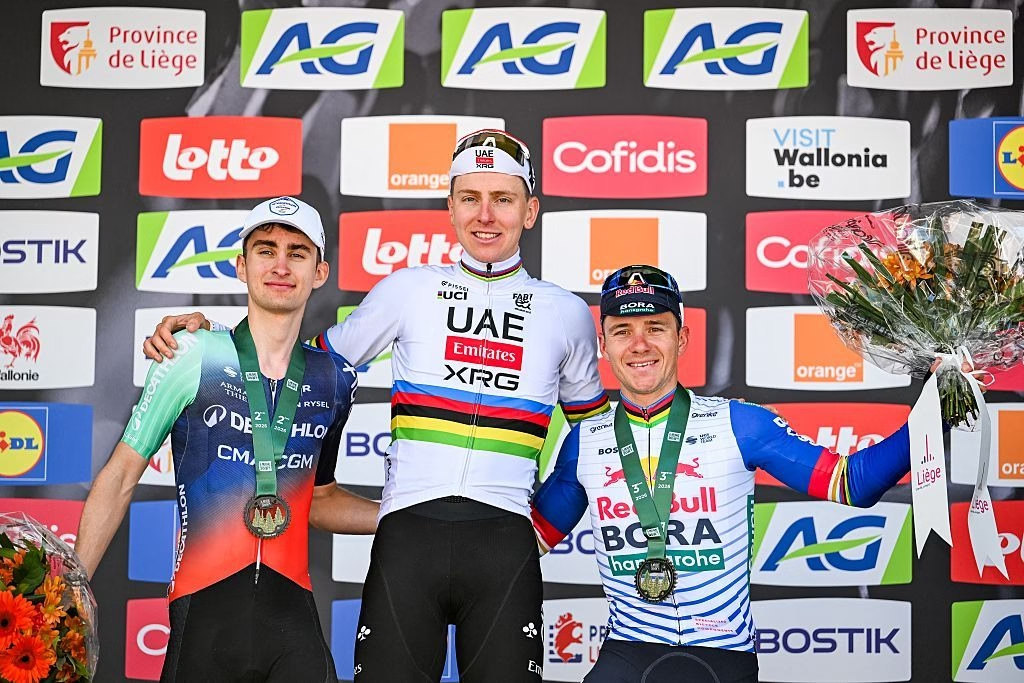
The Alpe d’Huez weekend is made for a champion, but still carries risk
The final Alpine block is the part of the route everyone will remember. Stage 18 finishes at Orcières-Merlette. Stage 19 finishes on Alpe d’Huez. Stage 20 returns to Alpe d’Huez via the Col de Sarenne after a brutal day through the high mountains.
On paper, that suits Pogačar. He can climb, recover, attack repeatedly and handle stages where the race is already broken before the final climb. The back-to-back Alpe d’Huez finishes create a chance for a champion to close the Tour with authority.
The risk is that the difficulty is so concentrated. If Pogačar has a bad day, the damage can be huge. The stage 20 route, with the Croix de Fer, Télégraphe, Galibier, Sarenne and Alpe d’Huez, is not forgiving. A rider can look in control for two and a half weeks and still lose the Tour if he cracks on a stage like that.
That is where UAE’s support becomes crucial. Pogačar can do almost everything himself, but the final week is not the place to be isolated early. Almeida, McNulty, Sivakov, Wellens, Politt and the rest of the selected squad need to keep him protected for as long as possible. The stronger UAE are at that point, the harder it becomes for rivals to turn the race into a one-against-many attack on Pogačar.
The final Alpine weekend also gives his rivals a clear target. If Vingegaard or another climber is close enough, they know exactly where to attack. That makes the earlier stages even more important. Pogačar’s best Tour may be one where he arrives at Alpe d’Huez with enough time that he does not need to chase every move.
For more on the finale, see our guide to why back-to-back Alpe d’Huez finishes could define the Tour de France 2026 and our Tour de France 2026 queen stage guide.
UAE Team Emirates-XRG give him the strongest platform
Pogačar’s individual form is the headline, but UAE Team Emirates-XRG may be just as important. The 2026 route demands more than one kind of support. It needs time-trial power in Barcelona, road control through the nervous early stages, climbing depth in the Pyrenees, medium-mountain strength in the Massif Central and Vosges, and elite mountain support in the Alps.
UAE can provide that. João Almeida gives them a rider who can climb and time-trial at a level that would make him a leader in most teams. Brandon McNulty brings time-trial power, climbing durability and control on difficult terrain. Pavel Sivakov offers another mountain layer. Tim Wellens can manage hilly stages and transitional danger. Nils Politt gives road-captain strength, protection and engine room power.
That depth gives Pogačar tactical freedom. UAE can chase. They can send riders ahead. They can make the race hard early. They can protect him before technical finishes. They can turn the middle mountain stages into pressure points without burning Pogačar too soon.
The only risk is hierarchy. UAE have so much quality that clarity becomes important. Almeida, Isaac del Toro, McNulty and Sivakov are all capable of serious results in their own right. That is a strength if everyone is committed to the same plan, but it can become complicated if the race suddenly demands sacrifice.
Pogačar’s status should simplify that. He is the clear Tour leader. If UAE ride fully around him, they may have the strongest collective platform in the race.
For a wider look at the supporting cast, see our Tour de France 2026 domestiques who could decide the race.
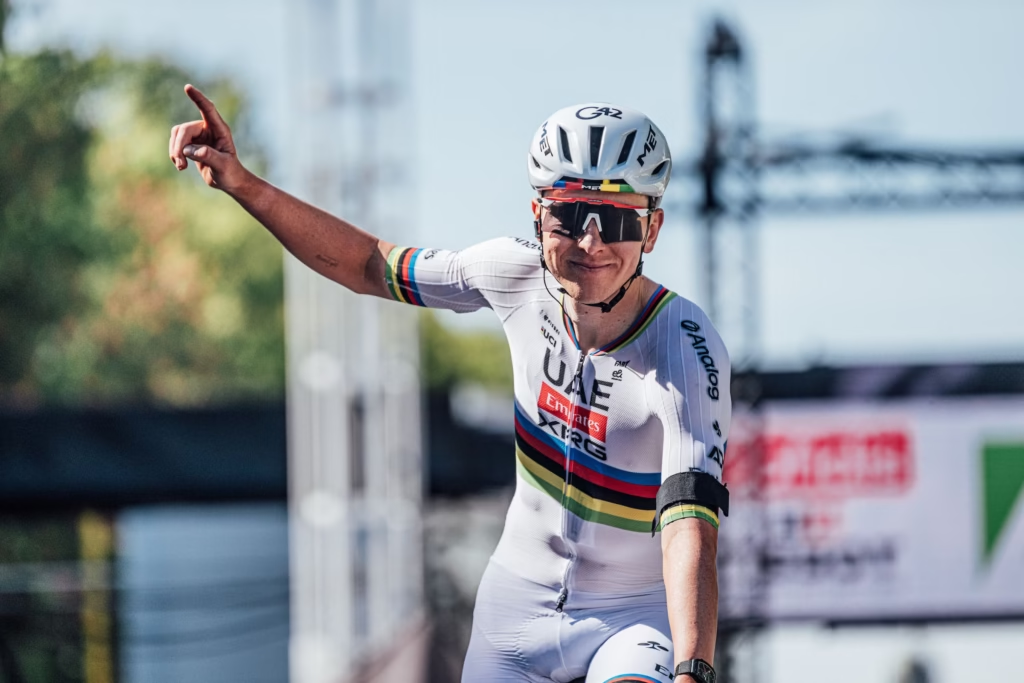
Who can challenge Pogačar?
Jonas Vingegaard remains the obvious reference point. If he arrives at his best, he is still the rider most capable of matching or beating Pogačar in the high mountains. The repeated Alpine finishes, especially stage 20 over the Sarenne route, give Vingegaard terrain where a pure climbing performance can still change the race.
The question is whether he can reach that point close enough. The Barcelona team time-trial, early Pyrenees, Plateau de Solaison and stage 16 time-trial all come before the final Alpine weekend. If Pogačar has already built a significant lead, Vingegaard may need to attack from further out than he would like.
Remco Evenepoel is the other route-specific problem for Pogačar. The time-trial elements suit him, and if he can limit damage in the high mountains, he can make the race tactically uncomfortable. But the 2026 Tour asks for repeated climbing across three weeks. Evenepoel’s chance depends on arriving in the Alps close enough for the time-trial work to matter.
Florian Lipowitz, Paul Seixas, Isaac del Toro and other emerging GC riders add interest, but they are still trying to prove they can beat Pogačar across three weeks rather than trouble him on one stage. Their best chance may come if the race becomes unpredictable and UAE are forced to chase several threats at once. The next generation’s wider route into the race is covered in our Tour de France 2026 young riders to watch guide.
Richard Carapaz, Enric Mas, Antonio Tiberi, Max Poole and others can influence stages, pressure UAE and fight for the podium picture. But on current evidence, the yellow jersey race still starts with Pogačar and asks who can stay close enough to make him uncomfortable.
What could go wrong for Pogačar?
The first risk is over-racing. Pogačar’s strength is also his temptation. He can attack almost anywhere, but the 2026 route is so loaded that he does not need to win the race every week. If he spends too much energy in the first two weeks, the final Alpine block could punish him.
The second risk is isolation. UAE look strong, but the Tour can dismantle even the best teams. Crashes, illness, heat, bad luck and repeated chasing can reduce a squad quickly. If Pogačar is left alone before the final climbs, rivals will try to make him answer every move himself.
The third risk is the stage 20 queen stage. Even for Pogačar, that day is dangerous. The Col de Sarenne route to Alpe d’Huez comes after weeks of racing and after another Alpe d’Huez finish the day before. If he has a rare bad day there, the route is hard enough to turn weakness into minutes.
The fourth risk is that his rivals coordinate indirectly. They do not need a formal alliance to make UAE work. If Vingegaard, Evenepoel, Lipowitz, Seixas and others all attack on different days, UAE may have to control the race repeatedly. Pogačar is at his best in open racing, but even he can be worn down if every stage becomes his responsibility.
Those risks are real, but they are also the risks of being the favourite. They do not weaken his case. They explain how narrow the route to beating him may be.
-
 Photo Credit: A.S.O./Billy Ceusters
Pogačar’s chances of winning the Tour de France 2026
Pogačar should start the Tour de France 2026 as the clear favourite. His form is already high, his route fit is excellent, and UAE Team Emirates-XRG look built for the specific demands of this course.
The race gives him too many opportunities to gain time for rivals to wait passively. Barcelona can give him an early advantage. Gavarnie-Gèdre can confirm his climbing level. Le Lioran and Le Markstein can wear down teams. Plateau de Solaison can create a major pre-Alps gap. The stage 16 time-trial can extend control. The final Alpine weekend gives him the platform to finish the job.
That is the best-case scenario. The race becomes a long squeeze rather than one decisive ambush. UAE set the terms, Pogačar chooses his moments, and rivals reach Alpe d’Huez needing something extraordinary.
The more dangerous version is a Tour where he is forced to respond too often. If Vingegaard is at peak level, Evenepoel gains time in the time-trial, UAE lose support or the race becomes chaotic before the final week, Pogačar may still have to fight hard for yellow. The route suits him, but it is not gentle enough to protect any rider from a bad day.
Even so, the balance is firmly in his favour. Pogačar has the form, the team, the route fit and the tactical range. If he reaches Barcelona healthy and avoids the obvious traps, he should be the rider most likely to leave Paris in yellow.
Verdict
Tadej Pogačar’s Tour de France 2026 chances look stronger because this is not a route designed around one narrow strength. It rewards the complete rider. It asks for time-trial power, climbing acceleration, recovery, tactical instinct, team depth and the confidence to race before the obvious decisive days.
That is Pogačar’s territory. His spring and early summer form suggest he is already close to the level required, while his Tour de Suisse performance shows that the long-range aggression is still there. The 2026 Tour route gives him a platform to win early, consolidate in the middle and defend or attack again in the Alps.
His rivals have routes into the race, especially through Vingegaard in the high mountains and Evenepoel against the clock. But they are chasing the rider with the fewest weaknesses and the most ways to win.
Pogačar does not need the Tour de France 2026 to be perfect. He just needs enough control to choose when it becomes hard. On this route, that may be enough.

