
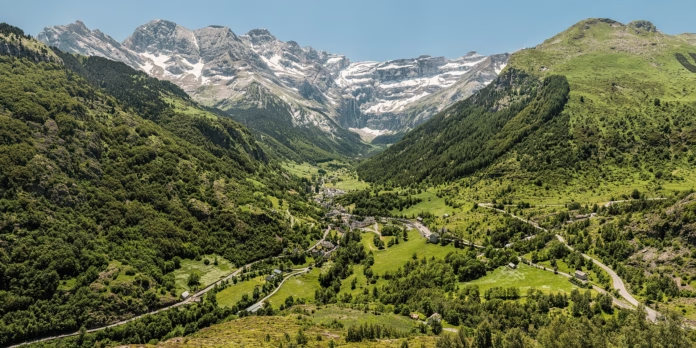
The Tour de France 2026 reaches the Pyrenees unusually early, and that changes the tone of the whole opening week. The race begins in Barcelona with a team time-trial, stays in Catalonia for two more days, then sends the peloton towards the high mountains before the first rest day. By the time the riders leave Pau after stage 6, the general classification should already have a shape.
This is not the biggest mountain block of the race. The final Alpine weekend, with back-to-back Alpe d’Huez finishes, is harder and more decisive on paper. But the Pyrenees are where the 2026 Tour first asks the main contenders whether they have arrived ready. A rider can survive this block and still lose the Tour later. What they cannot do is treat it as a warm-up.
The Pyrenean phase is built around two clear climbing days. Stage 3 from Granollers to Les Angles brings the race into the mountains while still in the Catalan and French borderlands. Stage 6 from Pau to Gavarnie-Gèdre is the first major summit finish of the race, with the Col d’Aspin and Col du Tourmalet before the final climb. Between them, stage 4 to Foix keeps the pressure high on hilly roads, while stage 5 to Pau gives the sprinters a likely chance before the mountains return.
For the full race picture, see our Tour de France 2026 full route guide, our Tour de France 2026 route analysis, the Tour de France 2026 mountain stages ranked by difficulty and our Tour de France 2026 GC favourites ranked. The race organiser’s official Tour de France 2026 route also gives the full stage-by-stage outline.
When do the Pyrenees feature in the Tour de France 2026?
The Pyrenees arrive in the first week of the Tour de France 2026. The race begins in Barcelona on Saturday, 4th July, with a team time-trial, then moves through Tarragona, Barcelona and Granollers before the first mountain stage to Les Angles on Monday, 6th July.
The main Pyrenean block covers stages 3 to 6:
Stage 3, Monday, 6th July: Granollers to Les Angles, 195.9km, mountain stage
Stage 4, Tuesday, 7th July: Carcassonne to Foix, 181.9km, hilly stage
Stage 5, Wednesday, 8th July: Lannemezan to Pau, 158.3km, flat stage
Stage 6, Thursday, 9th July: Pau to Gavarnie-Gèdre, 186.2km, mountain stage
That layout gives the race a very different opening rhythm from a Tour that waits until the second weekend for the high mountains. Stage 3 comes only two days after the Barcelona team time-trial, so riders will still be dealing with early-race nerves, team positioning and the first signs of GC pressure. Stage 6 then adds the first true mountain summit finish before the race turns towards Bordeaux and the first rest day in Cantal.
The route is not a continuous Pyrenean barrage. Stage 4 is hilly rather than a classic high-mountain stage, and stage 5 should give sprint teams a chance in Pau. But the placement of Les Angles and Gavarnie-Gèdre means the first week is far from gentle.
Stage 3: Granollers to Les Angles
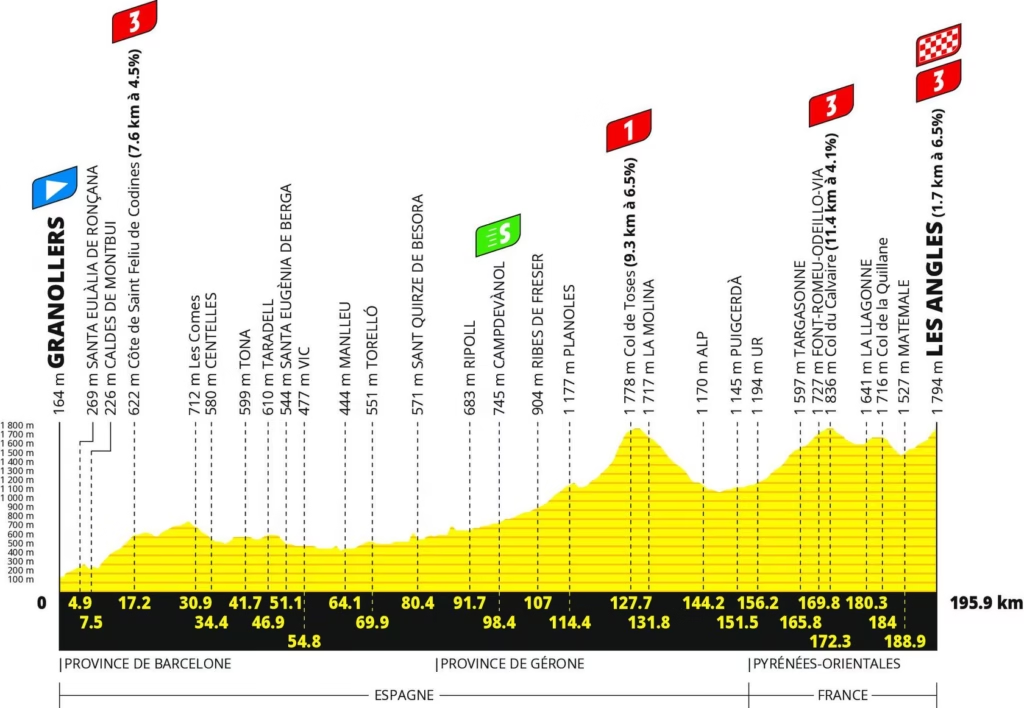
Stage 3 is the first mountain stage of the 2026 Tour de France, and it comes early enough to make every GC team nervous. The route from Granollers to Les Angles covers 195.9km and includes 3,850m of climbing. It is long, rising in difficulty as the day develops, and finishes at altitude after a final kick to the line.
The stage begins in Catalonia and gradually takes the race north towards the Pyrenees. The first classified climb comes early with the Côte de Saint Feliu de Codines, listed as 7.6km at 4.5 per cent. That climb should not decide the stage, but it helps set the tone. This is not a flat transition day before the mountains. The climbing begins early, and the peloton will have to manage fatigue across nearly 200km.
The more serious work comes later. The Col de Toses is the first major test, at 9.3km and 6.5 per cent. Its placement after more than 120km of racing means it should start to expose riders who are not yet settled into the Tour. It is not the hardest climb of the race, but it is exactly the sort of first-week ascent where poor legs become visible quickly.
After the route crosses towards France, the Col du Calvaire adds another long effort. It is listed as 11.4km at 4.1 per cent, which makes it more gradual on paper, but the accumulated climbing and altitude will matter. The final climb to Les Angles is short, just 1.8km at 6.5 per cent, but it comes at the end of a mountain stage and should create a punchy finish.
This is the sort of stage where the strongest GC riders may not need to attack early, but they will need to be present. Losing contact on the Col de Toses or being poorly positioned into the Les Angles finish could cost time before the Tour has even properly left its opening phase.
What stage 3 means for the GC
Stage 3 is unlikely to be the day that wins the Tour de France 2026 outright, but it can remove riders from the cleanest version of their race plan. The final climb is not long enough to guarantee huge gaps between the very best climbers, yet the stage is hard enough to punish anyone who arrives undercooked.
The Barcelona team time-trial will already have created a hierarchy. Stage 3 then asks whether those gaps are stable or fragile. A rider who loses time in the team time-trial and then struggles at Les Angles will be forced into a more aggressive race before the first week is over. A rider who survives both days cleanly can approach the rest of the Pyrenees with far more control.
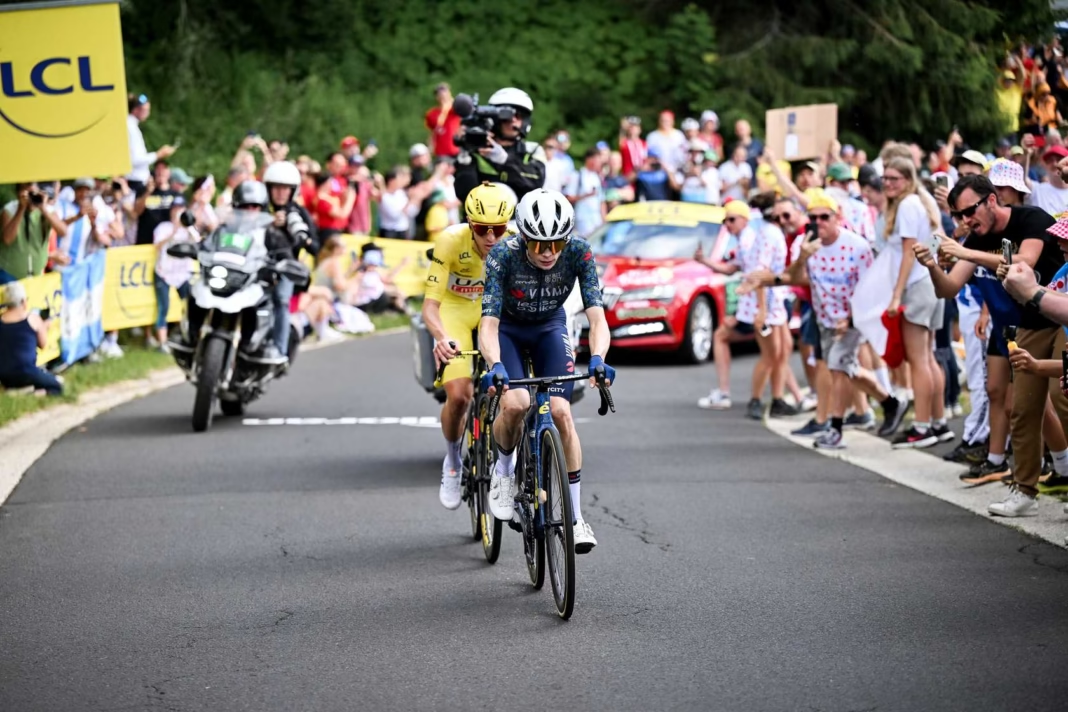
Tadej Pogačar and Jonas Vingegaard are the obvious names to watch if the stage becomes a GC test. Pogačar can use a short uphill finish without needing a long-range move, while Vingegaard will want to show immediately that the high mountain days will belong to him as much as to anyone. Remco Evenepoel may treat this as a control day, especially with the later individual time-trial in mind, but he cannot afford to leak time on the first mountain stage.
The stage also suits riders who can operate between GC and stage-hunting territory. A punchy climber or breakaway specialist could win if the favourites mark each other, but the yellow jersey contenders will still shape the final kilometres.
Stage 4: Carcassonne to Foix
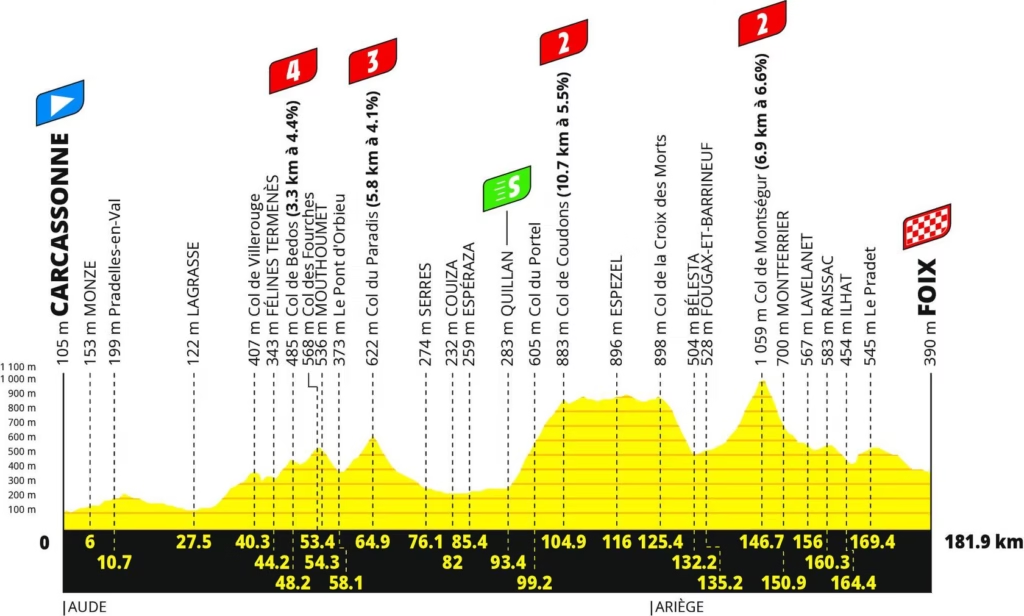
Stage 4 from Carcassonne to Foix is not listed as a mountain stage, but it belongs in any Pyrenees guide because it keeps the race difficult between the first summit-style finish and the next sprint opportunity. The stage covers 181.9km with 2,700m of climbing, and the route is packed with rugged roads through the Aude and Ariège.
This is classic foothill terrain. The climbs are not as famous as Aspin or Tourmalet, but the road rarely feels settled. The stage includes a series of smaller passes and rolling climbs that can make control awkward. On a calm day, GC teams may allow a breakaway to contest the stage. On a windy or aggressive day, it could become much more stressful.
The final part of the stage moves towards Foix after the Col de Montségur. That climb is not the longest in the race, but its position late in the stage gives it tactical value. If the breakaway is still close enough, the race can explode there. If the GC teams are already stretched from the early mountain stage, this is the kind of day where support riders can disappear quickly.
Foix has often been associated with aggressive racing rather than simple sprint finishes. In the 2026 route, it functions as a trap day. It is not labelled as one of the defining mountain stages, but it could punish a rider who relaxes after Les Angles.
Why the Foix stage is dangerous
The danger of stage 4 is not one monster climb. It is the accumulation. After the team time-trial, a hilly Catalan day and the first mountain stage to Les Angles, the riders face another long, uneven day with almost no mental rest.
That matters because early Tours are chaotic. Teams are still establishing hierarchy. Domestiques are still finding their legs. GC riders are trying to avoid crashes, stay protected and keep fuelled, while breakaway riders are already looking for chances before the route becomes more controlled later in the race.
Foix could be a day for the breakaway, but it could also become a quiet GC filter. A favourite who finishes safely in the main group may not gain anything visible, but they will have survived a stage where others could lose support, confidence or time. The best teams will treat it as a full concentration day, not a transition.
The stage is also important for the mountains competition. Riders aiming at the polka-dot jersey may see the repeated climbs as an early chance to gather points before the bigger summit finishes. For more on that contest, see our Tour de France 2026 climbers guide.
Stage 5: Lannemezan to Pau
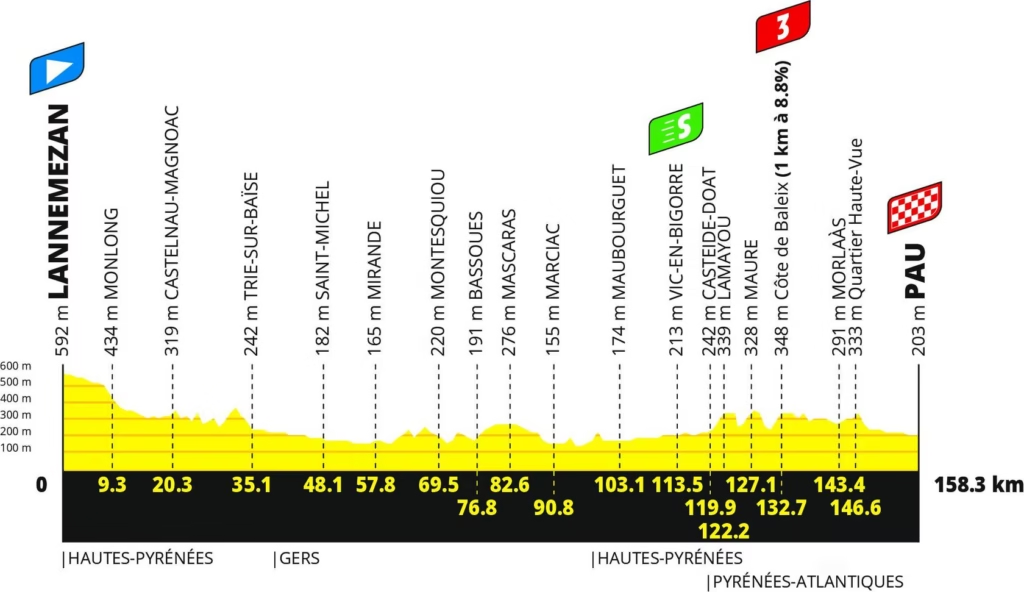
Stage 5 from Lannemezan to Pau is officially flat, but it still belongs in the Pyrenean story because of where it sits. At 158.3km with 1,600m of climbing, it should give the sprinters a chance, yet it comes between two demanding climbing stages and carries the usual risk of a nervous first-week sprint.
Pau is one of the Tour’s great recurring towns. In 2026, it acts as the pause before the biggest Pyrenean stage. Sprint teams will see stage 5 as an opportunity after the early climbing, while GC teams will mostly want a clean day. That can make the stage tense. Sprinters need control, breakaway riders know this may be one of their few early chances, and GC leaders want to avoid crashes before Gavarnie-Gèdre.
The late Côte de Baleix gives the stage a small sting, but it should not prevent a bunch finish if the sprint teams are organised. The bigger concern is positioning. A flat-rated day after several hard stages can still be messy, especially when riders are tired and the race is heading towards a major mountain test.
For green jersey contenders, this is one of the early sprint opportunities that cannot be wasted. For GC riders, it is a day to stay near the front without spending unnecessary energy. Our Tour de France 2026 sprinters guide looks at the riders who should be targeting days like Pau.
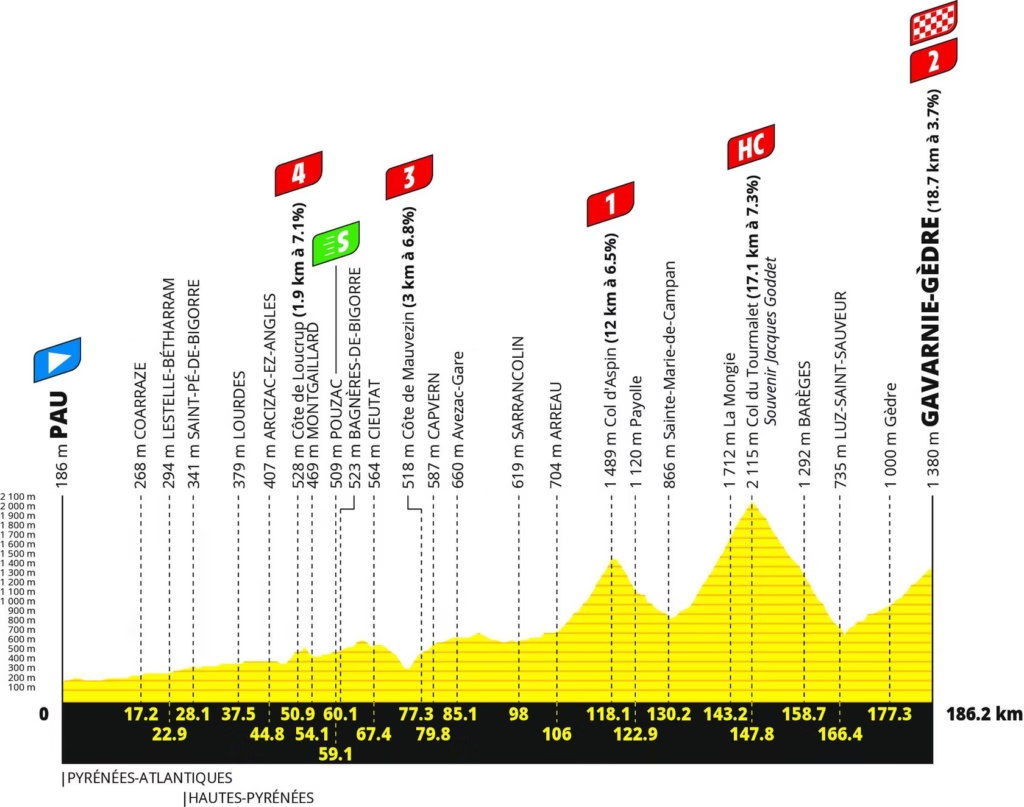
Stage 6: Pau to Gavarnie-Gèdre
Stage 6 is the centrepiece of the 2026 Tour de France Pyrenees. The route from Pau to Gavarnie-Gèdre covers 186.2km and includes 4,100m of climbing. It is the first major summit finish of the race and the first day where the best climbers have a full platform to create meaningful gaps.
The stage starts with smaller climbs before the race reaches the serious Pyrenean sequence. The Côte de Loucrup, listed at 2km and 7.1 per cent, and the Côte de Mauvezin, 3km at 6.8 per cent, should help shape the breakaway. Neither climb is decisive in isolation, but both can make the opening more selective.
The Col d’Aspin is the first major climb of the day, listed at 12km and 6.5 per cent. Aspin is not the hardest Pyrenean pass, but it is hard enough to start thinning the race. It comes far enough from the finish that GC teams may not use it for direct attacks, but they can use it to remove domestiques and set the tone before the Tourmalet.
The Col du Tourmalet is the iconic climb of the stage. Listed at 17.1km and 7.3 per cent, and carrying the Souvenir Jacques Goddet, it is the first HC mountain of the 2026 Tour. Even if the final climb to Gavarnie-Gèdre decides the stage, the Tourmalet is where the day becomes serious. It is long, high and historically heavy enough to change the rhythm of the race.
The finish at Gavarnie-Gèdre is new territory for the Tour. The final climb is listed at 18.7km and 3.7 per cent. That average gradient suggests a different challenge from a steep Alpine wall. It is long, rolling and gradual, with enough distance after the Tourmalet to reward endurance, team support and sustained power rather than a single violent acceleration.
For the organiser’s stage information, see the official Tour de France stage 6 page. For how Gavarnie-Gèdre fits among the race’s uphill finishes, see our Tour de France 2026 summit finishes guide.
How hard is Gavarnie-Gèdre?
Gavarnie-Gèdre is not the steepest summit finish of the 2026 Tour de France, but its placement makes it serious. After Aspin and the Tourmalet, a long 18.7km final climb becomes much harder than the average gradient suggests.
The key to understanding the finish is that the damage may already be done before the final ascent begins. If the Tourmalet has been ridden hard, the leading group could be reduced. Domestiques may already be gone. Riders who have spent too much energy on the previous climbs may find the final road to Gavarnie-Gèdre slowly exposing them.
The climb also changes the tactical question. On a very steep final ascent, lighter climbers can use repeated accelerations to crack rivals. On a longer, steadier climb, pacing and team support matter more. Riders with strong sustained power can limit damage, while pure climbers may need to attack earlier if they want major gaps.
That makes Gavarnie-Gèdre especially interesting for the Pogačar-Vingegaard dynamic. Pogačar has the explosiveness to win from a reduced group, but Vingegaard has historically been at his best when long climbs are combined with fatigue and altitude. Evenepoel will need to manage the Tourmalet and avoid being isolated too early, while other GC contenders may see the final climb as a chance to measure themselves without risking everything.
The Tourmalet factor
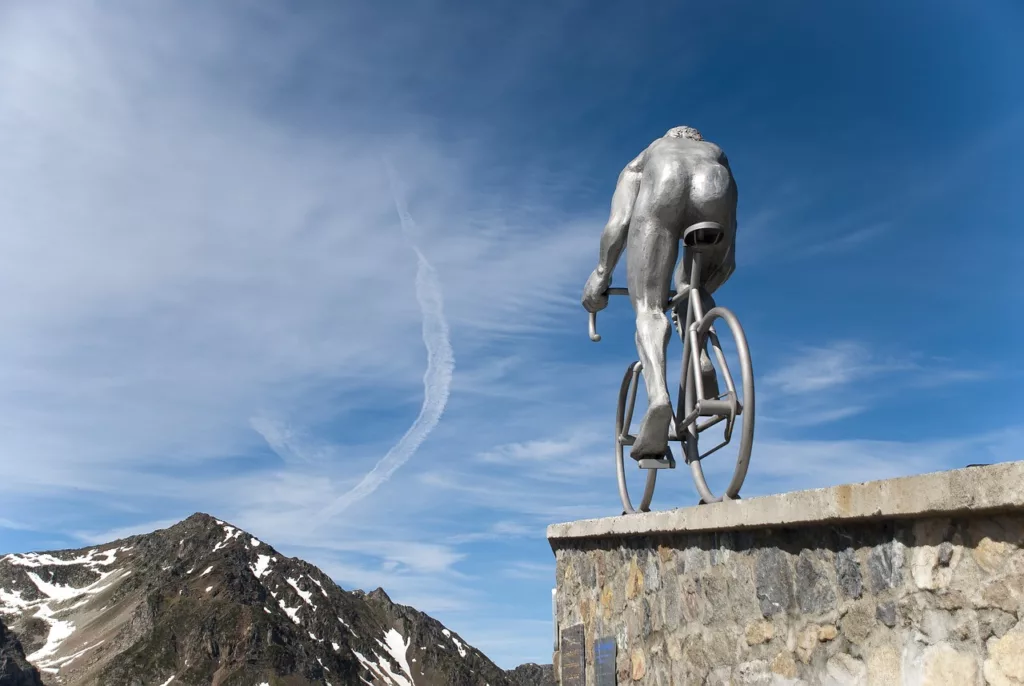
The Tourmalet is the emotional and tactical heart of the Pyrenean block. The 2026 Tour could reach it with the GC already shaped by the team time-trial and Les Angles, but stage 6 is where the race first meets one of cycling’s most famous high mountains.
Aspin and Tourmalet together give teams a choice. They can ride conservatively, keep the main group together, and leave the final climb to decide the stage. Or they can use the Tourmalet to make the final 40km much harder. The second option is riskier but more rewarding.
If Team Visma | Lease a Bike want to put pressure on Pogačar, the Tourmalet is the first obvious place to increase the pace and test UAE Team Emirates-XRG’s depth. If UAE feel strong, they may prefer to control the day and let Pogačar use the final climb. If Soudal – Quick-Step have Evenepoel in a strong position, they will want the stage ridden hard enough to discourage attacks but not so hard that he becomes isolated before the finish.
The Tourmalet can also shape the polka-dot jersey race. Breakaway climbers may target it for points, but if the GC teams decide to chase hard, the mountain classification could already start tilting towards the overall contenders.
Which riders does the Pyrenees block suit?
The 2026 Pyrenees suit complete GC riders rather than pure climbers alone. Stage 3 is long and awkward, stage 4 is a foothill trap, stage 5 requires safety and positioning, and stage 6 combines classic Pyrenean climbing with a long new summit finish. A rider who only wants one steep climb may find this block harder to control than expected.
Pogačar is the obvious reference point because he can take time on several types of terrain. Les Angles suits his punch, Foix gives him room to follow or punish mistakes, and Gavarnie-Gèdre gives him the first summit finish where he can test the whole field.
Vingegaard’s strongest argument comes on stage 6. The Tourmalet and a long final climb create the type of fatigue-based mountain day that has suited him in the past. If he is to put real pressure on Pogačar before the Alps, Gavarnie-Gèdre is one of the clearest early opportunities.
Evenepoel has a different challenge. The Pyrenees are not just about climbing for him, they are about staying close enough to use the later 26.1km individual time-trial from Évian-les-Bains to Thonon-les-Bains. If he leaves the Pyrenees within range, the route still gives him a major weapon later in the race. If he loses too much by Gavarnie-Gèdre, the race becomes far more complicated.
Roglič, João Almeida, Juan Ayuso, Richard Carapaz, Enric Mas and the other climbing contenders all have the same basic task: stay in the front of the race before the Alps. Some may attack on stage 6, others may simply try to avoid a damaging day. The Pyrenees will not decide every podium place, but they should show which riders are genuinely ready for three weeks.
What the Pyrenees mean for the polka-dot jersey
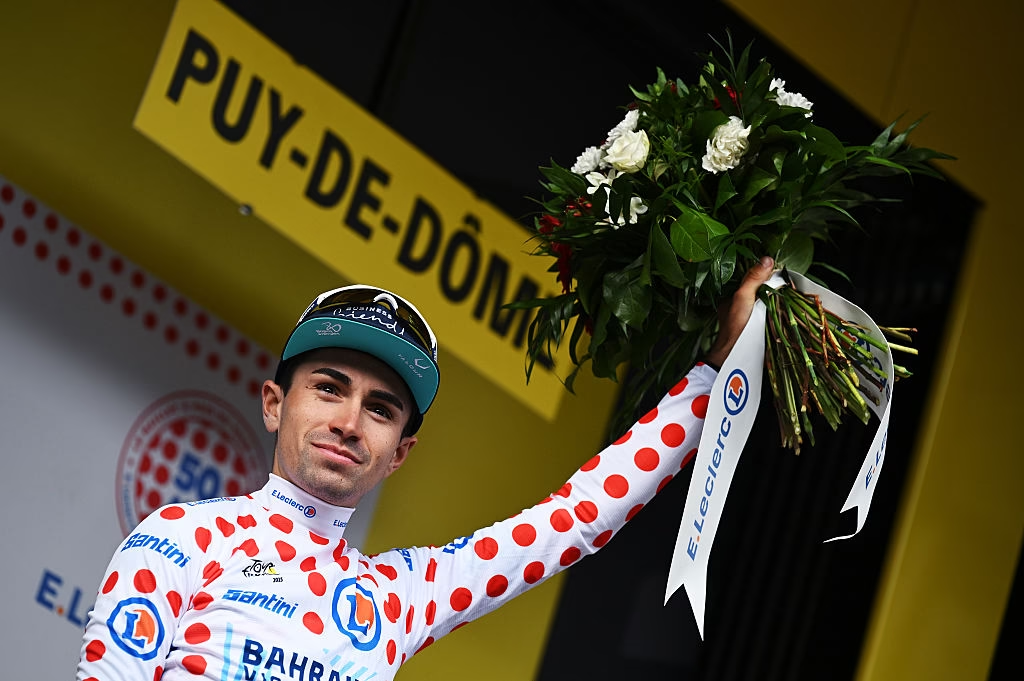
The Pyrenees could set the tone for the mountains classification. Stage 3 offers early points, stage 4 gives breakaway riders more opportunities, and stage 6 brings the Tourmalet and the first major summit finish.
In some editions, the polka-dot jersey begins as a breakaway competition and only later becomes attached to the GC race. The 2026 route may blur that line earlier. With five summit finishes across the Tour, the best climbers in the general classification could collect big points without specifically targeting the jersey.
A breakaway specialist can still take an early lead if they commit to stages 3 and 4, but stage 6 may quickly rebalance the contest. If the GC group reaches the Tourmalet and Gavarnie-Gèdre close to the front of the race, the mountain classification could already start favouring the riders fighting for yellow.
That makes the first week tactically interesting. Some teams may send climbers ahead for jersey points or satellite roles. Others may prefer to keep support close to their leaders. The Tourmalet is too valuable to be treated as just another climb.
Where to watch the Pyrenees in person
For roadside spectators, the 2026 Pyrenees offer very different viewing experiences.
Les Angles on stage 3 gives fans an early mountain finish with a Catalan-French border feel. The final climb is short, but the setting around the plateau and nearby ski areas should make it one of the more accessible first-week mountain finishes. The Col de Toses and Col du Calvaire also offer places to see the race before the finale, though access and closures will need careful planning.
Foix on stage 4 is better for fans who want a stage finish without the logistical difficulty of the highest passes. The roads around Montségur and the Ariège foothills should be lively, and the stage has enough uncertainty to make the finish worth watching.
Pau on stage 5 is the most traditional Tour base in this block. It is a familiar race town, easier to access than many mountain finishes, and likely to host a sprint or at least a fast finish. For fans following several days, Pau also works as a base before stage 6.
Stage 6 is the big one. Aspin, Tourmalet and Gavarnie-Gèdre all offer classic mountain viewing, but they will also bring the greatest access challenges. The Tourmalet will attract the biggest crowds because of its history. Gavarnie-Gèdre offers the new summit-finish experience, with the added drama of seeing the first major GC gaps of the race.
Anyone planning to watch stage 6 roadside should expect early road closures, limited mountain access and long waits. That is part of the appeal, but it needs planning. Bring food, water, layers and patience. For those watching from home, our how to watch Tour de France 2026 in the UK guide covers the main broadcast options.
-
 Photo Credit: A.S.O./Billy Ceusters
How the Pyrenees could shape the rest of the Tour
The Pyrenees are not the final word in the Tour de France 2026, but they should decide the first draft of the GC story. By the end of stage 6, the race will have already included a team time-trial, a hilly day into Barcelona, a mountain stage to Les Angles, a difficult foothill stage to Foix and a summit finish at Gavarnie-Gèdre.
That is a heavy opening week. The riders who come through it cleanly can look towards the Massif Central, Vosges, Jura and Alps with confidence. The riders who lose time will have to decide whether to wait for the later mountains or start taking risks earlier than planned.
The most important part may be psychological. If Pogačar takes time in the Pyrenees, the rest of the race could begin to orbit around UAE Team Emirates-XRG control. If Vingegaard or another climber lands a blow on stage 6, the Tour enters the middle phase with more uncertainty. If Evenepoel survives the high mountains within range, the stage 16 time-trial becomes even more important.
The Pyrenees also influence team resources. A leader who is isolated on the Tourmalet has a problem, even if they do not lose time. A team that controls Les Angles and Gavarnie-Gèdre may look powerful, but it may also have spent energy early. The race does not end in the first week, and the Alps are still waiting.
Tour de France 2026 Pyrenees verdict
The Tour de France 2026 Pyrenees are early, varied and strategically important. Stage 3 to Les Angles gives the race its first mountain test, stage 4 to Foix keeps the pressure high, stage 5 to Pau offers a likely sprint chance, and stage 6 to Gavarnie-Gèdre brings the first major summit finish with Aspin and the Tourmalet before it.
This block is not as hard as the final Alpine weekend, but it may be just as revealing. The Pyrenees should show which GC riders have arrived ready, which teams have real mountain depth, and which contenders are already being forced away from their ideal race plan.
The Tour will not be won only in the Pyrenees. It can definitely start to be lost there.

