

Tadej Pogačar leads the Tour de France mountains classification with 70 points, but the polka-dot jersey remains open as the race enters its decisive Alpine block.
Valentin Paret-Peintre is the closest challenger on 45 points, 25 behind Pogačar. Richard Carapaz sits third with 39, while Remco Evenepoel remains within range on 36 despite building his Tour around the general classification rather than breakaways.
Stage 18 offers 29 mountains points, beginning with 10 on the Category 1 Côte d’Engins after only 36.7km. Stage 19 then takes the race to Alpe d’Huez before the stage 20 queen stage crosses the Croix de Fer, Télégraphe, Galibier and Sarenne.
That scoring structure creates two very different routes towards the jersey.
Paret-Peintre and Carapaz can attack early, collect points from breakaways and attempt to build an advantage before the GC battle reaches Alpe d’Huez. Pogačar can wait, follow the yellow jersey race and collect the most valuable points through the decisive mountain finishes.
The challengers have more opportunities to score from escapes. Pogačar has the easier route to the biggest totals.
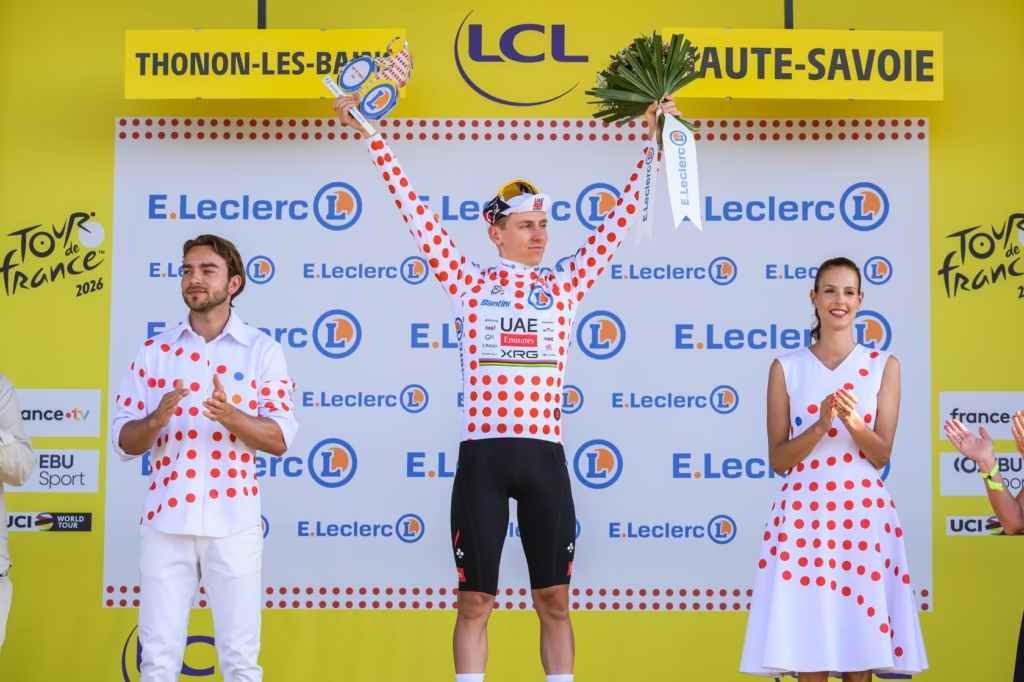 Photo Credit: A.S.O./Charly López
Tour de France mountains classification before stage 18
| Position | Rider | Team | Points | Gap |
|---|---|---|---|---|
| 1 | Tadej Pogačar | UAE Team Emirates-XRG | 70 | Leader |
| 2 | Valentin Paret-Peintre | Soudal Quick-Step | 45 | -25 |
| 3 | Richard Carapaz | EF Education-EasyPost | 39 | -31 |
| 4 | Remco Evenepoel | Red Bull-Bora-Hansgrohe | 36 | -34 |
| 5 | Paul Seixas | Decathlon CMA CGM | 34 | -36 |
Pogačar is wearing the yellow jersey, so the visible polka-dot jersey passes to the next eligible rider in the classification.
That means Paret-Peintre can wear polka dots on stage 18 without actually leading the competition. Pogačar remains the official mountains leader.
The system is explained in more detail in our guide to why another rider wears the polka-dot jersey when Pogačar leads the classification.
Can anyone catch Pogačar in the polka-dot jersey?
Yes. Paret-Peintre can overtake Pogačar during stage 18 if he joins the breakaway and scores heavily. Carapaz cannot quite erase his full deficit on Thursday alone, but he can move close enough to make the two Alpe d’Huez stages decisive.
Paret-Peintre needs 26 points to move ahead of Pogačar outright. Stage 18 offers a maximum of 29.
Carapaz begins 31 points behind, so even a perfect stage would leave him two short if Pogačar failed to score. His immediate target is therefore to close the gap while also limiting Paret-Peintre’s total.
Evenepoel is theoretically in contention, but he is unlikely to chase early mountain sprints while defending second overall. His realistic route into polka dots comes through high finishes on Orcières-Merlette and Alpe d’Huez.
Paul Seixas is in a similar position. He sits only 36 points behind Pogačar, but his more valuable objectives are the Tour podium and white jersey.
The true attacking challengers are Paret-Peintre and Carapaz. Pogačar remains the favourite because the final route allows him to score without altering his normal tactics.
The broader pre-race hierarchy is covered in the Tour de France 2026 climbers and polka-dot jersey guide.
Why the Côte d’Engins matters
The most attractive opportunity on stage 18 arrives surprisingly early.
The Côte d’Engins begins after approximately 25km and reaches its summit at kilometre 36.7. It measures 11.5km at 5.4% and awards 10 points to the first rider over the top.
| Position | Mountains points |
|---|---|
| 1st | 10 |
| 2nd | 8 |
| 3rd | 6 |
| 4th | 4 |
| 5th | 2 |
| 6th | 1 |
The climb is long enough to select strong riders but not difficult enough to require the effort needed to survive the Galibier or win on Alpe d’Huez.
That makes it unusually valuable.
Paret-Peintre can take 10 points before the GC teams have any reason to become involved. Carapaz can do the same. One of them could remove a large part of the deficit within the opening hour while Pogačar remains protected inside the peloton.
The challenge is reaching the climb in the correct group.
Teams will expect the mountains contenders to attack, so the breakaway battle may continue onto the ascent. Paret-Peintre and Carapaz cannot assume they will be allowed to join a small move uncontested.
They may need to follow repeated attacks, chase rival climbers and still retain enough strength to sprint at the summit.
It is a relatively economical 10 points compared with what lies ahead, but it is not free.
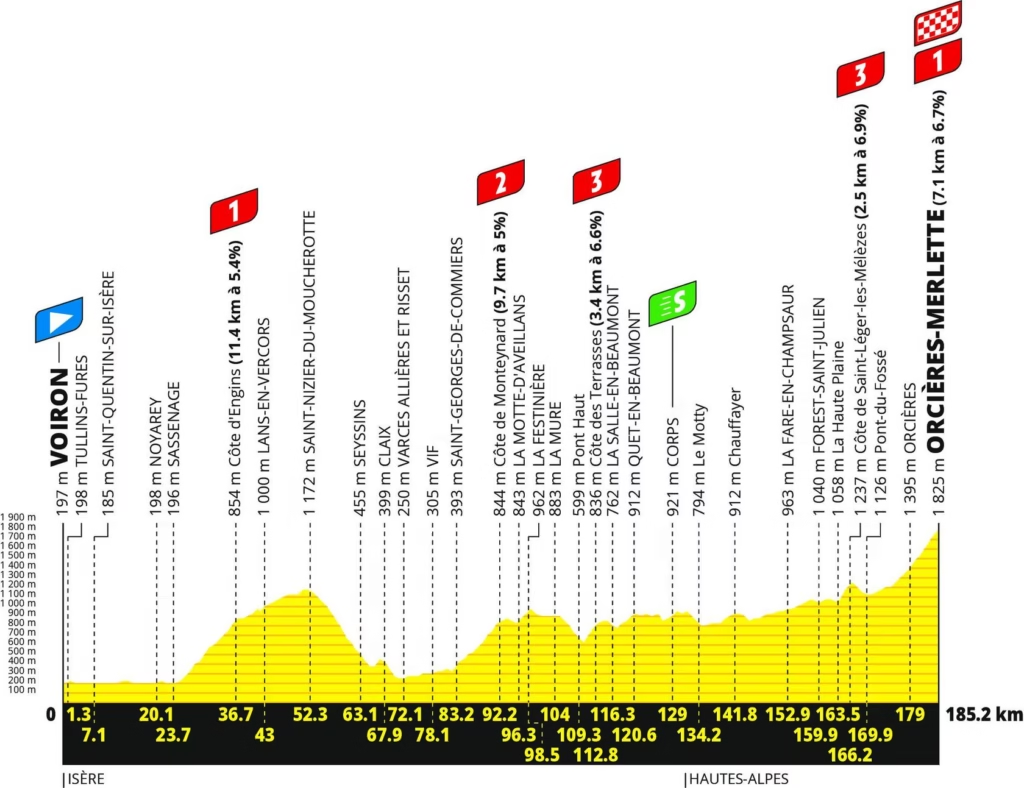
How many mountains points are available on stage 18?
Stage 18 offers five scoring opportunities.
| Climb | Category | Points to winner |
|---|---|---|
| Côte d’Engins | Category 1 | 10 |
| Côte de Monteynard | Category 2 | 5 |
| Côte des Terrasses | Category 3 | 2 |
| Côte de Saint-Léger-les-Mélèzes | Category 3 | 2 |
| Orcières-Merlette | Category 1 | 10 |
A rider winning every climb can collect 29 points.
Paret-Peintre would rise from 45 to 74 and move four points ahead of Pogačar if the yellow jersey failed to score.
A more realistic strong breakaway day might bring:
- 10 points on the Côte d’Engins
- Five on the Côte de Monteynard
- Two on the Côte des Terrasses
- Two on Saint-Léger-les-Mélèzes
- Six or eight at Orcières-Merlette
That would produce between 25 and 27 points.
Paret-Peintre can therefore take the jersey without winning the stage.
Carapaz needs to collect heavily while limiting Paret-Peintre’s scoring. If the Frenchman wins the early climbs, Carapaz’s route becomes more difficult even if both reduce the gap to Pogačar.
The full course and expected race pattern are covered in the Tour de France 2026 stage 18 preview.
Why Pogačar may allow the jersey to change hands
UAE Team Emirates-XRG have little reason to control the opening half of stage 18 for mountains points.
Pogačar leads the general classification by 4:32 and faces two more difficult mountain stages after Orcières-Merlette. His team’s priority is preserving energy and controlling riders who threaten yellow or Isaac del Toro’s podium position.
Paret-Peintre is not a GC threat. Neither is Carapaz.
If both enter the breakaway, UAE can allow them several minutes. The mountains classification may change temporarily, but the yellow jersey remains safe.
Pogačar could therefore reach Orcières-Merlette outside the polka-dot lead while remaining the favourite to win the jersey in Paris.
That apparent contradiction is central to the final-week battle.
The breakaway riders can take the jersey on Thursday. Pogačar can regain it through the two Alpe d’Huez stages without ever mounting a deliberate mountains classification campaign.
His wider advantage in the race is covered in GC and jerseys after Tour de France 2026 stage 17.
Valentin Paret-Peintre has the clearest immediate opportunity
Paret-Peintre is the best-placed specialist challenger.
His 25-point deficit is small enough to erase on stage 18, and the early Category 1 climb gives him a clear reason to attack from the opening kilometres.
He also carries a tactical advantage over Carapaz.
Paret-Peintre does not need to win every summit. If he remains ahead of Carapaz and collects around 20 points, he can move close enough to make the following stages decisive.
His ideal day looks straightforward:
- Enter the breakaway before or on the Côte d’Engins.
- Win the first Category 1 summit.
- Continue scoring through the middle climbs.
- Avoid spending everything in repeated sprints.
- Reach Orcières-Merlette with enough energy to add at least four or six points.
The danger is becoming too focused on the classification.
Each summit sprint requires an acceleration. If Paret-Peintre contests all five at maximum effort, stronger stage hunters may allow him to collect points before attacking once the climb has finished.
He could take the jersey but lose the stage.
That may still be worthwhile, particularly before a final weekend in which Pogačar is likely to score heavily.
 Photo Credit: Getty
Richard Carapaz needs to beat Paret-Peintre directly
Carapaz starts six points behind Paret-Peintre and 31 behind Pogačar.
That is close enough to remain dangerous, but he needs more than a good stage. He needs to outscore both riders ahead of him.
Carapaz’s advantage is that he is one of the strongest climbers likely to receive complete breakaway freedom.
He can collect points and remain a genuine stage-winning threat at Orcières-Merlette. His repeated attacking style also suits a route containing five separate climbs rather than one long summit finish.
His problem is the arithmetic.
Finishing second to Paret-Peintre on the first three climbs would increase rather than reduce the gap between them. Carapaz must either beat the Frenchman directly or force a race in which Paret-Peintre cannot contest every summit.
EF Education-EasyPost could help by placing another rider in the move.
A teammate can attack between climbs, forcing Paret-Peintre to chase while Carapaz remains protected. Alternatively, Carapaz can allow Paret-Peintre to expend energy collecting the earliest points before attacking later for the stage and the Orcières-Merlette summit.
Carapaz may be the stronger candidate to win a major mountain stage. Paret-Peintre currently has the easier route to wearing the jersey.
Evenepoel can remain in contention without targeting the jersey
Evenepoel is only 34 points behind Pogačar.
That keeps him mathematically close, but the standings exaggerate his practical interest in the competition.
Evenepoel is second overall and must defend a 2:19 advantage over Del Toro. He is not likely to attack from the start of stage 18 to chase 10 points on the Côte d’Engins.
His scoring opportunities come at the summit finishes.
Orcières-Merlette awards 10 points to the winner. Alpe d’Huez carries a larger total, while the GC battle on stage 20 crosses several high-value Alpine summits.
If Evenepoel repeatedly finishes second or third behind Pogačar, he could accumulate a substantial total.
The difficulty is that those same results are likely to give Pogačar at least as many points.
Evenepoel can remain near the top of the classification through consistency. Overtaking Pogačar requires him to beat the yellow jersey on the climbs where both are racing directly against each other.
That makes him a possible winner, but not the most likely challenger.
Seixas has more important classifications to chase
Seixas sits fifth on 34 points, 36 behind Pogačar.
His situation resembles Evenepoel’s.
The French rider is fourth overall, only 20 seconds behind Del Toro. He is also second in the white jersey competition by the same margin.
Those classifications will shape his tactics.
Seixas may attack on Orcières-Merlette, but the objective would be the podium and white jersey rather than the 10 mountains points at the summit.
He could move into the polka-dot conversation by finishing strongly on stages 18 and 19. Targeting early breakaways would risk the more valuable opportunity available in the general classification.
Seixas is best viewed as a rider who may score enough to influence the competition rather than someone likely to build a campaign specifically around the jersey.
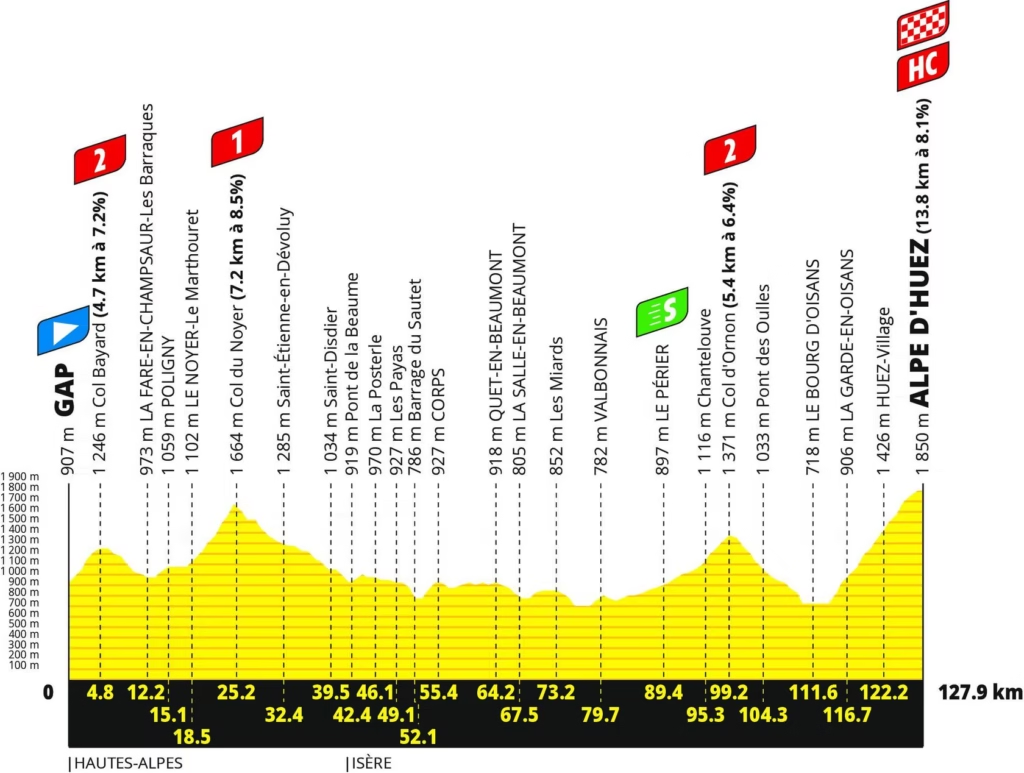
Stage 19 shifts the balance towards Pogačar
Stage 19 is short, difficult and finishes on Alpe d’Huez.
Paret-Peintre and Carapaz can again target the breakaway and collect points before the final climb. The finish changes the balance.
Alpe d’Huez is far more likely to be contested by the leading general classification riders than Orcières-Merlette. If Pogačar wins or finishes near the front, he can recover a significant amount of anything lost during stage 18.
That is the problem facing the breakaway specialists.
They may need to work across several early climbs to build their total. Pogačar can wait for the most valuable part of the stage and score while pursuing his normal yellow jersey objectives.
The repeated finishes and tactical consequences are examined in why back-to-back Alpe d’Huez stages could define the Tour de France 2026.
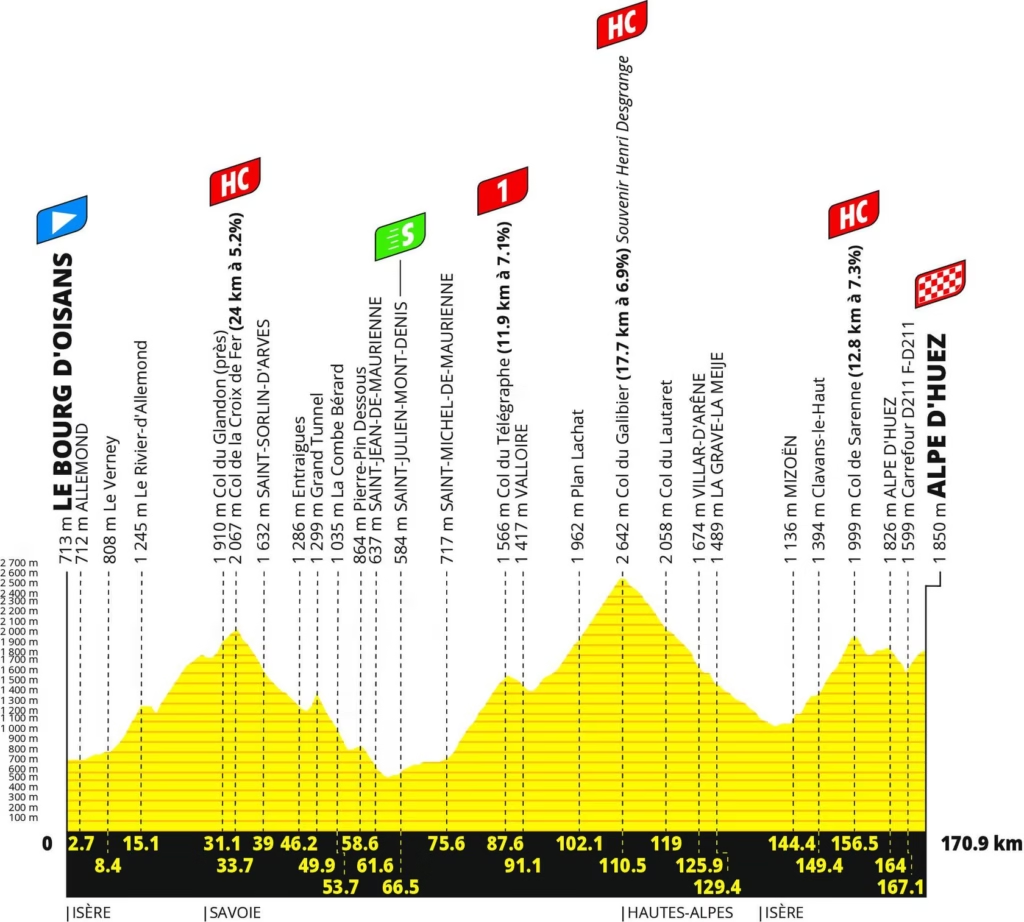
Stage 20 is the decisive day for the polka-dot jersey
The queen stage contains the largest concentration of major climbs remaining in the Tour.
The riders face the Col de la Croix de Fer, Col du Télégraphe, Col du Galibier and Col de Sarenne before returning to Alpe d’Huez.
This is both the challengers’ greatest opportunity and their greatest problem.
A rider in the breakaway can collect an enormous total. Winning several of the major summits could transform the classification in one afternoon.
Surviving at the front across the entire route requires an exceptional performance. Stage 20 contains approximately 5,450 metres of climbing and repeatedly takes the race above 2,000 metres.
Pogačar may not need the breakaway to be caught early. The yellow jersey group is still likely to race hard across the Galibier, Sarenne and final approach to Alpe d’Huez.
If Pogačar begins stage 20 within 20 or 30 points of the lead, he remains dangerous. If he starts ahead, the specialists will need a near-perfect day.
The stage is sufficiently valuable that no advantage established at Orcières-Merlette can be considered secure.
The full scale of the route is covered in the Tour de France 2026 Alps guide and our ranking of the 2026 Tour mountain stages by difficulty.
How large a lead does Paret-Peintre need?
There is no fixed total that guarantees victory, but Paret-Peintre needs more than a narrow advantage.
If he takes the jersey on stage 18 by two or four points, Pogačar can erase the difference through one high finish on Alpe d’Huez.
A useful target would be entering stage 20 at least 20 points ahead.
Even that may not be enough if Pogačar wins the queen stage or scores heavily across the major final climbs.
Paret-Peintre probably needs two excellent breakaway performances rather than one. He must collect heavily at Orcières-Merlette, add more during stage 19 and then remain involved on the queen stage.
That calculation shows the scale of the challenge.
The jersey can change hands on Thursday. Keeping it requires a campaign extending across the entire Alpine block.
 Photo Credit: Getty
Could a rider outside the top five still win?
Mathematically, yes.
Stage 20 contains enough major climbs to launch another rider into contention. A climber dominating several summits could add a huge number of points in one day.
In practice, the contenders outside the current top five need too many things to happen.
They must enter the correct breakaways, beat Paret-Peintre and Carapaz over multiple summits, avoid Pogačar scoring heavily and repeat the process across more than one stage.
A stage hunter can still rise rapidly through the standings. Winning the jersey from outside the current leading group would require one of the most dominant breakaway campaigns of the Tour.
The wider list of riders capable of such performances is covered in best climbers at the Tour de France 2026.
Why the mountains jersey often falls to the yellow jersey
The polka-dot jersey rewards climbing consistency, but modern Tour route design frequently favours the GC winner.
The most valuable climbs often arrive at summit finishes or late in the hardest mountain stages. Those are precisely the points where the yellow jersey contenders are racing at maximum intensity.
Breakaway riders can collect smaller summits, but the GC leader repeatedly scores 10 or 20 points without altering his strategy.
Pogačar’s 70-point total reflects that overlap.
He has not needed to chase every Category 2 or Category 3 climb. His performances on the Tour’s decisive mountain stages have been enough to place him in control.
The remaining route strengthens that effect.
Stages 19 and 20 are built around Alpe d’Huez and the biggest Alpine passes. Even a specialist who takes the lead on stage 18 must continue scoring while Pogačar races for yellow and stage victories.
For newer viewers, the Tour de France 2026 jerseys explained guide covers how the mountains competition fits alongside yellow, green and white.
-
 Photo Credit: SWPix.com

Who will wear polka dots on stage 19?
Three broad scenarios are possible after stage 18.
Pogačar keeps the lead
This happens if the breakaway riders divide the points or Pogačar scores at Orcières-Merlette.
Paret-Peintre would continue wearing the jersey on Pogačar’s behalf, provided he remains second.
Paret-Peintre moves ahead
He needs at least 26 points if Pogačar scores nothing.
That means winning almost every climb or combining a strong early haul with a high finish at Orcières-Merlette.
Paret-Peintre would then become the actual classification leader and wear the jersey in his own right.
Carapaz moves closer without taking the lead
Carapaz cannot close a 31-point gap with only 29 available on stage 18.
His realistic goal is to finish the day within a few points of Pogačar and ahead of Paret-Peintre. That would turn stage 19 into a direct contest for the jersey.
Polka-dot jersey prediction
Paret-Peintre is the most likely rider to take the jersey temporarily.
The Côte d’Engins gives him a clear early target, and the total of 29 available points is just enough to erase his deficit. He should be one of the most aggressive riders during the opening hour of stage 18.
Carapaz is the strongest alternative from the breakaway. His best chance may come from prioritising the stage and the larger late points rather than sprinting against Paret-Peintre over every early summit.
Evenepoel and Seixas remain close enough to feature but are constrained by the general classification.
Pogačar remains the favourite to wear polka dots in Paris.
He does not need to defend every point on stage 18. The two Alpe d’Huez stages and the enormous stage 20 climbing total give him a simpler route back to the top.
The challengers can take the jersey by attacking.
Keeping it requires them to beat Pogačar on terrain where he is already expected to dominate.
Prediction: Paret-Peintre takes the mountains lead during the Alpine block, but Pogačar regains it by the end of stage 20 and wins the 2026 Tour de France polka-dot jersey.

