
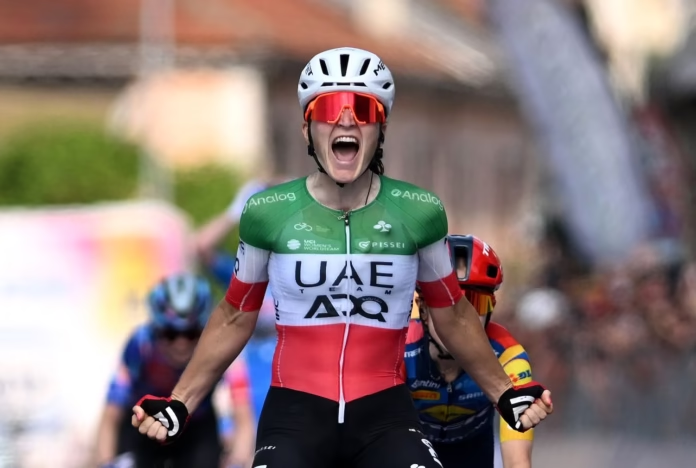
UAE Team L’IMAD have confirmed their seven-rider squad for the Tour de France Femmes 2026, with Elisa Longo Borghini leading the team’s general classification challenge.
Longo Borghini will be joined by Silvia Persico, Maëva Squiban, Dominika Włodarczyk, Brodie Chapman, Mavi García and Paula Blasi for the nine-stage race from Lausanne to Nice.
The selection gives UAE a clear GC structure around Longo Borghini while retaining several riders capable of contributing on the hilly and mountain stages. Persico and García provide climbing depth, Squiban and Włodarczyk offer attacking options, Chapman brings experience and versatility, while Blasi adds another developing rider to a squad built for more than one type of stage.
The wider structure of the team is covered in our UAE Team ADQ 2026 Women’s WorldTour team guide.
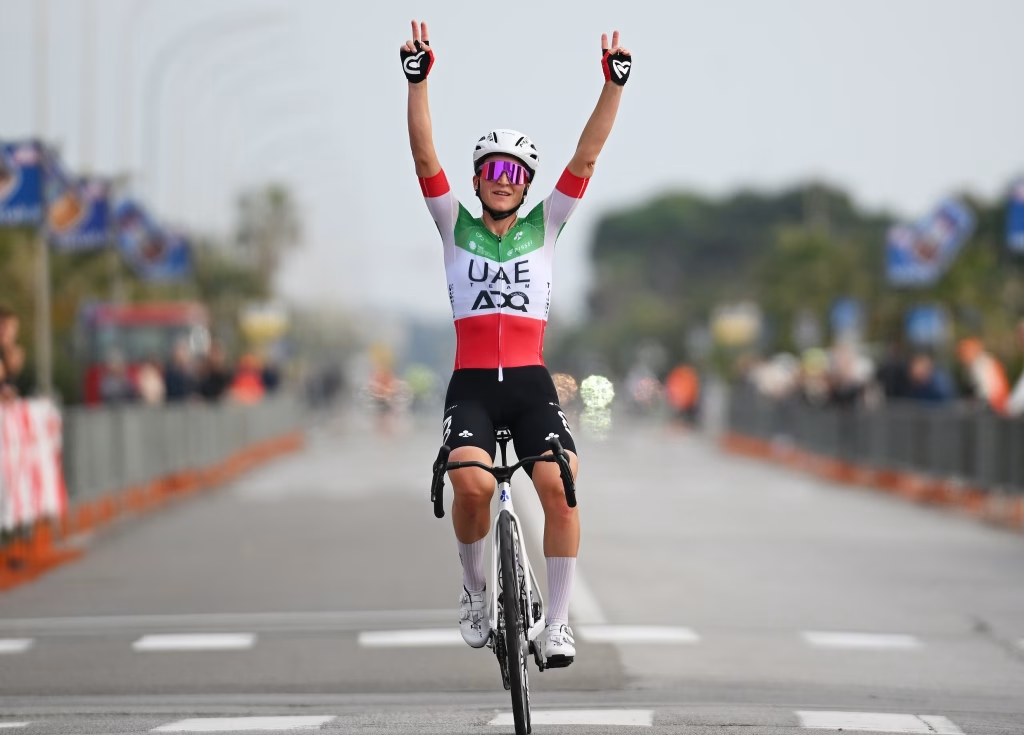
Longo Borghini gives UAE a genuine podium target
Longo Borghini is the obvious reference point.
She enters the Tour as one of the most complete stage racers in the field, combining high-level climbing with strong time trialling and the experience to manage a nine-day race without needing every stage to unfold perfectly.
That balance makes the Tour de France Femmes 2026 route particularly interesting for her.
Stage 4’s 21km time trial into Dijon gives Longo Borghini an opportunity to take time from several lighter climbers before the race reaches Mont Ventoux. She is unlikely to match Marlen Reusser against the clock, but she does not need to. A strong Dijon performance can give her a useful buffer over riders she expects to meet again in the mountains.
Ventoux then becomes the bigger test.
If Longo Borghini reaches Stage 7 already sitting close to the podium, her durability and pacing could make her one of the riders best placed to challenge Demi Vollering and Pauline Ferrand-Prévot when the climb becomes attritional.
Her broader route fit and GC chances are covered in our Elisa Longo Borghini Tour de France Femmes 2026 guide.
Persico gives UAE another rider for the hard stages
Silvia Persico gives UAE an important second option once the terrain becomes difficult.
Her biggest value is versatility. Persico can survive repeated climbing, contribute in selective races and remain useful on days that are too hard for the pure sprinters but not difficult enough to become a simple GC showdown.
That should make Stages 3, 5 and 6 particularly interesting.
If Longo Borghini remains well positioned overall, Persico can stay close to her leader through the difficult terrain. If the race situation gives her more freedom, she is strong enough to go into a breakaway or follow attacks from riders targeting the stage.
That second route to a result matters for UAE.
The team do not need every hard stage to be raced solely around Longo Borghini.
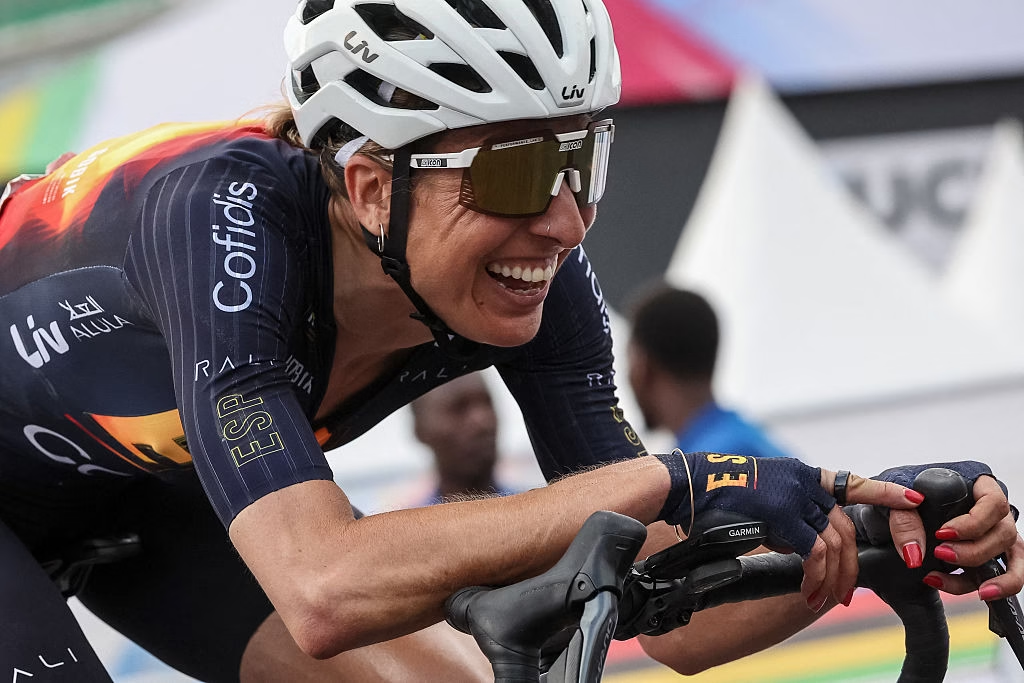
García adds major mountain experience
Mavi García provides another experienced climber for the decisive days.
At 42, García brings a depth of stage-racing experience that few riders in the peloton can match, and her role should become increasingly important once the Tour reaches Mont Ventoux and the final mountain stage around Nice.
She can be used conventionally as support for Longo Borghini, but UAE also have the option of sending her ahead.
That is particularly interesting on Stage 7.
A García breakaway would force rival teams to make a tactical decision. Chase and potentially weaken the support around their own leaders, or allow a proven climber to start Ventoux with a substantial advantage.
That makes her useful even if she is not the rider the team ultimately expect to contest the GC.
Squiban brings an attacking route to stage results
Maëva Squiban adds a different type of threat.
The French rider is well suited to aggressive racing and gives UAE an obvious option for days where the breakaway has a genuine chance of deciding the stage.
That role already has major Tour precedent. Squiban won Stage 6 of the 2025 Tour de France Femmes with a solo attack on the hilly run into Ambert, showing she can turn freedom into a result at the biggest race of the season.
The middle of the 2026 Tour should suit the same approach.
Stages 5 and 6 contain enough climbing to make control difficult, while the major GC teams may be reluctant to use too many riders chasing harmless moves before Ventoux. That creates exactly the sort of scenario where Squiban can become dangerous.
She does not need to wait for a controlled finish.
UAE can send her forward early, remove responsibility from their own shoulders and force other teams to decide whether the move matters.
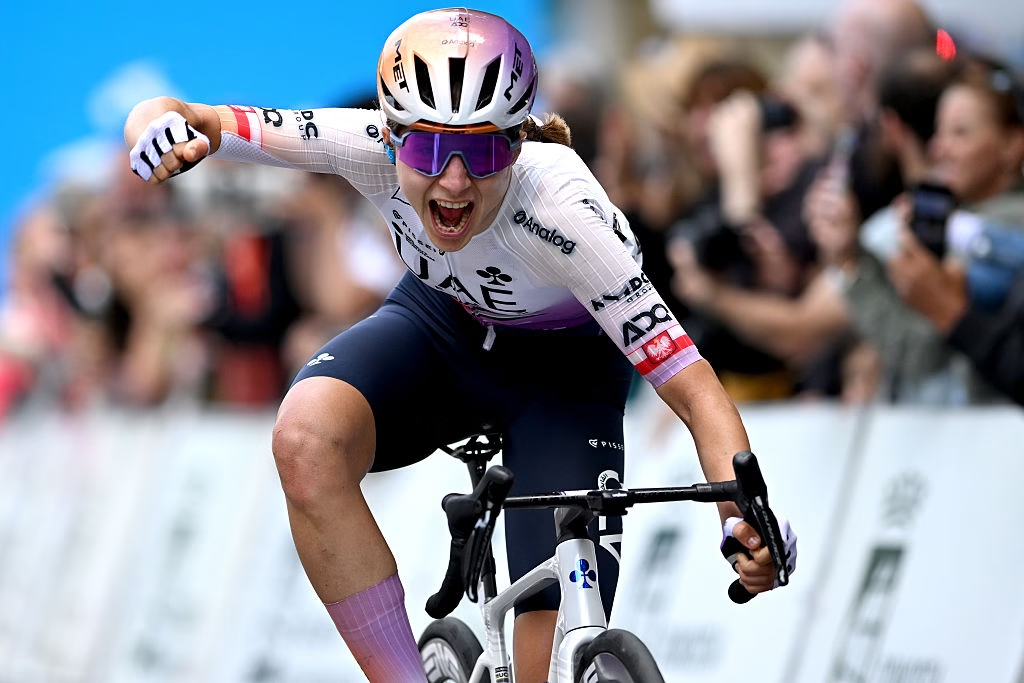
Włodarczyk offers speed after a hard race
Dominika Włodarczyk gives the squad another rider who becomes more dangerous after the race has already been made difficult.
She has enough finishing speed to become relevant from a reduced group and enough durability to survive terrain that can remove the more specialised sprinters.
That could give UAE options on the hilly stages without requiring Longo Borghini to contest every finale herself.
The key is how selective the race becomes.
A straightforward bunch sprint against Lorena Wiebes or Charlotte Kool is not the ideal scenario.
A 30-rider group after repeated climbing is very different.
Chapman adds tactical experience
Brodie Chapman gives UAE another experienced all-rounder capable of contributing across several roles.
She can work around Longo Borghini, help control dangerous moves and become useful herself if the race opens up.
That kind of rider is particularly valuable in a Tour squad because the same job rarely works for nine consecutive stages.
One day Chapman may be protecting her leader through positioning battles. The next she may be asked to follow a breakaway. Later in the week, she can become part of the mountain support around Longo Borghini.
That flexibility makes the overall seven-rider selection stronger than a squad built entirely around specialist climbers.
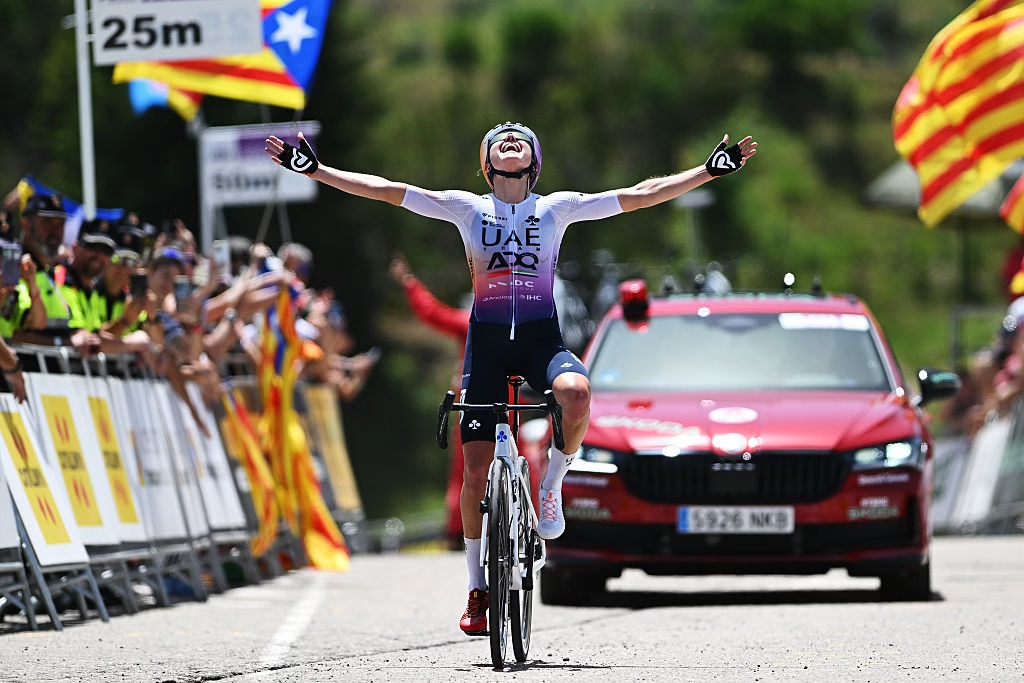
Blasi gets a major opportunity
Paula Blasi completes the seven-rider squad and receives one of the biggest opportunities of her young career.
Her role is unlikely to involve carrying responsibility for UAE’s headline results. Instead, she can work around the more established riders, contribute where needed and experience the demands of a nine-stage Tour at the highest level.
That still makes her selection significant.
A Grand Tour demands more than isolated performances. Positioning, recovery, nutrition and repeated race intensity all become part of the challenge, and simply contributing effectively across the week can be an important development step.
-
 Photo Credit: Getty

UAE have built around Longo Borghini without becoming one-dimensional
The shape of the squad is one of its strengths.
Longo Borghini is clearly the GC leader.
Persico provides another high-level option on selective stages.
García brings mountain support and potential breakaway strength.
Squiban can attack from distance.
Włodarczyk gives the team a faster finish after harder racing.
Chapman adds experience and versatility, while Blasi can develop without being asked to carry the team’s result.
That mix should be particularly useful on the stages where the race is difficult to control. The broader group of riders likely to benefit from those days is covered in our Tour de France Femmes 2026 breakaway specialists guide.
If Longo Borghini is fighting for the podium, UAE can organise around her. If a hilly stage becomes a breakaway day, they have riders to send forward. If a reduced group reaches the finish, Persico or Włodarczyk give them another route towards a result.
UAE Team L’IMAD Tour de France Femmes 2026 squad
- Elisa Longo Borghini
- Silvia Persico
- Maëva Squiban
- Dominika Włodarczyk
- Brodie Chapman
- Mavi García
- Paula Blasi
UAE Team L’IMAD head to Lausanne with Longo Borghini as a genuine podium contender and enough depth around her to remain aggressive throughout the race.
The team’s biggest strength is that its Tour does not depend entirely on one GC outcome. Longo Borghini gives them the overall ambition, but Persico, García, Squiban, Włodarczyk and Chapman ensure they can still chase stages and influence the race even when the focus shifts away from yellow.

