
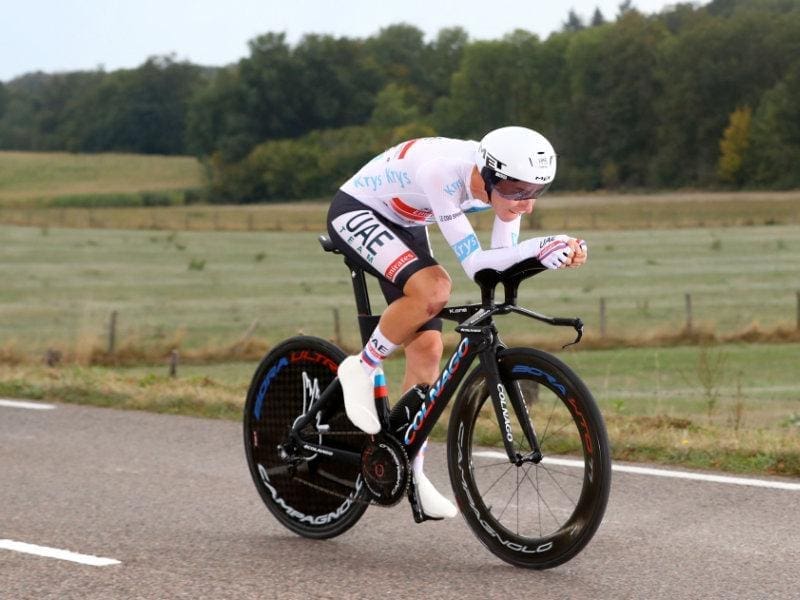
The Tour de France 2026 should have one of the most interesting young-rider battles in years. The white jersey is no longer just a development prize. In modern cycling, it often doubles as a second GC race, fought by riders already capable of finishing high overall, winning mountain stages or reshaping a team’s entire Tour strategy.
That should be especially true in 2026. The race starts with a team time trial in Barcelona, heads into the Pyrenees as early as stage 3, includes a first-week summit finish at Gavarnie-Gèdre, then builds towards a final week with an individual time trial, Orcières-Merlette and back-to-back stages finishing on Alpe d’Huez. Young riders cannot wait for the race to settle. If they want white, they need to be ready from the opening weekend.
The white jersey goes to the best young rider on general classification, which means it is based on time, not points. A rider can win it without taking a stage, while another can light up the race for one day and still finish well down if they lose time in the mountains or the time trial. That makes this more than a list of exciting prospects. It is about who can survive three weeks, avoid bad days, handle pressure and still climb with the best when the race reaches its hardest point.
For the full route context, see our Tour de France 2026 full route guide and Tour de France 2026 route analysis. Our Tour de France 2026 jerseys explained also breaks down how the white jersey fits alongside yellow, green and polka-dot.
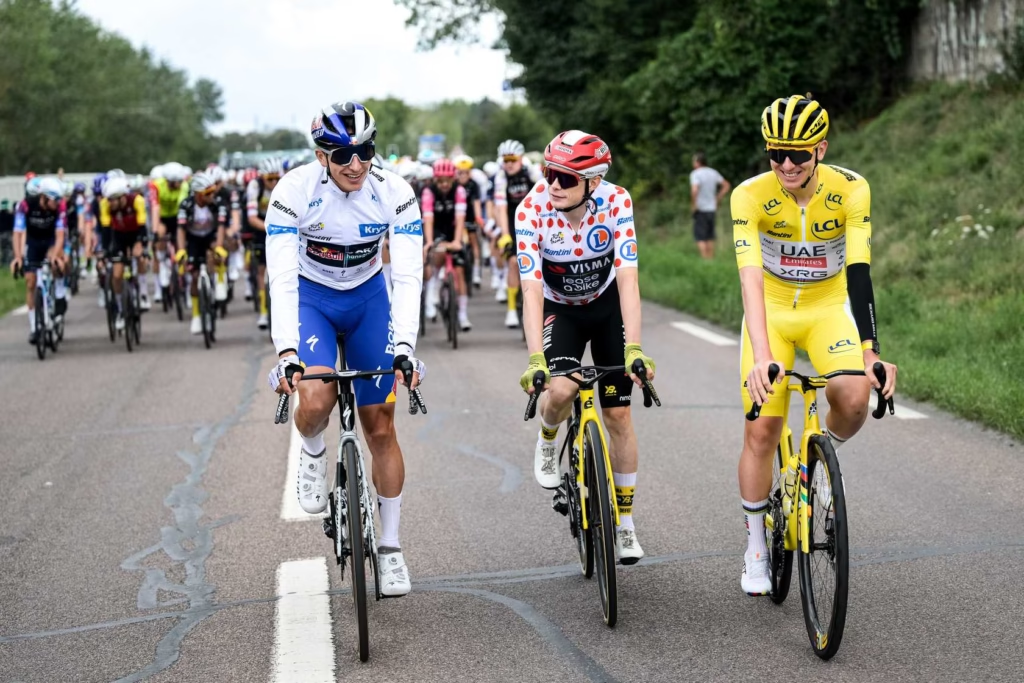
What kind of young rider suits the 2026 Tour?
The 2026 route favours young riders who already have complete stage-race qualities. Pure climbers will like the five summit finishes, but they cannot ignore the stage 1 team time trial or the stage 16 individual time trial. Time triallists will have opportunities, but they must survive the Pyrenees and Alps. Opportunists can win stages, but white will be about consistency.
The ideal white jersey contender needs:
- Strong climbing across repeated mountain stages
- A team time trial squad capable of limiting early losses
- A solid individual time trial on stage 16
- Good positioning through hilly and transition stages
- Recovery across three weeks
- Enough team protection to avoid wasting energy
- The confidence to race for GC rather than only stages
The key stages for young riders should be stage 1 in Barcelona, stage 3 to Les Angles, stage 6 to Gavarnie-Gèdre, stage 16 between Évian-les-Bains and Thonon-les-Bains, and the final Alpine block through Orcières-Merlette and Alpe d’Huez. Any rider who wants white will need to come through all of those without one major collapse.
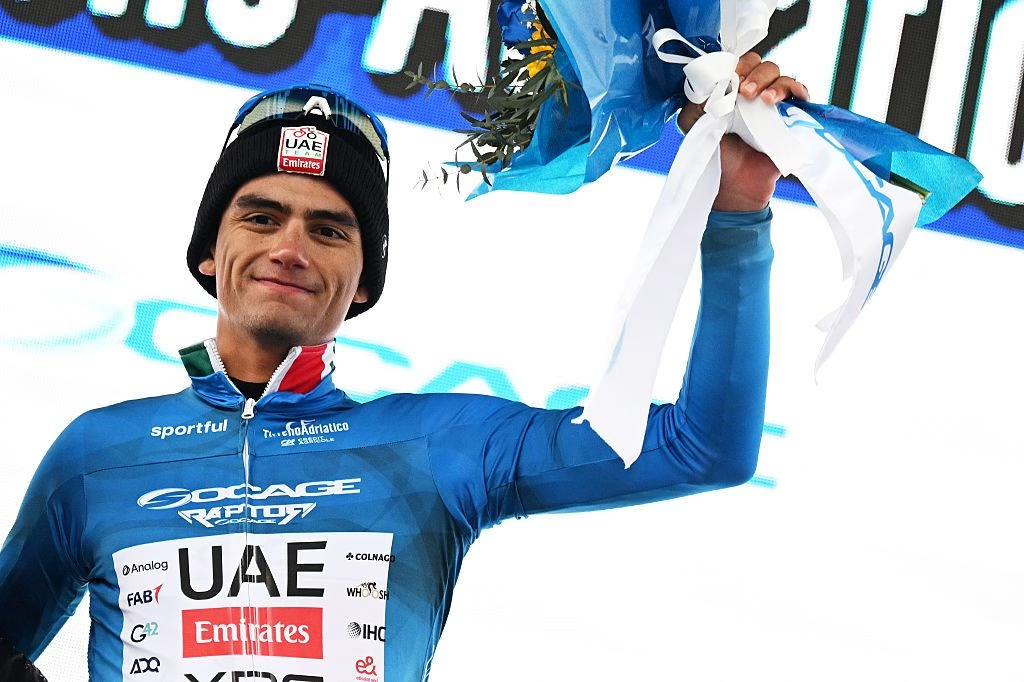 Photo Credit: Getty
Isaac del Toro
Isaac del Toro may be the most intriguing young rider in the 2026 Tour conversation. He has the climbing talent, race intelligence and all-round quality to become a genuine GC contender rather than simply a white jersey outsider. The question is not whether he has the ability. It is how UAE Team Emirates-XRG manage his role.
On this route, del Toro has obvious appeal. The early mountains give him a chance to show himself quickly, while the final week should suit a rider who can recover and climb repeatedly. The team time trial may also work in his favour if UAE arrive with their usual depth and discipline. That could help him start the race ahead of some young rivals before the first mountain test even begins.
The complication is team hierarchy. UAE’s Tour is unlikely to be built solely around del Toro if Tadej Pogačar is present, and João Almeida or Juan Ayuso may also have protected status depending on the final selection. That does not necessarily hurt del Toro. It may allow him to ride with less external pressure while still benefiting from the team’s strength.
If he is allowed to race for his own GC, del Toro is one of the most obvious white jersey contenders. If he is used as a support rider, he could still become one of the race’s most visible young climbers.
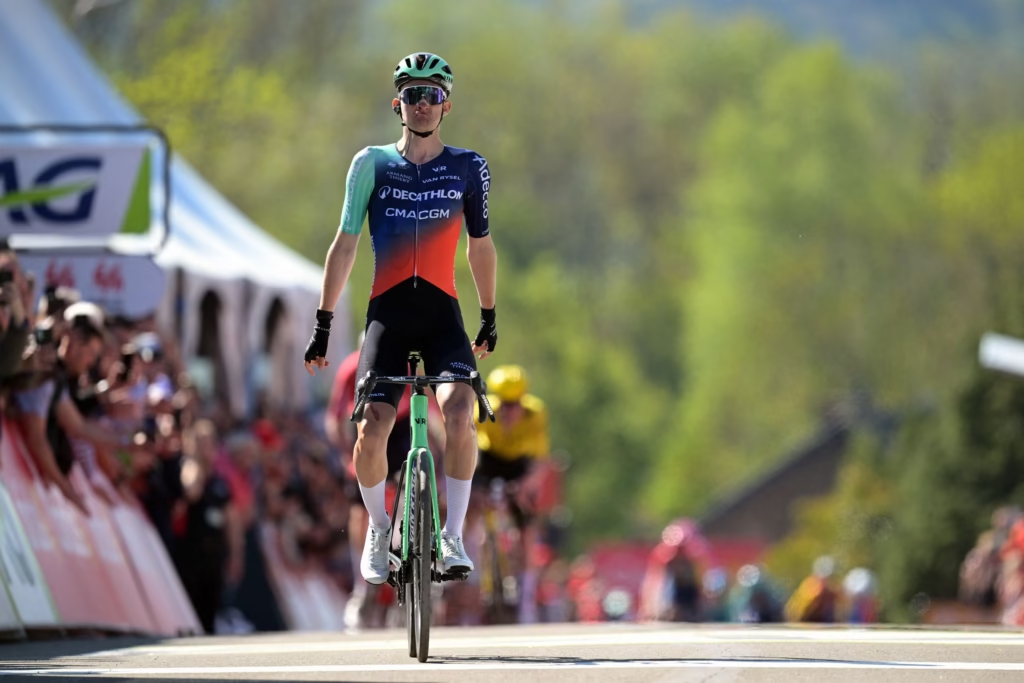
Paul Seixas
Paul Seixas is the home storyline the 2026 Tour almost demands. He is young, French, already carrying major expectation, and expected to lead Decathlon CMA CGM Team in July. That combination makes him one of the most important riders in the race before he has even reached Barcelona.
The route gives him both opportunity and danger. Stage 3 to Les Angles comes early enough to test his readiness before the Tour has settled, while Gavarnie-Gèdre on stage 6 offers another immediate mountain checkpoint. If he survives the first week close to the best young riders, the white jersey becomes realistic. If he loses time early, the race may become more about stage learning and mountain aggression.
His build-up through Tour Auvergne – Rhône-Alpes matters because that race has become one of the key Tour rehearsals. Seixas has been measuring himself against riders such as Isaac del Toro and Juan Ayuso, which gives this white jersey battle a useful form line before July. The pressure will still be very different at the Tour, especially with French attention around him.
The biggest issue is expectation. A teenage leader at the Tour will have difficult days, and Decathlon need to protect him from the race as much as from rival teams. But if he handles the first week well, Seixas could turn white into one of the defining subplots of the 2026 Tour.
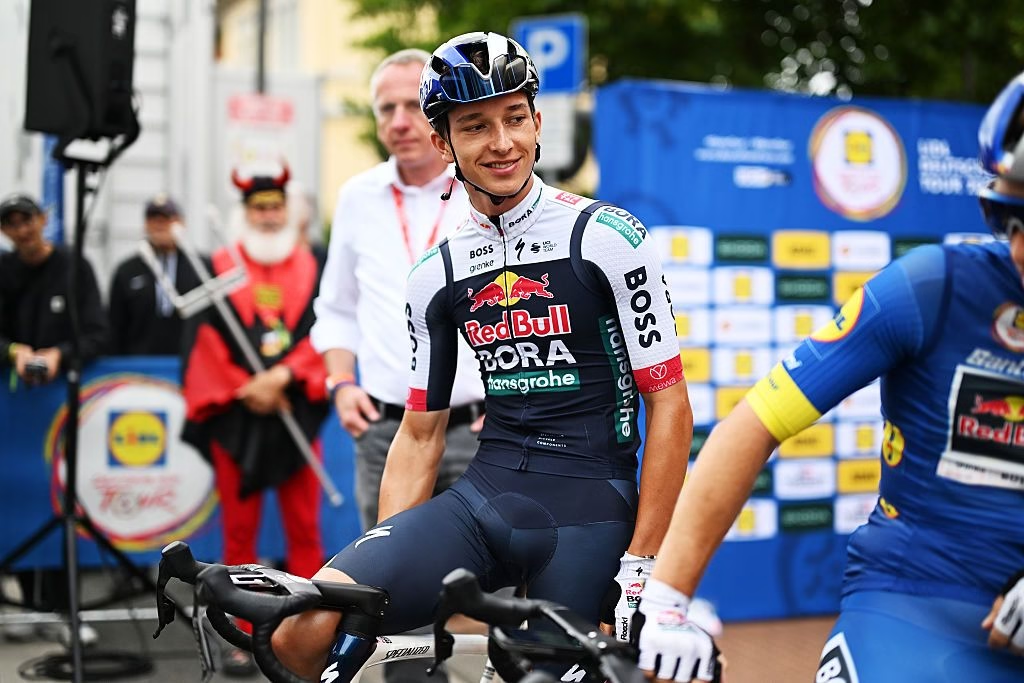
Florian Lipowitz
Florian Lipowitz has already shown he belongs in this conversation. Winning the 2025 white jersey and finishing on the Tour de France podium changed his status completely. He is no longer a young rider with potential. He is a proven Grand Tour GC rider who will be measured against the very top of the field.
That changes the way to judge him in 2026. The white jersey may be available again, but his target should be bigger than simply defending that classification. Red Bull-BORA-hansgrohe will have Primož Roglič as a central reference if selected, yet Lipowitz’s own level means he cannot be treated as just another support rider.
The 2026 route is a strong test of whether his 2025 breakthrough can be backed up. The time trial should not frighten him, while the repeated mountain stages give him enough terrain to show durability. The double Alpe d’Huez finish in the final week is the kind of setting where a podium contender has to confirm their status.
The risk is internal role and pressure. If Roglič is riding for yellow, Lipowitz may have to balance personal ambition with team duty. But if he stays close through the opening two weeks, he could again be one of the most important young riders in the race.
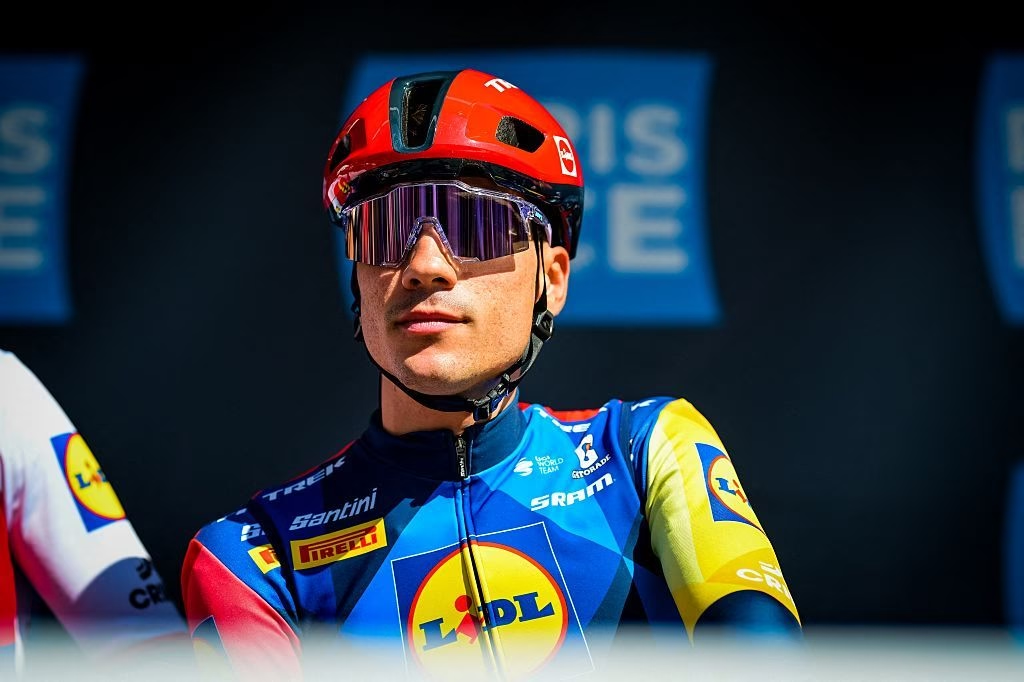
Juan Ayuso
Juan Ayuso remains one of the most naturally talented young stage racers in the peloton, and the 2026 Tour route should suit many of his strengths. He can climb, time trial and handle a hard three-week race. In a different team context, he would be an obvious white jersey favourite.
The issue is UAE Team Emirates-XRG’s depth. If Pogačar, Almeida and del Toro are all part of the Tour conversation, Ayuso’s role becomes one of the hardest to read. He could be a protected GC card, a luxury climbing lieutenant, or a rider whose race depends on how the first week unfolds.
If Ayuso is given freedom, stage 16 is one of the days that could work in his favour. A 26.1km individual time trial between Évian-les-Bains and Thonon-les-Bains is long enough to create meaningful gaps between young climbers. If he reaches that day close to Seixas, del Toro, Onley and Lipowitz, he can use it as a weapon.
The final Alpine weekend also suits him, but only if he has not spent too much energy working for others. Ayuso’s white jersey chances may depend less on talent than on how UAE decide to distribute leadership.
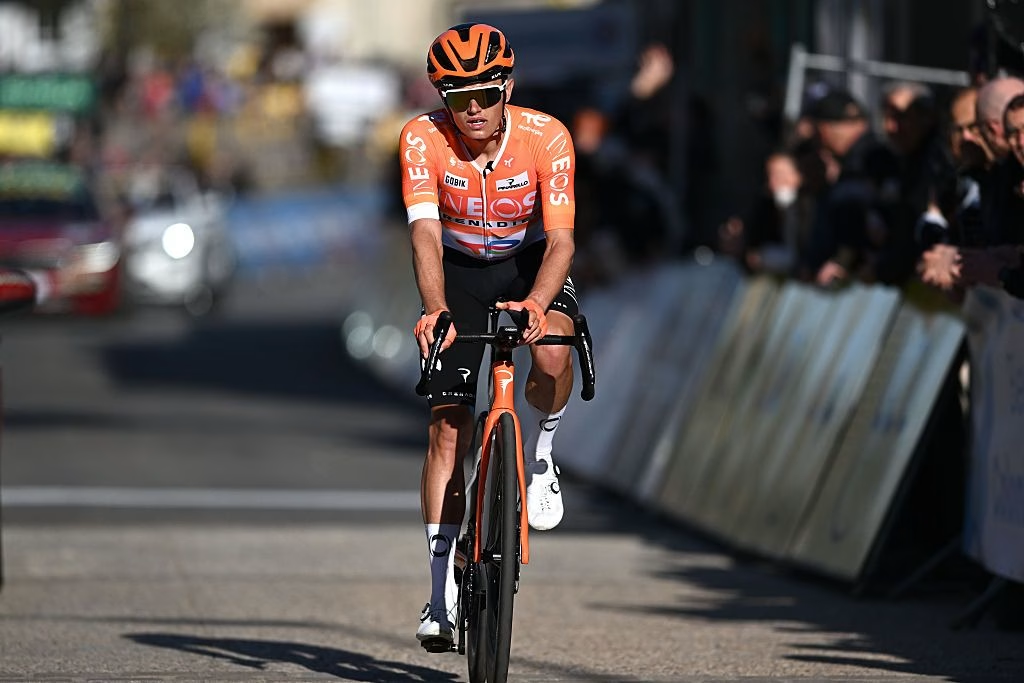
Oscar Onley
Oscar Onley is a strong white jersey candidate because his progression has been built around climbing consistency and stage-race resilience. He is not a rider who needs one spectacular attack to be relevant. He can sit high in the general classification by being present every day the race gets hard.
The 2026 Tour route should suit him, especially the repeated mountain stages after the opening week. The time trial is the obvious area where he needs to limit losses. If he can stay close enough through stage 16, the final mountain block gives him room to move back up.
Onley also benefits from being less burdened by the same level of attention as Seixas or the UAE riders. That can matter in a Tour where the media focus will fall heavily on Pogačar, Vingegaard, Evenepoel, Seixas and the French angle. Onley may be able to build his race more quietly.
A top-10 overall and a serious white jersey challenge are both realistic if he comes through the first week safely. The key will be avoiding one bad day, because the route does not offer much room to repair major damage.
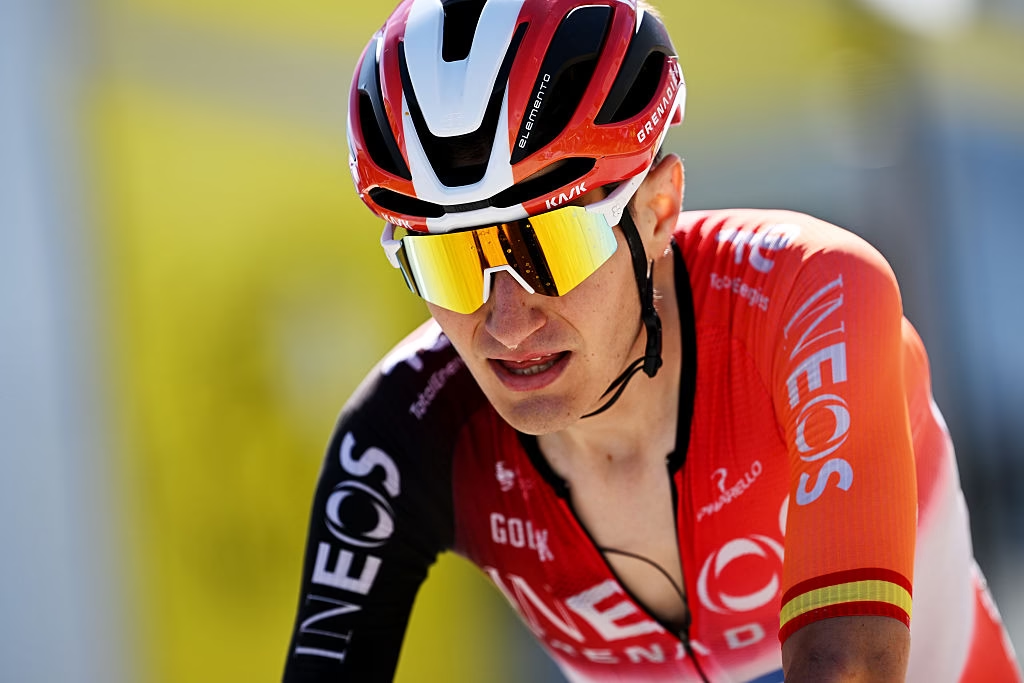
Carlos Rodriguez
Carlos Rodriguez is still eligible for the young rider conversation and brings something many of the others are still building: proven Tour de France experience. He knows how the race works, how positioning matters, and how quickly a GC plan can be lost through a crash, split or poorly timed bad day.
His route to white is built around consistency rather than surprise. Rodriguez can climb well enough to stay with elite groups, descend confidently, and manage a three-week GC race. The individual time trial may not make him the strongest contender, but he should be solid enough to avoid major damage if he is in form.
The question is whether he is still seen as a young rider in narrative terms. Compared with Seixas, del Toro or Bisiaux, Rodriguez feels more established. But that experience is exactly why he belongs in this guide. The white jersey is awarded by time, not by hype, and Rodriguez has the profile to finish ahead of several more explosive but less proven rivals.
If Netcompany INEOS back him as a protected GC card, he can be a serious white jersey podium contender.
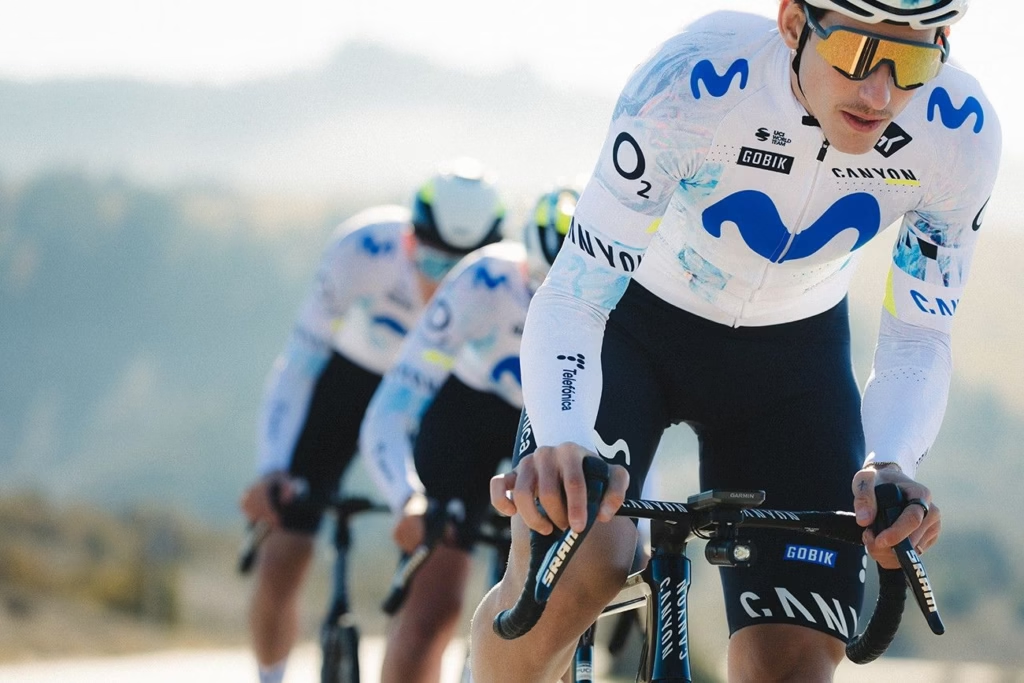
Cian Uijtdebroeks
Cian Uijtdebroeks is one of the riders who fits the classic white jersey mould: a young climber trying to turn stage-race promise into a major Grand Tour result. The 2026 route gives him enough climbing to matter, but it also asks questions that cannot be solved by mountain form alone.
The team time trial and individual time trial are important. Uijtdebroeks does not need to beat the strongest time triallists, but he cannot afford to give away too much before the Alps. The final week should suit him better, especially if the race becomes selective on Orcières-Merlette and Alpe d’Huez.
The other issue is team role. If he is selected in a team built around GC support for another leader, he may have to spend energy before the race even reaches the decisive stages. If he gets protected status, he becomes a much more interesting white jersey candidate.
Uijtdebroeks is unlikely to be the safest pick, but he remains one of the young climbers who can finish high if the race becomes a pure endurance test.
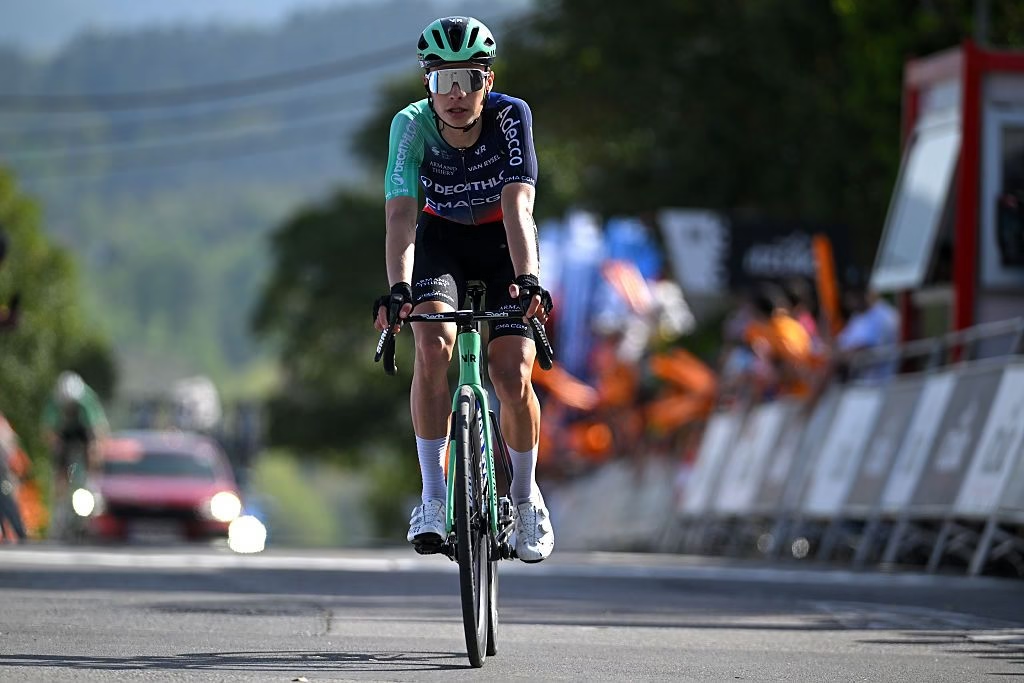
Matthew Riccitello
Matthew Riccitello is an important name because of the Decathlon CMA CGM Team context. Seixas may be the headline rider, but Riccitello gives the team another young climber with Grand Tour development value and the ability to support or protect a GC plan.
His move into a team with stronger stage-race ambition gives him a clearer pathway in races like this. If selected, his first job may be to help Seixas through the mountains, but that does not mean he should be ignored. A strong support rider in week one can become a protected option if the race turns unexpectedly.
Riccitello’s strengths make most sense in the high mountains. The Pyrenees and Alps should suit him more than the flat or hilly transition stages, while the time trial may limit his own white jersey ceiling. Still, the Tour is often where a rider’s value is seen through role as much as result.
He may not be Decathlon’s white jersey leader, but he could become central to whether Seixas stays in the fight.
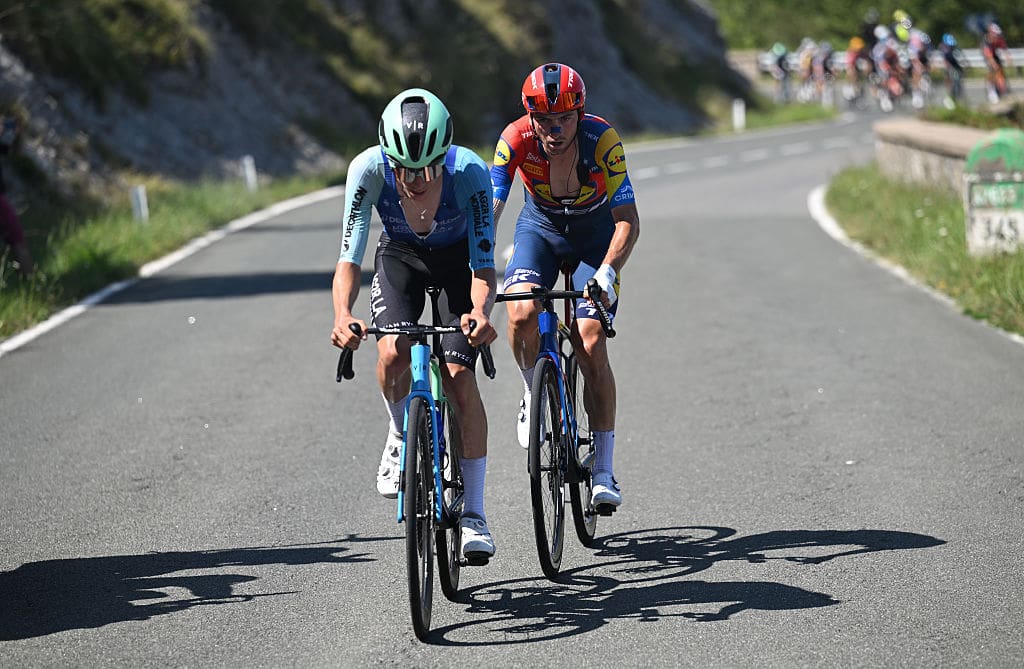 Photo Credit: Getty
Léo Bisiaux
Léo Bisiaux is one of the youngest riders worth watching if he makes the final Tour selection. He is still developing, but his climbing talent and long-term GC profile make him relevant in a race where the white jersey can become a preview of future hierarchy.
The danger is expecting too much too soon. The 2026 Tour is brutally demanding for a rider still learning this level. Early mountains, a hard final week and the pressure of July are not the same as showing promise in shorter races. If Bisiaux is selected, his role may be more about experience, support and stage-by-stage learning than a full GC bid.
That said, young riders sometimes grow into a Grand Tour quickly. If he handles the first week well and is given freedom later, he could be seen in breakaways or in support deep into mountain stages. For Decathlon, having Bisiaux around Seixas would also underline how much young climbing depth the team is trying to build.
He is more of a long-term watch than a white jersey favourite, but he belongs in the wider young-rider story.
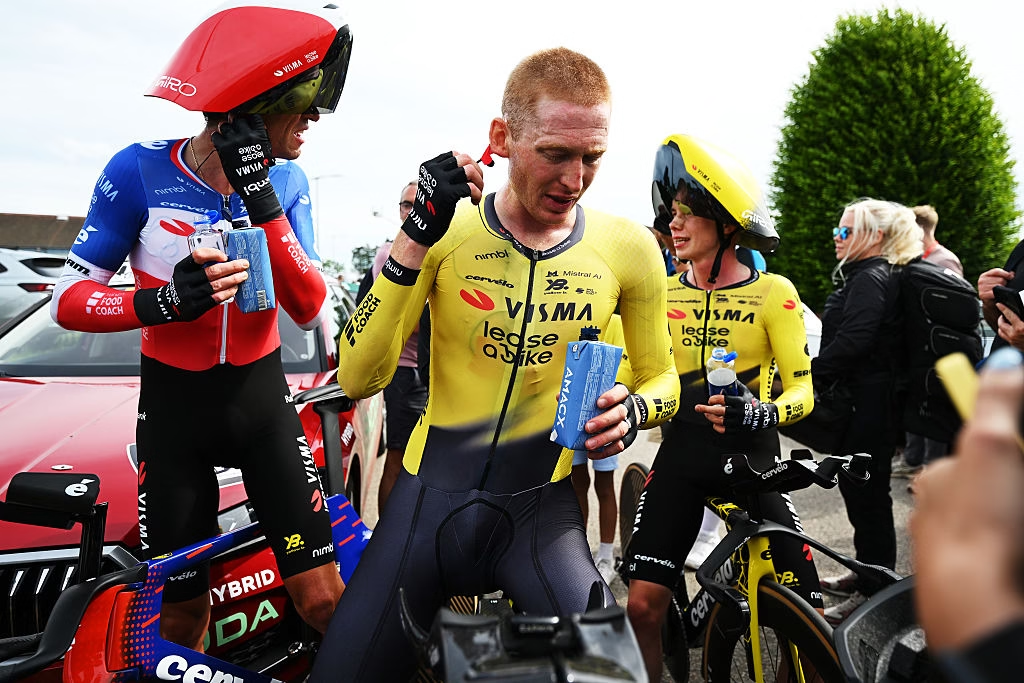 Photo Credit: Getty
Jørgen Nordhagen
Jørgen Nordhagen is another young rider whose Tour role would be fascinating if selected. Team Visma | Lease a Bike are unlikely to give him freedom at the expense of Jonas Vingegaard, but that does not make him irrelevant. Quite the opposite: his development may be accelerated by learning inside one of the most disciplined Tour structures in the peloton.
Nordhagen’s climbing ability makes him a rider to watch in mountain support roles. If he is part of the team, his job will likely involve positioning, pacing and saving energy for key moments rather than chasing his own GC. That kind of work can go unnoticed, but it is often how future leaders learn the Tour.
The white jersey may not be a realistic target if he spends the race working for Vingegaard. But as a young rider to watch, he is exactly the kind of name who could show flashes of future significance on the hardest climbs.
If he is still visible late in mountain stages, that will say plenty even without a high GC placing.
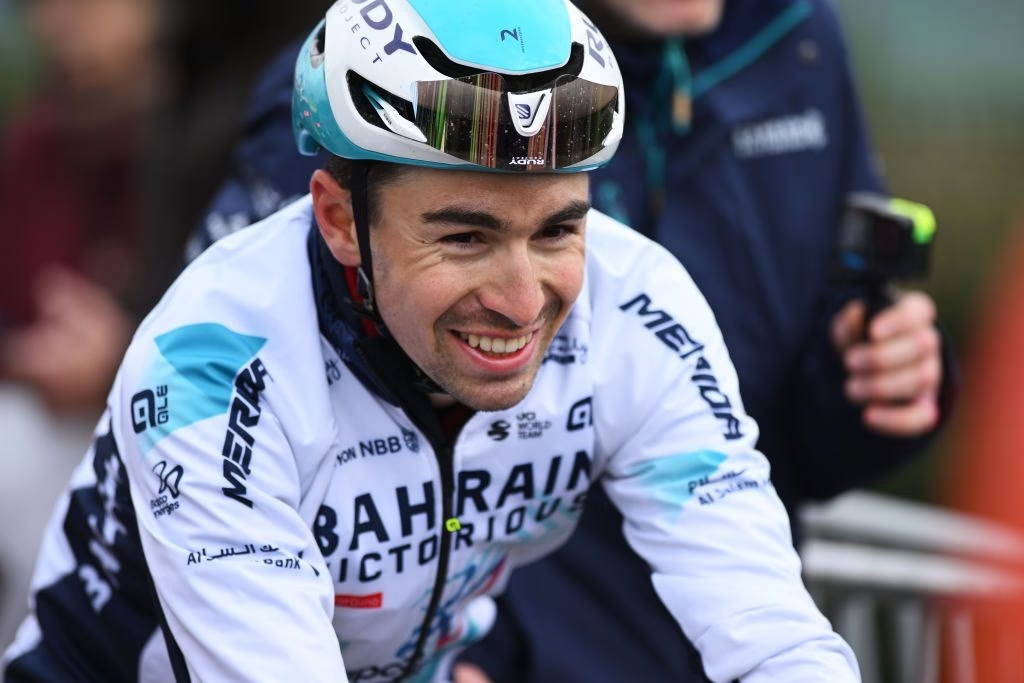 Photo Credit: Getty
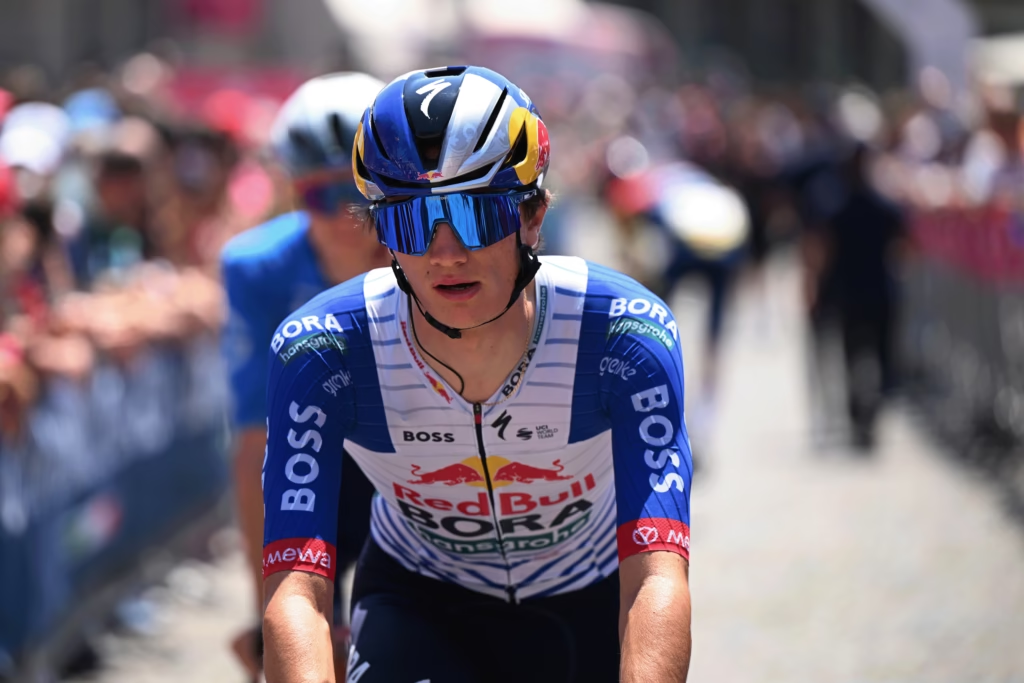
Lenny Martinez
Lenny Martinez brings the profile of a climber who can animate the race even if he is not a straightforward white jersey favourite. The route’s summit finishes suit him, especially if he loses time early and is allowed into mountain breakaways.
The challenge is the overall balance. The team time trial and individual time trial may both be difficult for him compared with more complete white jersey rivals. That makes the general classification harder, but it also creates a clear alternative path: stage hunting and mountains aggression.
Martinez is at his best when the race opens up and pure climbing instinct matters. Stages like Gavarnie-Gèdre, Plateau de Solaison, Orcières-Merlette or either Alpe d’Huez day could give him opportunities if he is no longer locked into a GC fight.
He may not be the most likely white jersey winner, but he is one of the young riders most likely to produce a memorable mountain-stage move.
Giulio Pellizzari
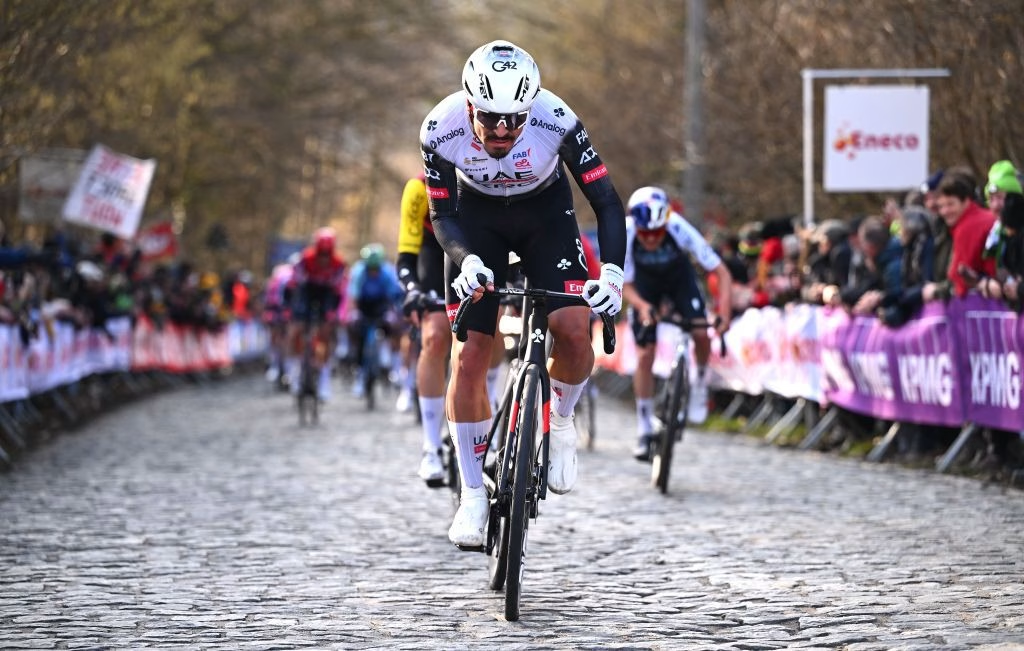
Giulio Pellizzari is another rider who could become more visible if the race turns towards aggressive mountain racing. He has the climbing profile to be interesting, but his Tour selection and role will be decisive.
If he is riding in a team with bigger GC priorities, he may be used as a support climber. If he gets freedom, he becomes a dangerous rider for breakaways and mountain stages where the GC teams allow a move to go. The 2026 route has enough hard climbing to give him chances, especially once the race reaches the second half.
His white jersey chances are less clear because the time trial and team role may work against him. But as a young rider to watch, he fits the Tour’s middle ground: not necessarily a podium contender, but someone who can make the race harder and show climbing quality on major stages.
Pellizzari is one for the mountain days rather than the overall favourites list.
António Morgado
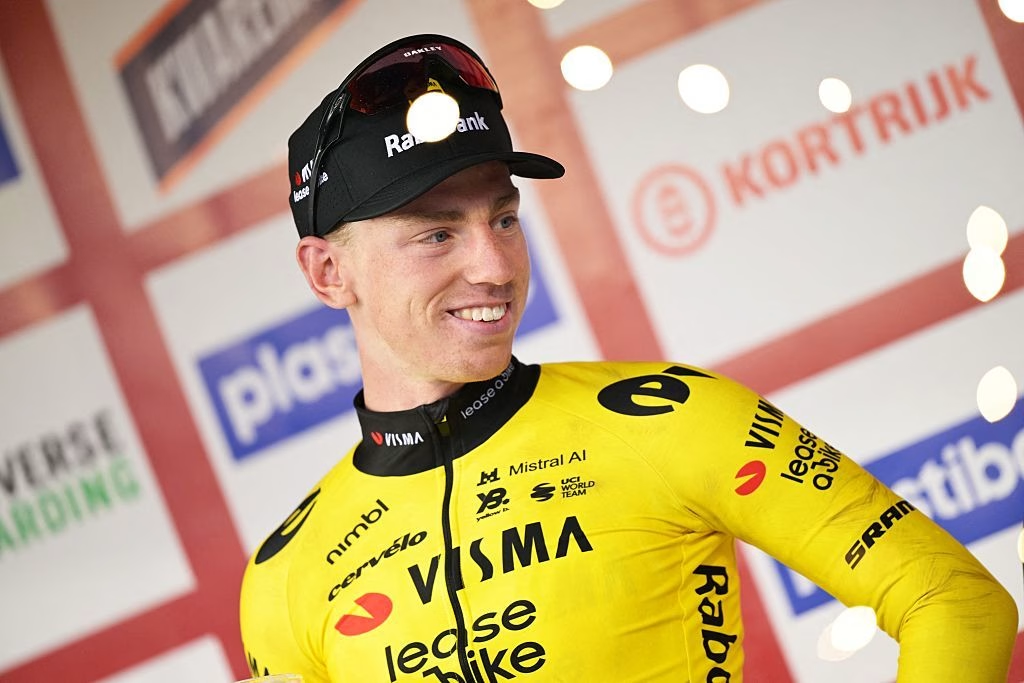
António Morgado’s Tour role would be very different from the pure climbers. He is not the obvious white jersey candidate for a mountain-heavy route, but he is a rider who could make an impression on hilly stages, breakaway days and reduced finishes.
The opening week could suit him more than the final Alpine block. Stage 2 around Montjuïc, stage 4 to Foix and some of the rolling transition stages could give him room if his team allows him to race. He has the engine and aggression to be visible when the race is hard but not yet controlled by the pure GC climbers.
His white jersey chances are limited by the amount of climbing later in the Tour. But the article is not only about who can win white. It is also about which young riders can shape stages, build reputation and show they belong at Tour level.
Morgado could do that through one-day style racing inside the Tour.
Matthew Brennan
Matthew Brennan would be one of the most exciting young stage hunters if selected. He is not a white jersey contender in the traditional GC sense, but the Tour is not only about the overall classifications. Young riders can make their mark through stage finishes, lead-outs, breakaways and reduced sprints.
Brennan’s speed and racing instinct make him interesting on stages where the pure sprinters are under pressure but the GC riders are not yet fully in control. The difficulty is selection. Team Visma | Lease a Bike have a clear yellow jersey focus, and a young fast finisher may not fit the final Tour balance if every slot is needed for Vingegaard support.
If he does make the squad, he would be one of the best examples of a young rider to watch outside the white jersey fight. He could be visible in finishes, support work and transition stages where quick decision-making matters.
Young riders most likely to challenge for white
The strongest white jersey candidates are the riders who can combine climbing with enough time trial strength and team protection to survive the full race.
The main white jersey contenders look like:
- Isaac del Toro
- Paul Seixas
- Florian Lipowitz
- Juan Ayuso
- Oscar Onley
- Carlos Rodriguez
- Cian Uijtdebroeks
Del Toro and Seixas carry the strongest future-facing storyline. Lipowitz has the best proven Tour result after winning white and finishing on the podium in 2025. Ayuso and Rodriguez bring more established stage-race experience. Onley and Uijtdebroeks are the riders who could climb into the picture if they avoid time trial losses and stay consistent.
Young riders most likely to win a stage
Not every young rider will be judged by GC. Some will be more dangerous if they are freed from white jersey pressure.
Young stage threats include:
- Lenny Martinez
- Giulio Pellizzari
- António Morgado
- Matthew Brennan
- Léo Bisiaux
- Jørgen Nordhagen
The mountain stages should suit Martinez and Pellizzari most clearly. Morgado is more interesting on hilly and transition days. Brennan would be a sprint or reduced-finish threat if selected. Bisiaux and Nordhagen may be more likely to show themselves through climbing support or breakaways than direct stage leadership.
Young riders who could shape team tactics
Some young riders may not have personal freedom, but they could still change the race through the work they do for leaders.
That group includes:
- Isaac del Toro, if UAE use him around Pogačar
- Juan Ayuso, depending on UAE hierarchy
- Matthew Riccitello, if Decathlon commit fully to Seixas
- Jørgen Nordhagen, if Team Visma | Lease a Bike use him in mountain support
- Léo Bisiaux, if Decathlon add another young climber around Seixas
- Giulio Pellizzari, if used as a mountain lieutenant rather than a breakaway rider
This is where the 2026 Tour could be especially interesting. Some of the strongest young riders may not start with personal leadership, but the race can change quickly. If a team loses a leader, if a young rider survives better than expected, or if the GC opens up early, a support role can become something much bigger.

Top 5 young riders to watch at the 2026 Tour de France
1. Isaac del Toro
Del Toro has the most complete upside and the best blend of climbing, instinct and GC potential. If UAE give him space, he can be a genuine white jersey contender.
2. Paul Seixas
Seixas carries the biggest home-race storyline and should have Decathlon CMA CGM Team built around him. The pressure is huge, but so is the opportunity.
3. Florian Lipowitz
The defending white jersey winner has already proven he can finish on the Tour podium. He is less of a prospect now and more of an established GC rider.
4. Oscar Onley
Onley has the climbing consistency to stay in the white jersey fight if he limits time trial losses. He could build a strong GC quietly across three weeks.
5. Juan Ayuso
Ayuso has the talent to rank higher, but his role inside UAE’s Tour structure may decide everything. If protected, he is a major white jersey threat.
Tour de France 2026 young riders verdict
The 2026 Tour de France young rider story is unusually strong because it cuts across several different levels of the race. Seixas gives France a teenage GC hope with a team likely to be built around him. Del Toro and Ayuso give UAE Team Emirates-XRG two young riders who could either support Pogačar or become major classification players themselves. Lipowitz brings proven Tour pedigree after his 2025 white jersey, while Onley, Rodriguez and Uijtdebroeks give the race more depth.
The route should make the white jersey hard to win by accident. The Barcelona team time trial, early Pyrenees, stage 16 individual time trial and final Alpine weekend all demand complete racing. A young climber with weak time trialling may need to attack. A young time triallist with limited climbing depth may be exposed. A rider with team protection and no bad days will have the best chance.
Del Toro may have the highest ceiling, Seixas may have the strongest storyline, and Lipowitz may have the strongest Tour evidence. That should make the white jersey one of the most compelling secondary battles of the race.

