
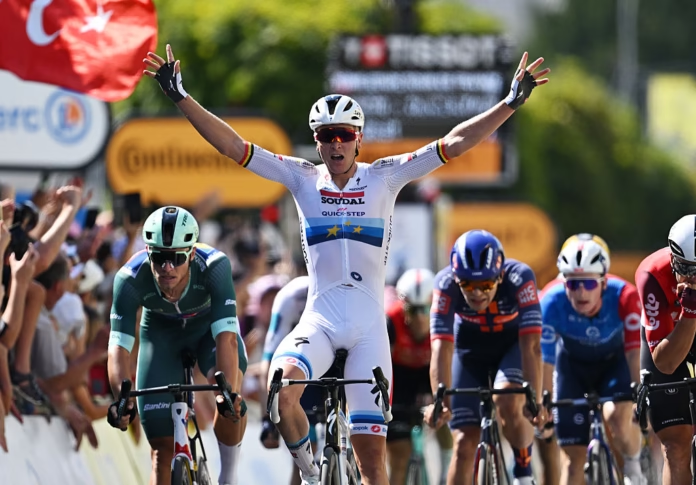
The Tour de France 2026 is not an easy race for the sprinters, but it does give them a clearer points-classification pathway than some recent editions. There are seven flat stages on the official route, and the revised green jersey structure makes those days even more valuable. That means the fast men are not simply looking for stage wins. They are looking for the days that can shape the whole points competition.
The key sprint stages are stages 5, 7, 8, 11, 12, 17 and 21. They do not all carry the same level of certainty, and they do not all arrive at the same point in the race. Some come before the mountains have done too much damage. Others come after major climbing blocks, where fatigue, team depth and survival become almost as important as top speed.
That is what makes the 2026 sprint battle interesting. Jasper Philipsen, Jonathan Milan, Tim Merlier, Biniam Girmay, Arnaud De Lie, Mads Pedersen and Kaden Groves will not simply be counting flat finishes. They will be asking which days can be controlled, which finishes suit their sprint, and how much energy they can afford to spend chasing points before the Alps.
For broader race context, see our Tour de France 2026 full route guide, Tour de France 2026 route analysis, Tour de France 2026 sprint stages ranked and Tour de France 2026 sprinters guide.
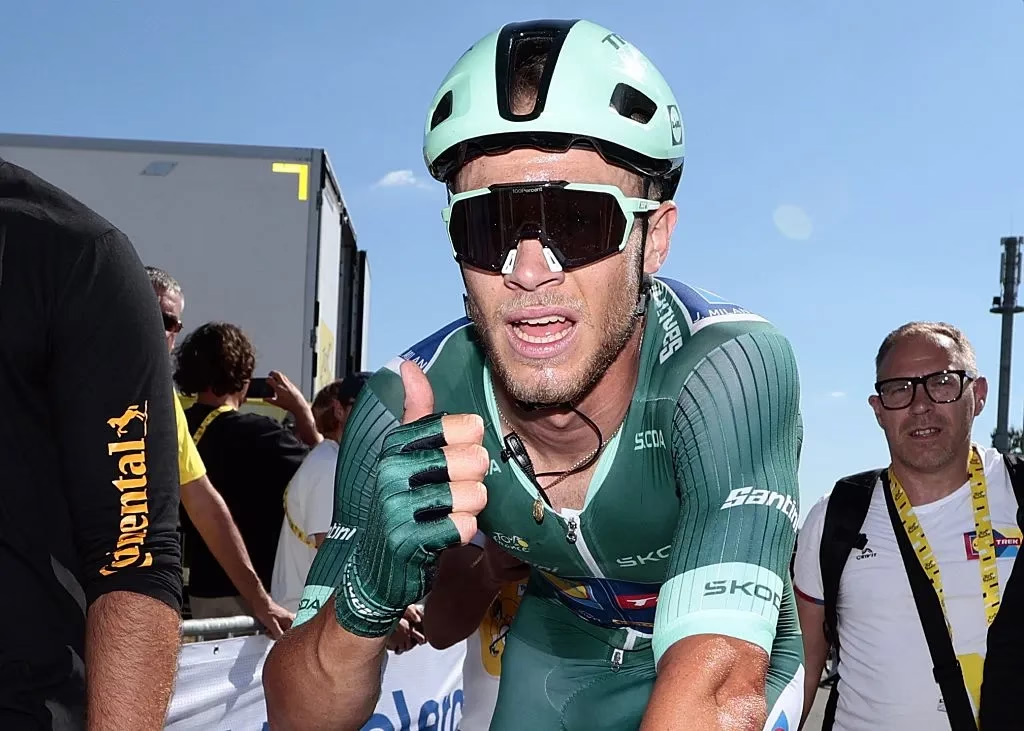
Why the 2026 sprint stages matter more than usual
The 2026 Tour route has been built around a hard GC structure. Barcelona opens the race with a team time-trial, the Pyrenees arrive early, the Vosges and Jura keep the second week tense, and the Alps finish the job with Orcières-Merlette and back-to-back Alpe d’Huez stages. On paper, that sounds like bad news for sprinters.
But the flat stages have been given extra importance through the points classification. The revised system gives flat-stage winners a larger reward, making the bunch sprint days much more central to the green jersey fight. That should help riders such as Philipsen, Milan and Merlier, who can win full bunch sprints, while forcing more versatile riders such as Girmay, De Lie and Pedersen to stay active across a wider range of terrain.
The result is a two-level sprint race. The first race is for stage wins. The second is for green. The same rider may win both, but the routes to each prize are not identical. A sprinter can win a stage and still fall behind in the points competition if they disappear on the other flat days. Equally, a rider can stay close in green through repeated podiums, intermediate sprint points and survival through the mountains.
That is why the best sprint days in 2026 are not only the flattest ones. They are the days that arrive at the right time, offer enough control for sprint teams, and come with enough points to change the classification.
For a fuller explanation of the jersey battle, see our Tour de France 2026 jerseys explained guide, while our Tour de France 2026 sprinters guide breaks down the riders most likely to fight for green.
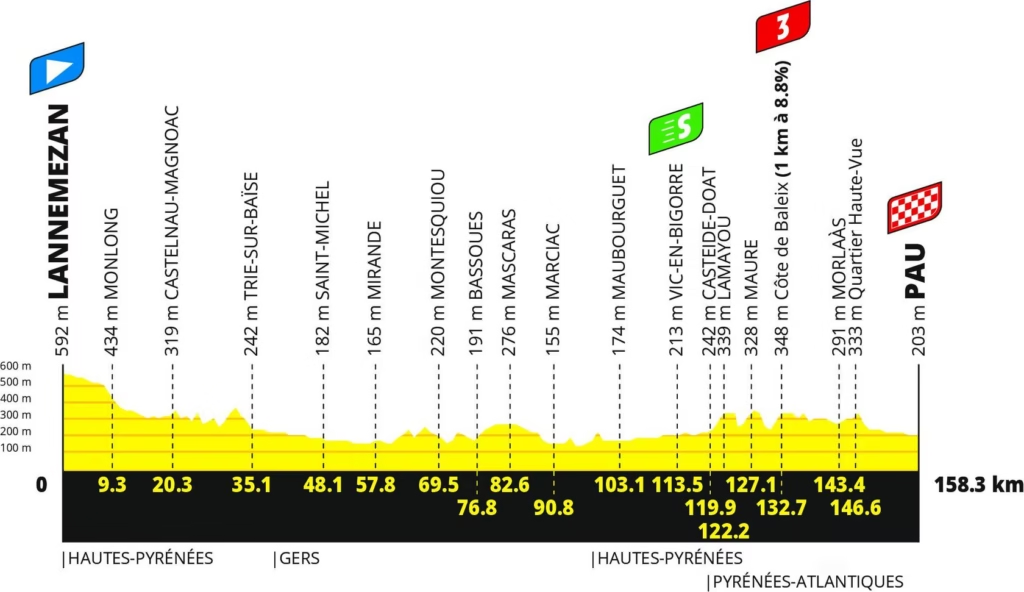
Stage 5: Lannemezan to Pau
Stage 5 from Lannemezan to Pau is the first official flat stage of the 2026 Tour, but it is not necessarily the purest sprint opportunity. That makes it a valuable, slightly awkward opening appointment for the fast men.
The race will already have dealt with the Barcelona team time-trial, the hilly stage back to Barcelona, the first mountain finish at Les Angles and the hilly day to Foix. By the time the peloton reaches stage 5, the sprinters will be desperate for their first clear chance, but the GC teams will still be nervous and the race will not yet have settled into a simple sprint-stage rhythm.
Pau is one of the Tour’s great gateway cities, usually linked to Pyrenean drama rather than pure sprinting. This stage comes immediately before the mountain day to Gavarnie-Gèdre, so teams will have competing priorities. Sprint teams need the finish. GC teams need safety. Breakaway riders may sense a rare chance if the peloton hesitates before another climbing block.
For the green jersey contenders, stage 5 is too important to waste. If Philipsen or Milan wins here, they immediately take control of the sprint narrative. If a more versatile rider like Girmay or De Lie scores heavily, the points competition becomes more complicated from the start.
Best suited to: Philipsen, Milan, Girmay, De Lie
Green jersey importance: High
Sprint certainty: 7.5/10
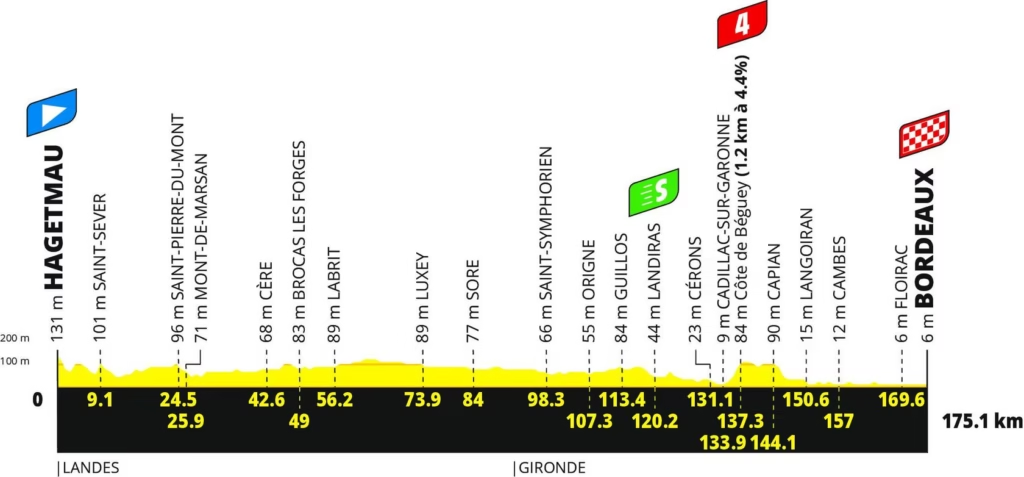
Stage 7: Hagetmau to Bordeaux
Stage 7 from Hagetmau to Bordeaux looks like the first truly major sprint appointment of the 2026 Tour.
Bordeaux is one of the great Tour sprint cities, and this stage should carry the feeling of a proper fast-finish day. It comes after the big Pyrenean stage to Gavarnie-Gèdre, so the sprinters will have had to survive a serious mountain test, but the prize at the end should be worth the suffering.
The timing is important. Stage 7 comes before the race moves into the Périgord and before the first rest day, so lead-outs should still be functional and sprint teams should still have the numbers to chase. It is unlikely that they will want to let a breakaway take away one of the biggest flat-stage points hauls of the first week.
This is a day for the biggest names. Milan will want a clean, powerful lead-out. Philipsen will relish the pressure and the prestige. Merlier will be dangerous if his team can put him into position. Bordeaux also matters because a win here can set up the entire green jersey contest before stage 8.
For more on the leading fast men, see our Jasper Philipsen at the Tour de France 2026 and Jonathan Milan at the Tour de France 2026 features.
Best suited to: Philipsen, Milan, Merlier
Green jersey importance: Very high
Sprint certainty: 9/10
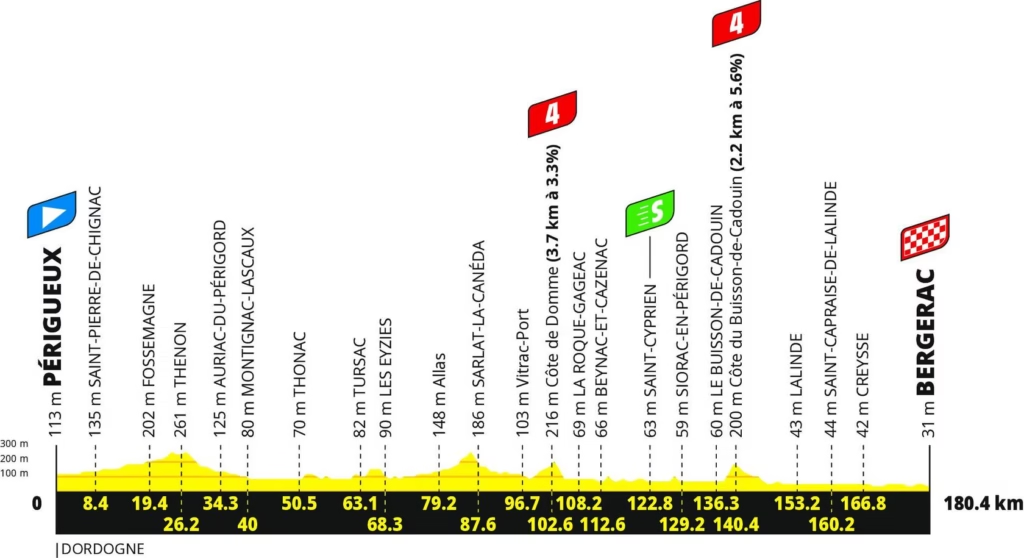
Stage 8: Périgueux to Bergerac
Stage 8 from Périgueux to Bergerac looks like one of the cleaner sprint chances of the first half of the race. It comes the day after Bordeaux, giving the fast men back-to-back opportunities and making this one of the most important stretches in the green jersey battle.
Bergerac has the feel of a classic Tour sprint finish. The stage is not completely without terrain, with enough rolling roads to keep the breakaway interested, but it should still be manageable for teams chasing a bunch sprint. This is exactly the type of day where a green jersey contender needs to score heavily.
The position in the race helps. The sprinters have had one mountain shock, but they are not yet in the second-week attrition phase. Lead-outs should still be functional. Teams chasing the points classification will not want to let the breakaway take away a high-value flat stage.
This may also be one of the best days for a rider like Milan. If the final is controlled and Lidl-Trek can build a long, powerful lead-out, his top-end sprint should be very hard to contain. Philipsen will still be a major threat because of his positioning and ability to surf chaos, but Bergerac could favour raw sprint force if the finish is clean.
For the stage-by-stage sprint hierarchy, see our Tour de France 2026 sprint stages ranked.
Best suited to: Milan, Philipsen, Merlier
Green jersey importance: Very high
Sprint certainty: 9/10
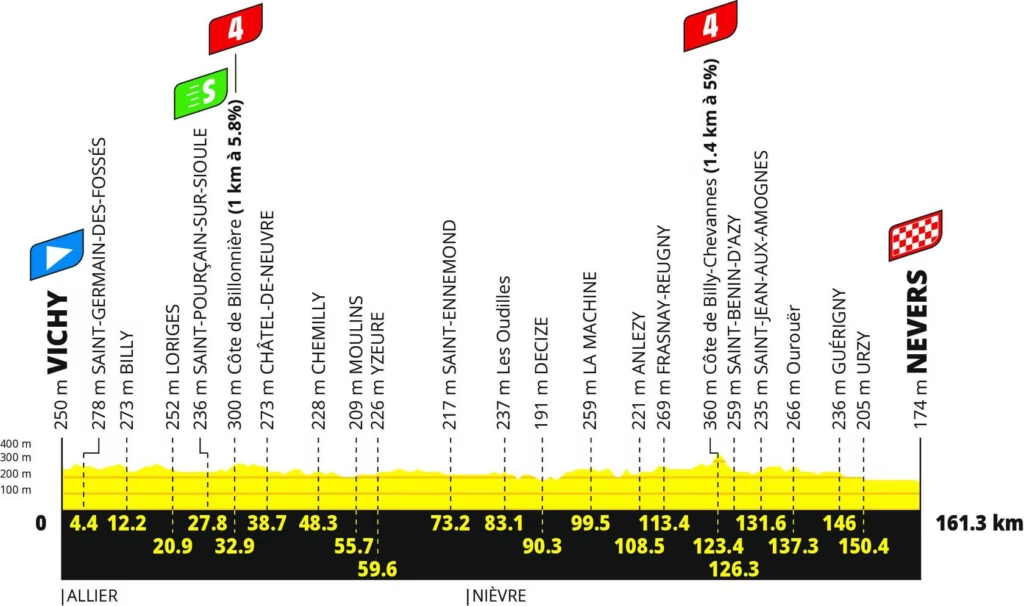
Stage 11: Vichy to Nevers
Stage 11 from Vichy to Nevers is one of the most important sprint days after the first rest day. The Tour will have restarted with the mountain stage from Aurillac to Le Lioran, so the fast men will be keen to regain control before the route turns towards another sequence of difficult terrain.
This is a stage where the sprinters’ teams should be strongly motivated. It sits in a useful window: after a hard mountain day, but before the Vosges and Jura begin to loom. If the breakaway riders sense tired legs in the peloton, they will try to make life difficult, but the points on offer should keep the sprint teams committed.
Nevers should give the fast men a clear target. This is not a stage to let slip if you are chasing green. The points balance means Philipsen, Milan, Merlier and the rest need to score, and the riders who struggled through Le Lioran will want to show they still have speed.
This is also where sprint-train durability starts to matter. Week-one lead-outs often look sharp. Week-two lead-outs reveal how well a team has managed the race. Alpecin-Premier Tech, Lidl-Trek and Soudal Quick-Step-type sprint structures will need to show they can still control the final kilometres after the route has already begun to bite.
Best suited to: Merlier, Milan, Philipsen
Green jersey importance: Very high
Sprint certainty: 8.5/10
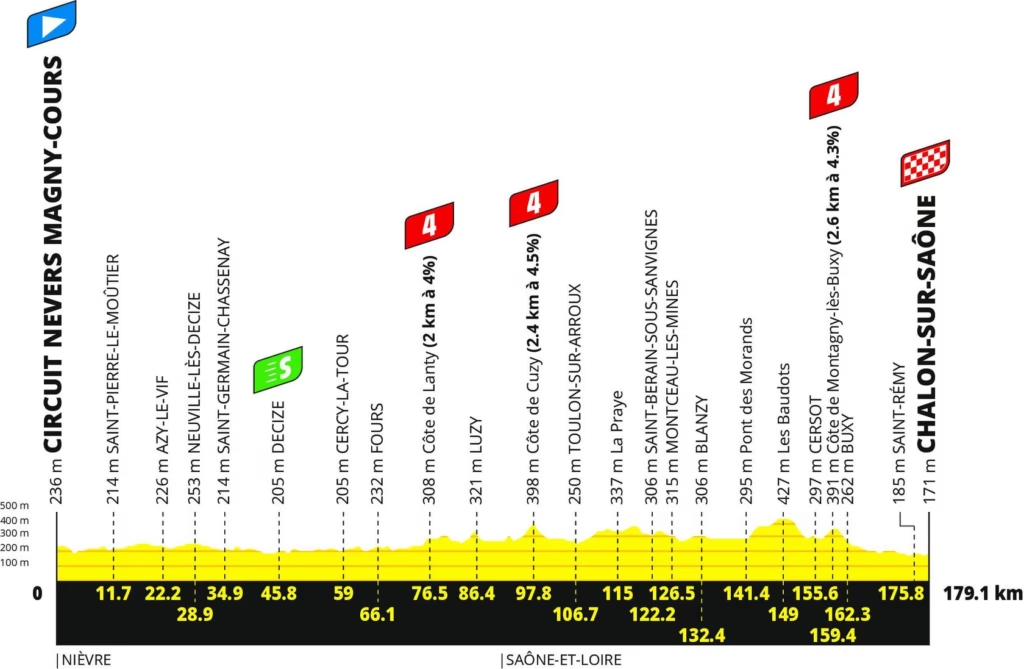
Stage 12: Circuit Nevers Magny-Cours to Chalon-sur-Saône
Stage 12 starts at Circuit Nevers Magny-Cours and finishes in Chalon-sur-Saône, giving the sprinters another crucial opportunity before the route heads into the longest stage of the race and then the Vosges.
The start location adds a nice contrast. A stage beginning at a motor-racing circuit naturally brings the idea of speed, control and wide-open tarmac, even if the final itself will be decided later in the day. More importantly, this is the second straight flat stage after the first rest day. If one sprinter wins both stages 11 and 12, the green jersey battle could tilt heavily.
The difficulty is repetition. Sprint teams that worked hard on stage 11 may have to do it all again. Breakaway riders will know this and may try to make the opening kilometres awkward. GC teams may want a calmer day before the long stage to Belfort, but sprint teams cannot afford to let the chance drift.
Chalon-sur-Saône should still be a bunch sprint if the fast teams are serious. It is one of the stages where the pure sprinters need to score because the following days become much less predictable.
For the wider green jersey context, see our Tour de France 2026 jerseys explained guide.
Best suited to: Milan, Philipsen, Merlier
Green jersey importance: Very high
Sprint certainty: 8.5/10
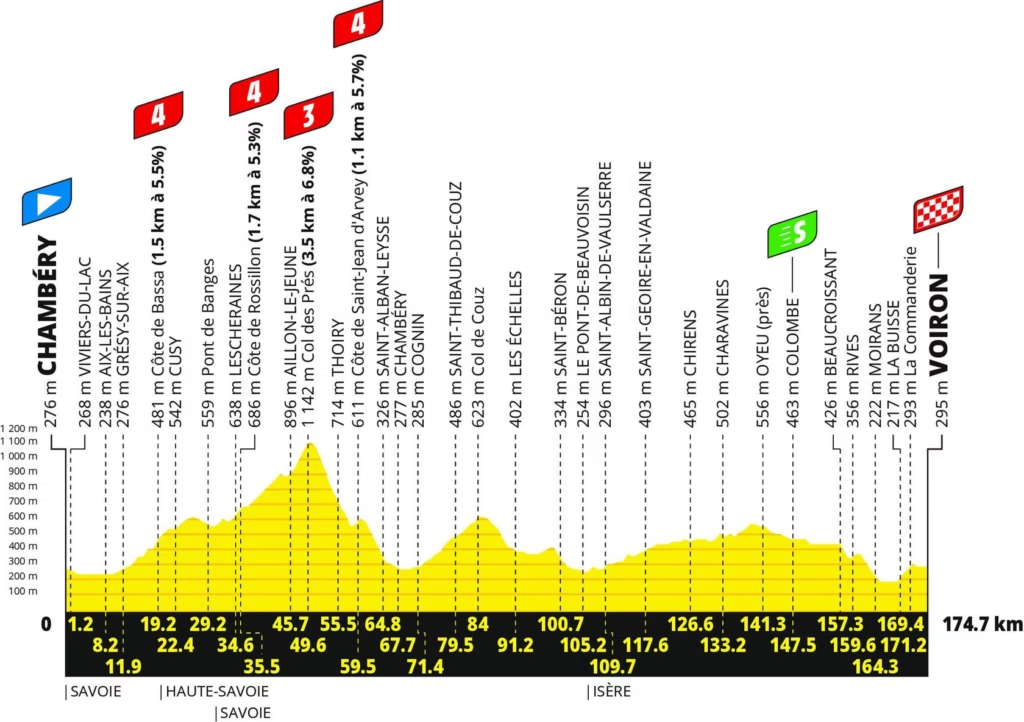
Stage 17: Chambéry to Voiron
Stage 17 from Chambéry to Voiron may be the most complicated sprint day of the race.
It comes after the second rest day and the stage 16 individual time-trial, and it acts as the last flat chance before the final Alpine block. On paper, it is one of the seven sprint stages. In practice, it will depend heavily on how much fatigue the peloton is carrying and how strongly the sprinters’ teams can still chase.
Voiron is not a guaranteed straightforward sprint in the same way as Bordeaux or Bergerac. The surrounding roads can make the stage more awkward, and the position before three decisive Alpine stages could change priorities. Some teams may want to save energy. Some sprinters may simply be trying to survive the final week. Breakaway riders will see this as one of their last realistic opportunities before Paris.
That is what makes stage 17 so valuable. If a sprinter still has a committed team, it is a huge chance to take points before the Alps. If the race has become tired and tactically loose, it could become dangerous for the fast men. A reduced sprint or late breakaway is more plausible here than on some of the earlier flat stages.
Philipsen should like the uncertainty if Alpecin-Premier Tech still have numbers. Girmay, De Lie and Pedersen may also fancy this kind of day because it could become more selective than a pure drag-strip finish. Milan remains a threat if Lidl-Trek control it, but stage 17 may not be as easy to lock down as the classification suggests.
For more on why stage 17 could slip away from the sprinters, see our Tour de France 2026 breakaway stages ranked guide.
Best suited to: Philipsen, Girmay, De Lie, Pedersen, Milan
Green jersey importance: Very high
Sprint certainty: 7/10
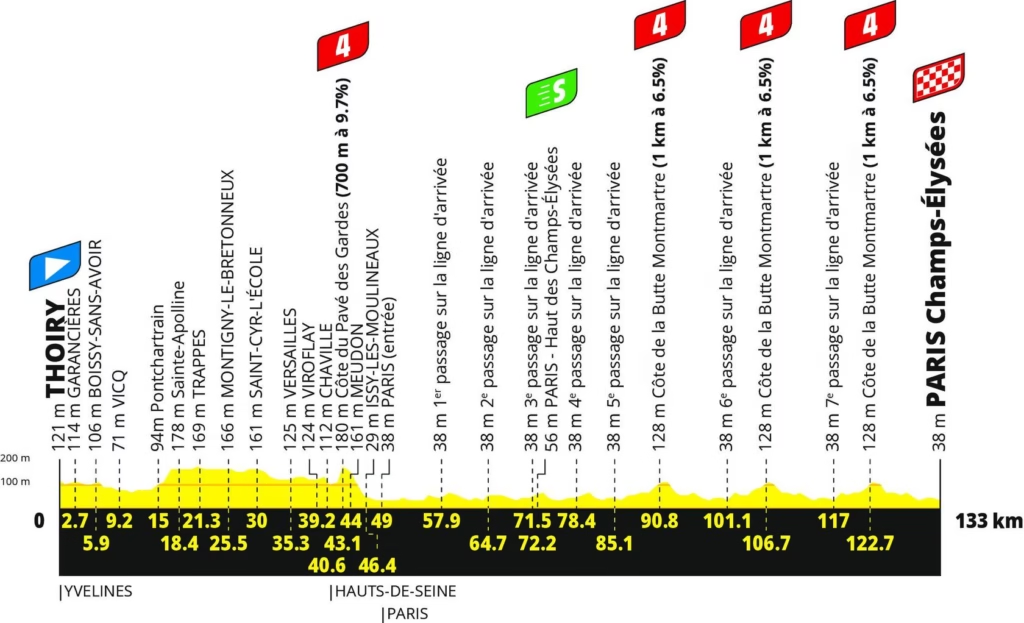
Stage 21: Thoiry to Paris Champs-Élysées
Stage 21 from Thoiry to Paris Champs-Élysées is the final sprint day, and it remains the emotional centre of the sprinters’ Tour. Even with the wider route built around mountains and GC drama, Paris is still one of the most important sprint stages in cycling.
This stage can mean different things depending on the state of the race. If the green jersey is already settled, it becomes a prestige sprint. If the points classification is close, it becomes a title-decider. If a sprinter has had a frustrating Tour, Paris offers one final chance to rescue the race.
The Champs-Élysées usually favours experience, positioning and nerve. The road is wide, the speed is high, and the final laps create a familiar but stressful rhythm. Lead-outs matter, but so does timing. By this point, every team is tired. The best sprint train in week one may no longer be the best sprint train in Paris.
Philipsen should be one of the favourites if he reaches Paris with speed still intact. Milan should also love the chance if Lidl-Trek have protected him through the Alps. Merlier is a pure danger in this kind of finish. Girmay, De Lie and Pedersen could be more relevant if the green jersey points are still close.
No sprinter can plan their Tour around Paris alone, but every sprinter wants it. It is the final image of the race for the fast men.
For viewing details, see our how to watch Tour de France 2026 in the UK guide.
Best suited to: Philipsen, Milan, Merlier
Green jersey importance: Potentially decisive
Sprint certainty: 9/10
The best sprint stages ranked
⦿ Stage 7: Hagetmau to Bordeaux
The first major prestige sprint and the clearest early opportunity for the pure fast men.
⦿ Stage 8: Périgueux to Bergerac
A classic-looking sprint day before the route becomes more complicated again.
⦿ Stage 11: Vichy to Nevers
A key post-rest-day sprint chance after the Massif Central.
⦿ Stage 12: Circuit Nevers Magny-Cours to Chalon-sur-Saône
Back-to-back sprint chances make this a major green jersey stage.
⦿ Stage 21: Thoiry to Paris Champs-Élysées
The prestige sprint and possibly the final green jersey decider.
⦿ Stage 5: Lannemezan to Pau
Officially flat, but slightly more complicated because of its position before the Pyrenees.
⦿ Stage 17: Chambéry to Voiron
A flat stage on paper, but fatigue and final-week tactics may make it the least straightforward sprint chance.
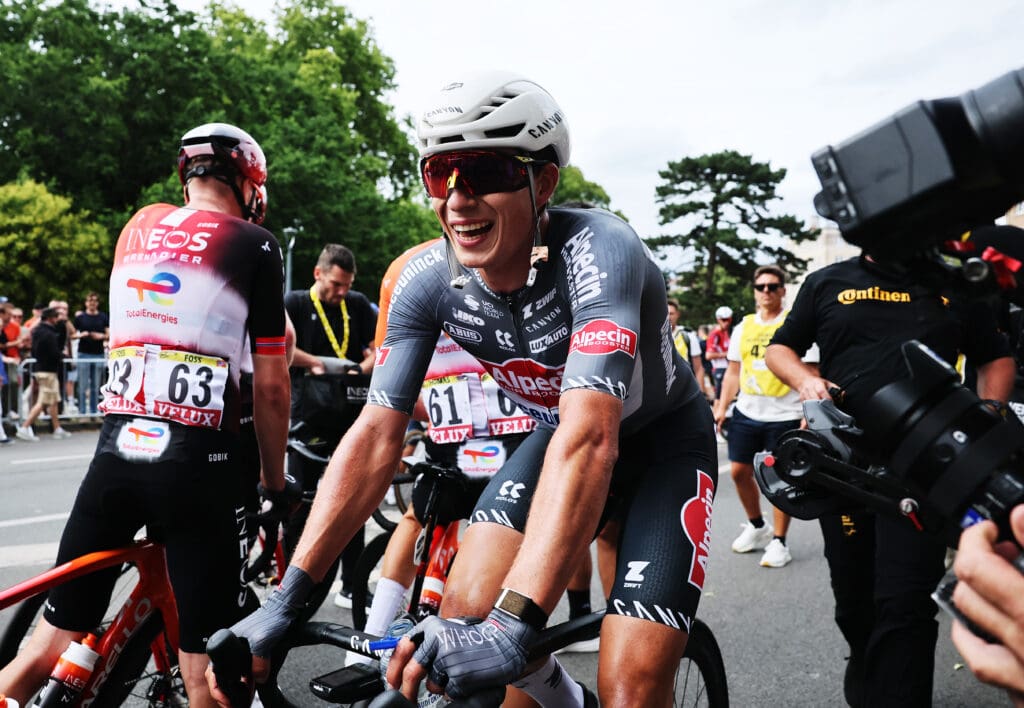 Photo Credit: Getty
Best stages for Philipsen
Philipsen’s best days should be stages 7, 8, 11, 12 and 21.
Bordeaux and Bergerac give him classic Tour sprint opportunities. Nevers and Chalon-sur-Saône give Alpecin-Premier Tech a chance to use their lead-out strength. Paris suits his experience and ability to handle pressure.
Stage 17 could also be a strong Philipsen day if it becomes messy or slightly more selective. He is often at his best when the final is chaotic and the sprint requires more than a simple drag race. If Van der Poel and Groves are still fresh enough to support him, Voiron could be a valuable late-race opportunity.
For a deeper look at his Tour prospects, see our Jasper Philipsen at the Tour de France 2026 feature.
Best stages for Milan
Milan’s best days should be stages 8, 11, 12 and 21, with stage 7 also a major early target.
He is most dangerous when Lidl-Trek can give him a clean, powerful lead-out and let him launch from a controlled position. Bergerac, Nevers, Chalon-sur-Saône and Paris could all suit that kind of sprint.
Stage 5 and stage 17 may be more complicated for him if the terrain or race situation becomes messy, but Milan has the power to win almost any flat finish if the team gets him into the right place.
For more on his green jersey case, see our Jonathan Milan at the Tour de France 2026 analysis, plus our Giro d’Italia 2026 stage 21 report for recent Grand Tour sprint context.
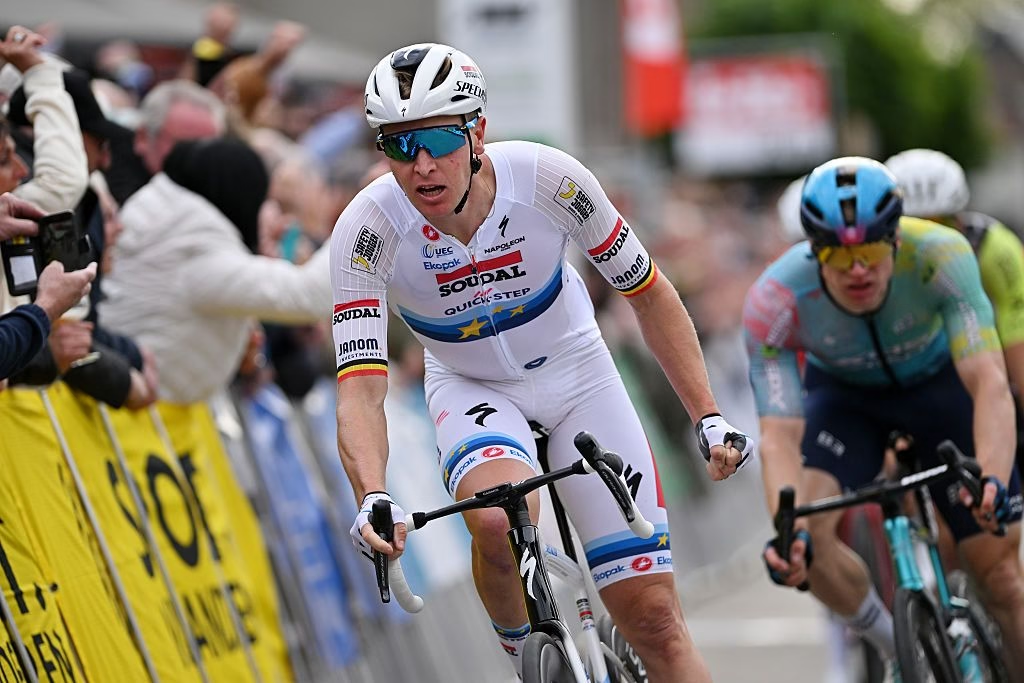 Photo Credit: RCS
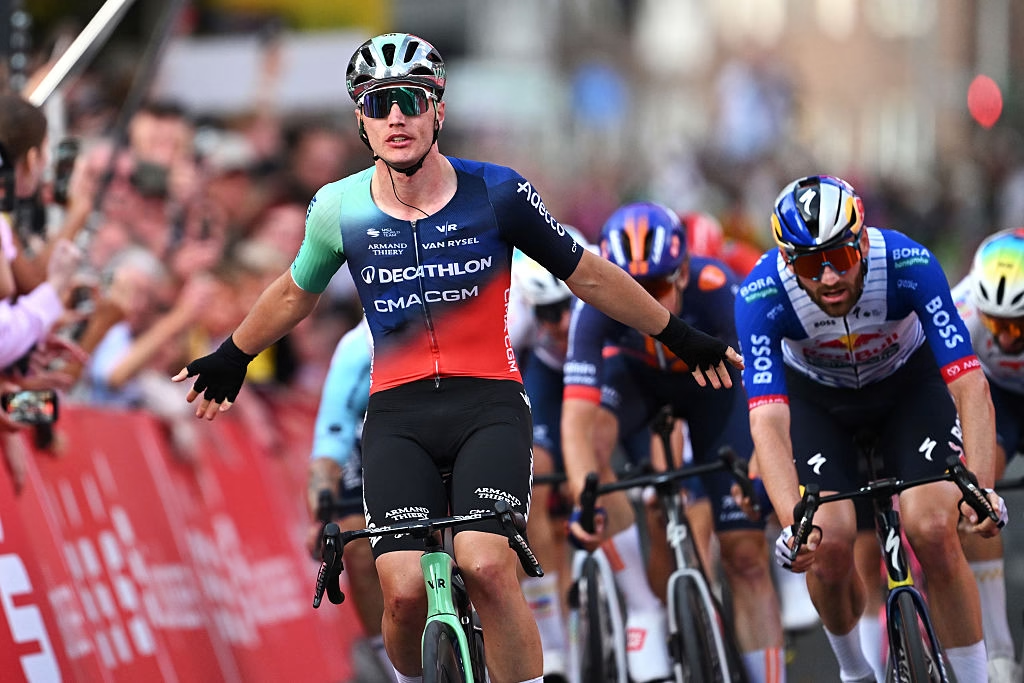
Best stages for Merlier
Merlier’s best days are the purest sprint finishes: Bordeaux, Bergerac, Nevers, Chalon-sur-Saône and Paris.
He is less dependent on versatility and more dependent on arriving in position with a clear launch. That makes the most controlled sprint days especially important for him. If the stage is straightforward and his lead-out works, he can beat anyone.
His green jersey chances depend on repetition. Winning one stage is realistic. Winning two or more puts him in the conversation. But if he has quiet days between wins, Philipsen and Milan may outscore him across the full Tour.
Best stages for Girmay, De Lie and Pedersen
Girmay, De Lie and Pedersen should be most interested in stages 5 and 17, plus any flat days where the finish becomes messy or reduced.
Stage 5 to Pau comes before the big Pyrenean day and may not be as clean as Bordeaux or Bergerac. Stage 17 to Voiron comes deep in the race and could be shaped by fatigue. These are exactly the sorts of stages where more versatile sprinters can turn a pure sprint day into something slightly different.
They can also score heavily in intermediate sprints and on harder days where the pure sprinters conserve energy. If the green jersey contest becomes less predictable, these are the riders who benefit.
For more on that tactical split, see our Tour de France 2026 sprinters guide.
The stages that look bad for sprinters
The sprinters will have to survive several blocks that offer very little for them.
The early mountain day to Gavarnie-Gèdre is a clear survival stage. The Massif Central stage to Le Lioran will be difficult to control and much better suited to climbers, punchers or breakaway riders. The Vosges and Jura block, especially stage 14 to Le Markstein Fellering and stage 15 to Plateau de Solaison, is about getting through without losing too much energy.
The final Alps are the real obstacle. Stages 18, 19 and 20 will be brutal for the fast men. Orcières-Merlette, Alpe d’Huez and the queen stage via Galibier and Sarenne mean the sprinters must think about time cuts, fatigue and recovery before Paris.
That is why the green jersey contest is not just about the seven flat stages. It is about what happens between them. The sprinter who survives the mountains most efficiently may be the one who has the final acceleration left in Paris.
For more on those harder sections, see our Tour de France 2026 Pyrenees guide, Tour de France 2026 Vosges and Jura guide and Tour de France 2026 Alps guide.
-
 Photo Credit: Getty

How the green jersey could be won
The simplest route to green is two or three flat-stage wins, regular podiums and steady intermediate sprint scoring. That favours Philipsen and Milan.
Philipsen’s advantage is experience and lead-out strength. Milan’s advantage is raw power and the ability to dominate a clean sprint. Merlier’s route depends on stage wins. Girmay, De Lie and Pedersen need to score across more varied terrain and stop the pure sprinters from building too large a cushion on the flat days.
The revised points weighting makes winning flat stages more important, but it does not remove the need for consistency. A rider who wins once and disappears will struggle. A rider who wins twice and keeps placing should be in control. A rider who reaches Paris with the jersey still close will have to handle the most stressful sprint of the race.
The intermediate sprints could also matter more than usual if several riders share stage wins. A few points here and there can become decisive once the biggest sprint days are split between different winners.
For the full points classification picture, see our Tour de France 2026 jerseys explained guide and Tour de France 2026 sprinters guide.
Prediction: best sprint days at the Tour de France 2026
The best sprint days at the Tour de France 2026 are stages 7, 8, 11, 12 and 21. These are the stages where the fastest riders should have the clearest route to victory and where the green jersey battle should take its biggest turns.
Stage 7 to Bordeaux feels like the first major statement stage. Stage 8 to Bergerac could be one of the purest bunch sprints. Stage 11 to Nevers has a strong post-rest-day sprint profile. Stage 12 to Chalon-sur-Saône is vital because it comes immediately after another sprint day. Stage 21 in Paris is the prestige finish and possible final points decider.
Stage 5 to Pau and stage 17 to Voiron are still important, but they look less straightforward. Those are the days where Girmay, De Lie or Pedersen may be able to complicate things for Philipsen, Milan and Merlier.
The prediction is that the 2026 green jersey will be decided between Philipsen and Milan, with Merlier winning at least one stage and the more versatile sprinters staying close through intermediate points and harder finishes. If Philipsen’s lead-out with Van der Poel and Groves is at full strength, he may still have the most complete sprint package. If Lidl-Trek can keep the race cleaner, Milan’s power could tilt the points competition his way.
For full race coverage, see our Tour de France hub and how to watch Tour de France 2026 in the UK guide.

