

Marianne Vos arrives at the Tour de France Femmes 2026 in an unusual position.
She is still one of the most dangerous stage hunters in the race, still capable of winning from a reduced group or selective sprint, and still one of the riders most likely to recognise a winning move before everyone else does. But Team Visma | Lease a Bike have built their Tour around one overriding objective: helping Pauline Ferrand-Prévot defend the yellow jersey.
That changes how Vos should be viewed.
She is not coming to Lausanne as a pure stage hunter with complete freedom. She is also not simply a domestique. Her value sits between the two, combining road captaincy, positioning, tactical control and the ability to win when the stage situation suits her.
On the Tour de France Femmes 2026 route, that could still add up to several serious opportunities.
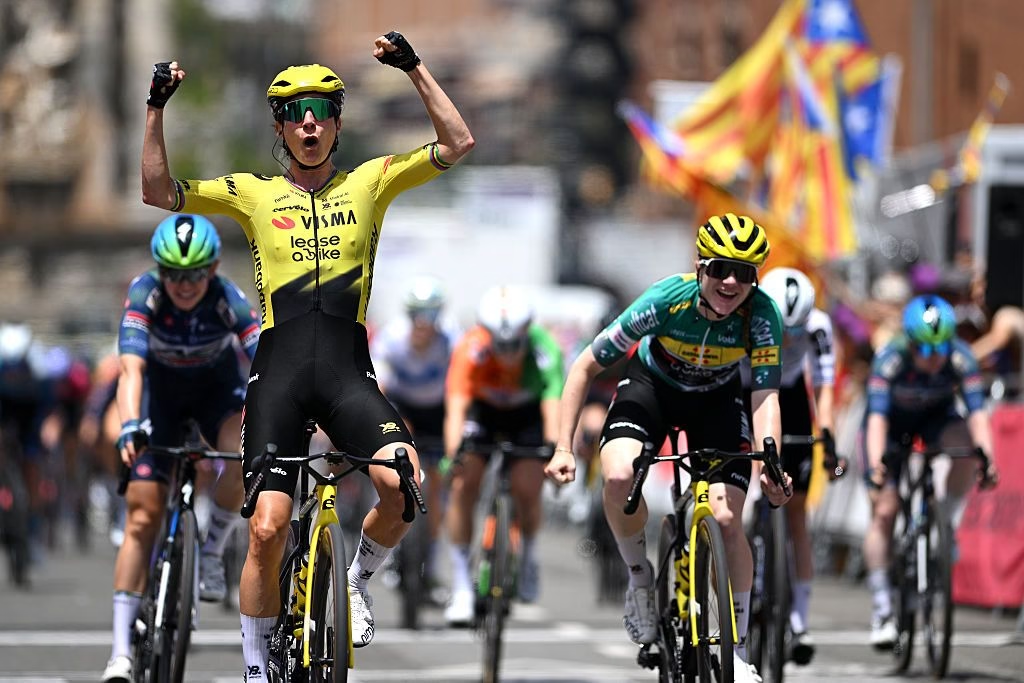 Photo Credit: Getty
Vos remains one of the most versatile stage hunters in the race
There are faster pure sprinters at the 2026 Tour.
Lorena Wiebes and Charlotte Kool are the obvious references if a full peloton reaches the final 200 metres together, while Elisa Balsamo and Chiara Consonni also bring more straightforward bunch-sprint speed.
Vos does not need that version of the race.
Her strength is that the harder the stage becomes, the more the hierarchy begins to change. She can survive climbing that removes some of the pure sprinters, position herself without requiring a full lead-out train and still finish quickly enough to beat riders who are stronger climbers but less explosive.
That combination makes her particularly dangerous on the borderline stages where nobody is completely sure whether the day belongs to the sprinters, puncheurs or breakaway.
It is also why she remains among the main names in our Tour de France Femmes 2026 riders to watch guide.
Stage 1 in Lausanne is an obvious target
The opening stage around Lausanne should immediately put Vos into the conversation.
It is officially classified as flat, but the profile is far more demanding than that label suggests. The repeated climbing and rising finish mean the race could lose some of the heavier pure sprinters before the line.
That is exactly the type of situation Vos has built a career around.
If Wiebes survives comfortably, she may still start as favourite. If Kool is present, she remains dangerous. But if the race has already been hard enough to reduce the field and leave riders carrying fatigue into the final kilometres, Vos becomes much more difficult to beat.
There is also a tactical reason for Visma to take the stage seriously.
Ferrand-Prévot needs to avoid early time losses and positioning problems, so Vos will already be riding near the front. If she enters the finale in good position and the GC situation is secure, the transition from road captain to stage contender can happen naturally.
That balance between stage hunting and leadership is a recurring theme in Vos’ 2026 season, covered more broadly in our Marianne Vos 2026 season guide.
 Photo Credit: Getty
Stage 3 to Poligny may suit Vos even better
Stage 3 from Geneva to Poligny is officially hilly and could be one of the best Vos stages of the Tour.
The key question is how much of the sprint field survives the Jura terrain.
If the race stays relatively controlled, some of the quicker riders may return before the finish.
If it is raced aggressively, the group could shrink significantly.
Vos can win from either version.
That is what separates her from many rivals. She does not need the race to eliminate every sprinter, but she is also far less worried than the pure fast finishers about a difficult approach.
The ideal scenario is a group large enough that the GC favourites are reluctant to attack but selective enough that several of the strongest sprinters are gone.
In that race, Vos should be one of the first riders to watch.
Stage 2 is harder for Vos to win
The clearest conventional sprint of the opening days comes on Stage 2 from Aigle to Geneva.
That is less favourable.
If Wiebes, Kool, Balsamo and Consonni all arrive fresh with their teams organised, Vos is trying to beat riders with more outright speed while racing in a team whose main priority is not the sprint.
She can still finish highly.
She can still win if the finale becomes chaotic.
But Visma have less reason to commit riders to a full lead-out when their real Tour revolves around Ferrand-Prévot.
Vos may therefore need to use the trains of rival teams rather than ask Visma to control the finale entirely around her.
It would be dangerous to rule her out. It is simply not the stage where her relative advantages are strongest.
 Photo Credit: Cor Vos
The harder the race, the more dangerous Vos becomes
Vos remains one of the best riders in the peloton at recognising when a race has moved from one category to another.
A stage may begin looking like a sprint day. Then a climb is raced harder than expected, a breakaway refuses to come back and the bunch becomes 35 riders.
Suddenly the pure sprinters have fewer teammates, the lead-out structure disappears and the riders capable of improvising become more valuable.
Vos thrives in that transition.
That is why her Tour cannot be reduced to the stages officially labelled flat. A hilly stage with a reduced finish may offer her a better chance than a pan-flat sprint.
Stage 5 could be the first real attacking opportunity
Stage 5 through Beaujolais is much harder than the opening sprint-oriented days and contains repeated climbing before Mont Brouilly close to the finish.
This is probably beyond the terrain where Vos simply waits for a sprint.
It may not be beyond the terrain where she can win.
If Visma decide the GC situation allows it, Vos can race aggressively before the final climbs rather than waiting to see whether she survives with the favourites.
That could mean following a dangerous move, joining a breakaway or attacking from a reduced bunch.
The important point is that she does not need to be the strongest climber in the race if the tactical situation is right.
Vos has won too many races from groups containing riders who were supposedly better suited to the terrain for that possibility to be ignored.

Stage 6 depends on Visma’s priorities before Ventoux
Stage 6 to Tournon-sur-Rhône is another stage where Vos would normally be an interesting breakaway option.
The complication is what happens the following day.
Mont Ventoux is one of the biggest stages of Ferrand-Prévot’s yellow jersey defence.
Visma may therefore want every rider conserving energy and performing a clear support role rather than chasing secondary objectives on Stage 6.
Vos’ road captaincy could become especially important here.
If the race is nervous because everyone is thinking about Ventoux, Ferrand-Prévot still needs to be positioned correctly and protected from unnecessary problems.
That may reduce Vos’ personal freedom.
But if Visma can place her in an early move that also serves the GC strategy, the two goals can overlap. A rider ahead of the race can become a useful satellite later in the stage while simultaneously racing for a stage win.
Vos’ main job is helping Ferrand-Prévot win yellow
Team Visma | Lease a Bike have been unusually clear about the hierarchy.
Ferrand-Prévot is the leader and the general classification is the priority. Vos has specifically been identified as the team’s road captain, with the rest of the squad structured around getting the defending champion safely to the decisive mountain stages.
That fits the wider shape of the team described in our Team Visma | Lease a Bike 2026 Women’s WorldTour guide.
Vos’ Tour therefore cannot be judged purely on her individual results.
She will be responsible for helping organise the team, reading dangerous situations and keeping Ferrand-Prévot in the right part of the peloton before critical sections.
That can mean sacrificing a potential stage result.
If Ferrand-Prévot needs Vos with 20km remaining, Vos is unlikely to disappear up the road simply because the stage suits her.
There will also be days where her support role naturally places her near the front heading into the finale.
Those are the opportunities she can exploit.
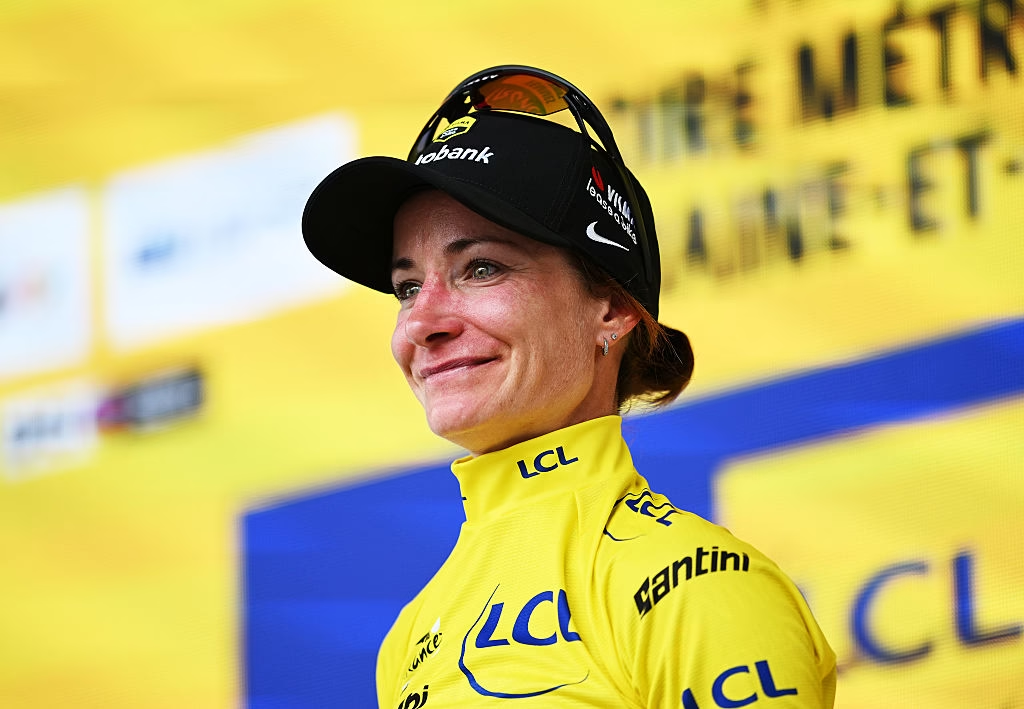
Road captaincy may actually help Vos on some stages
The responsibilities of being road captain do not automatically reduce Vos’ chances.
On some stages, they may improve them.
A rider protecting a GC leader needs to be near the front, understand where the dangerous points are and respond quickly if the peloton begins splitting.
Those are also the qualities required to win a difficult stage.
If Vos escorts Ferrand-Prévot through the decisive part of Stage 1 and then finds the GC leader safely positioned for the finish, she may already be exactly where she needs to be to contest the stage herself.
That was part of what made Visma so effective in 2025.
Vos does not need the team to choose between her stage ambitions and Ferrand-Prévot’s GC campaign every morning.
Sometimes one creates the conditions for the other.
The green jersey is possible, but probably not the main goal
Vos also has the profile to become involved in the points classification.
A rider who can score in conventional sprints and continue scoring on harder days immediately has an advantage over more specialised fast finishers.
That puts Vos among the most obvious riders capable of challenging Wiebes for green if she decides to pursue it.
The problem is the cost.
Chasing intermediate sprints and defending a points jersey requires energy and sometimes team resources. Visma’s primary objective is yellow.
If Vos takes green naturally through stage results, the classification may become worth pursuing.
If she needs to spend significant energy chasing points while Ferrand-Prévot is fighting for the Tour, Visma are unlikely to prioritise it.
The mechanics of that competition are covered in our Tour de France Femmes 2026 jerseys guide.

Stage 8 could bring Vos back into the sprint picture
The late stage into Nice could become another opportunity if Vos gets through the mountains well.
That qualification matters.
By then the race has gone through the hilly middle stages and Mont Ventoux, so the sprint hierarchy may look very different from Geneva.
Some pure sprinters could be fatigued.
Lead-out trains may be reduced.
The strongest teams may also be thinking about the final GC stage rather than devoting everything to a bunch sprint.
Vos’ ability to get through hard races economically can become increasingly valuable as a stage race develops.
If Stage 8 produces a reduced or tired bunch rather than a perfectly organised sprint, she becomes much more dangerous.
There is also the possibility that Visma’s GC situation changes how they race.
If Ferrand-Prévot already has a secure advantage, Vos may receive more freedom.
If yellow remains under heavy pressure, the whole team may still be required around the defending champion.
Ventoux and Nice are about Ferrand-Prévot, not Vos
Stages 7 and 9 are different.
Mont Ventoux is not a Vos stage.
Neither is the short mountain finale around Nice if the GC favourites race it as aggressively as expected.
Her role there is support.
On Ventoux, that may mean work before the race reaches the steepest part of the final climb, helping Ferrand-Prévot stay positioned and keeping the team structure intact for as long as possible.
On Stage 9, road captaincy could again become crucial if the Tour remains close and the race is aggressive from the opening kilometres.
Vos may not be visible in the final battle.
Her work earlier in the stage could still influence who wins yellow.
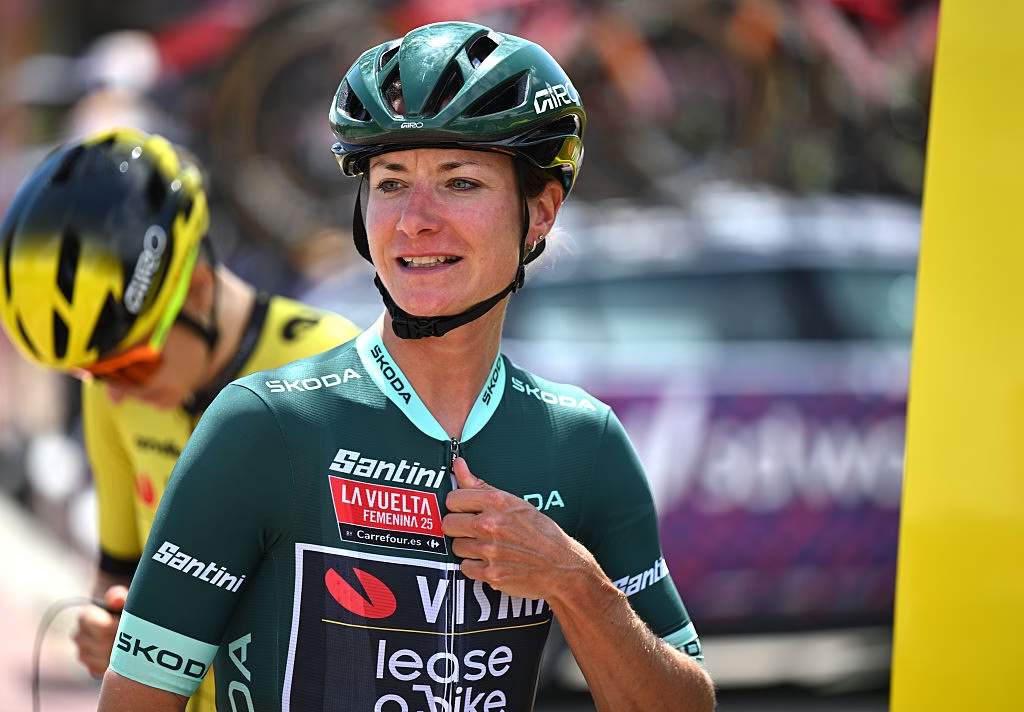
Visma’s squad gives Vos fewer responsibilities in the mountains
One reason Vos can still chase stages is that Visma have selected specialist climbing support around Ferrand-Prévot.
Femke de Vries has been identified as the final mountain domestique.
Sarah van Dam is expected to work before her.
Marion Bunel should stay with Ferrand-Prévot as long as possible in the high mountains.
That means Vos does not need to transform herself into a Ventoux domestique.
Her most important contribution comes earlier, through positioning, tactical control and shepherding the team towards the points where those climbers take over.
That division of labour can preserve enough of Vos’ energy to keep stage opportunities alive on the terrain that actually suits her.
Which stages best suit Marianne Vos?
Four stages stand out.
Stage 1 in Lausanne is probably the clearest opportunity. The route is hard enough to blunt some pure sprinters without necessarily becoming a GC stage.
Stage 3 to Poligny may suit her even better if the climbing produces a reduced group.
Stage 5 to Belleville-en-Beaujolais becomes an attacking rather than sprinting opportunity, but Vos is versatile enough to exploit the right tactical situation.
Stage 8 to Nice could return her to the sprint battle after the mountains, particularly if fatigue has reduced the advantage held by the pure fast finishers.
Stage 2 is possible but more dependent on chaos.
Stages 6, 7 and 9 are likely to be shaped more strongly by Ferrand-Prévot’s GC requirements.
Can Marianne Vos win a stage in 2026?
Absolutely.
It would be more surprising if Vos went through the entire Tour without seriously contesting one than if she won.
The question is not whether she still has the speed.
It is whether the right stage develops in a way that gives her enough freedom to use it.
Wiebes is faster in a conventional sprint.
Vollering and Ferrand-Prévot are stronger on the biggest climbs.
Kopecky and Pieterse can be more explosive on some punchy terrain.
But very few riders can operate across all of those worlds as effectively as Vos.
That gives her more potential winning scenarios than almost anyone else.
-
 Photo Credit: Tomasso Pelagalli/SCA/Cor Vos
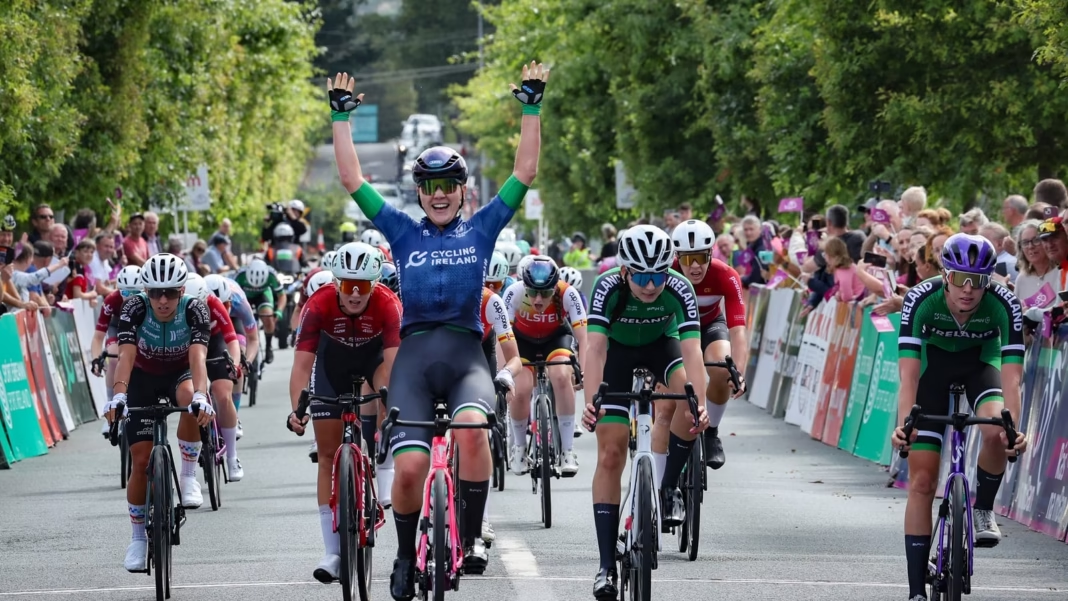

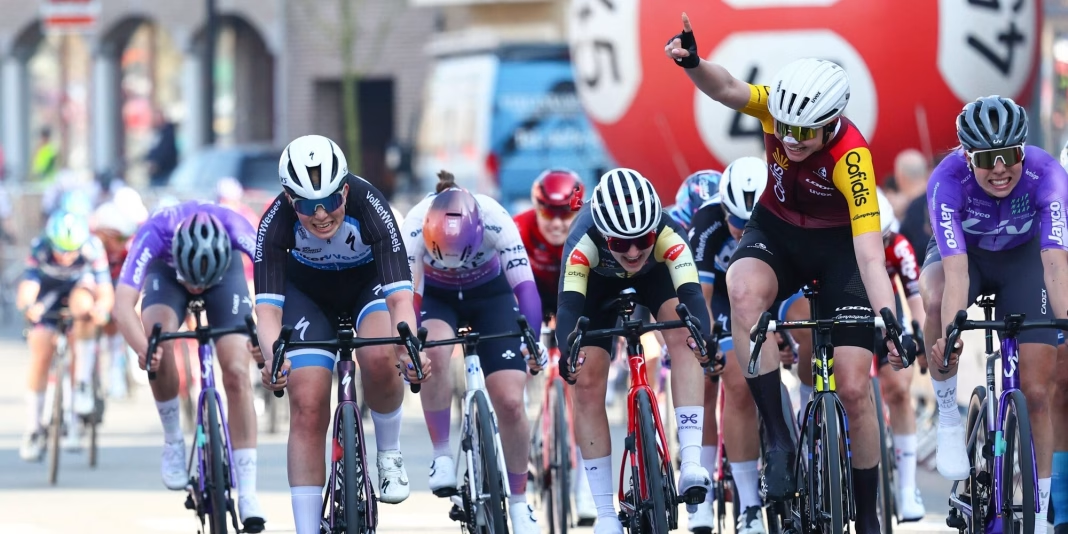
The opening three stages may define her personal Tour
The first three days are particularly important because they come before the GC battle becomes dominant.
Ferrand-Prévot will need protection, but Visma have less reason to conserve every resource for the mountains immediately.
That gives Vos more freedom.
Lausanne can suit her.
Geneva gives her a chance from the sprint.
Poligny is another strong reduced-finish opportunity.
If she leaves the opening three stages with a win, the rest of the Tour can become almost entirely about helping Ferrand-Prévot.
If she does not, Visma will have to decide how much freedom remains available once the race starts moving towards Dijon and Ventoux.
Marianne Vos’ Tour is about doing two jobs at once
Vos enters the 2026 Tour with one of the most complicated roles in the race.
She is good enough to win stages, experienced enough to lead the team on the road, fast enough to contest reduced sprints and strong enough to survive difficult terrain.
She is also important enough to Ferrand-Prévot’s yellow jersey defence that Visma cannot simply send her hunting results whenever she wants.
That tension defines her Tour.
The ideal Visma scenario is not choosing between Vos and Ferrand-Prévot.
It is having Vos control the dangerous moments, keep Ferrand-Prévot safe and still arrive at the finish with enough left to win.
The opening stage in Lausanne and Stage 3 to Poligny provide the clearest opportunities for that to happen.
Vos does not need the Tour to be built around her.
She only needs the right moment to appear.

