
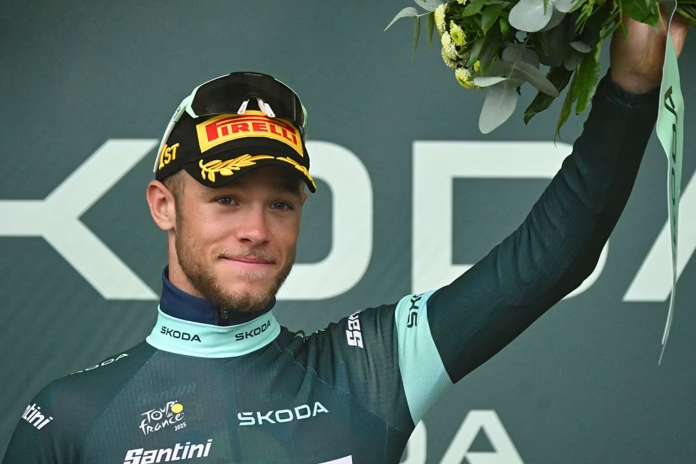
Edit: It now looks likely Milan will not be at this year’s edition
Jonathan Milan goes into the Tour de France 2026 as one of the most obvious green jersey contenders in the race. He has the sprint power, the team structure and the recent Grand Tour points pedigree to make him a genuine threat, but the question is not simply whether he can win stages. It is whether he can survive enough of the route, score consistently, and manage the points battle against riders who may be more versatile across awkward sprint days.
The 2026 route gives the sprinters enough to work with. The official race structure includes seven flat stages, alongside the Barcelona team time-trial, an individual time-trial, hilly stages and a heavy mountain load. That creates a clear opportunity for Milan, especially with the points system now placing extra value on flat-stage finishes. If the green jersey is going to be pulled back towards the pure sprinters, Milan is exactly the type of rider who should benefit.
But this Tour will not make it easy. The race starts with a team time-trial in Barcelona, reaches the Pyrenees early, then builds through the Massif Central, Vosges, Jura and Alps. Milan may have enough sprint chances to win green, but he will have to earn the right to reach them.
For broader race context, see our Tour de France 2026 full route guide, Tour de France 2026 route analysis, Tour de France 2026 sprint stages ranked and Tour de France 2026 sprinters guide.
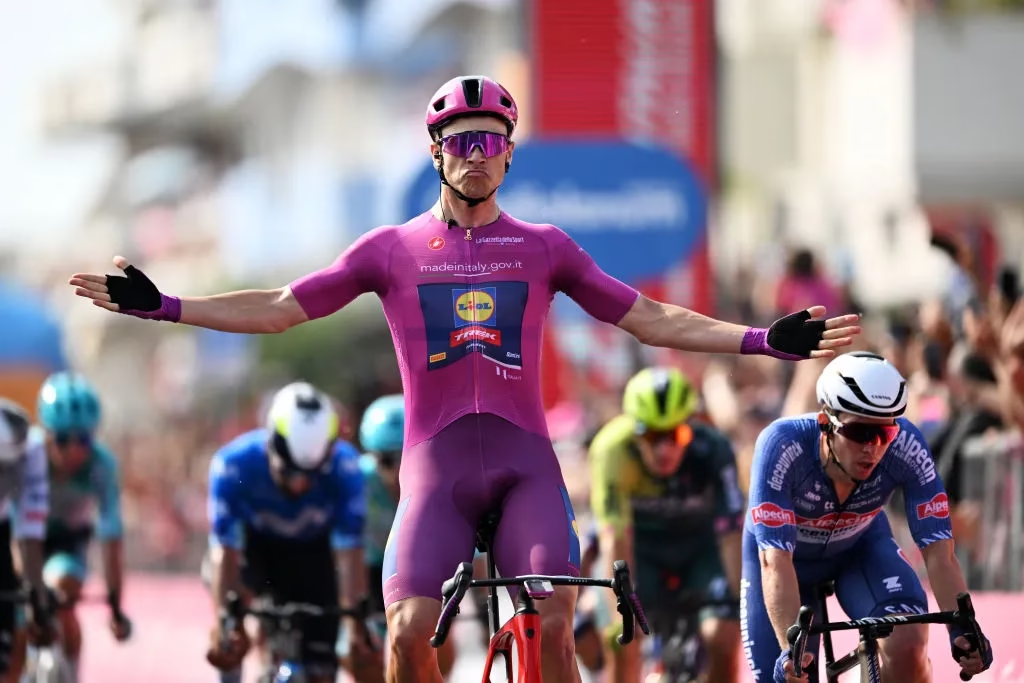 Photo Credit: Getty
Why Milan is such an obvious green jersey candidate
Milan’s case begins with one thing: raw sprinting power. At his best, he is one of the hardest riders in the peloton to come around once he opens up. His sprint is not delicate or especially subtle. It is built around enormous force, a long acceleration and the ability to keep driving when others are beginning to fade.
That makes him particularly suited to Tour sprint stages where positioning is hard and the lead-out is stretched. He does not need the most perfect final 150 metres in the race. If Lidl-Trek can put him in the right corridor, he has the power to turn imperfect situations into wins.
The points classification also rewards accumulation, not only stage wins. Milan can score heavily on flat days, take intermediate sprint points and keep himself in the jersey fight through consistency. If he wins two stages and places regularly, he should be near the front of the green jersey standings almost by default.
His challenge is whether he can keep that rhythm across three weeks. The Tour de France is not the Giro d’Italia. The sprint depth is deeper, the pressure is heavier and the mountain stages can drain even the strongest fast men. Milan has the tools, but green requires more than peak speed.
For a broader breakdown of the classification, see our Tour de France 2026 jerseys explained guide.
The 2026 points system helps him
The 2026 Tour’s points balance appears more favourable to pure sprinters than recent editions where punchier riders and even GC contenders could stay closer than expected. Flat stages have been given extra weight, making those days much more important in the green jersey fight.
That suits Milan. He is not a rider who needs hilly stages or reduced bunch finishes to build his case. His strongest argument comes on clear sprint days where the full points haul is available. If flat-stage winners are rewarded more heavily, the race naturally moves towards riders like Milan, Jasper Philipsen, Tim Merlier, Arnaud De Lie and other pure or near-pure sprinters.
That does not guarantee anything. A sprinter still has to finish the race, contest intermediate sprints and avoid losing too much momentum in the mountains. But the route and points structure should make Milan’s path clearer than it would be in a more mixed edition.
For more on how the sprint terrain is distributed, see our Tour de France 2026 sprint stages ranked guide and Tour de France 2026 sprinters guide.
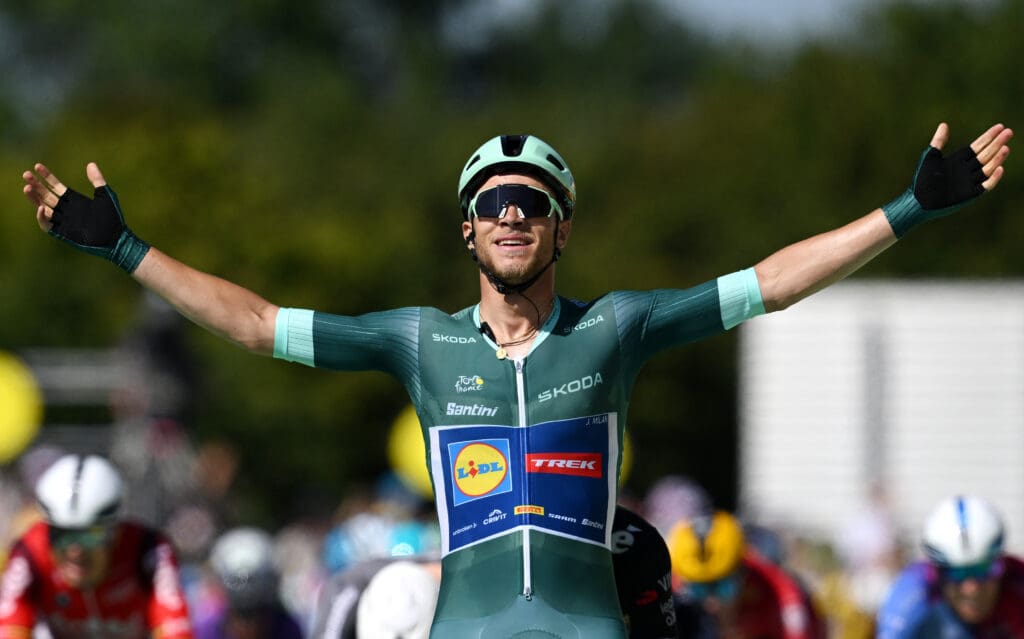 Photo Credit: Getty
The sprint stages that matter most
Milan’s green jersey bid will depend heavily on how he handles the seven flat stages. These are the days where he has to score big, because the rest of the route is too hard to rely on steady minor points alone.
The opening team time-trial in Barcelona will not be a green jersey stage in the normal sense, but it can still shape Milan’s Tour. It will test Lidl-Trek’s cohesion and immediately put the team under pressure. From there, Milan’s first proper opportunities should come on the flatter days once the race settles into its early rhythm.
The mid-race sprint stages are likely to be crucial. A rider who starts slowly can still recover, but the green jersey race usually becomes much harder once a rival has two wins and a run of high placings. Milan cannot afford to spend the first half of the Tour merely close. He needs to be winning or consistently finishing on the podium.
Stage 21 in Paris should also matter. A final sprint on the Champs-Élysées can decide the tone of a green jersey campaign even if the classification is already settled. For Milan, reaching Paris with the jersey still in play would make the final day a huge opportunity.
For a full stage-by-stage view, see our Tour de France 2026 full route guide, Tour de France 2026 route analysis and how to watch Tour de France 2026 in the UK.
Lidl-Trek’s biggest question: Milan or Pedersen?
Lidl-Trek’s strength is also their complication.
Jonathan Milan is a pure green jersey candidate. Mads Pedersen is a different type of points rider, more versatile, more comfortable on lumpy terrain and capable of scoring on days that Milan may simply need to survive. That gives Lidl-Trek options, but it also creates a strategic question: do they build fully around Milan, or do they keep Pedersen as a second points weapon?
For Milan’s green jersey bid, clarity would help. A pure sprint train needs commitment. The lead-out has to know who it is working for, when to take control and how much energy to spend chasing breakaways. If Milan is the undisputed sprint leader, the plan is simple. If Pedersen also has licence to chase points, Lidl-Trek must manage two different types of green jersey scoring.
That does not have to be a problem. It could even be an advantage. Pedersen can score on harder days, protect Milan in positioning battles and act as a pressure valve when the route is too difficult for a full bunch sprint. But if the team tries to chase two versions of the same prize, it risks losing focus.
Milan’s best route to green probably involves Pedersen being an ally rather than a rival. If Lidl-Trek align properly, they may have the strongest points-classification structure in the race.
Pedersen’s presence also matters in the race’s wider tactical picture, especially on breakaway and reduced sprint days. For more on those opportunities, see our Tour de France 2026 breakaway stages ranked guide.
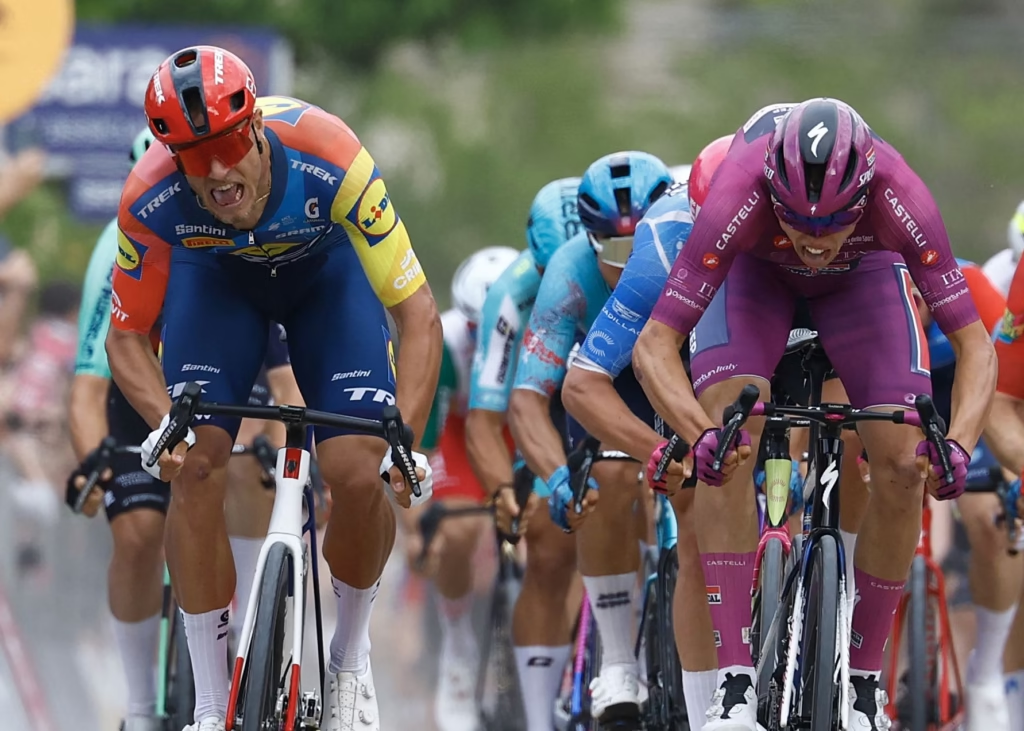 Photo Credit: Getty
Milan’s strengths
Milan’s biggest strength is that he can win the most valuable days.
Some points riders build green through breadth. Milan can build it through maximum scores. If the flatter stages carry greater points value, the rider who wins those stages has a major advantage. Milan is one of the few sprinters in the field who can dominate a finish when everything clicks.
His second strength is durability in fast finishes. He can hold a long sprint, survive messy positioning and still produce enormous speed late. That matters in the Tour, where sprint stages are rarely as clean as they look on paper. Roundabouts, crosswinds, late turns, narrowed roads and chaotic lead-outs all change the final kilometre.
His third strength is the team around him. Lidl-Trek have enough horsepower to support a sprint campaign, especially if the line-up balances Milan with riders capable of surviving the harder terrain. A good green jersey campaign is built by the whole team, not just the sprinter.
That is why Milan also belongs in the conversation around Tour de France 2026 domestiques who could decide the race, because the riders around him may be just as important as his final 200 metres.
Milan’s weaknesses
The first concern is the climbing load. The 2026 Tour is hard, with eight mountain stages and five summit finishes. The Pyrenees arrive early, the race keeps finding difficult terrain in the middle, and the Alps are severe. Milan does not need to climb with the GC riders, but he does need to survive repeated high-mountain days without losing too much energy.
That matters for the final sprint chances. A sprinter who survives the mountains at full cost may reach the next flat stage but lack the freshness to win it. Green jersey campaigns are often decided by recovery as much as speed.
The second concern is versatility. Milan is powerful, but he is not the most flexible points rider in every terrain. Pedersen, Philipsen, De Lie and Biniam Girmay can all score on days that are not perfectly flat. If Milan loses contact on lumpy finishes or decides not to contest intermediate sprints before hard finales, he may give away points that become important later.
The third concern is pressure. Milan’s sprint is hugely effective when the lead-out is in place, but Tour sprinting can become chaotic. If Lidl-Trek lose position, Milan sometimes has to use too much energy before launching. That can be costly against riders who are better at surfing wheels.
The mountain difficulty is explored in more detail in our Tour de France 2026 mountain stages ranked by difficulty and Tour de France 2026 Alps guide.
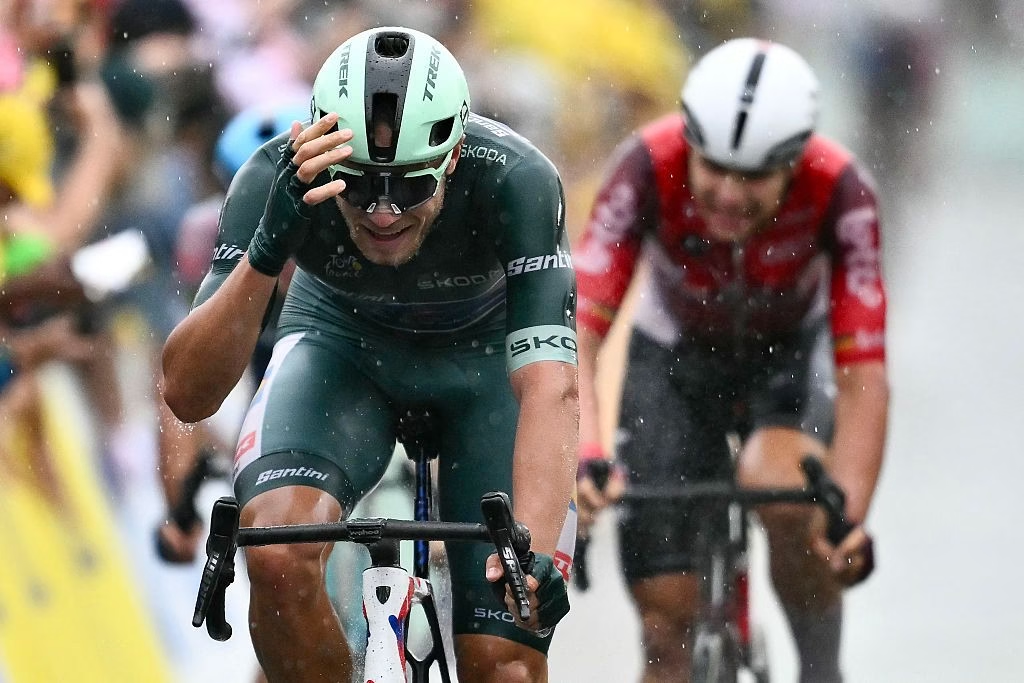 Photo Credit: Getty
How Milan compares with Jasper Philipsen
Jasper Philipsen remains one of Milan’s clearest green jersey rivals.
Philipsen has the Tour pedigree, the speed and the confidence to win multiple stages. He is also used to the specific pressure of Tour sprinting. That counts. Some riders can win sprints anywhere, but the Tour finish is its own environment, with heavier stress and fewer clean opportunities.
Milan may have more raw force in a long, open sprint. Philipsen may be better at navigating chaos and finding the right wheel. That contrast could define several finishes. If Lidl-Trek control the final kilometre, Milan can be very hard to beat. If the finish becomes broken and improvised, Philipsen may have the edge.
The green jersey battle between them will probably come down to accumulation. Philipsen can win stages, but he must avoid gaps on the days where Milan is at full power. Milan can win stages, but he must avoid giving away too many points on trickier days.
For the wider sprint field, see our Tour de France 2026 sprinters guide.
How Milan compares with Tim Merlier
Tim Merlier is another rider Milan cannot ignore.
Merlier may not offer the same broad points-classification profile as some others, but as a pure bunch sprinter he is dangerous. If he starts with the right lead-out and arrives in form, he can win the same kind of stages Milan needs for green. That makes him a direct threat, even if his overall route to the jersey may be narrower.
Against Merlier, Milan’s advantage could be resilience and scoring frequency. Milan has the potential to place highly even when he does not win. Merlier’s best days may be stage-winning days, but if he is less consistent across the Tour, Milan can build a points cushion.
The key is whether Milan can turn his power into repeated top-three finishes. Green rarely goes to a rider who wins once and disappears. It goes to the rider who keeps scoring.
That makes the flat-stage distribution important, and the key sprint chances are mapped in our Tour de France 2026 sprint stages ranked guide.
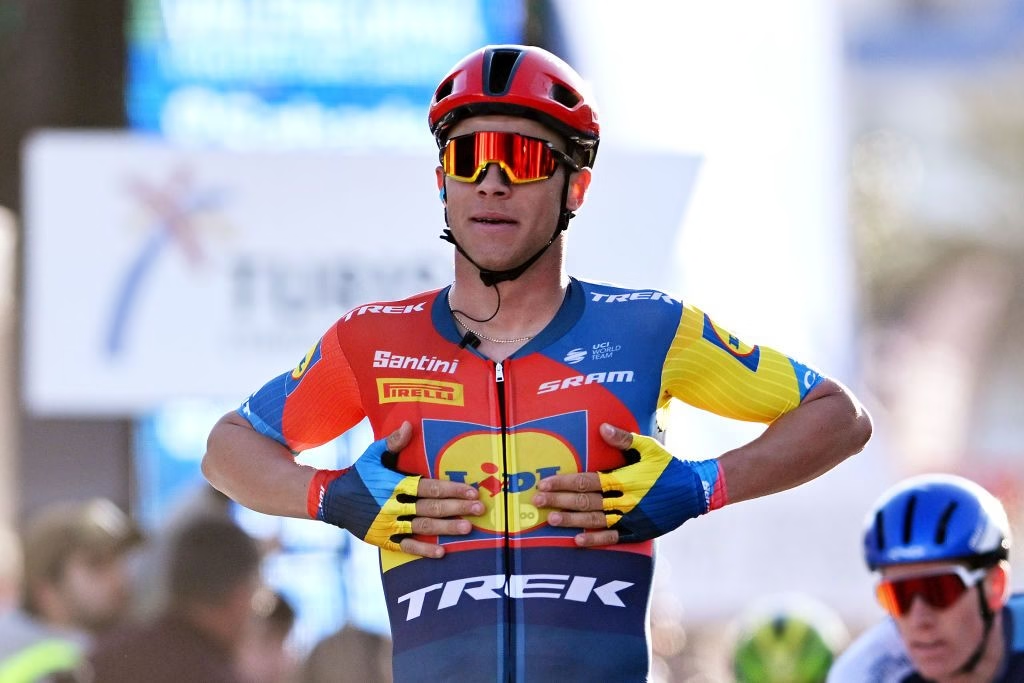 Photo Credit: Getty
How Milan compares with Biniam Girmay and Arnaud De Lie
Biniam Girmay and Arnaud De Lie are dangerous because they can make green harder to control.
Girmay can score on finishes that are too awkward for the purest sprinters. If the Tour includes lumpy days where the bunch is reduced but not destroyed, he can collect points while Milan is fighting to stay close. That kind of scoring can add up quickly.
De Lie brings a similar threat in a different style. He has the strength to survive hard sprint stages and the punch to make difficult finishes count. If he is consistent, he can stay in the green jersey fight without needing to dominate the pure flat days.
For Milan, the response is simple but demanding: maximise the flat stages. If he wins often enough on the high-value days, the more versatile sprinters have to chase him. If he misses opportunities, riders like Girmay and De Lie become much more dangerous.
That is why the points system and route classification matter so much. The more heavily the Tour rewards flat stages, the better Milan’s chances become.
For the full jersey context, see our Tour de France 2026 jerseys explained article.
The intermediate sprint problem
Green jerseys are not won only at the finish line.
Milan will have to decide how much energy to spend on intermediate sprints, especially on days where the final is not perfect for him. The temptation is always to save everything for the stage finish, but a rival who keeps picking up intermediate points can quietly build a lead.
This is where Lidl-Trek’s team strength could matter. If they can position Milan without forcing him to fight too hard, he can score without burning too many matches. If every intermediate sprint becomes a battle, the cost may show later in the race.
The trick is knowing which points to chase. Milan does not need to contest everything. He needs to contest enough. That balance is one of the hardest parts of winning green.
The same tension applies to the wider race structure, where the opening Barcelona team time-trial and the early mountains can interrupt a sprinter’s rhythm before the flat stages fully settle.

What the mountains mean for Milan
The mountains are Milan’s biggest obstacle.
The 2026 Tour includes several major climbing phases, including the early Pyrenees and the final Alpine block. Milan can afford to lose time. He cannot afford to be repeatedly emptied by survival days. The time cuts, the fatigue and the psychological strain all matter.
The Pyrenees may come early enough to interrupt his rhythm before the sprint campaign has properly settled. The Alps come late enough to threaten his ability to reach Paris with the same finishing speed. The middle mountain stages and hilly days can also chip away at his reserves.
For Milan, the goal in the mountains is not heroics. It is efficiency. Stay inside the time cut, avoid unnecessary stress, conserve energy where possible, and trust the team to guide him through. If he emerges from the hardest blocks still fresh enough to contest the remaining flat stages, the green jersey becomes very realistic.
For more on those hard days, see our Tour de France 2026 Pyrenees guide, Tour de France 2026 Alps guide and Tour de France 2026 climbs guide.
Stage 21 could still matter
Paris may still matter in the 2026 green jersey battle.
If Milan reaches the final stage with a decent lead, the Champs-Élysées becomes a confirmation day. If the classification is close, it becomes a pressure stage. A final sprint can swing points, momentum and the final impression of the race.
Milan should like that kind of finish. A powerful sprinter with a committed lead-out can be very dangerous in Paris, especially if the final is controlled. But it is also a stage where fatigue, nerves and desperation can disrupt even the best trains.
A green jersey contender cannot think only about the first two weeks. Milan must arrive in Paris still sprinting properly. If he does, he may have one final chance to secure the classification in the most visible sprint of the race.
The final stage also matters for how the race is remembered, just as Milan’s final-stage win in Rome shaped the closing image of his 2026 Giro d’Italia. For that wider season context, see our Giro d’Italia 2026 stage 21 report and what the Men’s Giro d’Italia 2026 means for the season.
-
 Photo Credit: David Pintens / BELGA MAG/AFP via Getty Images
 -
Photo Credit: BELGA MAG/AFP via Getty Images
What Milan needs to win green
Milan’s green jersey checklist is clear.
He needs to win at least one flat stage early, ideally more. He needs to finish consistently in the top three or top five on sprint days. He needs to take intermediate sprint points without wasting too much energy. He needs Lidl-Trek fully committed to his campaign. He needs to survive the mountains without losing his sprint. And he needs to avoid crashes, relegations and lead-out mistakes on the days that matter most.
The good news is that none of that is beyond him. Milan has already shown the kind of Grand Tour sprinting level that can support a points classification challenge. The 2026 route gives him enough chances. The points system should favour riders like him. Lidl-Trek have the depth to make the campaign credible.
The bad news is that green jersey campaigns are unforgiving. One missed sprint, one bad mountain day, one crash or one stronger rival can shift the whole contest.
That is why Milan should be viewed as more than just a stage winner. He is part of the central jersey conversation for this Tour, alongside the yellow jersey fight covered in our Tour de France 2026 GC favourites ranked and the mountains competition covered in our Tour de France 2026 climbers guide.
Prediction: can Jonathan Milan win green?
Yes, Jonathan Milan can win the green jersey at the Tour de France 2026.
He is one of the clearest favourites if Lidl-Trek build the sprint structure around him and if he reaches the key flat stages in good condition. The route gives him enough opportunities, and the points weighting should reward the kind of rider who can win the biggest bunch sprints.
The main threats are Philipsen, Merlier, De Lie, Girmay and possibly Pedersen depending on Lidl-Trek’s internal plan. Milan’s advantage is that his best sprint is probably strong enough to dominate the highest-value days. His weakness is that he may have to work harder than some rivals to score on awkward stages.
If the green jersey is decided by flat-stage wins and repeated high placings, Milan is one of the riders to beat. If the classification becomes messy, with points scattered across lumpy days, intermediate sprints and reduced finishes, his task becomes harder.
The most realistic verdict is that Milan starts as a top-tier green jersey contender, not an automatic favourite. He has the power to win it. The question is whether he can turn that power into three weeks of scoring.
For full race coverage, see our Tour de France 2026 section and how to watch Tour de France 2026 in the UK guide.

