
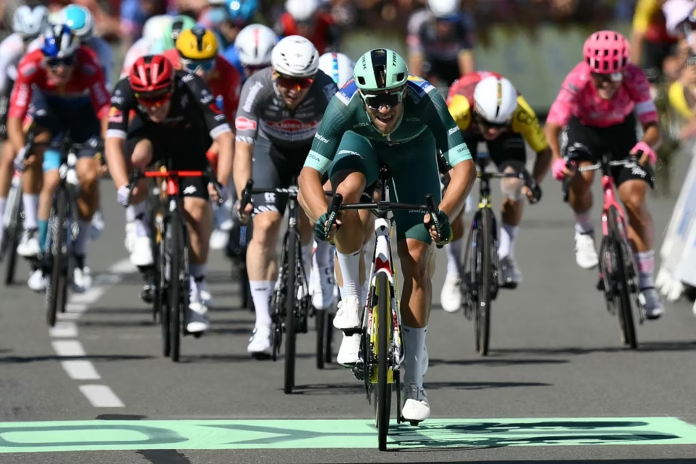
The Tour de France 2026 route gives the sprinters 7 officially classified flat stages, but they are not all equal. Some look like classic bunch-sprint days, built for the fastest riders and their lead-out trains. Others come with enough fatigue, road stress, timing or context to make them more complicated than the word “flat” suggests.
That distinction matters. A stage can be flat on the Tour de France route map and still be a difficult day for sprinters. A long transfer through exposed roads, a finish after mountain fatigue, a nervous run-in, or a late-race position in the final week can all change how likely a bunch sprint really is.
The 2026 Tour starts with a team time trial in Barcelona, reaches the Pyrenees early, then gives the fast men their first clear chance on stage 5 into Pau. From there, the race offers opportunities in Bordeaux, Bergerac, Nevers, Chalon-sur-Saône, Voiron and finally Paris. For full race context, see our Tour de France 2026 full route guide, Tour de France 2026 route analysis and Tour de France 2026 sprinters guide.
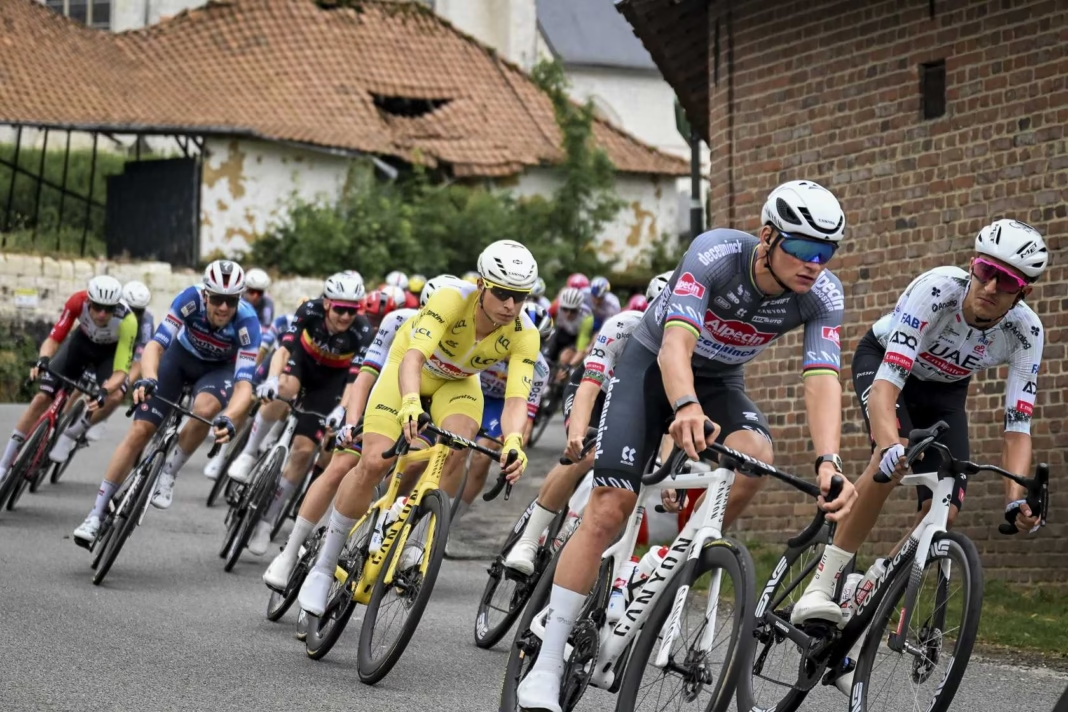 Photo Credit: A.S.O./Billy Ceusters
How the Tour de France 2026 sprint stages are ranked
This ranking is not simply a list of the flattest profiles. It is a practical ranking of the stages most likely to produce a full bunch sprint, while also considering how valuable each day may be in the green jersey fight.
The ranking takes into account:
- Route profile
- Stage distance
- Timing within the race
- Sprint-team motivation
- Breakaway chances
- Exposure and fatigue
- Whether the stage comes before or after major mountains
- How many sprinters are likely to still be in the race
- The prestige of the finish
On that basis, a stage like Bordeaux ranks very highly because the route and finish history strongly favour the sprinters. Paris ranks high for prestige, but slightly lower as a pure sprint stage because it comes after three weeks of racing and the final Alpine block.
For newer fans, our Tour de France 2026 jerseys explained guide breaks down why the green jersey can be shaped by more than just stage wins.
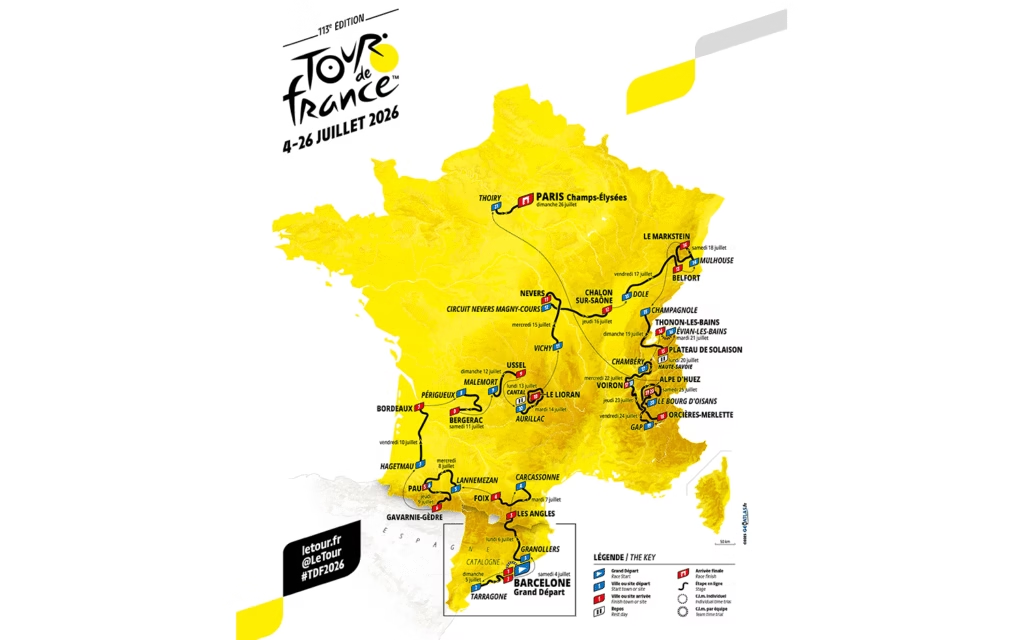
Tour de France 2026 sprint stages ranked
| Rank | Stage | Route | Distance | Sprint likelihood |
|---|---|---|---|---|
| 1 | Stage 7 | Hagetmau to Bordeaux | 175.1km | The clearest sprint stage of the race |
| 2 | Stage 11 | Vichy to Nevers | 161.3km | Flat mid-race chance after the first rest-day block begins |
| 3 | Stage 12 | Circuit Nevers Magny-Cours to Chalon-sur-Saône | 179.1km | Another strong sprint opportunity before the race turns harder again |
| 4 | Stage 21 | Thoiry to Paris Champs-Élysées | 133km | Prestigious final sprint, but only for those still surviving after the Alps |
| 5 | Stage 8 | Périgueux to Bergerac | 180.4km | Sprinter-friendly, but with more rolling danger than Bordeaux |
| 6 | Stage 17 | Chambery to Voiron | 174.7km | Flat on paper, but comes after the second rest day and before the Alpine trilogy |
| 7 | Stage 5 | Lannemezan to Pau | 158.3km | A possible sprint, but early Pyrenean context and nervousness make it less clean |
1. Stage 7: Hagetmau to Bordeaux
Stage 7 looks like the best sprint opportunity of the 2026 Tour de France. At 175.1km, the route from Hagetmau to Bordeaux comes immediately after the first major Pyrenean summit finish at Gavarnie-Gèdre. That could have two effects: tired legs in the bunch, but huge motivation from the sprint teams who have had to wait through the early climbing.
Bordeaux is one of the Tour’s great sprint cities. It has long been associated with fast finishes, big roads and high-speed finales. When the Tour reaches Bordeaux, the expectation is almost always that the sprinters will get their chance.
The position of the stage helps too. It comes early enough that almost every sprinter should still be in the race. It follows a hard mountain day, which makes it more attractive for a breakaway, but also makes the sprint teams more determined. They will know that opportunities are limited in a route packed with mountain stages, and Bordeaux is too good a chance to let slip.
This is the stage where the fastest rider in the race should be expected to win, assuming his lead-out survives the final kilometres.
Why stage 7 ranks first
Stage 7 ranks first because it has the strongest combination of route, timing and sprint-team motivation. There is no need to overcomplicate it. The Tour gives the sprinters a clean target after the Pyrenees, and Bordeaux is the kind of finish that major sprint squads will organise themselves around.
The breakaway will try, especially with some teams already out of GC contention after the first mountain block. But the stage profile and the prestige of the finish point towards a controlled chase. If the sprinters’ teams get even moderate cooperation, the bunch should bring it back.
This should be one of the most important stages for the green jersey battle. A win in Bordeaux carries points, confidence and status. For sprinters such as Jonathan Milan, Jasper Philipsen, Tim Merlier or any other green jersey contender on the start line, this is the kind of stage they cannot afford to miss. The wider Tour de France 2026 sprinters guide explains how those clear bunch-sprint days fit into the points battle.
2. Stage 11: Vichy to Nevers
Stage 11 from Vichy to Nevers is another major sprint opportunity. At 161.3km, it is one of the shorter flat stages and comes immediately after the Massif Central stage to Le Lioran. That makes it a recovery day for the GC riders, but a serious target for the sprinters.
The route is flat enough for control, and the stage comes at a point in the race where the green jersey battle should be fully formed. By now, the sprinters will know who has speed, who has points, and which teams are willing to work. That often creates clearer sprint politics than in the opening week.
Nevers is also a useful kind of finish for a Tour sprint. It does not carry the same automatic symbolism as Bordeaux or the Champs-Élysées, but that can make it more straightforward. The stage is not about romance. It is about a flat day, a manageable distance and a finish that should be within the reach of the sprint teams.
If a breakaway is allowed too much room, it will be because the sprint teams are tired or divided. Otherwise, this should be a bunch sprint.

Why stage 11 ranks second
Stage 11 ranks second because it looks cleaner than some of the other flat days. It is shorter than the Bergerac and Chalon-sur-Saône stages, comes after the first rest-day block, and should be easier to control than a transition stage placed deeper into the race.
There is still some danger. The previous day to Le Lioran is not a gentle restart, and riders can react differently after a rest day. A tired peloton can sometimes hesitate, especially if the breakaway contains strong rouleurs. But the stage gives the fast men one of their best mid-race opportunities.
This is the kind of day where the points classification can swing. A sprinter who won earlier can consolidate. A rider who missed Bordeaux can repair the damage. A team that has waited patiently can finally commit everything.
3. Stage 12: Circuit Nevers Magny-Cours to Chalon-sur-Saône
Stage 12 is another strong sprint candidate, running 179.1km from the Circuit Nevers Magny-Cours to Chalon-sur-Saône. It follows stage 11, which means the Tour gives the sprinters back-to-back chances before the route turns towards harder terrain again.
That makes the stage interesting tactically. If stage 11 ends in a bunch sprint, some teams may be less willing to take responsibility the next day. If stage 11 is missed by the sprinters, stage 12 becomes even more important. Either way, it is a day the fast men will have marked.
The start at Magny-Cours adds a neat sporting backdrop, but the race itself should be about whether the bunch can manage the breakaway and keep enough organisation for the finish in Chalon-sur-Saône. At 179.1km, the stage is long enough to be tiring, but not hard enough on paper to remove the sprinters.
This is one of the clearest examples of a Tour transition stage that should still come back together.
Why stage 12 ranks third
Stage 12 ranks third because it is highly likely to end in a sprint, but it may be slightly less straightforward than stage 11. The distance is longer, and the back-to-back sprint-day structure can sometimes reduce cooperation if teams start playing tactical games.
There is also the wider race situation. Stage 13 to Belfort is hilly, stage 14 goes into the Vosges, and stage 15 finishes at Plateau de Solaison. Sprinters will know they are about to enter a much harder block. That should make stage 12 valuable, but it also means some teams may be thinking about survival as much as victory.
Still, the basic shape is clear. This is a stage for the fast men, and it would be a major opportunity lost if the sprint teams fail to bring it back.

4. Stage 21: Thoiry to Paris Champs-Élysées
Stage 21 is the most prestigious sprint stage of the race, but not necessarily the purest sprint opportunity. The final day runs 133km from Thoiry to Paris Champs-Élysées, returning the Tour to its classic final-day setting.
For the sprinters, the Champs-Élysées remains one of the biggest stages of the year. Winning in Paris is different from winning almost anywhere else. It comes after three weeks, in front of a global audience, with the yellow jersey settled and the final podium ready to be confirmed.
The reason stage 21 ranks fourth rather than first is context. By the final day, some sprinters will have abandoned, missed time cuts, been emptied by the mountains or lost their sharpness. The 2026 route is especially hard late on, with Orcières-Merlette, Alpe d’Huez and then Alpe d’Huez again before Paris. Surviving that Alpine block will be a major task for the fast men.
If the top sprinters are still in the race, stage 21 should finish in a bunch sprint. But the field will not be as complete as it was in Bordeaux or Nevers.
Why stage 21 is still a major sprint target
Stage 21 is about prestige. It may not be the cleanest sprint stage on paper, but it is the one every sprinter wants on their palmarès. A Champs-Élysées win can define a Tour even for a rider who has missed earlier chances.
The route is short enough that the stage should not be a physical problem on the day itself. The issue is everything that came before. The sprinters have to survive the final Alpine weekend, including the hardest mountain stage of the race on stage 20. Their teams also have to arrive in Paris with enough riders and organisation to produce a lead-out.
That is why Paris is both predictable and unpredictable. The format usually points towards a sprint, but the list of realistic contenders can be much shorter than it looked in week one. The race’s final-day tradition also sits inside a much longer story, covered in our brief history of the Men’s Tour de France.
5. Stage 8: Périgueux to Bergerac
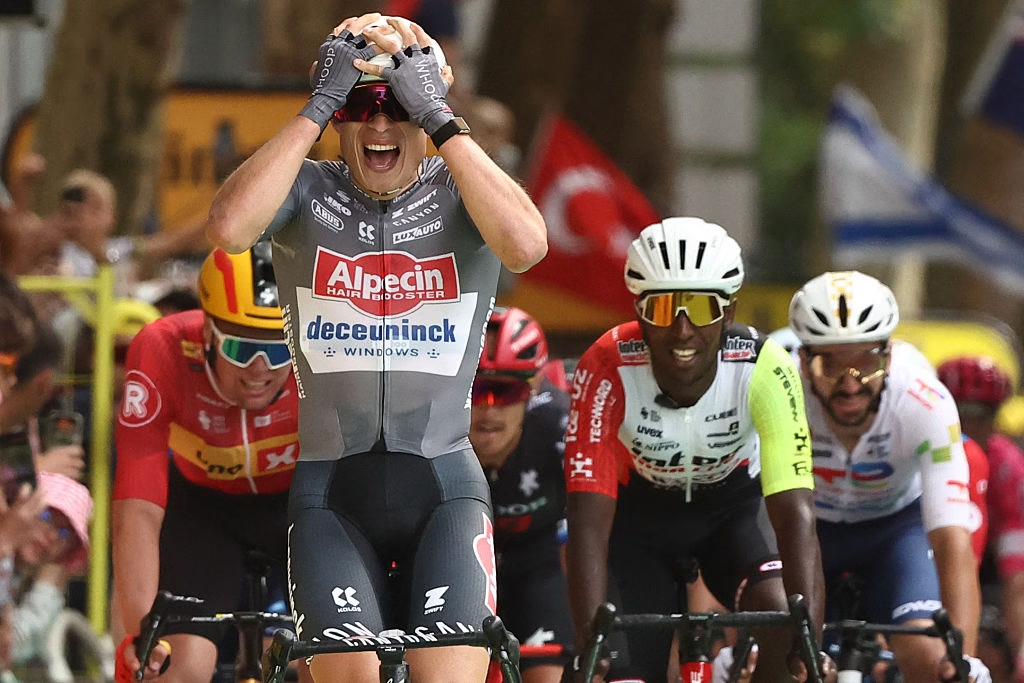
Stage 8 from Périgueux to Bergerac is another stage the sprinters will want, but it is a little less straightforward than Bordeaux. At 180.4km, it comes the day after stage 7 and before the hilly stage to Ussel. The terrain is officially flat, but this part of France can produce rolling roads and a finale that is not always as simple as it looks.
Bergerac has Tour sprint history, and the stage should still be controlled if the sprint teams are committed. But it comes in a delicate position. If Bordeaux produces a bunch sprint the day before, some teams may be reluctant to chase again all day. If a breakaway is strong, the peloton could be asked to work harder than expected.
The stage also arrives before a more awkward day to Ussel and then the first rest day. Some teams may be thinking about recovery, points and survival at the same time. That can make the chase politics more complicated.
It remains a sprint stage, but it is slightly less nailed-on than Bordeaux, Nevers or Chalon-sur-Saône.
Why stage 8 ranks fifth
Stage 8 ranks fifth because it is sprinter-friendly but vulnerable to context. Back-to-back flat stages can create uncertainty. If one or two dominant sprint teams have already taken what they wanted in Bordeaux, they may not want to shoulder all the work again. If the green jersey fight is close, the chase becomes more likely.
The most realistic outcome is still a bunch sprint. The route is officially flat, and the fast men will not want to waste an early opportunity. But the stage has more room for a strong breakaway to test the bunch than the top three stages on this list.
If the sprint teams are disciplined, Bergerac should belong to them. If they hesitate, this is one of the stages where an organised breakaway can start to believe.
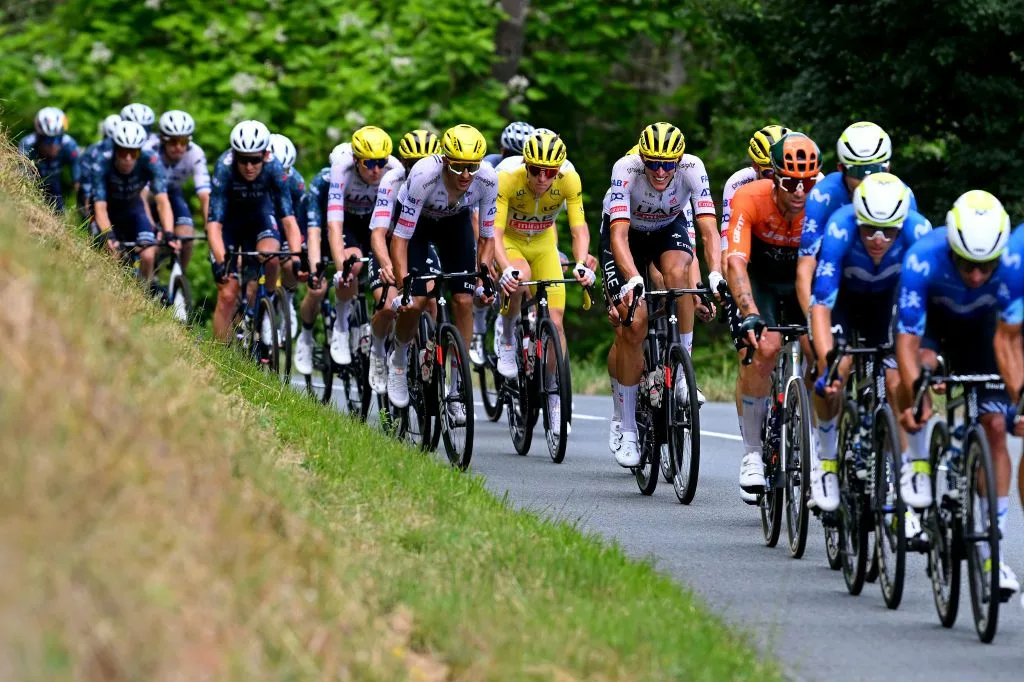
6. Stage 17: Chambery to Voiron
Stage 17 from Chambery to Voiron is officially flat, but it ranks low because of where it sits in the race. At 174.7km, it comes after the second rest day and the uphill individual time trial from Évian-les-Bains to Thonon-les-Bains. It also comes immediately before the final Alpine trilogy.
That makes it a strange day. On paper, it should be a sprint. In practice, the race context may make it more complicated. GC teams will want calm before Orcières-Merlette, Alpe d’Huez and the queen stage. Sprinters will know it is their last chance before Paris. Breakaway riders will see a route that is flat enough to survive if the bunch is tired or unwilling.
The sprint teams should chase because there are not many opportunities left. But by stage 17, the Tour is a different race. Teams are smaller, legs are heavier and priorities have shifted. Some sprinters may already be gone. Others may be riding only to reach Paris.
That is why stage 17 is not as secure as its official classification suggests. The full shape of that final week is covered in our Tour de France 2026 route analysis.
Why stage 17 is a dangerous flat stage
Stage 17 could produce a bunch sprint, but it could also become one of those late-Tour flat stages where the breakaway is given more room than expected. The GC teams will not want chaos, but they may also refuse to chase. The sprint teams will be tired, and not every fast man will still have a full lead-out.
There is also the psychological factor. Everyone knows the next three stages are brutal. Orcières-Merlette, Alpe d’Huez and the second Alpe d’Huez stage will decide the race. That can make stage 17 feel like a transition day, even if it is a huge opportunity for the sprinters.
For that reason, Voiron is likely to be a sprint if the green jersey battle is still close. If one rider has a strong grip on green and several sprint teams are depleted, the breakaway’s chances rise.
7. Stage 5: Lannemezan to Pau
Stage 5 is the first officially flat stage of the 2026 Tour de France, but it ranks last among the sprint stages because of context. It runs 158.3km from Lannemezan to Pau, arriving immediately after the hilly stage to Foix and one day before the first major mountain stage to Gavarnie-Gèdre.
On paper, this is a chance for the sprinters. Pau is a major Tour town, the distance is manageable, and the fast men will be desperate for an opportunity after the Barcelona team time trial, the hilly finish in Barcelona, the mountain stage to Les Angles and the hilly day to Foix.
The problem is that Pau is rarely a completely simple Tour stage town. The roads approaching it can be rolling, the peloton will be nervous before the Pyrenees, and teams may already be dealing with the first signs of fatigue and GC pressure. Breakaway riders will also know that the sprinters have not yet established full control of the race.
That does not mean stage 5 will not sprint. It may well do. But it is the least clean of the 7 flat stages.
Why stage 5 is the trickiest sprint day
Stage 5 has two competing identities. For the sprinters, it is the first real chance. For the GC teams, it is the day before the Tourmalet and Gavarnie-Gèdre. For breakaway riders, it is a flat stage where the chase might be nervous rather than fully organised.
That combination can make the race difficult to read. The sprint teams should be highly motivated, but they may not yet have the race under control. The green jersey hierarchy will not be established, and some teams may be reluctant to burn riders before the mountains.
Stage 5 could still be a bunch sprint, especially if the fastest riders and their teams decide they cannot afford to wait until Bordeaux. But if any flat stage is most vulnerable to late disruption, nervous racing or a breakaway making the bunch work harder than expected, it is this one.
What about stage 2 to Barcelona?
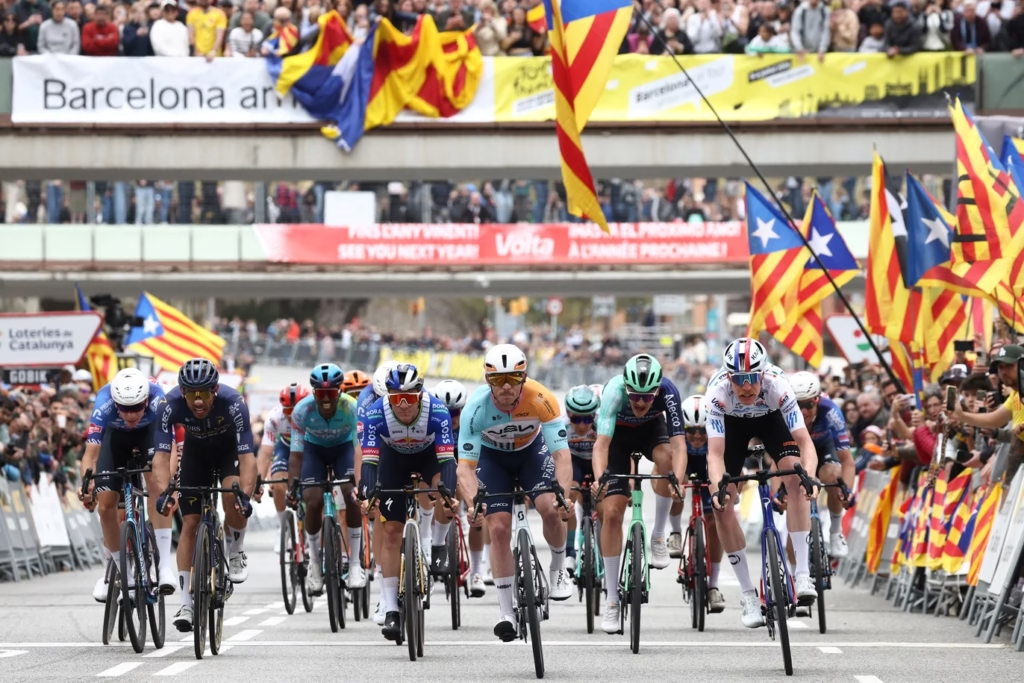
Stage 2 from Tarragona to Barcelona may interest some fast finishers, but it is officially classified as hilly rather than flat. It should not be counted among the Tour’s 7 sprint stages.
The opening half of the stage follows coastal roads, but the route becomes more difficult later, with climbing towards the Barcelona finale. It is more likely to suit puncheurs, strong classics riders and sprinters who can survive a tougher finish than the pure fast men.
That makes it important for the points classification, but it is not a clean bunch-sprint stage in the same way as Bordeaux, Nevers or Chalon-sur-Saône. The race’s Spanish opening is also part of a wider Grand Départ story, with Barcelona hosting the start of the 2026 Tour.
What about stage 9 to Ussel and stage 13 to Belfort?
Stages 9 and 13 are also not ranked here because both are officially hilly. They could still matter for the green jersey if versatile sprinters or classics-style riders survive, but they are not standard sprint days.
Stage 9 to Ussel comes before the first rest day and could favour a breakaway or reduced group. Stage 13 to Belfort is the longest stage of the race at 205.8km and includes enough late difficulty to make it much more open.
For pure sprinters, those are survival days or opportunistic points days. For riders who can sprint after climbs, they may become chances. But they do not belong in a ranking of the Tour’s flat sprint stages.
Which sprint stage matters most for the green jersey?
Stage 7 to Bordeaux is probably the most important early marker. It is the clearest sprint stage and comes while the sprint field should still be intact. Winning there would give a green jersey contender a major points haul and psychological control.
Stage 11 and stage 12 then become the middle section of the green jersey battle. Back-to-back flat days can reshape the classification quickly, especially if one rider wins both or consistently places while rivals miss out.
Stage 21 in Paris is the prestige prize, but it may not decide green unless the classification is still close. The Champs-Élysées offers huge symbolic weight, but the points battle is usually built over the previous three weeks through consistency, intermediate sprints and survival.
For a clearer explanation of how that competition works, our Tour de France 2026 jerseys guide explains the green jersey alongside the yellow, polka-dot and white jerseys.
Which sprint stages are most likely to end in a bunch sprint?
The most likely bunch sprint stages are:
- Stage 7: Hagetmau to Bordeaux
- Stage 11: Vichy to Nevers
- Stage 12: Circuit Nevers Magny-Cours to Chalon-sur-Saône
- Stage 21: Thoiry to Paris Champs-Élysées
Those four should be the clearest fast finishes of the race. Stage 8 to Bergerac is also a strong sprint candidate, but its position immediately after Bordeaux makes chase politics a little more uncertain. Stage 17 to Voiron is flat but late enough to be vulnerable. Stage 5 to Pau is the earliest chance, but also the most awkward.
Which sprinters should target the 2026 Tour?
The 2026 Tour route is good enough for sprinters to attend, but not so generous that they can afford to waste chances. With 7 flat stages, a handful of hilly days and a very hard mountain route, the green jersey battle should reward speed, consistency and survival.
The ideal sprinter for this route is not just the fastest rider in a clean finish. It is the rider who can:
- Win on the clearest bunch-sprint days
- Score points on hilly stages where pure sprinters struggle
- Survive the Pyrenees, Vosges, Jura and Alps
- Keep a lead-out intact deep into the race
- Stay motivated through long gaps between sprint chances
For a pure sprinter, Bordeaux, Nevers, Chalon-sur-Saône, Bergerac and Paris are the obvious targets. For a more versatile fast finisher, stages 2, 9 and 13 may also be important in the points classification.
The race is still attractive for sprinters, but the mountain-heavy structure means survival will be part of the contest. Our Tour de France 2026 sprinters guide looks more closely at which riders are best suited to that balance.


How to watch the sprint stages in the UK
The Tour de France 2026 will be a major shift for UK viewers, with the race shown live on TNT Sports and HBO Max. That change matters for fans following the sprint stages, because the best bunch finishes often depend on seeing the final hour rather than just the last kilometre.
Bordeaux, Nevers, Chalon-sur-Saône and Paris should all be major viewing days for sprint fans, while Bergerac, Voiron and Pau may be more tactically interesting because the chase is less certain.
For the full broadcast picture, including the end of ITV’s full live coverage from 2026, see our guide on how to watch Tour de France 2026 in the UK.
Final sprint-stage ranking verdict
The Tour de France 2026 gives the sprinters enough to justify a serious green jersey battle, but not enough for any fast rider to assume opportunities will keep coming. The route is mountain-heavy, and the final week is brutal. That makes the clean sprint stages more valuable.
The final ranking is:
- Stage 7: Hagetmau to Bordeaux
- Stage 11: Vichy to Nevers
- Stage 12: Circuit Nevers Magny-Cours to Chalon-sur-Saône
- Stage 21: Thoiry to Paris Champs-Élysées
- Stage 8: Périgueux to Bergerac
- Stage 17: Chambery to Voiron
- Stage 5: Lannemezan to Pau
Bordeaux looks like the best sprint stage of the 2026 Tour. Nevers and Chalon-sur-Saône should be the strongest mid-race opportunities. Paris remains the most prestigious. Bergerac, Voiron and Pau are still sprint chances, but each carries a little more risk.
For the sprinters, the message is clear. Win early, score consistently, and survive the mountains. The 2026 Tour offers chances, but it will not be generous to riders who miss them.

