
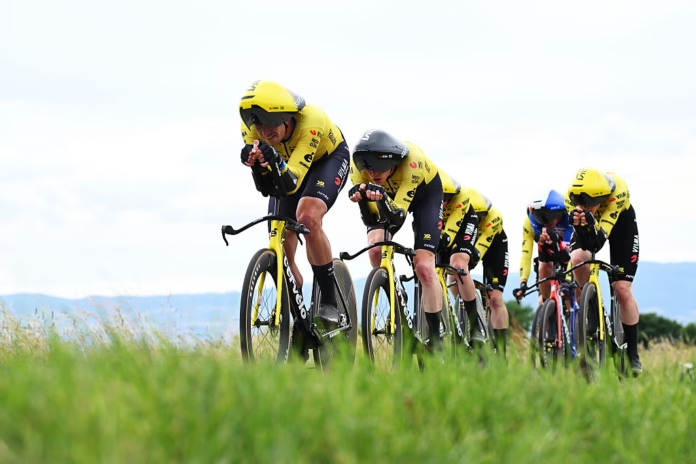
The Tour de France 2026 begins with something unusual enough to alter the entire opening week: a team time-trial in Barcelona. Not a short prologue. Not a nervous sprint stage. Not a scenic parade into the first yellow jersey. A 19.6km collective effort that will immediately force the GC teams to show their structure, their strength and their tactical priorities.
That matters because this is not a standard team time-trial. The stage classification is based on the first rider from each team to cross the line, while individual times count for the general classification. That means the 2026 Tour opener is not simply about dragging four or five riders to a timing point. It is closer to a hybrid: part team event, part leader launch, part early GC trap.
On paper, 19.6km should not decide a Tour de France. In practice, it can change the race before the mountains arrive. A strong team can put its leader in yellow or close to it. A weaker team can lose time straight away. A leader who finishes slightly detached from teammates can lose seconds that are entirely his own. A team with two GC options may have to decide, on stage 1, who gets priority when the route tilts towards Montjuïc.
That is why Barcelona matters. It will not crown the 2026 Tour winner, but it can decide who starts the race in control and who starts the race chasing.
For wider race context, see our Tour de France 2026 full route guide, Tour de France 2026 route analysis, Tour de France 2026 team time-trial explainer and Tour de France 2026 GC favourites ranked.

Why the Barcelona team time-trial is different
A traditional team time-trial is usually about keeping enough riders together to the finish, with the team’s time taken on a set rider, often the fourth finisher. The 2026 Tour opener changes that logic.
The stage result will be based on the first rider from each team. That creates an incentive to finish with the strongest leader or fastest final rider rather than keeping the whole unit neatly together. For the general classification, riders receive individual times, meaning anyone who loses contact late can pay for it personally.
That single detail changes almost everything. The strongest teams still need rhythm, rotation and collective speed. But in the final kilometres, especially with Montjuïc waiting, the race may become more leader-focused. A squad might spend 16km or 17km riding a classic team time-trial, then turn the final section into a launchpad for its GC rider.
It is not quite a normal team test and not quite an individual test. It asks teams to decide when to stop being equal and start serving the leader. That is why this opener already sits at the centre of the wider Tour de France 2026 route analysis.
That makes it fascinating, but it also makes it risky. A team that gets the transition wrong can lose riders, rhythm and time in the same kilometre.
The route: fast city roads, then Montjuïc
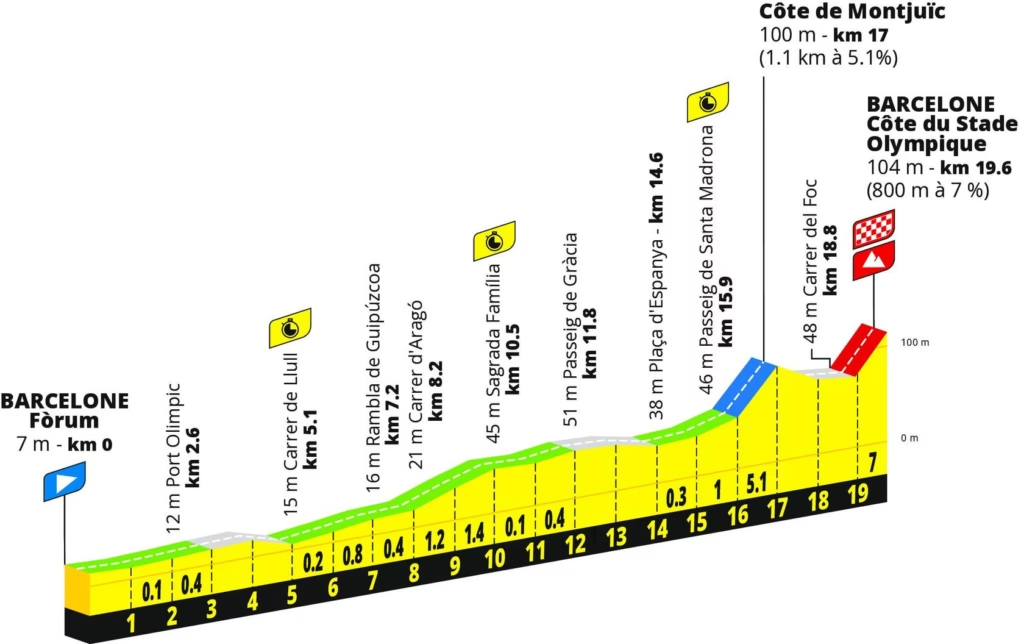
The stage is short enough to invite full commitment, but the Barcelona route is not flat from start to finish. The opening section should favour teams with big engines and polished rotation, especially along the coast and through the faster city roads. That is where the strongest squads can build speed and settle into formation.
The final section changes the feel. The climb to the Olympic Stadium on Montjuïc is short, but it is steep enough to break a team that has gone too deep too early. The listed Côte du Stade Olympique de Montjuïc is 0.8km at 7 per cent, which may sound manageable until you remember the riders will arrive there after almost 20km at full intensity.
This is where the stage becomes tactically awkward. Does a team keep more riders together for stability, or does it allow its leader to press on if others begin to crack? Does a GC rider risk going too early, knowing the stage classification is based on the first rider but the GC clock will punish anyone who fades? Does a team with several protected riders try to deliver all of them, or choose one?
The route is short, but the decisions are not. For a detailed breakdown of the format, see our Tour de France 2026 team time-trial explainer.
Why stage 1 can create real GC gaps
A 19.6km team time-trial will not create the same gaps as the Galibier or Alpe d’Huez, but it can still matter because it happens immediately.
If a favourite loses 30 or 40 seconds on stage 1, that changes the way they ride the first week. The early Pyrenees then become more urgent. Stage 3 to Les Angles and stage 6 to Gavarnie-Gèdre suddenly become attack days rather than control days. The rider who loses time in Barcelona may already be chasing before the race has even reached France properly.
The danger is not only the time loss itself. It is the tactical consequence. A team that starts behind may be forced to spend energy earlier. A leader who loses confidence in the support structure may ride more defensively or more anxiously. A rival who gains time can choose when to respond rather than when to attack.
That is what makes the opening team time-trial so important. It sets the tone. In a Tour with early climbing and a brutal final week, even small early gaps can influence the entire race pattern.
For more on how those early gaps may be used, see our Tour de France 2026 route: best days for GC attacks and Tour de France 2026 Pyrenees guide.
The first yellow jersey could go to a GC leader
The stage 1 format makes it very possible that the first yellow jersey goes directly to a GC contender.
In a standard team time-trial, the first jersey often goes to the rider who crosses as the designated timing rider or the strongest finisher from the winning team. Here, because the stage classification is based on the first rider from each team, the fastest team may deliberately deliver its leader first. If that happens, the opening yellow jersey could immediately fall to someone like Tadej Pogačar, Jonas Vingegaard, Remco Evenepoel or another GC rider from a strong collective.
That would change the optics of the Tour. Instead of a sprinter, rouleur or surprise prologue specialist wearing yellow, the race could start with one of the main favourites already in control. That can matter psychologically. A leader in yellow from stage 1 has the benefit of authority, but also the burden of early responsibility.
The team in yellow has media attention, podium duties, tactical pressure and a target on its back. Some squads may actually prefer to gain time without taking the jersey. But if the jersey is there, most GC leaders will not turn it down.
That possibility feeds directly into the hierarchy laid out in our Tour de France 2026 GC favourites ranked feature.
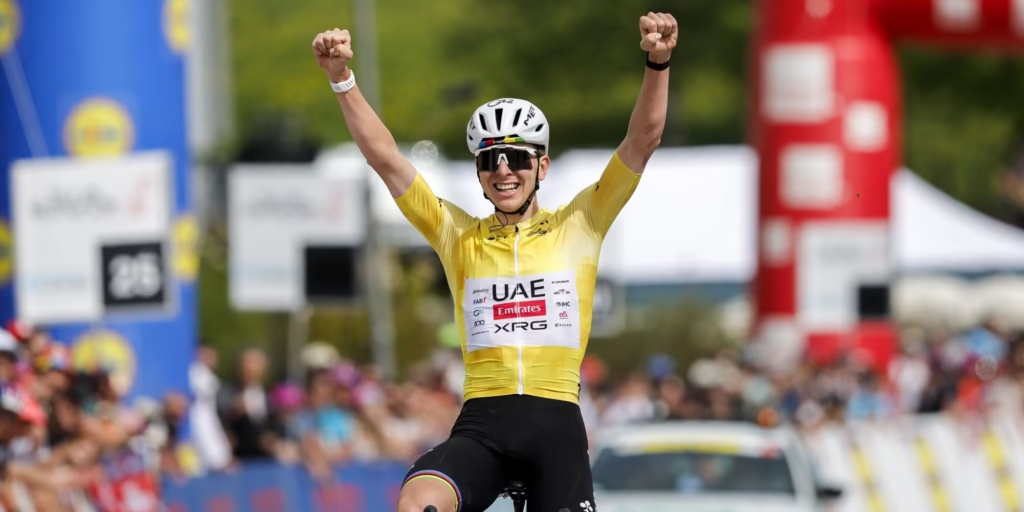 Photo Credit: Cor Vos
UAE Team Emirates-XRG: the Pogačar question
UAE Team Emirates-XRG should be one of the teams most capable of turning the Barcelona opener into a weapon.
Pogačar is not a passive GC leader. He can use almost any terrain to create pressure, and the Montjuïc finish gives him a final section that should suit his punch and ability to sustain high power after a long effort. The key question is whether UAE ride the stage as a complete team time-trial or as a controlled launch for Pogačar in the final kilometre.
The team’s depth matters. If UAE arrive with several strong engines, they can keep the speed high through the flat and faster sections before giving Pogačar the platform to finish strongly. That could put him into yellow immediately or at least create early time gains over rivals with weaker TTT structures.
The risk is that trying to maximise Pogačar’s time can cost other riders. If the team fractures late, some support riders may lose time or arrive with less confidence. That may not matter for the GC leader, but it can affect team strength across the opening week.
For Pogačar, though, this is a chance to begin the Tour on the front foot. That makes Barcelona dangerous.
For more on his wider route, see our Tadej Pogačar at the Tour de France 2026 feature.
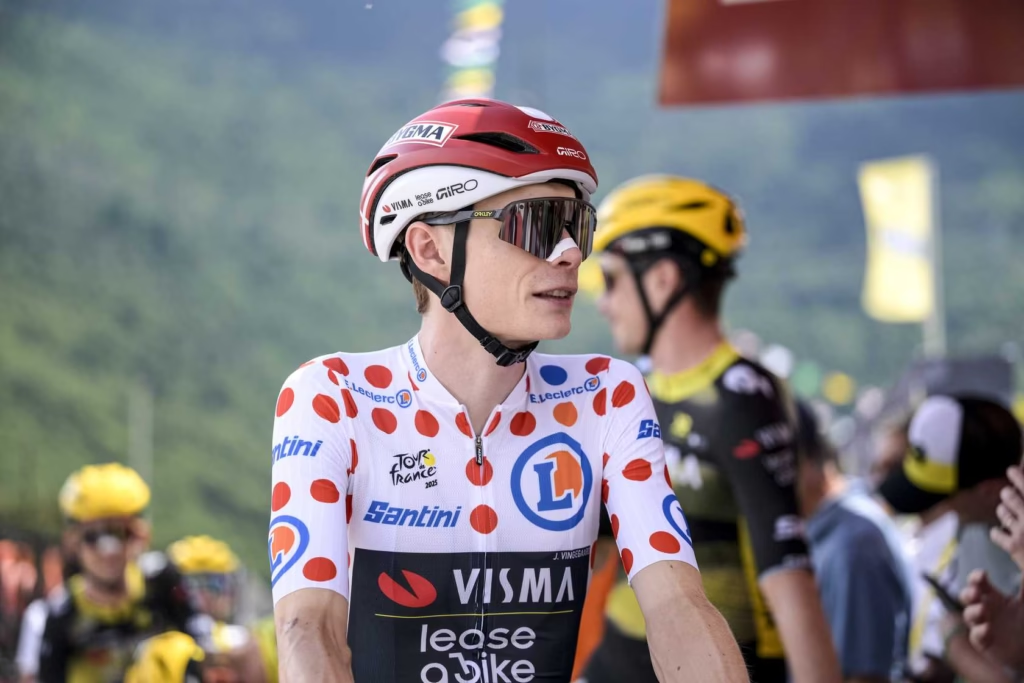 Photo Credit: A.S.O./Charly López
Team Visma | Lease a Bike: precision or pressure?
Team Visma | Lease a Bike should also be among the most important squads on stage 1. A team time-trial rewards the kind of detail, discipline and collective structure that has long been central to Visma’s Grand Tour approach.
For Jonas Vingegaard, the Barcelona opener is both opportunity and risk. If Visma ride well, he can gain time on rivals before the race reaches the mountains. If they underperform, he could start the Tour chasing Pogačar, Evenepoel or another GC contender before a single road stage has unfolded.
The format is particularly interesting for Visma because it changes the traditional team time-trial balance. The squad will still want cohesion, but the individual timing element means Vingegaard’s own finish becomes central. Riders such as Bruno Armirail, Matteo Jorgenson or other strong engines can do huge work early, but the final section must be judged around the leader.
If Visma get it right, they can make stage 1 feel controlled and efficient. If they get it slightly wrong, especially on Montjuïc, the cost could be immediate.
For Vingegaard, this is not his natural Tour-winning terrain in the same way as the final Alpine block, but it is a place where his team can give him a head start.
For more on his yellow jersey path, see our Jonas Vingegaard at the Tour de France 2026 feature.
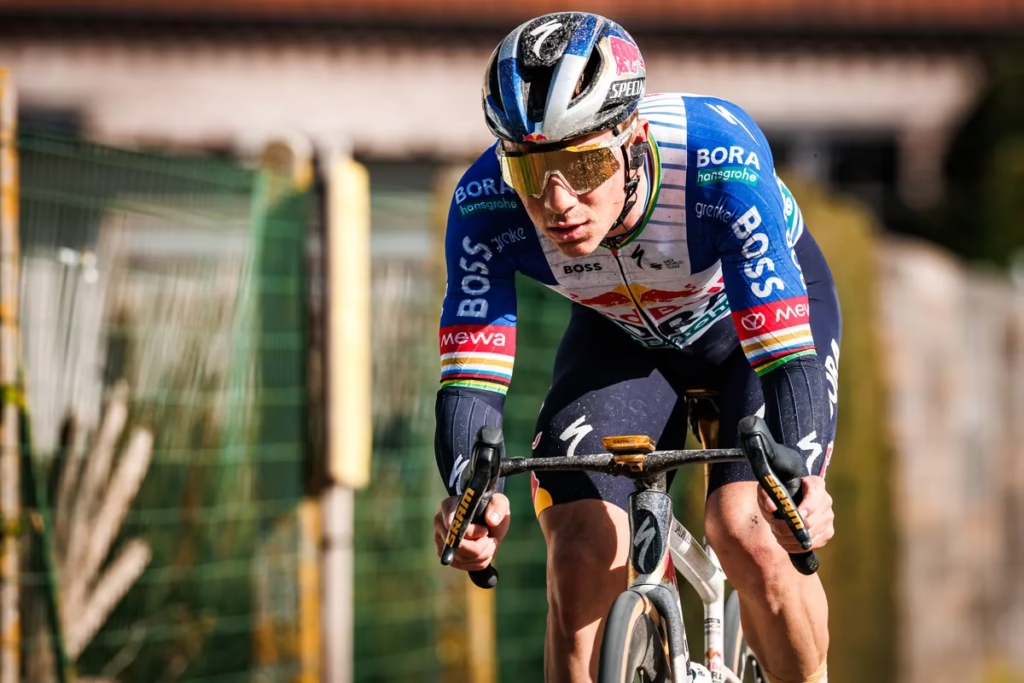
Red Bull-BORA-hansgrohe and Evenepoel’s platform
Red Bull-BORA-hansgrohe may look at stage 1 as one of Remco Evenepoel’s best opportunities to shape the race early.
Evenepoel is one of the strongest time-triallists among the GC contenders, but the team format means he cannot simply ride the stage alone from kilometre zero. Red Bull have to deliver him through the fast sections, protect him from unnecessary losses and then judge whether the final Montjuïc climb becomes the moment to let him finish the job.
This could be crucial because Evenepoel’s 2026 Tour route is built around controlled time gains and damage limitation in the biggest mountains. Stage 1 and the stage 16 individual time-trial are his two clearest chances to take time without needing to outclimb Pogačar or Vingegaard on the hardest Alpine stages.
A strong Barcelona ride would give him breathing room. A poor one would narrow his route immediately.
The team also has to think about Florian Lipowitz and any other GC or climbing options. If Red Bull ride entirely for Evenepoel, others may lose time. If they try to keep everyone together, they may blunt the stage-winning edge. That is the kind of decision the new format forces.
For more on Evenepoel’s race, see our Remco Evenepoel at the Tour de France 2026 feature.
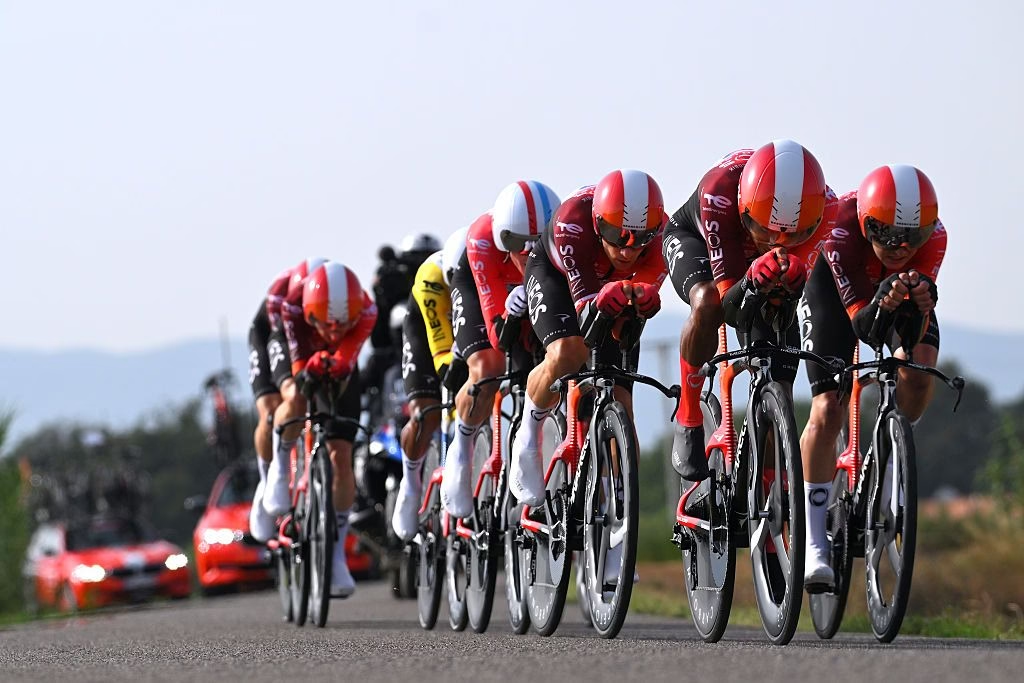
Netcompany Ineos and the multi-leader problem
Netcompany Ineos could be one of the teams most affected by the format because they may arrive with several riders who matter for GC.
Carlos Rodríguez, Oscar Onley, Thymen Arensman and Kévin Vauquelin all create different possibilities. Add a rider like Filippo Ganna, and the team has the raw material for an excellent time-trial. The question is how they turn that into a coherent stage plan.
If Ineos ride for one clear leader, they can make the final kilometres cleaner. If they try to protect several riders equally, the stage becomes more complicated. In a normal team time-trial, keeping a group together is the goal. In this version, individual finish times mean every protected rider needs to be looked after, and the first rider across the line still determines the stage result.
That creates an internal hierarchy test on day one. If one rider finishes ahead of the others, does that rider become the de facto GC priority? If Vauquelin rides strongly on the final climb, does he gain leadership weight? If Rodríguez or Onley lose seconds, does that change how the team races the Pyrenees?
Ineos may have one of the strongest squads for stage 1, but the format could force them to make decisions earlier than they would like. Their riders also sit prominently in the wider Tour de France 2026 dark horses for the general classification picture.
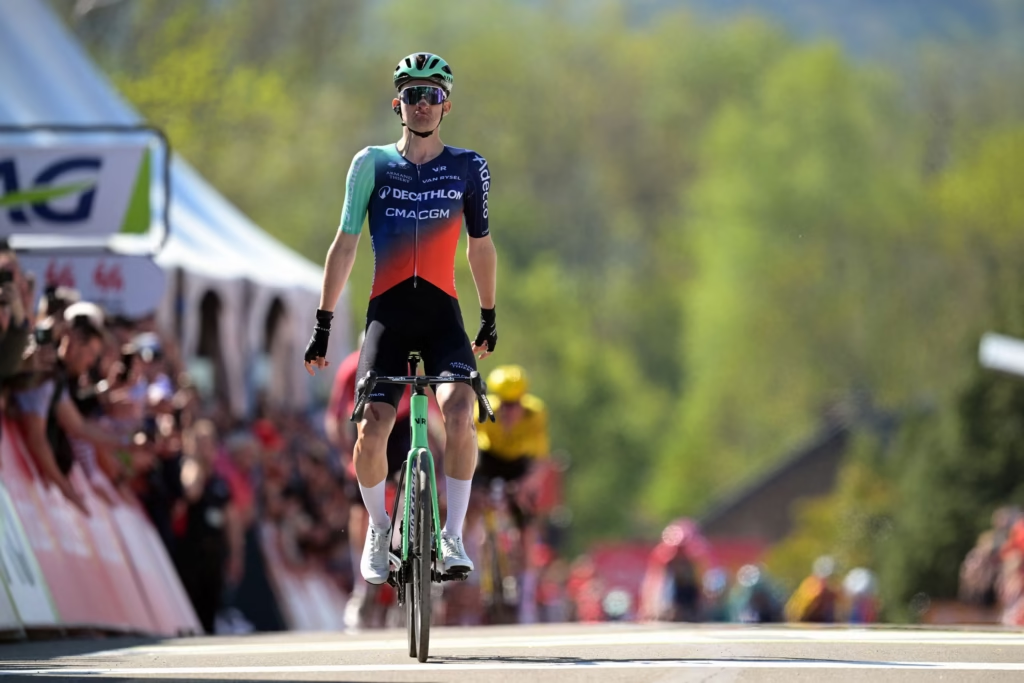
Decathlon CMA CGM and the Seixas risk
Decathlon CMA CGM’s stage 1 is important because Paul Seixas cannot afford to start his first Tour under unnecessary pressure.
Seixas is one of the most exciting young riders expected at the race, but the Barcelona team time-trial is a difficult opening assignment for a young GC hope. It is technical, fast and tactically unusual. The team will need to protect him, position him and avoid losing time to the strongest collective units.
The final Montjuïc section could suit Seixas if he is delivered well, but the danger is being asked to do too much too soon. A young rider in his first Tour does not need stage 1 to become a crisis. If Decathlon can limit losses and keep him close, that may be enough.
Aurélien Paret-Peintre and Nicolas Prodhomme could be important here, even if they are not pure time-trial specialists. The key is keeping the formation together long enough to protect Seixas before the road rises.
A good Decathlon ride would not have to win the stage. If Seixas starts the Tour within touching distance of the main favourites, the team can consider it a successful opening day.
For more on his place in the race, see our Tour de France 2026 young riders to watch guide.
Which teams could gain most?
The teams most likely to gain are those with three things: strong rouleurs, a clear GC leader and enough organisation to handle the format.
UAE Team Emirates-XRG have the leader and the depth. Team Visma | Lease a Bike have the collective precision. Red Bull-BORA-hansgrohe have Evenepoel as a final rider who can finish strongly. Netcompany Ineos may have the most obvious time-trial firepower if their hierarchy is clear enough.
These are the squads who can make stage 1 more than a formality. If they gain 20 to 40 seconds on weaker teams, that immediately affects the opening week.
There is also a second category: teams with one strong leader but less collective depth. They may not win the stage, but they can limit damage if they pace intelligently. For teams built around climbers, that may be the main objective.
The biggest risk belongs to teams that are neither time-trial strong nor tactically clear. Barcelona will punish hesitation. That is why the stage is not just a technical curiosity, but one of the key themes in the Tour de France 2026 route analysis.
 Photo Credit: Getty
Which riders could lose out?
Pure climbers and riders from weaker time-trial teams are the obvious danger group.
A climber can be in excellent mountain form and still lose time in Barcelona if their team cannot sustain speed, rotate smoothly or manage the final climb. That is one of the reasons stage 1 can distort the opening GC. It rewards the structure around the rider as much as the rider himself.
The individually timed format makes that even sharper. If a climber is dropped late by his own team, he does not simply share the team time. He gets his own time. That could mean losing extra seconds on the final climb, precisely when the best leaders are pushing on.
This matters for riders such as Lenny Martinez, Paul Seixas, Antonio Tiberi, Felix Gall, Isaac del Toro, Giulio Ciccone or any climber whose team may not be built primarily for a team time-trial. Some will survive it well. Others may be forced onto the back foot.
A bad ride here does not end the Tour, but it changes the job description. Instead of waiting for the mountains, the rider has to chase from the start.
The riders most exposed by that dynamic overlap with several names in our Tour de France 2026 climbers guide and Tour de France 2026 GC favourites ranked pieces.
How the format changes tactics
The new timing format may produce unusual team behaviour in the final kilometres.
In a traditional team time-trial, teams often focus on preserving the necessary number of riders until the finish or final timing point. Here, the stage win is based on the first rider, and GC times are individual. That may encourage a team to use riders as a launch train for its leader rather than keeping the whole group together.
The final climb makes that even more likely. A big rouleur may be essential along the seafront and boulevards, but less useful on Montjuïc. A climber-leader may sit in the wheels for most of the stage, then take over late. A second GC rider may suddenly have to choose whether to follow the leader or protect their own pacing.
This could make the stage look more fragmented than a normal team time-trial. Some squads may finish with their leader first and the rest of the team scattered behind. Others may try to keep a compact formation but lose the chance to win.
There is no perfect answer. The best teams will be those who have rehearsed the transition from team speed to leader finish.
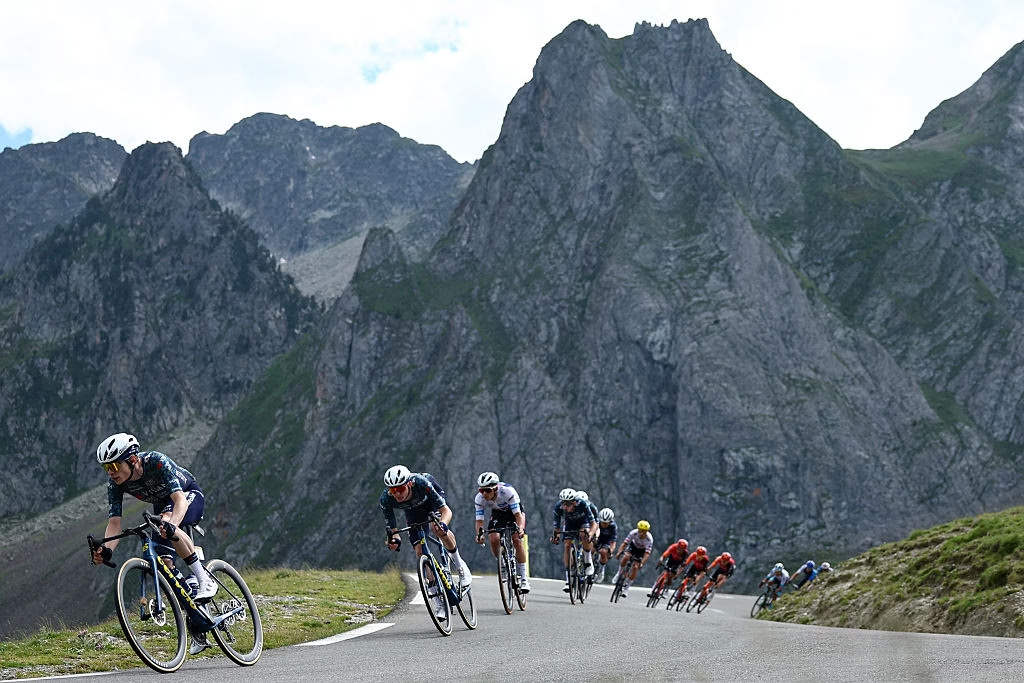
Why stage 1 changes the Pyrenees
The most important consequence of Barcelona may be felt on stage 3 and stage 6.
If Pogačar, Vingegaard, Evenepoel or another favourite gains time on stage 1, they can ride the first Pyrenean tests with more control. If a rival loses time, they may need to attack sooner than planned. That is how a team time-trial changes road stages that come days later.
Stage 3 to Les Angles becomes more dangerous if several riders are already behind. Instead of a controlled uphill finish, it could become an early chance to take back small gaps. Stage 6 to Gavarnie-Gèdre becomes even more important because it is the first major climbing day and the clearest chance to reset the hierarchy.
A rider who loses 30 seconds in Barcelona and another 20 seconds at Les Angles could arrive at Gavarnie-Gèdre already under real pressure. That is why stage 1 is not an isolated event. It is the first move in a sequence.
For more on those mountain days, see our Tour de France 2026 Pyrenees guide and Tour de France 2026 route: best days for GC attacks.
Could stage 1 affect the points and sprint picture?
The GC implications are obvious, but stage 1 also affects the rhythm of the sprinters’ race.
A team time-trial opener delays the first traditional sprint opportunity. That means the yellow jersey, green jersey and early media focus may all sit with GC teams or time-trial specialists before the fast men get their first proper chance. For sprinters, the opening weekend becomes more about survival, positioning and avoiding early damage than immediately taking control of the race.
That matters because the sprint field still has plenty of opportunities later, but the start of the race may feel less familiar. Teams that normally build the opening stage around a mass finish will instead have to think about protecting their leaders in a technical collective test. It is a different kind of first impression.
For more on where the fast men are most likely to matter, see our Tour de France 2026 sprint stages ranked guide.
-
 Photo Credit: Cor Vos
Could stage 1 decide the Tour?
Stage 1 should not decide the Tour on its own, but it can decide the race shape.
The final winner will still have to survive the Pyrenees, Plateau de Solaison, the stage 16 individual time-trial, Orcières-Merlette and back-to-back days on Alpe d’Huez. No one wins the Tour in a 19.6km team time-trial if they cannot climb deep into the third week.
But stage 1 can create the first imbalance. It can put one leader ahead and another behind. It can reveal which teams are organised and which are not. It can influence who attacks in the Pyrenees, who waits for the time-trial, and who has to gamble before the Alps.
That is enough to make it one of the most important opening stages in years.
The Tour’s decisive terrain is still likely to come later, especially in the final Alpine block. But the reason those stages may explode is partly because of what happens in Barcelona. A rider who loses time on day one may spend the next 19 stages looking for somewhere to take it back.
For the stage 20 endgame, see our Tour de France 2026 queen stage guide and why back-to-back Alpe d’Huez finishes could define the Tour de France 2026.
Prediction
The Barcelona team time-trial should favour the biggest, most organised GC teams. UAE Team Emirates-XRG, Team Visma | Lease a Bike, Red Bull-BORA-hansgrohe and Netcompany Ineos look like the squads most likely to gain from the format, though the exact outcome will depend heavily on line-ups and execution.
The first yellow jersey could easily go to a GC contender rather than a specialist. Pogačar and Evenepoel look especially well suited to the leader-launch nature of the finish, while Vingegaard could benefit from Visma’s collective strength. Ineos may have the power to win the stage, but their challenge is managing multiple GC options.
The biggest losers could be pure climbers on weaker time-trial teams, or squads that try to keep too many protected riders together and end up doing neither thing well.
The stage will not finish the Tour. It will start the argument. By the end of the first day in Barcelona, some riders will already have time in hand, some will already be chasing, and the Pyrenees will feel closer than they should.
For UK coverage details once the race begins, see our how to watch Tour de France 2026 in the UK guide.

