
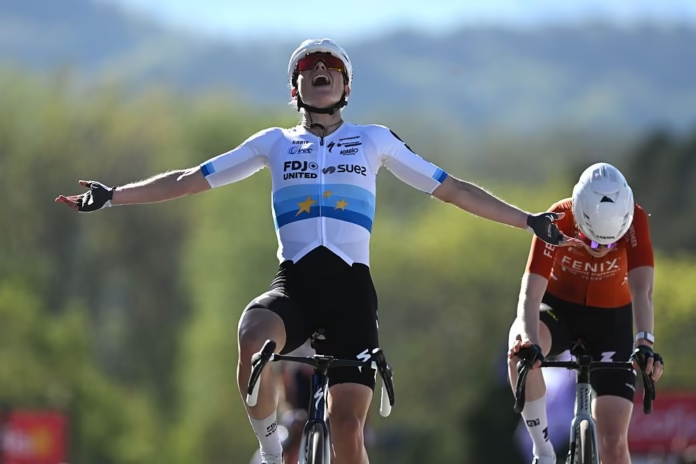
The Tour de France Femmes 2026 has one of the deepest general classification fields assembled since the race returned to the calendar, but there is still a clear starting point when asking who is favourite to win the yellow jersey.
Demi Vollering begins at the top. Pauline Ferrand-Prévot is the defending champion. Paula Blasi has forced herself into the discussion through an extraordinary 2026 season, while Marlen Reusser has perhaps the clearest opportunity to gain significant time before the race reaches its decisive mountains.
Behind them sit former Tour winner Kasia Niewiadoma-Phinney, Anna van der Breggen, Antonia Niedermaier and Elisa Longo Borghini. There is enough quality deeper into the field that a rider outside this top eight could still reach the podium, but these are the names around which the battle for yellow is most likely to revolve.
The Tour de France Femmes 2026 route makes separating them more complicated. Stage 4 contains a 21km individual time trial from Gevrey-Chambertin to Dijon before the race shifts towards its decisive climbing stages. Mont Ventoux arrives on Stage 7, followed by further mountain terrain on the road towards Nice.
This is not simply a climber’s Tour. Riders need to limit losses against the clock, survive several potentially awkward hilly stages and still have their best legs when the race reaches the mountains.
Based on form, route suitability, previous Grand Tour performances and the likely tactical situation within each team, these are the eight leading GC favourites for the 2026 Tour de France Femmes.
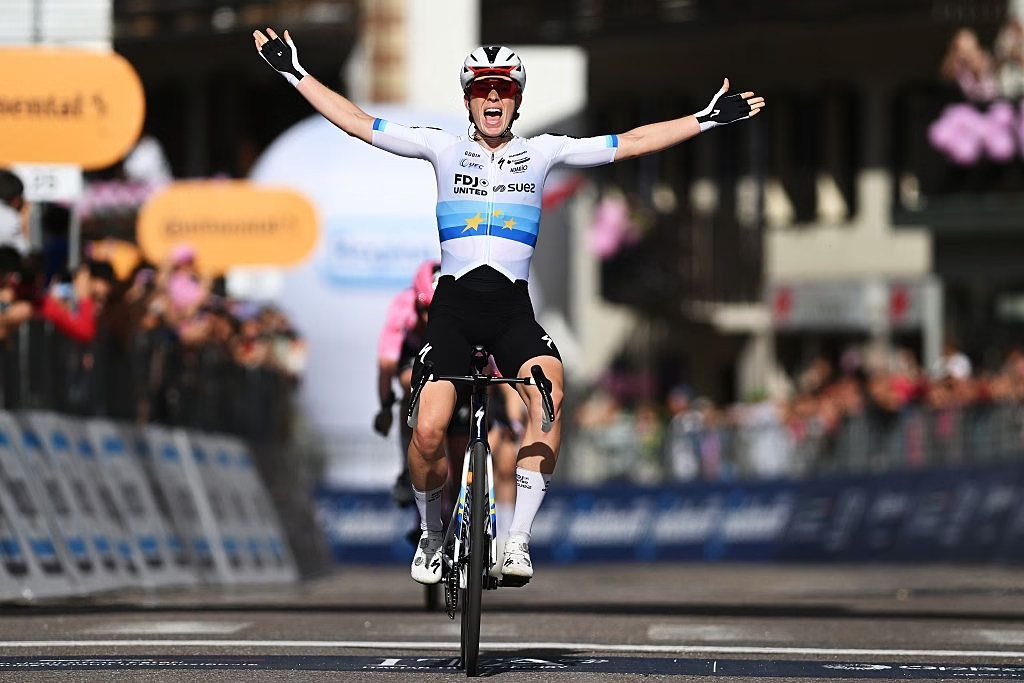
1. Demi Vollering
Demi Vollering is the strongest overall favourite because there is no obvious weakness for her rivals to exploit.
She already knows how to win the Tour de France Femmes, taking yellow in 2023, and arrives in 2026 having added the Giro d’Italia Women to her Grand Tour record. More importantly, this year’s route asks riders to do almost everything Vollering does well.
The Dijon time trial should work in her favour rather than becoming an exercise in damage limitation. She can potentially take time from Ferrand-Prévot, Blasi and Niewiadoma-Phinney there, but does not then have to defend that advantage against riders who are clearly superior to her in the mountains. Vollering remains one of the strongest climbers in the race herself.
Mont Ventoux therefore becomes potentially a double advantage. Several of her rivals may arrive needing to take time back, which means they cannot simply follow Vollering and hope the race comes to them. They will need to attack.
FDJ United-Suez have also built their Tour around her. Juliette Berthet and Évita Muzic provide climbing support, while Vollering enters this edition with a clearly defined leadership role.
There are scenarios in which Ferrand-Prévot peaks perfectly again or Blasi proves to be the strongest climber in the race. Across nine stages, though, Vollering has the widest margin for error.
GC verdict: The benchmark. The best combination of time trialling, climbing, Grand Tour experience and current form.
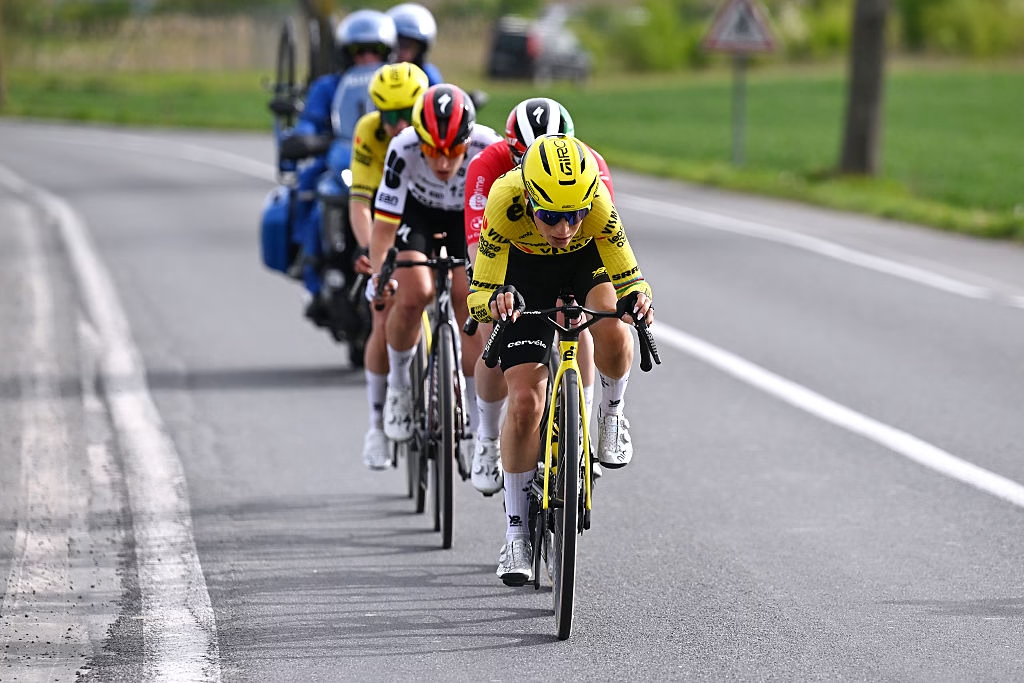
2. Pauline Ferrand-Prévot
Pauline Ferrand-Prévot earned the right to begin this race as one of the two outstanding favourites when she dominated the decisive mountain stages of the 2025 Tour de France Femmes.
The question is whether she can recreate that level against a stronger Vollering and on a route containing a substantial individual time trial.
Ferrand-Prévot’s 2025 victory demonstrated something particularly important about the way she approaches the Tour. She can build an entire season towards arriving at this race in peak condition. Results earlier in the year do not necessarily tell the full story because her objective is not to dominate every race from March onwards.
That makes judging her purely on 2026 form risky.
The strongest argument for Ferrand-Prévot comes later in the race. Mont Ventoux rewards sustained climbing strength, while the final mountain stages give her further opportunities if the race remains close. Visma | Lease a Bike also arrive with a strong squad around her, including Marianne Vos, Marion Bunel, Femke de Vries, Sarah van Dam, Lieke Nooijen and Daniek Hengeveld.
The time trial is the obvious point at which Vollering could establish an advantage. Ferrand-Prévot does not need to beat Vollering in Dijon, but she cannot afford to leave herself needing an enormous mountain turnaround either.
Last year showed what happens when Ferrand-Prévot reaches the decisive stages with her best legs. Nobody else could live with her.
GC verdict: The defending champion and the rider most capable of turning the expected Vollering advantage upside down.
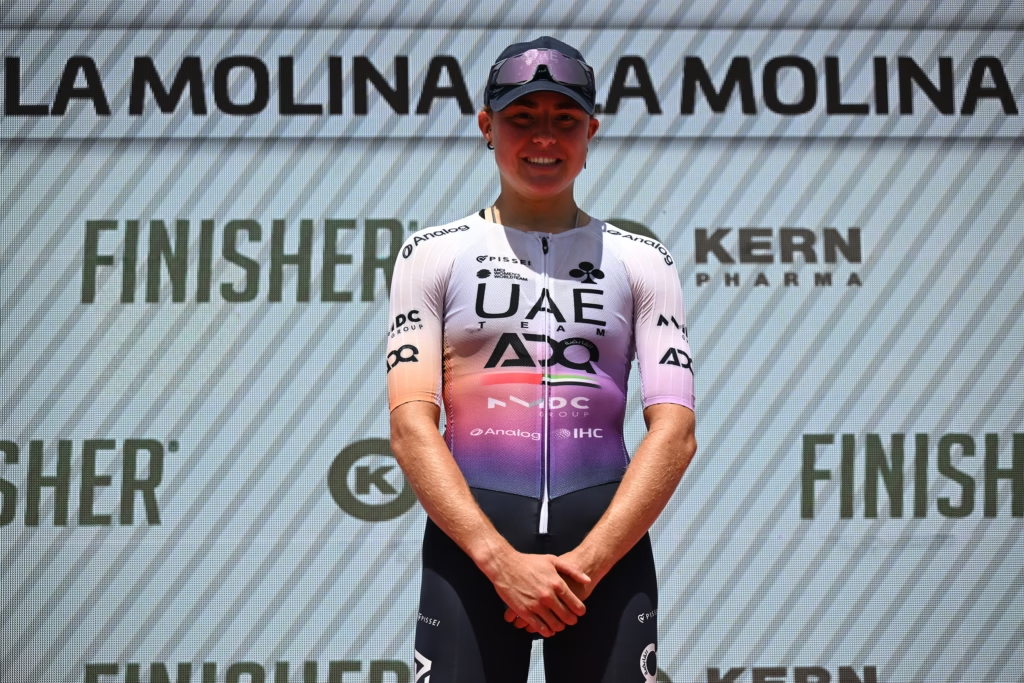
3. Paula Blasi
Paula Blasi would have looked like an aggressive outsider for the Tour at the start of 2026. She now arrives as a genuine yellow jersey candidate.
Her breakthrough has gone far beyond winning a few races. Blasi won La Vuelta Femenina, proving that she could sustain a GC challenge across a Grand Tour rather than simply producing isolated climbing performances. Victory at Amstel Gold Race and further stage-race success have added different evidence of the same development.
She has become one of the most intriguing riders in the race because nobody yet knows exactly where her ceiling lies.
The Ventoux stage could suit her particularly well. Blasi has repeatedly shown this season that prolonged climbing does not expose her relative lack of Grand Tour experience. It has instead become terrain on which she can beat much more established leaders.
Her problem is Dijon.
Against Vollering and Reusser, Blasi could begin the second half of the Tour needing to recover time. That changes the way UAE Team L’IMAD can use her and creates a fascinating tactical situation alongside Elisa Longo Borghini.
UAE do not need to declare Blasi their sole leader from Lausanne. Longo Borghini gives them another proven GC option, while Silvia Persico, Maëva Squiban, Dominika Włodarczyk, Brodie Chapman and Mavi García make this one of the deepest climbing squads in the race.
If Longo Borghini remains close on GC, rival teams have two leaders to control. If Blasi emerges as clearly stronger once the race climbs, the hierarchy becomes straightforward.
The betting market reflects just how dramatically her status has changed. She is no longer being priced as an exciting debutant. She is among the riders considered most likely to win the Tour.
That feels justified.
GC verdict: The highest-upside challenger in the race. If she limits the time trial damage, Ventoux could put her directly into yellow.
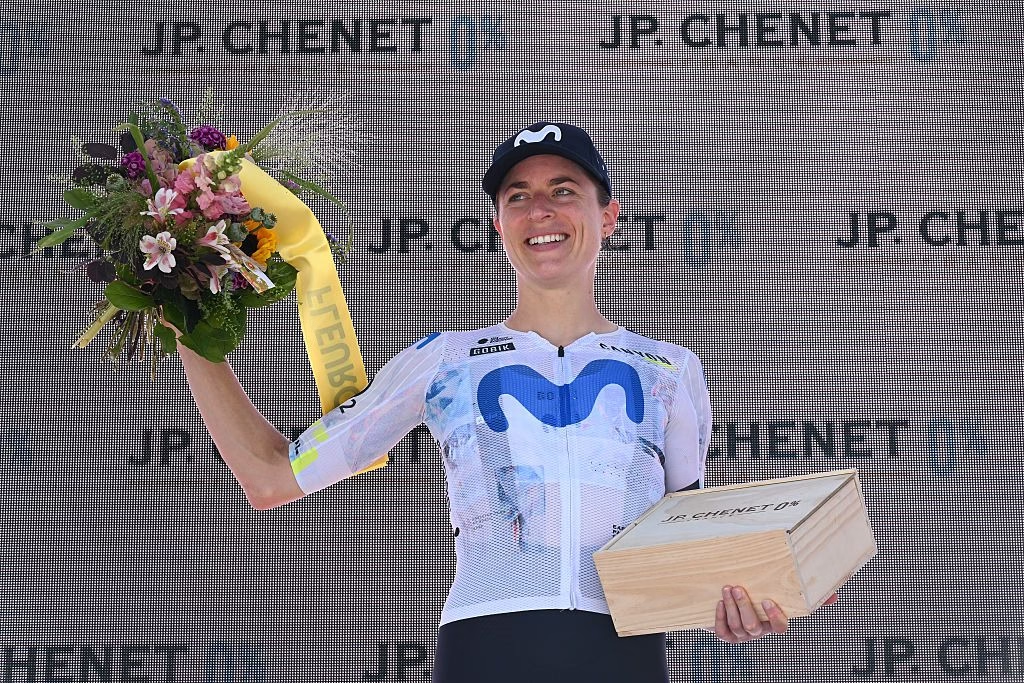
4. Marlen Reusser
Marlen Reusser may have the most interesting route of anyone in the top eight.
The obvious reason is Stage 4.
A 21km individual time trial is long enough for Reusser to take meaningful time from some of the climbers rather than simply chase a stage victory. If she reaches Dijon without losing time through the opening stages, she could leave it wearing yellow.
Her 2026 season provides increasingly strong evidence that she can then defend that position.
Winning the Tour de Suisse confirmed that Reusser’s development as a stage racer has continued. She is no longer simply a world-class time triallist who can climb surprisingly well. Her climbing has become strong enough that GC rivals have to consider her as a legitimate threat across an entire stage race.
The question is still what happens when the very best climbers begin attacking on Ventoux.
Reusser does not necessarily need to match every acceleration. If she has already gained significant time in Dijon, she can ride the climb as a controlled effort and force Vollering, Ferrand-Prévot, Blasi and Niewiadoma-Phinney to take the Tour away from her.
That makes the size of her Stage 4 advantage crucial.
A Reusser Tour victory would follow a very different pattern from a Blasi victory. Blasi probably needs to make the mountains decisive. Reusser wants the time trial to create the gap and the mountains to remain manageable.
GC verdict: The rider most capable of changing the entire Tour in Dijon.
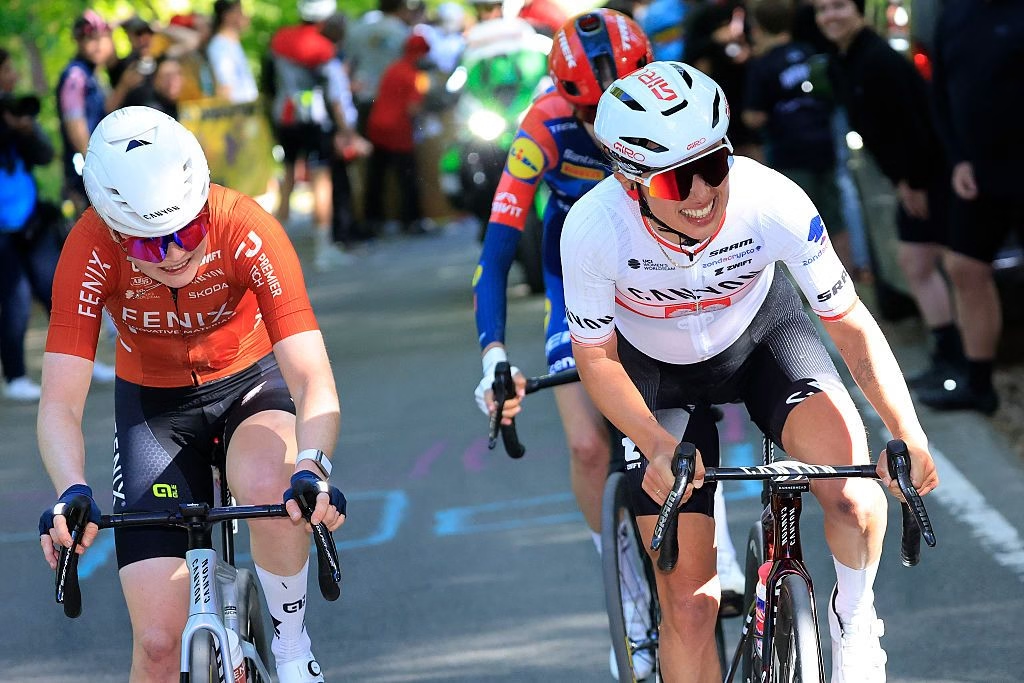
5. Kasia Niewiadoma-Phinney
Kasia Niewiadoma-Phinney has repeatedly finished on the Tour podium and won the race in 2024. There is very little theoretical about her credentials.
She belongs among the favourites because she has consistently performed at this race in a way few riders have matched.
The 2026 route gives her both opportunity and a significant problem.
Mont Ventoux is close to ideal terrain for the kind of aggressive climbing race in which Niewiadoma-Phinney thrives. She can attack on steep gradients, continue applying pressure across difficult terrain and exploit stages where positioning and racing instinct matter as much as a single sustained climbing effort.
The later mountain terrain is another asset because it gives her more than one opportunity to overturn the hierarchy rather than making Ventoux the only decisive examination.
Dijon is the complication.
Niewiadoma-Phinney has improved against the clock, but Vollering and particularly Reusser still have the potential to take enough time that she is forced to chase later in the race.
Canyon SRAM have strengthened her options by bringing Antonia Niedermaier, who has made another significant step as a stage racer in 2026. That gives the team another rider capable of surviving deep into the mountains and means Niewiadoma-Phinney should have more tactical flexibility around her.
She may need to use it. Of all the established favourites, Niewiadoma-Phinney is one of those most likely to benefit from making the Tour difficult before the obvious final climbs.
GC verdict: Too consistent at the Tour to rank lower, but Dijon means she may have to win the race aggressively rather than defensively.
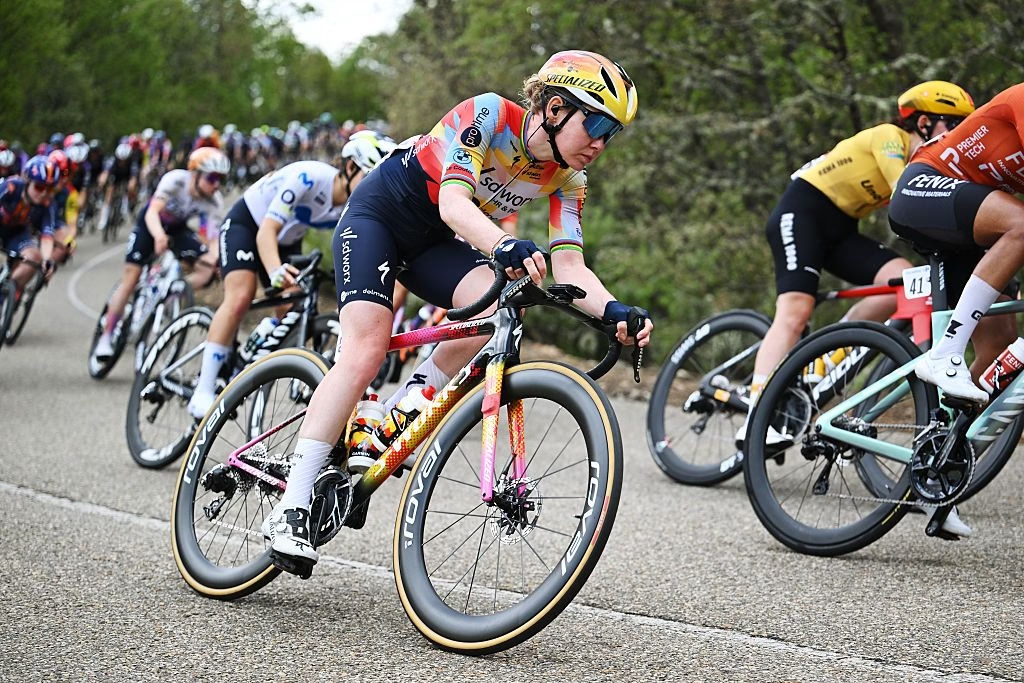
6. Anna van der Breggen
Anna van der Breggen’s return to the Tour de France Femmes in 2025 did not produce the GC result that might once have been expected automatically from one of the great stage racers of her generation.
That does not make 2026 irrelevant. It gives us a much better baseline.
Van der Breggen has now experienced the modern Tour de France Femmes from inside the peloton, understands the level required across its hardest stages and has had another season to rebuild the stage-racing durability that inevitably disappeared during retirement.
The route also suits her.
At her best, Van der Breggen loses little across any of the major GC disciplines. She can time trial, climb and read a stage race tactically. Dijon should put her ahead of several riders who may ultimately climb better, giving her something to defend before Ventoux.
The difficulty is ranking her against the current generation rather than against her own historical level.
Vollering is now the benchmark. Ferrand-Prévot won the Tour emphatically last year. Blasi has already become a Grand Tour winner. Reusser has developed into a genuine stage-race leader. Niewiadoma-Phinney has repeatedly proved herself specifically at this race.
Van der Breggen does not necessarily need to rediscover the version of herself who dominated stage racing before retirement to reach the podium. She probably does need something close to it to win.
GC verdict: The experience, time trial and climbing pedigree remain. The question is whether her current ceiling is high enough to beat the riders who replaced her at the top.
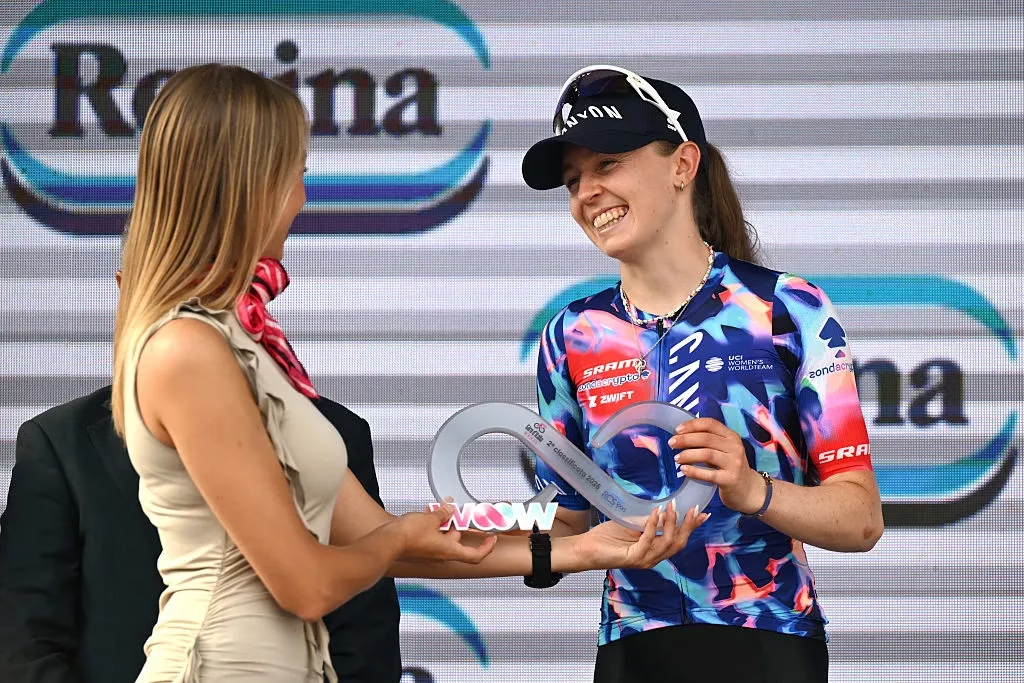
7. Antonia Niedermaier
Antonia Niedermaier is the most complicated rider to rank because her own GC prospects are tied directly to those of Niewiadoma-Phinney.
On pure 2026 performance, she belongs comfortably inside this top eight.
Her second place at the Giro d’Italia Women represented a major progression rather than a single surprise result. Niedermaier showed that she could remain competitive deep into a Grand Tour and continue climbing when more established GC riders were beginning to fade.
That makes her extremely relevant once the Tour reaches its hardest mountain stages.
She is also young enough that another sizeable improvement would hardly be surprising.
The issue is Canyon SRAM’s leadership structure. Niewiadoma-Phinney is a former Tour winner and arrives as the established GC leader. Niedermaier is therefore likely to begin the race as the second option rather than with complete tactical freedom.
Stage races have a habit of simplifying those decisions.
If Niedermaier reaches Ventoux ahead of Niewiadoma-Phinney, or is simply climbing better, Canyon SRAM are unlikely to sacrifice a genuine podium opportunity. Likewise, keeping two riders high on GC gives the team tactical options against Vollering and Ferrand-Prévot.
She may begin as the second card. She could finish as much more than that.
GC verdict: Not the nominal leader, but her Giro performance makes her impossible to treat merely as support.
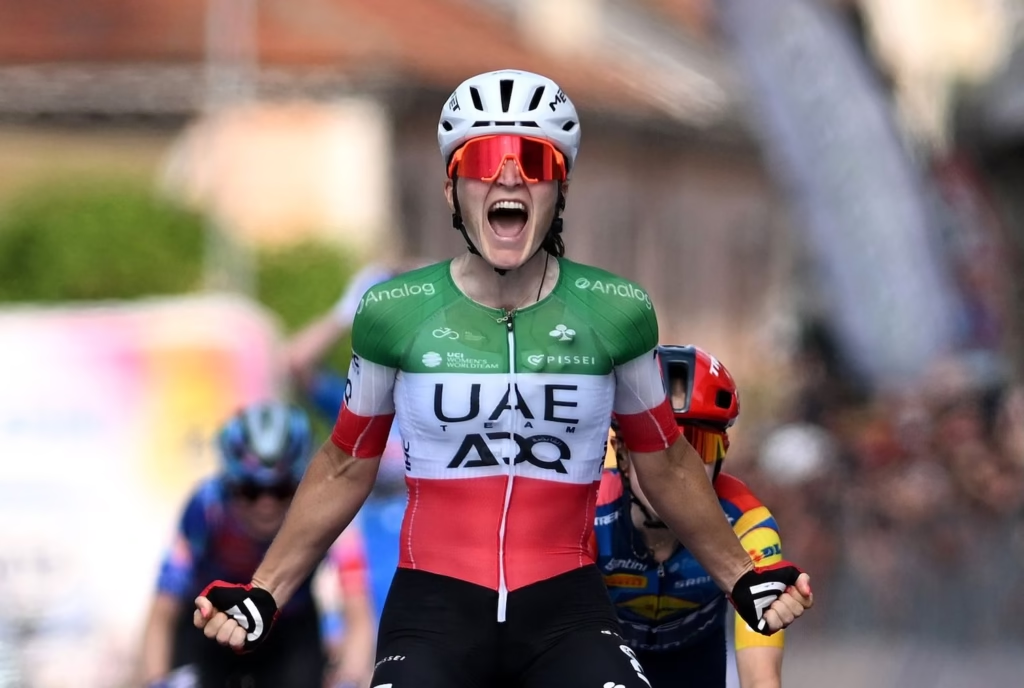
8. Elisa Longo Borghini
Ranking Elisa Longo Borghini eighth feels almost absurd when considering what she has achieved elsewhere.
She is a multiple Giro winner, one of the most tactically complete riders in professional cycling and capable of producing elite performances across climbs, time trials, cobbles and difficult one-day races.
The Tour has simply never gone as smoothly.
Sixth in 2022 remains her best overall finish, while later appearances have failed to produce the GC result expected from a rider with her Grand Tour record. That history matters when comparing her with Niewiadoma-Phinney, whose Tour consistency has been exceptional.
There are also legitimate questions about UAE Team L’IMAD’s internal hierarchy.
Longo Borghini brings the experience and the stronger time trial. Blasi brings arguably the more convincing climbing form of 2026. UAE do not need to choose between them immediately, and allowing both to remain protected could make them one of the hardest teams in the race to control.
That may actually improve Longo Borghini’s chances.
If rivals become preoccupied with Blasi on Ventoux, Longo Borghini has the tactical instincts to exploit the situation. She does not need to wait for the final kilometres to attack, while her ability against the clock could leave her starting the mountains from a stronger GC position than her younger teammate.
Her illness-disrupted spring and difficult Giro preparation prevent her ranking higher, even though she improved through the Giro and finished the race strongly.
Our full Elisa Longo Borghini Tour de France Femmes 2026 profile looks in more detail at how she can balance GC ambitions, stage opportunities and the presence of Blasi.
GC verdict: Eighth in the ranking, but far too accomplished to describe as an outsider.

Tour de France Femmes 2026 GC favourites at a glance
- Demi Vollering
- Pauline Ferrand-Prévot
- Paula Blasi
- Marlen Reusser
- Kasia Niewiadoma-Phinney
- Anna van der Breggen
- Antonia Niedermaier
- Elisa Longo Borghini
The ranking separates into three fairly clear groups.
Vollering and Ferrand-Prévot are the two riders against whom everyone else has to be measured. Vollering has the stronger all-round route profile, while Ferrand-Prévot has already shown that targeting this race specifically can produce an extraordinary peak.
Blasi and Reusser sit immediately behind them for almost opposite reasons. Blasi could be the rider who changes the expected hierarchy in the mountains. Reusser could change it three days earlier in Dijon.
Niewiadoma-Phinney and Van der Breggen bring proven Grand Tour quality, while Niedermaier represents the next generation pushing into that group. Longo Borghini’s palmarès would normally demand a higher ranking, but her Tour history, 2026 preparation and the presence of Blasi make her position less straightforward.
The wider Tour de France Femmes 2026 riders to watch guide covers the contenders beyond this top eight, as well as the sprinters and stage hunters likely to shape the race.
Who is favourite to win the Tour de France Femmes 2026?
Demi Vollering is the favourite to win the 2026 Tour de France Femmes.
The time trial separates her from several of the strongest climbers, while the Tour’s mountain stages do not create an obvious weakness for them to exploit afterwards. She can realistically gain time in Dijon and then win or finish alongside some of the same riders who need to take it back on Mont Ventoux.
Ferrand-Prévot is the biggest reason not to treat that as inevitable.
She transformed the 2025 Tour with one of the strongest mountain performances seen in the modern race. If she has timed her preparation equally well this year, the defending champion could again make form from earlier in the season largely irrelevant.
And then there is Blasi.
A year ago, a Tour victory for Paula Blasi would have belonged in the category of future possibilities. After winning La Vuelta Femenina and establishing herself among the strongest climbers in women’s cycling, it would now simply be the next step in one of the fastest rises in the peloton.
Reusser adds a completely different threat because she could force the climbers onto the offensive before Ventoux even arrives. Niewiadoma-Phinney has already proved how dangerous consistency and aggressive racing can be across nine stages. Behind them, Van der Breggen, Niedermaier and Longo Borghini ensure there is very little room for an off day.
There is a favourite for the 2026 Tour de France Femmes. There is not, however, a favourite strong enough to make the battle for yellow predictable.

