

Marlen Reusser starts the Tour de France Femmes 2026 with three things working in her favour: the race begins in Switzerland, there is a 21km individual time trial on Stage 4 and her climbing form has improved enough that she can no longer be treated simply as a time trial specialist trying to limit losses in the mountains.
That changes the scale of her Tour.
Reusser is still one of the strongest riders against the clock in the women’s peloton, and the Dijon time trial gives her a clear route to gaining time on several GC rivals. But her 2026 Tour de Suisse victory was important precisely because she did not win it through the time trial alone. After taking yellow against the clock, she defended it on a final mountain stage with more than 3,000 metres of climbing and then won the stage herself.
That makes Reusser one of the most interesting riders in the Tour de France Femmes 2026 GC battle. The question is no longer whether she can take enough time in Dijon to hang around the classification. It is whether she can use the time trial to create an advantage and then climb well enough on Mont Ventoux and around Nice to keep it.
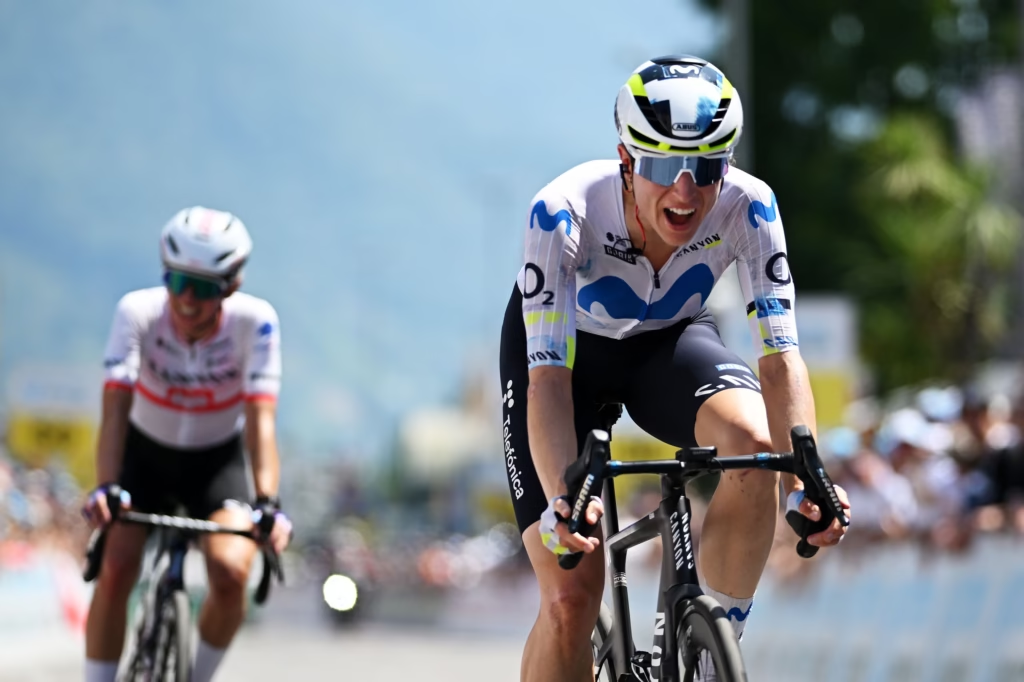
The Swiss Grand Départ gives Reusser a rare home Tour
For Reusser, the opening weekend carries more significance than an ordinary first two stages.
The Tour starts in Lausanne on Saturday 1 August before Stage 2 runs from Aigle to Geneva. Reusser therefore begins the biggest stage race in women’s cycling on home roads only weeks after winning the Tour de Suisse.
The Tour de France Femmes 2026 Grand Départ in Switzerland gives her an obvious emotional connection to the opening weekend, but there is a tactical benefit too. She knows the style of terrain and should be comfortable on the repeated short climbs around Lake Geneva.
There will inevitably be pressure to produce something immediately in front of a Swiss crowd. For Movistar, restraint may still be the better approach.
Reusser’s Tour is likely to be decided by accumulated time across nine stages rather than whether she takes yellow in Lausanne. The opening weekend provides opportunities, but it is also where crashes, splits and small mistakes can ruin a GC campaign before the terrain that best suits her arrives.
Her first task is to reach Dijon without losing anything unnecessary.
Stage 1 matters more to Reusser than its flat classification suggests
The Lausanne opener is officially classified as flat, but the route is much more awkward than that sounds.
The Swiss Grand Départ guide shows a stage containing repeated short climbs before the final rise towards Côte Saint-François in Lausanne. It is not the sort of opening day where the GC riders can simply sit anonymously behind a sprint train until the final kilometre.
That suits Reusser better than a completely flat sprint.
She does not need to try to beat Lorena Wiebes in a conventional bunch finish, but her power gives her options if the race becomes selective or a strong group forms late. Reusser is capable of contributing to that sort of race rather than simply surviving it.
The bigger consideration is risk. Opening stages are nervous because every team still has something to protect and there is no established hierarchy in the bunch.
If the stage naturally becomes selective, Reusser should be near the front.
She does not need to force it.
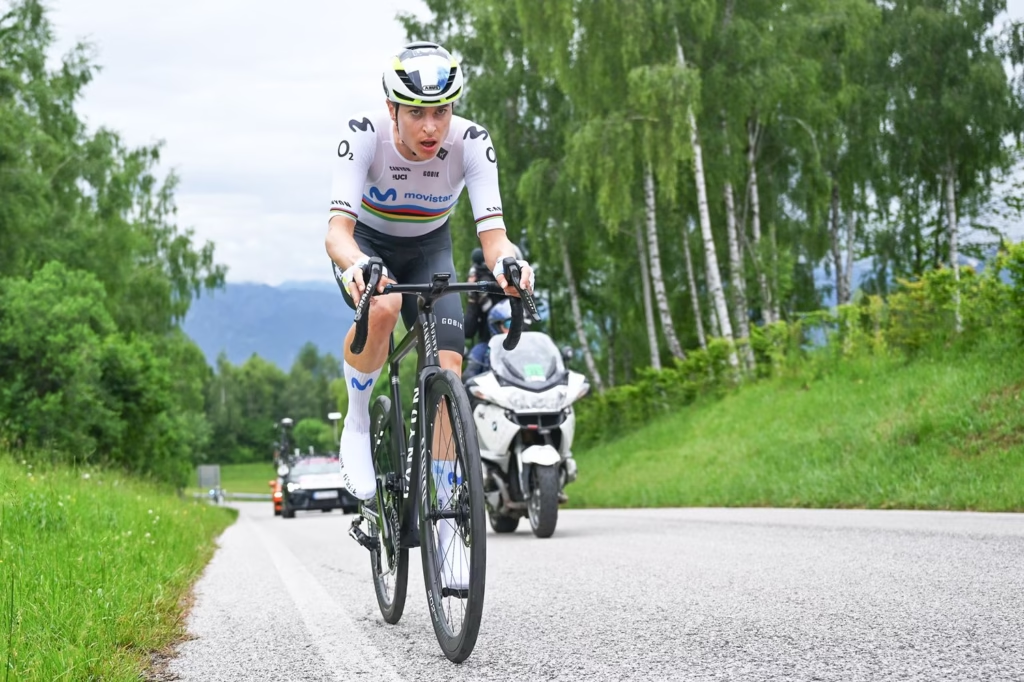
Aigle to Geneva is another day for control rather than heroics
Stage 2 gives Reusser another day on home roads before the race heads into France.
Aigle to Geneva contains enough climbing to make positioning important, but it should not create the sort of sustained mountain selection that decides the Tour. For Reusser, it is another opportunity to exploit her ability to move easily on rolling terrain without spending energy unnecessarily.
Her power means she can often maintain position more economically than a lightweight climber when the roads are fast and exposed.
Movistar still should not confuse that strength with an invitation to put her in the wind.
If Reusser reaches France on the same time as Demi Vollering, Pauline Ferrand-Prévot, Anna van der Breggen and the other major favourites, the Swiss opening has done exactly what she needs.
Stage 3 is the first meaningful GC climbing test
Geneva to Poligny provides a more useful indication of whether Reusser’s yellow jersey ambitions are realistic.
The stage includes the Col de la Faucille, Côte de Lajoux and Col de la Savine before the race continues towards Poligny. None is equivalent to what awaits later on Mont Ventoux, but the cumulative climbing is enough to begin exposing riders whose GC positions exist mainly because the race has not yet become difficult.
For Reusser, the important thing is how she handles those climbs rather than whether she gains time.
If Vollering, Ferrand-Prévot or another major contender accelerates and Reusser immediately loses contact, the Dijon time trial becomes partly about recovering losses.
If she remains comfortable with the main group, the same time trial becomes an opportunity to put those riders under pressure.
That distinction changes her whole Tour.
The clock is most useful when Reusser reaches it from a position of strength.
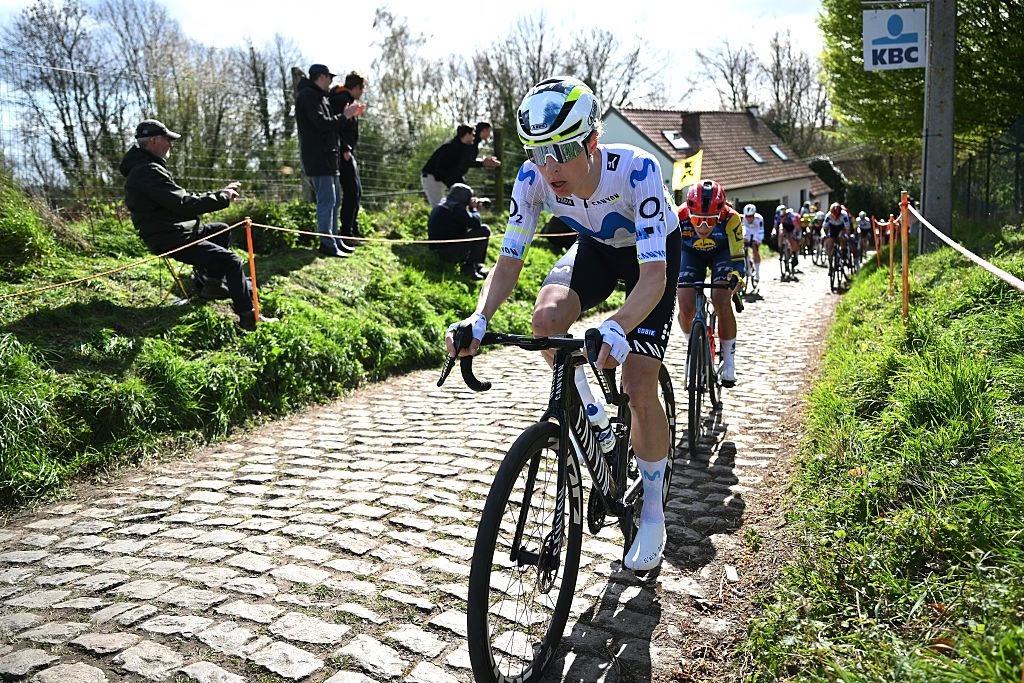
Dijon is the stage Movistar should build around
The 21km individual time trial from Gevrey-Chambertin to Dijon is the most obvious point in the race for Reusser to take control.
Our look at the Tour de France Femmes 2026 time trial contenders has Reusser as the safest favourite because she combines elite time trial power with enough climbing ability for a course that is not simply a flat straight-line test.
Her recent Tour de Suisse offers the clearest form evidence. Reusser took yellow in the time trial before going on to secure the overall victory, turning what could have been a specialist stage win into control of the whole race.
The Tour’s 21km test is not long enough for her to create enormous gaps merely by being slightly better than everyone else.
She needs to treat it as a stage win opportunity and a GC attack at the same time.
Every second gained in Dijon becomes something her rivals must recover later.
How much time can Reusser realistically gain?
That depends on the rider she is measured against.
Vollering is a very strong time triallist herself, so Reusser cannot assume Dijon automatically provides a minute or more. Van der Breggen also has the engine and technical ability to keep the damage controlled, while several younger riders are increasingly competitive against the clock.
The gaps become more interesting against riders whose strengths are concentrated further towards climbing.
Reusser does not need one enormous advantage to change the race. Twenty seconds on one rival, 40 on another and more than a minute on somebody else can completely reshape how the second half of the Tour has to be ridden.
Instead of Reusser needing to attack climbers on terrain that favours them, they become responsible for recovering what she has already taken.
That is the position Movistar wants.
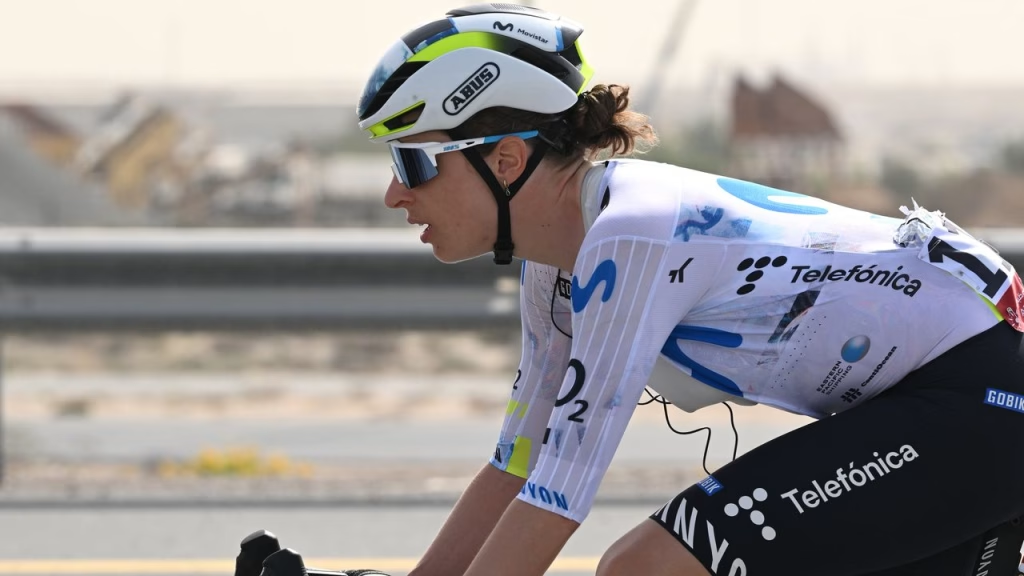
Yellow in Dijon would change Reusser’s race immediately
The most interesting scenario is Reusser taking the overall lead after Stage 4.
Four stages would have passed, but Mont Ventoux and the mountainous Nice finale would still be ahead. That means yellow would be valuable without being comfortable.
Until Dijon, Reusser can race as a challenger. Once she takes the jersey, Movistar becomes responsible for assessing attacks, controlling dangerous breakaways and protecting the race lead.
That costs energy.
It also puts pressure on the climbers.
Vollering, Ferrand-Prévot and the other GC contenders would know exactly how much time they need to recover. Instead of simply waiting to see who is strongest uphill, they would enter the mountains with a specific deficit.
The time trial can give Reusser yellow.
What happens afterwards determines whether it becomes a brief spell or the foundation of a Tour victory.
The Tour de Suisse changed the climbing conversation
This is why Reusser’s performance in Switzerland matters so much.
Winning the time trial was not the surprising part.
What she did afterwards was.
On the final mountain stage around Villars-sur-Ollon, Reusser entered with a narrow overall advantage and faced more than 3,000 metres of climbing. Rather than simply hanging on and hoping the time gained against the clock proved enough, she survived the repeated ascents and attacked late to win the stage as well.
The Tour de Suisse Women 2026 final stage is the strongest recent argument for taking her Tour GC challenge seriously.
It does not suddenly make Reusser the best pure climber in the race.
It does make the old assumption that rivals can simply wait for the mountains and remove her much less convincing.
They may still be able to do it.
They now have to demonstrate that they can.
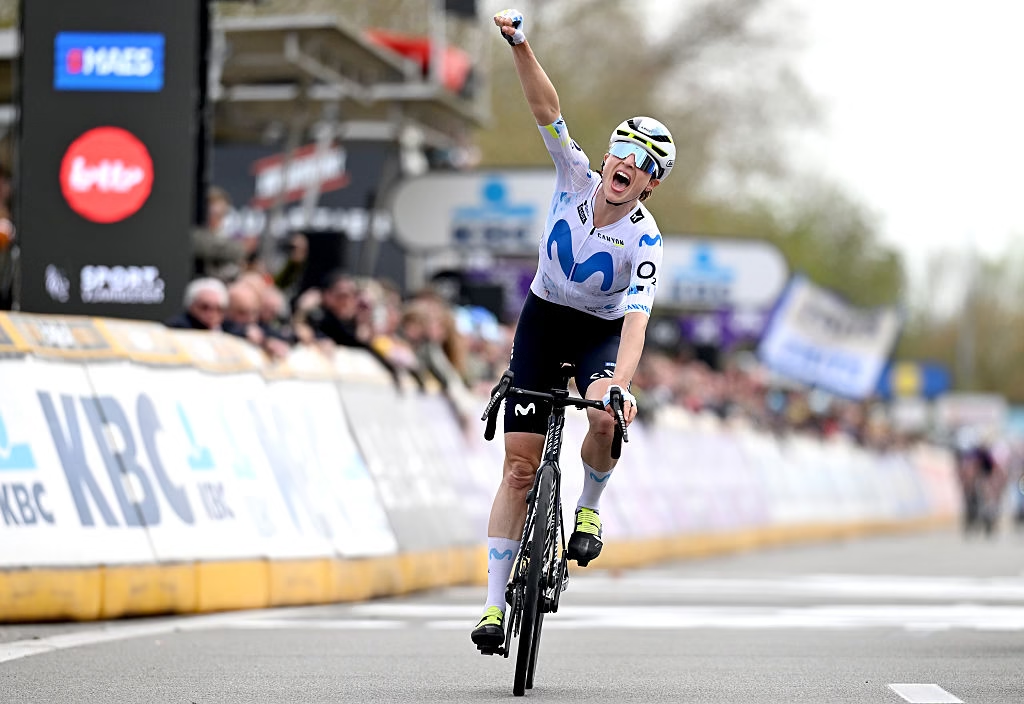 Photo Credit: Getty
Mont Ventoux remains the decisive test
Everything ultimately comes back to Stage 7.
The Mont Ventoux summit finish is the clearest place where the Tour moves beyond questions of all-round strength and asks the GC riders to climb for a sustained period at the highest level.
The final ascent is 15.7km at an average of 8.8%, reaching 1,910 metres.
For Reusser, this is likely to be the single most important stage of the race.
She does not necessarily need to climb with Vollering all the way to the summit. The amount of time she can afford to lose depends on what she has already gained.
If Reusser reaches Ventoux 45 seconds ahead, losing 20 seconds is fine.
If she loses two minutes, the time trial advantage disappears.
That is why her Tour is not really about whether she can win in Dijon.
It is about how effectively she can turn Dijon into protection against Ventoux.
Reusser does not have to become the strongest climber
There is a temptation to judge every GC contender by whether they can follow the best mountain rider directly.
Reusser’s route to yellow does not work like that.
Her strength is that she can gain time somewhere else.
If she takes 40 seconds in the time trial, she does not need to beat Vollering on Ventoux. She needs to finish less than 40 seconds behind her.
If the advantage is larger, the problem becomes easier.
This is what makes the 2026 Tour de France Femmes route particularly well suited to contrasting rider types. Dijon rewards power and aerodynamics, while Ventoux heavily favours climbing.
The eventual winner needs enough of both.
Reusser’s whole GC case is built around making her rivals use their strongest terrain to undo what she has already done on hers.
Stage 5 gives Reusser tactical options
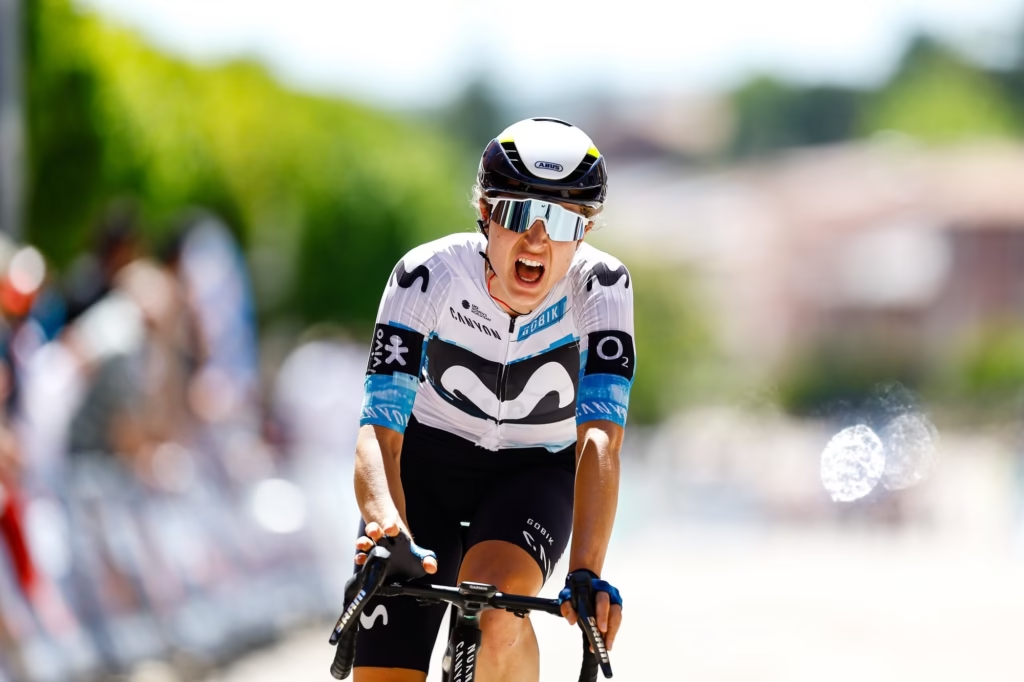
Mâcon to Belleville-en-Beaujolais arrives immediately after the time trial and creates one of the stages where Reusser’s broader skillset becomes useful.
If she is wearing yellow, Movistar may prefer a controlled day.
If she is behind, the terrain gives her another way to create pressure.
Rolling stages suit a rider capable of attacking from distance and maintaining a high speed when smaller climbers would rather sit behind a team. Reusser can use her power to force rivals into work on terrain where they might have expected to conserve energy before the mountains.
The decision depends on the classification.
What she must avoid is turning every stage into an opportunity to demonstrate strength.
Every hard effort has a cost, and Ventoux remains the place where any unnecessary fatigue will be exposed.
Stage 6 may be more dangerous than it looks
Montbrison to Tournon-sur-Rhône sits immediately before the Ventoux stage, which may make it tactically unstable.
GC teams will want to save riders.
Breakaway specialists will know a huge mountain day is coming.
Teams without a rider for yellow may see it as one of their best remaining chances.
That could create a stage where control is difficult even if the route itself is not the hardest of the Tour.
Reusser’s ability to respond on rolling roads can be valuable, particularly if she is defending yellow, but Movistar should not allow its leader to become an extra domestique simply because she is powerful enough to chase attacks.
The team needs that strength one day later.
Movistar’s job is to protect Reusser’s unusual route to yellow
Building a Tour around Reusser requires a different strategy from building around a pure climber.
Movistar needs to keep her out of trouble through Switzerland, reach Dijon without losses and then maximise the stage where she has the clearest individual advantage.
After that, the priority changes.
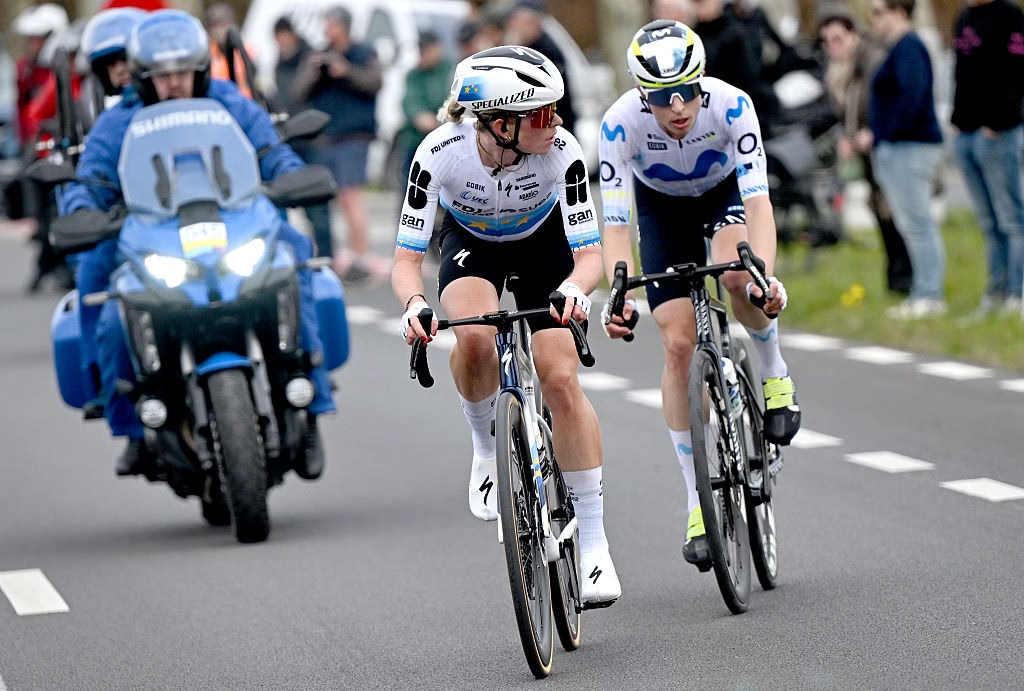
She needs enough climbing support to avoid being isolated when rivals begin attacking. Riders such as Liane Lippert become especially important because they can survive difficult terrain and cover moves without forcing Reusser to react herself every time.
This is where the Tour’s seven-rider team format matters. There is limited space for specialists, and a team cannot bring a domestique for every possible scenario.
If Reusser is genuinely racing for yellow after Dijon, Movistar’s tactical hierarchy needs to be clear.
Stage hunting becomes secondary to keeping her in contention.
Reusser is now Movistar’s central stage-race reference
The wider significance is that Reusser gives Movistar a proper Tour GC project again.
Annemiek van Vleuten won the race for the team in 2022 before retiring after the 2023 season. Finding another rider capable of approaching the Tour as a genuine overall contender was never going to be easy.
Reusser increasingly fills that role.
Her 2026 race programme was already structured around stage-race depth as much as her traditional time trial and Classics strengths. The Tour de Suisse confirmed the logic behind that programme.
She is no longer being developed as a rider who can pick off individual time trials while somebody else thinks about the general classification.
The classification is now the point.
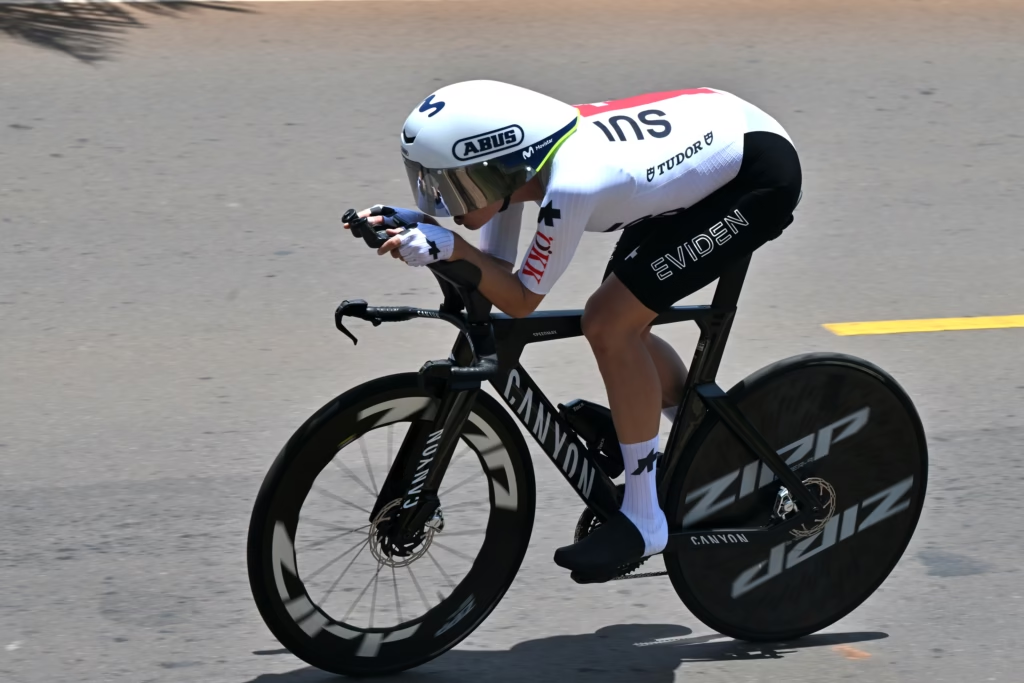 Photo Credit: Getty
The 2025 Tour gives her unfinished business
Reusser’s previous Tour never developed into the GC test Movistar wanted.
A crash early in the 2025 race compromised her campaign and she did not get the opportunity to show what a complete Tour built around her might look like.
That makes the 2026 route unusually well timed.
She gets a home Grand Départ.
She gets a meaningful individual time trial.
She arrives after winning her national stage race.
The second half of the Tour then contains enough climbing to give a definitive answer about whether she can defend a yellow jersey challenge through the biggest mountains.
There are few weaknesses in the route for Reusser to blame if the GC project does not work.
It is a demanding test, but a fair one.
Vollering remains the most important comparison
Of all Reusser’s rivals, Demi Vollering may be the most awkward.
She is strong enough against the clock that Reusser cannot count on building an enormous lead in Dijon, and strong enough in the mountains to take substantial time when the race reaches Ventoux.
That combination reduces Reusser’s room for error.
Against Vollering, a successful time trial may therefore be measured in tens of seconds rather than minutes.
Twenty seconds still matters.
Thirty changes how Vollering has to race.
Anything approaching a minute would transform the second half of the Tour.
Our Tour de France Femmes 2026 riders to watch puts both riders among the central GC names because they reach the same goal through different strengths.
That contrast could define the race.
 Photo Credit: Getty
Ferrand-Prévot asks a different question
Pauline Ferrand-Prévot presents a more straightforward tactical problem.
If the defending champion’s route to victory is built around the hardest climbing, Reusser wants her beginning that terrain from behind.
Dijon therefore becomes particularly valuable.
Reusser cannot afford to ride the time trial defensively simply because a podium is already within reach. Every second gained reduces the amount Ferrand-Prévot can afford to take in the mountains.
That does not guarantee anything.
A great mountain performance can erase a large time-trial deficit quickly.
But Reusser’s job is to make that performance necessary.
The more pressure she creates before Ventoux, the fewer tactical options the climbers have afterwards.
Reusser’s power helps even when she is not attacking
One of Reusser’s biggest strengths is that she can influence a stage without launching a conventional attack.
She can close gaps.
She can maintain position.
She can ride quickly through exposed sections.
She can help prevent a dangerous tactical situation from developing.
For a GC leader, that independence is useful. She does not need a teammate for every problem.
The danger is doing too much.
A rider capable of taking a long turn on the front can easily be tempted into spending energy a protected leader should save.
If Reusser is in yellow after Dijon, Movistar needs to protect her from that instinct as much as from rival attacks.
Her ability to work does not mean she should.
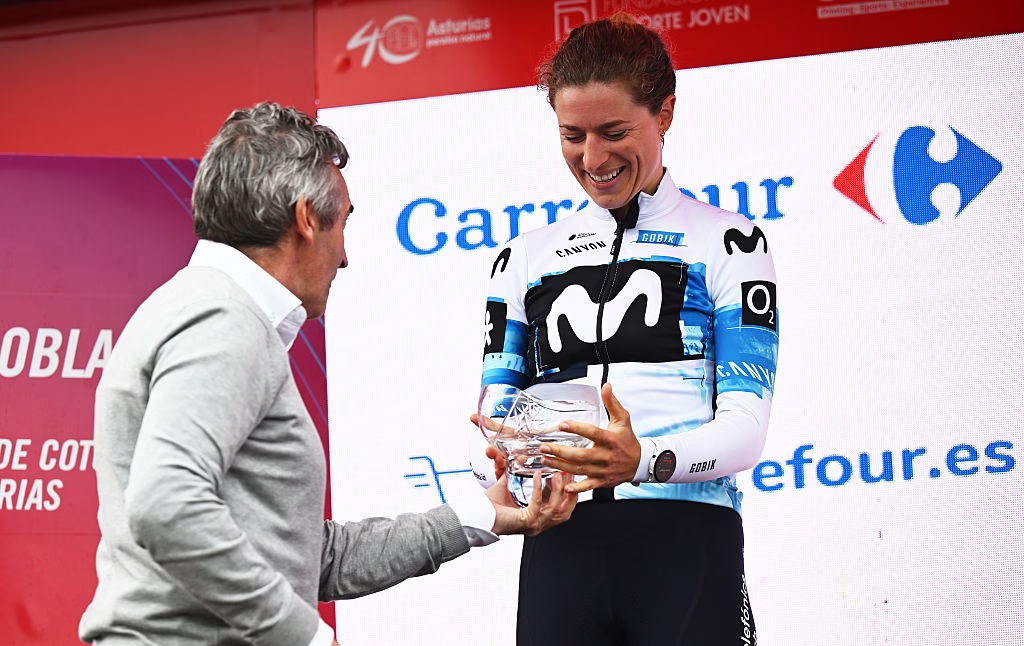
Nice means Ventoux cannot be treated as the finish line
Even surviving Mont Ventoux will not settle the race.
Stage 8 from Sisteron to Nice provides a transitional day before the 99.2km final stage around Nice, where repeated climbing and the Col d’Èze keep the general classification vulnerable until the end.
The Tour de France Femmes 2026 Nice finish guide shows why Stage 9 is a genuine GC stage rather than a ceremonial final procession.
For Reusser, that could be awkward.
A narrow lead is difficult to defend on a short stage where attacks can begin almost immediately and there is little flat road for Movistar to impose steady control.
At the same time, her power is useful on the descents and faster sections between climbs.
The race will still demand climbing.
It may also reward the rider best able to manage the transitions around it.
Could Reusser actually win the Tour?
Yes.
That answer is much easier to justify after the 2026 Tour de Suisse.
Reusser remains less proven than Vollering or Ferrand-Prévot on the hardest sustained mountain finishes, but she has now demonstrated that she can win a major stage race through a combination of time trialling and climbing rather than simply banking time against the clock and hoping it survives.
The 2026 Tour route gives that version of Reusser a credible pathway.
Reach Dijon without losing time.
Win or dominate the time trial.
Take an advantage into the second half.
Limit the damage on Mont Ventoux.
Defend through Nice.
None of those individual tasks requires an unrealistic transformation.
Putting all of them together over nine stages is the difficult part.
-
 Photo Credit: quentinphotographiebe
 -
 Photo Credit: Getty
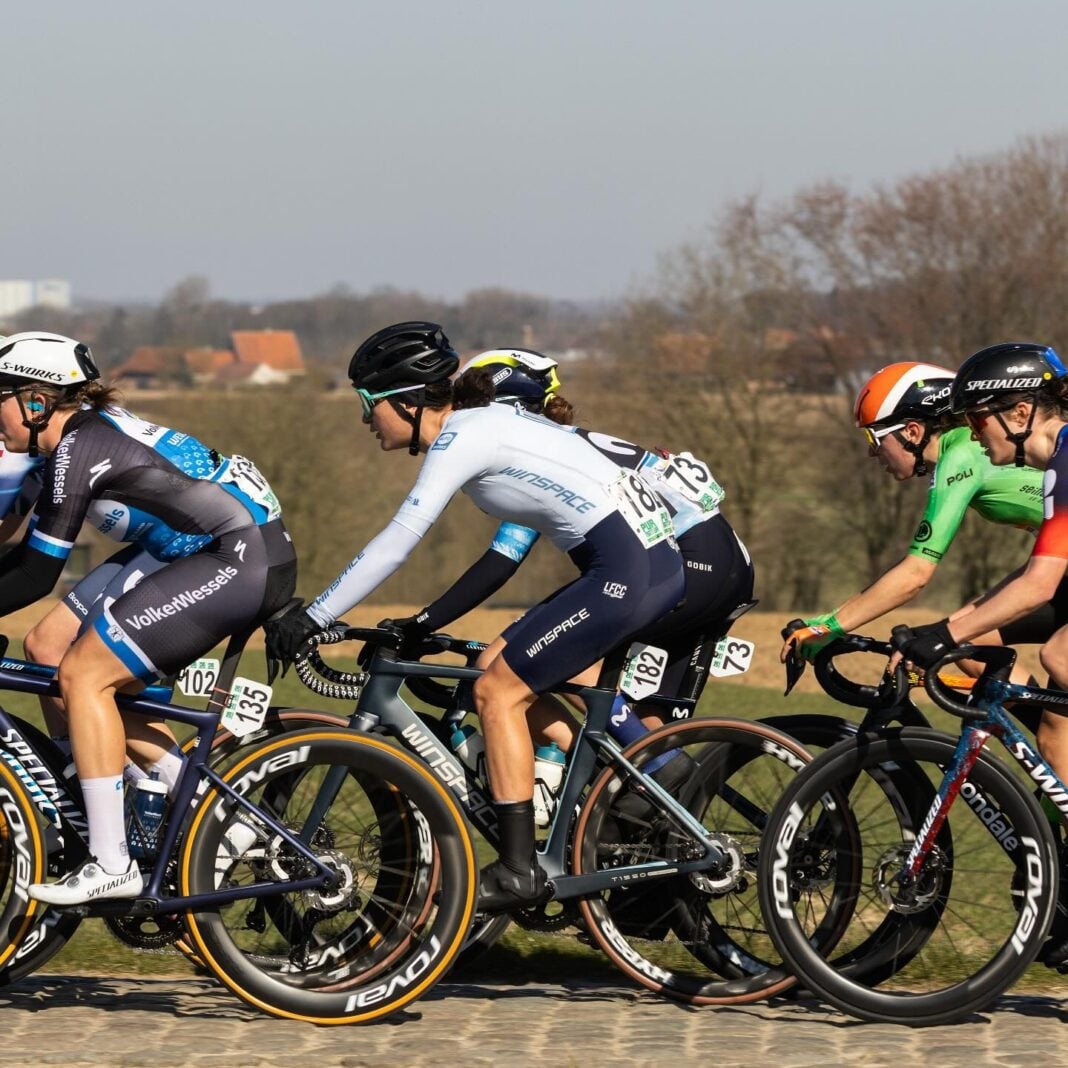

A podium should be a serious target, not an optimistic ceiling
Reusser is too strong, and the route suits her too well, for this Tour to be judged simply by whether she wins Stage 4.
A time trial victory would be significant.
A spell in yellow would be bigger.
The general classification has to be the central measure of her race.
Her Tour de Suisse mountain-stage victory showed that she can defend a race lead when the terrain stops favouring her, while the Tour’s own balance between Dijon, Ventoux and Nice rewards exactly the sort of all-round improvement she has made.
A podium is realistic.
Winning remains harder because several rivals have stronger records on sustained mountain finishes.
Reusser’s answer is that they all have to ride the time trial too.
The perfect Reusser Tour starts quietly
The best opening three stages for Marlen Reusser may be the ones where relatively little happens to her.
Stay upright in Lausanne.
Finish with the favourites in Geneva.
Pass the first climbing test towards Poligny without losing time.
Then attack Dijon.
That is where her Tour should begin to take shape.
If she leaves Stage 4 in yellow, the question becomes whether she can convert a time-trial advantage into enough protection for Mont Ventoux and the final weekend in Nice. If she leaves Dijon behind Vollering or Ferrand-Prévot despite racing on the terrain that most clearly favours her, the pathway to victory becomes much narrower.
The Swiss Grand Départ gives Reusser a home Tour. Dijon gives her the route’s clearest individual advantage. Her Tour de Suisse performance gives the GC project credibility.
The 2026 Tour de France Femmes will tell us whether Marlen Reusser remains one of the world’s best time triallists who can contend for stage races, or whether she has completed a more significant transition into a genuine Tour winner who happens to be exceptional against the clock.

