

Jonas Vingegaard goes into the Tour de France 2026 with one of the most intriguing profiles in the race. He is not arriving as an underdog, because a two-time Tour winner and reigning Giro d’Italia champion can never be treated that way. But he is no longer the rider with the clearest, cleanest path to yellow either.
Tadej Pogačar has set the tone through the spring and early summer, and the 2026 route gives the Slovenian plenty of places to attack. Yet Vingegaard’s case is still strong. The race has enough high mountains, enough late fatigue, and enough final-week brutality to keep him very much in the yellow jersey conversation.
The question is whether he can turn the Giro-Tour double into a winning platform rather than a burden. Winning the Giro d’Italia added another Grand Tour to his career and proved that the level is still there. The Tour de France, though, asks a different question: can he recover quickly enough, survive the early route traps, limit any time-trial damage, and then use the final Alpine block to put Pogačar under real pressure?
For wider race context, see our Tour de France 2026 full route guide, our Tour de France 2026 route analysis and our Tour de France 2026 GC favourites ranked.
 Photo Credit: Getty
What is Jonas Vingegaard’s 2026 form like?
Vingegaard’s 2026 form has to be judged through the Giro d’Italia. That was the major change in his Tour build-up. Instead of following a more traditional spring-to-Tour path, Team Visma | Lease a Bike set out a Giro-Tour plan, with Vingegaard aiming to add the Giro to his Tour and Vuelta titles before returning to France.
He achieved the first part. Winning the Giro confirmed that he still has the climbing depth, recovery and three-week durability that made him a Tour winner in 2022 and 2023. It also gave him a different kind of confidence. Vingegaard is no longer simply a rider trying to reclaim the Tour from Pogačar. He is a rider arriving after winning another Grand Tour.
That comes with a cost. The Giro is not a gentle preparation race. Even when a rider wins it well, the physical and mental load is significant. The Tour starts just over a month later, and there is a fine line between carrying Grand Tour form forward and arriving slightly dulled by the work already done.
That makes his form harder to read than Pogačar’s. Pogačar’s Tour de Suisse and Tour de Romandie performances provide a direct pre-Tour signal. Vingegaard’s Giro win provides a bigger but more complicated one. The level is clearly there. The question is freshness.
If he arrives in Barcelona recovered, the Giro may end up looking like the perfect platform. If he arrives a few per cent short, the Tour route may punish him early.
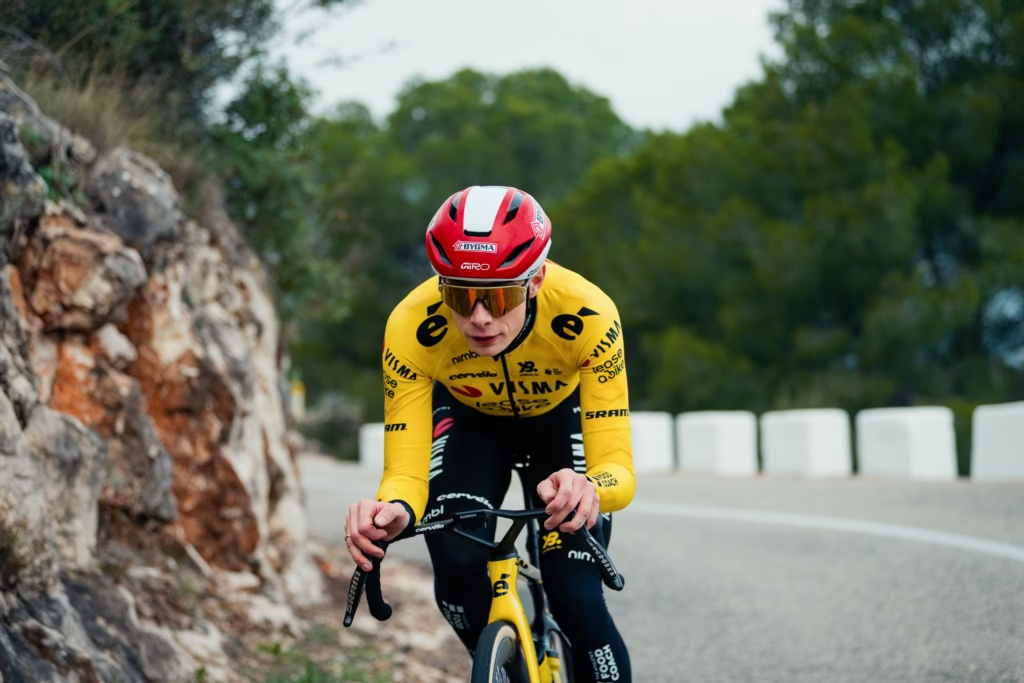
Why the 2026 route gives Vingegaard a real chance
The Tour de France 2026 route gives Vingegaard several reasons to believe he can win yellow again. It is not a flat race with one mountain week at the end. It is a race with early mountains, a hard middle section, a third-week time-trial and then a severe Alpine finish.
That structure suits a rider who gets stronger as the race goes on. Vingegaard has often been at his most dangerous when the Tour becomes a war of recovery, high mountains and repeated pressure. The 2026 route offers plenty of that.
The early danger comes quickly. Stage 1 is a team time-trial in Barcelona, stage 2 finishes on the Montjuïc circuit, stage 3 heads to Les Angles, and stage 6 finishes at Gavarnie-Gèdre after the Col d’Aspin and Col du Tourmalet. That is not a gentle opening week. Vingegaard needs to be ready immediately.
But the second and third weeks are where his Tour can really develop. Le Lioran, Le Markstein Fellering, Plateau de Solaison and the Lake Geneva time-trial all come before the final Alpine block. Then the race goes to Orcières-Merlette, Alpe d’Huez and Alpe d’Huez again via the Col de Sarenne.
That closing sequence is exactly the kind of terrain where Vingegaard can still win the Tour. If he reaches the Alps within range, the race remains very much alive.
For the key pre-Alps battlegrounds, see our guide to where the Tour de France 2026 can be won before the Alps.
The Barcelona team time-trial is an early problem to solve
The opening team time-trial in Barcelona could be one of the most important stages of Vingegaard’s race. It is only 19.6km, but on day one of the Tour, even a small gap can change the tone of the first week.
Team Visma | Lease a Bike can build a strong team time-trial unit. Edoardo Affini, Victor Campenaerts, Matteo Jorgenson and Bruno Armirail all bring power and structure, while Vingegaard himself is no passenger against the clock. On paper, this should not be a disaster stage.
The problem is the comparison. UAE Team Emirates-XRG should also be extremely strong in Barcelona, and Pogačar may have a squad capable of taking early time. If Vingegaard loses 20 or 30 seconds on the opening day, it is not race-ending. But it does give Pogačar more tactical freedom before the first mountains.
The team time-trial also creates a leadership test. Vingegaard needs protection, but he also needs a squad that can ride the stage cleanly, keep the group together and avoid sacrificing too many riders too early. It is a short stage with a large psychological weight.
For a fuller explanation of the format, see our Tour de France 2026 team time-trial guide and our Barcelona Grand Départ guide.
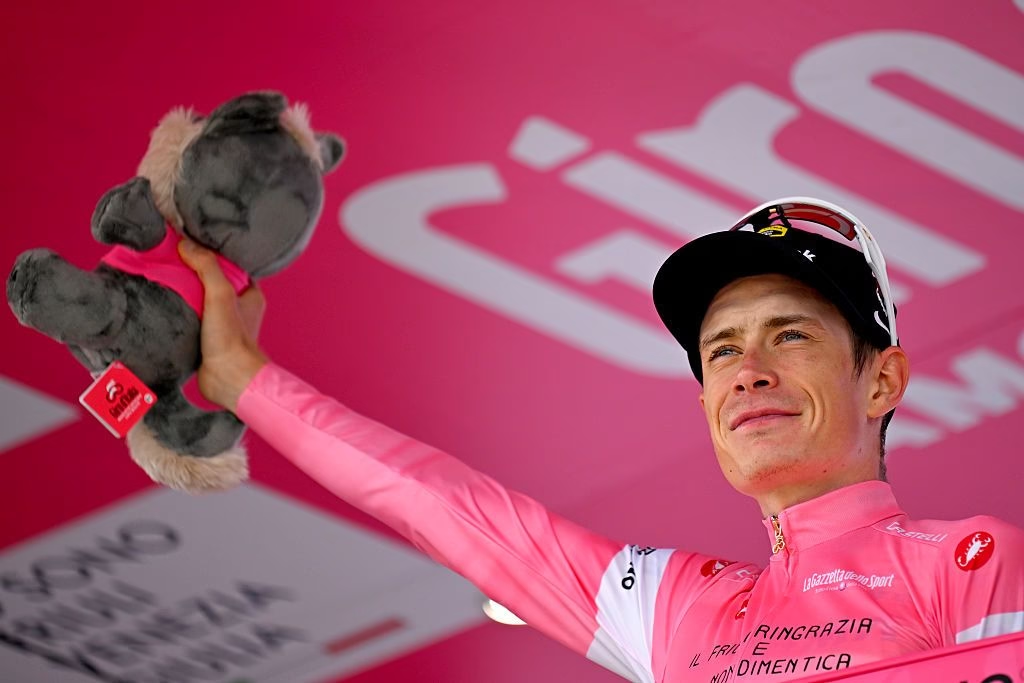
The Pyrenees are where he must stop Pogačar gaining control
Vingegaard’s first major test will come before the race has properly settled. Stage 3 to Les Angles and stage 6 to Gavarnie-Gèdre mean the Pyrenees arrive early, and that could define the tone of his Tour.
The key is not necessarily attacking Pogačar straight away. It is stopping Pogačar from gaining control too easily. If Vingegaard loses time in the Barcelona team time-trial and then concedes more at Les Angles or Gavarnie-Gèdre, he could find himself chasing from a long way out.
Gavarnie-Gèdre looks especially important. With the Col d’Aspin and Col du Tourmalet before the final climb, it is the first stage where UAE can really test the field. If Pogačar is stronger there, the race may already start to lean his way. If Vingegaard matches him, the Tour becomes much more open.
That is where Vingegaard’s Giro form becomes relevant. If he has recovered well, he should be able to handle a hard early mountain stage. If the Giro remains in his legs, the first week may expose it quickly.
Vingegaard does not need to win the Tour in the Pyrenees. He does need to make sure he does not lose it there.
The middle mountain stages suit his long-game style
Vingegaard’s best route to yellow may not be one explosive attack. It may be a slow accumulation of pressure.
That is why the middle mountain stages are so important. Le Lioran, Le Markstein Fellering and Plateau de Solaison are not simply warm-up acts for the Alps. They are stages where a rider’s team can be weakened, recovery can be tested and the GC picture can become much clearer.
Le Lioran is a stage where repeated climbs and awkward terrain can create damage before the final climb. It suits riders who can sustain pressure, manage positioning and respond to attacks without wasting energy.
Le Markstein Fellering could be another attritional day. It is the sort of stage where Vingegaard may not necessarily attack to win, but where Team Visma | Lease a Bike can try to reduce Pogačar’s support, force UAE to work and make the race less predictable.
Plateau de Solaison is the biggest of the pre-Alps tests. It is steep, late in the stage and late enough in the race to matter. If Vingegaard is close on GC before that stage, it could be one of his first real chances to make Pogačar uncomfortable.
For the broader mountain picture, see our Tour de France 2026 mountain stages ranked by difficulty and Tour de France 2026 summit finishes guide.
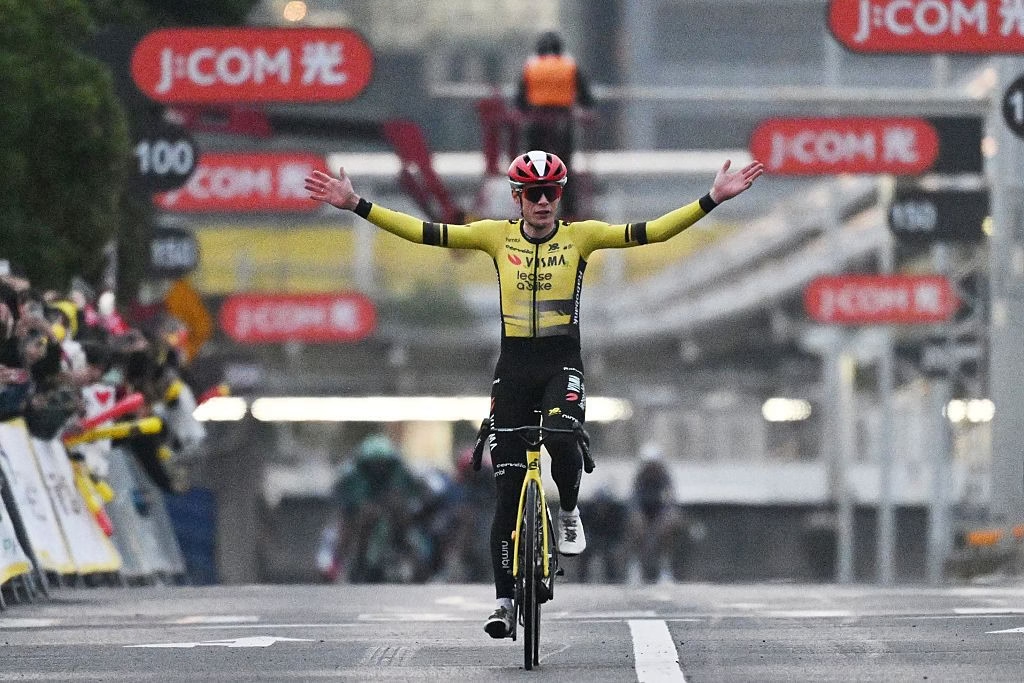
The individual time-trial is dangerous but not decisive on its own
Stage 16 brings the individual time-trial from Évian-les-Bains to Thonon-les-Bains. For Vingegaard, this is a stage that can either keep him in the race or put him under serious pressure before the Alps.
He has shown before that he can time-trial at an elite level when he is at his best. The 2023 Tour time-trial remains the clearest example of how devastating he can be when the form, pacing and course all align. But he has also had days against the clock where he has looked less comfortable, especially when compared with the very best specialists and with Pogačar at full strength.
The stage 16 position in the race is crucial. It comes after two weeks of accumulated fatigue and before the final mountain block. That should suit Vingegaard if his recovery is strong. The more tired the race becomes, the more his endurance can come into play.
But the Giro-Tour double complicates the equation. If Vingegaard carries even a small amount of fatigue into the Tour, an individual time-trial after two weeks may expose it. If he is fresh, it could work in his favour.
The time-trial probably will not decide the Tour alone. But it could decide what kind of race Vingegaard has to ride in the Alps. If he loses time, he has to attack. If he gains or holds steady, he can choose his moment.
The final Alpine weekend is his biggest opportunity
If Vingegaard is going to win the Tour de France 2026, the final Alpine weekend looks like the most obvious place to do it.
Stage 18 finishes at Orcières-Merlette. Stage 19 finishes on Alpe d’Huez. Stage 20 returns to Alpe d’Huez via the Col de Sarenne after a brutal high-mountain route that includes the Croix de Fer, Télégraphe and Galibier before the final climb.
That is Vingegaard territory. Long climbs, repeated altitude, accumulated fatigue and a brutal third-week stage are all conditions that can bring out his best. If he reaches that point within striking distance, he can still win the Tour.
The back-to-back Alpe d’Huez finishes also create an interesting dynamic. Stage 19 may not settle everything because stage 20 is even harder. A rider can attack on the first Alpe d’Huez stage, but the real damage may come the next day when legs are heavier and teams are more fragile.
Vingegaard’s ideal scenario is to reach stage 20 close enough that Pogačar has to respond rather than simply manage. If the gap is small, Team Visma | Lease a Bike can use multiple riders, long-range pressure and high-mountain fatigue to try to isolate UAE. If Pogačar already has a large lead, Vingegaard may be forced into a desperate attack.
For the final weekend, see our guide to why back-to-back Alpe d’Huez finishes could define the Tour de France 2026 and our Tour de France 2026 queen stage guide.
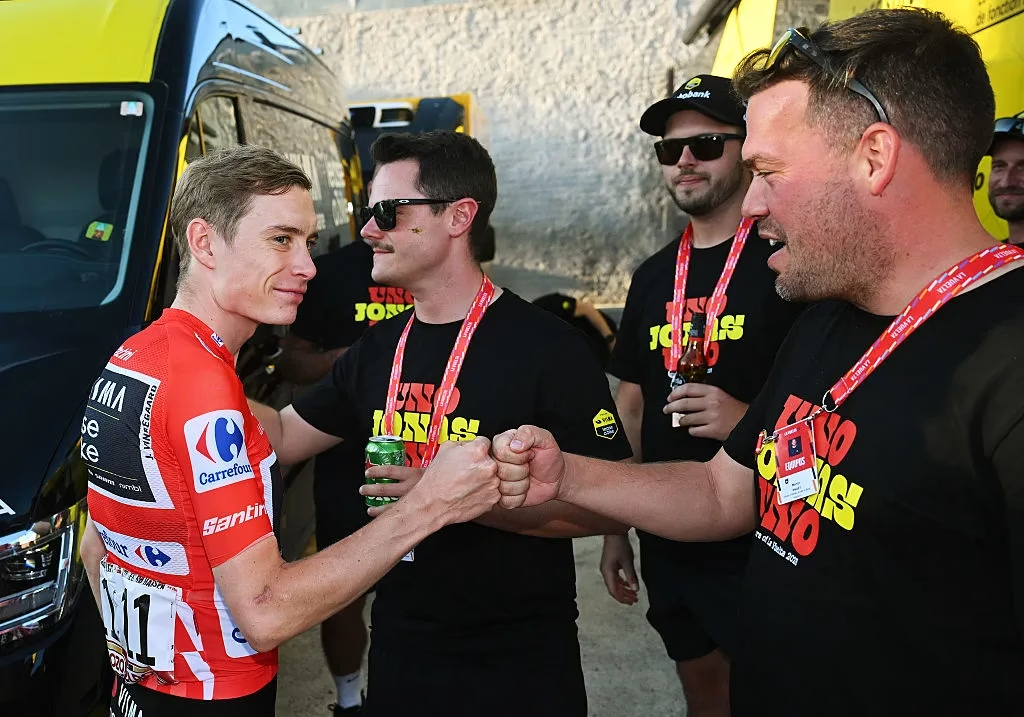
Losing Wout van Aert changes the support picture
Wout van Aert’s absence is a serious blow for Vingegaard. It does not remove his chance of winning the Tour, but it changes how Team Visma | Lease a Bike can race.
Van Aert is not a normal domestique. He can protect a leader on flat roads, control breakaways, position the team before climbs, survive deep into mountain stages, win stages himself, and act as a bridge rider in long-range attacks. Losing that kind of rider makes the squad less flexible.
The most obvious impact is on chaotic days. Barcelona, crosswind stages, hilly finishes and nervous transition stages all become harder without Van Aert’s presence. In a Tour where the first week is already dangerous, that matters.
The second impact is tactical. Vingegaard has used Van Aert as a key part of long-range pressure before. Without him, Team Visma | Lease a Bike still have strong riders, but they lose one of the most versatile weapons in the race.
That puts more responsibility on Matteo Jorgenson, Sepp Kuss, Bruno Armirail, Victor Campenaerts, Edoardo Affini and the rest of the selected team. They can still build a strong Tour squad. But the margin for error becomes smaller.
For a wider look at the support riders who could shape the race, see our Tour de France 2026 domestiques guide.
How Team Visma | Lease a Bike can win the race
Team Visma | Lease a Bike cannot simply wait for one mountain stage and hope Vingegaard rides away. Pogačar is too strong, UAE are too deep, and the route gives too many early opportunities for the race to tilt before the Alps.
Their best strategy is probably layered pressure. Stay close in Barcelona. Defend carefully through the early Pyrenees. Use the middle mountains to make UAE work. Keep Jorgenson and Kuss as climbing support for the hardest stages. Use Armirail, Campenaerts and Affini to protect Vingegaard through the flat and rolling days. Then arrive at the Alps with enough riders still effective to make stage 20 dangerous.
Jorgenson may be the most important support rider. He gives the team climbing depth, tactical intelligence and the ability to sit high on GC if needed. Kuss remains valuable in the high mountains, especially if the race becomes attritional. Campenaerts and Affini are important for the team time-trial and for keeping Vingegaard out of trouble on the road stages.
The Van Aert absence means others must cover more ground. Team Visma | Lease a Bike can still win the Tour, but they may need to be more precise. They cannot waste riders early, and they cannot allow UAE to control the race too comfortably.
The team’s best chance is to make the Tour a three-week endurance contest rather than a sequence of short Pogačar accelerations. The harder the race becomes across many days, the better Vingegaard’s chances look.
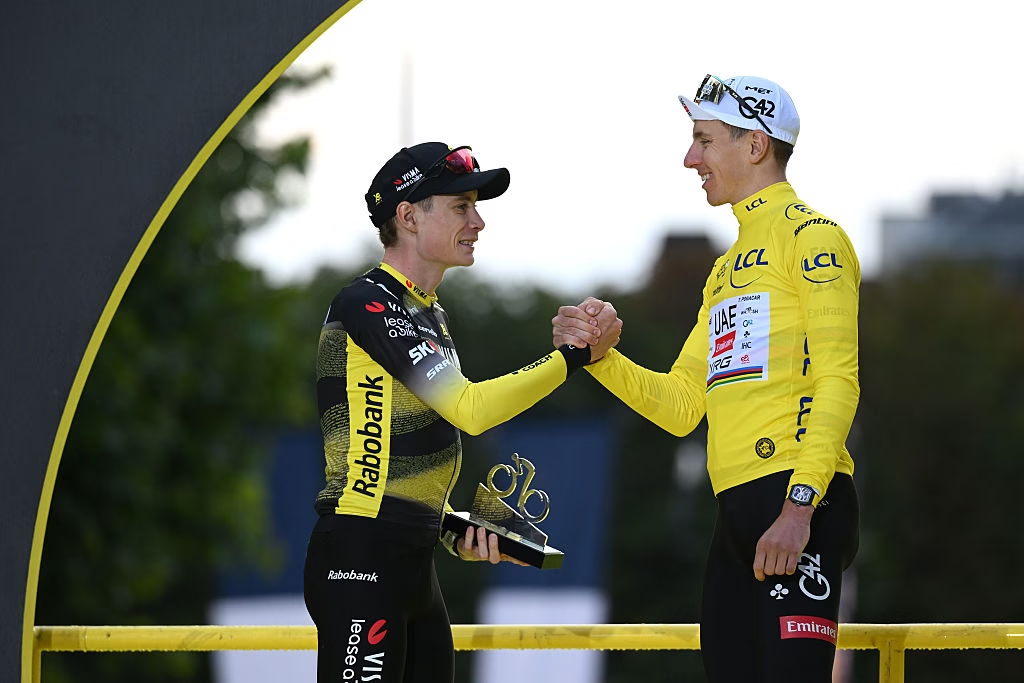 Photo Credit: Getty
How does Vingegaard compare with Pogačar?
Pogačar starts as the more complete and more explosive rider. He can take time in short finishes, hilly stages, time-trials, medium mountains and high mountains. He can win almost anywhere, and the 2026 route gives him repeated chances to do damage before the Alps.
Vingegaard’s advantage is narrower but still powerful. At his best, he is one of the few riders who can make Pogačar suffer on long climbs deep into a Grand Tour. He does not need to match Pogačar’s range across every kind of stage. He needs to keep the gap manageable until the race reaches terrain where his endurance and climbing depth can become decisive.
The Tour may come down to which version of the race develops. If the route becomes a scattered fight across many different stage types, Pogačar’s versatility is a huge weapon. If the race becomes a high-mountain endurance battle, Vingegaard’s chances rise.
That is why the early stages matter so much. Vingegaard cannot afford to give Pogačar a comfortable buffer before the final week. He needs to stay close enough that Pogačar still has to race hard in the Alps.
For the other side of the rivalry, see our analysis of Tadej Pogačar at the Tour de France 2026.
Who else affects Vingegaard’s chances?
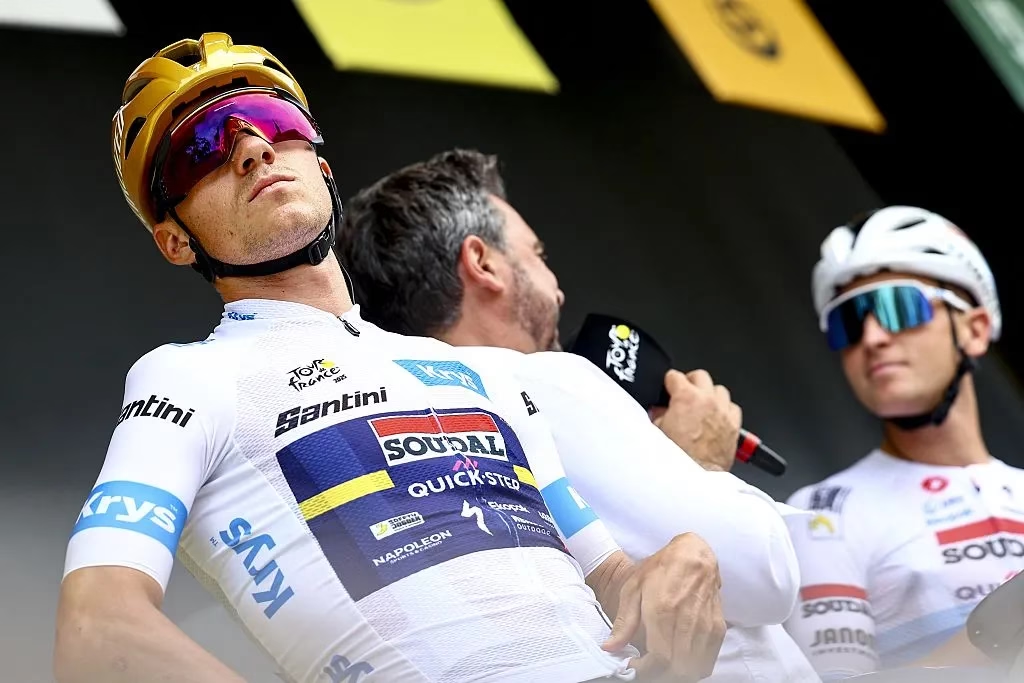
Remco Evenepoel is the obvious third force because the time-trial elements suit him. If Evenepoel is close after the opening week, he can make the stage 16 time-trial a major pressure point. That matters for Vingegaard because he may be fighting on two fronts: limiting Pogačar in the hills while making sure Evenepoel does not take too much time against the clock.
Florian Lipowitz and Paul Seixas are also important because they can affect the rhythm of the race. They may not start as equal favourites to Pogačar or Vingegaard, but if they are close on GC, they can force teams to chase, follow moves and change the shape of mountain stages.
Isaac del Toro is another rider to watch, especially given UAE’s strength. If he is selected, he can be both support and a tactical problem for rivals. A strong UAE rider sitting high on GC gives Pogačar another layer of protection.
Richard Carapaz, Enric Mas, Antonio Tiberi, Max Poole and other climbers can also make the race harder. They may not all be direct yellow jersey threats, but repeated attacks from riders like that can drain support teams and create the kind of chaos that decides a Tour.
For the wider contender picture, see our Tour de France 2026 GC favourites ranked and Tour de France 2026 young riders to watch guides.
What could go wrong for Vingegaard?
The first risk is Giro fatigue. Winning the Giro d’Italia is a statement, but doing the Giro-Tour double is one of the hardest projects in cycling. Vingegaard may arrive with the level to win, but the question is whether he can sustain it all the way to Alpe d’Huez.
The second risk is losing time too early. The Barcelona team time-trial, Montjuïc, Les Angles and Gavarnie-Gèdre all come before the race has fully settled. If Pogačar gains time early, Vingegaard may be forced into a more aggressive race than he wants.
The third risk is the absence of Van Aert. Team Visma | Lease a Bike still have depth, but they lose a rider who can cover multiple roles in one race. That makes positioning, chase control and long-range tactical setups harder.
The fourth risk is the individual time-trial. If Vingegaard is slightly fatigued after the Giro, stage 16 could become a problem. A bad ride there would leave him needing to attack in the Alps from a less comfortable position.
The fifth risk is that Pogačar simply has too many ways to win. Vingegaard may be stronger on the hardest Alpine day and still lose time elsewhere. To win yellow, he cannot just be excellent on stage 20. He has to be solid across every type of stage before then.
What has to happen for Vingegaard to win yellow?
Vingegaard needs five things.
First, Team Visma | Lease a Bike must get through Barcelona without serious damage. The team time-trial does not have to be a victory, but it cannot hand Pogačar a major early advantage.
Second, Vingegaard must match Pogačar through the early Pyrenees. Les Angles and Gavarnie-Gèdre are not optional tests. If he is already losing time there, the race becomes much harder.
Third, the Giro cannot leave him flat in the second week. The middle mountain stages will show whether he has recovered fully. If he improves as the race goes on, his chances rise sharply.
Fourth, he needs to survive the stage 16 time-trial. Even a small loss is manageable if he is close overall. A large one would force him into a high-risk Alpine strategy.
Fifth, he needs the final Alpine block to become genuinely hard. Not just a final-climb sprint, but a race of attrition, altitude, team pressure and repeated climbing. That is where he can still beat Pogačar.
If all five things happen, Vingegaard can win the Tour de France 2026. If two or three of them fail, Pogačar’s route to yellow becomes much clearer.
-
 Photo Credit: Getty
Can Jonas Vingegaard win the Tour de France 2026?
Yes, Jonas Vingegaard can win the Tour de France 2026, but he needs the race to unfold in a specific way.
He is not the most versatile favourite. That is Pogačar. He is not the rider with the cleanest build-up either, because the Giro-Tour double creates uncertainty. But he remains the rider most capable of beating Pogačar in the terrain that usually decides the Tour: long climbs, high fatigue and brutal third-week mountain stages.
The route gives him a genuine chance. The final Alpine block is hard enough to overturn earlier gaps, and stage 20 over the Sarenne route to Alpe d’Huez could be one of the most decisive Tour stages in years. If Vingegaard reaches that weekend within one minute of yellow, the race is still open.
The concern is how much happens before then. Pogačar can gain time in Barcelona, the Pyrenees, the Massif Central, the Vosges, the time-trial and even on short hilly finishes. Vingegaard cannot afford to wait too long. He needs to be close, active and supported before the Alps.
So the answer is yes, he can win yellow again. But he probably needs a harder, more attritional Tour than Pogačar would prefer. If the race becomes a three-week endurance contest, Vingegaard is still dangerous. If it becomes a race of repeated Pogačar accelerations across varied terrain, he may find himself chasing the Tour rather than controlling it.
Verdict
Vingegaard’s Tour de France 2026 chances are real, but conditional. His Giro d’Italia victory proves he has the level, and the route gives him enough mountains to believe in another yellow jersey. The final Alpine block, especially the Sarenne route to Alpe d’Huez, is the kind of terrain where he can still win the race.
The obstacles are just as clear. He has to recover from the Giro, cover Pogačar’s early route opportunities, survive the Barcelona team time-trial, manage the stage 16 time-trial and race without Wout van Aert’s support. That is a lot to solve.
If Vingegaard reaches the final weekend close to Pogačar, he can win the Tour de France 2026. If he arrives there already too far behind, even the hardest Alpe d’Huez finale may not be enough.

