
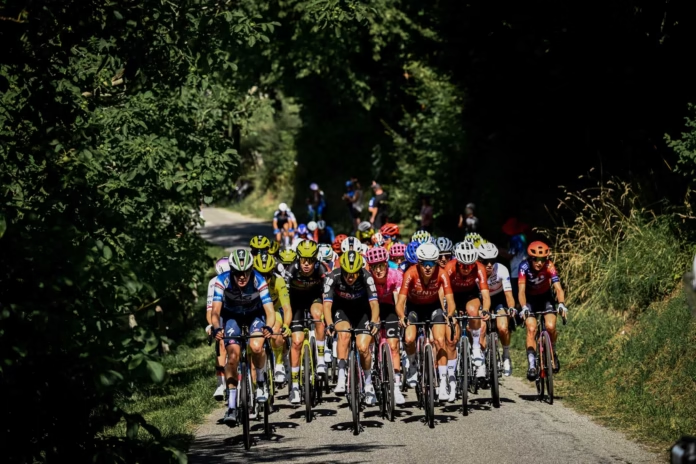
The Tour de France Femmes 2026 begins in Lausanne on Saturday 1 August, with Stage 1 offering an immediate battle for the first yellow jersey on a selective circuit around the Swiss city.
For UK viewers, the neutralised start is scheduled for 13:15 BST, with racing expected to begin at around 13:40 BST. TNT Sports and HBO Max coverage is scheduled from 14:30 BST, while the finish should come between roughly 16:44 and 17:02 BST depending on the race speed.
That means anyone mainly interested in the decisive part of the stage should aim to be watching by around 16:00 BST. The final 40km include the last categorised climb before the race heads back towards Lausanne, while the closing kilometres lead into the uphill Côte Saint-François finish where the first stage winner and yellow jersey will be decided.
For the wider broadcast picture across all nine stages, see our Tour de France Femmes 2026 UK viewing guide.
What time does Tour de France Femmes Stage 1 start in the UK?
The neutralised start of Tour de France Femmes Stage 1 is scheduled for 13:15 BST on Saturday 1 August 2026.
Lausanne is one hour ahead of the UK, so the local start time is 14:15 CEST. The peloton then completes the neutralised section before reaching kilometre zero at around 13:40 BST, when competitive racing begins.
For UK viewers, the key timings are:
Neutralised start: 13:15 BST
Expected race start: around 13:40 BST
TNT Sports and HBO Max coverage: from 14:30 BST
Final 40km: approximately 15:49 to 16:02 BST depending on race speed
Final 20km: approximately 16:19 to 16:34 BST
Expected finish: approximately 16:44 to 17:02 BST
The scheduled television window runs comfortably beyond the expected finish, allowing time for the first yellow jersey presentation afterwards.
What channel is Tour de France Femmes Stage 1 on in the UK?
Tour de France Femmes Stage 1 will be shown live in the UK on TNT Sports, with streaming available through HBO Max.
The live programme is scheduled to begin at 14:30 BST on Saturday, by which point the race should already be under way but still well before the important final hour.
HBO Max is the streaming option for viewers watching on a phone, tablet, laptop, smart television or other supported device, while TNT Sports provides the traditional linear television route.
For 2026, HBO Max has replaced the old Discovery+ habit for UK cycling viewers, with TNT Sports cycling coverage now available through the newer streaming platform.
Is Tour de France Femmes Stage 1 on ITV?
No. UK viewers should plan around TNT Sports and HBO Max rather than ITV or ITVX for live coverage of Stage 1.
The broader change to Tour broadcasting in 2026 means Warner Bros. Discovery’s platforms are now the main live route for British viewers. Anyone wanting to follow the full race should therefore use TNT Sports or HBO Max rather than relying on the free-to-air arrangement that previously existed around the Tour.
Our women’s cycling TV guide hub brings together the current viewing information for the Tour de France Femmes and the rest of the women’s calendar.
What time should I start watching Stage 1?
If you want to watch the race develop rather than simply catch the finish, 14:30 BST is the obvious starting point because that is when scheduled UK television coverage begins.
By then, the early breakaway should be established and the race will be moving towards the first important climbing section. That gives enough time to see how aggressively the teams approach a stage officially labelled flat but considerably more selective than a conventional opening sprint.
If you are short on time, 16:00 BST is the more important marker.
By then, the race should be approaching or have recently passed the Côte de Vulliens with around 41km remaining. From that point the peloton begins working back towards Lausanne, and the tactical question becomes much clearer: have the sprinters survived comfortably, or have the puncheurs succeeded in turning Stage 1 into something harder?
If you only want the final showdown, aim for 16:20 BST at the latest. The race should then be inside the final 20km on most official schedule scenarios, leaving enough time to see the battle for positioning before the Côte Saint-François.
Leaving it until 16:40 risks joining after the decisive moves have already begun if the race is running ahead of schedule.
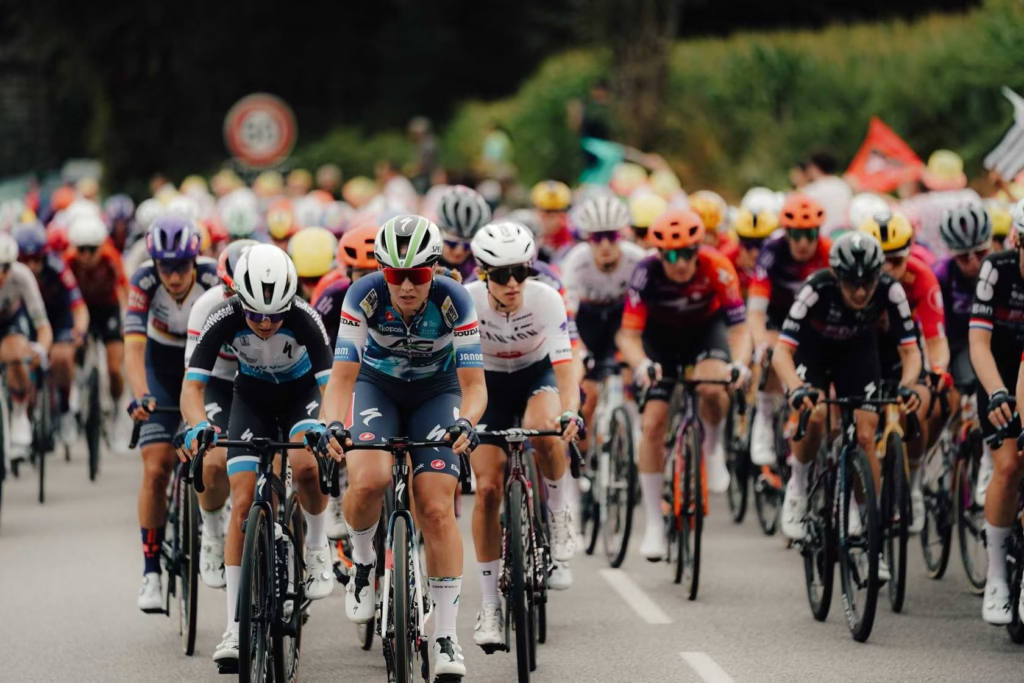 Photo Credit: A.S.O./Thomas Maheux
When will Tour de France Femmes Stage 1 finish?
The expected finish window is roughly 16:44 to 17:02 BST.
That variation comes from the different race-speed assumptions used in the official timetable, so it is better to treat the arrival as a window rather than one fixed time.
At the fastest predicted pace, the riders should reach Lausanne at around 16:44 BST. A more moderate schedule pushes the finish into the 16:50s, while the slowest expected scenario takes it to roughly 17:02 BST.
Weather, attacks, crashes and the way the peloton handles the climbing can all shift those timings. Anyone mainly interested in the final kilometres should therefore be watching before the earliest expected arrival rather than working backwards from a single finish time.
Where is Tour de France Femmes Stage 1?
Stage 1 starts and finishes in Lausanne, Switzerland, as the Tour begins with a Swiss Grand Départ.
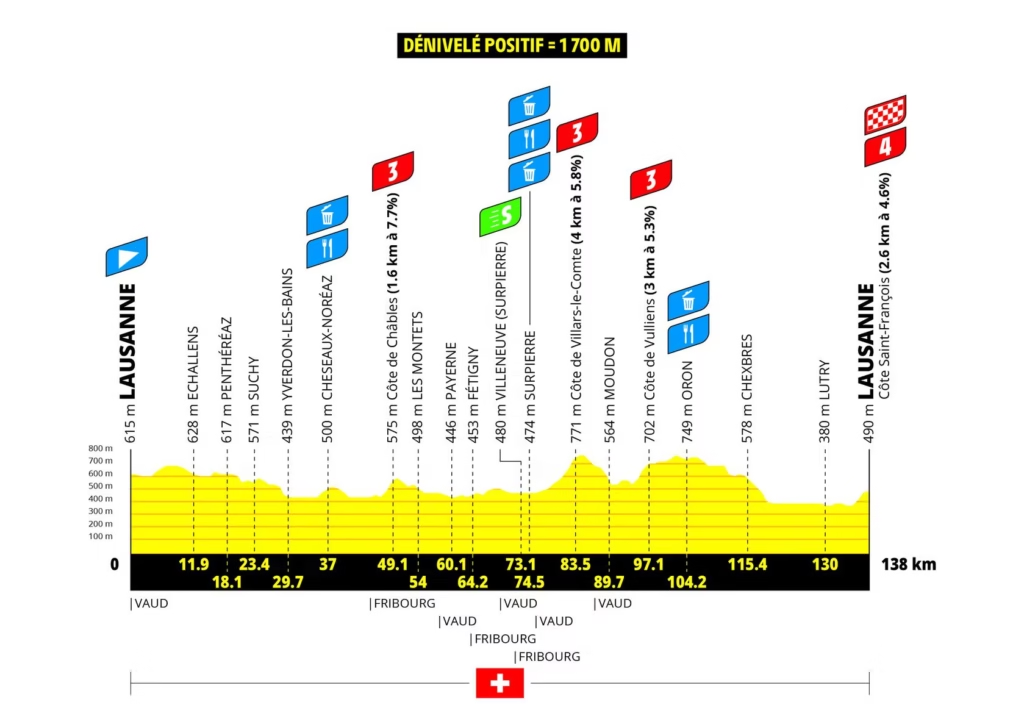
The opening stage covers around 137km and is officially classed as flat, but that description understates how demanding it could become. Rather than following a conventional flat route towards a sprint, the peloton faces repeated climbing before returning to Lausanne for an uphill finish.
For a wider look at the opening weekend, our Tour de France Femmes 2026 Grand Départ guide covers Lausanne, Aigle and Geneva, while the dedicated Lausanne Stage 1 guide goes into the start, finish and best roadside viewing locations.
Stage 1 includes the Côte de Châbles, Côte de Villars-le-Comte and Côte de Vulliens before the final climb of the Côte Saint-François into Lausanne. Those ascents make this much more selective than a conventional opening sprint stage.
Why the final 40km are the part to watch
The Côte de Vulliens is the final categorised climb before the race turns back towards Lausanne, and that makes it the clearest point for teams trying to weaken the pure sprinters.
The climb itself is not brutal enough to guarantee separation. What matters is how it is raced.
Lorena Wiebes can survive this kind of gradient, particularly if SD Worx-Protime are able to control the tempo. But teams built around Marianne Vos, Noemi Rüegg, Célia Gery, Kimberley Le Court-Pienaar or other strong all-round finishers have an incentive to make the stage as difficult as possible before the final climb.
If the pace over Vulliens is relatively steady, the advantage remains with the fastest sprinters.
If attacks repeatedly force them to chase and recover, the finishing hierarchy changes.
That tactical battle should become clear during the final hour.
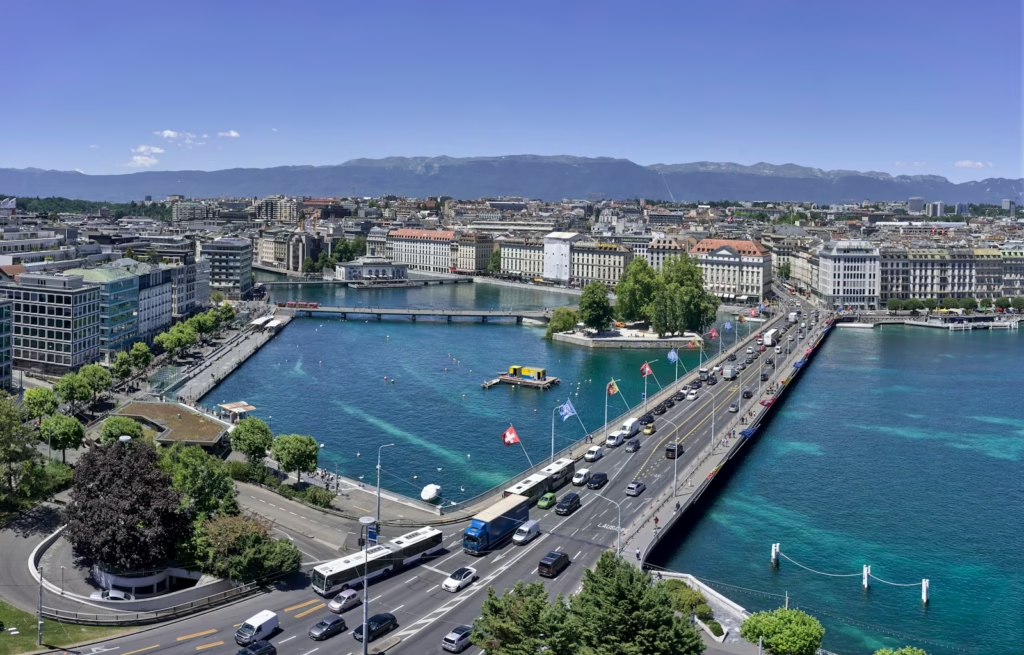
The race reaches Lake Geneva before the final climb
After the last categorised climbing, the race heads towards Lake Geneva before beginning the final approach into Lausanne.
This section matters because it gives teams some time to reorganise after the hills, but it also means the fight for position intensifies rapidly once the peloton reaches the lakeside roads.
A sprinter who has survived the climbing still needs teammates around her.
A GC contender who has spent the day safely in the bunch still needs to avoid being trapped behind a split.
A puncheur hoping to attack needs to start the final climb close enough to the front to use the gradient rather than spend the opening section overtaking riders.
The final kilometres therefore become a battle for position before they become a battle for victory.
Côte Saint-François decides the first yellow jersey
The closing climb of the Côte Saint-François gives Stage 1 its defining character.
It is not long enough or steep enough to become a GC mountain, but it is substantial enough to disrupt a normal bunch sprint after a day of repeated climbing.
The strongest sprinters want the approach controlled. The puncheurs want the opposite.
A smooth, fast tempo increases Wiebes’ chances because it prevents attacks from developing and allows her to use her raw finishing speed.
Repeated accelerations help Vos, Rüegg, Gery and riders with more climbing depth. A finish already reduced by the previous hills becomes even more interesting because fewer teammates remain to keep the final climb organised.
There is also no reason for teams to treat the stage conservatively. The winner gets the first yellow jersey of the Tour, making the uphill finish one of the most valuable early opportunities of the entire race.
The broader Tour de France Femmes 2026 route guide shows why Lausanne is only the beginning of a race that becomes progressively harder through Dijon, Mont Ventoux and Nice.
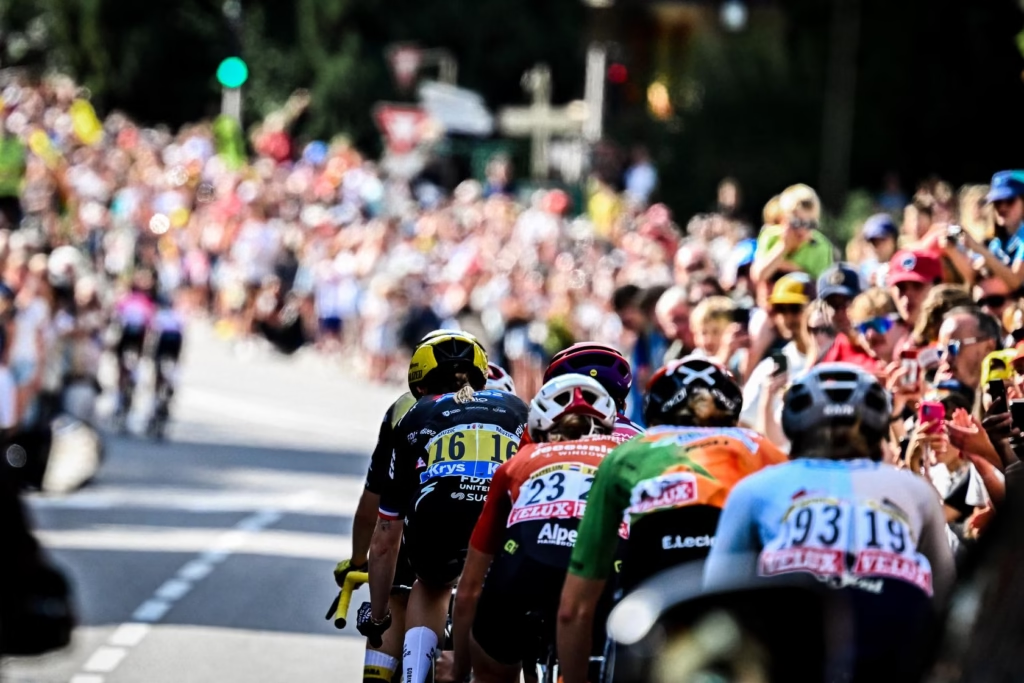
Who should you watch in the Stage 1 finale?
Lorena Wiebes remains the obvious reference if the main group stays large. The uphill finish makes her job more difficult, but it is not automatically too hard, and very few riders can match her if she reaches the final few hundred metres still in a good position.
Marianne Vos has perhaps the widest range of winning scenarios. She can survive a harder stage than most pure sprinters and still has the speed to finish from a reduced group.
Noemi Rüegg is especially interesting because the race begins on home roads. The Swiss rider has enough climbing strength to benefit if the final hour becomes selective and enough finishing speed to turn that survival into a genuine shot at yellow.
Célia Gery becomes more dangerous as the stage gets harder, while Kimberley Le Court-Pienaar has the versatility to survive a selective race and still influence the finale.
Lotte Kopecky is another important tactical variable. Her role depends partly on how SD Worx-Protime approach the stage around Wiebes, but the uphill finish is exactly the sort of terrain where Kopecky herself can become a threat if the race breaks open.
The GC favourites also need to stay near the front. Demi Vollering, Pauline Ferrand-Prévot, Paula Blasi, Kasia Niewiadoma-Phinney and Marlen Reusser are unlikely to regard Lausanne as the place to decide the Tour, but none can afford to begin it by losing unnecessary time.
Can the GC change on Stage 1?
Probably not dramatically, but Stage 1 is not ceremonial.
The final climb is unlikely to create large differences between the strongest GC contenders, yet there are several places where a rider can still be caught out.
A split after one of the climbs, a crash during the return towards Lausanne or poor positioning at the bottom of the final ascent can produce small gaps that nobody wants to concede on the first afternoon.
The bigger concern is energy.
GC teams need their leaders near the front without forcing them to spend unnecessary effort. The more decisive days arrive later, particularly the Dijon time trial and Mont Ventoux, so the ideal Stage 1 for a GC favourite is one where she finishes safely near the front while somebody else takes responsibility for chasing the win.
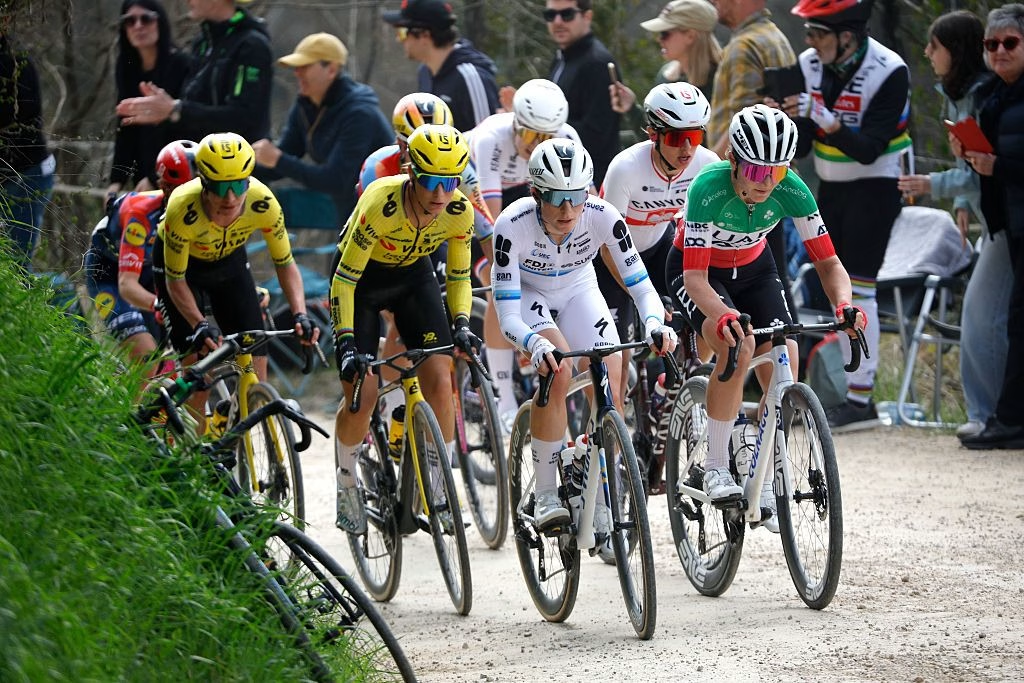

What jerseys are available on Stage 1?
Everything begins from zero in Lausanne, so Stage 1 establishes the first leaders of all the major classifications.
The stage winner should take the yellow jersey as overall leader, while finishing points and the intermediate sprint begin the green jersey competition.
The categorised climbs establish the opening mountains classification, creating an incentive for the breakaway to contest the early ascents rather than simply wait to be caught.
The highest-placed eligible young rider becomes the first white jersey wearer.
That gives riders outside the main stage-winning battle reasons to race aggressively from the beginning. A rider who knows she is unlikely to beat Wiebes or Vos at the finish may instead target the early climbs, the intermediate sprint or the young rider classification.
Tour de France Femmes Stage 1 UK timings at a glance
For anyone organising Saturday around the race:
Date: Saturday 1 August 2026
Stage: Lausanne to Lausanne
Distance: around 137km
Neutralised start: 13:15 BST
Racing begins: approximately 13:40 BST
UK TV coverage: from 14:30 BST
TV: TNT Sports
Streaming: HBO Max
Recommended time to start watching the finale: 16:00 BST
Final 20km: roughly 16:20 onwards
Expected finish window: approximately 16:44 to 17:02 BST
Finish: uphill in central Lausanne on the Côte Saint-François
If you only watch one hour, make it the final one. The opening kilometres establish the breakaway and the first mountains battle, but the decisive question will be answered much later: whether the sprint teams can carry their fastest riders back into Lausanne intact, or whether the accumulated climbing has made the first yellow jersey available to someone capable of turning the uphill finish into something more selective.

