
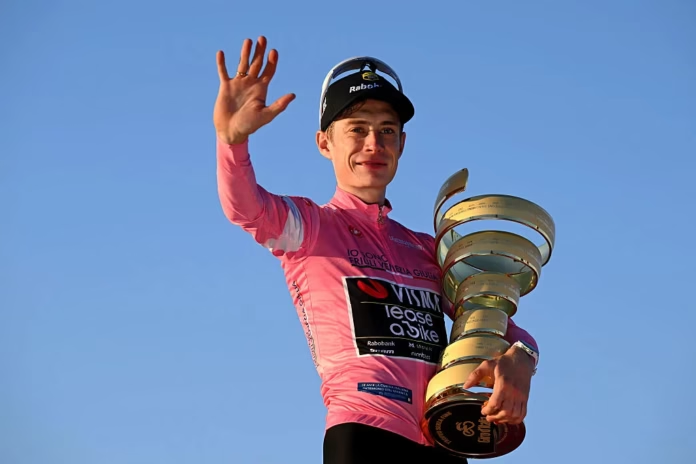
The Giro d’Italia 2026 ended in Rome with Jonas Vingegaard in pink, Jonathan Milan winning the final sprint and Team Visma | Lease a Bike carrying the strongest collective impression away from the race. For three weeks, the Giro had its usual layers: early sprint drama, a changing general classification, breakaway ambition, a points battle that stayed alive until Rome and a final mountain block that sorted the podium properly.
What it means for the season is more complicated than simply saying Vingegaard won. His victory was dominant, but the race also changed the outlook for several teams and riders around him. Felix Gall confirmed himself as a Grand Tour podium-level rider, Jai Hindley re-established himself in a major three-week race, Derek Gee continued his evolution as a genuine GC force, and Afonso Eulálio left with the white jersey and one of the breakthrough rides of the year.
The Giro also sharpened the picture before the summer. Some riders leave Italy with their season transformed. Others leave with questions. For the teams targeting the Tour de France, the Giro’s biggest lesson was clear: Team Visma | Lease a Bike have not only a Grand Tour winner in peak condition, but the depth and structure to make that strength count over three weeks.
For the full shape of the race, ProCyclingUK’s Men’s Giro d’Italia 2026 full route guide shows how the race built from Bulgaria to Rome, while the Giro d’Italia 2026 final classification recap has the complete jersey and overall standings.
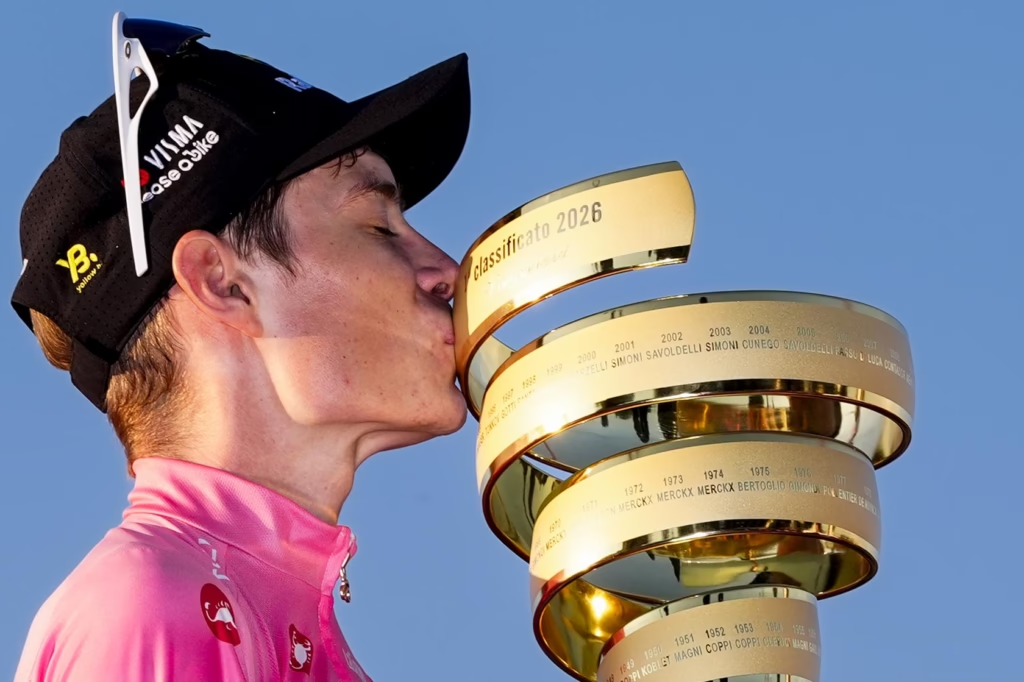 Photo Credit: RCS
Vingegaard’s Giro win changes his season completely
Jonas Vingegaard did not need this Giro to prove he could win a Grand Tour, but winning it still changes the shape of his season. Taking the maglia rosa completed the set of Grand Tour victories after his previous wins at the Tour de France and Vuelta a España, placing him in a different historical category.
The manner of the win was just as important as the result. Vingegaard did not simply defend a lead. He won five stages, controlled the final mountain block and left Rome with a 5:22 advantage over Felix Gall. That margin reflected the race on the road. When the Giro became steep enough and hard enough to separate the best, Vingegaard was repeatedly the reference point.
For the rest of 2026, the question becomes how much this has cost him. A Giro victory is never light work, especially one built around repeated mountain dominance. If he goes on to target the Tour de France, the double becomes the obvious storyline. The Giro has given him momentum, but it has also added a full three-week effort into his legs before the biggest race of the year.
Team Visma | Lease a Bike look frighteningly deep again
The Giro was a team victory as much as an individual one. Team Visma | Lease a Bike won the general classification, won the team classification, took a major mountain stage with Sepp Kuss, placed Davide Piganzoli eighth overall and repeatedly controlled the hardest parts of the race.
That matters for the season because depth is often the difference between a strong leader and a winning Grand Tour team. Vingegaard had the legs to finish the job, but he was rarely left exposed. Kuss gave the team mountain authority, Piganzoli added consistency and the wider structure around them helped keep the race predictable when others needed it to become chaotic.
The performance also gives Visma more than one success story. Piganzoli’s top-10 and second place in the young rider classification showed he can be more than support. Kuss’s stage 19 win at Piani di Pezzè reminded everyone that he remains one of the most valuable high-mountain domestiques in the sport, but also a rider who can still take opportunities when the race allows.
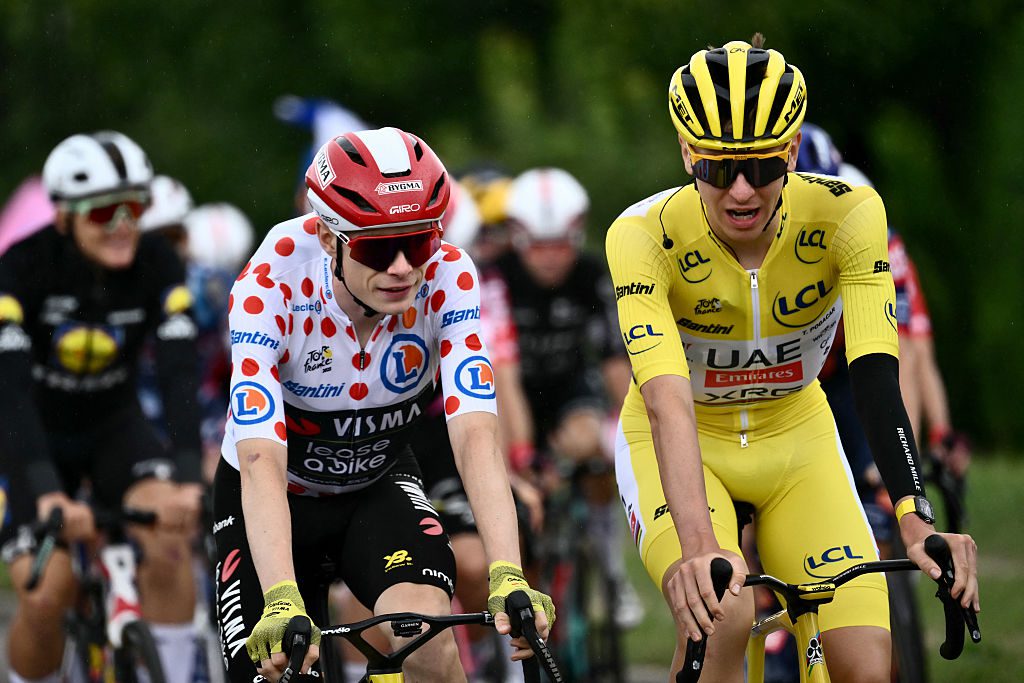 Photo Credit: Getty
The Tour de France conversation becomes sharper
Any Vingegaard Grand Tour win immediately points towards July. The Tour de France remains the central reference point of the men’s season, and this Giro will inevitably be read through that lens.
On the positive side, Vingegaard leaves Italy with proof of form, confidence and a Grand Tour victory already banked. He has shown that his climbing level is where it needs to be and that Visma’s three-week structure is functioning. Those are not small signals before the Tour de France.
The risk is load. Winning the Giro with five stage victories means Vingegaard was not quietly riding through Italy. He had to race hard, respond in the mountains and carry leadership pressure for a long spell. The Giro-Tour double is still one of the most difficult targets in cycling because it asks a rider to peak twice, recover quickly and then face a fresh set of rivals in July.
Felix Gall becomes more than a mountain-stage threat
Felix Gall’s second place overall was one of the most important outcomes of the race. He has long been respected as a climber, but a Grand Tour podium-level ride across three weeks carries a different weight. Gall was not simply visible on one mountain stage. He stayed close enough, consistently enough, to finish as Vingegaard’s nearest challenger.
For Decathlon CMA CGM Team, that is a major result. It gives them a proven Grand Tour reference point and confirms that Gall can carry leadership at the highest level. A rider who can finish second at the Giro is no longer only a stage-hunting climber or a dangerous outsider. He becomes someone other teams must plan around.
The next step is turning consistency into a genuine challenge for victory. Gall was strong, but Vingegaard was still a level above. That gap matters. Yet for his season, and for his team’s standing, this Giro is a clear move forward.
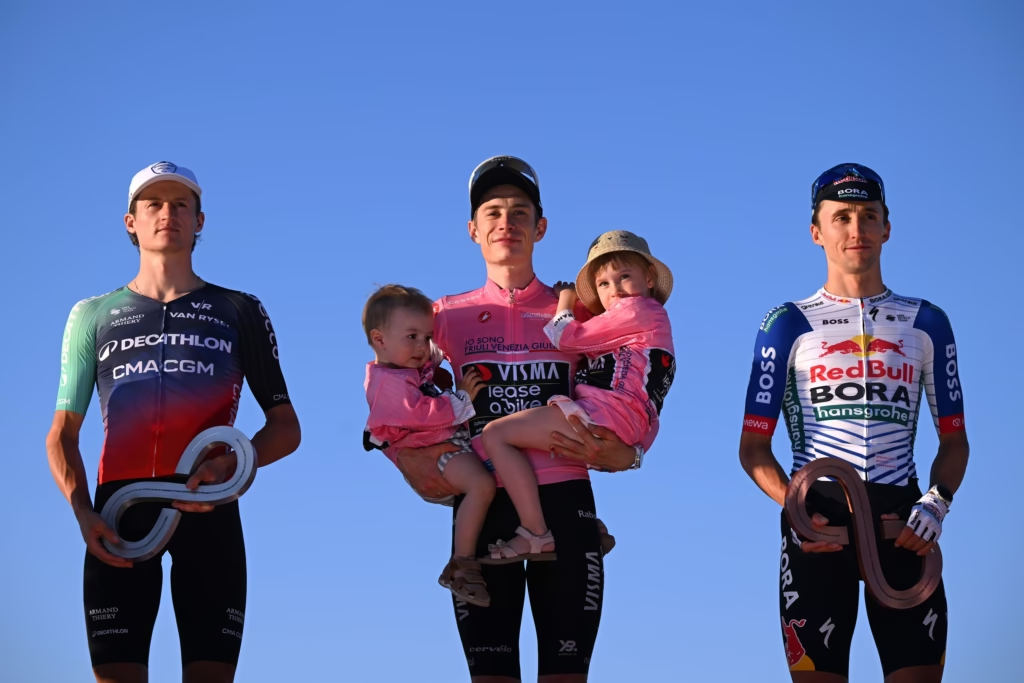 Photo Credit: Getty
Jai Hindley’s podium matters
Jai Hindley’s third place was quietly significant. He has already won the Giro in his career, but modern Grand Tour hierarchies move quickly. A podium in 2026 re-establishes him as a rider who can still absorb three weeks, survive the decisive mountain stages and finish ahead of several major rivals.
His final-week movement was especially important. Hindley moved onto the podium when the race became hardest, rather than fading as others did. That is the kind of performance that can reset a season. It gives Red Bull-Bora-hansgrohe a Grand Tour podium and gives Hindley renewed authority in the team’s stage-race structure.
It also matters tactically for the rest of the year. Hindley may not have matched Vingegaard, but he showed enough climbing depth to be taken seriously in any hard stage race he starts next.
Thymen Arensman leaves with mixed feelings
Fourth overall is a strong result, but for Thymen Arensman it will feel slightly more complicated. He was on course for the podium before the final mountain block reshuffled the order, and losing that place late in the race changes the emotional tone of his Giro.
Still, there is plenty to take from it. Arensman remained one of the strongest riders in the race and helped give Netcompany INEOS a high final classification presence alongside Egan Bernal in 10th. The team finished second in the team classification and showed depth, even if they did not quite convert that into a podium.
For Arensman’s season, this is not a failure. It is a reminder that he is very close to the top tier, but also that the margins between fourth and a Grand Tour podium are still unforgiving.
Derek Gee’s GC rise continues
Derek Gee finishing fifth overall was another major marker in his development. He has moved steadily from breakaway force to stage-race contender, and this Giro gave that progression another serious result.
His ride in the final week was particularly convincing. Second on stage 19 and a rise to fifth overall showed he could still produce high-level climbing performances deep into the race. That matters more than a single early flash. Grand Tour GC riders are judged by how they recover, how they limit bad days and whether they still have something left when others are fading.
For Lidl-Trek, Gee’s fifth place sat alongside Jonathan Milan’s final-stage win and Giulio Ciccone’s mountains classification. That made their Giro one of the most broadly successful in the peloton, with results across GC, sprints and classification racing.
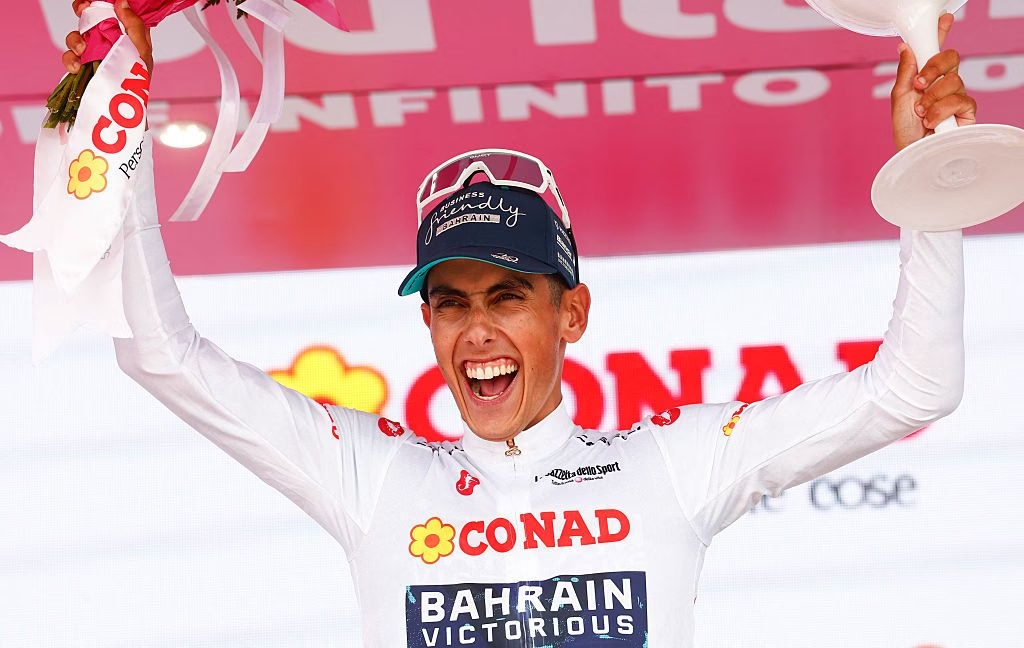 Photo Credit: Getty
Afonso Eulálio is the breakout rider of the race
Afonso Eulálio’s sixth place overall and young rider classification win gave the Giro one of its clearest breakthrough stories. He wore pink earlier in the race, stayed in the GC fight longer than many expected and then defended the maglia bianca through the final mountains.
That is a very different achievement from one impressive day in a breakaway. Eulálio had to manage pressure, recovery, team responsibility and the gradual tightening of the race around him. Davide Piganzoli closed the white jersey gap in the mountains, but Eulálio still reached Rome with the classification secure.
For Bahrain Victorious, it is a valuable development result. For Eulálio, it changes expectations. He will not be able to return to anonymity after a top-six Grand Tour finish and a white jersey. The next question is whether this Giro becomes a foundation or a peak.
Paul Magnier confirms his Grand Tour sprint credentials
Paul Magnier’s maglia ciclamino victory gave Soudal Quick-Step one of the strongest sprint stories of the race. Three stage wins and the points classification marked him out as the most consistent fast finisher across the Giro, even though Jonathan Milan closed the race with victory in Rome.
The points jersey mattered because it showed repeatability. A young sprinter can win a stage through speed, positioning or a perfect day. Winning the points classification means scoring across the race, surviving the mountains and holding form through three weeks.
For the rest of 2026, Magnier’s status changes. He is no longer just a fast rider with potential. He is a Grand Tour points jersey winner, and that will affect how teams race against him in every sprint field he enters.
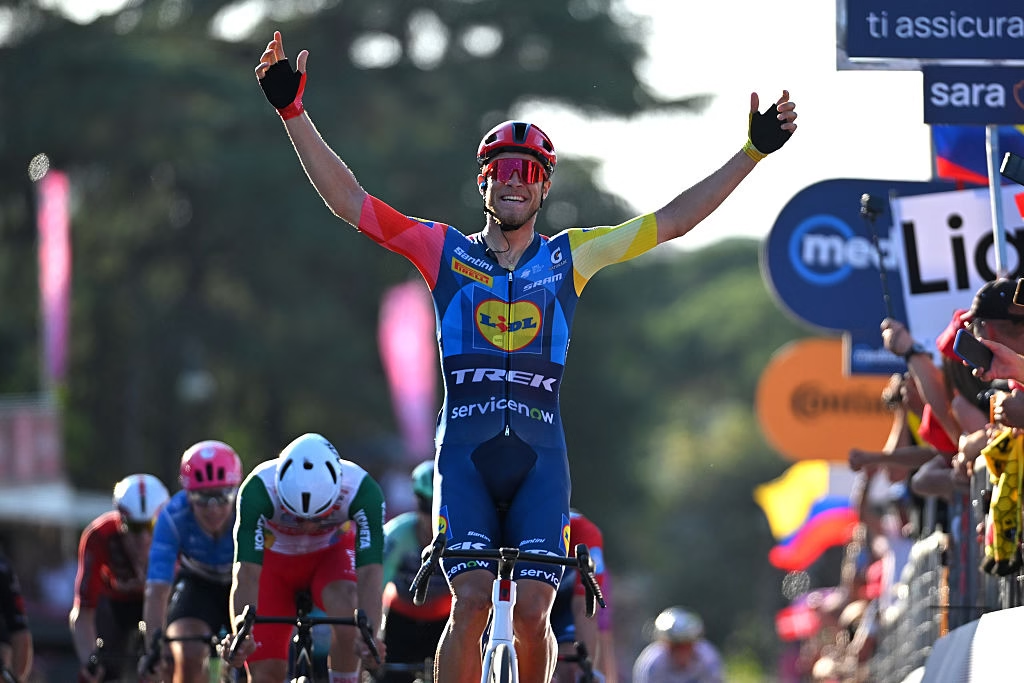 Photo Credit: Getty
Jonathan Milan salvages the final image
Jonathan Milan’s final-stage win in Rome did not overturn the points classification, but it still gave him a valuable end to the Giro. Winning in the capital carries symbolic weight, especially for an Italian sprinter, and it ensured that his race finished with a major result rather than only a near-miss in the points battle.
It also strengthened Lidl-Trek’s overall impression. Milan gave them a sprint victory, Gee finished fifth overall, and Ciccone won the mountains jersey. That combination is exactly what teams want from a Grand Tour: not one isolated success, but several ways of influencing the race.
Milan may still leave with some frustration because Magnier won the maglia ciclamino, but Rome changed the tone. A final-stage Giro win is never minor, and ProCyclingUK’s stage 21 report from Rome captured how that final sprint gave Lidl-Trek one more major result before the race closed.
Giulio Ciccone turns aggression into a jersey
Giulio Ciccone’s mountains classification victory was built in the final week, especially through his huge stage 19 ride across the Dolomites. He had to be active, targeted and committed, because Vingegaard’s repeated mountain wins kept bringing him close in the maglia azzurra standings.
That made Ciccone’s jersey feel earned rather than inherited. He did not win it because the GC riders ignored the competition completely. He won it because he raced for it and timed his biggest points haul when it mattered most.
For the season, that is useful. Ciccone remains one of the peloton’s most dangerous riders when mountains classifications, breakaways and hard climbing days overlap. The Giro reminded everyone that his aggression still has a clear sporting payoff.
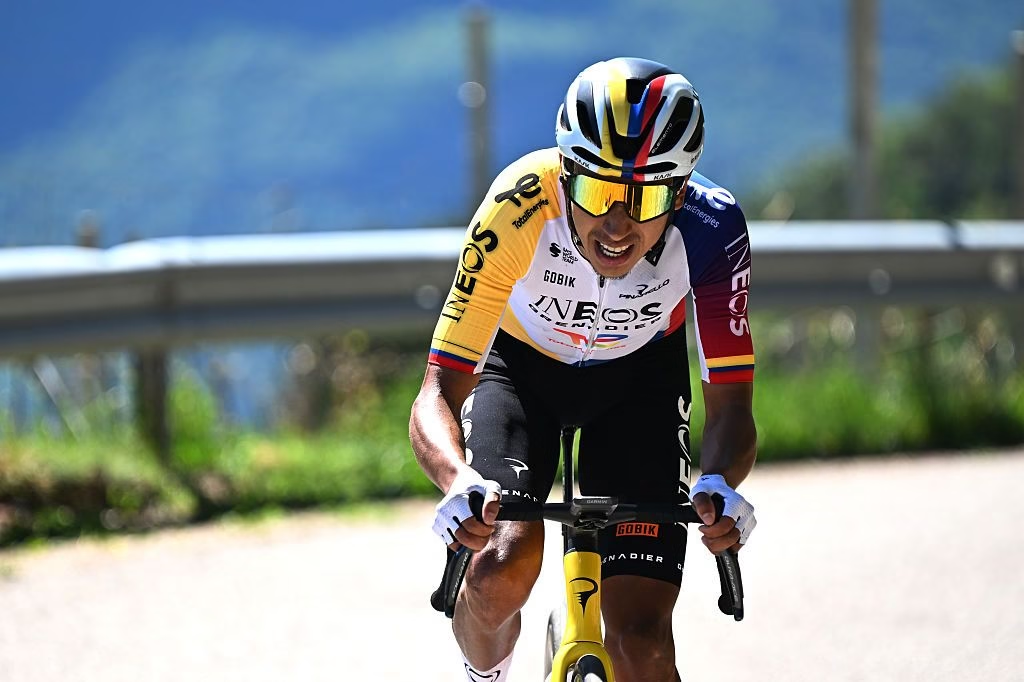 Photo Credit: Getty
Bernal’s top 10 is encouraging, but not yet a full return
Egan Bernal finishing 10th overall is a result with emotional and sporting value, but it should still be read carefully. A top-10 in the Giro shows resilience and consistency, especially in a race this hard, but it does not yet place him back at the level of riders challenging for overall victory.
That distinction matters. Bernal’s presence in the top 10 strengthens Netcompany INEOS’ race, and it gives him another three-week result to build from. But the gap to Vingegaard and the podium riders remains significant.
For his season, the Giro is a step rather than a conclusion. It shows that Bernal can still be relevant in a Grand Tour. The next challenge is whether he can move from relevance back towards genuine leadership at the sharpest end of the race.
UAE Team Emirates-XRG had a difficult Giro
One of the biggest team stories was who did not shape the final classification. UAE Team Emirates-XRG arrived with serious ambition but lost Adam Yates, Marc Soler and Jay Vine earlier in the race, forcing a reset before the final mountain block had fully formed.
That changed their Giro completely. Instead of becoming one of the central GC forces, the team had to find other ways into the race. Igor Arrieta provided some reward by topping the Red Bull KM classification, but this was still not the kind of Grand Tour UAE would have expected from the squad they brought.
For the rest of the season, the impact depends on recovery and programme choices. The Giro did not deliver what they wanted, but it may at least leave some riders fresher for later targets than they would have been after a full GC campaign.
-
 Photo Credit: Getty

The Giro strengthened several Tour de France storylines
The Tour de France will now inherit several narratives from this Giro. Vingegaard’s form is the largest one, but not the only one. Gall, Hindley, Gee, Arensman and Eulálio all changed how their seasons will be discussed after Italy.
If Vingegaard goes to the Tour, the Giro becomes the first half of a much bigger story. Can he recover? Can Visma repeat this control against a different field? Will the effort of five stage wins and overall victory in Italy sharpen him or leave him vulnerable later?
For others, the Giro may become the central result of the season. Gall and Hindley have podiums to build from. Gee and Eulálio have confirmation that their GC trajectories are real. Magnier and Ciccone leave with jerseys that give their 2026 campaigns clear identity.
The next major men’s WorldTour stage-race checkpoint is also close. The Tour Auvergne – Rhône-Alpes 2026 will offer another pre-Tour form test, giving teams a final chance to measure climbing strength, leadership depth and recovery before July.
What the Giro means for the rest of the 2026 season
The Giro d’Italia 2026 leaves the season with one dominant conclusion and several important secondary ones. Vingegaard remains the benchmark stage racer of the moment if he carries this form forward. Team Visma | Lease a Bike look organised, deep and capable of controlling a Grand Tour from multiple angles. Lidl-Trek leave with one of the most balanced team performances of the race.
Behind them, the podium and top 10 give the men’s season more depth. Gall is now a proven Grand Tour podium rider, Hindley has reinforced his status, Gee continues to rise, and Eulálio has announced himself properly. Magnier’s points jersey adds another young sprint name to the highest level, while Ciccone’s mountains win confirms his value as one of the sport’s most aggressive climbers.
The Giro did not answer every question before the summer, but it sharpened most of them. Vingegaard won the race. Visma controlled it. Several rivals improved their standing. Others left with work to do. As the season moves towards the Tour de France and the next block of stage races, the Giro’s final classifications will not sit as a closed chapter. They will shape the rest of the year.

