
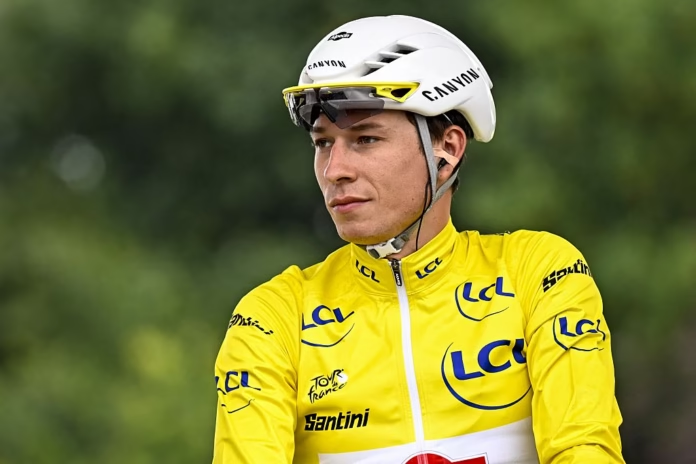
Jasper Philipsen arrives at the Tour de France 2026 with a familiar question around him: how many sprint stages can he win if Alpecin-Premier Tech get the lead-out right?
That question has followed him for several years, but it feels especially relevant in 2026. The route offers seven flat stages, the points system has been adjusted to give sprinters more value on those days, and Philipsen remains one of the most proven Tour de France sprinters in the peloton. He is not only a stage-win contender. He is a serious green jersey candidate, especially if his team can combine his finishing speed with Mathieu van der Poel’s lead-out power and Kaden Groves’ versatility.
The complication is that Philipsen’s Tour record now carries both dominance and frustration. He has already shown he can win repeatedly at the race, take yellow and win the green jersey. He has also had campaigns shaped by crashes, controversy, changing lead-out dynamics and the growing strength of rivals such as Jonathan Milan, Tim Merlier, Biniam Girmay and Arnaud De Lie.
That makes 2026 a fascinating test. Philipsen has the speed. Alpecin-Premier Tech have the structure. The route gives them enough chances. But the green jersey and the sprint hierarchy will not simply fall into his hands.
For broader race context, see our Tour de France 2026 full route guide, Tour de France 2026 sprint stages ranked, Tour de France 2026 sprinters guide and Tour de France 2026 jerseys explained.
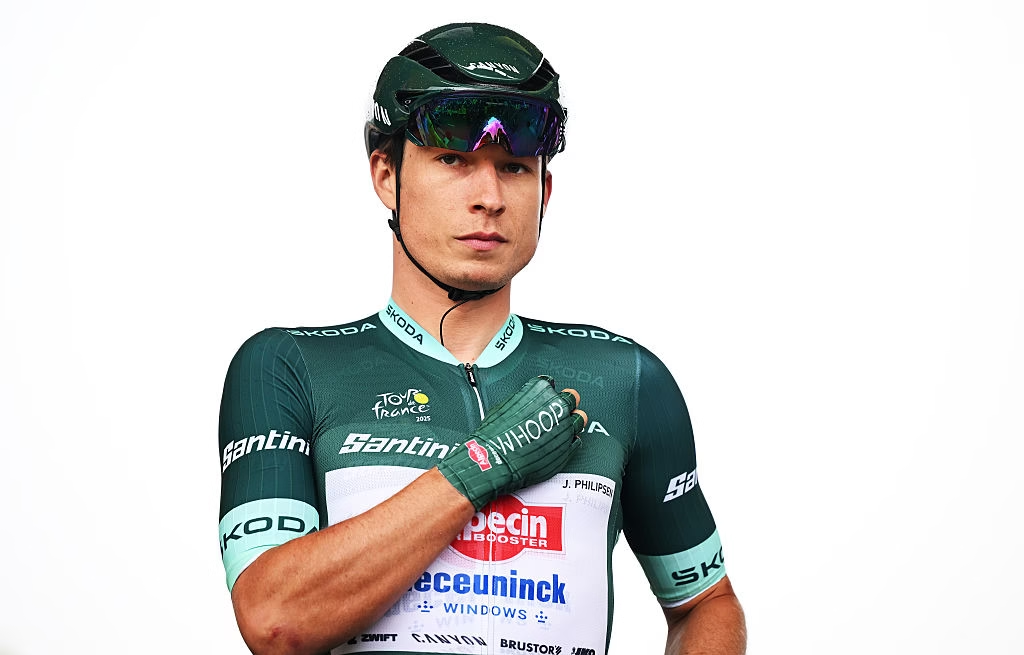
Why Philipsen remains one of the Tour’s benchmark sprinters
Philipsen’s Tour de France status is already secure. He has won multiple Tour stages, taken the green jersey, and established himself as one of the few sprinters who can consistently impose himself on the hardest and most chaotic sprint race in the world.
That matters because Tour sprinting is different. A rider can dominate smaller stage races and still be swallowed by the pressure of the Tour. The final 10km is faster, the lead-outs are more aggressive, the GC teams fight for position, and every sprint comes with more consequence. Philipsen has already proved that environment suits him.
His best quality is not only top speed. It is the way he turns chaos into control. He can follow wheels, hold position, improvise if the lead-out breaks, and still launch with enough power to finish the job. That makes him hard to beat because he is not completely dependent on a perfect final kilometre.
There are faster riders in a straight drag. There may be more powerful riders over a long acceleration. But Philipsen’s Tour skill is the whole package: positioning, confidence, timing, aggression, team support and finishing instinct.
That is why he starts as one of the clearest stage-win favourites in any flat finish, even with Jonathan Milan emerging as a huge rival. For more on Milan’s challenge, see our Jonathan Milan at the Tour de France 2026 feature.
The 2026 route gives him enough sprint chances
The 2026 Tour route is hard, but it is not hostile to sprinters. The official classification includes seven flat stages, and those days will be central to Philipsen’s race. He does not need the entire route to be flat. He needs enough high-value sprint days to build a stage-winning and green jersey campaign.
Stages 5, 7, 8, 11, 12, 17 and 21 are the key days for the fast men. The exact shape of each final will matter, but the structure is clear: the sprinters have chances, and the points classification now gives those stages even greater importance.
That helps Philipsen in two ways. First, it gives him repeated opportunities to win. Second, it makes the green jersey more likely to be decided by the pure sprint days rather than by punchier riders or GC contenders collecting points in harder terrain.
The problem is the road between those opportunities. The race starts with a team time-trial in Barcelona, reaches the Pyrenees early, then moves through the Massif Central, the Vosges, the Jura and the Alps. Philipsen will need to survive the mountain blocks without losing too much energy. Sprint chances only matter if he reaches them with speed still in the legs.
For the full route picture, see our Tour de France 2026 route analysis, Tour de France 2026 sprint stages ranked and Tour de France 2026 mountain stages ranked by difficulty.
 Photo Credit: Getty
Why the green jersey rule change suits him
The 2026 green jersey points change should make Philipsen even more dangerous.
Flat-stage winners now receive more points, with the top placings on sprint days weighted more heavily than before. That is good news for riders like Philipsen, Milan and Merlier, because it makes the pure bunch sprints more decisive in the points classification.
The logic is simple. If a rider can win two or three flat stages, they can build a major points lead without needing to score heavily on every hilly day. Philipsen has already shown he can stack Tour stage wins. That makes the new system a natural fit.
There is also a defensive element. In previous years, the green jersey could be affected by riders who were strong on punchy days, breakaway stages or intermediate sprints in more selective terrain. The revised weighting reduces that risk slightly. A rider like Biniam Girmay or Arnaud De Lie can still be dangerous, but Philipsen can respond by winning the stages that now matter most.
That turns every flat finish into a major classification moment. Philipsen will not be racing only for stage wins. He will be racing for points, momentum and control of the competition.
For a full green jersey overview, see our Tour de France 2026 sprinters guide and Tour de France 2026 jerseys explained.
The lead-out: Van der Poel remains the unique weapon
Philipsen’s biggest advantage may still be Mathieu van der Poel.
Van der Poel is not a conventional lead-out rider. He is too strong, too explosive and too tactically independent to fit neatly into that category. But when he commits to Philipsen in the final kilometres, he can change the sprint. He can move through traffic where others hesitate. He can hold speed through difficult corners. He can stretch a peloton before most teams are ready to launch.
That matters because Philipsen is at his most dangerous when he is delivered late and fast. Van der Poel can do that better than almost anyone. He does not merely guide Philipsen into position. He can bend the whole sprint around him.
The question is how often Alpecin-Premier Tech use him that way. Van der Poel will also have his own stage ambitions, especially on punchy or transition days. He may be targeting selective stages, breakaways or even specific terrain that suits his classics engine. The team therefore has to balance Philipsen’s green jersey campaign with Van der Poel’s own opportunities.
That balance is usually a strength rather than a weakness. A team with both Philipsen and Van der Poel can attack the Tour in several ways. But for the pure sprint days, the hierarchy must be clear. If Van der Poel is there to lead out, Philipsen becomes one of the hardest riders in the race to beat.
Van der Poel’s broader race value also matters on the awkward days where sprint teams may lose control. Those stages are covered in more detail in our Tour de France 2026 breakaway stages ranked guide.
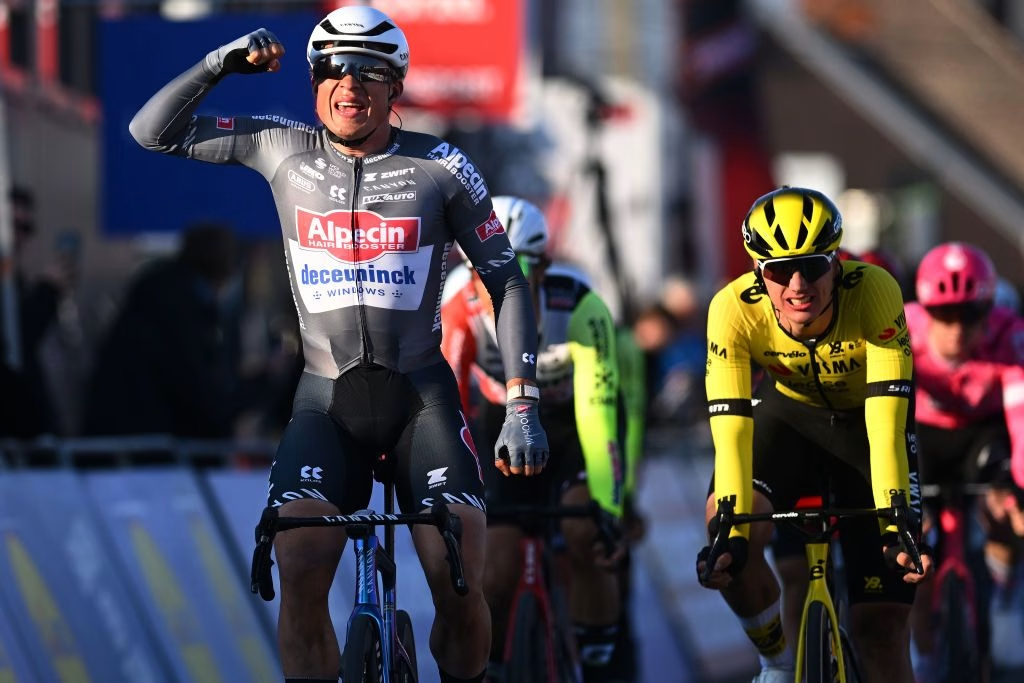
Kaden Groves adds flexibility and depth
Kaden Groves gives Alpecin-Premier Tech another important layer.
Groves is not simply a spare sprinter. He is a rider who can win, survive harder terrain and support a points strategy in different ways. His presence means Alpecin-Premier Tech do not have to treat every sprint day in exactly the same manner. On some days, he can be a lead-out option. On others, he can be a secondary threat. On harder finishes, he may give the team an alternative if Philipsen is not perfectly suited.
That can be a strength, but only if the roles are managed properly. Philipsen’s green jersey bid needs focus. If the team divides too much attention between two sprinters, it risks losing the clarity that made Philipsen so successful in previous Tours.
The best version of Alpecin-Premier Tech uses Groves as part of the pressure system. He can help chase, position, cover moves and give rivals another rider to think about. If Philipsen is clearly the primary fast man, Groves makes the team stronger. If the roles blur, the team risks complicating the final kilometres.
In a Tour where Lidl-Trek may have both Jonathan Milan and Mads Pedersen, that squad balance could become one of the defining green jersey subplots. That rivalry is explored in our Jonathan Milan at the Tour de France 2026 piece and the wider Tour de France 2026 sprinters guide.
Philipsen versus Milan
The Philipsen-Milan comparison may define the 2026 sprint battle.
Milan has enormous power. His sprint is long, heavy and difficult to come around once he launches. If Lidl-Trek get him to the final 200 metres in clean air, he can be almost impossible to stop. The points system also suits him, because it rewards flat-stage winners.
Philipsen’s advantage is different. He is better at chaos. He can win from less-than-perfect positions, move through traffic more naturally, and use the final kilometre as a tactical space rather than simply a launchpad. If the sprint is messy, Philipsen may have the edge. If it is clean and straight, Milan’s power could decide it.
That makes the lead-outs crucial. A perfect Lidl-Trek lead-out gives Milan the kind of sprint he wants. A disruptive, high-speed Alpecin-Premier Tech lead-out gives Philipsen the kind of finish he loves. The battle may be less about who is faster in isolation and more about which team can control the final three kilometres.
For a full look at Milan’s chances, see our Jonathan Milan at the Tour de France 2026 feature.
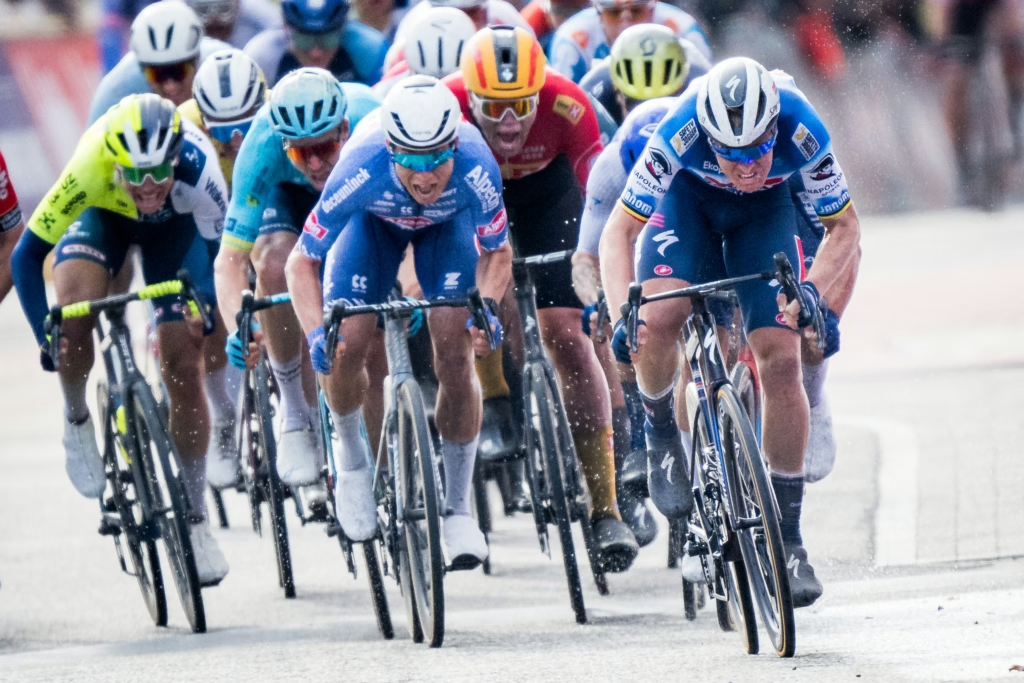
Philipsen versus Merlier
Tim Merlier is a different type of problem.
Merlier is one of the cleanest pure sprinters in the world. If he arrives well-positioned, he can beat anyone. He is not a rider Philipsen can afford to leave room for. On a flat, fast finish with a clean lead-out, Merlier is a direct stage-winning threat.
The difference is the green jersey profile. Philipsen has a stronger Tour record and may have more ways to score across three weeks. Merlier’s green jersey bid depends on repeated sprint-stage success and avoiding gaps on the days where the points contest gets complicated.
For Philipsen, the key is consistency. He does not need to beat Merlier every time. He does need to make sure that Merlier’s wins do not turn into a points-classification lead. That means podium finishes, intermediate points and staying present even on the days where the final sprint is not perfectly aligned.
If Merlier wins two stages and Philipsen is only 6th or 7th on those days, the classification changes quickly. If Philipsen is always 2nd or 3rd even when he does not win, he stays in control.
That is why the pure sprint days listed in our Tour de France 2026 sprint stages ranked article are so important. These are the stages where Philipsen cannot afford to drift.
Philipsen versus Girmay and De Lie
Biniam Girmay and Arnaud De Lie make the green jersey contest more complex.
Girmay is dangerous because he can score on days that are not pure sprint stages. If the route includes rolling finishes, reduced bunch sprints or intermediate sprints before harder terrain, he can collect points where Philipsen may be less comfortable. He has already shown he can win and score consistently in a Tour environment.
De Lie offers a similar but more forceful threat. He has the strength to survive harder days and still sprint well, which makes him a dangerous green jersey rider if the classification spreads beyond the flat stages.
For Philipsen, the answer is to dominate the high-value sprint days. If he wins enough on the flat stages, he forces Girmay and De Lie to chase. If he misses those days, the more versatile riders can make the race uncomfortable for him.
The revised points system should help Philipsen, but it does not remove the danger. Green is still about total scoring. A pure sprinter who switches off on the awkward days can still be beaten by a rider who keeps taking smaller points everywhere.
For a wider comparison of the green jersey field, see our Tour de France 2026 sprinters guide and Tour de France 2026 jerseys explained guide.
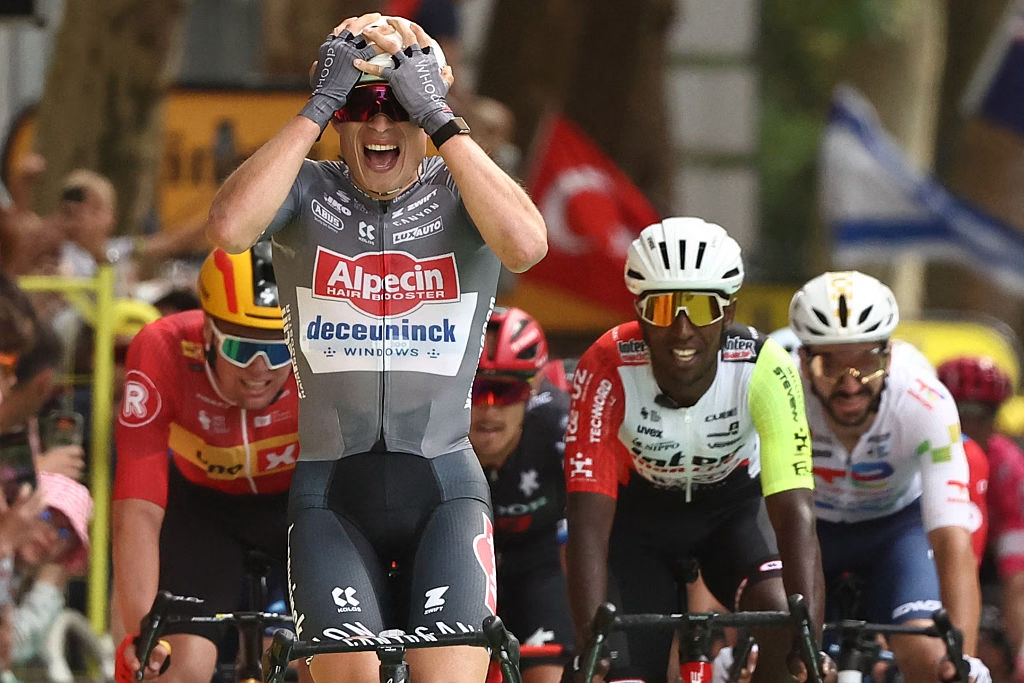
The intermediate sprint question
Philipsen’s green jersey bid will depend on how seriously Alpecin-Premier Tech treat intermediate sprints.
Stage wins are the priority, but green often turns on points taken before the finish. Intermediate sprints can be awkward because they cost energy, require positioning and sometimes come before difficult terrain. A team has to decide when chasing those points is worth the effort.
Philipsen has the speed to score heavily in them, but he cannot afford to spend too much energy every day. Alpecin-Premier Tech will need a selective approach. Chase when the points are easy or strategically important. Save energy when the stage win is worth more. Use the team’s depth to position him without forcing him into repeated fights.
This is where Van der Poel and Groves can matter even when they are not directly leading him out for the finish. They can help control positioning, discourage rivals and keep Philipsen from having to do too much work himself.
The green jersey is not just a sprinter’s prize. It is a logistical project. The same logic applies to Milan, as outlined in our Jonathan Milan green jersey contender analysis.
The Copenhagen Sprint clue
Philipsen’s 2026 Copenhagen Sprint win is a useful reminder of why his lead-out still matters so much.
That race was not the Tour, but it did highlight a familiar Philipsen strength: calm execution in a chaotic final. The break was caught late, the city-centre roads demanded constant positioning, and Philipsen still came through the sprint with the authority of a rider who knows how to turn disorder into a result.
That is exactly the kind of quality that matters at the Tour. Not every sprint will be clean. Not every final kilometre will go to plan. Some stages will come after crosswinds, crashes, nervous GC positioning or long days where the peloton only just controls the break. Philipsen’s ability to win those races is part of what separates him from riders who need a perfect train.
For more on that result, see our Men’s Copenhagen Sprint 2026 report.
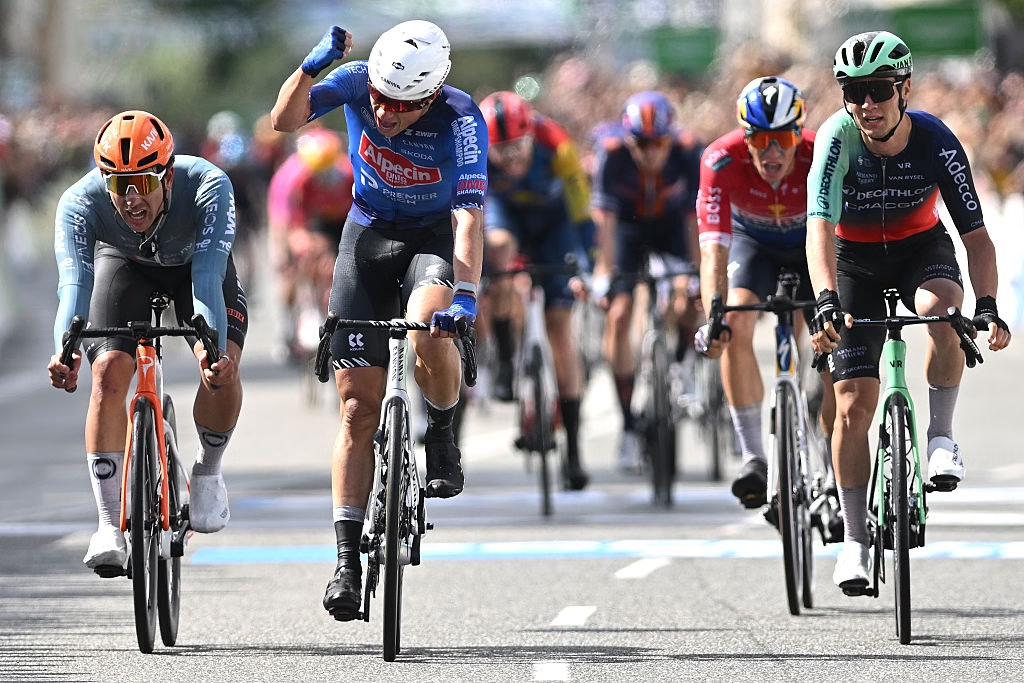
The mountain problem
The 2026 Tour gives sprinters enough chances, but it also gives them a lot of suffering.
The Pyrenees arrive early, the Vosges and Jura bring another awkward block, and the Alps are severe. Philipsen is not expected to do anything in those stages except survive, but survival is not passive. It costs energy. It demands concentration. It affects the next sprint.
This is where a green jersey campaign can quietly weaken. A sprinter can reach the next flat day still in the race but without the sharpness needed to win. Philipsen has to get through the mountains efficiently, not heroically. That means avoiding panic, staying with the gruppetto, trusting the team, and making sure no stage becomes harder than necessary.
The final Alpine block is especially important. Stage 18 to Orcières-Merlette, stage 19 to Alpe d’Huez and stage 20 back to Alpe d’Huez via Galibier and Sarenne will be brutal for the sprinters. If Philipsen is still fighting for green, he has to survive those days with Paris in mind.
For more on the climbing blocks, see our Tour de France 2026 Pyrenees guide, Tour de France 2026 Vosges and Jura guide and Tour de France 2026 Alps guide.
Stage 21 and the Paris factor
A Champs-Élysées sprint always matters for Philipsen.
If the green jersey is already secure, Paris becomes a final statement. If the classification is close, it can decide the contest. If Philipsen has had a frustrating Tour, it offers one last chance to change the story. The final stage is not just symbolic for sprinters. It is still one of the most important sprint stages in cycling.
Philipsen should like the setting. He has the confidence for high-pressure finishes and the team to deliver him late. The problem is that by Paris, every sprinter is tired and every rival knows exactly what is at stake. Lead-outs become more desperate. Positioning becomes more aggressive. A late mistake can ruin three weeks of work.
That is why the route’s final flat stage is so important in the green jersey equation. Philipsen does not need to arrive in Paris fresh. No one does. He needs to arrive with enough speed left to win one more time.
For the full sprint-stage picture, see our Tour de France 2026 sprint stages ranked guide and the wider Tour de France 2026 full route guide.
What Alpecin-Premier Tech need to get right
Alpecin-Premier Tech need three things to make Philipsen’s Tour work: clarity, timing and discipline.
Clarity means knowing when the day is fully for Philipsen. If the team wants stage wins and green, the flat days cannot be half-committed. Van der Poel, Groves and the rest of the squad need clear jobs in the final 20km.
Timing means not taking over too early. Philipsen is strong, but even the best sprinter can be left exposed if the lead-out burns too much road too soon. Alpecin-Premier Tech are at their best when they appear late, fast and organised.
Discipline means avoiding penalties, crashes, wasted energy and unnecessary fights. Philipsen’s aggression is part of his strength, but the Tour rewards controlled aggression more than chaos. The team has to keep the edge without crossing into avoidable risk.
If those pieces come together, Alpecin-Premier Tech may again have the best sprint structure in the race. That strength will matter even more because the GC teams will also be fighting for position on transition and sprint days, as explained in our Tour de France 2026 route analysis.
-
 Photo Credit: Getty
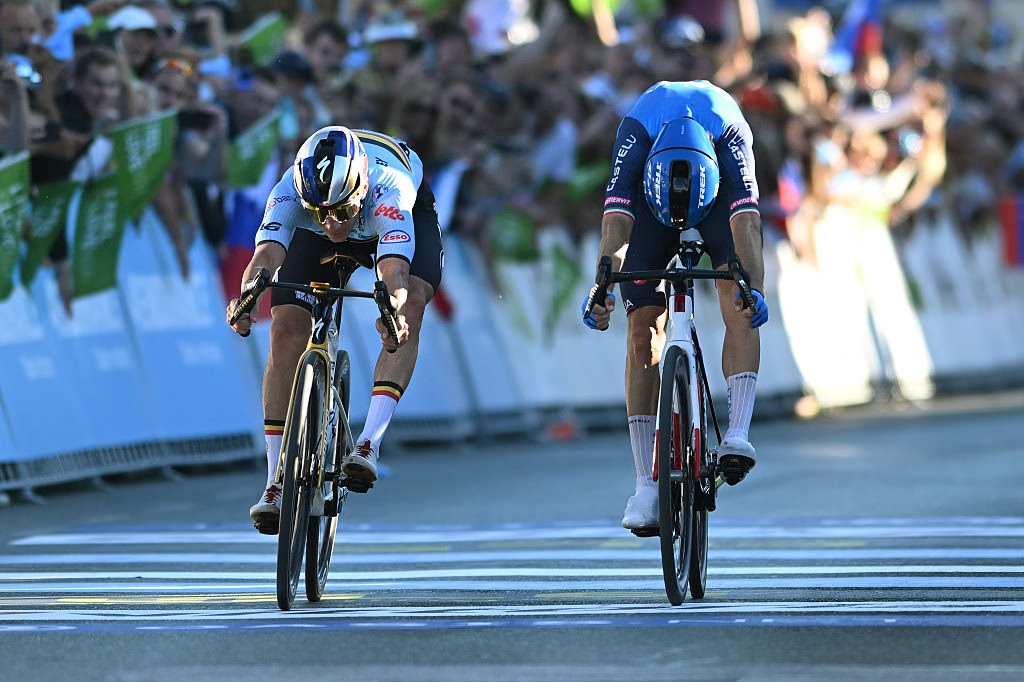

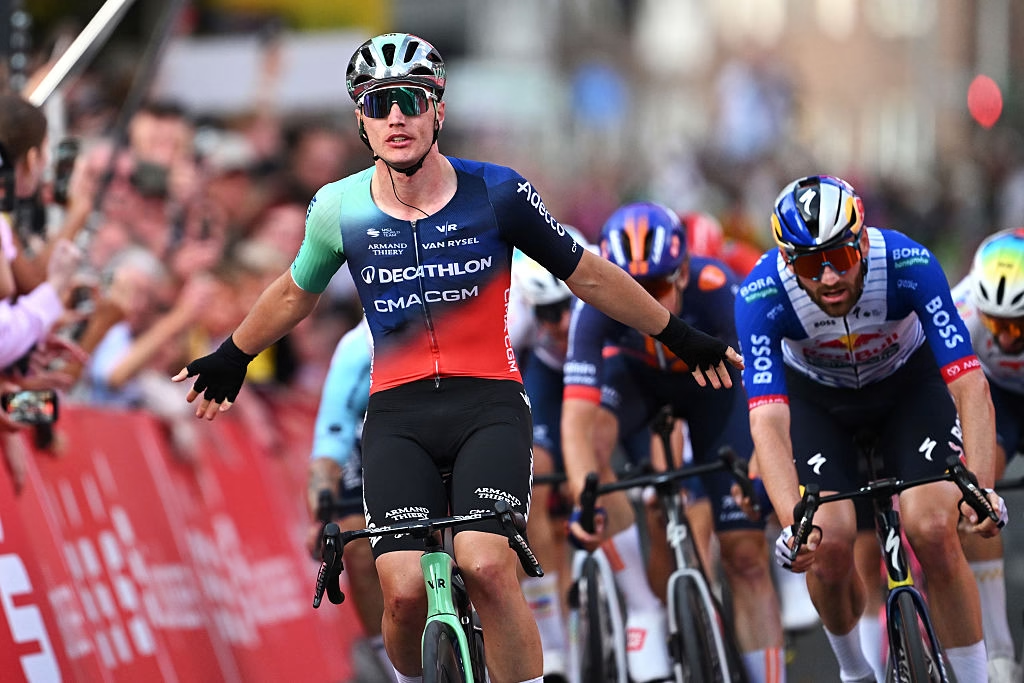
How many stages can Philipsen win?
A realistic target is two stage wins.
That may sound modest for a rider of Philipsen’s quality, but the Tour sprint field is deep. Milan, Merlier, De Lie, Girmay and others will all have genuine chances. The route also spreads the sprint opportunities around major climbing blocks, which means form and fatigue will change across the race.
One stage win would be a solid Tour but probably not enough for the green jersey unless he scores heavily elsewhere. Two wins would put him right in the green jersey fight. Three wins would make him very difficult to beat, especially under the revised points system.
The key is the first sprint opportunity. If Philipsen wins early, Alpecin-Premier Tech can race from a position of confidence. If he misses the first two flat finishes, pressure builds, and the team may have to chase more aggressively later.
That is where his experience should help. Philipsen has been in enough Tour sprints to know that one lost finish does not decide the race. But in a green jersey campaign, the points table can become unforgiving quickly.
For a direct comparison with the rest of the fast men, see our Tour de France 2026 sprinters guide.
Prediction: Philipsen’s Tour de France 2026 chances
Philipsen starts the Tour de France 2026 as one of the strongest sprint-stage contenders and one of the main favourites for green.
The route suits him well enough. The points system helps. The lead-out, if Van der Poel and Groves are properly aligned around him, could be the strongest in the race. The sprint field is deep, but Philipsen’s Tour experience gives him an advantage over almost everyone.
The biggest threat is Jonathan Milan. Milan’s power and Lidl-Trek’s structure make him a serious green jersey rival. Merlier is a major stage-win threat. Girmay and De Lie can make the points race harder by scoring on more varied terrain. Pedersen can also complicate the contest if Lidl-Trek use him alongside Milan.
Even so, Philipsen has the clearest complete package: Tour sprint pedigree, lead-out strength, tactical adaptability and the ability to win more than once.
The prediction is two stage wins and a serious green jersey challenge. If Alpecin-Premier Tech get the lead-out right and Philipsen survives the mountain blocks efficiently, he can win the points classification for a second time.
For full race coverage, see our Tour de France hub and how to watch Tour de France 2026 in the UK guide.

