

Paul Seixas will start the 2026 Tour de France carrying more than his own ambitions. He will also carry the newest version of France’s longest-running cycling question: when will the home nation produce another rider capable of winning the Tour?
That question has followed every promising French climber since Bernard Hinault’s last Tour victory in 1985. It followed Richard Virenque in a different era. It followed Thibaut Pinot through the emotional peaks and collapses of the 2010s. It followed Romain Bardet as he turned podium finishes into national hope. More recently, it has followed David Gaudu, Lenny Martinez, Kévin Vauquelin and every young French rider who looks comfortable when the road goes uphill.
Seixas changes the tone because he arrives with a different kind of profile. He is not just a young climber being pushed into the Tour because France needs a story. He is already a serious stage-race and one-day prospect, an all-rounder with climbing, time-trial ability and the kind of sharp acceleration that modern Grand Tour racing demands. His 2026 Tour debut with Decathlon CMA CGM is not being framed as a ceremonial first appearance. It is being framed as the beginning of a project.
The important word is “beginning”. Seixas may be the biggest French Tour story of 2026, but he is not the whole story. The next French generation is broader than one rider. Kévin Vauquelin has already shown the level needed to compete high on GC. Lenny Martinez remains one of the most natural climbers in the French pool. Romain Grégoire has the punch and race craft for hard stages. Paul Lapeira, Jordan Jegat, Valentin Paret-Peintre and other riders give France a wider base than it has had for several years.
For the 2026 race context, see our Tour de France 2026 full route guide, Tour de France 2026 route analysis and best French riders to watch at the Tour de France 2026.
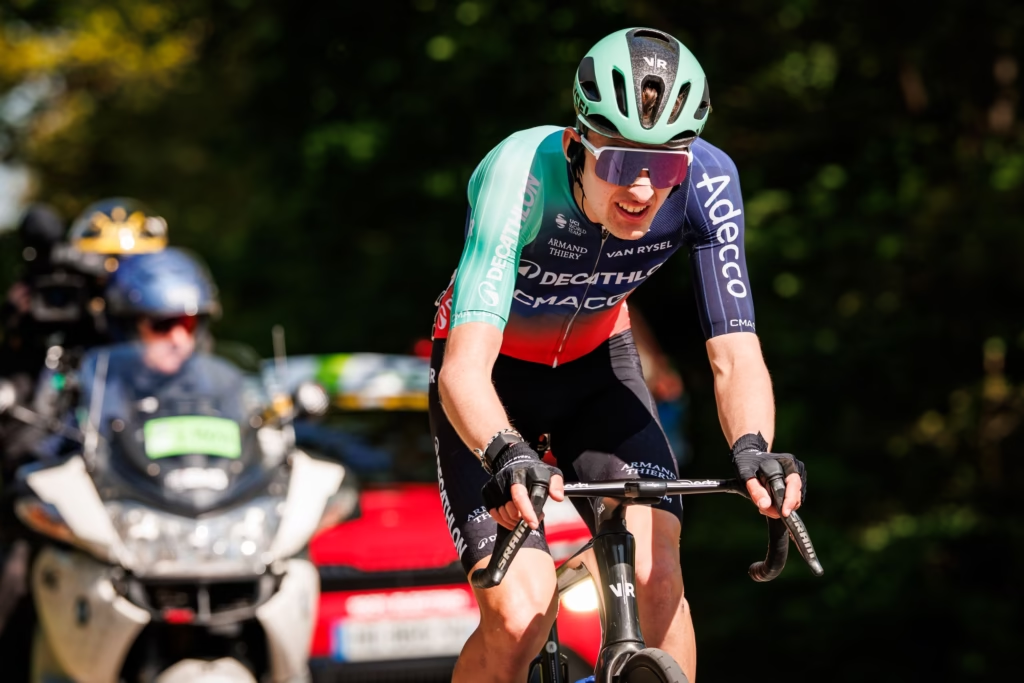
Why Paul Seixas matters
Seixas matters because he fits the modern Tour de France more naturally than many French hopes before him. The Tour is no longer a race where a pure climber can wait for the Alps, limit losses in the time trials and hope to survive everything else. The best riders now climb, time-trial, descend, accelerate, recover and race aggressively across almost every kind of terrain.
That is why Seixas is interesting. He is not being discussed only because he is French. He is being discussed because his skill set looks relevant to the way the Tour is now raced. He can climb, he has a strong time-trial background from his junior years, and he has shown the ability to race with confidence rather than simply follow wheels.
France has had good climbers before. It has had emotional Tour stories before. What it has lacked is a rider who looks like a complete modern GC project early enough to be shaped properly. Seixas gives Decathlon CMA CGM that possibility.
The danger is obvious. The Tour can distort development. A French rider with promise quickly becomes a national debate. Every attack is treated as evidence. Every bad day becomes a verdict. Seixas has the talent to justify excitement, but the scale of the expectation around him needs controlling.
His first Tour should be judged as the start of a long build, not as a referendum on whether France has found its next Tour winner. For the wider youth race, see our Tour de France 2026 young riders to watch.
What makes Seixas different?
The most obvious difference is range. Seixas is not only a mountain prospect. He has the background of a rider who can build towards the full GC package.
That matters because the 2026 Tour begins with a team time-trial in Barcelona. A young climber can lose the race psychologically before the mountains if the opening stage goes wrong. Seixas will need Decathlon CMA CGM to guide him through that first day cleanly, but his own time-trial ability should help him handle the pressure better than a more limited climber.
The second difference is how early his results have arrived. France has had riders who looked promising as under-23s, then needed years to turn that into WorldTour impact. Seixas has moved quickly. That does not guarantee a Tour podium, but it changes the development curve.
The third difference is temperament. He does not look like a rider who wants to hide. That can be a strength, especially in a sport increasingly shaped by riders who attack early and race without waiting for perfect conditions. It can also be a risk. The Tour punishes overreach. A young rider who spends too much energy chasing moments in week one can pay for it heavily in week three.
That balance will define his debut. Seixas needs to race with ambition without turning every mountain stage into a statement.
For more on where he sits among the young contenders, see our Tour de France 2026 young riders to watch and Tour de France 2026 dark horses for the general classification.
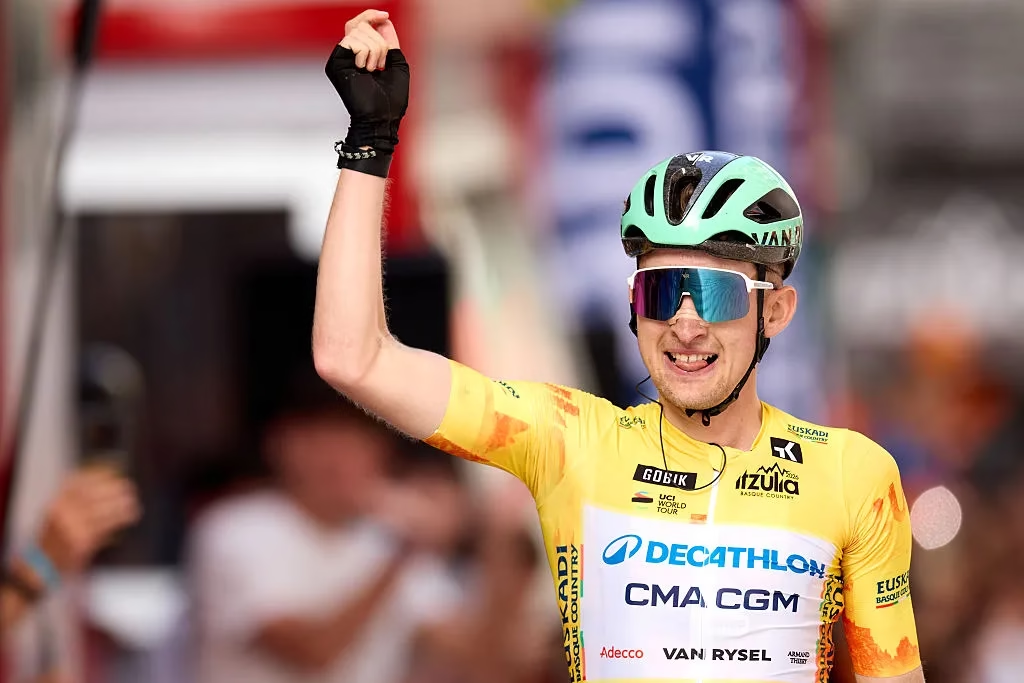
The weight of French expectation
French cycling has never been short of hope. The problem is that hope often arrives before the rider is ready for it.
Pinot carried that better than most, but his Tour story also showed how heavy it could become. Bardet reached the podium and gave France a genuine GC rider, yet even that was judged through the gap to yellow. Gaudu has had strong moments but has also had to deal with the difficulty of being seen as the next answer. Martinez has already had to manage expectation because his climbing talent is so visible.
Seixas enters that same environment with even more attention because his ceiling looks so high. The French public does not just want a stage winner. It wants a rider who can make the Tour feel nationally alive again. The danger is that a teenager becomes a symbol before he has had time to become a Grand Tour rider.
That is why Decathlon CMA CGM’s management matters. The team has to protect him from the noise as much as from crosswinds and mountain attacks. He needs a plan, a race rhythm and a clear definition of success that does not shift every time a television camera finds him in the bunch.
A good first Tour might be a top 10. It might be a strong white jersey challenge. It might be two excellent mountain days and one controlled bad day. It might even be a quieter ride that teaches him how the Tour works. What it cannot be is a demand that he solves four decades of French frustration in three weeks.
The wider French picture is covered in our best French riders to watch at the Tour de France 2026.
Decathlon CMA CGM and the Seixas project
Seixas also matters because he gives Decathlon CMA CGM a clear sporting identity. The team has moved beyond being a useful French WorldTour squad. It now has a rider around whom it can build a serious long-term Tour project.
That changes recruitment, tactics and pressure. A team with a protected young GC rider needs time-trial strength, mountain support, road captains and patience. It also needs to decide when to race for the present and when to protect the future.
The 2026 Tour will be a major test of that balance. Decathlon have to support Seixas, but they also have Olav Kooij as a sprint option and other riders with stage ambitions. A Tour team cannot serve every aim equally. If Seixas is genuinely the GC project, then the team structure around him has to reflect that.
The stage 1 team time-trial is the first proof point. A poor opening day could put Seixas under pressure before the race has properly started. A clean, controlled ride gives him stability before the Pyrenees. In a first Tour, that kind of emotional and tactical stability matters.
For more on that opening test, see our Tour de France 2026 team time-trial explained, how the stage 1 team time-trial could change the Tour de France 2026 and best time-triallists at the Tour de France 2026.
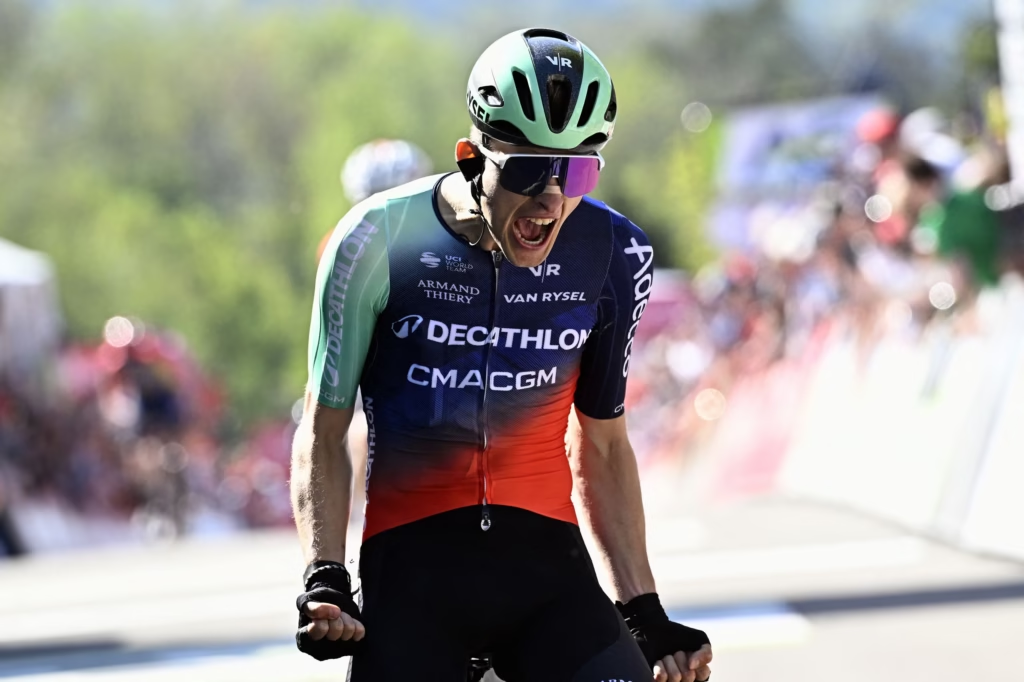
The 2026 route is a tough first Tour
The 2026 Tour is not a gentle route for a debutant GC rider. It starts with a team time-trial, moves quickly into the Pyrenees and keeps placing difficult terrain throughout the race. There is no long soft opening where Seixas can quietly settle into his first Grand Tour.
Stage 3 to Les Angles comes early. Stage 6 to Gavarnie-Gèdre follows soon after. That means Seixas will be tested before the race has reached its rhythm. For an experienced leader, that is simply part of the Tour. For a first-time rider, it can be a lot to manage.
The middle of the race is not easy either. The Massif Central, Vosges and Jura can create fatigue before the Alps. Those are the sections where young riders often learn the difference between being good in the mountains and being good across three weeks. It is not only about the final climb. It is about positioning, eating, recovery, avoiding crashes and never spending energy carelessly.
Then comes the final Alpine block, including back-to-back finishes on Alpe d’Huez. That is where Seixas’ first Tour could be defined. If he reaches that point still inside the top 10, still composed and still improving, France will have reason to believe. If he fades, that should not be treated as failure. It would simply be a reminder that the Tour is a different race from anything else.
For more on the decisive terrain, see our Tour de France 2026 summit finishes guide, Tour de France 2026 Massif Central guide and Tour de France 2026 Alps guide.
What would be a successful Tour for Seixas?
The realistic answer is not “win the Tour”. Not yet. The field is too strong, the route is too demanding and the race is too long to treat a 19-year-old debutant as a normal yellow jersey contender.
A successful Tour for Seixas would start with staying calm. He needs to get through Barcelona without unnecessary time loss, survive the early Pyrenees without panic and avoid turning every French roadside expectation into a tactical decision.
A top 10 overall would be a major success. A serious white jersey challenge would be a major success. A stage where he follows the best climbers deep into the final kilometres would be a major success. Even a Tour where he loses time but learns how to manage three weeks could still be useful if the team handles it properly.
The bigger aim is not July 2026 alone. It is the years after. If Seixas is going to become a real French Tour contender, the first appearance should give him information, confidence and experience rather than exhaustion and pressure.
That is the line Decathlon need to walk. Ambition is justified. Overload is not. His wider GC context is covered in our Tour de France 2026 GC favourites ranked.
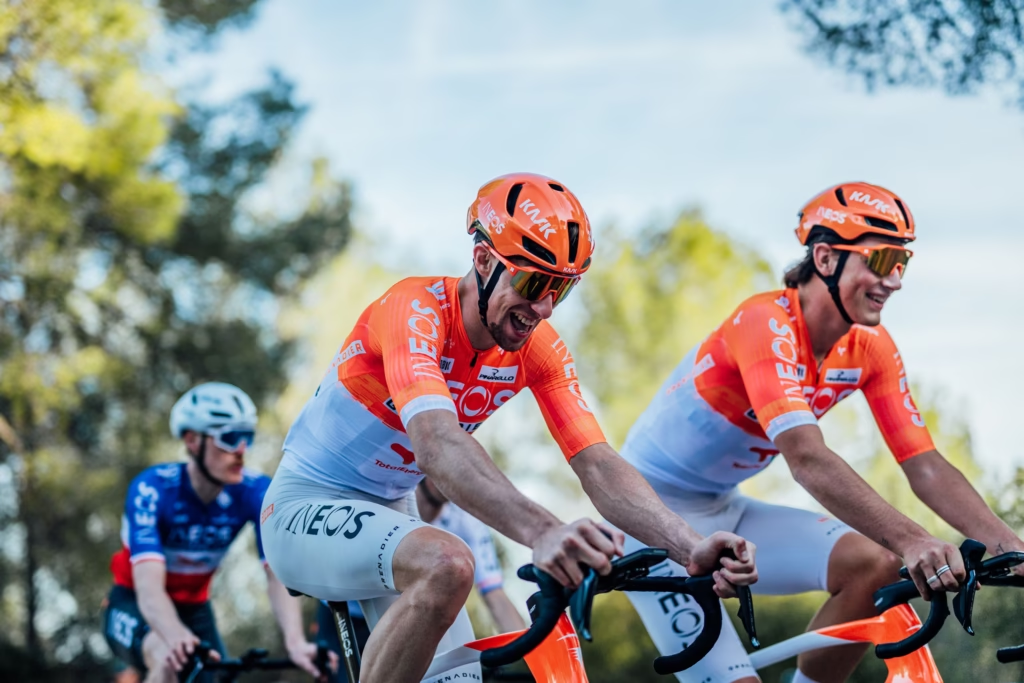 Photo Credit: Getty
Kévin Vauquelin: the proven Tour reference
Seixas may be the biggest name in the French future conversation, but Kévin Vauquelin is already a serious present-tense Tour rider. His move to Netcompany INEOS for 2026 also changes his context. He is no longer just a French rider overperforming inside a smaller structure. He is part of a team with a deep history of Grand Tour control, even if its current project looks different from the old Sky era.
Vauquelin’s value is that he has already shown he can handle the Tour. He climbs well, races intelligently and has enough all-round quality to sit high on GC. In a French cycling culture that often rushes to the next prospect, he deserves to be treated as more than a supporting name in the Seixas story.
The issue is ceiling. Vauquelin can be a top-10 rider, a stage winner, a dangerous opportunist and perhaps more if the race opens up. Whether he can become a true Tour-winning candidate is less clear. That does not make him less important. France needs several riders operating at a high level, not just one chosen successor.
In 2026, Vauquelin gives French cycling a more experienced counterpoint to Seixas. If Seixas is the new project, Vauquelin is the rider who can show what French GC relevance already looks like.
For the broader GC field around both riders, see our Tour de France 2026 GC favourites ranked and Tour de France 2026 dark horses for the general classification.
Lenny Martinez: the pure climber question
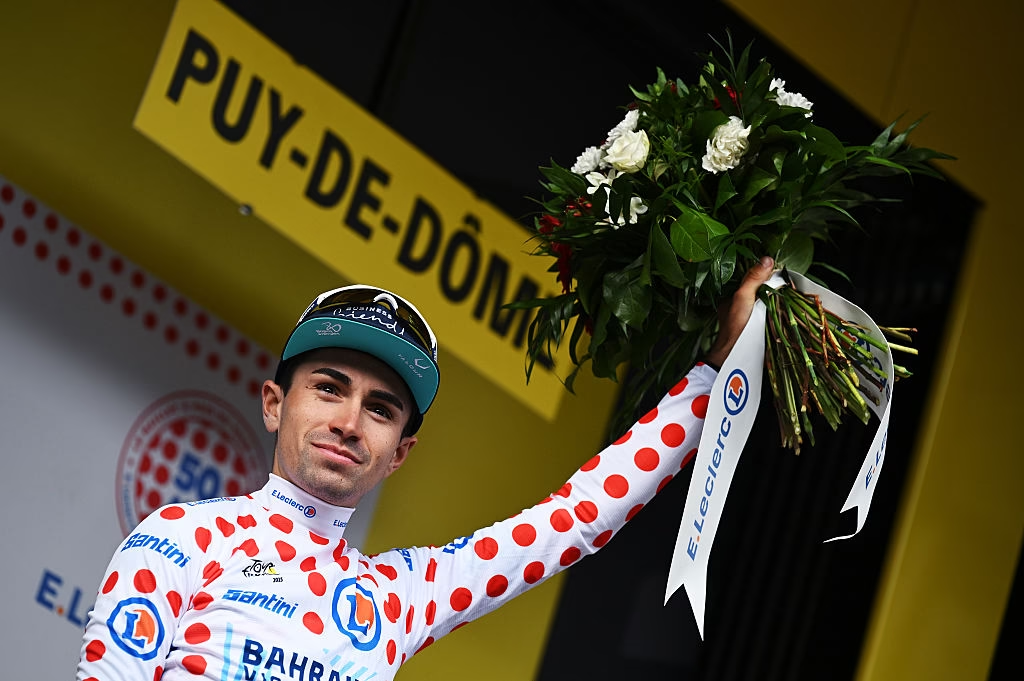
Lenny Martinez remains one of the most naturally gifted French climbers of his generation. He is light, sharp uphill and capable of looking at home on gradients that expose heavier riders. In a country still drawn to mountain romance, that makes him an obvious Tour storyline.
The question is whether he can become more than a climber. The modern Tour requires much more than acceleration on steep roads. Martinez needs consistency, resilience, time-trial management, positioning and the ability to avoid losing too much on days that do not suit him.
That does not mean his ceiling is low. It means his route to becoming a Tour contender is narrower than Seixas’. Martinez may be more naturally explosive in the mountains, but Seixas looks more complete for the full three-week structure. That difference matters.
Martinez’s best Tour role may not be the same every year. He can be a stage hunter, mountains-classification threat, climbing domestique or GC outsider depending on form and team plan. That flexibility could help him if expectations are managed properly.
For the French public, Martinez and Seixas should not be treated as rivals in a single succession race. They are different types of rider. France needs both.
For more on the climbing group they are joining, see our best climbers at the Tour de France 2026 and Tour de France 2026 mountain stages ranked by difficulty.
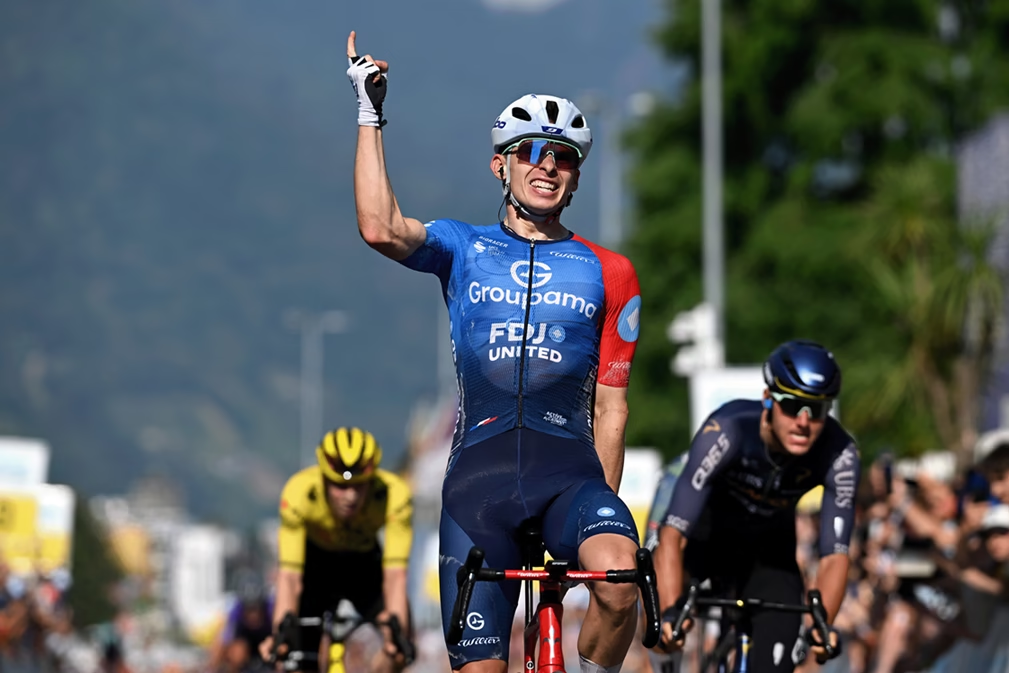 Photo Credit: Getty
Romain Grégoire and the punchier route
Romain Grégoire sits in a different category. He is not a classic Tour GC climber, but he is one of the most talented French riders of the new wave. His strength is punch, positioning and the ability to win difficult races rather than simply survive them.
That makes him relevant to the Tour in a different way. France does not only need a yellow jersey candidate. It needs stage winners, breakaway threats, Classics-style attackers and riders who can shape hard transition days. Grégoire can be part of that.
The 2026 Tour route has several days where a rider like him could matter if selected and given freedom. Hilly stages, rolling finales and breakaway-friendly terrain all suit riders who can handle repeated accelerations and still finish fast.
Grégoire’s presence in the wider French generation is important because it stops the conversation becoming too narrow. French success at the Tour does not have to mean only one GC leader. It can mean a broad group of riders capable of winning stages, animating the race and forcing other teams to react.
For those stage-hunting possibilities, see our Tour de France 2026 stage hunters to watch and Tour de France 2026 route: best days for breakaways.
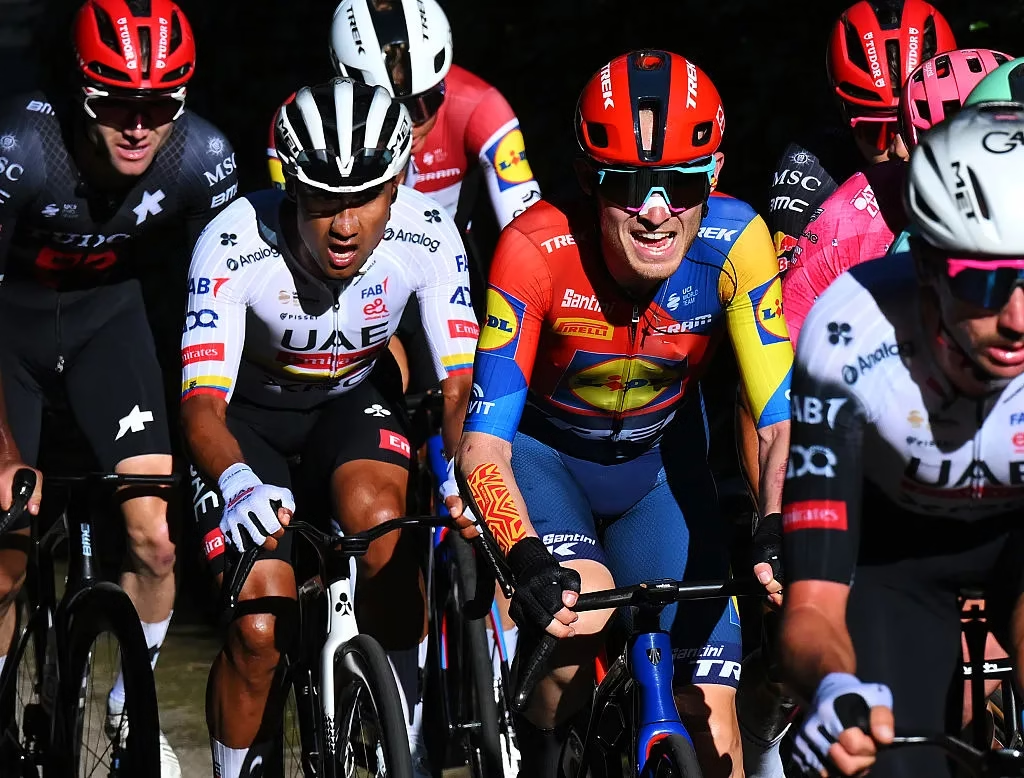 Photo Credit: Getty
Jordan Jegat, Valentin Paret-Peintre and the wider base
The next French generation also includes riders who may not carry the same hype but can still matter at the Tour. Jordan Jegat is one example. He has developed into a rider with climbing durability and enough ambition to chase stages or GC respectability depending on the race situation.
Valentin Paret-Peintre is another. His Giro d’Italia stage win showed he can deliver in a Grand Tour environment, and his climbing profile makes him useful either as a protected rider on the right day or as support for a stronger team leader.
Dorian Godon, Paul Lapeira, Lenny Martinez, Romain Grégoire, Kévin Vauquelin and Seixas all occupy different parts of the French performance map. That is the point. France’s future does not depend only on one rider being the next Hinault. It depends on whether enough riders can lift the level together.
If Seixas becomes the Tour-winning candidate but the rest of the group also wins stages, supports leaders and stays visible in the race, French cycling becomes much stronger than it has been in years.
The post-Pinot and post-Bardet shift
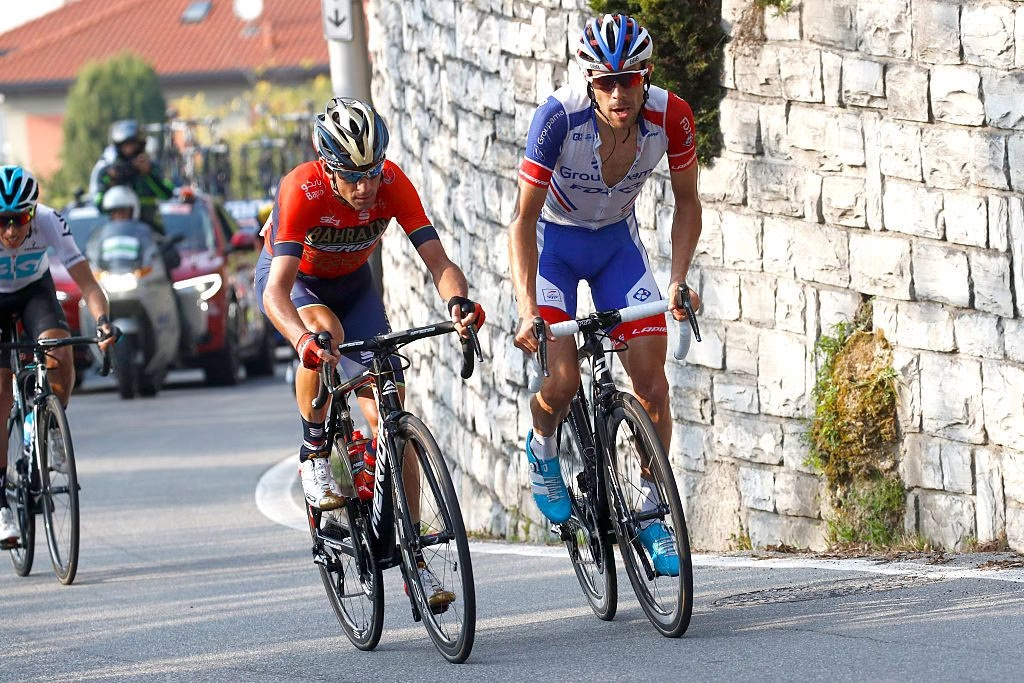
The emotional centre of French cycling has changed. Pinot and Bardet gave France two very different kinds of modern Tour hope. Pinot was the more instinctive and emotionally charged climber. Bardet was the more measured Grand Tour podium rider. Both shaped a generation of French expectation.
The new group has to operate differently. The level at the top of the sport has moved. Tadej Pogačar, Jonas Vingegaard and Remco Evenepoel have raised the standard for what a Tour contender needs to be. A French rider cannot simply be a good climber and hope the race comes to them. They need to be excellent across multiple disciplines and aggressive enough to take opportunities before the final climb.
That is why Seixas feels like the most modern French prospect. He is not being fitted into an old French template. He looks closer to the international model: young, complete, confident, and already expected to race across different types of terrain.
But France should be careful with the comparison. The point is not to find “the new Pinot” or “the new Bardet”. The point is to build a new structure around riders who fit the current era.
For more on the riders setting that current standard, see our Tadej Pogačar at the Tour de France 2026, Jonas Vingegaard at the Tour de France 2026 and Remco Evenepoel at the Tour de France 2026.
The white jersey battle as the first big marker
For Seixas, the white jersey may be the most realistic major classification target in 2026. It gives him a high-profile objective without requiring him to beat the established Tour winners immediately.
The problem is that the white jersey field could be extremely strong. Isaac del Toro, Juan Ayuso, Florian Lipowitz and other young riders are part of the same wider generational shift. Seixas is not emerging in isolation. He is arriving at a time when the young GC field is unusually deep.
That is useful. It gives his first Tour a proper benchmark. If he can compete with that group, France will know his development is on schedule. If he struggles, it will show where the gaps are.
The white jersey can also protect the narrative. A strong young rider race gives Seixas something to chase even if the yellow jersey fight becomes dominated by Pogačar, Vingegaard and Evenepoel. It allows Decathlon to frame the Tour around development and ambition rather than immediate overall victory.
For the wider young rider picture, see our Tour de France 2026 young riders to watch, Tour de France 2026 jerseys explained and best climbers at the Tour de France 2026.
Where Seixas could make a mark in 2026
The first obvious place is the Pyrenees. Stage 3 to Les Angles and stage 6 to Gavarnie-Gèdre come early enough to test him before the race settles. If he can stay close there, it changes the tone of his Tour.
The second marker is the Massif Central. Stage 10 to Le Lioran comes after the first rest day and could be a stage where young GC riders have to show discipline. It is hard enough to create gaps, but not as final as the Alps. A strong ride there would show Seixas can manage difficult mid-race terrain.
The third marker is the Vosges and Jura. These stages can be awkward, irregular and tactically messy. They are not always the days that get the biggest pre-race headlines, but they can expose inexperience. Seixas will need team help and calm decision-making.
The final marker is Alpe d’Huez. By then, the question may not be whether Seixas can attack the best riders. It may be whether he can still ride strongly after nearly three weeks of pressure. If he reaches the final Alpine weekend still relevant, his first Tour will already have been a success.
For more on those decisive stages, see our Tour de France 2026 Vosges and Jura guide, Tour de France 2026 Alps guide and Tour de France 2026 queen stage guide.
-
 Photo Credit: Getty
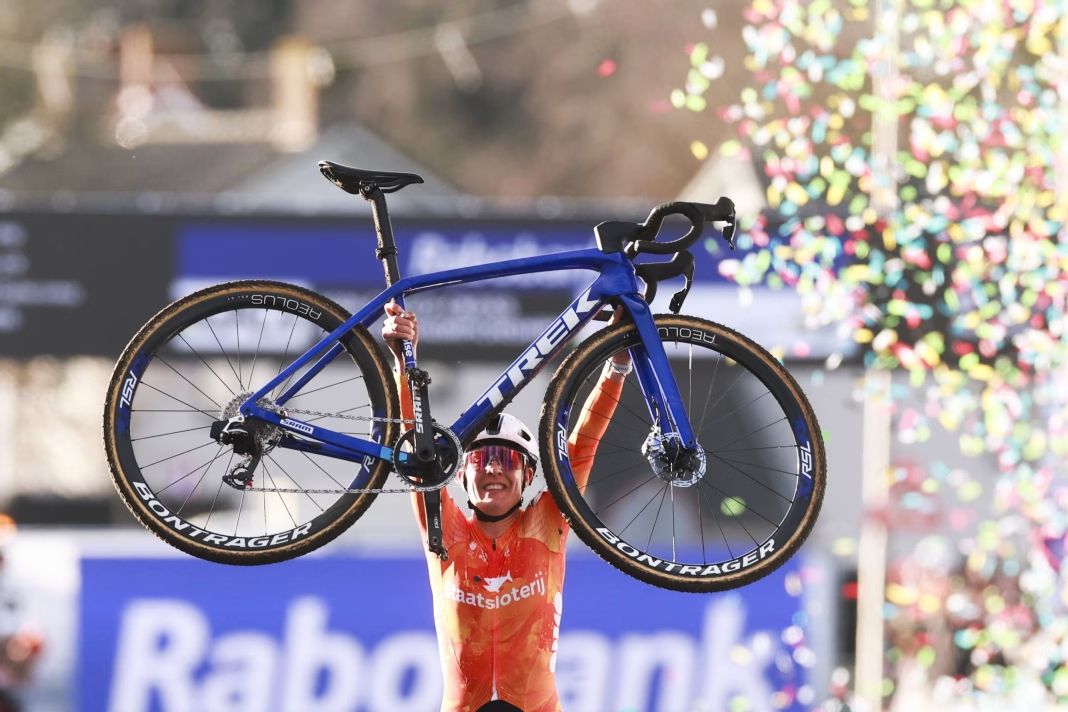
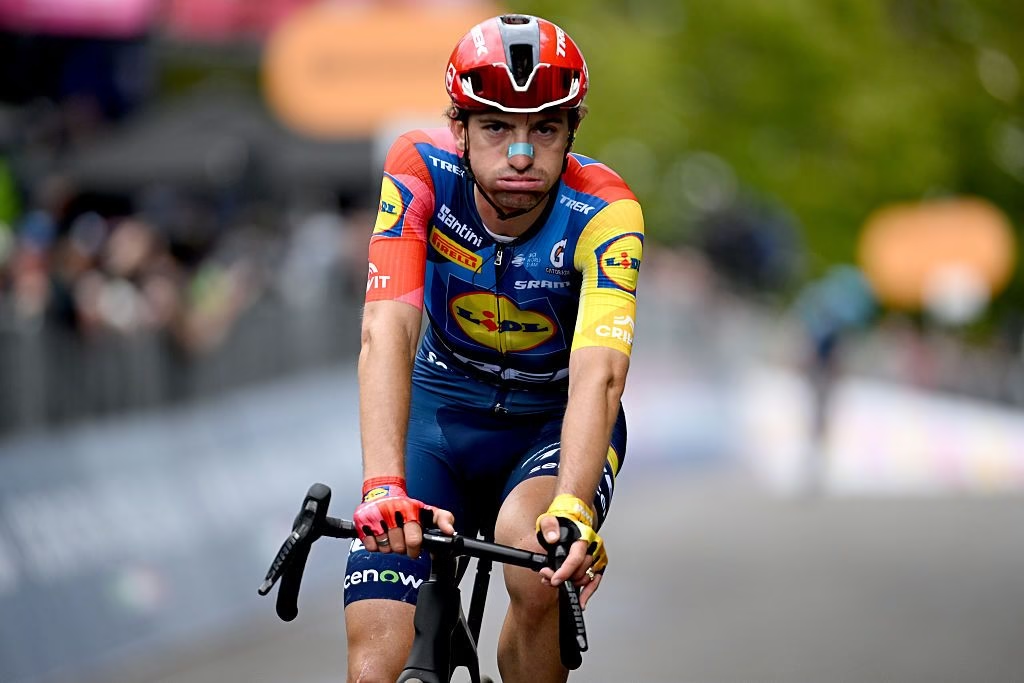

Can France win the Men’s Tour again?
Yes, but probably not by asking one rider to carry the whole answer immediately.
The gap between French hopes and Tour victory has not only been about talent. It has also been about team depth, time-trial strength, recovery, climbing support, race control and the ability to build a rider over several seasons. The strongest Tour contenders now sit inside systems designed around every detail.
That is where Decathlon CMA CGM’s project becomes important. If Seixas is to become a real Tour-winning candidate, he needs a team built around that aim. He needs support riders who can keep him safe on flat days, limit damage in team time-trials, position him before climbs and stay with him deep into mountain stages. He also needs a calendar that develops him rather than drains him.
France has enough individual talent to believe again. Seixas, Vauquelin, Martinez and Grégoire give the country different ways into the Tour. The next step is converting that into a collective level capable of challenging the best international systems.
A French Tour win is possible in the coming years. But the smarter question is whether France can build a generation strong enough to make that possibility feel normal rather than romantic.
Final verdict: Seixas is the centre, but not the whole generation
Paul Seixas is the face of the next French Tour de France generation because he has the most complete GC profile and the biggest home-race story. His 2026 Tour debut will be one of the defining narratives of the race, especially if he survives the early mountains and reaches the final week still in the white jersey or top-10 conversation.
But France should resist turning him into a one-man solution. Vauquelin is already a serious Tour rider. Martinez has rare climbing ability. Grégoire gives the generation a punchier, more aggressive stage-race and Classics dimension. Jegat, Paret-Peintre and others add depth. That is healthier than waiting for a single saviour.
The most important outcome in 2026 may not be a podium. It may be proof that France now has a structure and a generation capable of staying relevant across the whole Tour: GC, white jersey, mountain stages, breakaways and hilly stage wins.
Seixas is the headline. The generation around him is the real story.
For more Tour de France 2026 coverage, visit our Tour de France hub, beginner’s guide to Men’s Tour de France 2026 and how to watch Tour de France 2026 in the UK.

