
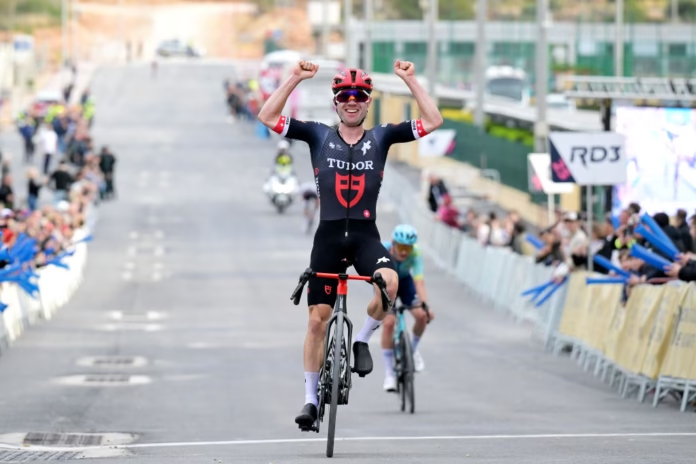
The Tour de France 2026 route gives stage hunters plenty to work with. This is not a race made only for pure sprinters and yellow jersey contenders. Between the Barcelona opening weekend, the early Pyrenees, the Massif Central, the Vosges, the Jura, the Alps and the reworked Paris finale, there are repeated chances for riders who can attack, descend, climb, sprint from reduced groups or survive in a breakaway.
That matters because the stage-hunter field could be one of the most interesting parts of this Tour. The general classification will naturally focus on riders such as Tadej Pogačar, Jonas Vingegaard and Remco Evenepoel, but the daily race should be shaped by a wider cast. Mathieu van der Poel, Tom Pidcock, Mads Pedersen, Matej Mohorič, Julian Alaphilippe, Marc Hirschi, Quinn Simmons, Frank van den Broek and others all have profiles that could suit specific days.
The key is matching the right rider to the right terrain. Some stage hunters need chaos. Some need a reduced sprint. Some need a long mountain breakaway. Some need the GC teams to hesitate. The 2026 Tour has enough variety for all of those routes to victory.
For the full race shape, our Tour de France 2026 full route guide explains how the 21 stages move from Barcelona to Paris via the Pyrenees, Massif Central, Vosges, Jura and Alps.
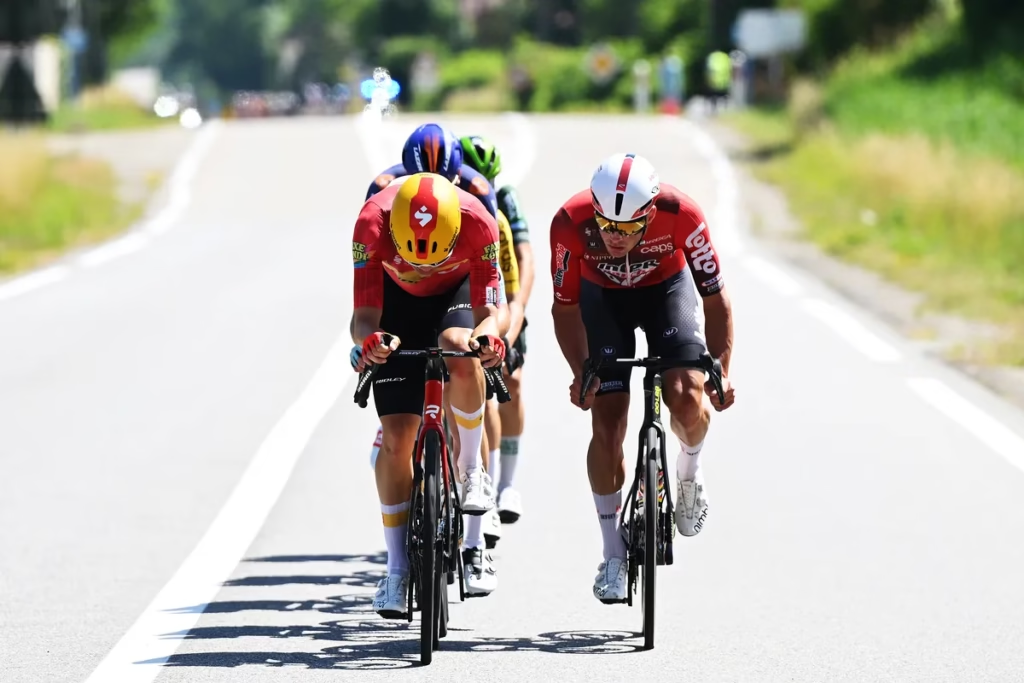
Tour de France 2026 stage hunters at a glance
| Rider | Team | Best stage-hunting terrain | Why they matter |
|---|---|---|---|
| Mathieu van der Poel | Alpecin-Premier Tech | Hilly stages, reduced sprints, Paris finale | The most explosive Classics-style rider in the race |
| Tom Pidcock | Pinarello-Q36.5 Pro Cycling Team | Mountain breakaways, technical descents, punchy stages | Can win from chaos and already has an Alpe d’Huez Tour stage |
| Mads Pedersen | Lidl-Trek | Hard sprint stages, rolling terrain, windy days | One of the best riders when pure sprint days become difficult |
| Matej Mohorič | Bahrain Victorious | Long breakaways, descents, transitional stages | A specialist in winning awkward stages through timing and risk |
| Julian Alaphilippe | Tudor Pro Cycling Team | Hilly finales, punchy climbs, emotional breakaways | Still dangerous when the stage becomes instinctive |
| Marc Hirschi | Tudor Pro Cycling Team | Reduced uphill finishes, medium mountains | A sharp finisher when a breakaway survives into rolling terrain |
| Quinn Simmons | Lidl-Trek | Long-range breakaways, rolling and hilly stages | Powerful enough to force moves before the favourites care |
| Frank van den Broek | Team Picnic PostNL | Breakaways, rolling terrain, hard transitional days | A rider who can turn opportunity into a full-day move |
| Warren Barguil | Team Picnic PostNL | Mountain breakaways | Experienced, aggressive and still suited to selective escape days |
| Kévin Vauquelin | INEOS Grenadiers | Hilly stages, GC-adjacent breakaways | Strong enough to win, but may be limited by wider team goals |
What is a stage hunter at the Tour de France?
A stage hunter is a rider whose main goal is to win individual stages rather than fight for the overall general classification. Some are breakaway specialists. Some are puncheurs. Some are climbers who deliberately lose time to gain freedom. Others are sprinters or Classics riders who target the few stages that suit their exact skill set.
At the Tour de France, stage hunting is a discipline in itself. It is not just attacking and hoping. The best stage hunters understand when the breakaway can survive, which teams will chase, how the GC battle changes the day, and whether a stage has the right balance of difficulty and opportunity.
The 2026 Tour should reward that kind of intelligence. There are obvious sprint stages, but also hilly days, awkward transition stages, hard mountain stages and late-race opportunities where the yellow jersey teams may want control but not full responsibility.
Our Tour de France 2026 route analysis looks at the bigger GC structure, but many of the same stages could also become stage-hunter territory.
Why the 2026 route is good for breakaways
The Tour de France 2026 route has 7 flat stages, 4 hilly stages and 8 mountain stages. That already tells part of the story. There are days for the sprinters, but there are also enough difficult stages to create uncertainty.
The key stage-hunter zones are likely to be:
| Route block | Stage-hunter appeal |
|---|---|
| Barcelona and Catalonia | Technical, hilly and unpredictable opening road stages |
| Early Pyrenees | Mountain breakaways once GC control becomes selective |
| Massif Central | Ideal terrain for strong rouleurs and punchy climbers |
| Vosges and Jura | Hard, rolling, selective stages with breakaway potential |
| Alps | High-mountain stage hunting if GC teams allow space |
| Paris finale | A harder final stage with more scope for late attacks |
The most interesting stages are not always the hardest on paper. A stage can be too hard for sprinters, but not hard enough for GC teams to fully commit. That is often where breakaways thrive. The Tour’s middle section, particularly through the Massif Central, Vosges and Jura, looks especially attractive for that type of racing.
For a deeper look at those possible openings, our Tour de France 2026 breakaway stages ranked guide identifies the stages where the peloton may be most vulnerable to a successful escape.
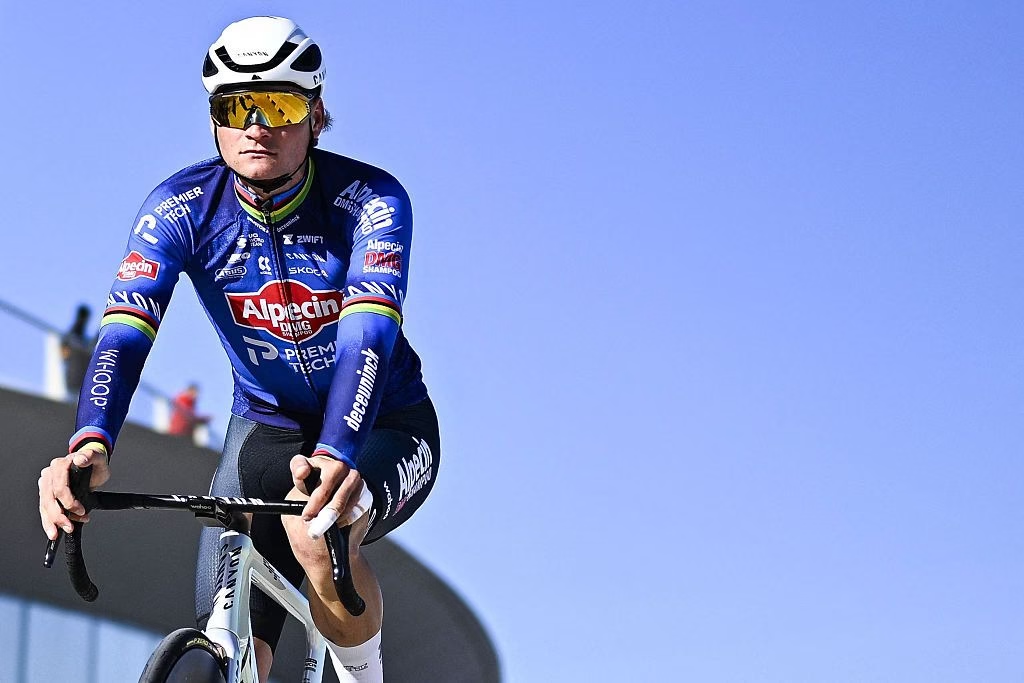 Photo Credit: Getty
Mathieu van der Poel
Mathieu van der Poel is the most obvious stage hunter in the Tour de France 2026 field because he can win stages in several different ways. He can attack from distance, survive repeated climbs, sprint from reduced groups, handle technical finishes and turn a chaotic final hour into something that suits him.
The Barcelona opening weekend immediately looks interesting. Stage 2 back into Barcelona, with Montjuïc in the finale, has exactly the kind of punchy, technical profile that can reward Van der Poel if Alpecin-Premier Tech choose to race aggressively. It may also be a yellow jersey stage, which complicates the picture, but that does not reduce his relevance.
Later in the race, the Massif Central and the reworked Paris finale may also suit him. Van der Poel’s strength is not simply that he is explosive. It is that he can make other riders uncomfortable before the sprint even begins. On a stage that has repeated short climbs, fast descents and nervous positioning, he can force the race into his world.
The obvious challenge is team balance. Alpecin-Premier Tech may also have sprint ambitions, depending on their final eight-rider selection. If Jasper Philipsen is present, the team will need to decide when it rides for the pure sprint and when it releases Van der Poel. That tactical split can be a problem, but it can also be a strength. Few teams have two such different stage-winning threats.
Our guide to the Tour de France 2026 route’s best days for sprinters explains where Alpecin-Premier Tech may prefer a more controlled Philipsen-style approach, which is part of the Van der Poel calculation.
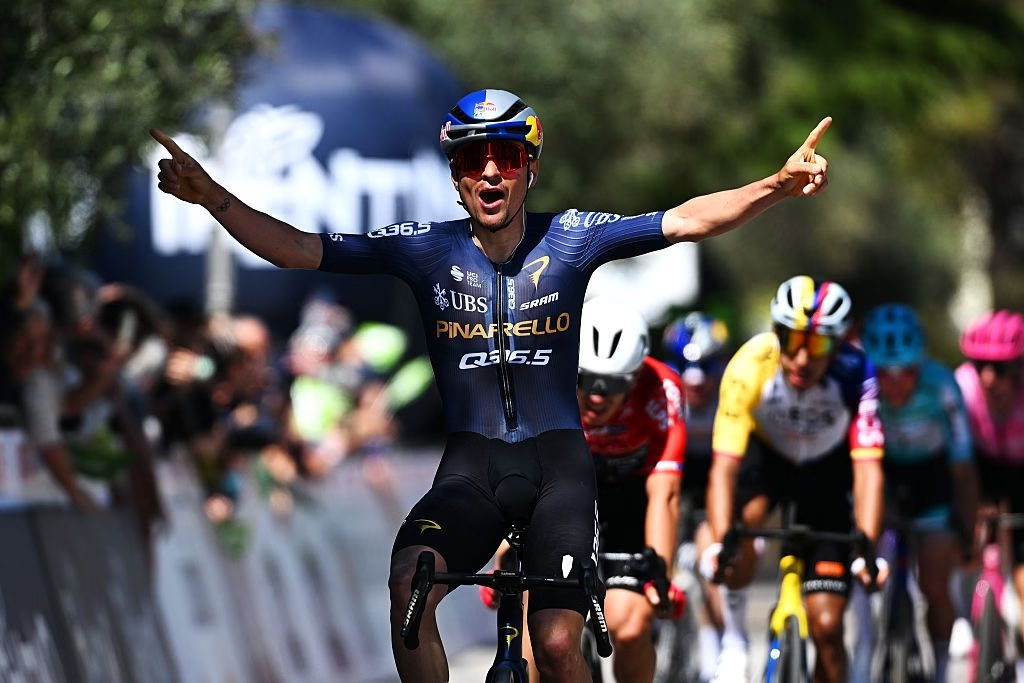 Photo Credit: Getty
Tom Pidcock
Tom Pidcock is the stage hunter who could also start the Tour as a general classification outsider. That makes him fascinating, but also harder to read.
If Pidcock stays close overall, he may have less freedom to attack. If he loses time, he becomes one of the most dangerous breakaway riders in the race. That is the central tension. His 3rd place at the 2025 Vuelta a España means he has earned GC respect, but his Tour de France stage win on Alpe d’Huez in 2022 remains the clearest image of what he can do when allowed to race on instinct.
The 2026 route gives him several kinds of opportunity. The Catalan opening stages suit his bike-handling and punch. The medium-mountain terrain suits his attacking style. The Alpine finale brings Alpe d’Huez back into the story, and that will follow him through the whole race.
Pidcock is not a pure climber in the Vingegaard or Pogačar mould, and he is not a sprinter in the Van der Poel or Pedersen mould. His stage-winning route is different: technical descending, sharp timing, hard climbs taken from the break, and the ability to attack when others are still measuring the effort.
Our dedicated analysis of Tom Pidcock at the Tour de France 2026 looks at whether he is better used as a GC outsider or as a stage hunter with freedom.
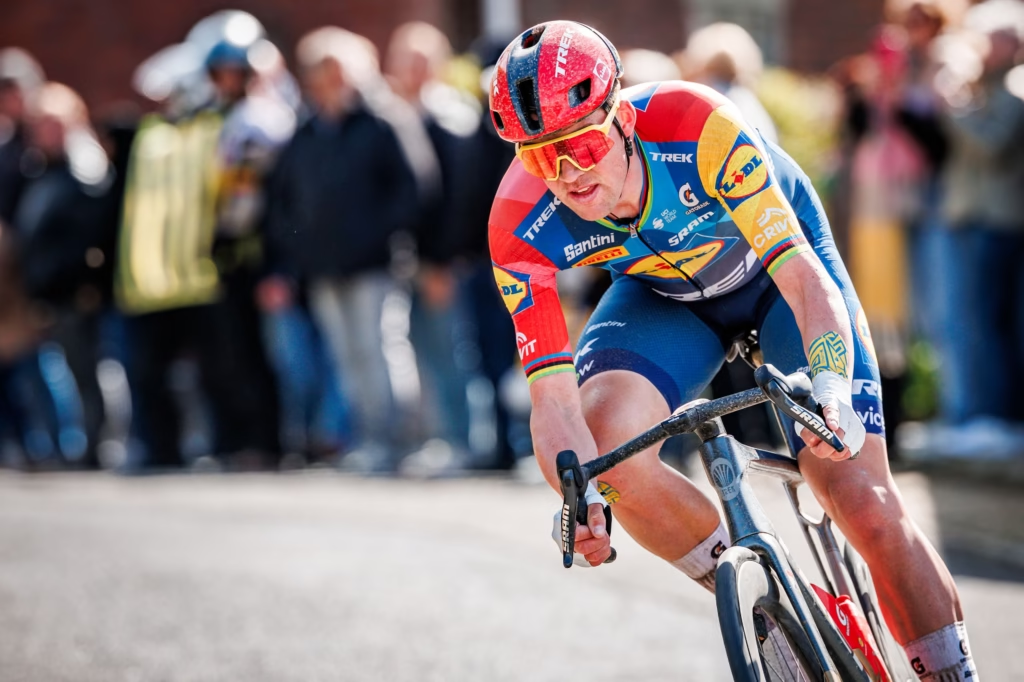 Photo Credit: Getty
Mads Pedersen
Mads Pedersen is not a stage hunter in the classic mountain-breakaway sense, but he is one of the most important stage-win riders in the race. His value comes on days that are too hard for the pure sprinters but still controlled enough to end in a reduced group.
That makes him a major threat on rolling stages, windy stages, long draggy finishes and days where repeated climbs slowly strip the bunch down. If Lidl-Trek can keep him positioned and avoid turning the race into pure GC chaos, Pedersen has the finishing speed and durability to turn difficult terrain into sprint territory.
The 2026 Tour has enough stages where that matters. The early days, selected transition stages and the Paris finale could all bring him into play. He is also tactically useful because his presence changes how rivals ride. If Pedersen is in a breakaway, nobody wants to tow him to the line. If he is in a reduced bunch, teams know he is one of the hardest riders to beat.
Lidl-Trek may have a complicated race to balance, with GC interests, stage ambitions and strong rouleurs all in the same team. That could actually suit Pedersen. On days where the team is not required to control for GC, he gives them a direct and realistic stage-winning card.
Our Mads Pedersen at the Tour de France 2026 guide looks in more detail at how his hard-day sprinting and green jersey role could fit into Lidl-Trek’s wider plan.
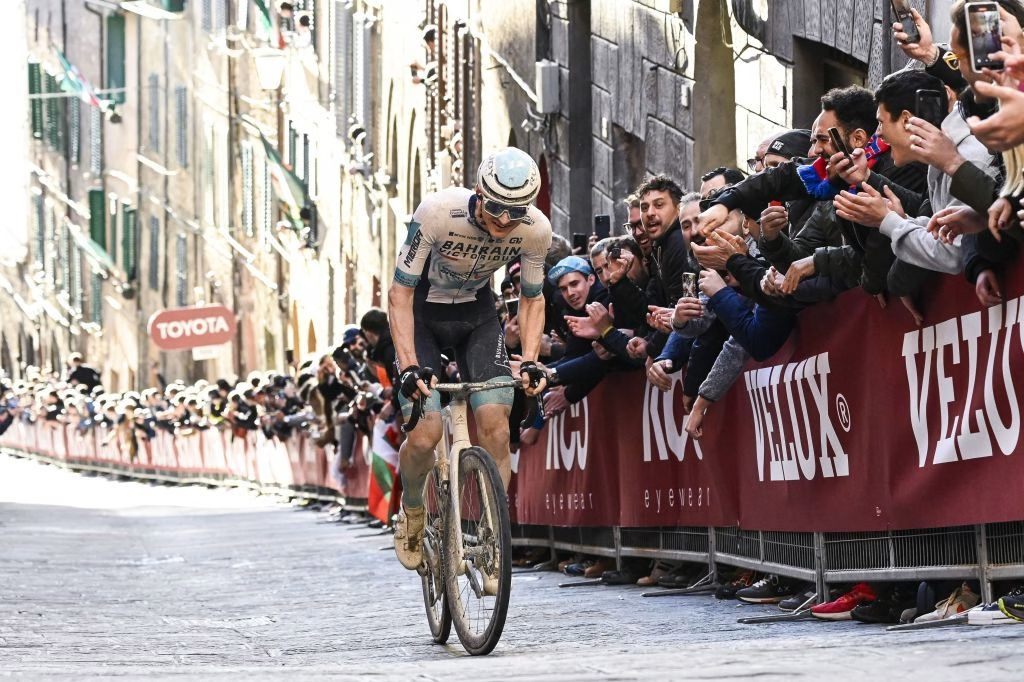 Photo Credit: Getty
Matej Mohorič
Matej Mohorič is one of the purest stage hunters in the modern peloton. He wins the kinds of stages that look almost impossible to control: long, awkward, tactical days where the breakaway is strong, the chase is disorganised and the descent or final road section rewards nerve.
The 2026 Tour has several stages where Mohorič could matter. He does not need a summit finish. He needs space, fatigue, technical roads and a group that cannot agree how to beat him. If a stage crosses rolling terrain and ends after a descent or fast run-in, he immediately becomes dangerous.
His descending remains one of his great weapons. That does not mean reckless riding, but rather confidence, judgement and the ability to carry speed when others hesitate. In the Tour, that can be decisive because everyone is tired, everyone is under pressure, and even a small gap can become a stage-winning move.
Bahrain Victorious may also need stage wins more than they need to control the race. That gives Mohorič room. He is exactly the kind of rider who can disappear into a breakaway that looks strong but not immediately decisive, then make the one move that matters.
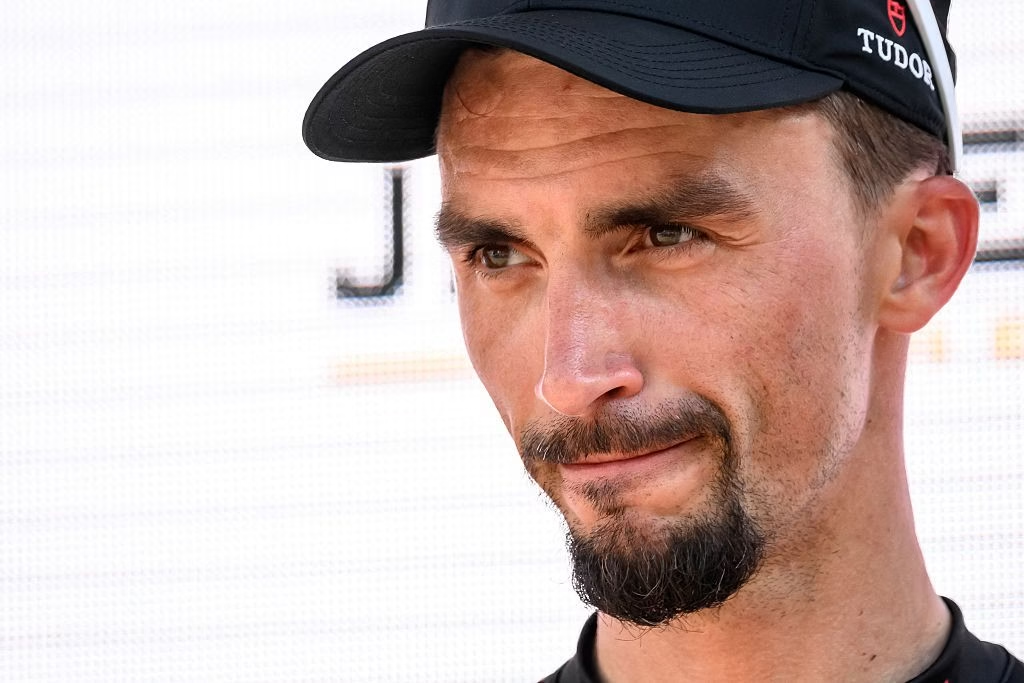
Julian Alaphilippe
Julian Alaphilippe’s best years may have carried a different kind of dominance, but he still belongs on a Tour stage-hunter list because his route to victory has always been built on instinct, timing and emotional racing.
Now with Tudor Pro Cycling Team, Alaphilippe could be especially valuable on days where the breakaway has a punchy final climb or a technical run-in. He no longer needs to be the rider who controls the whole race. He needs to choose the right day, arrive in the right move and use the final 20km better than the riders around him.
That is why the 2026 route still gives him chances. The hilly stages, Massif Central terrain and certain Vosges or Jura days could suit him if the GC teams allow space. He is also the kind of rider who can make a stage feel bigger than it is. When Alaphilippe attacks at the Tour, the race tends to react.
The question is whether he still has enough finishing sharpness to convert. If he does, Tudor have one of the most visible stage-hunting cards in the race.
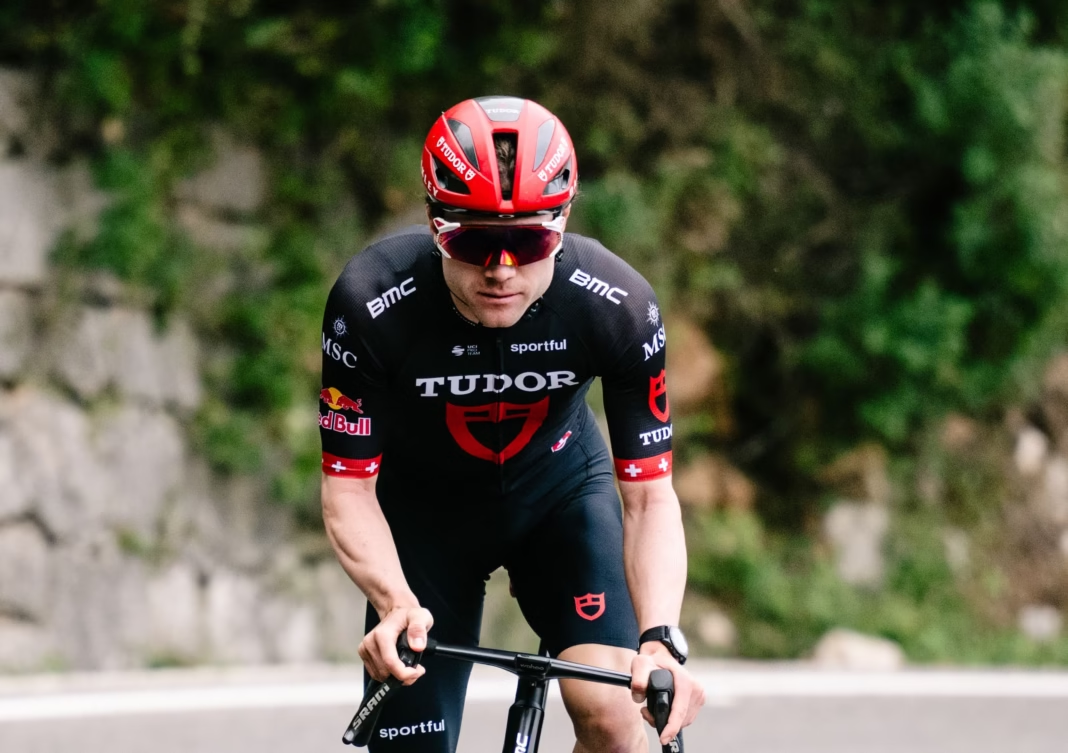 Photo Credit: Getty
Marc Hirschi
Marc Hirschi gives Tudor another route to a stage win. Where Alaphilippe brings the emotion and instinct, Hirschi brings a more controlled uphill finishing profile. He is at his best when a stage has been made hard, the group is reduced, and the final kilometres suit a rider who can climb and sprint.
That makes him a good fit for medium-mountain stages or hilly days where a breakaway survives but still needs a sharp finisher. He is not the rider most likely to win a long, high-mountain day if the pure climbers are still present, but he is very dangerous when the stage sits between categories.
Tudor’s inclusion gives the team a major platform, and a stage win would transform their Tour. Having both Alaphilippe and Hirschi gives them more than one way to attack the race. They can play numbers in breakaways, use Alaphilippe’s reputation to draw attention, and allow Hirschi to wait for the more precise final effort.
Quinn Simmons
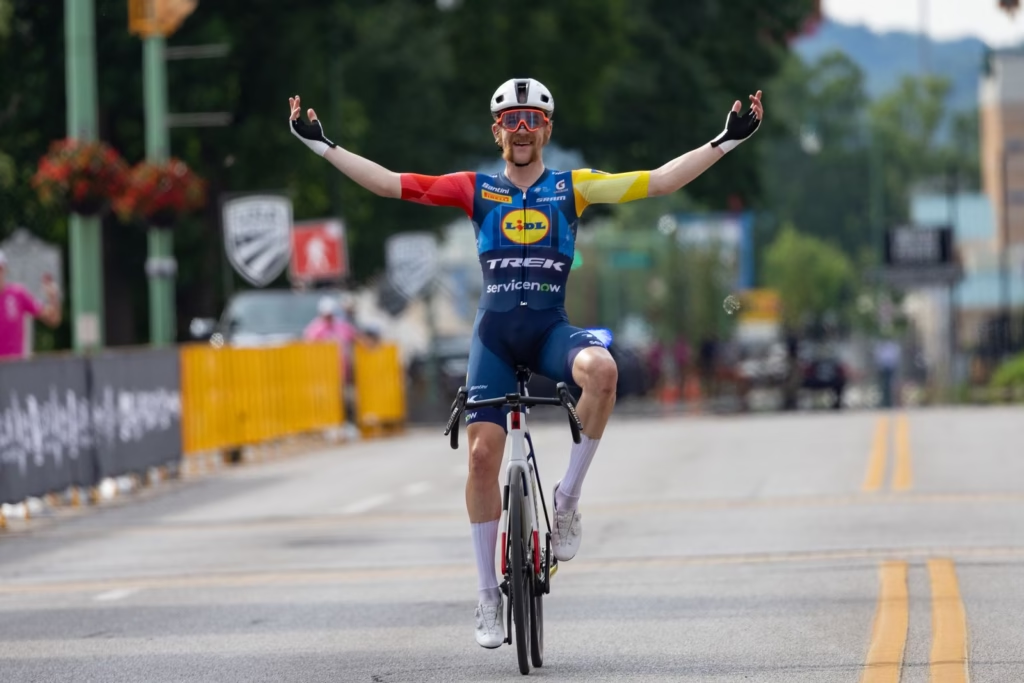
Quinn Simmons is one of the more intriguing stage-hunter names because his best route to victory is long range. He is not waiting for a neat sprint from a group of favourites. He is the kind of rider who can make a breakaway hard from distance, force others to commit, and then keep going when the stage becomes attritional.
The 2026 route should offer days for that type of rider. Rolling terrain through the Massif Central or hard transition stages can suit Simmons if he gets into the right move. He has the power to make the race uncomfortable, and that matters on stages where hesitation behind allows the breakaway to build a decisive lead.
His challenge is team hierarchy. Lidl-Trek may have several priorities, including Mads Pedersen and wider GC or stage ambitions. Simmons’ best chance may come on a day where the team can place multiple riders in the break, or where Pedersen is not the obvious card.
If the breakaway is strong but not full of pure climbers, Simmons can become a serious contender.
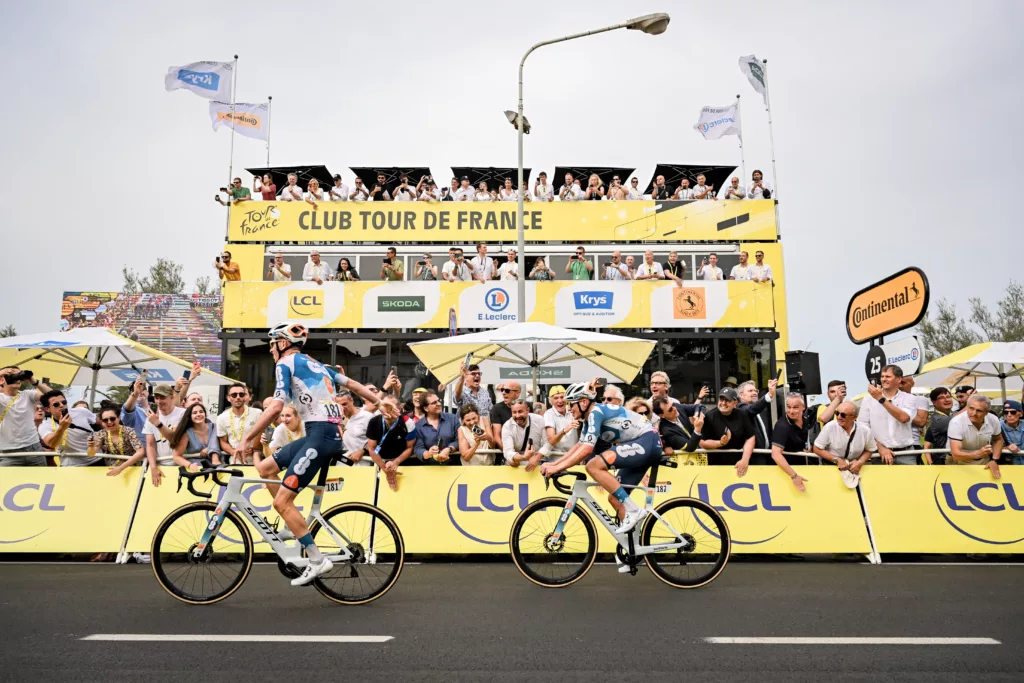 Photo Credit: ASO-Billy Ceusters
Frank van den Broek
Frank van den Broek has the profile of a rider who can make a Tour de France stage messy in exactly the right way. He is strong, aggressive, capable of working in a breakaway and suited to rolling days where the race becomes more about endurance and commitment than pure climbing rank.
Team Picnic PostNL may not control many stages, but that can be an advantage. Riders from teams without heavy GC responsibility often have more freedom to attack, and Van den Broek is the kind of rider who can take that freedom seriously.
His best chances are likely to come in the middle of the race, when sprint teams are tired, GC teams want selective control rather than a full chase, and the breakaway has a better chance of staying away. He is not the biggest name on the list, but that is part of the point. The Tour stage-hunting picture is rarely only about favourites. It is also about riders who choose the right day before others realise it is the right day.
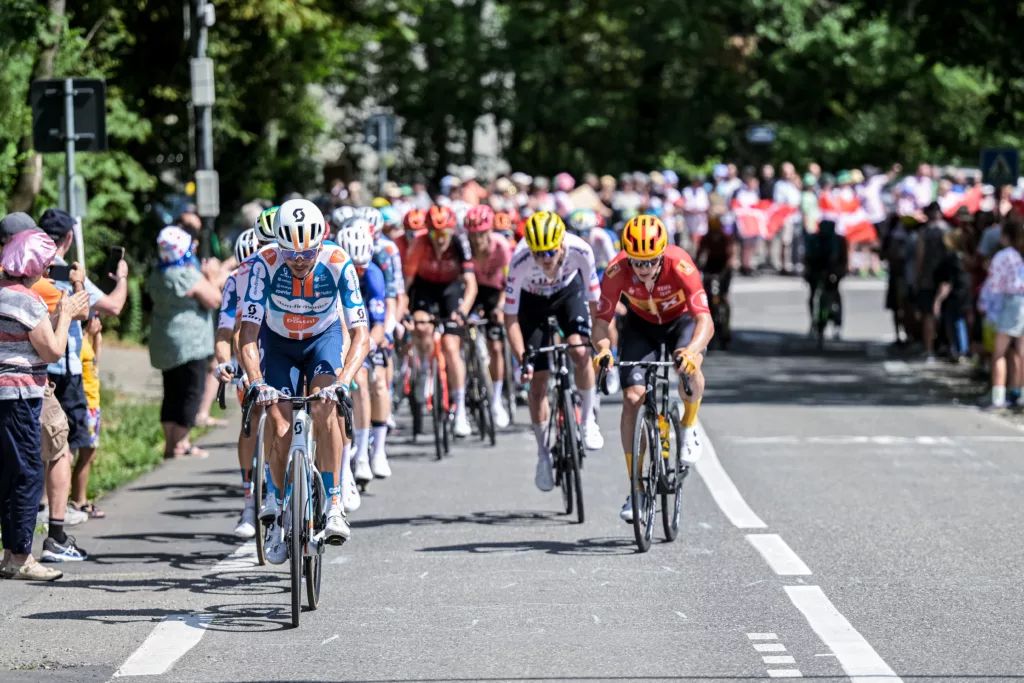 Photo Credit: A.S.O./Charly Lopez
Warren Barguil
Warren Barguil is a more traditional mountain breakaway rider, and that still has value in the 2026 Tour. He knows how to race the Tour, understands the rhythm of mountain stages, and has the experience to survive in the kind of breakaway that only becomes dangerous after several hours.
His best chance would likely come once the GC battle has created clear time gaps. If Barguil is no longer a threat overall, he can target a mountain day where the favourites are watching each other and the breakaway is allowed enough rope.
The early Pyrenees may come too soon for that kind of freedom, but the later mountain stages, especially if fatigue has split the race into different tactical layers, could suit him. A rider like Barguil does not need to be the strongest climber in the whole race. He needs to be the strongest climber in the right breakaway.
That is a different skill, and he has built a career around it. The route’s five summit finishes and heavy mountain balance are covered in more detail in our Tour de France 2026 summit finishes guide and Tour de France 2026 mountain stages ranked by difficulty analysis.
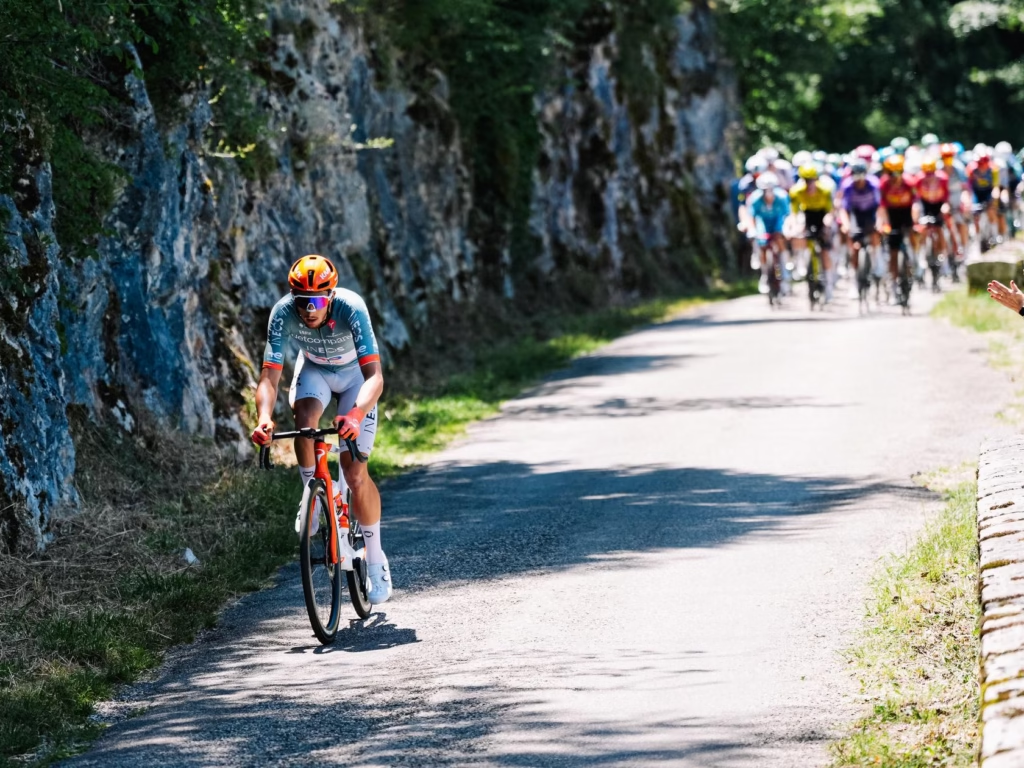 Photo Credit: A.S.O./Gaëtan Flamme
Kévin Vauquelin
Kévin Vauquelin sits slightly differently from the pure stage hunters because he may also be drawn into broader team and GC responsibilities. That makes him harder to classify, but also worth watching.
He has the engine, climbing ability and finishing strength to win a Tour stage from the right situation. The question is how much freedom he gets. If INEOS Grenadiers use him as part of a wider GC structure, his attacks may be limited. If he is allowed to target stages, he could become one of the more dangerous French options in the race.
Vauquelin’s best days are likely to be hilly or medium-mountain stages where a strong rider can either attack from a reduced bunch or win from a high-quality breakaway. He does not need the route to be brutally mountainous. He needs difficulty, but not so much that the pure GC climbers dominate everything.
For the home audience, a French stage win always carries extra weight. Vauquelin has the profile to chase one.
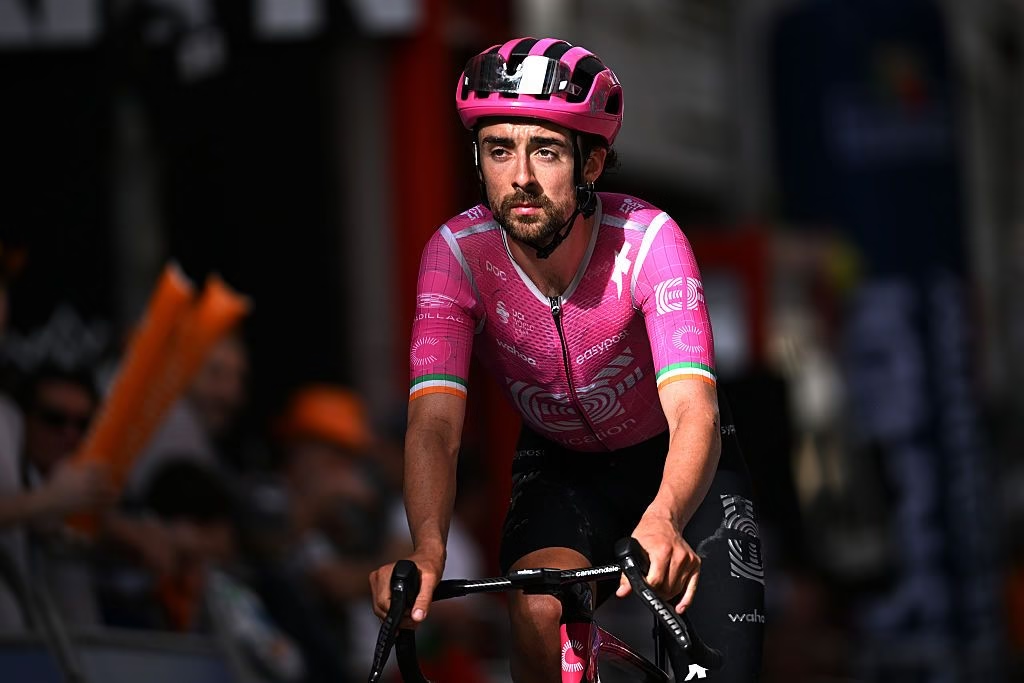 Photo Credit: Getty
Other stage hunters to keep in mind
The Tour always produces stage winners from outside the obvious list. Some riders become stage hunters because their GC plan collapses. Others are freed by team tactics, illness in a squad, a quiet first week, or one perfectly timed breakaway.
A few other names are worth watching depending on final team selection and race role:
| Rider | Why they could matter |
|---|---|
| Ben Healy | Aggressive on hilly terrain and dangerous if given full freedom |
| Neilson Powless | Well suited to rolling breakaway stages and long-range attacks |
| Dorian Godon | Strong on punchy terrain and reduced finishes |
| Søren Kragh Andersen | Experienced, powerful and tactically useful in transition stages |
| Victor Campenaerts | Dangerous if the route gives rouleurs a breakaway window |
| Matteo Jorgenson | Stage-winning ability, though likely tied to Visma’s GC work |
| Sepp Kuss | Mountain-stage threat if ever released from domestique duties |
| Giulio Ciccone | More likely to be linked to GC or mountains, but still a breakaway danger |
Not every rider on that list will have the freedom to hunt stages. That is the key distinction. A rider can have the ability, but the Tour decides whether he has the space.
Ciccone is especially interesting because the mountains classification could overlap with stage hunting on the right days. Our Tour de France 2026 climbers guide looks at how the polka-dot jersey battle could pull mountain breakaway riders into the same tactical space as stage hunters.
Which stages suit stage hunters most?
The most obvious stage-hunter opportunities are likely to sit away from the pure sprint days and away from the biggest GC summit finishes. The best days are often the ones where responsibility is unclear.
Stage 2 into Barcelona could suit a puncheur or Classics-style rider, though the yellow jersey fight may make it hard to escape. Stages through the Massif Central should attract powerful breakaway riders. The Vosges and Jura offer terrain where climbers, puncheurs and rouleurs can all survive depending on how the day is ridden.
The Alps are more complicated. On paper, the hardest mountain days look like GC stages. In practice, if a breakaway goes early and the favourites only race behind, a strong climber can still win. The final Alpe d’Huez block will be heavily controlled, but it also creates huge fatigue, and fatigue is where stage hunters often find cracks.
Stage 20 is the biggest mountain day of the race and will be difficult for any breakaway to survive if the GC battle is still open. Even so, the route over the Croix de Fer, Télégraphe, Galibier, Sarenne and Alpe d’Huez means it could still reward a rider who climbs brilliantly from the early move. Our Tour de France 2026 queen stage guide explains why that day is so severe.
Paris is also worth watching. The modernised final stage is no longer simply a procession into a flat bunch sprint. The Montmartre-style finale changes the calculation and creates a late opportunity for a rider who can attack, handle repeated efforts and still sprint at the end.
 Photo Credit: Getty
Why Wout van Aert’s absence changes the stage-hunter field
Wout van Aert would normally be one of the first names in any Tour de France stage-hunter guide. His absence changes the race. It removes one of the peloton’s most versatile riders and one of Visma-Lease a Bike’s most important support weapons.
For the stage-hunting field, that matters in two ways. First, there is one fewer all-rounder capable of winning almost any kind of non-high-mountain stage. Second, Visma’s tactical approach may become more focused around Jonas Vingegaard, with less flexibility to chase independent stage wins.
That opens space for others. Van der Poel, Pedersen, Pidcock and Mohorič all become even more central to the stage-win conversation. It may also make breakaways slightly easier to organise on certain days, because one of the sport’s strongest chase-and-attack riders is missing.
Tour de France 2026 stage hunters FAQ
Who are the best stage hunters at the Tour de France 2026?
Mathieu van der Poel, Tom Pidcock, Mads Pedersen, Matej Mohorič, Julian Alaphilippe, Marc Hirschi and Quinn Simmons are among the most interesting stage hunters expected at the Tour de France 2026.
What type of rider wins breakaway stages at the Tour de France?
Breakaway stages are often won by riders with endurance, timing, climbing ability and tactical discipline. Some are rouleurs, some are puncheurs and some are climbers who have lost enough time to be allowed into the move.
Can Tom Pidcock win a Tour de France stage in 2026?
Yes. Pidcock is one of the most dangerous stage hunters in the race if he has freedom. His best chances are likely to come on technical, hilly or mountainous stages, especially if he is no longer tightly marked as a GC threat.
Can Mathieu van der Poel win a Tour de France stage in 2026?
Yes. Van der Poel has several possible routes to victory, including hilly stages, reduced sprints, late attacks and the tougher Paris finale.
Which Tour de France 2026 stages suit breakaways?
The best breakaway opportunities are likely to come on hilly and medium-mountain days, especially in the Massif Central, Vosges and Jura. Some Alpine stages may also go to the breakaway if the GC teams allow space.
Is Wout van Aert racing the Tour de France 2026?
No. Wout van Aert has been ruled out of the Tour de France 2026 because of an elbow injury and infection recovery.
Can stage hunters also ride for GC?
Yes, but it is difficult. Riders such as Tom Pidcock can begin with GC ambition, but the more threatening they are overall, the less freedom they usually receive in breakaways.
-
 Photo Credit: Cs-wolves / Wikimedia Commons, CC BY-SA 4.0
Why stage hunters could shape the 2026 Tour
The Tour de France is never only about the yellow jersey. The GC contenders define the race’s biggest arc, but stage hunters often create the days people remember. They attack when control slips. They force teams to chase. They turn transitional stages into real races. They make the middle of the Tour more than a bridge between mountain blocks.
The 2026 route gives them room. Barcelona offers early punch. The Pyrenees arrive quickly. The Massif Central, Vosges and Jura provide the kind of terrain where breakaways can turn serious. The Alps bring altitude, fatigue and opportunity. Paris may even give the final day more racing edge than the old flat processions.
Van der Poel is the headline name. Pidcock is the most intriguing hybrid. Pedersen is the hard-stage sprinter. Mohorič is the tactical breakaway specialist. Alaphilippe and Hirschi give Tudor two visible cards. Simmons, Van den Broek and Barguil add different forms of escape-day danger.
That is what makes the stage-hunter race so compelling. It is not one contest. It is a series of different puzzles across three weeks, with different riders suddenly becoming relevant depending on the road, the weather, the GC situation and the willingness of the peloton to let them go.
For more race build-up, the Tour de France hub brings together the latest route guides, rider analysis, start-list coverage and explainers for the 2026 edition.

