
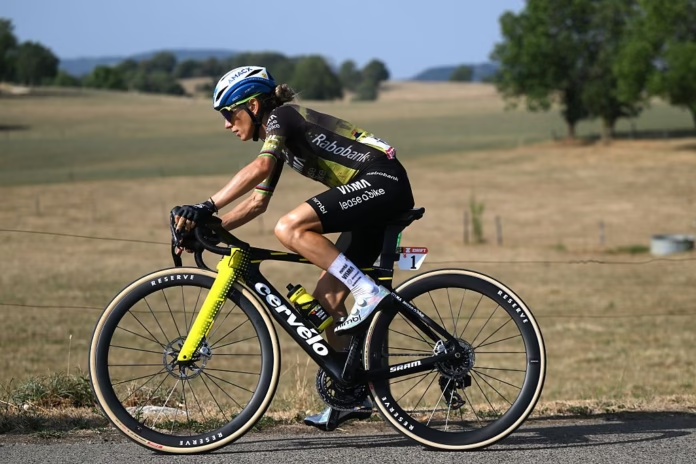
Pauline Ferrand-Prévot has conceded that her Tour de France Femmes title defence is effectively over after losing another 2:35 to the leading general classification riders on Stage 5.
The defending champion was dropped on the Col de Durbize with approximately 31 kilometres remaining as FDJ United-Suez increased the pressure for Demi Vollering. Ferrand-Prévot could not respond when the pace rose on the steeper section and eventually finished alongside Anna van der Breggen, Cédrine Kerbaol and Noemi Rüegg.
She has fallen to 17th overall, exactly five minutes behind yellow jersey Marlen Reusser. More significantly, she is 4:48 behind Vollering and 3:43 outside the podium before the race reaches Mont Ventoux.
Asked afterwards whether her GC challenge was over, Ferrand-Prévot gave an unusually direct answer: “I think it’s over.”
Where Ferrand-Prévot was dropped on Stage 5
Ferrand-Prévot survived much of an aggressive stage from Mâcon to Belleville-en-Beaujolais, which contained eight categorised climbs and almost 3,000 metres of elevation.
The decisive moment came on the Col de Durbize, the penultimate classified ascent.
Célia Gery moved to the front for FDJ United-Suez with approximately 31 kilometres remaining and began reducing the group. Vollering then continued the pressure as the gradient increased, stretching the remaining favourites into a line.
Ferrand-Prévot initially remained near the back of the group but began losing contact on the steeper section. Once the elastic broke, she could not stabilise the gap or ride back to the favourites before the summit.
Ahead, Vollering, Reusser and Kasia Niewiadoma-Phinney eventually separated themselves from the rest of the GC field. Ferrand-Prévot instead joined Van der Breggen and the EF Education-Oatly riders Kerbaol and Rüegg for the final part of the stage.
The quartet crossed the line 2:35 behind Vollering. That was not a brief positioning problem or a small split created close to the finish. Ferrand-Prévot was comprehensively distanced when the strongest riders began racing on the climbs.
The complete account of the stage is available in our Tour de France Femmes Stage 5 race report.
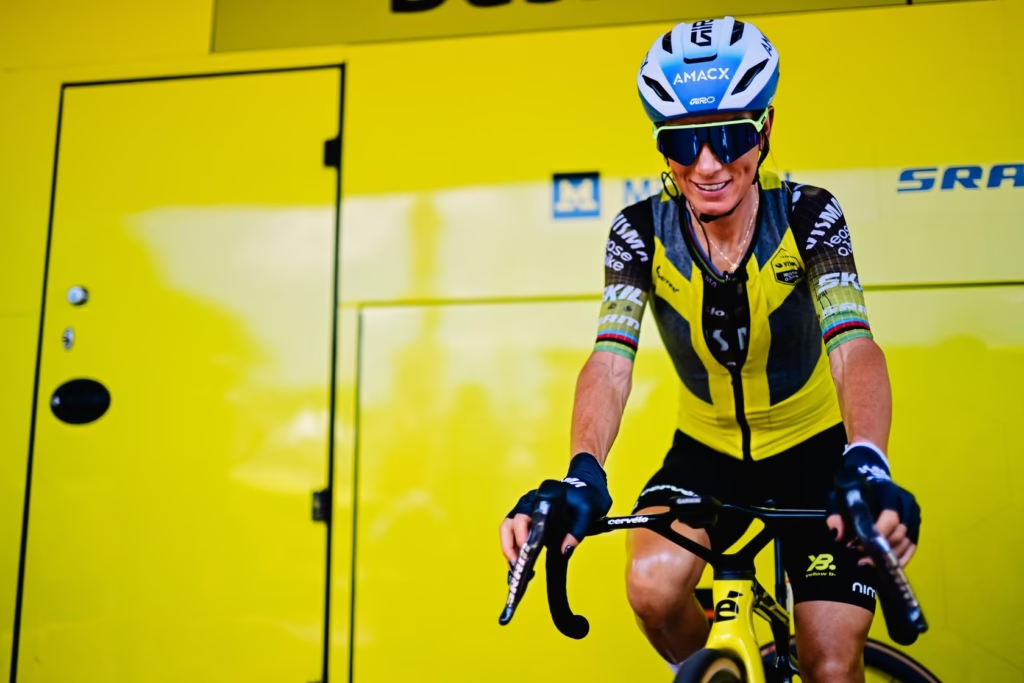 Photo Credit: A.S.O./Billy Ceusters
Ferrand-Prévot says she did not have a bad day
There was no obvious crash, mechanical problem or sudden physical collapse to explain the time loss.
Ferrand-Prévot said she had felt comfortable until the Col de Durbize became steeper. She tried changing position and standing on the pedals but could not increase her speed sufficiently to remain with the group.
Her assessment was blunt: “I think they’re simply much stronger.”
That distinction matters.
Ferrand-Prévot did not describe illness, heat stress or one isolated moment of weakness. She believed she was riding at her available level but found that Vollering, Reusser and Niewiadoma-Phinney were operating above it.
“I wasn’t strong enough to follow,” she said after finishing.
It is a much more definitive explanation than saying she mistimed an effort or suffered a temporary bad patch. The problem was not that Ferrand-Prévot failed to execute her plan. On the decisive terrain, she could not produce the power required to remain part of the yellow jersey contest.
The warning signs appeared before the Col de Durbize
Stage 5 did not create Ferrand-Prévot’s GC problem from nothing. It confirmed a pattern that had begun earlier in the Tour.
On Stage 3, she lost contact during a late acceleration by Vollering. The moment could initially be interpreted as a positioning issue or a calculated decision not to chase an attack when the stage victory was already likely to remain ahead.
The Dijon time trial then produced a far more serious warning.
Ferrand-Prévot finished 34th on Stage 4, losing 2:13 to Reusser and 1:55 to Vollering across 21 kilometres. She dropped to 14th overall but remained publicly optimistic because the Tour still contained Mont Ventoux and the mountainous final weekend.
The full scale of that setback became clear when Marlen Reusser won the Stage 4 time trial and moved into yellow.
After the time trial, Ferrand-Prévot said she liked the prospect of having to attack rather than defend her status as favourite. Team Visma | Lease a Bike continued to point towards the climbing stages as the terrain on which the race could turn back in her favour.
Stage 5 was therefore supposed to begin the recovery.
Instead, it removed the idea that the time trial had simply exposed one weaker discipline. Ferrand-Prévot lost time again when the road climbed, on terrain much closer to the stages she dominated during her 2025 victory.
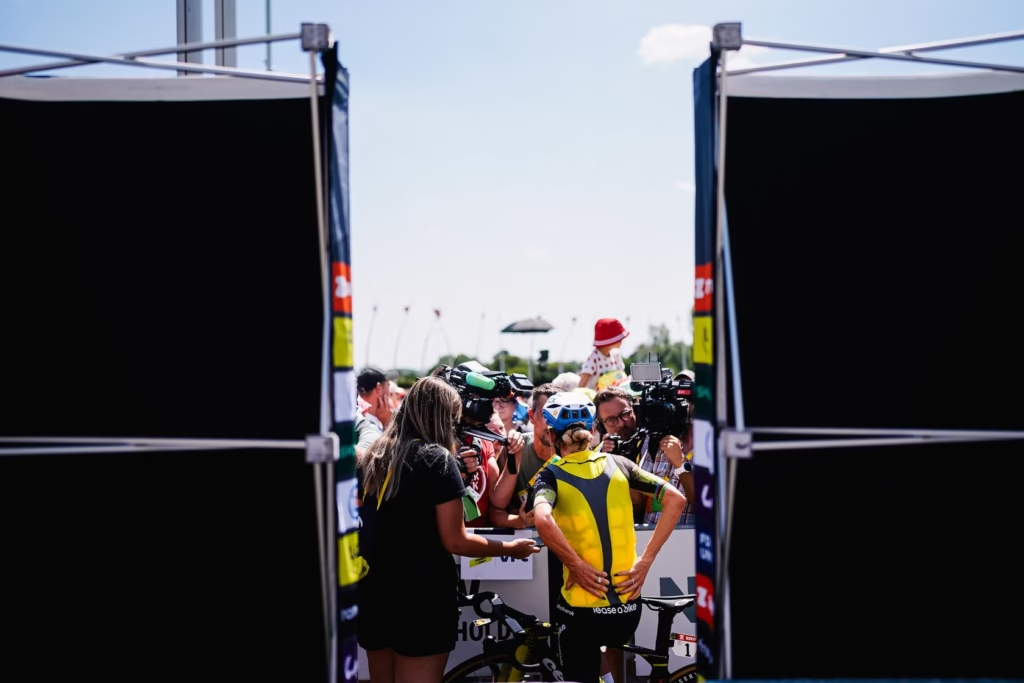 Photo Credit: A.S.O./Gaëtan Flamme
Why the contrast with 2025 is so striking
Ferrand-Prévot won the 2025 Tour through overwhelming climbing superiority.
She did not merely survive the decisive mountain stages. She attacked, isolated the strongest riders in the race and created gaps measured in minutes.
Her Stage 8 victory on the Col de la Madeleine transformed the general classification before another solo success in Châtel completed one of the most dominant closing weekends in the modern race.
The expectation for 2026 was that her preparation would again peak for the hardest stages, even if her relatively light race programme left some uncertainty around her condition.
That version of Ferrand-Prévot has not appeared during the opening five days.
She lost more than two minutes in the time trial and then could not follow the first sustained GC acceleration across the Beaujolais climbs. Vollering, Reusser and Niewiadoma-Phinney did not need to wait for Mont Ventoux to expose the difference.
Ferrand-Prévot also finished behind a wider group containing riders who had already spent substantial energy in the day’s breakaway. Antonia Niedermaier, Dominika Włodarczyk and Isabella Holmgren all remained considerably closer to the stage leaders despite racing aggressively earlier.
The comparison with 2025 is therefore not simply about one disappointing result. Ferrand-Prévot has gone from being the rider who dictated the Tour’s hardest climbing to one who could not remain inside the main GC selection on a hilly stage.
Her route from reigning champion to rider chasing a recovery is examined more broadly in our Pauline Ferrand-Prévot Tour de France Femmes profile.
Could Ferrand-Prévot still recover on Mont Ventoux?
Five minutes is not a mathematically impossible deficit with four stages remaining, but it is functionally decisive against this quality of opposition.
Ferrand-Prévot would need to gain time on Reusser, Vollering, Niewiadoma-Phinney and every rider between herself and the podium. Those rivals do not need to chase one another recklessly now that she has fallen so far behind.
More importantly, her Stage 5 performance provides no evidence that she currently possesses the climbing superiority required to reverse the standings.
Mont Ventoux is longer and more consistent than the short Beaujolais climbs. That different effort may suit Ferrand-Prévot better, and a dramatic improvement cannot be completely dismissed. Yet even an outstanding Ventoux performance would need to produce an enormous margin merely to return her to the edge of podium contention.
The full demands of the climb and its place within the race are covered in our Tour de France Femmes Mont Ventoux guide.
The Tour is no longer hers to recover through patient GC riding. Any attempt to change the situation would require an aggressive move and a level of freedom she would never have received as defending champion.
Her lower position may at least alter the tactical calculation. At five minutes, the leading teams might be more willing to let her attack from distance than they would have been earlier in the race.
Whether they grant her complete freedom is another matter. A rider of Ferrand-Prévot’s ability remains dangerous, particularly on Mont Ventoux, and no rival will want to discover too late that her Stage 5 weakness was temporary.
-
 Photo Credit: Getty

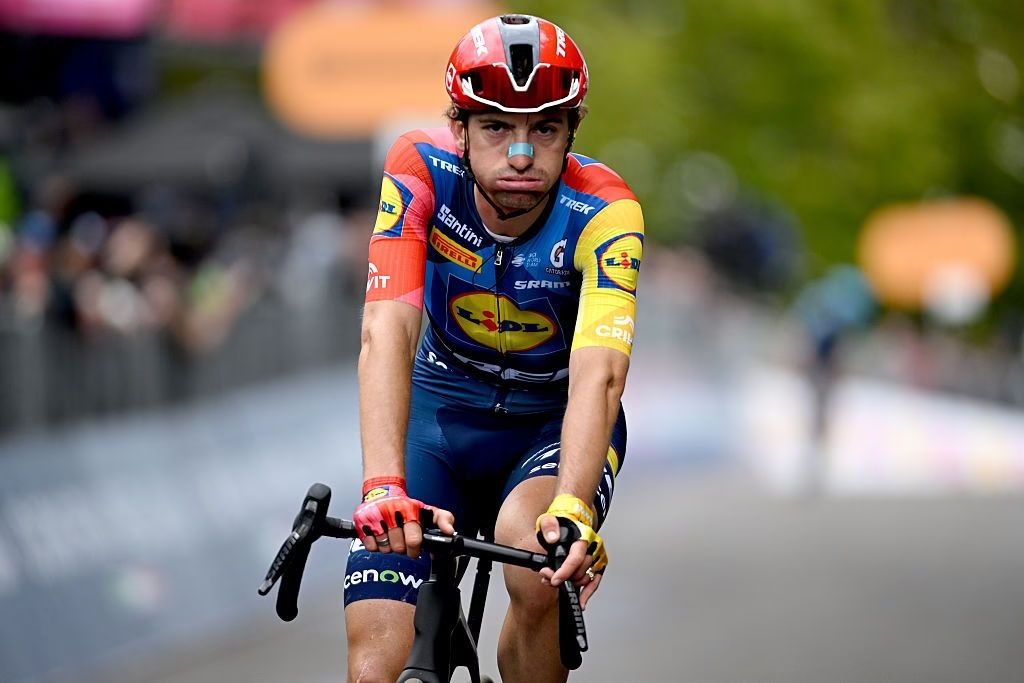

Team Visma | Lease a Bike must now change the plan
Ferrand-Prévot acknowledged after the stage that Team Visma | Lease a Bike would need to reconsider its objectives.
The team arrived with a squad constructed around the defence of yellow. Marianne Vos provided a separate route towards stage victories, but the mountain resources were selected primarily to support Ferrand-Prévot.
That approach no longer makes sense with the defending champion in 17th.
Visma can now race more aggressively. Femke de Vries has moved ahead of Ferrand-Prévot into eighth overall at 3:11 and gives the team a realistic top-10 objective. The Dutch rider was part of the dangerous Stage 5 breakaway and briefly moved close to the virtual race lead before the GC favourites closed the gap.
De Vries may now deserve greater protection rather than being used entirely as a satellite rider for Ferrand-Prévot.
Sarah van Dam and Daniek Hengeveld can also pursue breakaways, while Vos remains a leading candidate for the hilly Stage 6 finish in Tournon-sur-Rhône. Marion Bunel provides another climbing option once the race reaches Ventoux and the final Alpine stages.
Team Visma | Lease a Bike no longer need to spend entire stages controlling the peloton. Their strongest route towards salvaging the Tour is to place riders ahead and force the teams of Reusser, Vollering and Niewiadoma-Phinney to carry responsibility.
Stage wins become Ferrand-Prévot’s new objective
Ferrand-Prévot has already indicated that she is prepared to reset her ambitions.
Asked which remaining stage she would target, she replied that she would take any opportunity, including the final day.
That opens several possible routes back into the race as a protagonist.
Stage 6 is hilly enough for an attack, although it may arrive too soon after the effort and disappointment of the Beaujolais stage.
Mont Ventoux is the obvious target. Ferrand-Prévot prepared specifically for long climbs and remains one of the most accomplished off-road and road riders of her generation. Winning there would not rescue the yellow jersey, but it would transform the interpretation of her Tour.
The final weekend also provides attacking opportunities. Once a rider is no longer bound by a podium position, she can take greater tactical risks, move earlier and force her rivals to decide whether she remains worth chasing.
Ferrand-Prévot’s GC challenge appears over, but her Tour does not have to become irrelevant.
The question has changed. It is no longer whether the 2025 Tour de France Femmes winner can successfully defend yellow. It is whether she can recover physically and mentally quickly enough to turn a failed title defence into a stage-hunting campaign.

