

Mads Pedersen goes into the 2026 Tour de France with a route that does not look made for him at first glance, but still gives him enough ways to shape the race. This is not a soft Tour for sprinters. The Pyrenees arrive almost immediately, the Massif Central, Vosges and Jura keep the middle of the race heavy, and the Alps finish with three brutal mountain days, including back-to-back finishes at Alpe d’Huez.
That makes Pedersen’s Tour a question of selection rather than pure speed. He is unlikely to be the fastest rider in a full bunch sprint against Jasper Philipsen, Jonathan Milan or Tim Merlier, but the green jersey is not always won by the fastest man on one perfect day. It is won by the rider who keeps scoring when others disappear, survives the hard days, and turns awkward stages into points.
For Pedersen, the 2026 Tour is a chance to chase stages, test the green jersey equation and give Lidl-Trek a rider who can make something happen on the days that are too difficult for the pure sprinters but not selective enough for the general classification contenders alone.
For broader route context, see our Tour de France 2026 full route guide, Tour de France 2026 route analysis, Tour de France 2026 route: best days for sprinters and Tour de France 2026 sprinters guide.
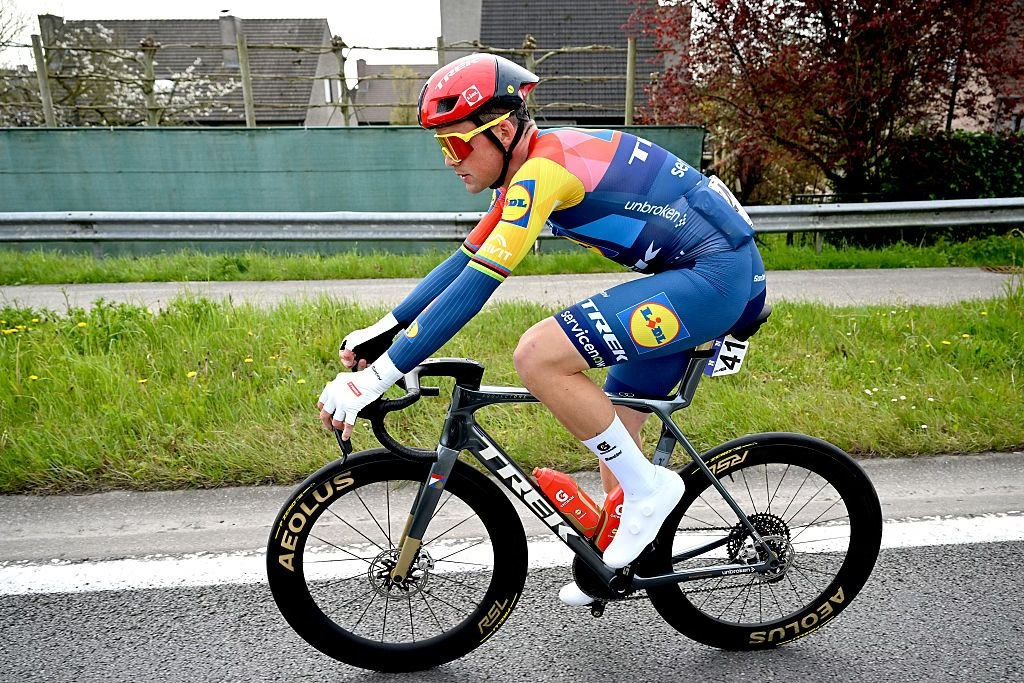 Photo Credit: Getty
Why Pedersen fits this Tour differently
The 2026 route gives the sprinters seven official flat stages: stage 5 to Pau, stage 7 to Bordeaux, stage 8 to Bergerac, stage 11 to Nevers, stage 12 to Chalon-sur-Saône, stage 17 to Voiron and stage 21 to Paris. Those are the obvious days for the fast men, and the revised points structure makes them even more valuable in the battle for green.
That change helps the pure sprinters because flat-stage winners can collect a much bigger haul. Pedersen therefore cannot rely only on being consistent across lumpy terrain. He still has to be competitive on the big sprint days, especially if the strongest sprint teams keep the race under control.
His advantage comes when the stage is not clean. Pedersen is at his best when the final is awkward, the roads are heavy, the bunch is reduced and the race has already cost other sprinters something. He can sprint from a smaller group, chase intermediate points, follow dangerous moves and survive days where bigger fast men are more vulnerable.
That is why his Tour is not only about the seven flat stages. It is about how many of those flat stages become messy, and how much he can take from the hilly stages around them.
For a more stage-specific breakdown of those sprint opportunities, see our Tour de France 2026 sprint stages ranked guide.
Stage 5 to Pau gives the first real opportunity
Stage 5 from Lannemezan to Pau is the first official flat stage of the race, but it comes after a demanding opening sequence. The race starts with a team time-trial in Barcelona, then moves through a hilly stage back to Barcelona, a mountain stage to Les Angles and another hilly stage to Foix.
By the time the peloton reaches Pau, the pure sprinters will already have had to work. That is useful for Pedersen. He does not need the day to be extremely difficult, but he does benefit if the race carries early fatigue and nervousness into the first proper sprint appointment.
Pau is not the kind of finish where Pedersen automatically starts as favourite, but it is a stage he has to contest. In the green jersey fight, he cannot afford to let Philipsen, Milan or Merlier take a full score while he misses the podium. Even a top-five finish would keep him in the early points conversation, especially if he has already collected from intermediate sprints.
The danger is that Lidl-Trek may already be balancing priorities. If Jonathan Milan is their protected pure sprinter, Pedersen’s role has to be clear. If he is chasing green himself, stage 5 has to become part of that plan, not just a day to survive.
For more on the opening week and early race structure, see our Tour de France 2026 team time-trial explainer and Tour de France 2026 Pyrenees guide.
 Photo Credit: Getty
Bordeaux and Bergerac are essential green jersey days
Stage 7 to Bordeaux is the clearest early sprint target. It comes after the mountain finish at Gavarnie-Gèdre, so the fast men have to survive a serious Pyrenean stage before they get their reward. That is exactly the kind of Tour rhythm where Pedersen can stay dangerous.
Bordeaux should be controlled by the sprint teams, but the day still matters for him. He has the durability to come through the first mountain block better than some rivals, and if the bunch is even slightly reduced or the final becomes technical, his chances improve. A win would be a major statement, but a podium may be almost as important in the green jersey calculation.
Stage 8 from Périgueux to Bergerac gives the sprinters a second straight chance before the hilly stage to Ussel and the first rest day. This is where Lidl-Trek have to decide how much they want to invest in Pedersen’s points campaign. Back-to-back sprint days can be expensive for a team, especially when the race still has two hard weeks ahead, but they also offer the kind of points haul that can define the jersey battle.
For Pedersen, Bordeaux and Bergerac are non-negotiable. If he leaves that block close to the best pure sprinters, the race begins to open up for him. If he loses heavily there, he will need to attack the points race from harder terrain.
For the wider comparison with the main sprint rivals, see our Jasper Philipsen at the Tour de France 2026 and Jonathan Milan at the Tour de France 2026 features.
The hilly stages are where Pedersen can change the green jersey race
Stage 2 to Barcelona, stage 4 to Foix, stage 9 to Ussel and stage 13 to Belfort are not classic sprint days, but they are the kind of stages where Pedersen’s range becomes valuable.
Stage 2 comes early, with hilly terrain and a nervous peloton still settling into the race. It may be too hard for a full bunch sprint, but not hard enough for the GC riders to take complete control. Pedersen can be dangerous in that kind of finish if Lidl-Trek want to race aggressively from the start.
Stage 4 to Foix is more complicated because it sits between the first mountain stage and the first flat opportunity. It may suit a breakaway or punchier riders, but Pedersen has the profile to survive if the day is ridden selectively rather than explosively.
Stage 9 to Ussel, just before the rest day, looks especially interesting. A hilly stage at the end of the opening block can become chaotic because fatigue is already present and teams have different priorities. GC teams may not want to burn resources, sprint teams may doubt whether they can control it, and breakaway riders may see a final chance before the rest day. Pedersen thrives when that uncertainty creeps in.
Stage 13 to Belfort also deserves attention. It is long, hilly and placed before the Vosges and Jura mountain weekend. Pure sprinters may see danger. GC teams may want a controlled day. Pedersen may see points, a stage chance or both.
This is where his Tour becomes distinct from Milan’s. Milan can dominate cleaner sprint days. Pedersen’s advantage is that he can take value from the days that sit between classifications.
For more on those ambiguous stages, see our Tour de France 2026 breakaway stages ranked and Tour de France 2026 Vosges and Jura guide.
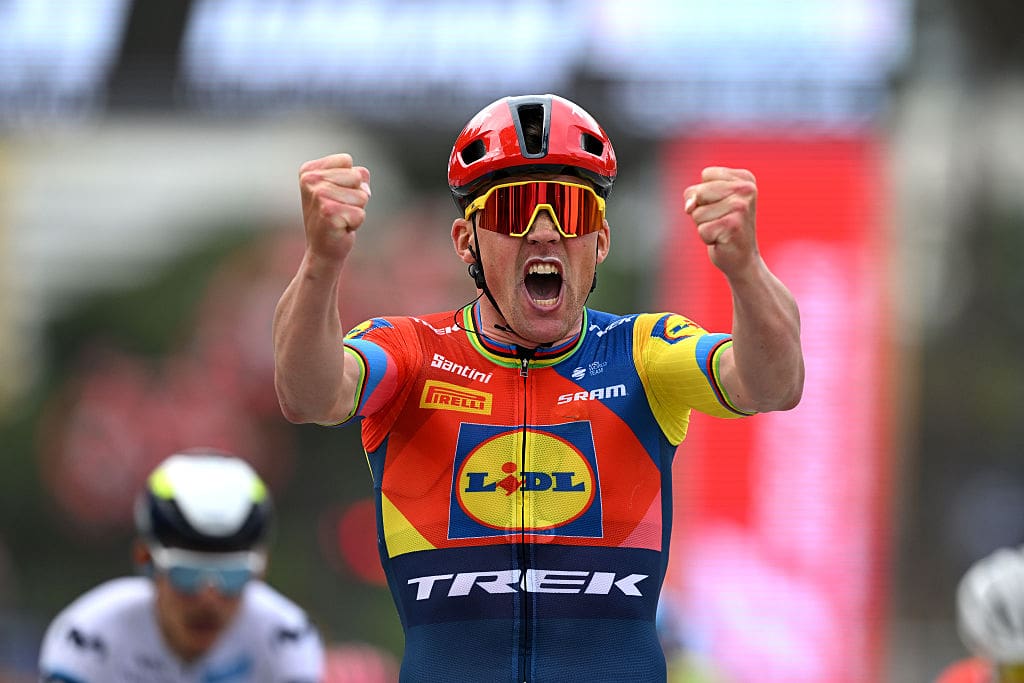
Nevers and Chalon-sur-Saône keep the sprint battle alive
After the first rest day and the mountain stage to Le Lioran, stages 11 and 12 give the sprinters another important pair of opportunities.
Stage 11 from Vichy to Nevers is flat and should be one of the more controlled sprint days of the race. That makes it harder for Pedersen if all of the top-end fast men arrive fresh and well positioned. Still, by the second week, sprint trains are rarely as clean as they were at the start. Teams are carrying fatigue, injuries and lost riders. The Tour begins to become less predictable.
Stage 12 from Circuit Nevers Magny-Cours to Chalon-sur-Saône is another flat stage, but with a different rhythm. It should still be a sprint day, but Pedersen’s best chance may come if the final is disrupted or if Lidl-Trek can make the run-in harder than expected.
This middle block is vital for the green jersey. If Pedersen is still within range after stage 12, he becomes more dangerous because the race then heads towards terrain that can hurt the pure sprinters.
The problem is the points weighting. If Milan, Philipsen or Merlier wins both stages 11 and 12, Pedersen may suddenly be forced into attack mode later in the race. If the wins are split, and he keeps scoring, the door stays open.
For more on the green jersey structure, see our Tour de France 2026 jerseys explained guide.
Stage 17 to Voiron could be one of Pedersen’s best chances
Stage 17 from Chambéry to Voiron comes after the second rest day and the individual time-trial, but before the final Alpine block. It is officially flat, yet its position in the race makes it more complicated than a simple sprint stage.
By this point, the peloton has already gone through the Pyrenees, Massif Central, Vosges, Jura and a time-trial. Several sprint rivals may be gone. Others may be carrying fatigue. Teams may be missing lead-out riders. GC squads will be thinking about Orcières-Merlette and Alpe d’Huez rather than policing every break.
This is exactly the kind of late-Tour stage where Pedersen’s durability matters. He can win from a reduced sprint, get into a dangerous move, or score heavily if others are no longer at full strength. If he is still in the green jersey fight at this point, stage 17 could be one of the decisive days.
It is also a stage where Lidl-Trek can use him differently. They do not necessarily need to set up a textbook bunch sprint. They can allow the race to become harder, trust Pedersen’s engine and try to remove some of the faster finishers before the final.
Stage 17 is also the last real chance before the final Alpine block. That makes it a major day for anyone still chasing green, especially because the next three stages are built around survival for the sprinters.
For the final week context, see our Tour de France 2026 Alps guide and Tour de France 2026 queen stage guide.
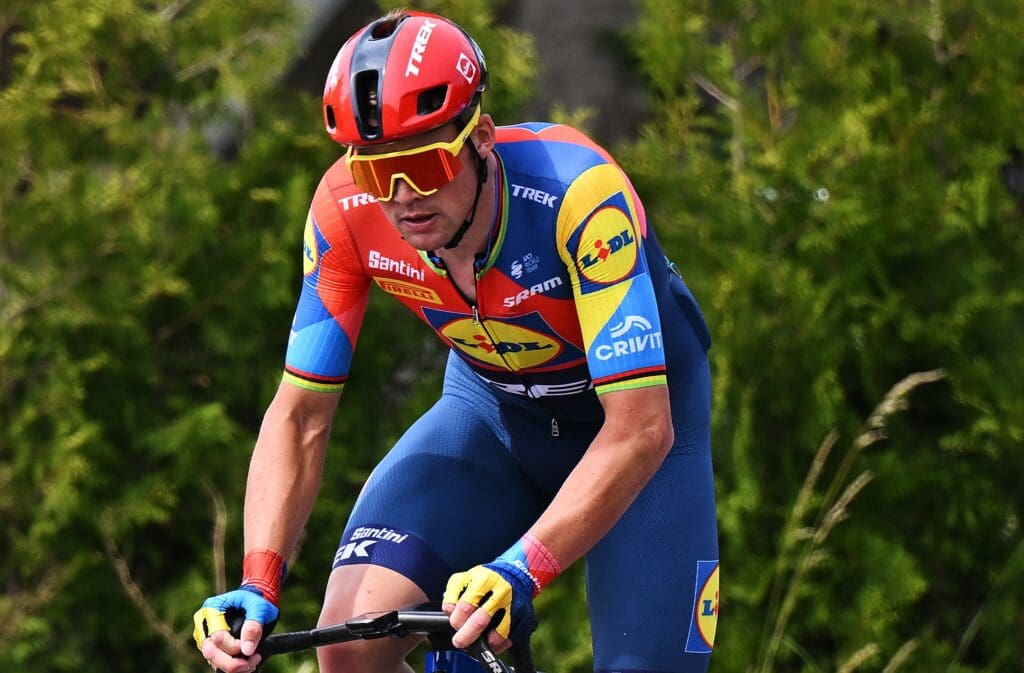 Photo Credit: Getty
Paris is still important, but Pedersen needs the race before Paris
Stage 21 to Paris gives the final sprint opportunity on the Champs-Élysées. Pedersen can sprint there, and if the race has been attritional enough, he can be competitive. But he cannot build his Tour around Paris alone.
The pure sprinters will still see the Champs-Élysées as one of the biggest targets of the race. If Philipsen, Milan or Merlier make it to the final day with lead-outs intact, Pedersen will need either a hard race, perfect positioning or a slightly chaotic finish to beat them.
For green, Paris may be decisive only if he has already done the work. Pedersen’s path to the jersey has to be built through repeated scoring: intermediate sprints, hilly-stage points, reduced finishes and consistent results on the flat days. Paris can finish the job. It cannot be the whole plan.
That is why the final stage should be seen as the last piece of his points strategy, not the foundation. If Pedersen reaches Paris within touching distance of green, he can still make the jersey battle tense. If he arrives needing a miracle, the earlier flat-stage points will probably have decided it already.
For UK viewers planning around the final stage, see our how to watch Tour de France 2026 in the UK guide.
The green jersey route is difficult but realistic
The revised points structure makes the green jersey harder for Pedersen because it gives the pure sprint stages more weight. A rider who wins multiple flat stages can build a lead quickly, and Pedersen cannot count on hilly consistency alone to cancel that out.
But there is still a realistic route.
He needs to stay close on the obvious sprint days, especially stages 5, 7, 8, 11 and 12. He needs to score where others do not on stages 2, 4, 9 and 13. He needs to survive the mountains better than at least some of the faster sprinters. Then he needs to make stage 17 and Paris count.
That is a demanding plan, but it suits his mentality. Pedersen is not a rider who waits for one perfect day. He can grind points out of stages, use his team, race from distance and keep fighting when the Tour becomes uncomfortable.
The green jersey favourites may still be Milan and Philipsen, but Pedersen can make the competition harder for both. If the race becomes chaotic, he becomes much more dangerous.
For the full green jersey picture, see our Tour de France 2026 sprinters guide.
-
 Photo Credit: A.S.O./Billy Ceusters

Lidl-Trek’s balance around Pedersen
The key question is how much Lidl-Trek commit to Pedersen as a green jersey leader. Pedersen can chase stages and points, but a serious green jersey challenge needs team support every day. It means controlling breakaways on some stages, positioning him for intermediate sprints, protecting him through hard terrain and deciding when to spend energy.
That can become complicated if Lidl-Trek also have Jonathan Milan as their clearest pure sprint card. Milan is the better bet in a clean, high-speed bunch finish. Pedersen is the better bet when the stage becomes awkward. That gives the team options, but it also creates a strategic puzzle.
If Lidl-Trek split the difference well, they could have one of the strongest points-classification setups in the race. Milan can chase maximum scores on the flat days. Pedersen can attack the harder finishes and intermediate sprints. If they clash, the team risks diluting both campaigns.
Still, Pedersen’s versatility helps solve some of that tension. He does not need a full sprint train in the same way as a pure bunch sprinter. He can use a smaller support structure, work from reduced groups and rely on positioning as much as raw speed. That makes him easier to carry as both a stage hunter and a points-classification rider.
For more on the Milan side of that equation, see our Jonathan Milan at the Tour de France 2026 feature.
Verdict: Pedersen’s Tour is about hard points, not easy sprints
Mads Pedersen can win a stage at the 2026 Tour de France, but his best chances may not come on the cleanest sprint days. Bordeaux, Bergerac, Nevers and Chalon-sur-Saône matter because of the points on offer, but stages like Ussel, Belfort and Voiron may suit him more naturally.
The green jersey is possible, but only if the race becomes difficult enough to blunt the pure sprinters and open the door for a rider who can score across more terrain. Pedersen needs consistency, aggression and survival. He needs to turn the awkward days into advantages and avoid losing too much when the sprint specialists get their perfect finishes.
That is why his 2026 Tour is so interesting. He is not the obvious green jersey favourite, but he may be one of the riders best suited to making the competition uncomfortable. In a route full of hard days, that gives him a real way into the race.
The most realistic outcome is a stage win and a strong green jersey challenge that depends on how clean the sprint stages become. If the flat days are controlled by Philipsen, Milan and Merlier, Pedersen may have to settle for opportunistic stage hunting. If the Tour becomes messy, selective and attritional, he could become one of the most important riders in the points competition.
For full race coverage, visit our Tour de France hub, Tour de France 2026 full route guide and how to watch Tour de France 2026 in the UK.

