
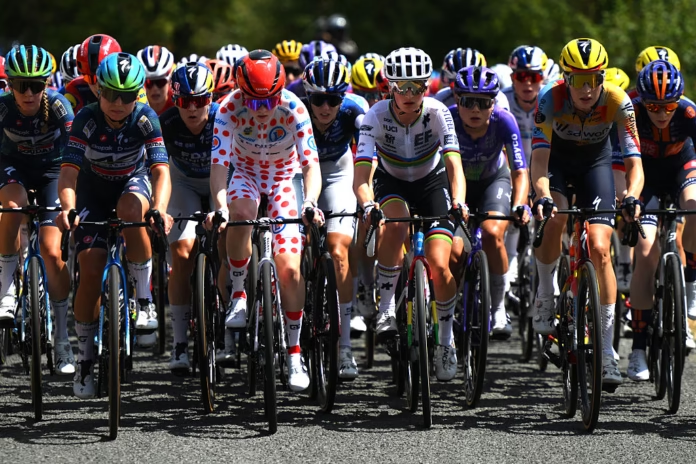
The Tour de France Femmes peloton has allowed an unusually dangerous breakaway to establish an advantage of around 1:43 with 60 kilometres remaining on Stage 5, placing Antonia Niedermaier within seconds of becoming the virtual race leader.
Niedermaier began the day ninth overall, exactly 1:43 behind yellow jersey Marlen Reusser. With the gap hovering at approximately the same margin, the Canyon SRAM rider is effectively level with Reusser on the road, although fluctuating live timings mean she cannot yet be considered definitively in virtual yellow.
The German is not the only general classification threat in the move. Femke de Vries started only four seconds further back at 1:47, while Dominika Włodarczyk was 1:59 behind Reusser. Nienke Vinke, Juliette Berthet and Noemi Rüegg were also within 3:01 of yellow following the Stage 4 time trial in Dijon.
This is no longer a conventional breakaway being given limited freedom. It contains enough climbing strength, team depth and GC proximity to force Movistar and the other overall contenders into a serious chase.
A breakaway packed with riders who matter
The 19-rider move includes:
- Antonia Niedermaier, Canyon SRAM
- Femke de Vries, Team Visma | Lease a Bike
- Dominika Włodarczyk, UAE Team L’IMAD
- Nienke Vinke, SD Worx-Protime
- Juliette Berthet, Trek Factory Racing
- Noemi Rüegg, EF Education-Oatly
- Thalita de Jong, Human Powered Health
- Niamh Fisher-Black, Lidl-Trek
- Puck Pieterse, Fenix-Premier Tech
- Riejanne Markus, Lidl-Trek
- Justine Ghekiere, AG Insurance-Soudal
- Maëva Squiban, UAE Team L’IMAD
- Amanda Spratt, Lidl-Trek
- Magdeleine Vallieres Mill, EF Education-Oatly
- Sarah van Dam, Team Visma | Lease a Bike
- Liane Lippert, Movistar
- Franziska Koch, Trek Factory Racing
- Lore De Schepper, AG Insurance-Soudal
- Célia Le Mouël, Arkéa-B&B Hotels
The composition explains why the advantage has become so tactically awkward.
Several teams have placed more than one rider in the move. Lidl-Trek have Fisher-Black, Markus and Spratt, while UAE Team L’IMAD have Włodarczyk and Squiban. Team Visma | Lease a Bike have De Vries and Van Dam, EF Education-Oatly have Rüegg and Vallieres Mill, and Trek Factory Racing have Berthet and Koch.
That representation gives those teams little reason to contribute to the chase behind. It also means the breakaway contains enough riders to maintain its speed even as the repeated climbing begins to remove some of its weaker members.
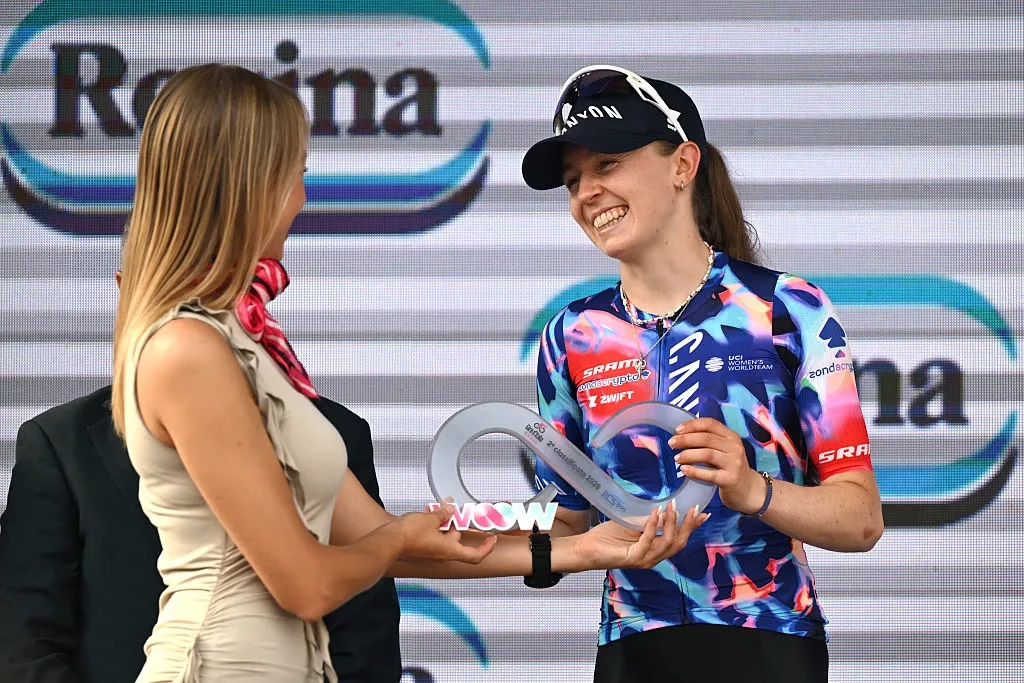
Niedermaier gives Canyon SRAM a genuine GC opportunity
Niedermaier is the most immediate threat because she began Stage 5 closest to Reusser.
The 23-year-old is an accomplished climber and time triallist rather than a rider who has accidentally found herself high on GC after the opening stages. Her second place at the 2026 Giro d’Italia Women confirmed that she can sustain a general classification challenge across a full stage race.
If Movistar allow her to carry a meaningful advantage into the final climbs, she has the ability to defend it rather than simply surrendering time as soon as the road becomes harder.
Canyon SRAM have therefore created a valuable tactical situation. Niedermaier can continue working while the break remains organised, but she does not need to treat this as a desperate all-or-nothing move from 60 kilometres out. Her GC position means responsibility should gradually transfer towards Movistar and the teams of the other overall favourites.
The problem for Canyon SRAM is that Niedermaier may also become the reason the move is caught. A break containing riders five or ten minutes down could have been given considerably more freedom. A rider starting only 1:43 behind yellow cannot.
Movistar have Lippert ahead but still need control behind
Liane Lippert’s presence gives Movistar representation in the breakaway, but it does not remove the danger to Reusser.
Lippert began the stage 18:58 down and poses no threat to the yellow jersey. She can act as a tactical satellite rider later in the stage, potentially helping Reusser if the race comes back together or if the Swiss rider attacks across to the front group.
However, Lippert cannot police every move in a group of this size. Nor can Movistar simply ask her to destroy the break when Niedermaier, De Vries and Włodarczyk all have teammates around them.
Movistar must decide how much support to commit before the decisive part of the Stage 5 route through the Beaujolais. Chase too aggressively and Reusser may be left exposed when the GC favourites begin attacking. Allow the advantage to grow and yellow could change shoulders before the peloton reaches Belleville-en-Beaujolais.
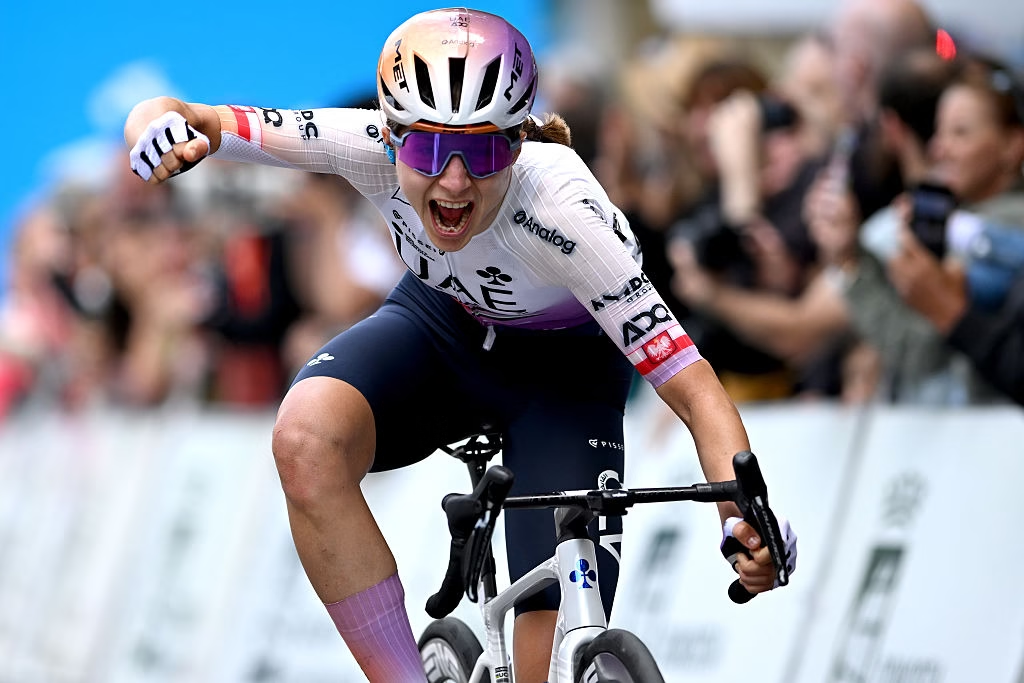
De Vries and Włodarczyk add another layer of pressure
Even if Niedermaier is neutralised, the break contains two more riders capable of moving close to the race lead.
De Vries began at 1:47 and Włodarczyk at 1:59. At the current margin, both are within striking distance of the virtual podium, while finishing bonuses could become important if the break survives.
De Vries already demonstrated her stage-racing ability by taking her first professional victory and the race lead at the 2026 Tour de Suisse Women. Her presence gives Team Visma | Lease a Bike a tactical alternative to Pauline Ferrand-Prévot.
The defending champion does not need to initiate the chase while her teammate is gaining time ahead, shifting more of the workload towards Movistar and FDJ United-Suez.
UAE Team L’IMAD have a similar opportunity with Włodarczyk, whose durability and finishing speed made her an important part of the team’s Tour de France Femmes squad.
Elisa Longo Borghini can remain alongside the other favourites while Włodarczyk and Squiban apply pressure from the front. Should the move survive deep into the finale, Włodarczyk has enough climbing ability to become more than a disposable satellite rider.
-
 Photo Credit: Getty
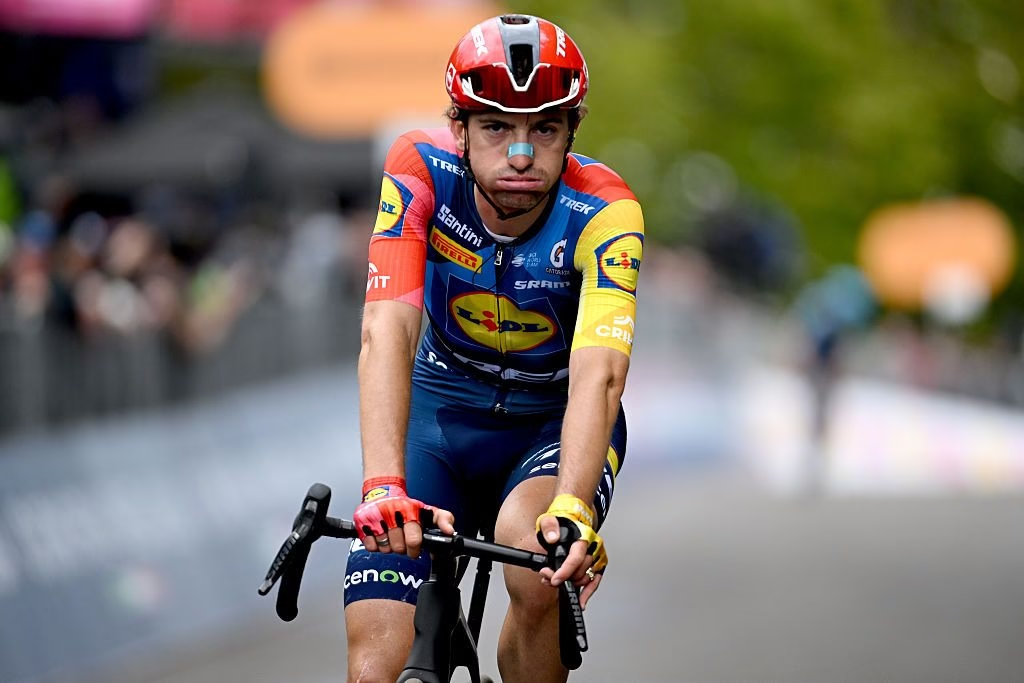

Lidl-Trek hold the strongest numerical hand
Lidl-Trek’s three-rider presence may be the most important feature of the move once the stage reaches its final climbs.
Fisher-Black began the day 3:07 behind Reusser, Markus at 3:47 and Spratt at 6:31. Fisher-Black remains close enough to GC to demand attention, while Markus and Spratt give the team experienced attacking options.
They can use Spratt to maintain the pace, send Markus ahead on a rolling section or protect Fisher-Black for the hardest climbing. Few teams in the break have the numbers to respond repeatedly.
It also removes Lidl-Trek from responsibility in the peloton. Any chase involving the yellow-jersey group must take place without their cooperation, while the team can wait to see whether one of its three riders emerges as the strongest option at the front.
The gap is small, but the break is difficult to control
An advantage of 1:43 with 60 kilometres remaining would normally favour the peloton. On a flatter stage, a fully committed chase could remove it quickly.
Stage 5 is different. The road continues to rise and fall through the Beaujolais, making it difficult to organise a smooth pursuit. Every climb reduces the number of domestiques available, while every descent interrupts the chase and gives the breakaway a chance to preserve its advantage.
The escape also contains riders who would ordinarily be among the strongest helpers in the peloton. Their teams are represented ahead and therefore have no reason to assist Movistar.
The most likely outcome remains that the GC teams reduce the gap before the final decisive climbs. Yet they cannot afford to assume it will happen automatically. Niedermaier is effectively at the yellow-jersey boundary, De Vries and Włodarczyk are immediately behind her, and the break contains enough strength to punish hesitation.
Stage 5 has developed from a possible breakaway day into the first major tactical test of Reusser’s leadership. The question is no longer simply whether the move can contest the stage. It is whether Movistar can bring it back without leaving their yellow jersey isolated for the attacks that follow.

