
The Tour de France 2026 should have one of the most interesting French groups in years, not because there is one obvious home favourite for yellow, but because there are several different kinds of French storyline spread across the race.
Paul Seixas gives France its biggest GC hope in a long time, even if expectation needs to be handled carefully. Kévin Vauquelin arrives as a serious all-round option in a strengthened Ineos setup. Lenny Martinez gives Bahrain Victorious a climbing card. Romain Grégoire, David Gaudu and Valentin Madouas give Groupama-FDJ United several routes into the race. Julian Alaphilippe remains the emotional stage-hunting name, while TotalEnergies bring Jordan Jegat and Anthony Turgis as riders capable of making the race matter from breakaways.
The route helps that variety. The Barcelona team time-trial will immediately reward strong collective setups. The early Pyrenees bring the race uphill quickly, especially around Les Angles and Gavarnie-Gèdre. The middle of the race has stages for breakaway riders, puncheurs and climbers, before the Alps finish the GC battle with Orcières-Merlette and back-to-back days on Alpe d’Huez.
That means France does not need one rider to carry the whole story. There are GC hopes, stage hunters, breakaway specialists, domestiques and young riders all worth following.
For wider context, see our Tour de France 2026 full route guide, Tour de France 2026 route analysis, Tour de France 2026 GC favourites ranked and Tour de France 2026 young riders to watch.
Paul Seixas
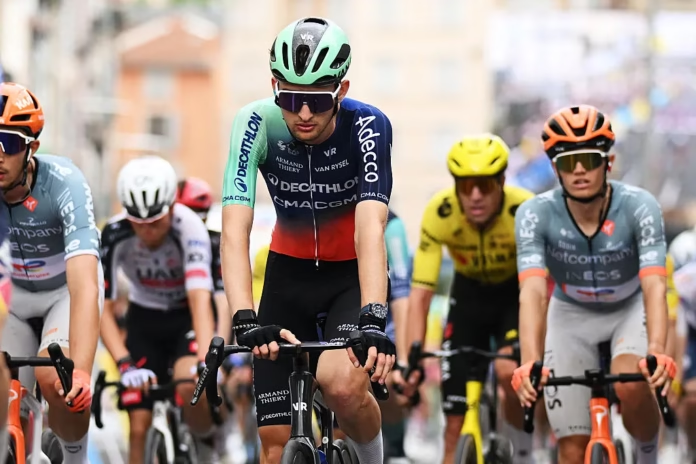
Paul Seixas is the French rider who will attract the most attention at the 2026 Tour de France, and there is no real way around that. He is young, already winning big races, and now expected to start his first Tour with Decathlon CMA CGM backing him as a serious GC project rather than just a protected prospect.
That is exciting, but it is also dangerous. France has spent years searching for the next genuine Tour contender, and Seixas is young enough that the pressure could easily become unfair. The important thing is to separate long-term ceiling from immediate Tour expectation. He does not need to win the Tour in 2026 for the race to be a success. A strong top-10 challenge, a white jersey fight, a mountain-stage performance or simply surviving the full three weeks while staying competitive would all be meaningful.
The route gives him opportunity and risk. The early Pyrenees mean there is no gentle introduction. Stage 3 to Les Angles and stage 6 to Gavarnie-Gèdre will test whether he can handle the rhythm of a Tour that climbs early. The final Alpine block is even harder, especially the back-to-back Alpe d’Huez finish. If he is still in the GC picture by then, the story will become enormous.
Decathlon CMA CGM should have a strong team around him. Aurélien Paret-Peintre and Nicolas Prodhomme give the squad French climbing and support depth, while the wider team has the engines to help manage the opening phase. Seixas is the headline, but he will need the structure around him to be calm.
He is the rider who can make the whole French race feel different. He also sits at the heart of the wider Tour de France 2026 young riders to watch conversation.
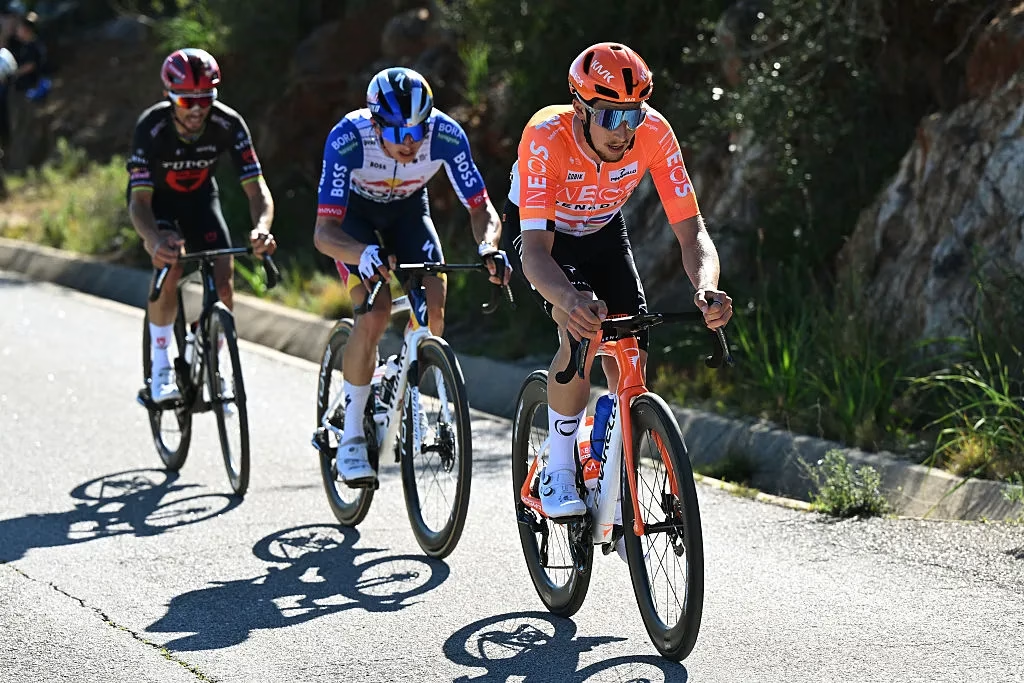 Photo Credit: Getty
Kévin Vauquelin
Kévin Vauquelin is one of the most interesting French riders at the 2026 Tour because his pathway is not limited to one role. With Netcompany Ineos, he can be a GC option, a stage threat, a time-trial asset and part of a team that may arrive with several protected riders.
That versatility makes him valuable. The Barcelona team time-trial should suit Ineos, especially with Filippo Ganna in the line-up. The stage 16 individual time-trial from Évian-les-Bains to Thonon-les-Bains is also important for Vauquelin because it gives him a chance to gain or defend time against pure climbers. The question is whether he can carry that all-round strength through the hardest mountain stages.
He is not a rider who needs to race like Tadej Pogačar or Jonas Vingegaard to have a good Tour. His success would be built on consistency: staying close in the Pyrenees, using the time-trial well, avoiding the one bad day and still being present when the race reaches the Alps.
Ineos could have Carlos Rodríguez, Oscar Onley, Thymen Arensman and Vauquelin all in the same Tour line-up, which makes the internal hierarchy interesting. That may help him. If rivals do not know which Ineos rider is the main GC threat, Vauquelin can ride into the race rather than having it built entirely around him from day one.
A top-10 ride is realistic if the legs are there. A top-five challenge would require an excellent final week, but the route gives him a reason to believe.
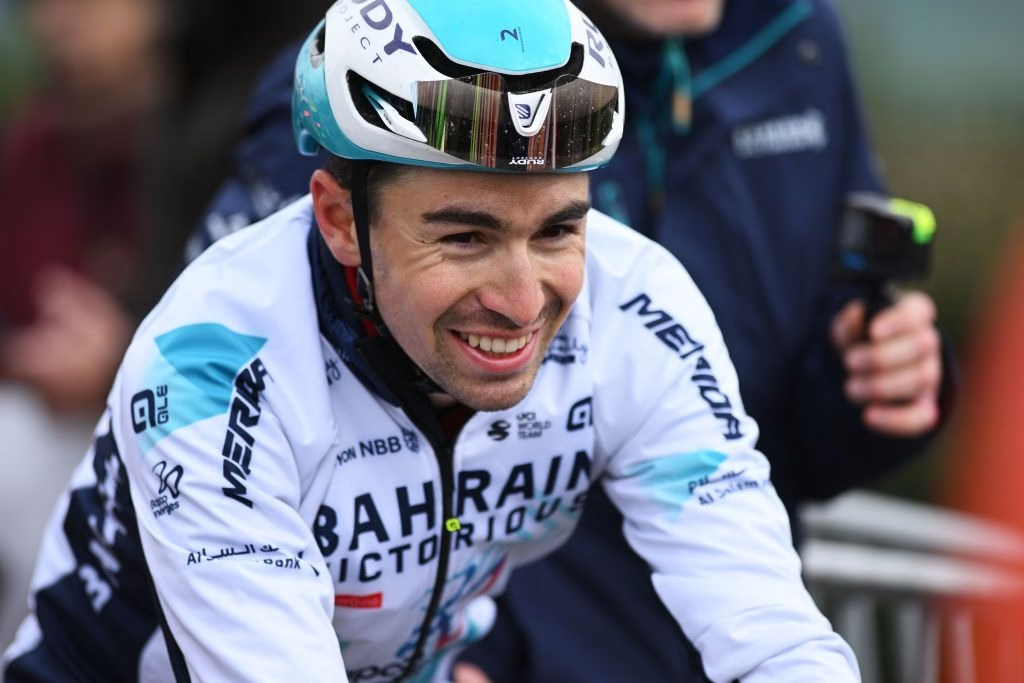 Photo Credit: Getty
Lenny Martinez
Lenny Martinez is one of the purest French climbers expected at the 2026 Tour, and that makes him especially interesting on this route.
Bahrain Victorious are expected to bring him alongside Antonio Tiberi, which gives the team two different GC or stage-racing options. Tiberi is the steadier all-rounder. Martinez is the lighter climbing threat who can make mountain stages feel dangerous if he gets freedom.
The Tour route suits him better once the road gets properly hard. The early Pyrenees are useful, but the final week is the real test. Plateau de Solaison, Orcières-Merlette and the Alpe d’Huez weekend give him the kind of terrain where he can show whether he is ready for a full three-week GC challenge or whether his best Tour route is stage hunting.
That is the important distinction. Martinez may not need to chase GC every day to make the race a success. If Bahrain commit to Tiberi for the overall, Martinez can become a high-quality mountain-stage threat. If Tiberi falters or if Martinez climbs better than expected early, the team may have a more open decision.
He is the kind of rider who can animate the race from the mountains rather than the time-trial. In a Tour with so much late climbing, that gives him clear value. For the broader climbing picture, see our Tour de France 2026 mountain stages ranked by difficulty and Tour de France 2026 climbs guide.
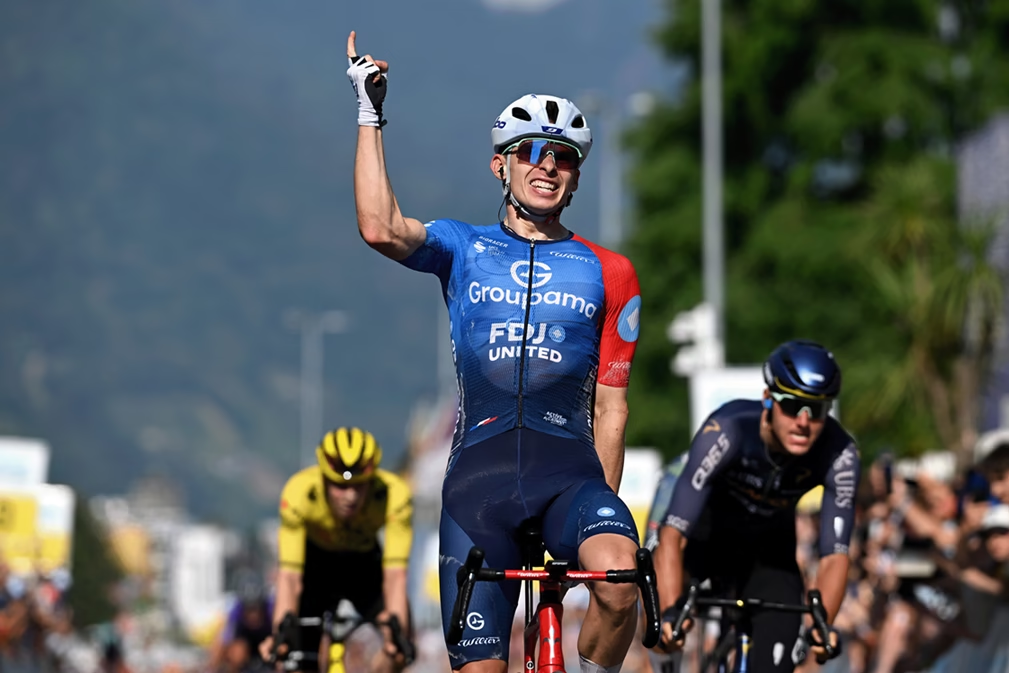 Photo Credit: Getty
Romain Grégoire
Romain Grégoire is one of the French riders best suited to the unpredictable stages that sit between the pure sprint days and the pure GC days.
Groupama-FDJ United are not arriving with one simple Tour plan. David Gaudu, Valentin Madouas, Guillaume Martin-Guyonnet and Grégoire all give them different options, but Grégoire may be the rider with the widest stage-winning range. He can handle punchy finishes, rolling terrain, reduced groups and aggressive breakaways, which is exactly the kind of rider the Tour often rewards when the favourites pause.
The 2026 route has several days that could suit him. The early stages around Barcelona may be too controlled, but once the race moves into the hillier and medium mountain terrain, Grégoire becomes more interesting. Le Lioran, the Vosges and the transition days before the Alps could all create openings.
He is not the obvious French GC hope. That helps. Grégoire can ride more freely than Seixas or Gaudu, and that freedom can matter in a Tour where teams will focus heavily on Pogačar, Vingegaard, Evenepoel and the major GC names.
A stage win would be the clearest target. If he gets one, it would be a major result for Groupama-FDJ United and one of the home stories of the race.
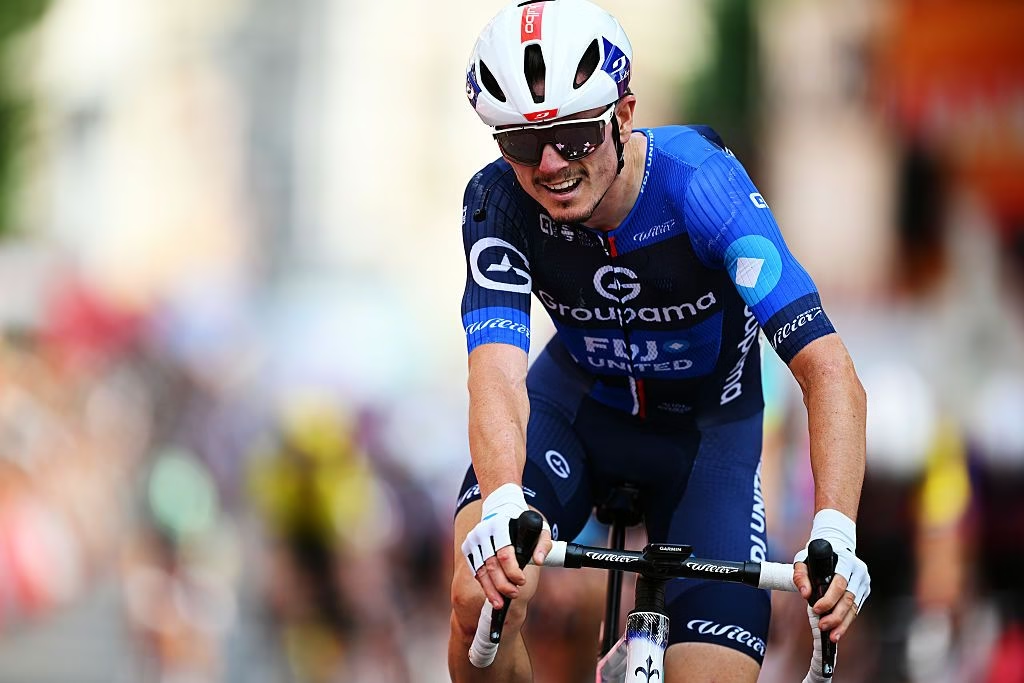 Photo Credit: Getty
David Gaudu
David Gaudu returns to the Tour in a different kind of role from the one he once carried. He is no longer the obvious French answer to the GC question, and that may actually make him easier to watch.
Gaudu is still a strong climber, still capable of producing big days, and still experienced enough to understand how to survive the Tour’s harder weeks. The question is whether he is riding for an overall placing, a stage win or a flexible role depending on how the first half unfolds.
The 2026 route gives him options. The Pyrenees arrive early, which should quickly decide whether a GC ride is realistic. If he is close after Gavarnie-Gèdre, Groupama-FDJ United may keep him protected. If he loses time, he becomes a dangerous breakaway rider for the mountains. That may be the better route anyway.
Gaudu’s best days come when the race is hard, but not always when he is carrying the full weight of national expectation. With Seixas absorbing much of that spotlight, Gaudu could have a freer Tour than in previous years. That makes him a genuine stage threat on the right mountain day.
For Groupama-FDJ United, the ideal scenario may be simple: let Gaudu stay close early, then reassess. If GC is still there, protect it. If not, hunt the mountain stages.

Julian Alaphilippe
Julian Alaphilippe is not going to the 2026 Tour as a GC rider, but he remains one of the most compelling French riders in the race.
With Tudor Pro Cycling Team, his job should be clear: chase a stage, animate the hilly days and make the race visible whenever the terrain suits his instincts. He no longer needs to be judged against the Alaphilippe of his very best years. The better question is whether there is still one Tour stage in 2026 that can bend towards him.
The route gives him possibilities. He needs a day that is too hard for the pure sprinters but not controlled enough for the GC teams. That might come on rolling terrain, in a reduced breakaway or on a stage where the favourites let a strong move go. He has the experience to pick those days better than most.
The emotional pull is obvious. Alaphilippe has been one of the defining French riders of the last decade, and a Tour stage win in this phase of his career would carry weight beyond the result itself. It would not change the GC, but it would change the mood of the race for French fans.
His challenge is selectivity. The Tour is full of riders who want the same kind of stage. Alaphilippe needs the right day, the right break and the legs to finish it off.
 Photo Credit: A.S.O./Billy Ceusters
Valentin Madouas
Valentin Madouas is the kind of Tour rider whose value can be missed if you only look for stage wins or GC positions. He is hard, versatile, experienced and useful on exactly the kind of difficult transitional terrain that defines the middle of a modern Tour.
For Groupama-FDJ United, he can fill several roles. He can help Gaudu or Grégoire, protect positioning, get into breakaways and survive when the race becomes attritional. He is also capable of making a stage result himself if the right group goes clear.
The 2026 route should suit his durability. He may not be the fastest in a reduced sprint or the best climber on the steepest Alpine stages, but he can handle repeated hard days. That matters in a Tour where fatigue will build from the early Pyrenees into the final mountain block.
Madouas is probably more stage hunter than GC rider here, but he is a rider who can shape the race for others. If Groupama-FDJ United have a good Tour, he will almost certainly be involved somewhere, either visibly in a break or quietly through the work that allows another French rider to succeed.
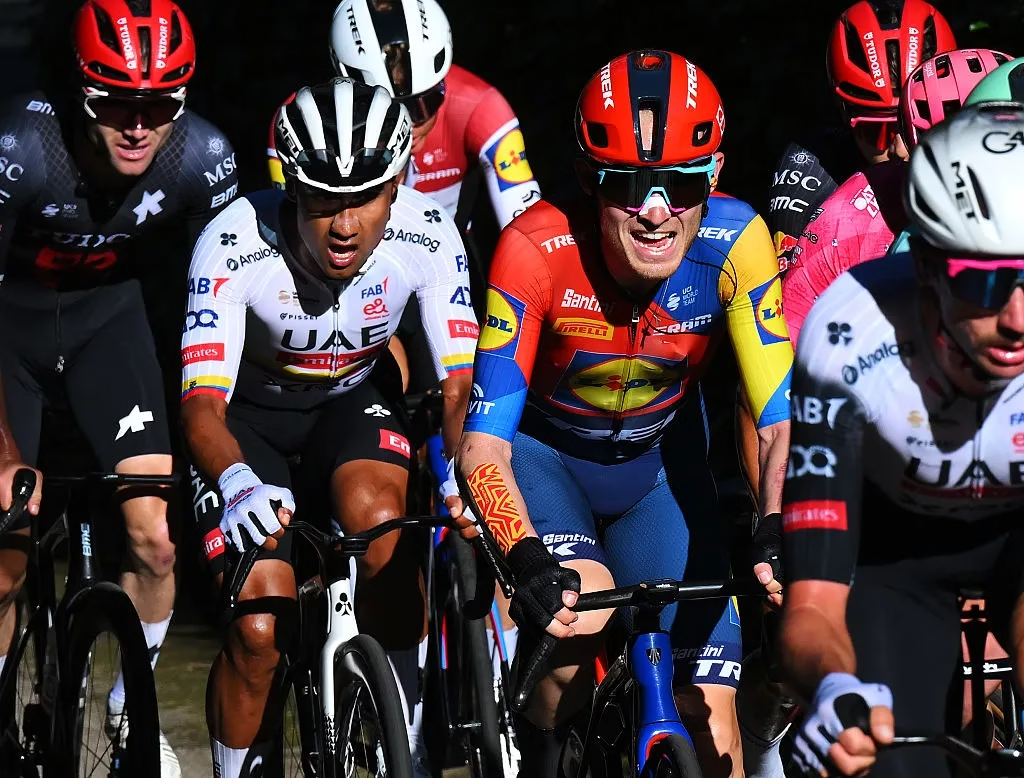 Photo Credit: Getty
Jordan Jegat
Jordan Jegat gives TotalEnergies their most interesting GC-adjacent storyline. He was a top-10 rider at the Tour last year and returns with a role that should allow him to target another strong overall or stage-focused performance.
That makes him different from many ProTeam riders at the Tour. He is not only there to get in the early break and hope. He has shown that he can survive deep into three weeks and still be part of the classification picture. That does not make him a podium contender, but it does make him worth watching.
The 2026 route is hard enough to expose him if he is slightly below his best. The early Pyrenees will quickly decide whether another GC ride is realistic. If he holds well there, he can build around consistency. If he loses time, TotalEnergies can release him into breakaways on the mountain stages.
His value is that both routes are credible. A top-15 overall would be a strong result. A stage win from a mountain break would be even bigger. For a French wildcard-linked team, that kind of visibility matters.
Jegat may not attract the same attention as Seixas or Alaphilippe, but he is one of the more solid French names to follow.

Anthony Turgis
Anthony Turgis gives TotalEnergies a different kind of threat. He is a Classics-style rider with the engine, experience and toughness to win from breakaways rather than through pure climbing or sprinting.
The 2026 Tour has several stages where that kind of rider can matter. He will not be waiting for Alpe d’Huez to define his race. His chances are more likely to come on rolling days, windy transitions, hilly stages or breakaway afternoons when the peloton lets a strong group go. If the race becomes messy, Turgis is exactly the sort of rider who can profit.
The key is selecting the right move. Tour breakaways are harder to win than they look because the quality is so high and the fight to get in them can last for a long time. Turgis has the experience for that, and TotalEnergies will need riders willing to keep attacking if the race does not immediately open for Jegat.
He is not the most glamorous French name in the race, but he is one of the more realistic stage-win hopes if the right day appears.
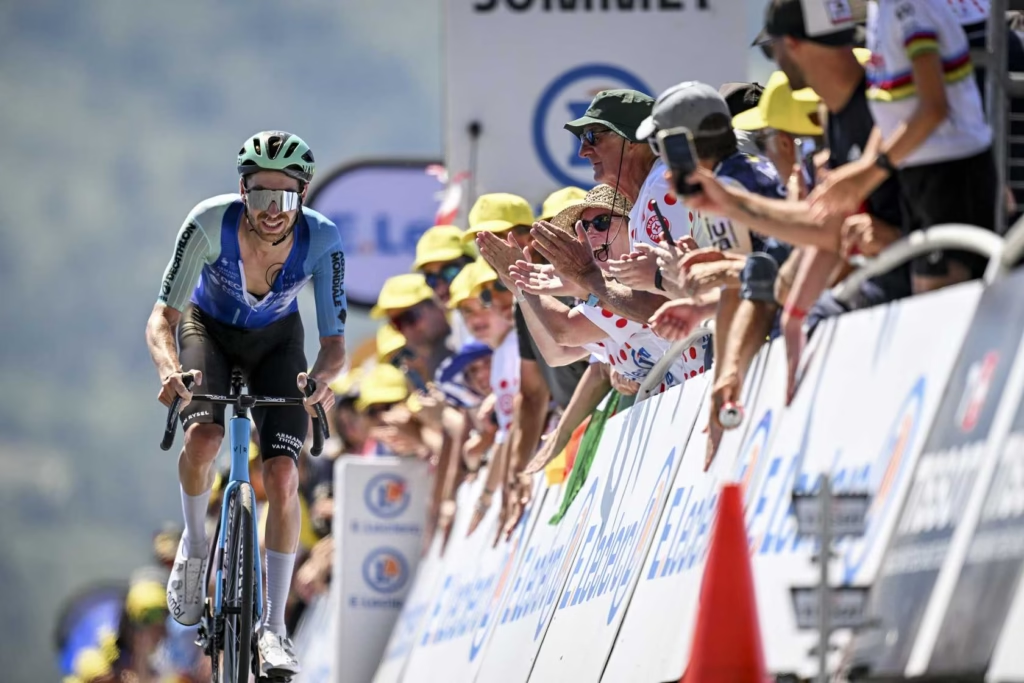
Aurélien Paret-Peintre
Aurélien Paret-Peintre should be one of the most important French support riders in the race if Decathlon CMA CGM fully commit to Seixas.
That does not mean he is only a domestique. Paret-Peintre has the climbing ability and stage-racing experience to be visible in his own right, but his value in 2026 may be measured by how long he can stay with Seixas when the race becomes difficult. A young leader needs calm riders around him, especially when the Tour reaches the first serious mountain test.
The early Pyrenees and the final Alps should both suit him as a support rider. He can help position Seixas, control pacing, cover moves and keep the team from panicking if the race becomes stretched. If Seixas loses time or the team changes strategy, Paret-Peintre could also become a stage hunter later in the race.
His Tour may not be built around personal headlines, but he could be central to whether France’s biggest hope has a controlled race or a chaotic one.
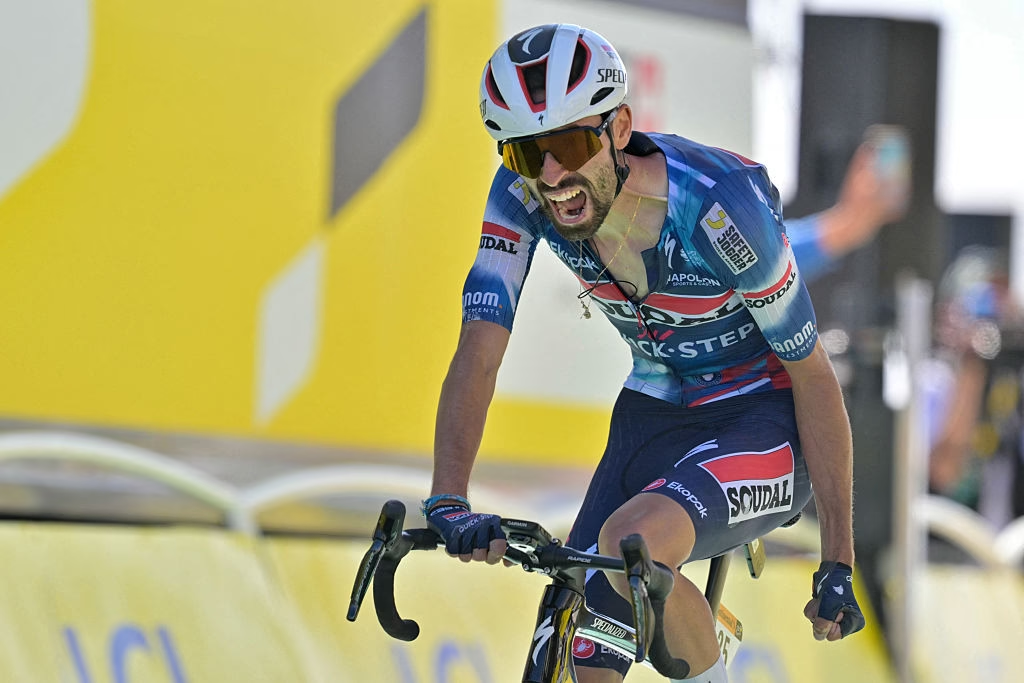 Photo Credit: Getty
Valentin Paret-Peintre
Valentin Paret-Peintre is another French climber worth watching, but in a very different setup. At Soudal-Quick-Step, he is part of a team that should primarily chase sprint success with Tim Merlier while giving freedom to climbing riders when the route allows.
That can be a useful Tour role. Paret-Peintre does not need to carry the full responsibility of a GC leader. Instead, he can look for mountain breakaways, support where needed and choose days when the race gives him room. The challenge is making himself part of the right move, especially on stages where dozens of riders will have the same idea.
His route into the race is through opportunism. If Soudal-Quick-Step control the flat days for Merlier, riders like Paret-Peintre may get their chances when the road turns uphill and the sprinters are no longer relevant. That makes him one of the French names to keep in mind on medium mountain and breakaway days.
A stage win would be difficult, but a strong mountain breakaway performance is well within range.
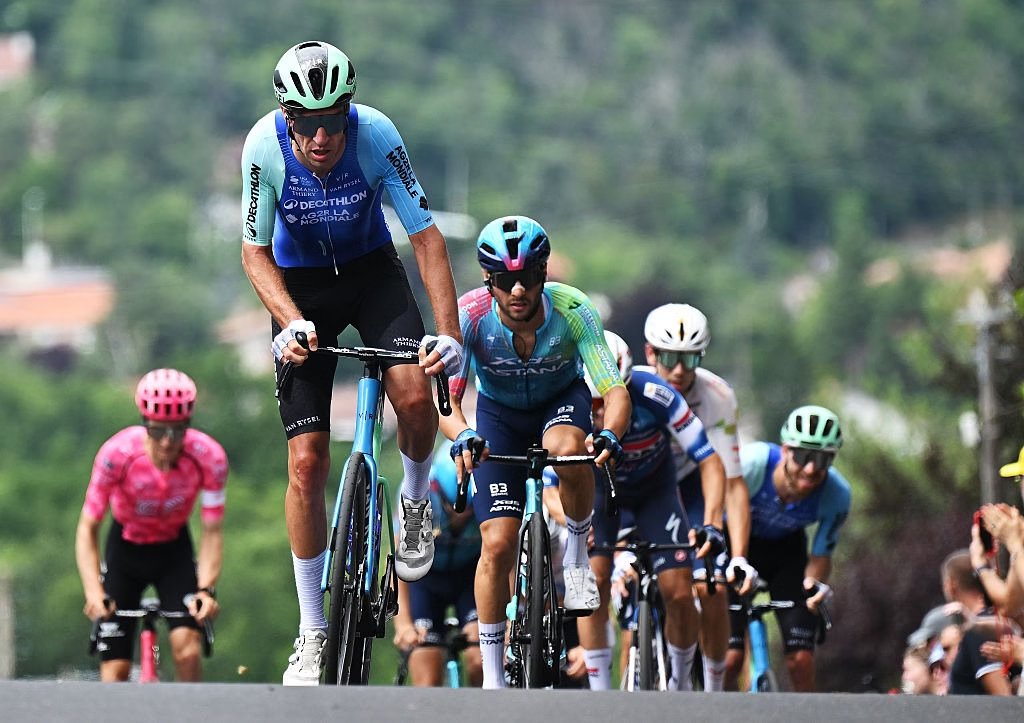 Photo Credit: Getty
Bruno Armirail
Bruno Armirail’s race will be judged less by personal freedom and more by how he fits into Team Visma | Lease a Bike’s Tour structure.
With Jonas Vingegaard leading the team, Armirail is likely to be part of a powerful support unit built around control, positioning and workload. He gives Visma strength on the flat, in transitions and in the team time-trial. That Barcelona opener is especially important because it can immediately shape the GC, and riders like Armirail are exactly the kind of engines teams need there.
He may not be a stage-win candidate unless the race situation changes dramatically, but he is still one of the French riders to watch because his work could be visible at key moments. If Visma are controlling the bunch before a mountain stage, chasing dangerous moves or setting up Vingegaard for the final week, Armirail’s role matters.
France’s Tour story is not only about riders attacking for wins. It is also about riders embedded in the biggest teams, influencing the race from within the strongest tactical structures. Armirail fits that part of the picture. For the wider Vingegaard angle, see our feature on Jonas Vingegaard at the Tour de France 2026.
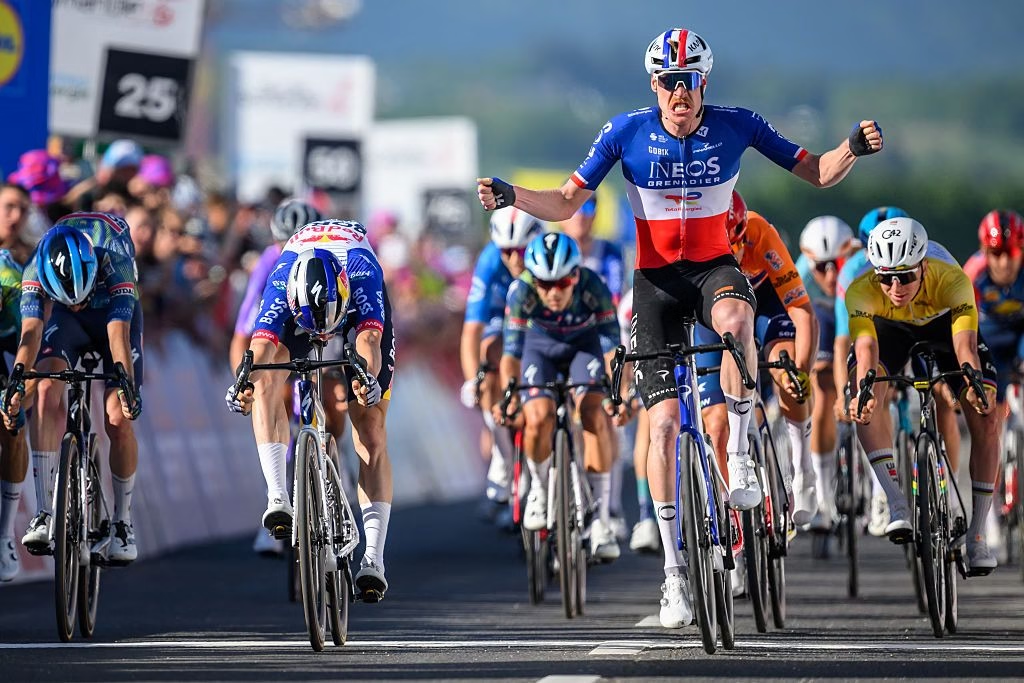 Photo Credit: Getty
Dorian Godon
Dorian Godon is a useful name to watch because he gives Netcompany Ineos another French layer beyond Vauquelin.
Godon’s best chance is not a pure mountain stage. He is more interesting on rolling, punchy, reduced-group days where positioning, strength and timing matter. He can also work for the team’s GC options, especially if Ineos are trying to protect Vauquelin, Rodríguez, Onley or Arensman through complicated terrain.
His value comes from versatility. The Tour always has stages that look simple on paper but become chaotic because of weather, breakaway pressure, narrow roads or mid-stage climbs. Godon is the kind of rider who can help a team survive those days or turn one into an attacking opportunity.
For French fans, he will not be the first name on the list, but he is part of what makes the 2026 French contingent broad. There are riders aiming for yellow, riders chasing stages, and riders whose influence depends on helping a team stay organised.
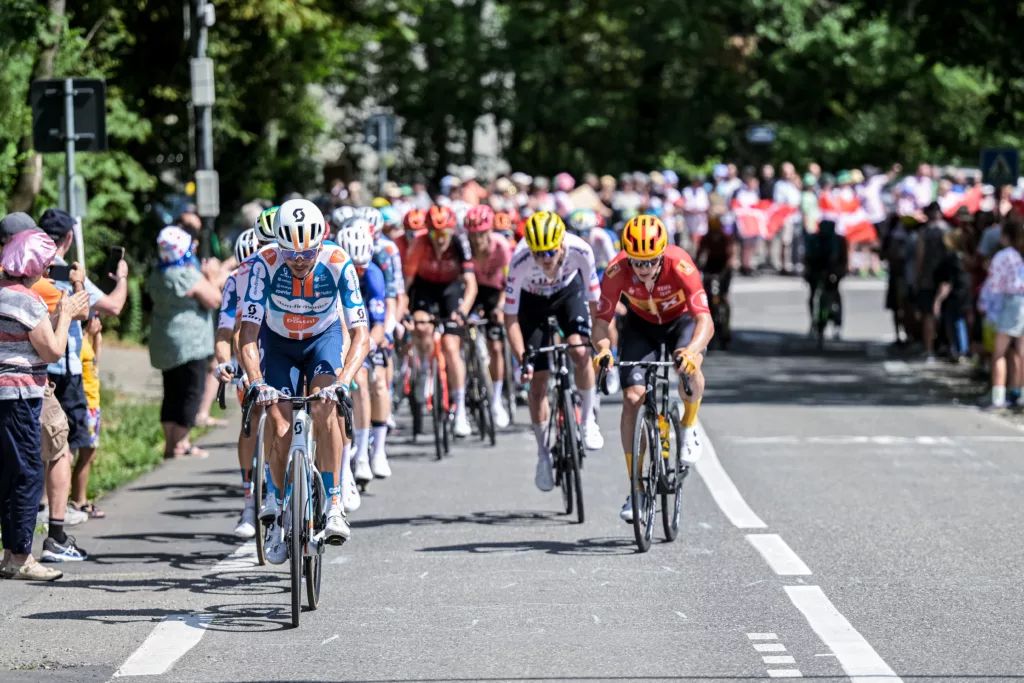 Photo Credit: A.S.O./Charly Lopez
Warren Barguil
Warren Barguil is no longer the same climbing force who once lit up the Tour mountains, but he remains a rider with deep Tour experience and a strong instinct for the right day.
At Team Picnic PostNL, his role should be stage-focused. That could mean breakaways in the mountains, support for younger teammates, or simply using his experience to navigate a difficult race. He knows what it takes to win at the Tour, and that still matters, even if the physical level required now is brutal.
The best Barguil scenario is a mountain breakaway where the GC teams are willing to let a group go clear. He is unlikely to beat the very best climbers from the main group, but he does not need that route. He needs the race to open, the right companions, and one day where experience counts for as much as raw watts.
He may not be a headline pick, but he is exactly the kind of French rider who can suddenly appear deep in a stage and remind everyone of his Tour pedigree.
 Photo Credit: Getty
Guillaume Martin-Guyonnet
Guillaume Martin-Guyonnet gives Groupama-FDJ United another experienced option for difficult terrain. He has long been one of the more thoughtful and durable French stage racers, and his role in 2026 should be flexible.
If Groupama-FDJ United commit to Gaudu or Grégoire for specific goals, Martin-Guyonnet can help shape the race around them. If the team wants to attack, he can still find breakaway opportunities on hard stages. His best Tours have often come from persistence rather than explosive dominance, and that trait remains useful.
The 2026 route may be a little too sharp at the top end for a major GC result, especially with the time-trial and the final Alpine block, but there are stages where he can be involved. He is especially interesting if the race becomes attritional and teams begin to lose control in the second half.
He is not the future of French cycling in the way Seixas is, but he is a rider who understands the Tour. That makes him valuable in a team with multiple ambitions.
 Photo Credit: A.S.O./ Tony Esnault
Hugo Page
Hugo Page is one of the French riders whose Tour will depend heavily on opportunity. With Cofidis, the team’s headline options may come through riders such as Alex Aranburu, Ion Izagirre or Milan Fretin, but Page gives them another French presence with stage-hunting potential.
His chances are more likely to come on fast, rolling days rather than the big Alpine stages. If a reduced sprint or chaotic breakaway develops, he can be useful. If the race stays under the control of the major sprint teams or GC teams, his chances narrow quickly.
Cofidis are at the Tour through their wildcard route, which means visibility matters. Page may need to be active rather than waiting for a perfect opportunity. The race rewards riders who get ahead of the predictable pattern, and that should be his aim.
He is not one of the biggest French names in the race, but he is worth watching because wildcard teams often need riders like him to animate the stages others ignore.
 Photo Credit: A.S.O./Billy Ceusters
Mathieu Burgaudeau and the TotalEnergies support cast
TotalEnergies do not arrive with only Jegat and Turgis. Mathieu Burgaudeau, Nicolas Breuillard and Joris Delbove add depth to a French-heavy group that should spend much of the race looking for stage opportunities.
Burgaudeau is the most familiar of that support cast, with enough punch and experience to be useful on rolling stages. Breuillard and Delbove can give the team numbers in breakaways and help keep TotalEnergies visible across a race where the big favourites will dominate the main narrative.
The key is volume. TotalEnergies are unlikely to control the Tour, so they need repeated attempts. Some days will fail before the television coverage has properly settled. Others may put them in the right move. The more riders they have willing to attack, the better their chance of turning one day into a result.
For French fans, this is part of the texture of the Tour. Not every home rider is a contender. Some are there to make sure the race is alive from kilometre zero.
The French GC picture
The French GC picture starts with Seixas, but it should not end there.
Seixas is the biggest story because of his age, his ceiling and the strength of the Decathlon CMA CGM project. Vauquelin may be the more balanced three-week option if Ineos give him protection. Martinez has the climbing profile to make the mountain stages exciting. Gaudu still has enough experience and climbing quality to matter if his form holds. Jegat is the rider who can quietly build another strong overall.
That gives France more GC depth than usual, even if none of those riders start as a yellow jersey favourite. The realistic target is not overall victory. It is a top 10, a white jersey challenge, a mountain-stage breakthrough, and maybe one rider forcing himself into the top-five conversation if the race opens.
The route is difficult enough to reward real climbers, but varied enough that consistency and time-trialling matter too. That is why Vauquelin is so interesting, why Seixas needs support, and why Martinez may be better suited to selective mountain stages than a pure GC grind.
France may not win the Tour in 2026, but it should have more than one rider who matters to the shape of the race. For the wider yellow jersey hierarchy, see our Tour de France 2026 GC favourites ranked and Tour de France 2026 dark horses for the general classification.
The French stage-win hopes
If a French rider wins a stage in 2026, Alaphilippe, Grégoire, Turgis, Martinez, Gaudu, Vauquelin and Jegat are among the most realistic routes.
Alaphilippe needs a hilly day with emotion and timing. Grégoire needs a reduced group or punchy breakaway. Turgis needs a hard, rolling stage where the sprinters are out and the GC teams hesitate. Martinez and Gaudu need the mountain stage to loosen enough for a breakaway or late attack. Vauquelin could win from a GC group, a breakaway or a time-trial-adjacent scenario if the day suits him. Jegat probably needs a mountain break or a race where others underestimate him.
The home stages will matter too. French teams know which days can be targeted, and the Tour often rewards clarity. The hardest thing is not identifying possible stages. It is committing early enough to the right one.
With Seixas under GC attention, the more realistic stage-hunting responsibility may fall on Grégoire, Alaphilippe, Turgis, Gaudu, Martinez and the TotalEnergies group.
Who should French fans be most excited about?
Seixas is the answer because his ceiling changes the conversation. He is the rider who could make France believe in a future Tour podium again.
Vauquelin may be the most complete short-term option because he has the time-trial and climbing mix to survive more types of stage.
Grégoire may be the best stage-win bet from a reduced group or hilly day.
Alaphilippe remains the emotional pick, especially if he finds one last Tour day where instinct and experience line up.
Martinez is the mountain wildcard. If he gets freedom, he can still make one of the hardest stages feel alive.
Jegat is the quiet one to follow if you like riders who build a Tour through consistency rather than spectacle.
The best French story would be Seixas riding strongly for three weeks while another home rider takes a stage. That would give the Tour both future and present, which is probably the most realistic target for 2026.
The final Alpine weekend could decide how that story is remembered. Stage 19 and stage 20 bring back-to-back finishes at Alpe d’Huez, with the queen stage using the Galibier, Sarenne and one last ascent to the ski station. Our Tour de France 2026 queen stage guide explains why that penultimate day could be the final exam for every French GC hope.
-
 Photo Credit: Getty
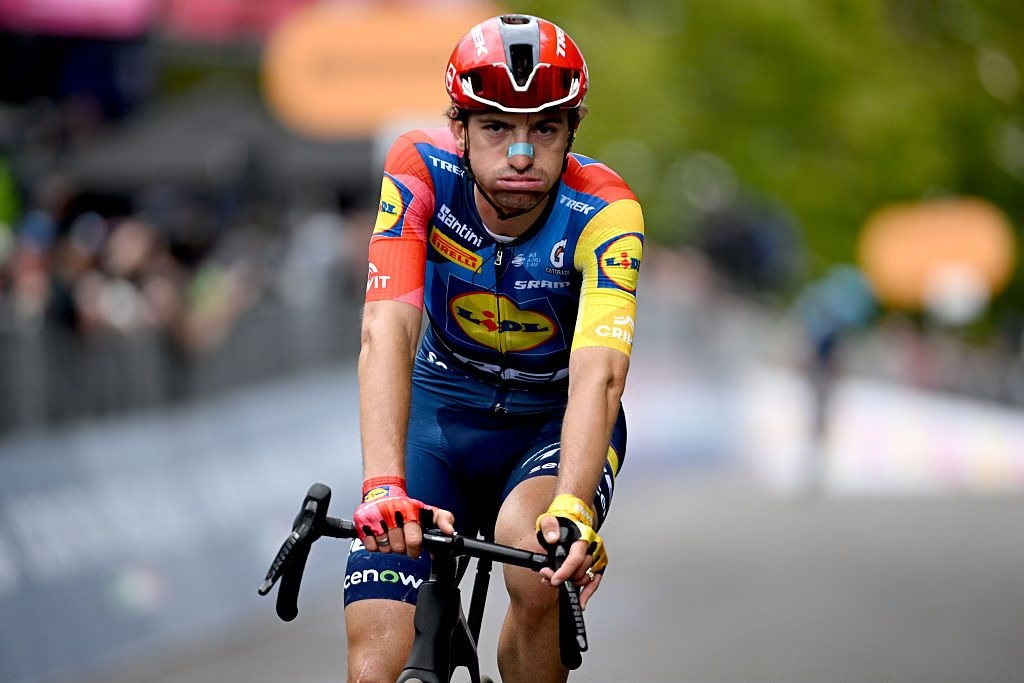

Best French riders to watch at the Tour de France 2026
⦿ Paul Seixas
⦿ Kévin Vauquelin
⦿ Lenny Martinez
⦿ Romain Grégoire
⦿ Julian Alaphilippe
⦿ David Gaudu
⦿ Jordan Jegat
⦿ Anthony Turgis
⦿ Valentin Madouas
⦿ Aurélien Paret-Peintre
⦿ Valentin Paret-Peintre
⦿ Bruno Armirail
⦿ Dorian Godon
⦿ Warren Barguil
⦿ Guillaume Martin-Guyonnet
Prediction
The French Tour de France 2026 story is likely to be split into two strands.
The first is the long-term story of Seixas. If he handles his debut well, stays calm in the Pyrenees and reaches the Alps with a strong GC position, the race will become a major moment for French cycling even without a podium. A top 10 and a serious white jersey challenge would already be a huge step.
The second is the stage-win story. France has enough options for that to be realistic. Grégoire, Alaphilippe, Turgis, Martinez, Gaudu, Vauquelin and Jegat all have routes to a stage victory if the race gives them the right opening.
Seixas is the most important French rider to watch. Vauquelin may be the safest all-round pick. Grégoire could be the best stage-win bet. Alaphilippe remains the rider most capable of turning one day into a national moment. Between them, France should have a presence across almost every part of the race.
For UK viewing details, see our how to watch Tour de France 2026 in the UK guide.

