
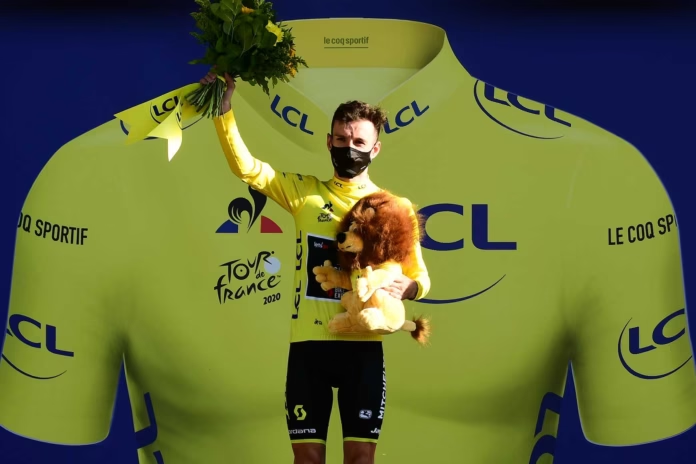
The British presence at the 2026 Tour de France is smaller and more focused than the broad farewell-and-debut mix of 2025, but it still has several important storylines. There is no Geraint Thomas farewell this time, no Mark Cavendish sprint-history chase, and no expectation that Britain will control the race in the way Team Sky and Ineos once did. Instead, the interest is spread across GC support, stage hunting, reduced sprints, mountain survival and one very different type of British leader.
Oscar Onley’s withdrawal has changed the shape of Britain’s story at the 2026 Tour de France. What looked like a race built around a clear emerging GC project is now more fragmented, with British interest spread across stage-hunting, mountain support, breakaways, reduced sprints and team roles.
There is no Geraint Thomas farewell this time, no Mark Cavendish sprint-history chase, and now no Onley GC test after his shoulder injury ruled him out of the race. Instead, the British presence is narrower but still interesting. Adam Yates remains one of the best mountain domestiques in the world. Tom Pidcock gives the race a genuine stage-hunting edge. Fred Wright offers breakaway potential. Ben Tulett could have an important support role for Team Visma | Lease a Bike. Jake Stewart and Lewis Askey add a double British angle at NSN Cycling Team, where the wider plan is likely to revolve around Biniam Girmay, sprint support and selective stage opportunities.
The 2026 route gives each of them something different. The Barcelona team time-trial creates an immediate team test. The early Pyrenees punish anyone undercooked. The Massif Central, Vosges and Jura open the race to breakaways and reduced groups. The stage 16 time-trial gives specialists and GC riders a late checkpoint. The final Alpine block, with Orcières-Merlette and back-to-back Alpe d’Huez finishes, will decide whether British riders can influence the yellow jersey race through support work or chase stage opportunities deep into the final week.
For wider context, see our Tour de France 2026 full route guide, Tour de France 2026 route analysis, Tour de France 2026 team-by-team guide and British riders at the 2025 Tour de France.
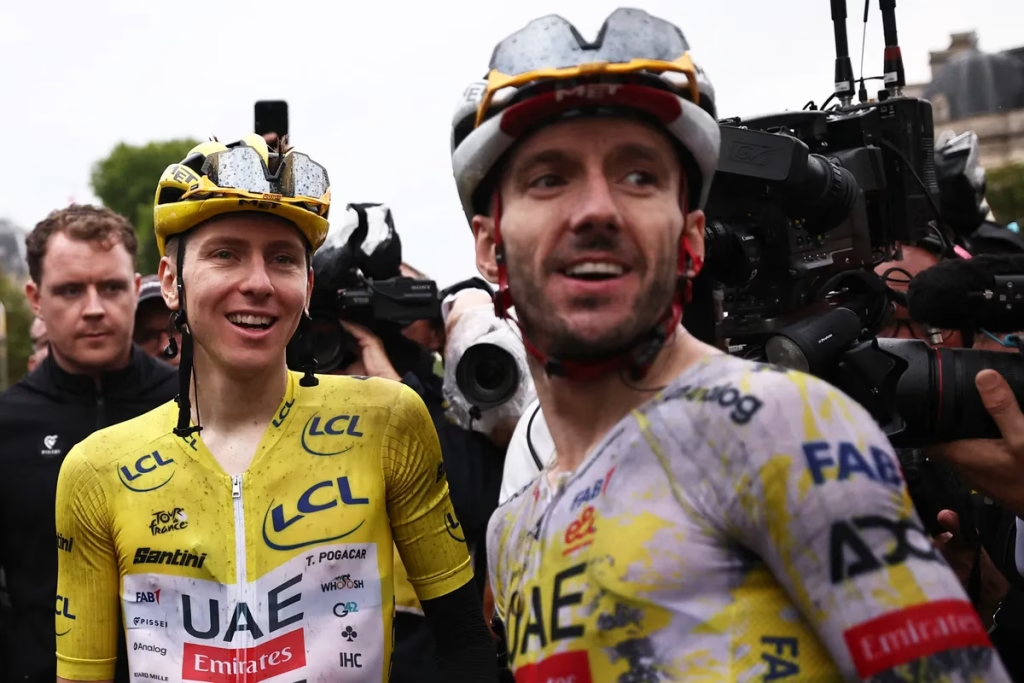
Adam Yates
Adam Yates is not likely to arrive at the 2026 Tour de France as a sole leader, but that does not make him less important. In some ways, his role with UAE Team Emirates-XRG is one of the clearest British storylines of the race.
Yates has become one of the most valuable mountain support riders in the peloton. His job is not simply to ride on the front until he explodes. At his best, he can control pace, follow dangerous moves, bridge across to attacks and remain close enough on GC to become a tactical threat. That gives Tadej Pogačar more than a domestique. It gives him a satellite option, a pressure valve and a rider rivals cannot ignore completely.
The 2026 route should suit Yates’ support profile. The early Pyrenees will demand immediate climbing depth. The Massif Central and Vosges-Jura stages will require a rider who can handle repeated climbing and control messy mid-mountain terrain. The Alps will be where his value is most obvious, especially on stages 18, 19 and 20.
The back-to-back Alpe d’Huez finishes could be exactly where UAE use Yates hardest. If Pogačar is attacking, Yates can help soften the race before the decisive moves. If Pogačar is defending, Yates can steady the tempo and keep the team structure intact. If the race becomes tactical, he can be sent up the road or used as a bridge.
His own GC result may be secondary, but he is still capable of finishing high overall if the race opens that way. The bigger question is whether UAE will allow him to ride for his own placing or ask him to spend everything in support. Given the route and Pogačar’s likely status, the latter feels more likely.
Prediction: key mountain domestique, possible top-ten if UAE’s race allows it, and one of the most important British riders in the final week.
For more on UAE’s Tour structure, see our Tadej Pogačar at the Tour de France 2026, Tour de France 2026 domestiques who could decide the race and Tour de France 2026 Alps guide.
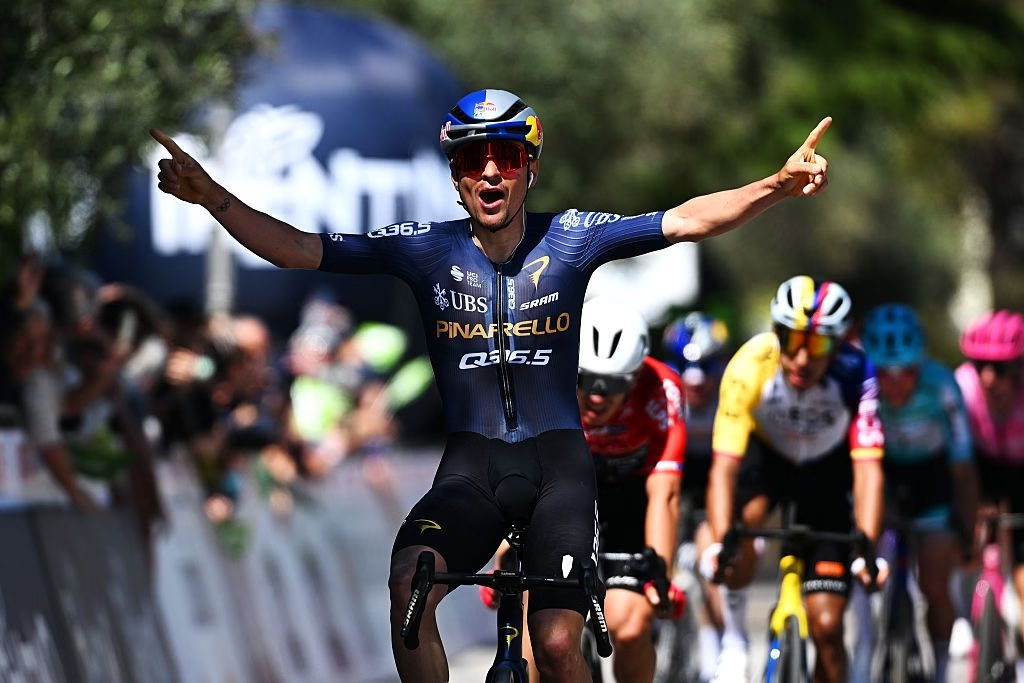 Photo Credit: Getty
Tom Pidcock
Tom Pidcock is the most unpredictable British rider likely to start the 2026 Tour de France. That is not a criticism. It is what makes him worth watching.
Now with Pinarello-Q36.5 Pro Cycling Team, Pidcock’s Tour should be built around stage opportunities rather than a conservative GC plan. That gives him freedom. He does not need to sit eighth on GC and defend every day. He can choose moments, target terrain and race in the way that has always made him most dangerous: attacking, descending, taking risks and using his all-round skill set to make stages difficult for everyone else.
The route gives him plenty of potential openings. Stage 2 into Barcelona has a hilly finale around Montjuïc. Stage 4 to Foix could suit a punchy breakaway or reduced selection. Stage 9 to Ussel is a major breakaway day if the race goes that way. Stage 13 to Belfort has the kind of long, hilly structure that can suit riders with classics power and climbing punch. The Vosges and Jura may offer more chances if he is not trapped by GC duties.
Pidcock’s biggest question is not talent. It is focus. The Tour is unforgiving when riders try to do everything. If he wants a stage, he may need to lose time deliberately, target the right day and avoid wasting energy in the wrong moves. A rider like Pidcock can be dangerous almost anywhere, but that also creates the temptation to chase too much.
The team context may help. Pinarello-Q36.5 are not expected to control the Tour. That gives Pidcock the chance to ride like a hunter. With Fred Wright also likely in the squad, the team could have two British riders capable of making breakaways interesting.
Prediction: serious stage-win contender, especially on hilly and transition days, but unlikely to be a controlled GC threat.
For route options that suit him, see our Tour de France 2026 breakaway stages ranked, Tour de France 2026 route: best days for GC attacks and Tour de France 2026 Vosges and Jura guide.
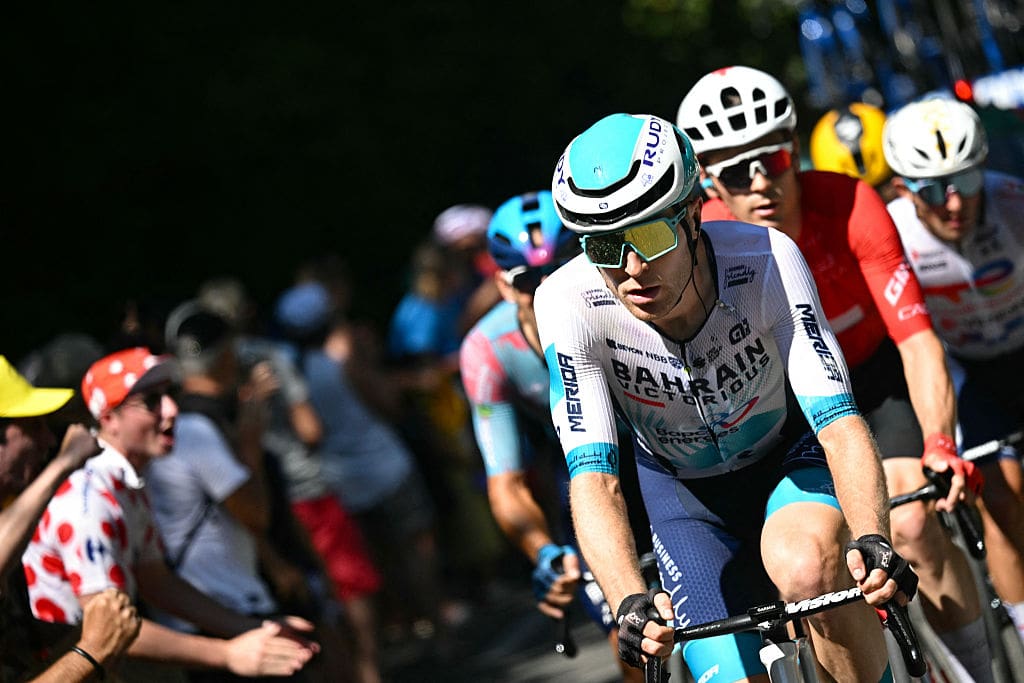 Photo Credit: Getty
Fred Wright
Fred Wright has spent years being one of Britain’s most visible breakaway riders, and the 2026 Tour gives him the kind of route where that identity still has value.
With Pinarello-Q36.5, Wright should not be buried inside a team built entirely around a GC leader. That matters. His best Tour work has come when he has space to read a day, get into the right move and use his engine over long, attritional terrain. He is not a pure climber, not a pure sprinter and not a time-triallist in the stage-winning sense. He is a rider for awkward days, and the 2026 route has several of them.
Stage 9 to Ussel may be one of the most obvious targets. It is long, hilly and badly timed for sprint-team control. Stage 13 to Belfort could be another. Stage 17 to Voiron, coming before the final Alpine block, may also become a day where breakaway strength beats sprint organisation. Those are the stages where Wright’s persistence can pay.
His challenge is finishing. Wright has often been good enough to be there but not always sharp enough to finish the move off. At the Tour, that is a brutal distinction. Being in the right break is only half the work. The final selection, the final climb, the final sprint or the final tactical hesitation is usually where the winner is decided.
Still, Wright remains one of the British riders most likely to be visibly active. He can make the race, especially on days when the GC teams hesitate and the sprinters do not want responsibility. With Pidcock in the same team, there is also a useful tactical pairing if both are allowed to hunt.
Prediction: breakaway regular, with stage-win potential if he times the right move and reaches the final with a favourable group.
For more on his best terrain, see our Tour de France 2026 Massif Central guide, Tour de France 2026 breakaway stages ranked and Tour de France 2026 route: best days for GC attacks.
 Photo Credit: Getty
Jake Stewart
Jake Stewart gives Britain a different type of Tour interest. He is not a GC rider and he is unlikely to be the fastest pure sprinter in the race, but he could be dangerous on reduced finishes and tougher sprint stages.
The 2026 route is not especially soft for sprinters. There are seven official flat stages, but the race is broken up by early mountains, awkward hilly stages, the Massif Central and a very hard final week. That creates room for riders who can sprint after work has been done. Stewart’s best chance is not necessarily the cleanest bunch sprint against Jonathan Milan, Jasper Philipsen, Tim Merlier or Arnaud De Lie. It is the day where the sprint field is thinned, the lead-outs are messy and the fastest riders have already spent something.
Stage 5 to Pau is the first real chance, though it may still favour bigger sprint structures. Stage 7 to Bordeaux and stage 8 to Bergerac look more straightforward, but they come after hard racing. Stage 11 to Nevers and stage 12 to Chalon-sur-Saône are important for the pure sprinters. Stewart may be more interesting on days like stage 2 to Barcelona, stage 9 to Ussel or even stage 17 to Voiron if the race is not fully controlled.
His team role will matter. If NSN Cycling Team build their sprint plan around Biniam Girmay, Stewart may have to work as a support rider more often than he gets his own chance. Lewis Askey’s presence in the same squad adds another British layer to that plan, giving NSN two British riders who can work around Girmay, cover rolling terrain and keep the team involved beyond the cleanest bunch finishes.
For Stewart, the Tour is about opportunity rather than obligation. If he gets a clear sprint, he has to take it. If he is used as support, he can still be part of one of the more interesting points-classification stories of the race.
Prediction: reduced-sprint option and sprint support rider, with a possible top-five stage finish if the right day opens up.
For more on the sprint picture, see our Tour de France 2026 sprinters guide, Tour de France 2026 sprint stages ranked and Tour de France 2026 route: best days for sprinters.
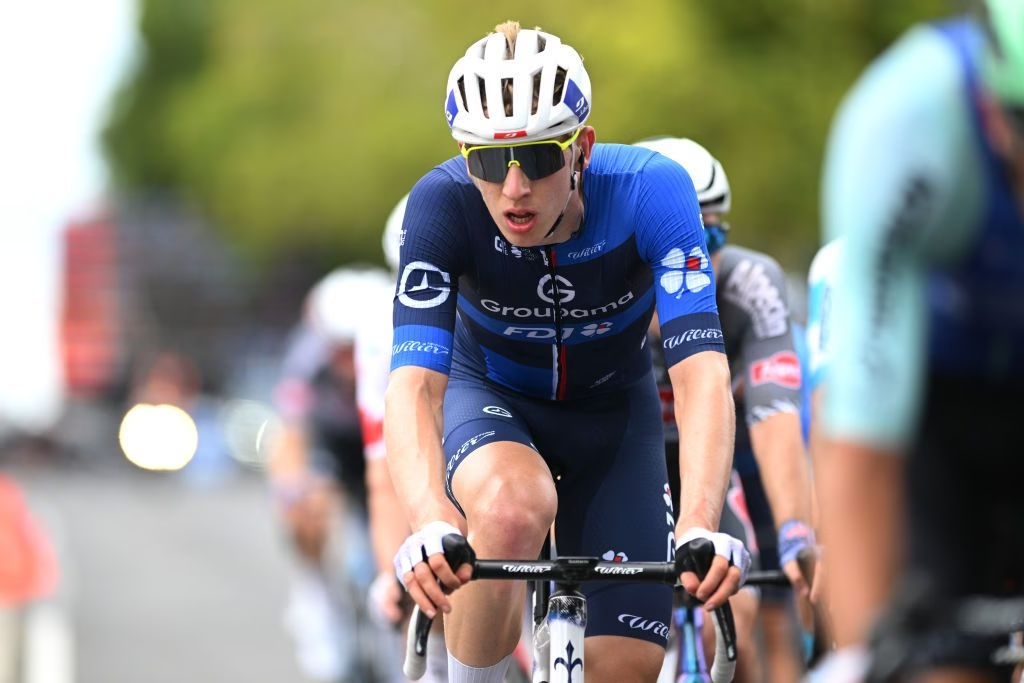
Lewis Askey
Lewis Askey gives Britain another starting rider at the 2026 Tour de France and adds to the NSN Cycling Team angle alongside Jake Stewart. He should not be framed as a pure sprinter or a GC rider. His value is more likely to come as a classics-style support rider, rolling-terrain engine and breakaway option on days where the race becomes harder to control.
Askey’s move into the NSN Tour line-up matters because it gives the team more than one British route into the race. Girmay is likely to be the central sprint and points-classification figure, but Askey can help position him, work in the chase, cover moves and keep the team active when the terrain becomes too hard for a straightforward bunch sprint.
The route gives him a few possible openings. Stage 9 to Ussel, stage 13 to Belfort and stage 17 to Voiron all have the kind of awkward profile where a strong breakaway or reduced group could stay clear. Askey is unlikely to be one of the headline stage favourites, but he is exactly the kind of rider who can become visible if NSN decide to race aggressively rather than wait only for sprint days.
His challenge will be role clarity. If NSN commit fully to Girmay, Askey may spend most of the race in support. If the team gives him freedom on rolling days, he has enough punch and engine to be part of a dangerous move. Either way, his start gives Britain another active presence in the race and makes NSN one of the more interesting teams from a British perspective.
Prediction: sprint support, classics-style engine and possible breakaway option on rolling stages, with his clearest value coming in NSN’s wider stage-hunting and Girmay support structure.
For more on the terrain that could suit him, see our Tour de France 2026 breakaway stages ranked, Tour de France 2026 sprint stages ranked and Tour de France 2026 stage hunters to watch.
 Photo Credit: Getty
Ben Tulett
Ben Tulett may not be the loudest British storyline at the Tour de France 2026, but he could have one of the most important jobs.
If Team Visma | Lease a Bike start with Jonas Vingegaard as their main GC leader, Tulett’s role will be about control, climbing support and keeping the team structure intact across a very hard route. He is not likely to be riding for his own GC result unless the race takes a strange turn, but that does not make him marginal. On this route, support riders could decide whether the major leaders are isolated or protected in the final week.
Tulett’s value comes from his climbing, his ability to work across hard terrain and his place inside a team that knows how to build Grand Tour systems. The 2026 Tour is particularly demanding for domestiques because there are so many different types of pressure. The Barcelona team time-trial needs power and coordination. The early Pyrenees need mountain support immediately. The Massif Central and Vosges-Jura block require riders who can handle repeated climbs and tactical stress. The final Alps demand everything that is left.
If Vingegaard is to challenge Pogačar deep into the race, Team Visma | Lease a Bike will need more than one mountain helper. Tulett could be part of that support layer. His job may be to ride before the decisive moves, keep Vingegaard positioned, help control breakaways or provide cover when the race becomes unpredictable.
That sort of work rarely produces headlines, but it is often what separates winning teams from isolated leaders. For British fans, Tulett is worth watching because his value may be visible in the shape of the race rather than in his own result.
Prediction: mountain support role for Vingegaard, with a chance to become increasingly important if Visma’s support structure is tested.
For more on the Vingegaard challenge, see our Jonas Vingegaard at the Tour de France 2026, Tour de France 2026 domestiques who could decide the race and Tour de France 2026 Alps guide.
Who has the best chance of a British stage win?
Pidcock now looks like the clearest British stage-win option. His route possibilities are broader than the others, and he should have freedom to target hilly stages, breakaways and perhaps a mountain-adjacent day if he loses enough GC time to be allowed up the road.
Wright has the engine for a breakaway win but needs the final to fall perfectly. Adam Yates can win from a reduced mountain group, but UAE’s plan will probably make his own stage chances conditional on Pogačar’s race. Stewart has a chance in reduced sprints, though he may need team freedom. Askey is more of an outside option, but he could be relevant if a rolling stage breaks into a reduced group or if NSN place him in the right breakaway. Tulett’s role is likely to be more about support than stage hunting.
The best British stage-win days could be stage 2 to Barcelona, stage 4 to Foix, stage 9 to Ussel, stage 13 to Belfort and stage 17 to Voiron. Pidcock and Wright fit that list best. Stewart and Askey may prefer the reduced or rolling versions of those days, while Yates becomes relevant if the mountain stages fragment and UAE’s tactical plan allows him freedom.
For more on the stages where British riders could attack, see our Tour de France 2026 breakaway stages ranked and Tour de France 2026 route: best days for GC attacks guides.
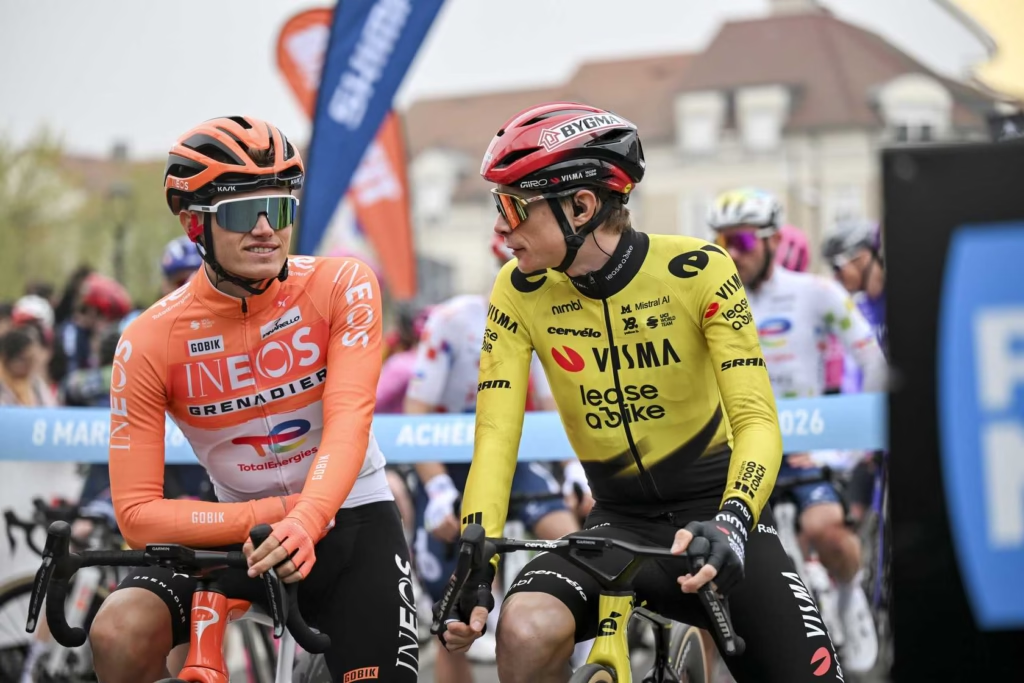
Who has the best British GC chance?
With Onley out, Britain no longer has an obvious dedicated GC leader at the 2026 Tour de France. That changes the tone of the article. The British GC story is now diminished, and the main interest shifts towards support roles, stage hunting and tactical influence rather than a clear three-week overall bid.
Adam Yates is the best British bet for a high overall finish, but only if UAE Team Emirates-XRG’s race allows him to retain GC position while supporting Pogačar. His actual role is likely to be more about mountain control than personal ambition, especially if UAE are fully committed to winning yellow. Tulett may finish respectably if Team Visma | Lease a Bike keep him protected, but his value is more likely to come through support work for Vingegaard. Pidcock could theoretically climb well enough to feature, but the more realistic route is stage hunting rather than three-week GC discipline.
That means no British rider should now be judged primarily by overall position. A Yates top ten would depend on team freedom. Tulett’s success may be measured by how long he can stay useful to Vingegaard in the mountains. Pidcock’s Tour is better judged by whether he can win a stage or animate the right days.
For more, see our Tour de France 2026 GC favourites ranked and Tour de France 2026 dark horses for the general classification features.
Why the 2026 route suits some British riders more than others
The 2026 route is not a simple sprinter’s Tour, not a pure climber’s Tour, and not a time-trialist’s Tour. It is a route built on repeated stress. That makes it interesting for Britain’s likely starters because none of them are here as the obvious race favourite.
Yates needs the mountain workload. Pidcock needs punchy and chaotic terrain. Wright needs breakaway days. Stewart and Askey need reduced sprints, rolling terrain and NSN freedom. Tulett needs a route where climbing domestiques are valuable.
The early Pyrenees are good for Yates and Tulett, but they also make the race harder for Stewart, Askey and Wright. The Massif Central is good for Pidcock, Wright and possibly Stewart or Askey if a reduced group forms. The stage 16 time-trial is not a major British target unless Tulett or Yates are still riding for position, but it shapes the wider GC context around the teams they support. The Alps are where Yates and Tulett will matter most, while Pidcock may either target a stage or fade from GC relevance deliberately.
That variety makes the British story more interesting than a simple list of national names. Each rider has a different race to ride, and Onley’s absence makes those secondary stories more important.
-
 Photo Credit: Getty

Final ranking: British riders to watch at the Tour de France 2026
Tom Pidcock
The best British stage-win option if he gets freedom and chooses the right hilly or mountain-adjacent day.
Adam Yates
A crucial mountain support rider for UAE Team Emirates-XRG and still capable of a high GC finish if circumstances change.
Ben Tulett
Potentially one of the most important British domestiques in the race if Team Visma | Lease a Bike need depth around Vingegaard.
Fred Wright
A breakaway engine for the awkward stages, especially Ussel, Belfort and Voiron.
Jake Stewart
A reduced-sprint and support option who could be more visible if the sprint days become harder than expected.
Lewis Askey
A British NSN Cycling Team starter, classics-style support rider and possible rolling-stage breakaway option.
Verdict
Oscar Onley’s withdrawal removes the clearest British GC storyline from the 2026 Tour de France. That is the major update. Without him, Britain does not have an obvious dedicated overall contender, and the article should no longer be framed around a top-five or top-ten GC target.
Instead, the British story is spread across several different roles. Pidcock carries the stage-hunting excitement. Yates carries the mountain-domestique importance. Tulett carries the support-rider intrigue around Team Visma | Lease a Bike. Wright carries the breakaway hope. Stewart and Askey give NSN Cycling Team a double British presence around sprint support, reduced finishes and rolling-stage opportunities.
That makes Britain’s Tour less obvious than in the years of Wiggins, Froome, Thomas or Cavendish, and less GC-focused than it would have been with Onley on the start line. But it still has several useful angles. The route is hard enough to reward riders who can suffer, adapt and choose the right moments. It is also varied enough that British riders should appear in several different parts of the race.
The strongest British headline is now probably a Pidcock stage win or a major mountain-support role from Yates. Wright has the engine to make breakaways interesting. Tulett could be quietly important if Visma’s support structure is tested. Stewart and Askey give NSN British depth around Girmay and the sprint-stage project.
The 2026 Tour may not have a British outright favourite or a clear British GC leader, but it still has enough British storylines to follow from Barcelona to Paris.
For full race coverage, visit our Tour de France hub, Tour de France 2026 full route guide and how to watch Tour de France 2026 in the UK.

