
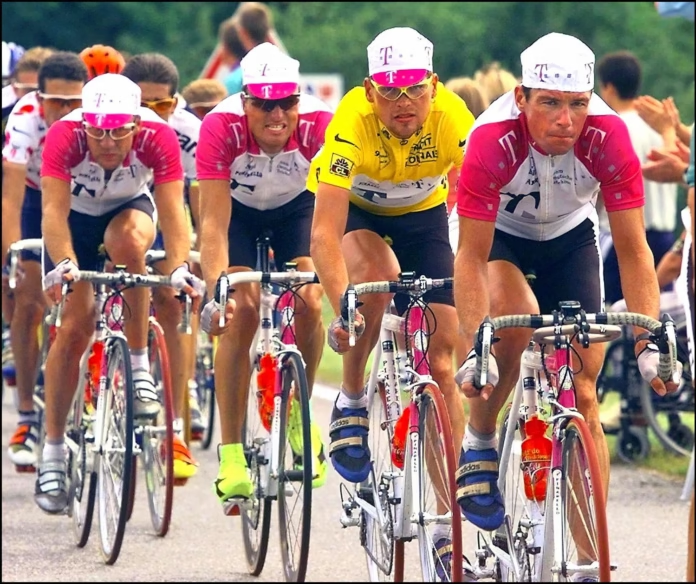
Tour de France teams work by building everything around a race plan. Each squad starts with eight riders, but those riders rarely have equal freedom. Some are leaders, some are sprinters, some are climbers, some are domestiques, some are road captains, and some are selected because they can do several jobs across three weeks.
The Tour de France is won by an individual rider, but it is almost never won alone. A yellow jersey contender needs teammates to protect them from wind, crashes, splits, hunger, mechanical problems and tactical traps. A sprinter needs a lead-out train. A breakaway specialist needs freedom. A young rider needs support and patience. Even riders who never appear in the results can be essential to how a team functions.
The 2026 Tour de France started with 23 teams: 18 UCI WorldTeams and five UCI ProTeams, giving a full field of 184 riders across eight-rider squads. That edition opened with a 19km team time-trial in Barcelona before moving towards the Pyrenees, a clear example of how team organisation can shape the race before the decisive individual battles begin.
For the full race context, see our Tour de France 2026 full route guide, Tour de France 2026 team-by-team guide and Tour de France 2026 route analysis.
How many riders are on a Tour de France team?
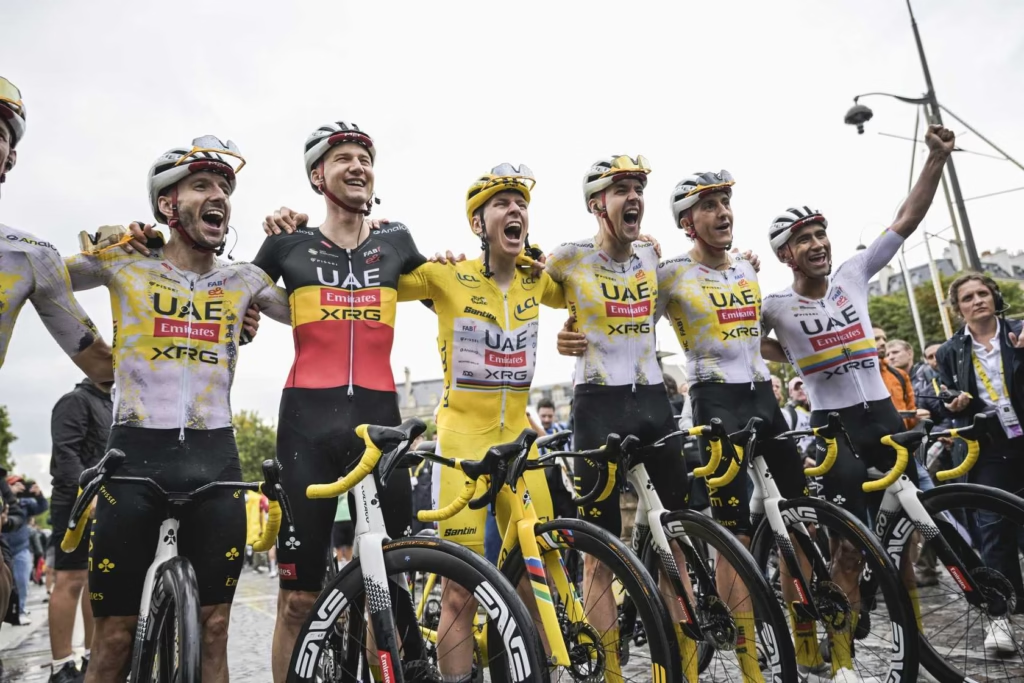
Each Tour de France team starts with eight riders. Across 23 teams, that creates a full peloton of 184 riders at the start.
Those eight places have to cover every task the team wants to perform. That is why selection is so important. A squad built only around climbing may lack power on flat stages. A team built around a sprinter may not have enough mountain support. A team chasing breakaways may not be able to defend a GC position if the race changes.
A Tour team usually includes some mix of:
| Role | Main job |
|---|---|
| GC leader | Targets the overall classification and yellow jersey |
| Sprinter | Targets flat stage wins and sometimes the green jersey |
| Climbing domestique | Supports the leader in the mountains |
| Flat-road domestique | Protects leaders, chases breaks and controls positioning |
| Lead-out rider | Guides a sprinter into the final metres |
| Road captain | Makes tactical calls inside the race |
| Breakaway rider | Chases stage wins from attacks |
| All-rounder | Covers several roles depending on the stage |
Some riders fit more than one category. The best Tour squads are not just collections of strong riders. They are balanced teams with clear jobs.
For the confirmed selection picture, see our full start list for Tour de France 2026.
Why do teams matter in an individual race?
The Tour de France is officially an individual race for the yellow jersey, but the race is shaped by teams every day.
A GC leader cannot fetch every bottle, close every gap, chase every attack, position themselves before every climb and still win the Tour. A sprinter cannot control a flat stage alone. A climber cannot survive crosswinds without help. Even the best rider in the race needs teammates to reduce the number of problems they have to solve.
Teams matter because cycling is tactical and aerodynamic. Riding behind another rider saves energy. Being placed near the front reduces crash risk. Having teammates around you means someone can give you food, lend a wheel, chase a break, set the pace, or calm the race down.
That is why a Tour winner often looks protected for most of the day. Their teammates are spending energy so the leader does not have to.
For a deeper look at that overall race battle, see our how the Tour de France general classification works and Tour de France 2026 GC favourites ranked.
What is a team leader?
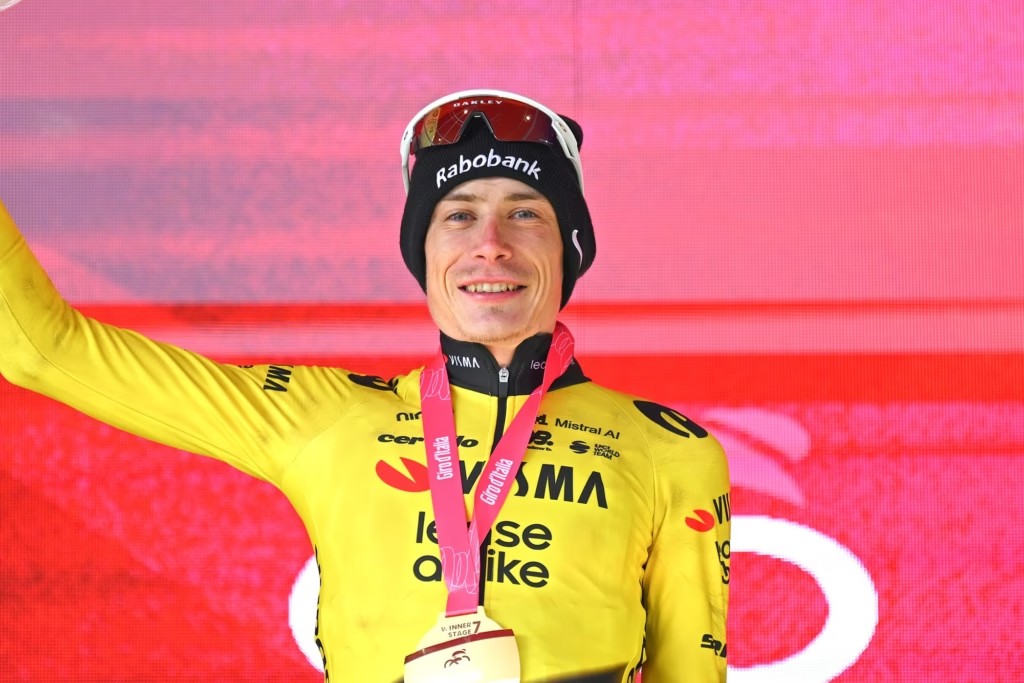
A team leader is the rider the squad is built around. In the Tour de France, that usually means a GC contender or a sprinter, but some teams can have different leaders for different objectives.
A GC leader targets the general classification. Their aim is to finish the whole Tour in the lowest possible time. The team protects them on flat stages, supports them in the mountains and organises the race around keeping them safe.
A sprint leader targets stage wins and sometimes the green jersey. Their team works to control flat stages, bring back breakaways and deliver them into the final few hundred metres in the best possible position.
Some teams have one clear leader. Others arrive with shared leadership. That can be useful if the race goes badly for one rider, but it can also create tactical tension. If two riders need support at the same moment, the team has to choose.
The best teams know exactly who they are riding for before the race starts.
What is a domestique?
A domestique is a rider whose main job is to work for someone else. The word comes from French and is central to how Tour de France teams operate.
A domestique might ride on the front of the peloton to control the pace. They might fetch bottles from the team car. They might drop back to help a leader after a mechanical problem. They might guide a sprinter through the final kilometres. They might set a hard tempo on a climb until they have nothing left.
Domestiques often finish far behind the leaders because they have already done their job. Their value is not always visible in the results sheet. A rider who finishes 80th on a mountain stage may have been one of the most important riders in the race if they protected their leader for the first 170km.
Different domestiques have different specialisms. Some are powerful flat-road riders. Some are climbers. Some are lead-out riders. Some are experienced road captains who keep the team organised.
For more on this role, see our what is a domestique at the Tour de France? and Tour de France 2026 domestiques who could decide the race.

What does a road captain do?
A road captain is an experienced rider who helps direct the team during the race. They are not always the strongest rider, but they are often one of the most trusted.
The road captain reads the race from inside the peloton. They know when to move up, when to stay calm, when to chase, when to let a break go and when the team leader needs support. They also communicate with riders around them and help translate instructions from the team car into practical action.
Race radios are important, but they do not replace judgement. A directeur sportif in the car can see television pictures and time gaps, but a road captain can feel the wind, see the road narrowing, sense nervousness in the bunch and understand when the peloton is about to split.
On chaotic Tour stages, the road captain can be the difference between a team looking controlled and a team looking scattered.
How do Tour de France teams choose their riders?
Teams choose riders based on objectives. The first question is usually: what are we trying to achieve?
A team targeting yellow will select riders who protect a GC leader. That usually means strong climbers, experienced flat-road protectors, time-trial support and riders who can stay calm under pressure.
A sprint team will select lead-out riders, powerful rouleurs and riders who can chase breakaways. The whole squad may be built around giving one fast finisher a handful of chances.
A team without a realistic GC or sprint favourite may select aggressive riders for breakaways. That can be a smart Tour strategy because stage wins, television exposure and mountain points can all come from attacking.
Some teams try to do several things at once. They might bring a GC leader, a sprinter and a stage hunter. That gives options, but also creates trade-offs. With only eight riders, every selection means leaving someone else at home.
For the 2026 race, see our full start list for Tour de France 2026 and Tour de France 2026 team-by-team guide.
What are the main types of Tour de France team?
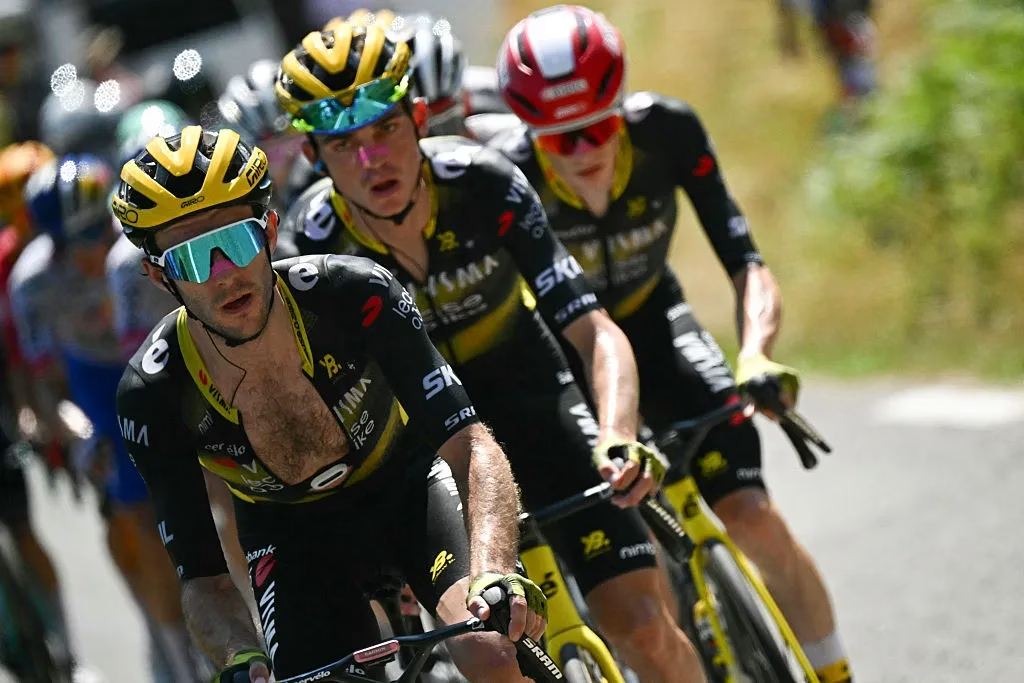
Not every team arrives with the same aim. Broadly, Tour squads fall into a few categories.
| Team type | Main objective | What they need |
|---|---|---|
| GC team | Win or place high overall | Climbing support, road captains, time-trial strength |
| Sprint team | Win flat stages or green jersey | Lead-out train, rouleurs, chase power |
| Breakaway team | Win stages from attacks | Aggressive riders, tactical freedom, endurance |
| Mountains team | Chase climbing stages or polka-dot jersey | Climbers, opportunists, recovery |
| Development team | Build experience around young riders | Protection, patience, flexible goals |
| Mixed team | Combine GC, sprint and stage aims | Balance and clear priorities |
The strongest teams can cover several aims at once, but the Tour often exposes unclear planning. If a team says it wants everything, it may end up fully committing to nothing.
The 2026 Tour illustrated that balance particularly well: the opening team time-trial, early mountains, sprint stages and final Alpine block all asked different questions of an eight-rider squad.
For a wider view of how squads may balance those aims, see our Tour de France 2026 team-by-team guide.
How does a GC team work?
A GC team works by protecting its leader from time loss. That starts on stage 1 and continues until Paris.
On flat stages, the team keeps the leader near the front but out of the wind. That reduces crash risk and avoids splits. In crosswinds, teammates form part of the shield around the leader. Before climbs, they position the leader near the front so they do not waste energy moving up.
In the mountains, climbing domestiques set pace, discourage attacks and stay with the leader as long as possible. Sometimes they ride hard to weaken rivals. Sometimes they ride steady to protect their own leader. Sometimes they chase. Sometimes they wait if the leader has a problem.
A GC team also controls emotion. Leaders can panic if they are isolated, badly positioned or forced to respond to every attack. A strong team gives them structure and calm.
At the 2026 Tour, the GC teams will be tested immediately by the Barcelona team time-trial. A strong squad can give its leader a good start. A weaker one can leave them chasing from day one. For more, see our Tour de France 2026 team time-trial explained and how the stage 1 team time-trial could change the Tour de France 2026.
How does a sprint team work?
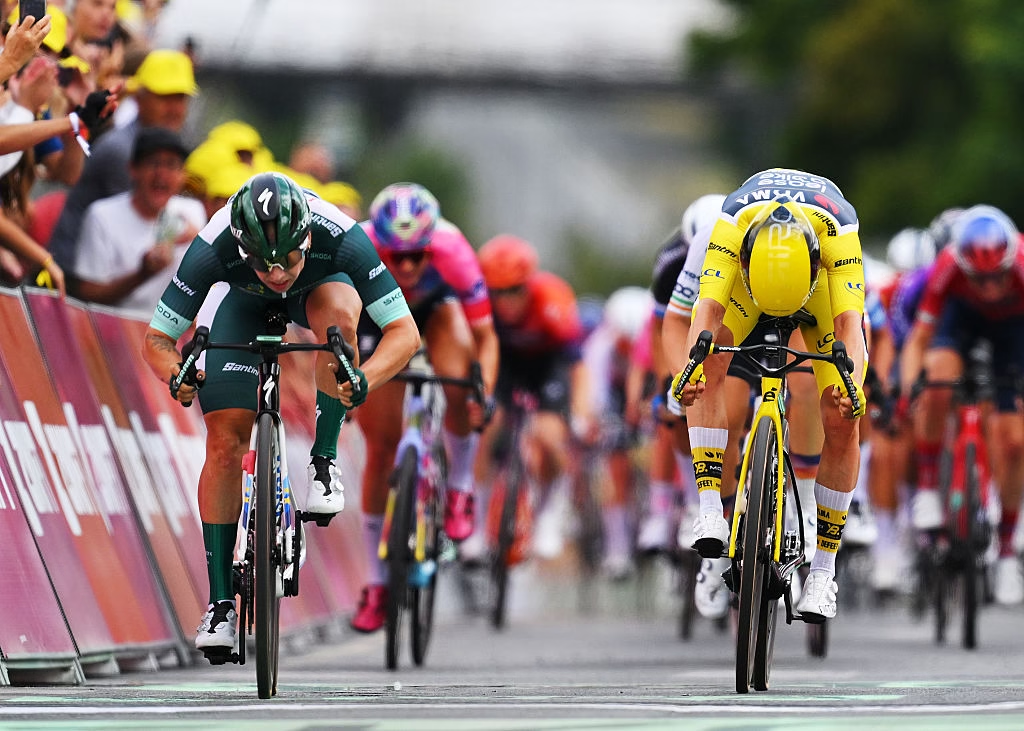
A sprint team works by controlling flat stages and delivering its sprinter to the finish. That is harder than it looks.
First, the team helps manage the breakaway. If a small group attacks early, sprint teams may allow it to go but keep the time gap under control. They do not want to catch the break too early, because that invites more attacks. They also cannot leave it too late, or the sprinter loses the chance to win.
In the final kilometres, the lead-out train takes over. Riders line up in front of the sprinter, keeping speed high and guiding them through the chaos. Each lead-out rider does a short effort, then swings away. The final lead-out rider tries to drop the sprinter into the perfect launch position.
A sprint team needs power, timing and trust. If the train goes too early, the sprinter is exposed. If it goes too late, they may be boxed in. If one rider loses position, the whole plan can collapse.
For the 2026 sprint picture, see our Tour de France 2026 sprint stages ranked and best sprinters at the Tour de France 2026.
How does a breakaway team work?
A breakaway team works by creating opportunities rather than controlling the race. These teams may not have a rider capable of winning the Tour or dominating bunch sprints, so they race aggressively.
A breakaway rider attacks early, hoping to join the right move. The team then decides whether to place more riders in the break, protect the rider in front, disrupt the chase behind or save energy for another day.
Breakaway racing is tactical. The strongest rider does not always win. A rider needs timing, endurance, nerve and the ability to cooperate with rivals before attacking them later.
For smaller teams, breakaways are also important because they give sponsor visibility. Hours at the front of the Tour can be valuable even if the stage win does not arrive.
The 2026 route should offer several breakaway chances, especially on hilly stages, transitional days and mountain stages where GC teams may not want to chase all day. For more, see our Tour de France 2026 route: best days for breakaways and Tour de France 2026 breakaway stages ranked.
What does the team car do?
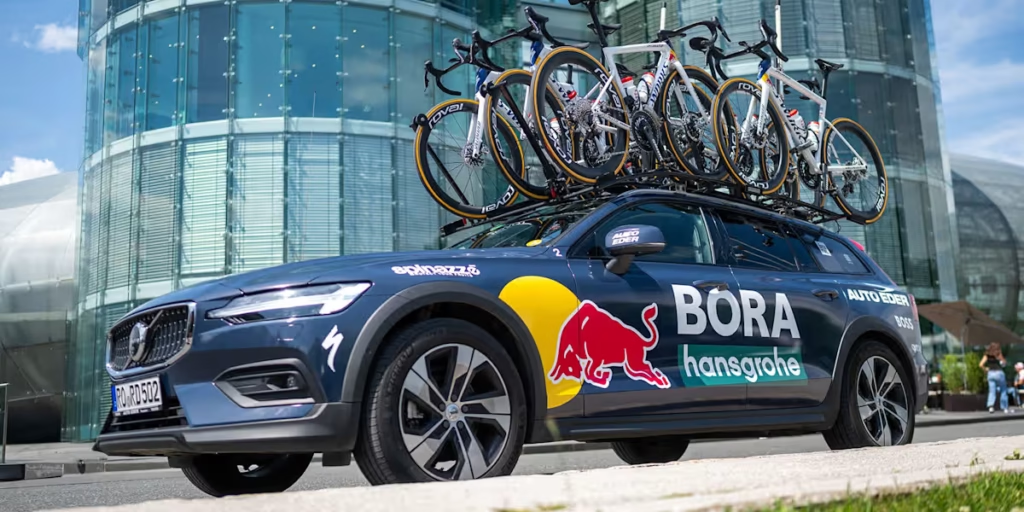
The team car is the mobile control centre. It carries spare bikes, wheels, food, drink, clothing, radios, medical supplies and the directeur sportif.
The directeur sportif, often shortened to DS, gives instructions from the car. They receive information from race radio, television images, time gaps and team staff. They then tell riders when to chase, when to wait, when to eat, where the danger points are and what the tactical plan should be.
The car also provides mechanical support. If a rider punctures or crashes, the team car can supply a spare wheel or bike. If the leader has a problem, teammates may drop back to help while the car moves up when allowed.
Position in the convoy matters. The higher a team’s best rider is on GC, the better its car position usually is. That can be important because a car closer to the front can reach riders more quickly after mechanical problems.
The team car cannot solve everything, but it is essential to how the race is managed.
What do team staff do?
A Tour de France team is much bigger than the eight riders on the start line. Behind them is a travelling operation of directors, coaches, mechanics, soigneurs, doctors, chefs, nutritionists, press officers and logistics staff.
Mechanics prepare bikes, wheels, tyres and spare equipment. Soigneurs look after food, drinks, massage, laundry and rider care. Doctors manage illness, crashes and medical checks. Chefs and nutritionists help riders refuel properly. Directors plan tactics. Press staff handle media. Logistics staff make sure bags, hotels, transfers and vehicles work.
This matters because the Tour is three weeks long. A rider’s performance depends on sleep, food, equipment, recovery, confidence and routine. Teams that manage the small details well can save energy every day.
For more on the recovery side, see our how Tour de France riders recover between stages.
How does the team time-trial show team strength?
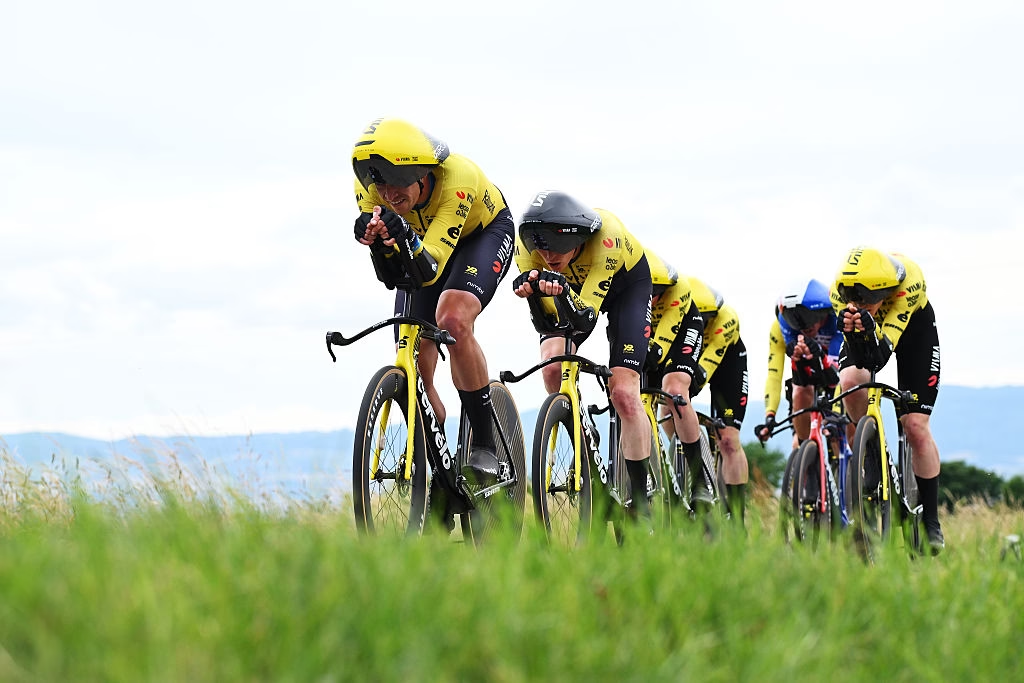
A team time-trial is the clearest example of a Tour team functioning as a single unit. Riders take turns on the front, then move aside and recover in the slipstream. The aim is to keep the group fast, smooth and organised.
The strongest individual rider cannot win a team time-trial alone. If they ride too hard, teammates are dropped. If the team goes too slowly, time is lost. The best squads balance power and cohesion.
The 2026 Tour starts with a team time-trial in Barcelona, which means team strength will be visible from the first day. GC leaders with powerful squads can gain time immediately. Leaders with weaker support may start the Tour under pressure before the road has even climbed properly.
That is why the opening stage is more than a spectacle. It is a team audit. For more detail, see our Tour de France 2026 team time-trial explained and best time-triallists at the Tour de France 2026.
What happens if a team leader crashes?
If a team leader crashes, the team reacts immediately. Nearby teammates may stop or slow down to help them return to the peloton. One rider might give up a wheel or bike. Others might pace the leader back. The team car provides mechanical or medical support when possible.
The response depends on the stage and situation. If the crash happens early, the team may be able to recover calmly. If it happens in crosswinds or near the finish, the damage can be much greater. If the leader is injured, the team may have to change its entire Tour plan.
Sometimes a team will switch objectives after a leader crashes. A squad that came for GC may start chasing stages. A domestique may get more freedom. A sprinter may become the main focus. The Tour forces teams to adapt quickly.
This is one reason teams bring riders with flexible skill sets. A Plan B can save a race.
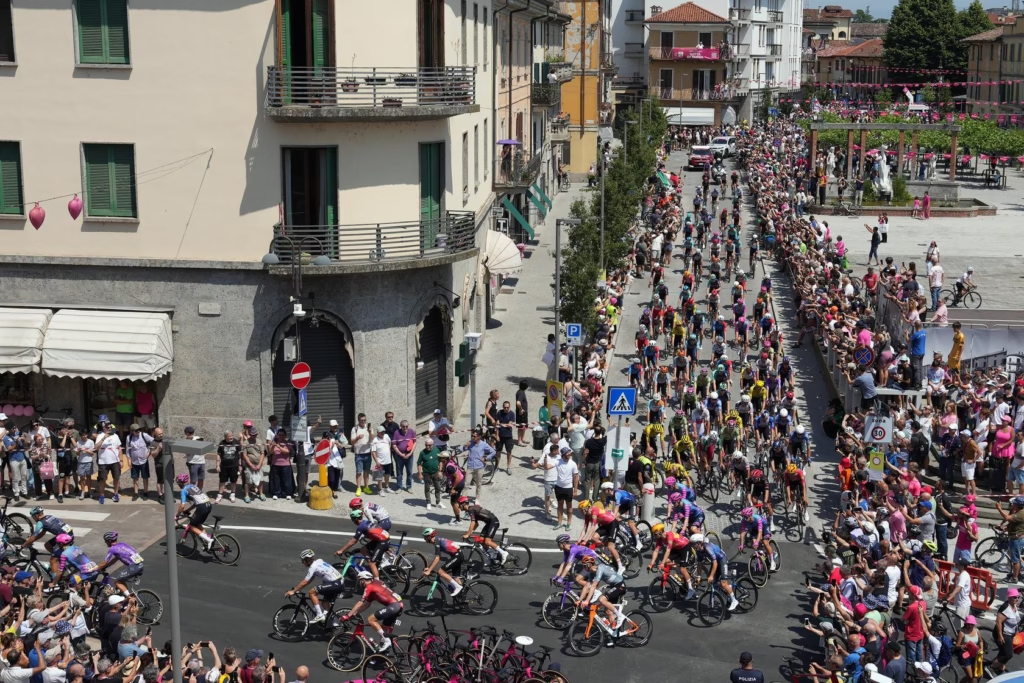 Photo Credit: RCS
How do teams control the peloton?
Teams control the peloton by riding on the front. This sets the speed, manages gaps and influences how difficult the stage becomes.
A sprint team may ride steadily for hours to keep a breakaway close. A GC team may set a hard pace in the mountains to weaken rivals. A team defending yellow may chase dangerous riders but ignore harmless ones. A team trying to split the race in crosswinds may suddenly accelerate.
Control is not just about strength. It is also about judgement. Chasing too hard too early wastes energy. Waiting too long can lose the race. Letting the wrong rider into a breakaway can create a tactical problem.
The best teams control without appearing desperate. They make the race feel predictable for their leader and uncomfortable for everyone else.
Why do teams sometimes let breakaways go?
Teams let breakaways go because chasing everything is impossible. The Tour is too long to control every attack.
If a breakaway contains riders who are far behind on GC, the yellow jersey team may allow it to build a lead. That gives the breakaway a chance at the stage while the peloton saves energy.
Sprint teams think differently. On flat stages, they often want to bring the break back before the finish. But even then, they may allow a small break to go early because it makes the stage easier to control. A predictable breakaway of three or four riders is often less dangerous than constant attacks.
GC teams may also prefer a breakaway to take bonus seconds at the finish. If the break wins the stage, rival GC riders cannot gain stage-win bonuses. That can be tactically useful.
Breakaways are therefore not just attacks. They are part of the negotiation between teams.
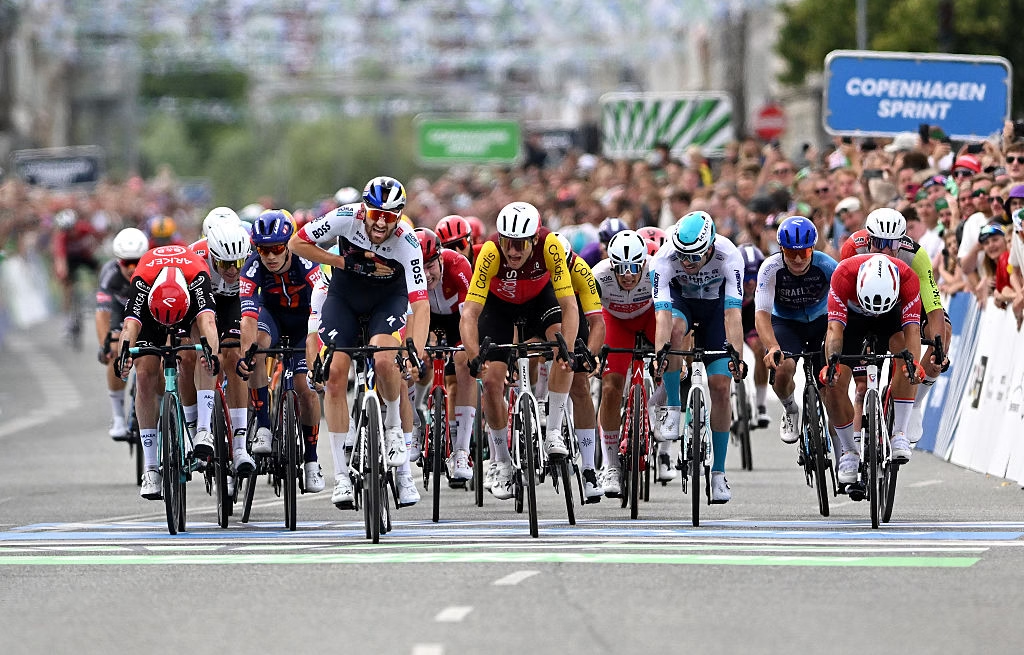
What is a lead-out train?
A lead-out train is a line of teammates working for a sprinter in the final kilometres. The aim is to keep speed high, hold position and launch the sprinter at the right moment.
The first riders in the train handle positioning and speed. Later riders guide the sprinter through the final bends and road furniture. The final lead-out rider makes the last effort before the sprinter launches.
A good lead-out train reduces chaos. It gives the sprinter a path through the bunch. It also stops rival teams from taking the best position.
The timing is delicate. Launch too early and the sprinter fades. Launch too late and they may never find space. That is why the relationship between sprinter and lead-out rider is one of the most important partnerships in cycling.
For the green jersey and sprint context, see our Tour de France 2026 sprinters guide: who can win green? and Tour de France 2026 route: best days for sprinters.
What is a mountain train?
A mountain train is a group of teammates setting a hard pace on a climb for their leader. It is most often used by GC teams.
The aim can vary. Sometimes the team wants to discourage attacks by making the pace too high. Sometimes it wants to weaken rivals before the leader attacks. Sometimes it wants to protect a leader who is strong but not explosive. Sometimes it is simply about keeping the race under control.
A mountain train works best when the team has several strong climbers. Each rider sets tempo until they are finished, then drops away. The leader stays protected until the final selection.
The tactic can look defensive, but it can also be brutal. A high mountain pace can slowly remove domestiques, reduce the group and expose rival leaders.
At the 2026 Tour, mountain support will matter through the Pyrenees, Massif Central, Vosges, Jura and Alps. For more on the hardest stages, see our Tour de France 2026 mountain stages ranked by difficulty and Tour de France 2026 Alps guide.
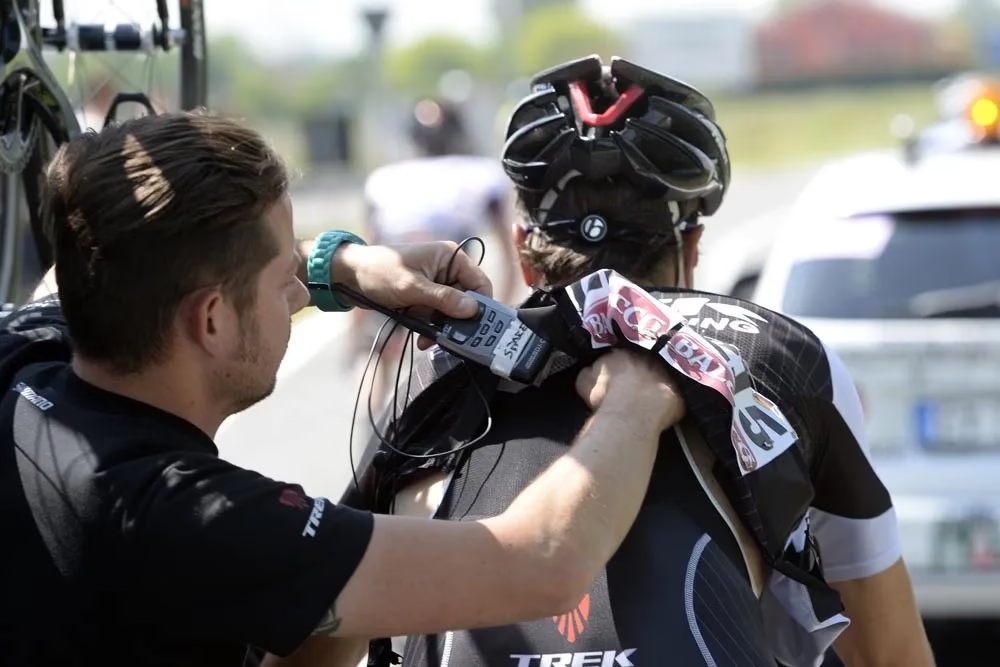
How do teams use race radios?
Race radios allow riders and team cars to communicate during the stage. Directors can warn riders about corners, climbs, wind, crashes, time gaps and tactical changes. Riders can report how they feel, ask for food, request mechanical help or say when a leader is struggling.
Radios make the race more controlled, but they do not remove instinct. A rider still has to make fast decisions in the peloton. The team car may not see everything, and instructions can arrive too late if the race changes suddenly.
Road captains are important because they combine radio instructions with what is happening inside the bunch. They can tell teammates when to move, when to stay calm and when the race is about to become dangerous.
The Tour is too chaotic to be run only from a car. Radios help, but riders still have to read the race.
What is the team classification?
The team classification is a separate competition based on team times. It is not as famous as the yellow, green, polka-dot or white jerseys, but it rewards collective consistency.
The calculation is based on the times of a team’s best riders on each stage. Over the race, those times are added together to create the team standings.
Some teams care about it more than others. A squad without a stage win or GC podium may use the team classification as a target. For others, it is a secondary reward that follows naturally from having several riders high on GC.
The team classification is useful because it shows depth. A team with several strong riders across mountain stages and hard days can rank well even if it does not win the yellow jersey.
For fans, though, it is still secondary to the main individual competitions. The yellow jersey remains the central prize. For the full jersey breakdown, see our Tour de France 2026 jerseys explained.
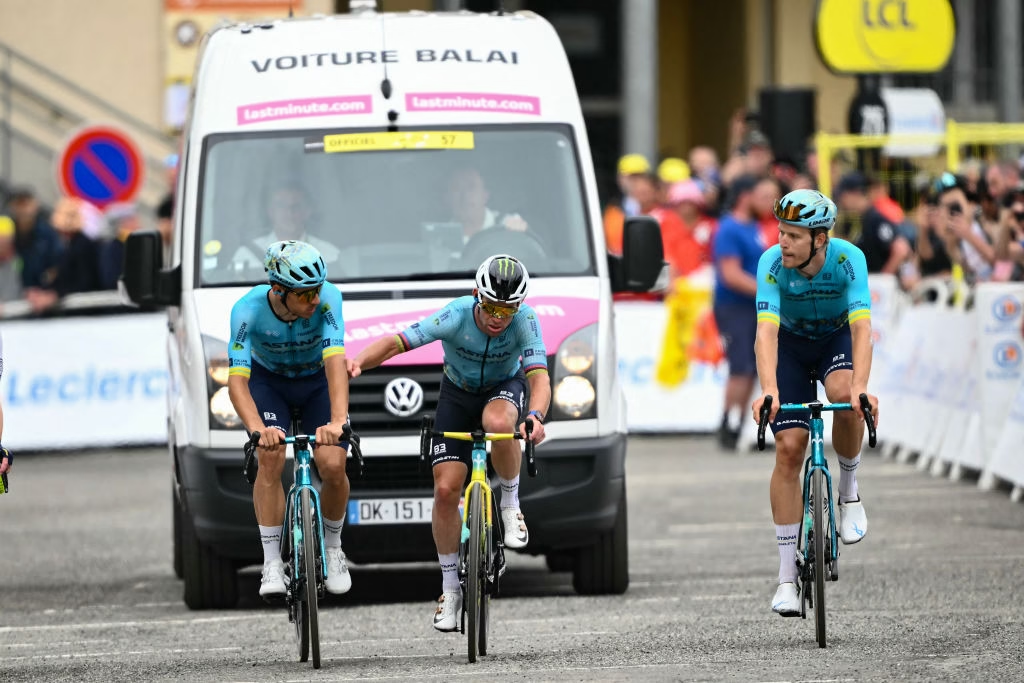 Photo Credit: Getty
What happens when a team loses riders?
If a rider abandons the Tour, their team continues with fewer riders. They cannot be replaced. That can seriously affect race tactics.
A GC leader who loses a climbing domestique may be isolated earlier in the mountains. A sprinter who loses a lead-out rider may struggle to position properly. A breakaway-focused team may lose one of its main attacking options.
This is why teams try to protect every rider, not just the leader. The eighth rider on the squad may become crucial in the final week if injuries, illness or fatigue reduce the team’s options.
A Tour team that starts strong can look very different by the third week. Depth matters because the race gradually removes choices.
Why do teammates drop back for bottles?
Riders need food and drink constantly during the Tour. They cannot all go back to the team car whenever they want, so domestiques often collect bottles and bring them forward.
This is called a bottle run. A rider drops back through the convoy, collects bottles from the car, stuffs them into jersey pockets and carries them back to teammates.
It looks simple, but it costs energy. Moving from the front of the peloton to the cars and back again takes effort, especially in wind or on rolling roads. A domestique may do this many times in a stage.
Bottle runs are one of the clearest examples of invisible team work. The leader stays protected near the front because someone else is doing the tiring job behind.
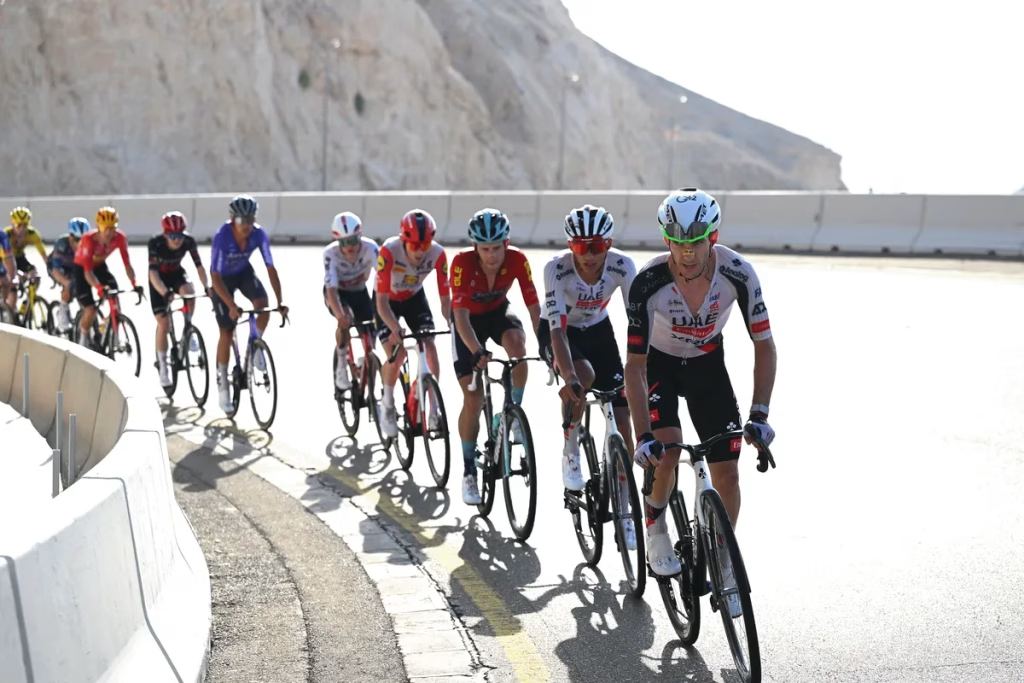
How do teams decide tactics during a stage?
Tactics are decided before the stage, then adjusted constantly once the race begins.
Before the start, the team discusses the route, wind, climbs, feed zones, danger points, rivals and objectives. Riders are told who protects the leader, who covers attacks, who fetches bottles and who saves energy for later.
Once the stage starts, the plan can change. A dangerous breakaway may force a chase. A crash may remove a key rider. A rival may attack earlier than expected. Wind may split the peloton. A leader may feel worse than planned.
Good teams adapt without panic. They know the ideal plan but also have alternatives. The Tour rewards squads that can make fast decisions under pressure.
Can one team dominate the Tour?
Yes, but domination is harder than it looks. A team with the strongest leader and the strongest support can control large parts of the race. They can defend yellow, set pace in the mountains and make rivals feel trapped.
But the Tour is long. Crashes, illness, heat, bad days, tactics and fatigue can change everything. A team that looks unbeatable in week one can be exposed in week three.
Modern Tour racing is also more aggressive. Rivals are often willing to attack earlier, use satellite riders, exploit crosswinds or race hard on medium mountain stages. That makes complete control difficult.
The strongest team is not always the one with the biggest names. It is the one that can match its riders to the route and keep functioning when the race becomes chaotic.
For more on the scale of the challenge, see our explainer on how hard the Tour de France really is.
-
 Photo Credit: Getty

How the 2026 route could shape team tactics
The 2026 Tour route makes team structure especially important.
Stage 1 is a team time-trial, so collective strength matters immediately. The early Pyrenean stages mean GC teams cannot hide weak climbing support. The flat stages give sprint teams chances, but they will need chase power and lead-outs. The Massif Central, Vosges and Jura create breakaway and ambush opportunities. The final Alps demand deep mountain support.
That means teams will have to make hard selection choices. A squad with a sprinter may still need enough climbers to survive the final week. A GC team may still need powerful rouleurs for Barcelona and flat-stage positioning. A breakaway team may need riders who can handle repeated hard stages rather than one-day specialists.
The route rewards complete squads. It punishes teams built too narrowly.
For the key 2026 terrain, see our Tour de France 2026 Pyrenees guide, Tour de France 2026 Massif Central guide and Tour de France 2026 Vosges and Jura guide.
Tour de France teams explained in simple terms
The easiest way to understand Tour de France teams is this: one rider may get the result, but the whole team creates the chance.
A leader needs protection. A sprinter needs a lead-out. A climber needs support in the mountains. A breakaway rider needs freedom. A domestique may sacrifice their own result completely so someone else can win.
That is what makes the Tour different from many other sports. The winner stands alone on the podium, but behind that win are teammates who controlled the peloton, fetched bottles, closed gaps, gave shelter, chased attacks, set pace and made the race manageable.
The Tour de France is an individual race built on collective work. Understanding the teams is the key to understanding why the race unfolds the way it does.
For more Tour de France 2026 coverage, visit our Tour de France hub, beginner’s guide to Men’s Tour de France 2026 and how to watch Tour de France 2026 in the UK.

