
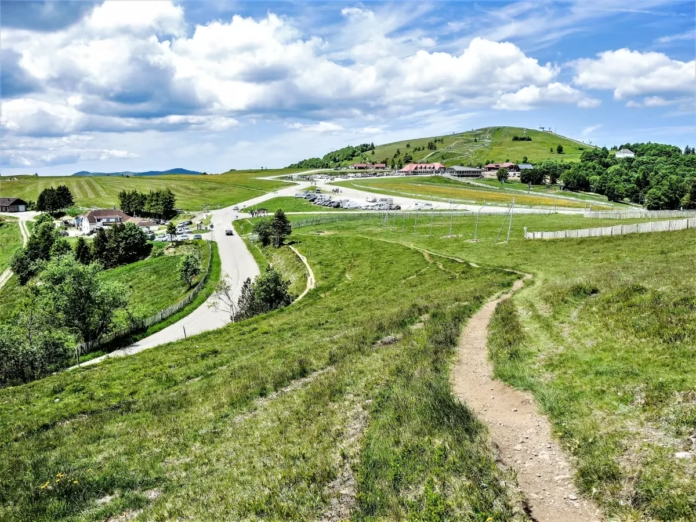
Le Markstein does not have the deep Tour de France history of Alpe d’Huez, the Col du Tourmalet or Mont Ventoux. It is not one of the race’s oldest mountain myths, nor a climb that appears in every generation of Tour storytelling. Its place in the race is more recent, more subtle and more Vosges-specific.
That makes it interesting. Le Markstein is not famous because riders have been fighting there for a century. It is famous because the Tour has begun using the Vosges differently. Instead of treating the range as a secondary mountain block before the Alps, modern routes have made the area a real source of pressure. Le Markstein sits at the centre of that shift.
The climb and ski station entered the broader Tour conversation through the men’s race in the 2010s, through La Planche des Belles Filles’ rise as a nearby Vosges reference point, and then through two very different Le Markstein finishes in 2022 and 2023. Annemiek van Vleuten effectively sealed the first Tour de France Femmes there in 2022. A year later, Tadej Pogačar won the final mountain stage of the 2023 men’s Tour there, while Jonas Vingegaard confirmed his second overall victory.
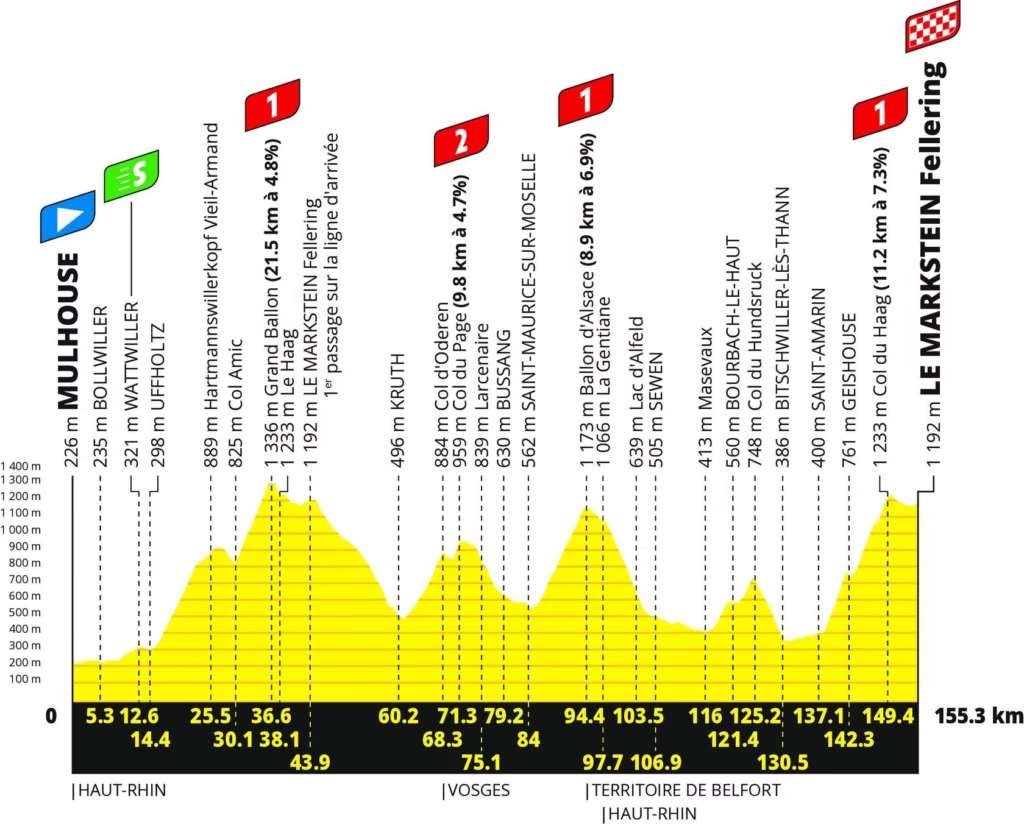
In 2026, Le Markstein returns again. Stage 14 of the Tour de France runs from Mulhouse to Le Markstein Fellering, with 155.3km of racing and 3,800m of climbing. It is not the final Alpine showdown, but it could be one of the most awkward pre-Alps stages of the race. For the full 2026 context, see our Tour de France 2026 full route guide, Tour de France 2026 climbs guide and Tour de France 2026 Vosges and Jura guide.
Where is Le Markstein?
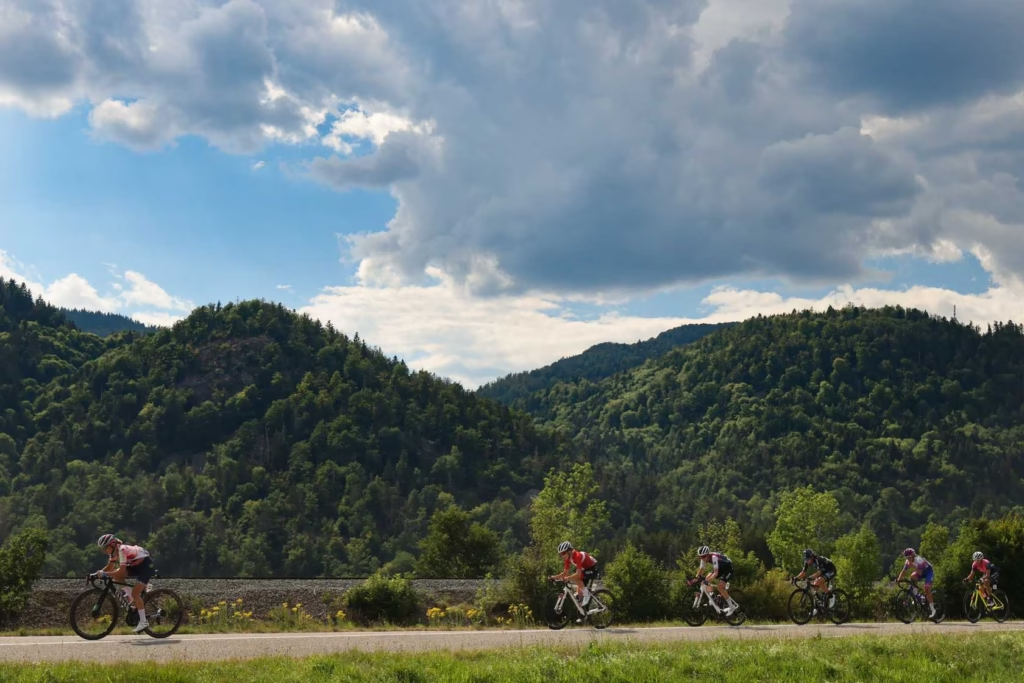
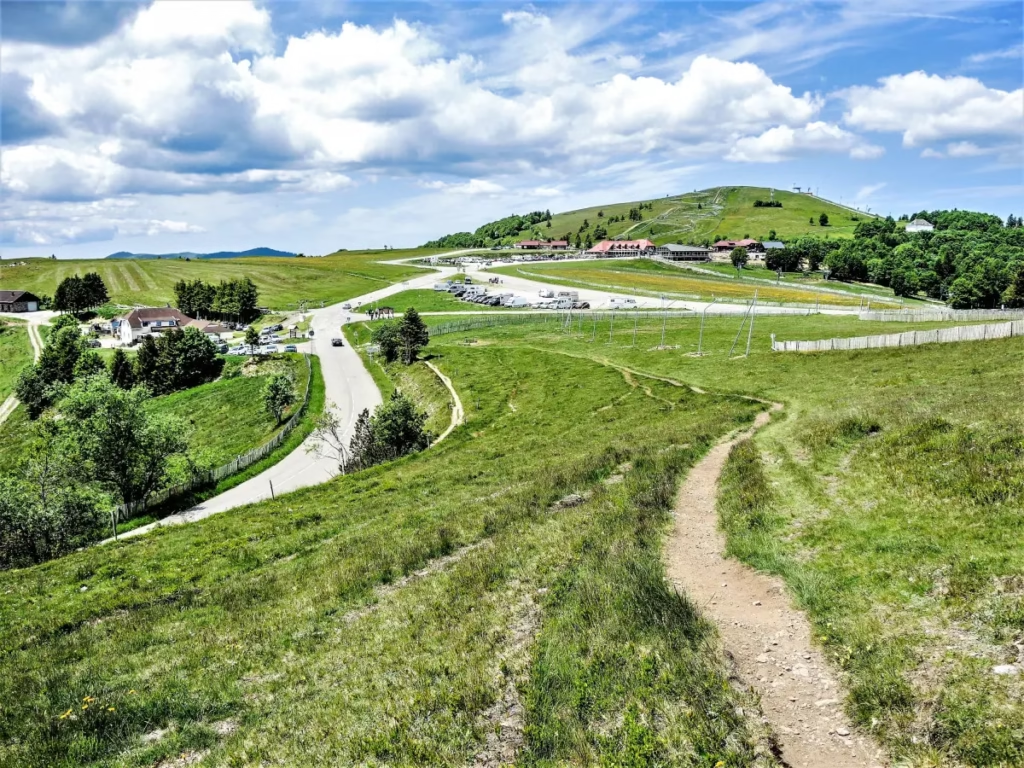
Le Markstein is a mountain and winter sports area in the Vosges, in north-eastern France. It sits in Alsace, close to the Grand Ballon, the highest summit in the Vosges massif. In cycling terms, it belongs to a network of climbs rather than standing alone as a single iconic ascent.
That is one of the main differences between Le Markstein and better-known Tour finishes. Alpe d’Huez is defined by one road and 21 hairpins. Mont Ventoux is defined by one exposed summit. The Tourmalet is defined by a historic pass. Le Markstein is more about how the race reaches it.
The approach can be shaped by climbs such as the Grand Ballon, the Ballon d’Alsace, the Platzerwasel, the Petit Ballon, the Col de la Schlucht, the Col du Haag and other Vosges roads. That gives organisers several ways to design a stage. The finish may be at Le Markstein, but the race can be broken long before the final kilometres.
That is why Le Markstein is best understood as a Vosges stage hub rather than a single-climb monument. Its difficulty comes from accumulation, positioning and rhythm. For the wider climb list in the 2026 race, see our Tour de France 2026 climbs guide.
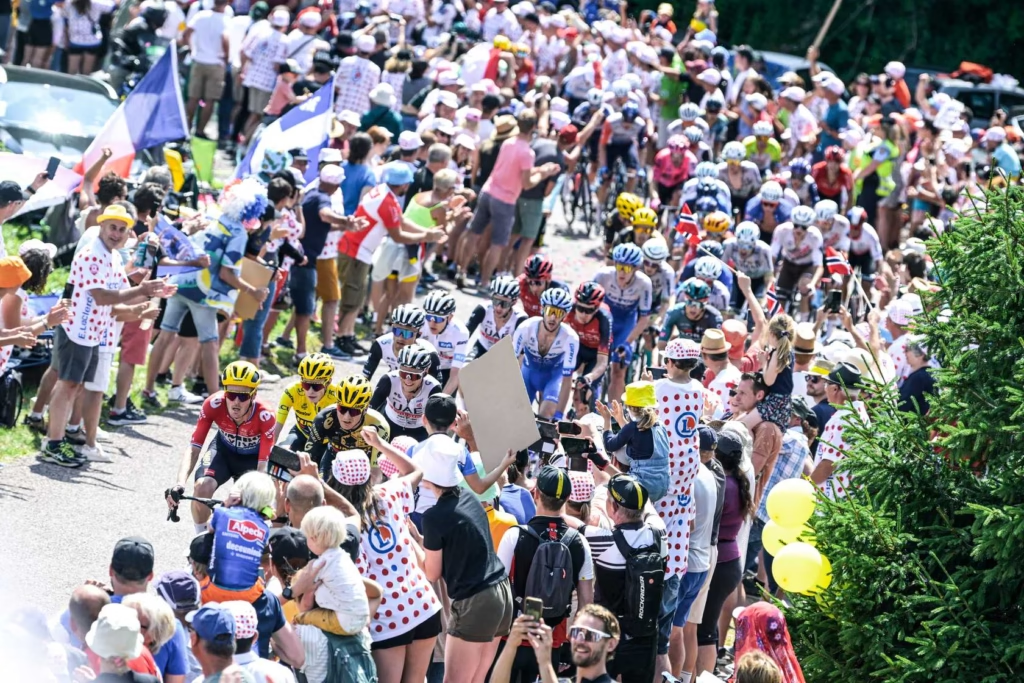 Photo Credit: A.S.O./Charly López
Why the Vosges matter in the Tour
The Vosges have always had a place in Tour history, even if they do not always get the same attention as the Alps and Pyrenees. The Ballon d’Alsace was one of the Tour’s earliest major mountain references, helping bring climbing into the race’s identity in the early 20th century.
The Vosges are different from the high mountains. They are lower, greener and often less spectacular on television. But that can make them dangerous. The climbs are frequently irregular, the descents can be fast, the roads can be narrow, and the rhythm is rarely as clean as a long Alpine pass.
That suits aggressive racing. A Vosges stage can be difficult to control because the climbs come in clusters. Teams can lose domestiques gradually. Riders can be put under pressure without one obvious summit-finish showdown. A leader may not crack dramatically, but they can be isolated, forced to chase or slowly worn down.
Le Markstein’s Tour history is tied to that character. It is not about one legendary gradient. It is about the way the Vosges can make a race messy.
For more on how this block fits the 2026 route, see our Tour de France 2026 route analysis and where the Tour de France 2026 can be won before the Alps.
The early Tour and the Ballon d’Alsace legacy
Le Markstein itself is not one of the Tour’s earliest names, but the Vosges are central to the race’s mountain history. The Ballon d’Alsace became one of the first major climbs to define what the Tour could be. It showed that the race could move beyond distance and endurance and become a contest of climbing ability.
That matters when discussing Le Markstein because the 2026 stage again uses the Vosges as a place of selection. The modern Tour no longer needs the Vosges to prove that mountains belong in the race. The Alps and Pyrenees have long since done that. But the Vosges still offer a different kind of test.
The Ballon d’Alsace gives the area historical weight. Le Markstein gives the modern race a flexible finish point. Together, they show how the Tour can use an old mountain range in a new way.
The Vosges are not just a warm-up for bigger peaks. Used correctly, they can become the place where teams begin to fall apart before the race reaches the final week. For the broader story of how the Tour developed, see our brief history of the Men’s Tour de France.
Le Markstein before it became a finish
Before Le Markstein became a Tour finish, it appeared more as part of the Vosges terrain than as the headline destination. That matters because it explains why the climb’s history feels different from the great summit finishes.
The Tour often builds mythology around finish lines. Riders win there, photographs are taken there, crowds gather there, and the place becomes fixed in memory. Le Markstein spent years without that level of identity in the men’s race. It was part of the route, but not yet a place that defined a stage.
That changed once the Tour began looking again at the Vosges as more than transitional terrain. La Planche des Belles Filles helped reframe the region as a decisive modern Tour battleground. Le Markstein then fitted into that same wider movement: lower than the Alps, but capable of producing serious racing.
In other words, Le Markstein’s history is not a simple tale of repeated legendary finishes. It is a story of gradual elevation, from stage terrain to modern Tour destination.
Why Le Markstein is not a classic summit finish
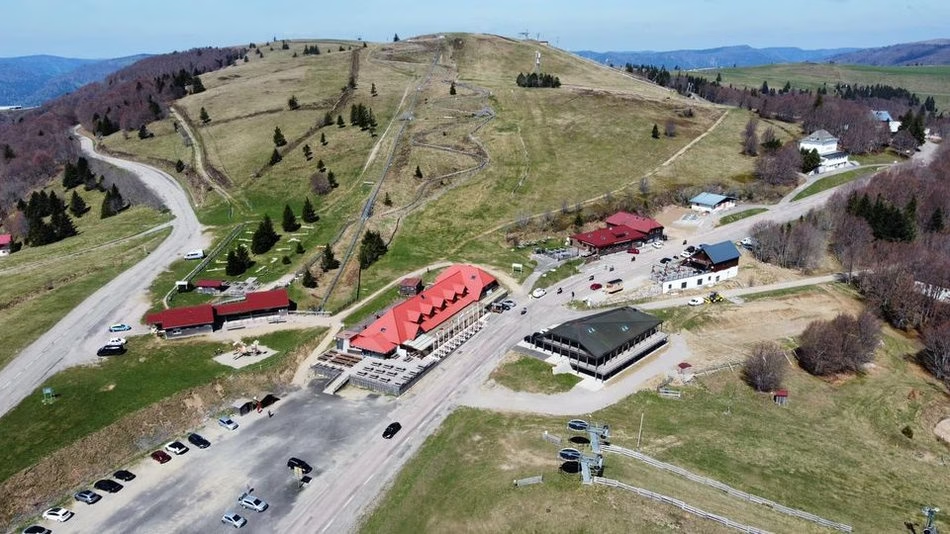
Le Markstein can be used as a mountain finish, but it does not always function like a classic summit finish. A traditional summit finish often climbs all the way to the line. Le Markstein stages can be more complicated, with a decisive climb before the finish and a short run towards the ski station.
That changes the tactics. If the hardest climb crests several kilometres from the line, riders have to decide whether to attack before the summit, over the top, or wait for the run-in. A small group can reform. Descending and transition power can matter. Team numbers can still influence the final kilometres.
That is important for 2026 because Stage 14 is not simply a straight drag to a famous high-altitude finish. It is a Vosges stage with repeated climbing and a late decisive section. The Col du Haag, which crests close to the finish, may be the key tactical point.
This makes Le Markstein less predictable than a simple summit slog. It can reward pure climbers, but it can also suit riders who climb aggressively, descend well and commit over the top.
For the 2026 climb detail, see our Tour de France 2026 climbs guide and Tour de France 2026 summit finishes guide.
2014 and 2019: Le Markstein as route terrain
Le Markstein appeared in the men’s Tour route before it became a finish. The climb was included in 2014 and 2019, but in those editions it was not the final destination. That meant it served more as part of the day’s accumulated difficulty than as the place where the stage would be remembered.
Those appearances still mattered. They showed how Le Markstein could fit inside a broader Vosges stage, linking climbs and creating pressure before the decisive part of the route. The race did not need to finish there for the area to influence the day.
That is one of the features of Vosges racing. A climb can hurt the bunch without being the final climb. A pass can strip domestiques without producing the stage winner. A section of road can make later attacks possible even if it does not appear in the headline.
By the time Le Markstein became a finish, the Tour had already learned how useful it could be as a connector in a hard mountain stage. That lesson still matters in 2026, where the route uses the Vosges and Jura before the final Alpine block rather than treating them as filler between bigger mountain ranges.
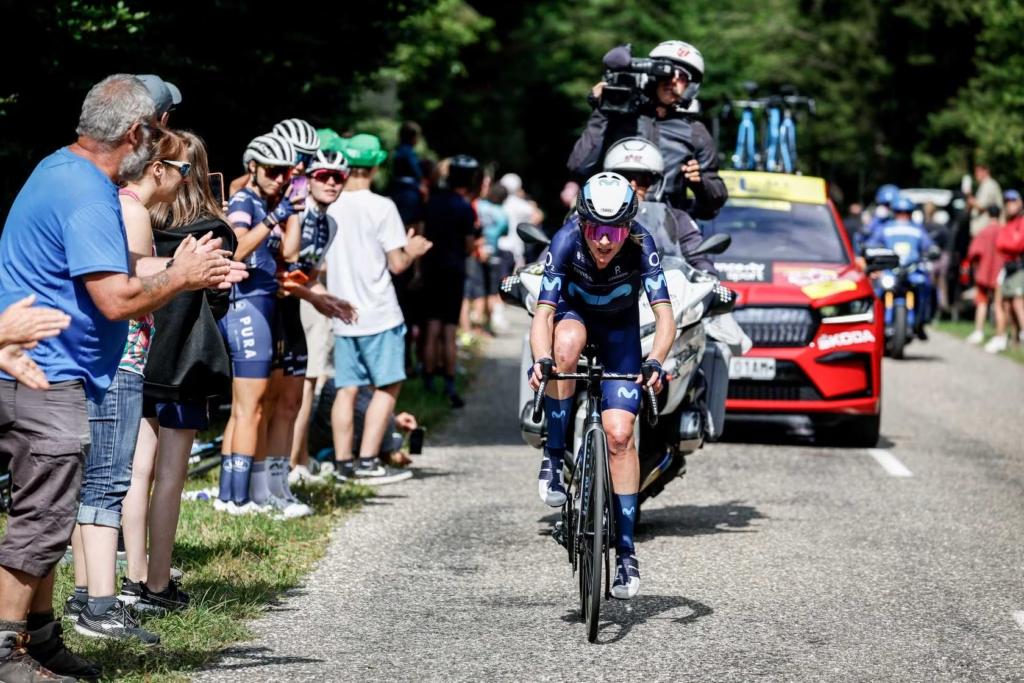 Photo Credit: A.S.O./Fabien Boukla
2022: Annemiek van Vleuten and the Tour de France Femmes
Le Markstein’s first major modern Tour finish came not through the men’s race, but through the Tour de France Femmes. In 2022, Annemiek van Vleuten won the stage to Le Markstein and effectively took control of the race.
That stage was important for several reasons. It came in the first edition of the revived women’s Tour, giving the race a mountain finale with real weight. It also gave Van Vleuten the terrain she needed to show the difference between a strong contender and the strongest climber in the race.
Van Vleuten attacked on the first of the major mountain stages and turned the general classification upside down. The finish at Le Markstein became the place where the first modern Tour de France Femmes found its decisive shape.
That matters for the climb’s history. Le Markstein did not enter modern Tour memory only as a men’s finish. It also belongs to the women’s race, where it helped establish the Tour de France Femmes as a serious stage race rather than a symbolic add-on.
For the wider context, see our guide to the most important women’s cycling races explained and our women’s cycling race hub.
Why Van Vleuten’s ride mattered
Van Vleuten’s 2022 ride mattered because it gave the new women’s Tour a defining mountain performance at the first attempt. The race needed a stage that would separate the contenders and create a clear sporting hierarchy. Le Markstein did exactly that.
The stage also showed what the Vosges could do in women’s racing. It was not a token climb or a decorative finish. It was hard enough to create meaningful gaps and to make the overall victory feel earned through mountain strength.
For Van Vleuten, it was another entry in a career built on long-range aggression and stage-race control. For the Tour de France Femmes, it was a statement that the race could use difficult terrain properly.
Le Markstein therefore carries a different kind of status from older Tour climbs. It is not only part of men’s Tour history. It is also tied to the early identity of the modern women’s Tour.
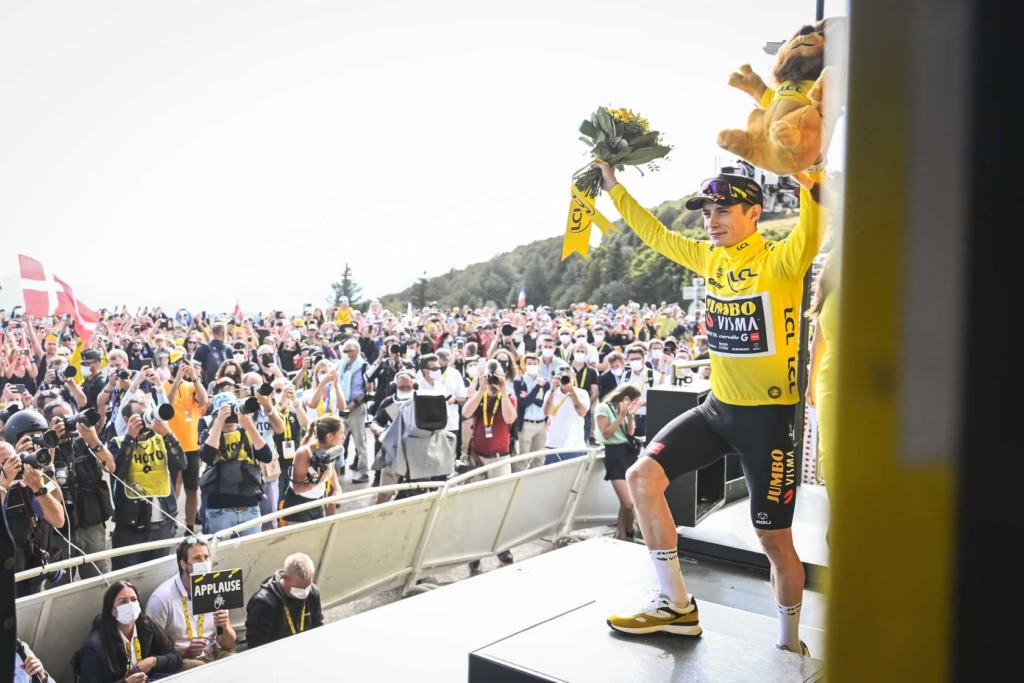 Photo Credit: A.S.O./Pauline Ballet
2023: the men’s Tour finally finishes at Le Markstein
The men’s Tour de France finally finished at Le Markstein in 2023, on Stage 20 from Belfort. It was the final mountain stage of the race and came after Jonas Vingegaard had already taken a commanding lead over Tadej Pogačar.
The route was short by Tour mountain-stage standards at 133.5km, but it was packed with Vosges climbing. The stage included the Ballon d’Alsace, the Col de la Croix des Moinats, the Col de Grosse Pierre, the Col de la Schlucht, the Petit Ballon and the Col du Platzerwasel before the finish at Le Markstein.
That made the stage a classic late-Tour mountain test. It was not about one long Alpine ascent. It was about repeated climbs, fatigue and one final chance for the Pogačar-Vingegaard rivalry to produce something memorable.
Pogačar won the stage, outsprinting Felix Gall and Vingegaard from a small group. Vingegaard finished safely with him and effectively sealed his second Tour de France victory before Paris. Le Markstein therefore became the setting for both Pogačar’s final act of defiance and Vingegaard’s confirmation.
For more on the yellow jersey battle, see our Tour de France 2026 GC favourites ranked and how the Tour de France general classification works.
Pogačar’s 2023 win and what it said about the climb
Pogačar’s 2023 win showed one of Le Markstein’s key qualities: it can produce a selection without necessarily producing huge time gaps. The strongest riders were together at the finish, but the stage still mattered because it came after a hard sequence of climbs and carried heavy psychological meaning.
Pogačar had suffered badly earlier in the third week, especially on the Col de la Loze stage. By winning at Le Markstein, he restored some authority and ended his mountain campaign on a high. It did not change the overall winner, but it changed the tone of the final weekend.
That is often how Le Markstein works. It may not always create the massive separations of the highest Alpine summit finishes, but it can reveal recovery, fatigue and tactical sharpness. It can reward a rider who still has punch after a draining day.
In 2023, that rider was Pogačar. Vingegaard did not need the stage win. He needed control. Both riders got what they needed from the same finish.
For the 2026 rider angle, see our features on Tadej Pogačar at the Tour de France 2026 and Jonas Vingegaard at the Tour de France 2026.
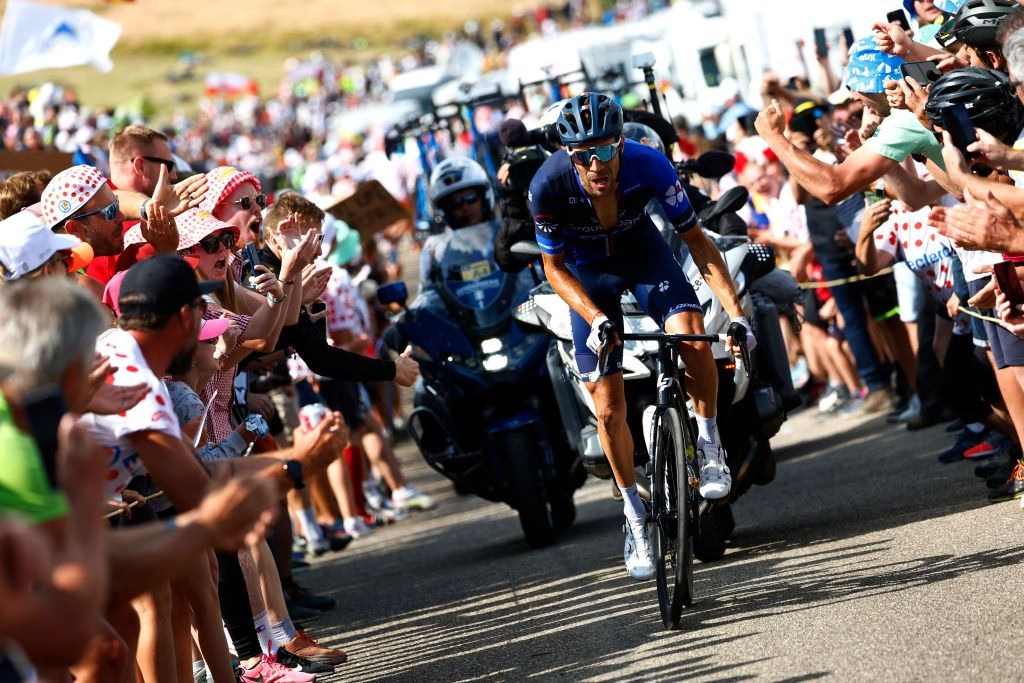 Photo Credit: Getty
Thibaut Pinot and the Vosges emotion
The 2023 Le Markstein stage also mattered because it passed through Thibaut Pinot country. Pinot, one of the most popular French riders of his generation, was riding his final Tour de France. The Vosges became his farewell stage.
The crowds on the Petit Ballon and surrounding roads turned the day into something more than a standard mountain stage. Pinot attacked, rode with emotion and briefly gave the race the feeling of an old-fashioned French mountain story. He did not win, but the stage became one of the defining images of his final Tour.
That is important for Le Markstein’s identity. The climb and its surrounding roads are not only tactical tools. They sit in a region with its own French cycling culture, close to riders, fans and memory. The Vosges can feel personal in a way that some bigger, more famous climbs do not.
Pinot’s 2023 farewell gave Le Markstein a human layer. It was not just Pogačar versus Vingegaard. It was also a regional goodbye.
For the French Tour angle, see our best French riders to watch at the Tour de France 2026 and Paul Seixas and the next French Tour de France generation.
Le Markstein compared with La Planche des Belles Filles
Le Markstein’s rise makes more sense when compared with La Planche des Belles Filles. Both are Vosges-related Tour reference points, but they work differently.
La Planche des Belles Filles is more explosive and more clearly defined as a summit finish. It has become famous for steep gradients, GC punches and repeated Tour use in a short period. It is a modern climb with a sharp identity.
Le Markstein is broader and more complex. It is less about one final wall and more about a hard network of roads. The final kilometres can matter, but the earlier climbs often do just as much damage. It is a stage-design tool rather than a single-climb statement.
That difference helps explain why Le Markstein has a quieter reputation. It may not produce the same instant visual as a steep final ramp, but it can create a more layered race. The damage can build gradually rather than arrive in one burst.
For the Tour, that makes Le Markstein useful. It gives the route another way to create mountain pressure without repeating the same kind of finish.
Why Le Markstein is different from the Alps
Le Markstein is not Alpine racing. That is the point.
The Alps often bring long climbs, high altitude and big-name passes. They create fear through scale. The Vosges create difficulty through repetition and disruption. The climbs are lower, but they can be steeper than expected, irregular and close together.
That changes how teams race. On a long Alpine pass, a strong mountain train can set tempo for long periods. In the Vosges, the constant changes of rhythm can make control harder. Descents arrive quickly. Roads twist. The race can become less predictable.
Le Markstein fits that style perfectly. It can punish riders who are comfortable on long, steady climbs but less happy with repeated accelerations. It can suit punchier climbers, aggressive breakaway riders and GC teams that want to create stress before the final week.
That is why the climb should not be judged only by altitude or fame. Its value is tactical. For the contrast with the final mountain block, see our Tour de France 2026 Alps guide and Tour de France 2026 queen stage guide.
Le Markstein and the polka-dot jersey
Le Markstein stages can also matter for the mountains classification. The Vosges usually offer several categorised climbs in one stage, which makes them attractive for riders chasing the polka-dot jersey.
A rider who gets into the breakaway can score points across multiple climbs before the GC favourites take over. That can be especially important if the hardest summit finishes later in the race are likely to favour the main yellow jersey contenders.
In 2026, Stage 14 could become a useful day for riders chasing mountain points. With the Grand Ballon, Ballon d’Alsace and late Vosges climbs in the route, there may be enough points on offer to change the classification or give a breakaway specialist a serious foothold.
The difficulty is that the stage may also interest GC teams. If the yellow jersey contenders race hard, breakaway riders may find it harder to survive to the finish. But even then, the early climbs could still matter for the polka-dot battle.
For more on the competition, see our Tour de France 2026 climbers guide, best climbers at the Tour de France 2026 and Tour de France 2026 jerseys explained.
The 2026 return: Mulhouse to Le Markstein Fellering
The 2026 Tour brings Le Markstein back on Stage 14, from Mulhouse to Le Markstein Fellering. The stage is 155.3km long with 3,800m of climbing, placing it firmly among the key mountain days before the final week.
Its position is important. It comes after Stage 13 to Belfort, the longest stage of the race, and before Stage 15 to Plateau de Solaison. That makes it part of a difficult three-day block through the Vosges and Jura. Riders will not be able to treat it as an isolated test.
The stage includes several major Vosges features, with the Grand Ballon early and the Col du Haag late. The Col du Haag is especially important because it crests close enough to the finish for attacks to carry through to Le Markstein. If a rider opens a gap there, the run to the line may not be long enough for the race to come back together.
This is why Stage 14 could be more important than its profile suggests at first glance. It is not the highest stage of the Tour. It is not the final Alpine showdown. But it sits in exactly the kind of position where fatigue, team strength and tactical pressure can create serious consequences.
For more detail, see our Tour de France 2026 Vosges and Jura guide, Tour de France 2026 mountain stages ranked by difficulty and Tour de France 2026 route: best days for GC attacks.
Why Stage 14 could matter before the Alps
The 2026 Tour will not be decided only in the Alps. By the time the race reaches Le Markstein, riders will already have faced Barcelona, the Pyrenees, the Massif Central and the longest stage of the race. That means fatigue will already be layered into the bunch.
Le Markstein can exploit that. A rider who looked comfortable on the Tourmalet may be less convincing after two weeks of racing. A team that looked strong in the opening week may have fewer helpers left. A contender who is carrying small weakness may find it exposed on repeated climbs rather than one famous summit.
That is what makes Stage 14 dangerous. It may not be the stage everyone circles first, but it could shape what happens later. A rider who loses time there goes into Plateau de Solaison under pressure. A rider who spends too much controlling there may pay for it the next day. A rider who gains even 20 seconds could shift the tactical balance before the time trial and Alps.
Le Markstein is therefore not just a finish. It is a stress test before the final phase of the Tour. For a wider view of the race before the Alps, see our Tour de France 2026 Massif Central guide and where the Tour de France 2026 can be won before the Alps.
What kind of rider can win at Le Markstein?
Le Markstein can suit different types of riders depending on how the stage is raced.
If the GC teams control the day, the winner is likely to be a general classification rider with a fast finish from a reduced group. That is what happened in 2023, when Pogačar won from a small selection.
If the breakaway is allowed to go, the stage can suit an aggressive climber or all-rounder who can handle repeated climbs and still accelerate after a long day. The Vosges often reward riders who are tactically sharp rather than simply the lightest climbers.
If the race becomes chaotic early, team numbers may matter. A rider with a teammate in the front group can save energy or use tactical pressure. A rider isolated too early may have to chase every move alone.
The ideal Le Markstein rider is therefore not just a pure climber. They need endurance, repeatability, descending confidence and a strong final effort.
For riders who could fit that profile in 2026, see our Tour de France 2026 stage hunters to watch, Tour de France 2026 route: best days for breakaways and Tour de France 2026 dark horses for the general classification.
-
 Photo Credit: Cor Vos
 -
 Photo Credit: Zac Williams/AusCycling


How Le Markstein could shape the modern Tour
Le Markstein’s future in the Tour depends on what the race wants the Vosges to do. If organisers want a mountain stage that feels different from the high Alps, it is a useful finish. It provides climbing, regional identity and tactical uncertainty without relying on a climb that has been overused for decades.
It also helps balance the route. The Tour needs more than the Pyrenees and Alps. The Massif Central, Jura and Vosges are crucial because they stop the race from becoming too predictable. They create stages where the strongest rider might not win by simply waiting for the final kilometre.
Le Markstein fits that modern need. It can be used as a finish, a pass, a launchpad or part of a larger mountain chain. It gives route designers flexibility.
That is why its history may still be at an early stage. Compared with Alpe d’Huez, Le Markstein is young in Tour memory. But that gives it room to grow. The 2026 stage will be another test of whether it can become a recurring modern mountain reference.
For another modern mountain-history comparison, see our history of Alpe d’Huez at the Tour de France.
Le Markstein in Tour history explained simply
Le Markstein is not an old Tour legend in the same way as the Tourmalet or Alpe d’Huez. Its importance comes from modern route design and from the way the Vosges are now used to shape the race before the Alps.
The climb and ski area sit inside a wider Vosges network of roads, so the difficulty often comes from the whole stage rather than one final ascent. That makes Le Markstein tactical. It can create pressure, break teams, help breakaways and test GC riders before the final week.
Its key modern moments are clear: Annemiek van Vleuten taking control of the first Tour de France Femmes in 2022, Tadej Pogačar winning the final mountain stage of the 2023 men’s Tour, Jonas Vingegaard confirming overall victory there, and the 2026 Tour returning to the same area with another hard Vosges stage.
Le Markstein is still building its Tour identity. But that is precisely why it matters. It shows how the Tour keeps creating new reference points, even in mountain ranges that have been part of the race for more than a century.
For more Tour de France 2026 coverage, visit our Tour de France hub, beginner’s guide to Men’s Tour de France 2026 and how to watch Tour de France 2026 in the UK.

