
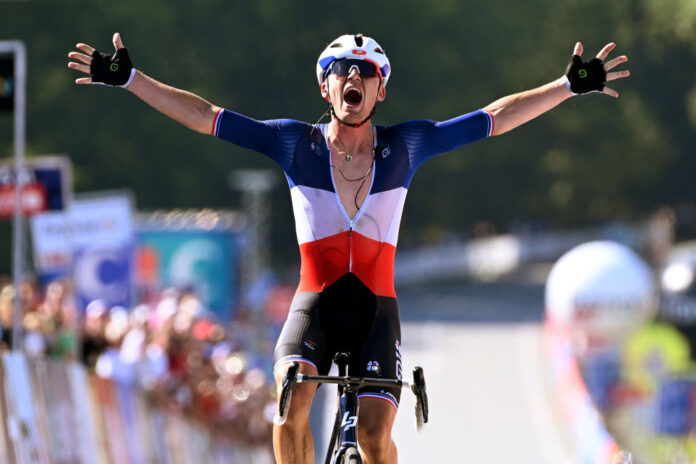
The Bretagne Classic is one of the oldest surviving one-day races in professional cycling, although its modern name hides much of that history. For generations it was known simply as the Grand Prix de Plouay, a race built around the short, relentless climbs surrounding a small Breton town that developed an extraordinary relationship with elite cycling.
The organisers’ historical palmarès stretches back to 1926, while 1931, when François Favé took victory, is commonly used as the beginning of the established professional lineage. What followed was a race that survived the Second World War, the transformation of professional cycling, numerous sponsorship changes and several major redesigns of its route.
Today it is the Bretagne Classic CIC, part of the UCI WorldTour and still finishing in Plouay. It sits alongside the other major one-day races on ProCyclingUK’s men’s cycling race hub, but few of them can match its combination of longevity and attachment to one small town.
The roots of racing in Plouay
Cycling had already become an important part of life around Plouay before the race developed into the international Classic we know today.
The organisers preserve results going back to 1926, when the event was still a much more local Breton competition. By the early 1930s it had developed into a recognisable professional road race.
François Favé won in 1931, ahead of Pierre Le Doaré and André Godinat.
Philippe Bono then became an early repeat winner with victories in 1932 and 1933.
The race continued through the remainder of the decade before the Second World War interrupted the event. Competition returned after the conflict and quickly re-established itself within French cycling.
That capacity to survive interruptions and changing sporting structures would become one of Plouay’s defining characteristics.
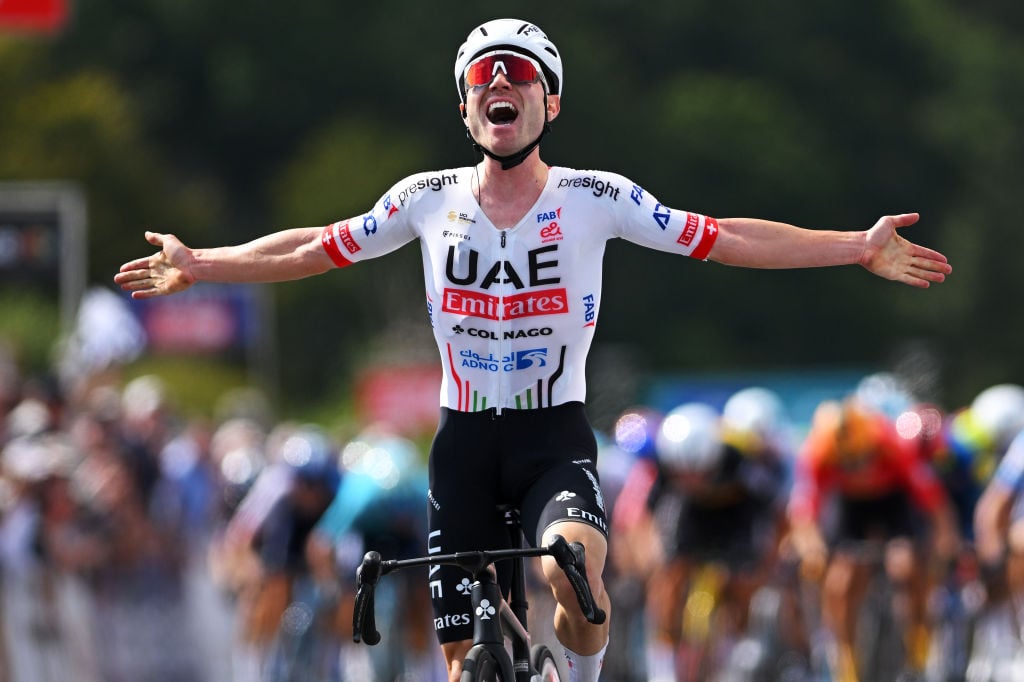
Plouay develops its own type of Classic
The roads surrounding Plouay gradually gave the race its identity.
There was no giant mountain comparable with the climbs of Liège-Bastogne-Liège and no cobbled sector equivalent to those that define Paris-Roubaix.
Instead, the traditional GP de Plouay depended on repetition.
Short climb.
Descent.
Another rise.
Technical roads.
Another lap.
One ascent might do relatively little damage. Repeating the same effort several times after hours of racing produced a completely different effect.
That remains central to understanding both the old GP de Plouay and today’s Bretagne Classic. The race has generally been about accumulated fatigue rather than one decisive obstacle.
It is also why its winners have come from such different backgrounds.
Sprinters have won.
Puncheurs have won.
Climbers have won.
Classics specialists have won.
What almost all of them shared was the ability to continue producing power deep into an irregular, attritional race.
French riders dominate the early decades
For much of its early history, Plouay was overwhelmingly a French affair.
Émile Guérinel won consecutive editions in 1951 and 1952. Jean Gainche took victories in 1958 and 1962, while Fernand Picot won in 1961 and 1963.
The pattern continued into the following decades.
Jean Jourden won back-to-back editions in 1968 and 1969, while Cyrille Guimard added his name to the roll of honour in 1975.
Jacques Bossis then won consecutively in 1976 and 1977.
That French dominance reflected the position Plouay occupied at the time. It was an important national race with particularly deep significance in Brittany rather than the truly international WorldTour fixture it would later become.
As the international calendar evolved, that began to change.
Sean Kelly gives Plouay one of its biggest international winners
One of the most significant victories came in 1984, when Sean Kelly won.
Kelly was among the outstanding Classics riders of his generation and was enjoying one of the greatest seasons of his career. His presence on the Plouay roll of honour immediately connects the Breton race with the very top level of 1980s one-day racing.
Gilbert Duclos-Lassalle later won his second edition in 1987, six years after his first victory, before Luc Leblanc succeeded him in 1988.
The 1990s continued the internationalisation.
Ronan Pensec won in 1992, Andrei Tchmil in 1994 and the enormously talented Frank Vandenbroucke in 1996.
Plouay was no longer merely an important French one-day event. The sort of riders capable of winning the biggest Classics in Europe were increasingly treating it as a major target.
Michele Bartoli wins as the world’s attention turns to Plouay
Italian Classics great Michele Bartoli won in 2000, adding Plouay to a career that already included victories at the Tour of Flanders, Liège-Bastogne-Liège and Il Lombardia.
That year became one of the most important in the town’s cycling history for another reason.
Plouay hosted the 2000 UCI Road World Championships.
Latvian Romāns Vainšteins won the elite men’s road race, ahead of Zbigniew Spruch and Óscar Freire, while the championships helped reinforce Plouay’s position as an internationally recognised cycling venue.
The town’s relationship with major women’s racing developed alongside the men’s event. The history of that side of the Plouay festival is covered in ProCyclingUK’s brief history of Classic Lorient Agglomération.
The two races have followed different historical paths, but together they help explain why Plouay occupies such an unusual place in professional cycling.
Plouay joins cycling’s top international series
Another important step came in 2005, when the race became part of the newly created UCI ProTour.
The ProTour was the predecessor to the modern WorldTour and attempted to create a more clearly defined top division of professional races and teams.
Plouay was included.
That elevated the race’s international position substantially. Rather than relying simply on prestige to attract the strongest teams, it now sat formally within cycling’s top-level competition.
George Hincapie won that first ProTour-era edition.
A year later came one of the most interesting winners in the race’s entire history.
Vincenzo Nibali wins before becoming a Grand Tour great
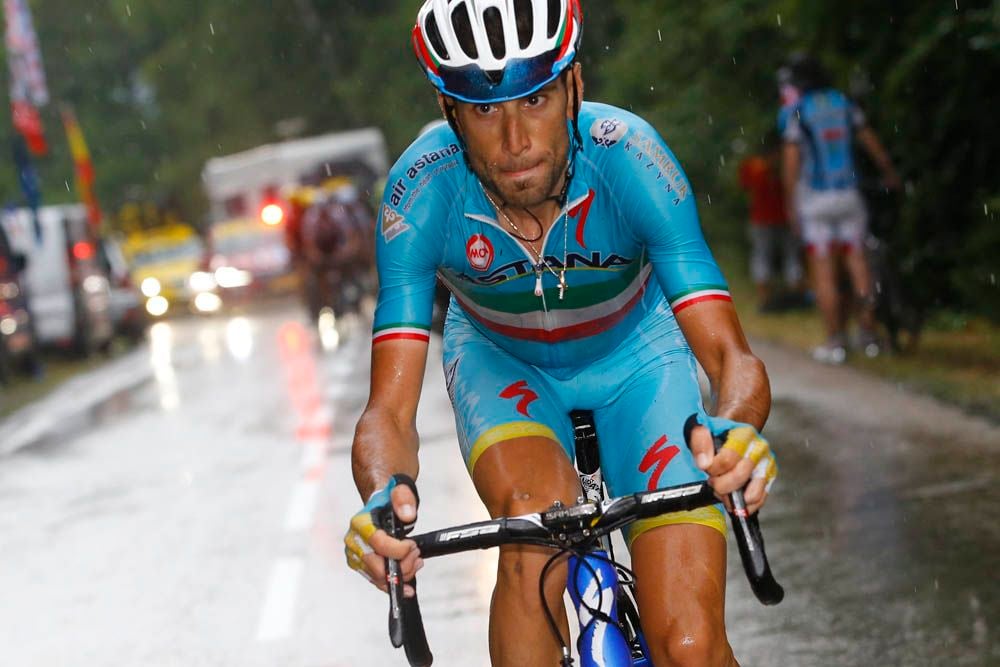
Vincenzo Nibali won the 2006 GP de Plouay.
The significance of that result looks much greater with hindsight.
Nibali was only 21 and had yet to become the rider who would win all three of cycling’s Grand Tours. His Tour de France, Giro d’Italia and Vuelta a España victories were still years away.
Plouay therefore sits unusually early in one of the defining careers of his generation.
Thomas Voeckler won the following edition, Pierrick Fédrigo succeeded him in 2008 and Simon Gerrans won in 2009.
Matthew Goss then took victory in 2010.
The variety was already striking. A future Tour de France champion could win, but so could a rider such as Goss, whose greatest strength was his ability to survive difficult one-day racing while retaining a powerful sprint.
That tactical openness would only become more obvious in the WorldTour era.
The WorldTour era begins
Plouay retained its position when cycling’s top series evolved into the modern UCI WorldTour.
Grega Bole won in 2011 before Edvald Boasson Hagen took the 2012 edition and Filippo Pozzato won in 2013.
Sylvain Chavanel triumphed in 2014.
Then came Alexander Kristoff in 2015, the final winner before the race underwent the biggest transformation of its modern history.
The old circuit-based format had enormous historical value, but organisers increasingly wanted to show more of Brittany and create a race that was harder for teams to control through familiarity.
The solution went far beyond a simple change of sponsor.
GP de Plouay becomes Bretagne Classic in 2016
The Bretagne Classic name arrived in 2016.
With it came a major redesign.
Rather than spending most of the afternoon circulating repeatedly around Plouay, riders were sent on a much larger journey across Brittany before returning to the traditional finishing roads.
The change broadened the geographical identity of the race and made it less predictable.
It also created a useful distinction between two eras.
The GP de Plouay was defined primarily by its repeated local circuit.
The Bretagne Classic could incorporate roads much further away before bringing the surviving riders back towards the same historic finishing town.
The first winner of the new era was Oliver Naesen, who defeated Alberto Bettiol and defending champion Kristoff.
For Naesen, Plouay would become particularly significant.
Oliver Naesen becomes the first foreign double winner
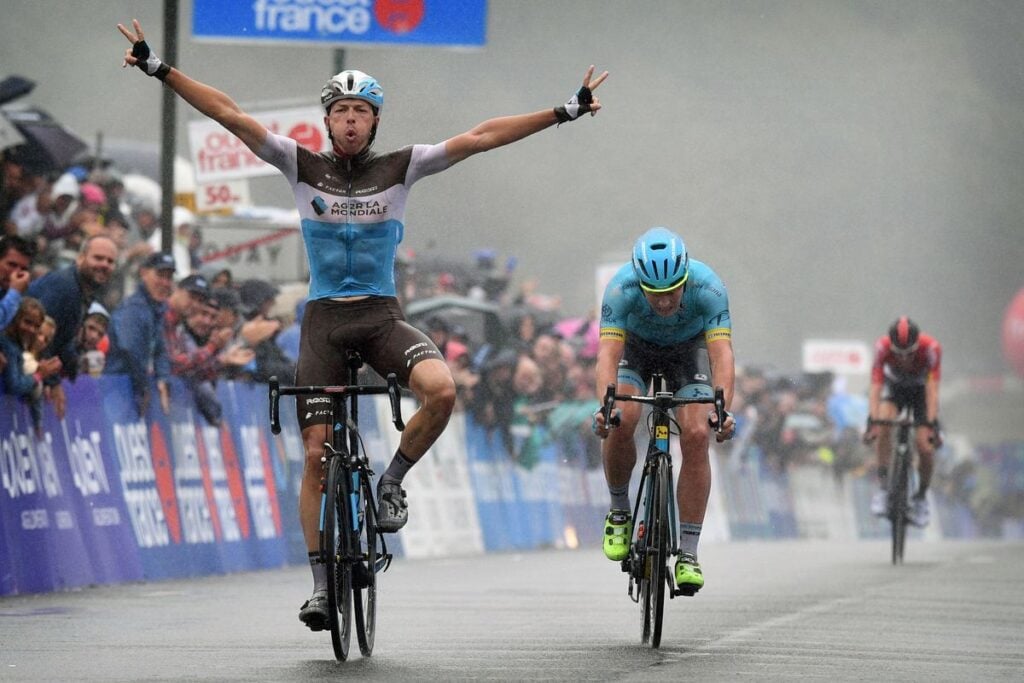
Elia Viviani won the 2017 Bretagne Classic before Naesen returned in 2018 and won for the second time.
That put the Belgian alongside the relatively small group of riders who had managed multiple victories at Plouay.
His success was particularly notable because repeated victories have always been difficult here.
Even the most successful riders in the race’s long history have generally stopped at two wins.
That says something important about the Bretagne Classic.
The terrain is selective without being rigidly prescriptive. Different weather, tactics and route designs can favour dramatically different riders from one edition to the next.
Naesen could solve the race twice.
Nobody has ever been able to solve it consistently enough to dominate an era.
Sep Vanmarcke and Michael Matthews continue the Classics theme
Another Belgian Classics specialist, Sep Vanmarcke, won in 2019.
Then came the extraordinary 2020 season.
The COVID-19 pandemic completely reshaped professional cycling’s calendar, and Plouay suddenly became the centre of an unusually concentrated period of elite racing.
The European Road Championships were held in the town, while Bretagne Classic took place only days before the delayed Tour de France.
Michael Matthews won the Bretagne Classic, using his familiar combination of durability and finishing speed.
Matthews was almost a perfect example of the kind of rider Plouay can reward. He was fast enough to win a reduced sprint but strong enough to survive a difficult, selective race before getting there.
Cosnefroy and Van Aert take the next two editions
Benoît Cosnefroy won in 2021, ahead of Julian Alaphilippe and Mikkel Honoré.
Then came Wout van Aert.
The Belgian won the 2022 Bretagne Classic, adding another major one-day victory to an increasingly broad palmarès.
Again, the fit was obvious.
Van Aert possessed the endurance to handle the distance, the power to respond to repeated short climbs and the sprint necessary to finish from a reduced group.
Few riders have ever provided a better physical template for Plouay.
The race has remained part of Van Aert’s later-season programme too. ProCyclingUK covered his planned return in Wout van Aert’s 2025 end-of-season schedule, another example of Bretagne Classic’s place between the major summer stage races and the September Classics.
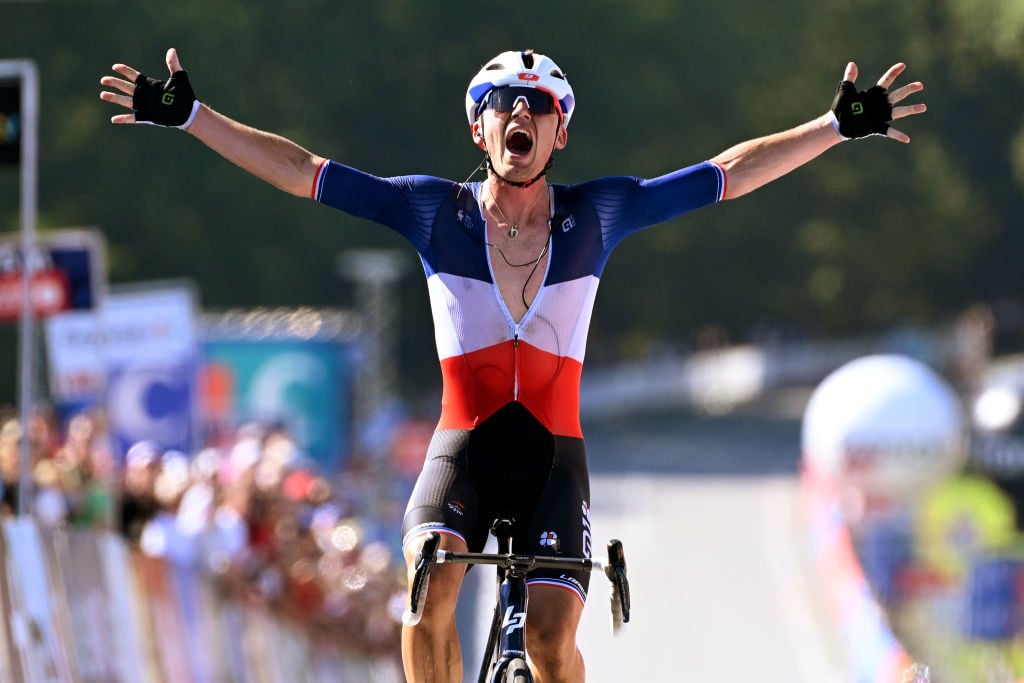
Valentin Madouas wins on home roads
The 2023 edition produced one of the race’s most popular recent victories.
Valentin Madouas, born in Brest and deeply connected with Breton cycling, took the win ahead of Mathieu Burgaudeau and Felix Großschartner.
Madouas had long looked suited to Plouay.
Even several years earlier, he had been producing strong performances in the race. ProCyclingUK’s review of the 2018 WorldTour season highlighted his eighth place at Bretagne Classic during what was still the early stage of his WorldTour career.
Five years later, he won it.
For a Breton rider, that carried significance beyond another WorldTour victory. Plouay remains the region’s most important men’s one-day race and one of the clearest links between Brittany’s enormous grassroots cycling culture and the elite international peloton.
Marc Hirschi attacks his way to victory in 2024
Marc Hirschi won the 2024 edition, continuing the race’s tendency to reward riders prepared to attack rather than simply wait for a sprint.
Hirschi’s success was another useful reminder of the tactical problem facing fast riders at Bretagne Classic.
Waiting can be an advantage if enough teammates remain to control the race.
Wait too long, however, and an explosive rider can create a small gap on one of the final climbs and make everyone else hesitate.
In races this demanding, ten seconds can be enough.
The group behind may contain riders physically capable of closing the gap, but that does not mean any of them wants to sacrifice their own chance by doing the work.
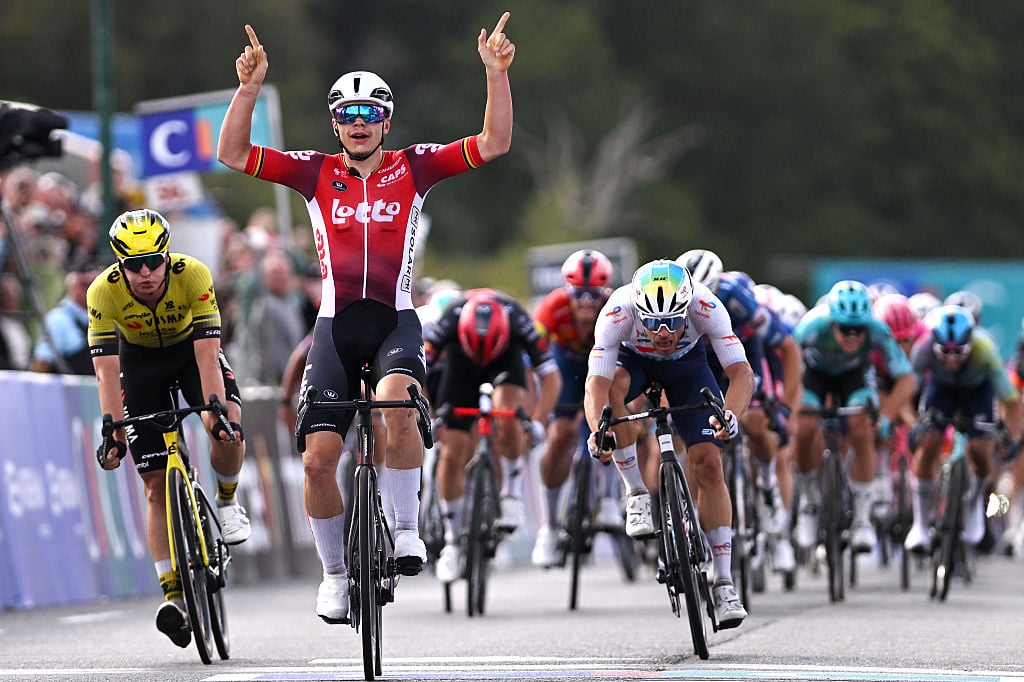
Arnaud De Lie changes the script again in 2025
A year later, the race produced a completely different winner.
Arnaud De Lie won in 2025, demonstrating that a sufficiently durable sprinter could still survive the attrition and finish the job.
De Lie’s suitability for this style of racing is also evident in the Beginner’s guide to the Renewi Tour 2026, where his ability to combine sprint speed with Classics strength makes him a natural contender on difficult rolling terrain.
His Bretagne Classic victory followed Hirschi, Madouas, Van Aert and Cosnefroy.
Five winners.
Five noticeably different ways of racing.
That sequence neatly summarises why Plouay has remained tactically interesting.
Recent Bretagne Classic winners
| Year | Winner |
|---|---|
| 2025 | Arnaud De Lie |
| 2024 | Marc Hirschi |
| 2023 | Valentin Madouas |
| 2022 | Wout van Aert |
| 2021 | Benoît Cosnefroy |
| 2020 | Michael Matthews |
| 2019 | Sep Vanmarcke |
| 2018 | Oliver Naesen |
| 2017 | Elia Viviani |
| 2016 | Oliver Naesen |
The variety is striking.
Viviani was an elite pure sprinter at his peak.
Vanmarcke was built around the cobbled Classics.
Matthews could climb and sprint.
Cosnefroy and Hirschi offered explosive puncheur qualities.
Van Aert could attack or wait for the finish.
Madouas thrived through attrition.
De Lie brought enormous sprint power while remaining robust enough to survive the preceding difficulty.
There is no single blueprint.
Nobody has won Bretagne Classic three times
One of the most unusual features of such an old race is the absence of a dominant multiple champion.
A number of riders have won twice, but nobody has reached three victories.
The multiple winners include:
| Rider | Victories |
|---|---|
| Philippe Bono | 2 |
| Éloi Tassin | 2 |
| Amand Audaire | 2 |
| Émile Guérinel | 2 |
| Jean Gainche | 2 |
| Fernand Picot | 2 |
| Jean Jourden | 2 |
| Jacques Bossis | 2 |
| Gilbert Duclos-Lassalle | 2 |
| Oliver Naesen | 2 |
Naesen is the most recent rider to join the group.
For a race with roots reaching back a century, the lack of a three-time winner is remarkable.
Compare that with other major Classics where individual riders have built long periods of dominance. Plouay has repeatedly resisted that pattern.
Part of the explanation lies in the route.
It is difficult enough to create separation, but not so specialised that the same type of rider is guaranteed an advantage every year.
-
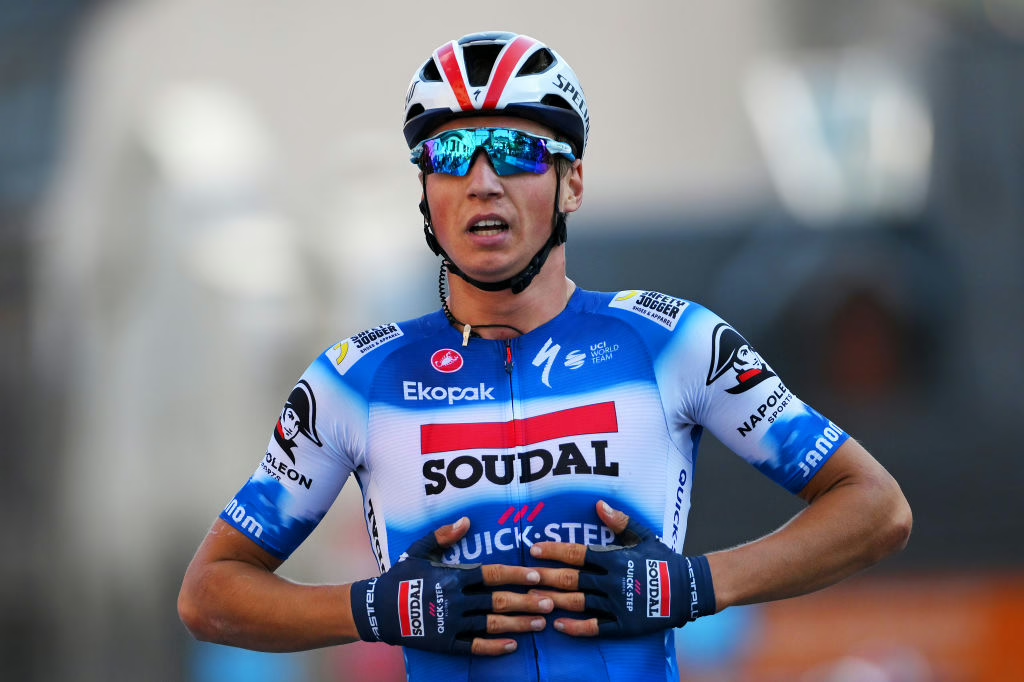
 Photo Credit: Gaetan Flamme
From GP de Plouay to Bretagne Classic CIC
The title has changed repeatedly.
The event has appeared under names including:
- Circuit de Plouay
- Grand Prix de Plouay
- GP Ouest-France
- Bretagne Classic-Ouest-France
- Bretagne Classic
- Bretagne Classic CIC
Those changes reflect sponsorship and the evolution of the event rather than the creation of separate races.
The historical line remains continuous.
The 2026 edition takes place on Sunday 30 August and remains part of the men’s WorldTour. The current calendar position can be followed through ProCyclingUK’s men’s cycling race hub, which places Bretagne Classic between the late-August WorldTour programme and the September Canadian Classics.
The route has changed, but Plouay has not
Perhaps the most remarkable part of Bretagne Classic history is not any individual winner.
It is that the race is still based in Plouay.
Professional cycling has changed almost beyond recognition since the earliest editions. Teams have transformed from national and sponsor-led structures into multinational organisations. The UCI’s top-level series has been rebuilt several times. Equipment, training, television coverage and the economics of the sport bear little resemblance to the inter-war era.
The route has changed too.
The old GP de Plouay revolved around repeated circuits.
The modern Bretagne Classic became a much broader journey through Brittany.
The 2026 route now brings more emphasis back to the traditional finishing roads, creating another link between the modern race and its past.
Plouay has remained the constant.
The same town also stages the women’s Classic Lorient Agglomération, whose modern format and distinctive terrain are explored in the Beginner’s guide to Classic Lorient Agglomération 2026.
Together, the two races help explain why a small town in Morbihan occupies a place in elite cycling vastly out of proportion with its size.
Bretagne Classic may have carried its current identity for only a decade, but the race behind the name belongs to a much longer story, stretching from the early Plouay competitions through Sean Kelly, Vincenzo Nibali and Oliver Naesen to Wout van Aert, Valentin Madouas and Arnaud De Lie.
The sponsors have changed. The route has changed. Even the name has changed.
Plouay has not.

