
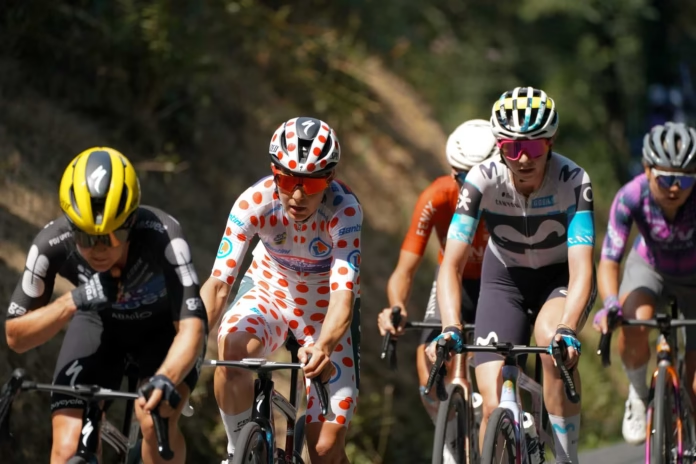
The polka dot jersey at the Tour de France Femmes rewards the rider who collects the most points across the race’s categorised climbs.
Unlike the yellow jersey, it is not decided by overall time. A rider can lose minutes in the general classification and still win the mountains competition by repeatedly reaching summits near the front.
That makes the Queen of the Mountains classification tactically different from the GC battle. The strongest pure climber does not automatically win polka dots. Riders who attack from breakaways, target repeated lower-category climbs and build a points advantage before the major mountain stages can put themselves in a stronger position than a yellow jersey favourite concentrating primarily on Mont Ventoux and Nice.
For 2026, that makes Justine Ghekiere, Mavi García and Usoa Ostolaza three of the most natural riders to target the classification deliberately. Behind them, riders such as Marion Bunel and Niamh Fisher-Black could enter the picture if their roles change, while Demi Vollering, Pauline Ferrand-Prévot, Paula Blasi and Antonia Niedermaier could score enough on the biggest climbs to take over the competition through the GC battle.
The mountains classification is one of four leader’s jerseys at the race, alongside yellow, green and white, all explained in our Tour de France Femmes 2026 jerseys guide.
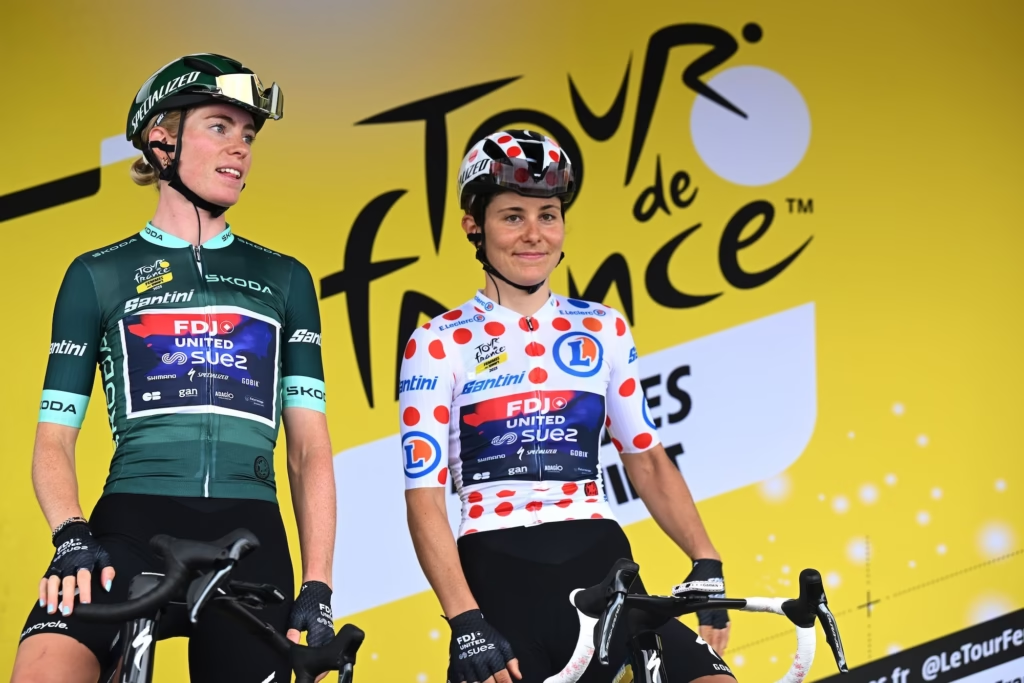
What is the polka dot jersey?
The white jersey with red polka dots is worn by the leader of the mountains classification, commonly referred to as the Queen of the Mountains or QOM competition.
Points are awarded to the first riders over categorised climbs, with harder ascents carrying larger rewards.
The classification therefore rewards a mixture of climbing strength and tactical intent.
A rider targeting yellow usually wants to conserve energy for the decisive climbs and finish. A rider targeting polka dots can race very differently, attacking early to collect points even if she eventually finishes several minutes behind the favourites.
That is why the mountains classification frequently develops into its own contest rather than simply mirroring the GC standings.
How are QOM points awarded?
The 2026 Tour uses five levels of categorised climb, ranging from Category 4 to hors catégorie, or HC.
The harder the climb, the more riders score and the greater the reward for reaching the summit first.
| Climb category | 1st | 2nd | 3rd | 4th | 5th | 6th | 7th | 8th |
|---|---|---|---|---|---|---|---|---|
| HC | 15 | 12 | 10 | 8 | 6 | 4 | 2 | 1 |
| Category 1 | 10 | 8 | 6 | 4 | 2 | 1 | ||
| Category 2 | 5 | 3 | 2 | 1 | ||||
| Category 3 | 3 | 2 | 1 | |||||
| Category 4 | 2 | 1 |
That makes the smaller climbs valuable in aggregate.
Three Category 2 victories are worth the same 15 points as being first over an HC climb. A rider who repeatedly gets into the breakaway can therefore build a substantial advantage without ever winning a major mountain stage.
No mountains points are available during the Stage 4 individual time trial.
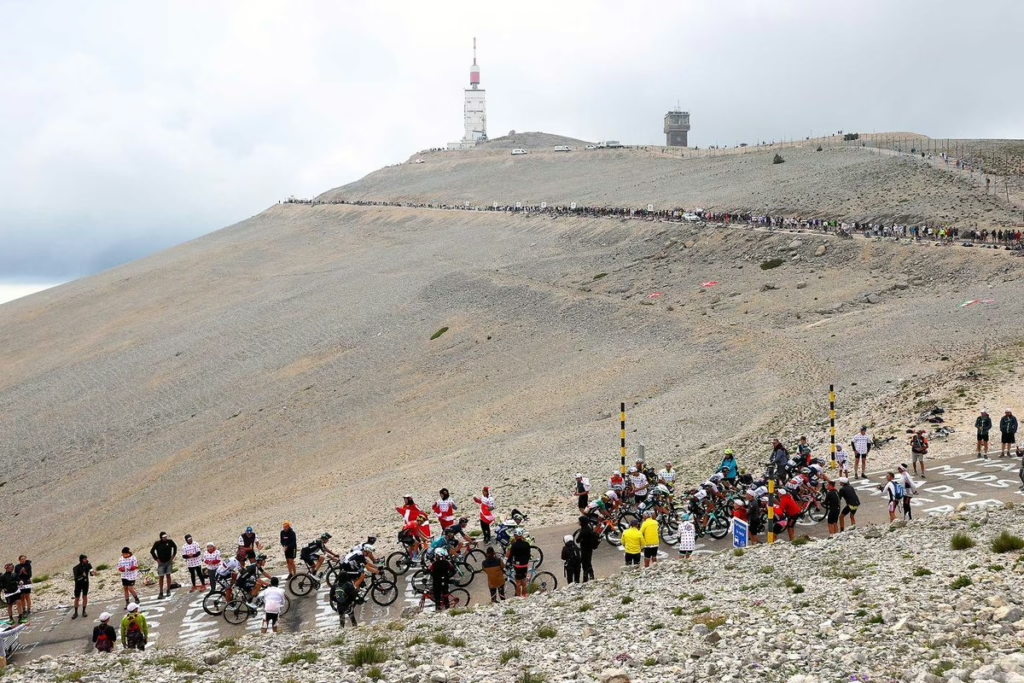
Mont Ventoux offers the biggest single QOM prize
Stage 7 finishes on Mont Ventoux, the defining climbing landmark of the 2026 Tour.
The final ascent from the Bédoin side is classified HC and covers 15.7km at an average of 8.8%, finishing at 1,910 metres. The first rider over the summit takes 15 QOM points, with points available down to eighth place.
The full climb and its importance to the race are covered in our Tour de France Femmes 2026 Mont Ventoux guide.
Stage 7 also contains several categorised climbs before Ventoux, meaning a rider in the breakaway can score before the GC favourites begin racing seriously for the summit finish.
That makes the stage capable of changing the competition in two ways at once.
The early breakaway can build points.
The strongest GC climbers can then take the biggest haul at the finish.
The smaller climbs can matter more than Ventoux
The obvious temptation is to assume that whoever wins on Mont Ventoux will also win the polka dot jersey.
That is not necessarily the case.
The 2026 Tour de France Femmes route contains 26 categorised climbs spread across the nine stages. Many of those come before the Tour reaches its decisive mountain phase.
A rider who spends the opening week collecting points from breakaways could therefore reach Ventoux with a substantial advantage.
She then does not need to outclimb Vollering or Ferrand-Prévot.
She simply needs to score enough to protect the lead she has already created.
That is the classic route towards winning polka dots.
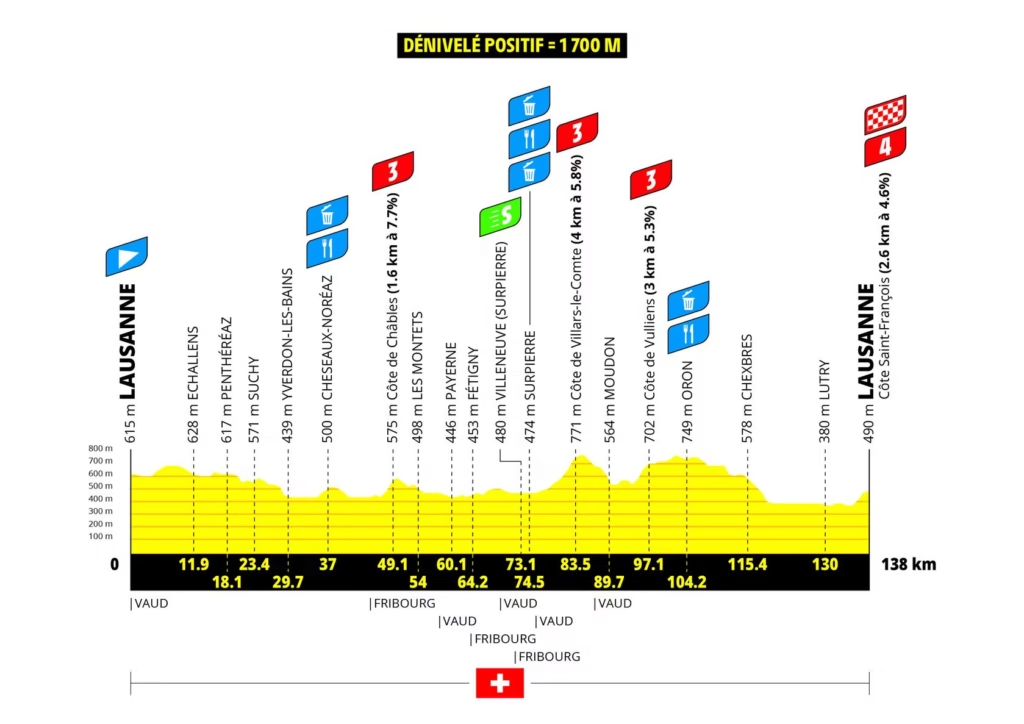
Stage 1 starts the competition immediately
The opening stage around Lausanne is officially flat, but that does not mean the mountains classification waits until later in the week.
There are categorised climbs on the opening day, giving an aggressive rider the opportunity to become the first QOM leader before the Tour has even reached France.
For smaller teams in particular, the first polka dot jersey can be a worthwhile target.
It provides television exposure and gives a rider a clear tactical reason to attack again on following stages.
A competition that starts as an attempt to wear the jersey for one day can quickly become a realistic classification campaign.
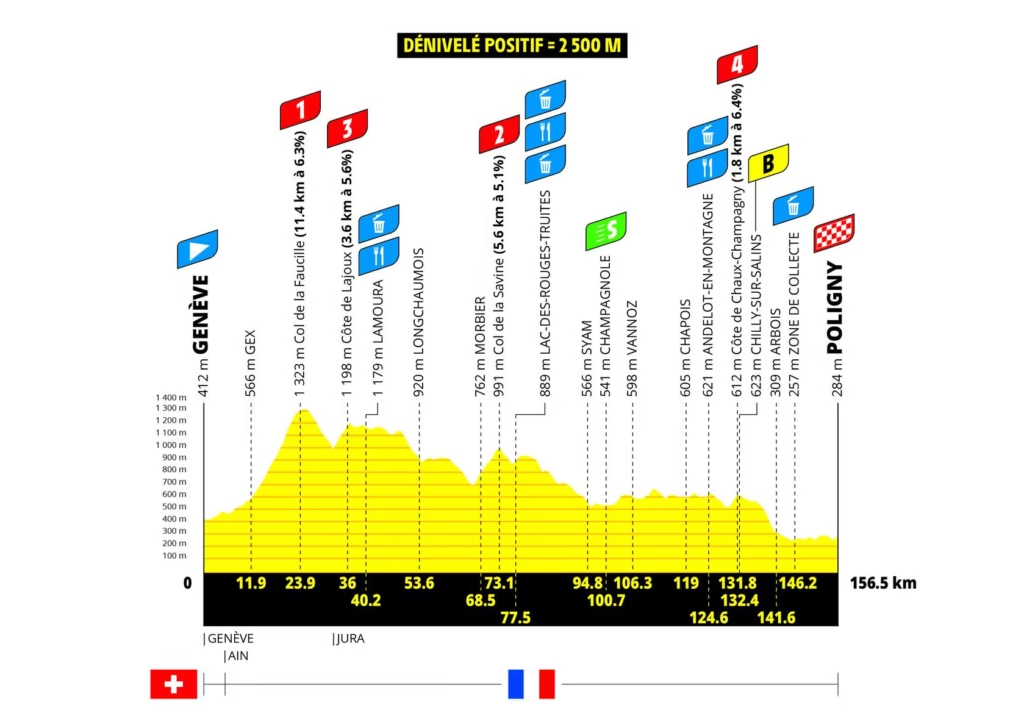
Stage 3 should begin shaping the serious QOM battle
Stage 3 from Geneva to Poligny moves the Tour into the Jura and should be one of the first days when stronger climbers begin taking an interest.
The profile offers more opportunities to collect points than the opening stages, while the general classification battle may still be relatively restrained before the Dijon time trial.
That makes it an attractive day for riders without yellow jersey ambitions.
Someone such as Ghekiere, García or Ostolaza can begin building a meaningful advantage before the race reaches the harder climbing later in the week.
The key is getting ahead before the GC teams become interested in controlling the same climbs.
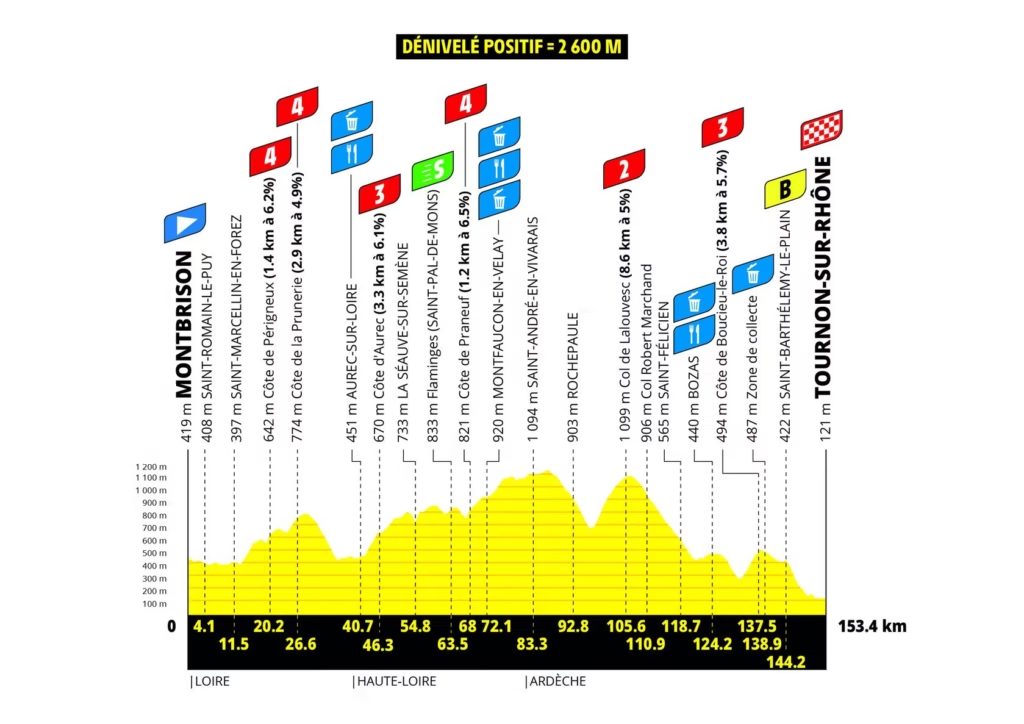
Stages 5 and 6 could define the breakaway route to polka dots
The two hilly stages following the Dijon time trial may be the most important days for riders specifically targeting the mountains classification.
Stage 5 through Beaujolais contains repeated climbing, including Mont Brouilly close to the finish, while Stage 6 to Tournon-sur-Rhône contains another succession of climbs immediately before Ventoux.
Those profiles are ideal for breakaway specialists.
The major GC teams may not want to spend riders chasing someone who is already well down overall, particularly on Stage 6 when mountain domestiques will be needed the following day.
A QOM contender can exploit that hesitation and collect points while the yellow jersey teams are thinking about something else.
The riders most likely to benefit from that type of racing are covered in our Tour de France Femmes 2026 breakaway specialists guide.
By the end of Stage 6, the shape of the competition should be much clearer.
Either an attacking rider will have established a meaningful advantage, or the classification will remain open enough for Ventoux to transform it.

Justine Ghekiere is the obvious polka dot specialist
Justine Ghekiere is the clearest rider to identify before the Tour.
She already knows exactly how to win this competition.
Ghekiere took the Tour de France Femmes mountains classification in 2024 after repeatedly attacking from breakaways and winning Stage 7 at Le Grand-Bornand.
That combination of aggressive racing and climbing ability is precisely what the 2026 competition rewards.
AG Insurance-Soudal have also given her freedom to attack rather than asking her to spend every mountain stage glued to Kim Le Court.
Her best route towards a second polka dot jersey is not necessarily beating the GC favourites on Ventoux. It is collecting enough points across Stages 3, 5 and 6 that she arrives there already in control of the classification.
Her 2024 victory showed how effectively that strategy can work, with Ghekiere’s eventual success covered in Justine Ghekiere secures her first polka-dot jersey in dramatic Tour finale.
She begins as the most natural pre-race favourite.
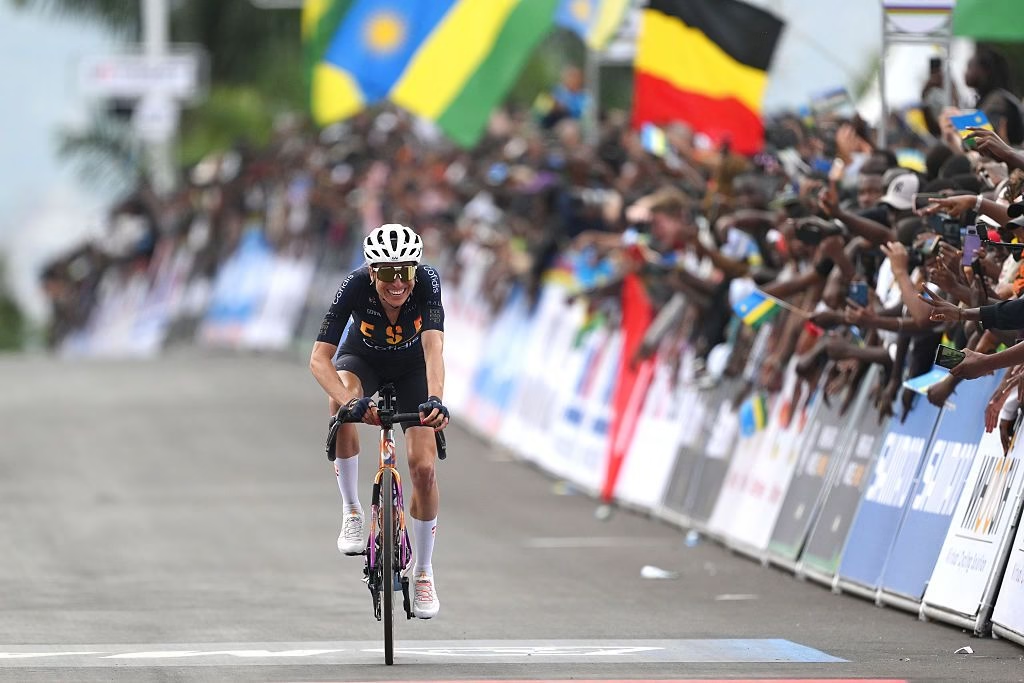
Mavi García has the climbing ability and tactical role
Mavi García is another obvious contender if UAE Team L’IMAD give her sufficient freedom.
Elisa Longo Borghini and Paula Blasi give UAE serious GC ambitions, which can work against García if she is required to remain with the leaders.
It can also create the ideal attacking role.
Sending García into a breakaway places an accomplished climber ahead of the race while giving UAE a possible satellite rider for Longo Borghini or Blasi later in the stage.
If García collects QOM points along the way, the move serves two purposes.
That makes her dangerous because she does not necessarily need the polka dot jersey to be the original reason she attacks.
A mountains campaign could develop naturally from the team’s GC tactics.
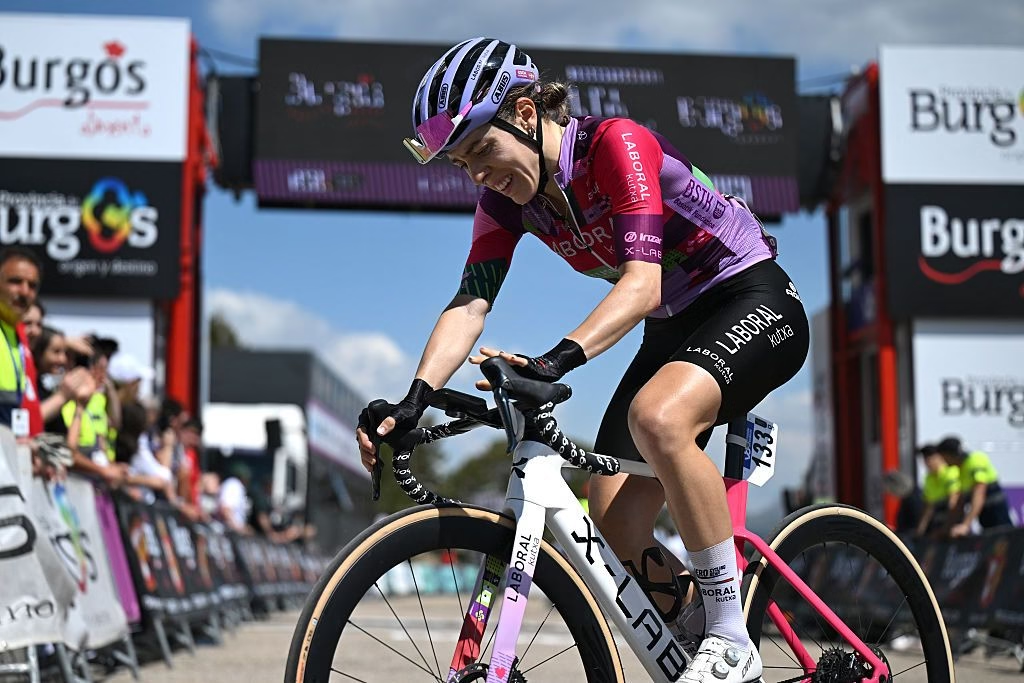
Usoa Ostolaza could gain freedom after Dijon
Usoa Ostolaza is another rider whose QOM prospects may depend on what happens in the Stage 4 time trial.
If she remains close to the leaders overall, Laboral Kutxa-Euskadi may decide that protecting her GC position is more valuable than attacking early.
If she loses time in Dijon, the calculation changes.
A strong climber sitting several minutes behind the favourites becomes much easier for the yellow jersey teams to allow into a breakaway.
Ostolaza can exploit that freedom on Stages 5 and 6.
She is unlikely to win the mountains competition by following Vollering and Ferrand-Prévot on every major climb. Repeated attacks from a lower GC position provide a much more realistic path.
 Photo Credit: Toni Baixauli
Marion Bunel has the ability but a restrictive role
Marion Bunel has the climbing ability to score heavily, but her role at Team Visma | Lease a Bike makes a deliberate QOM campaign more complicated.
Visma have selected their Tour around Ferrand-Prévot’s title defence.
Bunel is expected to support the defending champion deep into the mountains rather than spend energy chasing every available point.
There is still a tactical route into the competition.
Visma could send Bunel ahead as a satellite rider, allowing her to collect QOM points while giving Ferrand-Prévot support farther up the road if the favourites eventually catch the breakaway.
If that happens repeatedly, Bunel could enter the polka dot contest without the team ever making it her primary objective.
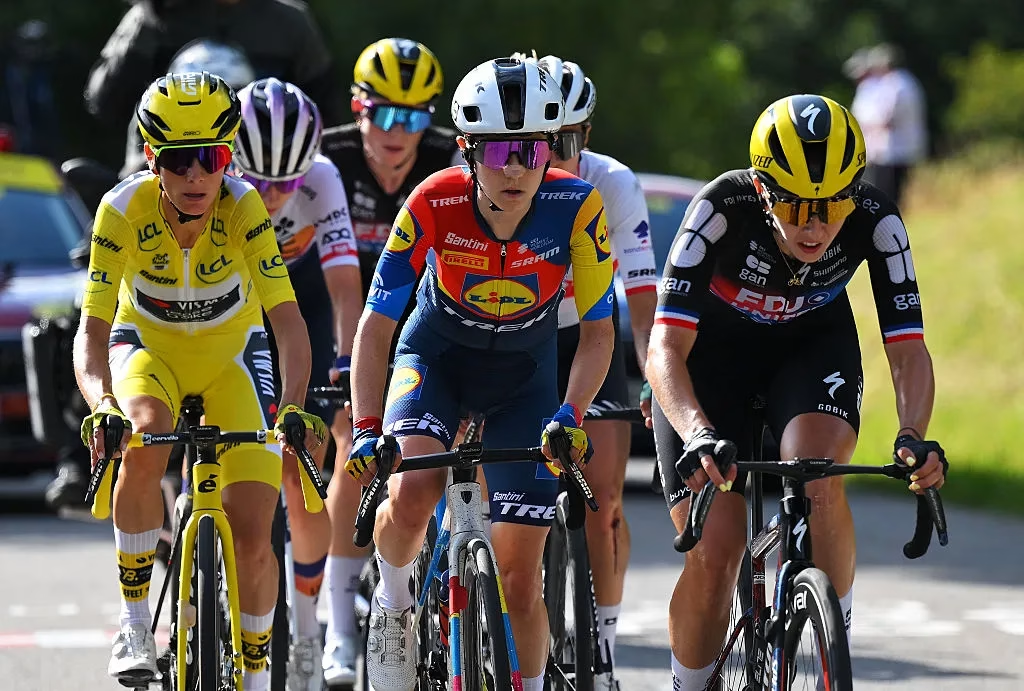
Niamh Fisher-Black could switch objectives if GC disappears
Niamh Fisher-Black is likely to begin the Tour with the general classification as the priority.
That makes chasing early mountain points unlikely.
Her climbing ability still means she could score naturally on Ventoux and the final mountain stage, particularly if she remains high overall.
The more interesting scenario comes if she loses time.
If a poor day or tactical setback removes Fisher-Black from the GC fight, Lidl-Trek suddenly have one of the strongest climbers in the race available to attack.
At that point, the mountains classification can become an attractive alternative objective.
That ability to change plans during a Grand Tour is one reason the QOM hierarchy often looks very different after several stages.
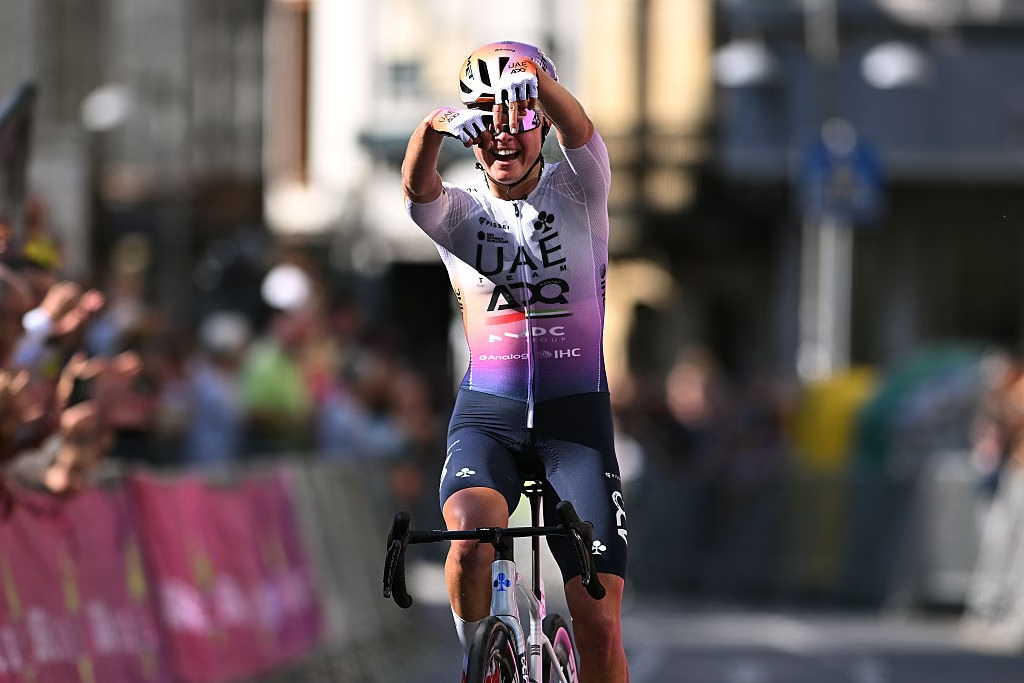
Paula Blasi could become a major threat
Paula Blasi has the climbing results to become a serious polka dot contender, although yellow should initially matter much more.
Her 2026 season has included overall victory at La Vuelta Femenina after her decisive performance on the Angliru, establishing her among the strongest climbers on the Tour start list.
If she remains close to yellow, there is little reason for UAE to waste her energy chasing minor QOM points.
If Dijon leaves her with a significant deficit, the equation changes.
A Blasi no longer required to protect every second on GC would be extremely dangerous in a mountain breakaway.
Few riders seeking polka dots would want to see her allowed several minutes before a major climb.
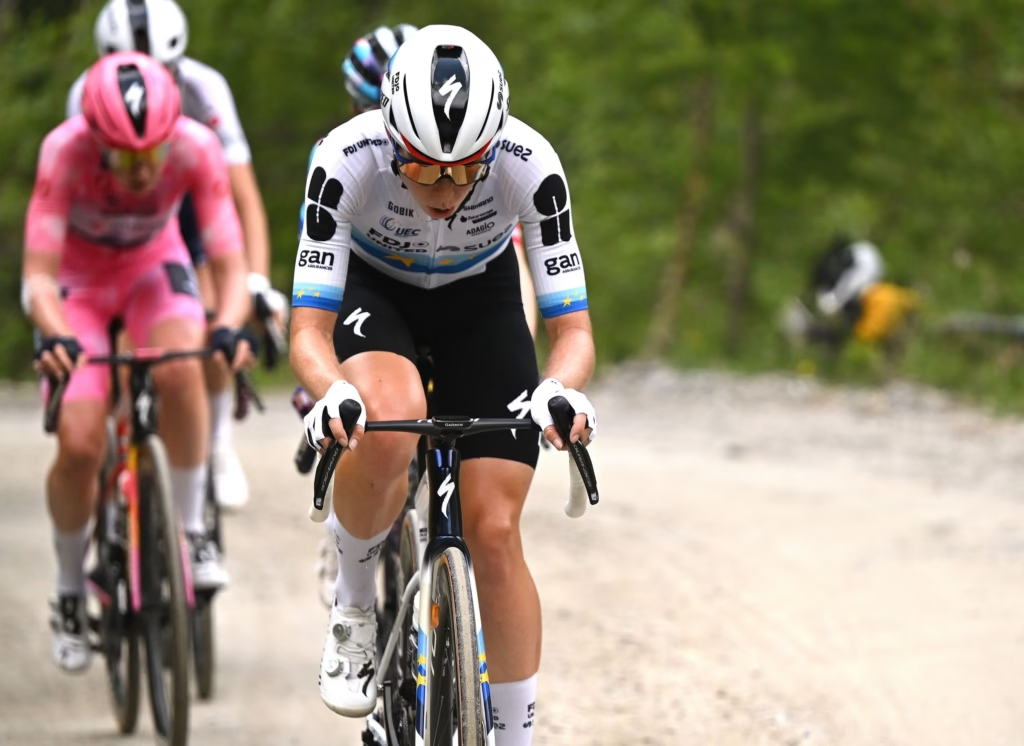
Demi Vollering could win polka dots while chasing yellow
Demi Vollering is one of the most obvious candidates on pure climbing ability.
She is much less obvious as a rider who will actually target the mountains classification.
Yellow comes first.
That means Vollering is unlikely to chase a Category 3 summit if doing so wastes energy needed for the general classification.
Ventoux is different.
If Vollering wins there, she takes 15 points in one move. Another major haul on the final mountain stage around Nice could suddenly put her into the lead regardless of what happened earlier.
That creates the main threat to the dedicated QOM riders.
They can spend six stages building an advantage only for the strongest climber in the GC battle to erase it across the final weekend.
The final stage keeps the mountains classification open
Stage 9 around Nice is only 99.2km, but it is a genuine mountain stage rather than a ceremonial finale.
That makes it an important final source of QOM points.
A rider leaving Ventoux with a modest advantage cannot assume the competition is finished.
The short distance should encourage aggressive racing, while the GC battle itself is likely to place the strongest climbers at the front repeatedly.
That favours riders such as Vollering, Ferrand-Prévot, Niedermaier and Blasi.
For a breakaway specialist, the objective is therefore to build as much insurance as possible beforehand.
Every Category 2, 3 or 4 point collected earlier in the week can become important in Nice.
-
 Photo Credit: quentinphotographiebe
 -
 Photo Credit: Getty
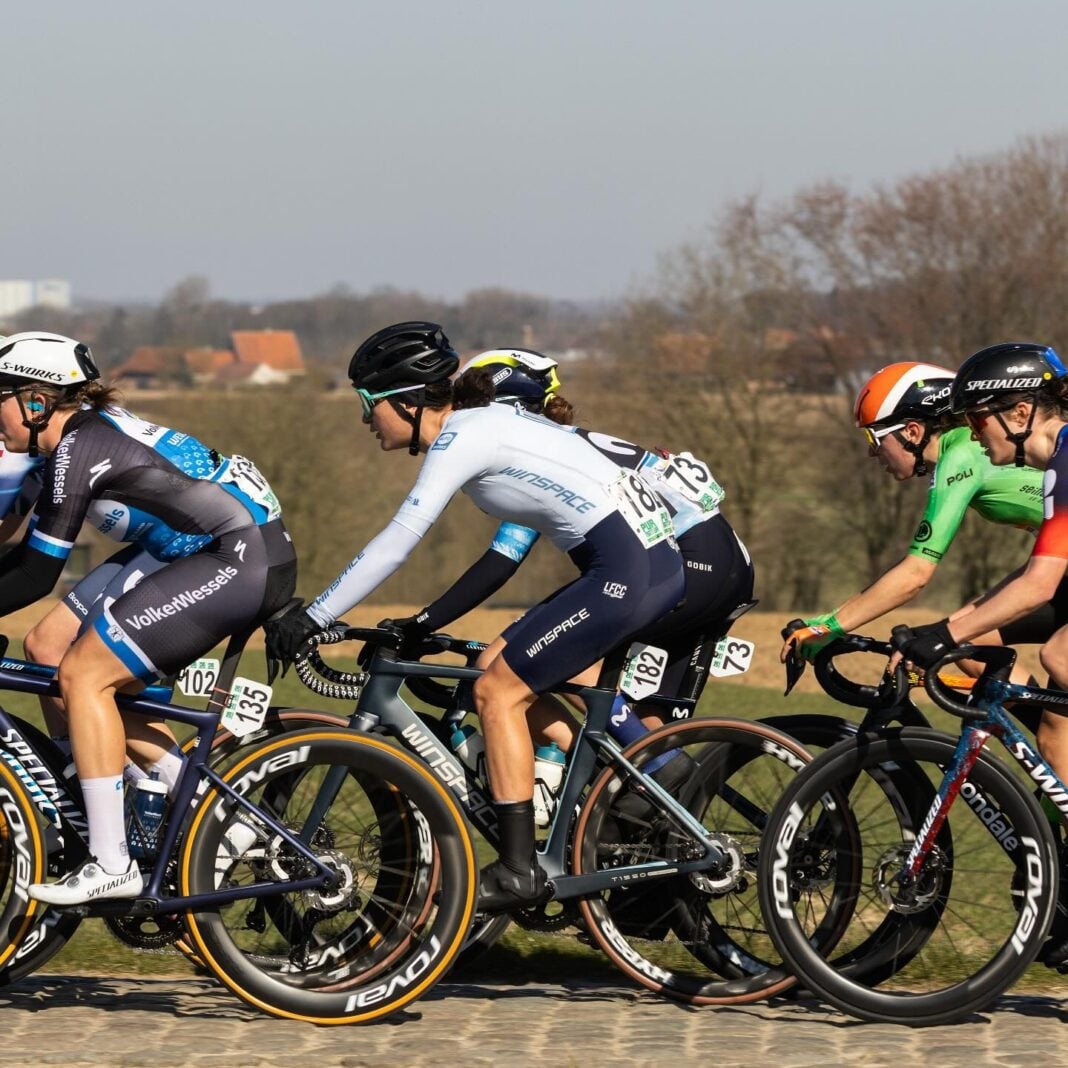
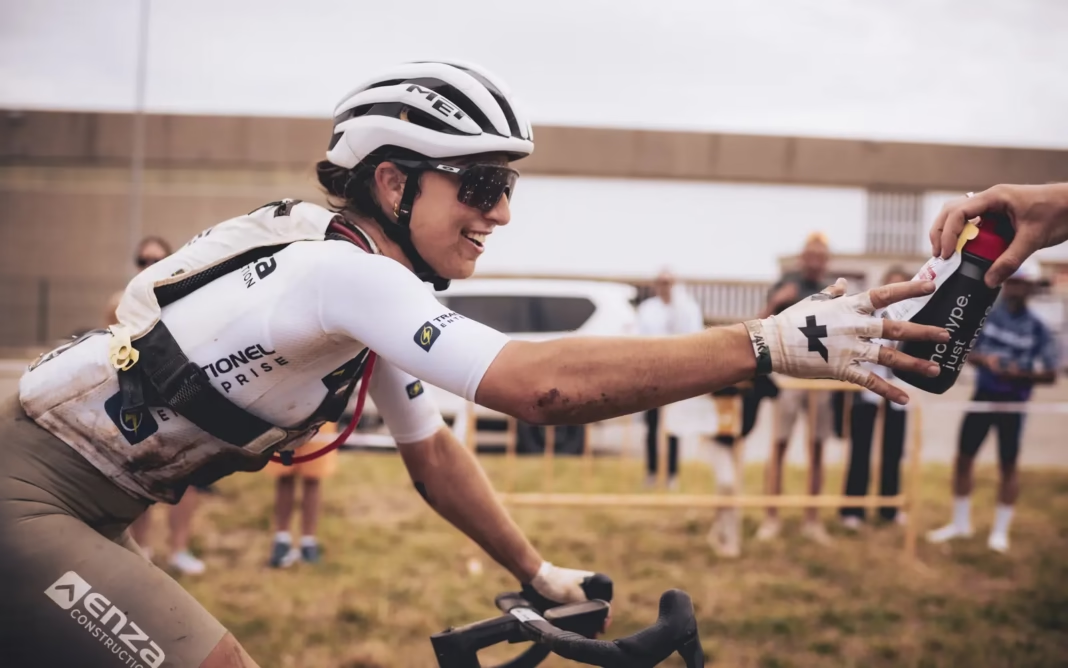
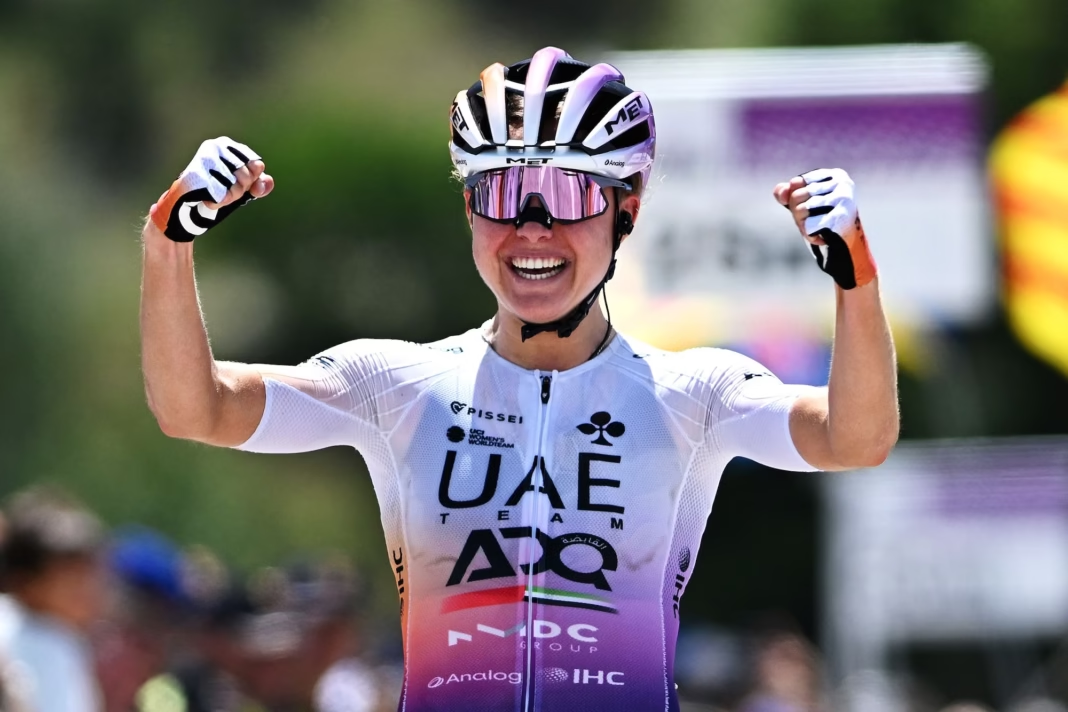
Who are the main 2026 polka dot jersey contenders?
The confirmed start list produces three broad types of QOM contender.
Best dedicated mountains jersey candidates: Justine Ghekiere, Mavi García and Usoa Ostolaza.
Strong climbers who could switch towards the competition: Marion Bunel, Niamh Fisher-Black and Paula Blasi.
GC favourites capable of winning through the major climbs: Demi Vollering, Pauline Ferrand-Prévot, Antonia Niedermaier and Elisa Longo Borghini.
The most important difference is tactical freedom.
Ghekiere can spend an afternoon attacking for five points here and three points there.
Vollering cannot if doing so compromises yellow.
But Vollering can take 15 points in one hit on Mont Ventoux.
That tension is what should make the classification interesting.
Who should win the polka dot jersey?
Justine Ghekiere is the strongest pre-race pick.
She has already won the classification at the Tour, has explicitly been given freedom to attack and has the climbing strength to accumulate points before the GC favourites begin dominating the biggest mountains.
Mavi García is the clearest alternative if UAE allow her to race aggressively, while Usoa Ostolaza could become increasingly dangerous if losing time against the clock gives her the freedom to spend multiple stages in the breakaway.
The biggest threat to all three comes from the yellow jersey battle.
If Demi Vollering or Pauline Ferrand-Prévot dominate Mont Ventoux and the final mountain stage, the points available late in the race could overwhelm an advantage built through smaller climbs.
That is what makes the polka dot jersey different from simply asking who the best climber is.
The strongest climber may win it.
The rider who understands where the points are available, and has the freedom to chase them, often has the better route.

