
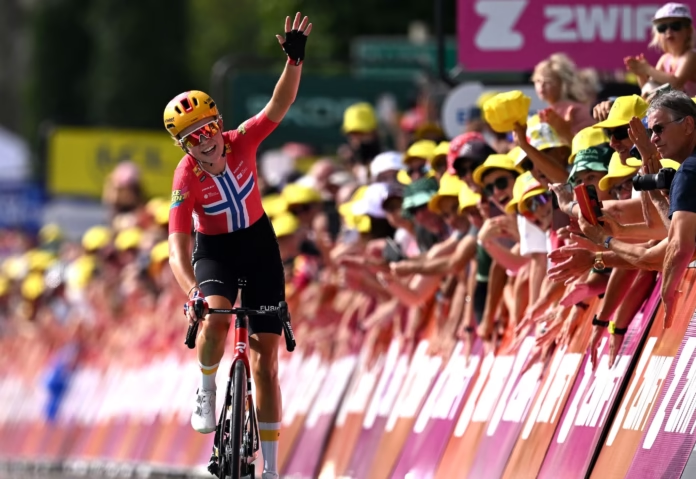
The 2026 Tour de France Femmes never settled for long enough to belong comfortably to anyone.
Lorena Wiebes began it by winning twice and wearing yellow. Sigrid Ytterhus Haugset then produced an 88-kilometre solo ride which temporarily turned the Tour into something nobody had predicted. Marlen Reusser’s carefully targeted Dijon time trial put the race back into the hands of the specialists before Demi Vollering and Kasia Niewiadoma-Phinney began dragging it towards the mountains.
Then Mont Ventoux changed everything. Niewiadoma-Phinney attacked into the tactical hesitation between Vollering and Reusser, won alone and took yellow. Twenty-four hours later Vollering attacked on a stage widely expected to suit the sprinters and stole it back. The final stage began with only eight seconds between them, the smallest first-to-second margin ever carried into the last day of the modern Tour, before Vollering finally removed the uncertainty by winning alone in Nice and stretching her final advantage to 1:18.
That volatility made this one of the most complete editions of the modern race. Sprinting mattered, the time trial mattered, breakaways mattered and bonus seconds repeatedly altered the GC. Ventoux was the headline climb, but crucially it did not decide the Tour. Five different riders wore yellow, each having taken it through a different kind of performance.
Vollering ultimately won because she was the rider best able to respond every time the shape of the Tour changed again.
Tour de France Femmes 2026 stage winners
| Stage | Route | Winner |
|---|---|---|
| 1 | Lausanne to Lausanne | Lorena Wiebes |
| 2 | Aigle to Geneva | Lorena Wiebes |
| 3 | Geneva to Poligny | Sigrid Ytterhus Haugset |
| 4 | Gevrey-Chambertin to Dijon ITT | Marlen Reusser |
| 5 | Mâcon to Belleville-en-Beaujolais | Demi Vollering |
| 6 | Montbrison to Tournon-sur-Rhône | Kim Le Court-Pienaar |
| 7 | La Voulte-sur-Rhône to Mont Ventoux | Kasia Niewiadoma-Phinney |
| 8 | Sisteron to Nice | Demi Vollering |
| 9 | Nice to Nice | Demi Vollering |
There were only five individual stage winners across nine days, but those victories came through almost every form of racing available: uphill sprinting, a conventional bunch finish, an enormous solo breakaway, an individual time trial, selective GC racing and mountain attacks.
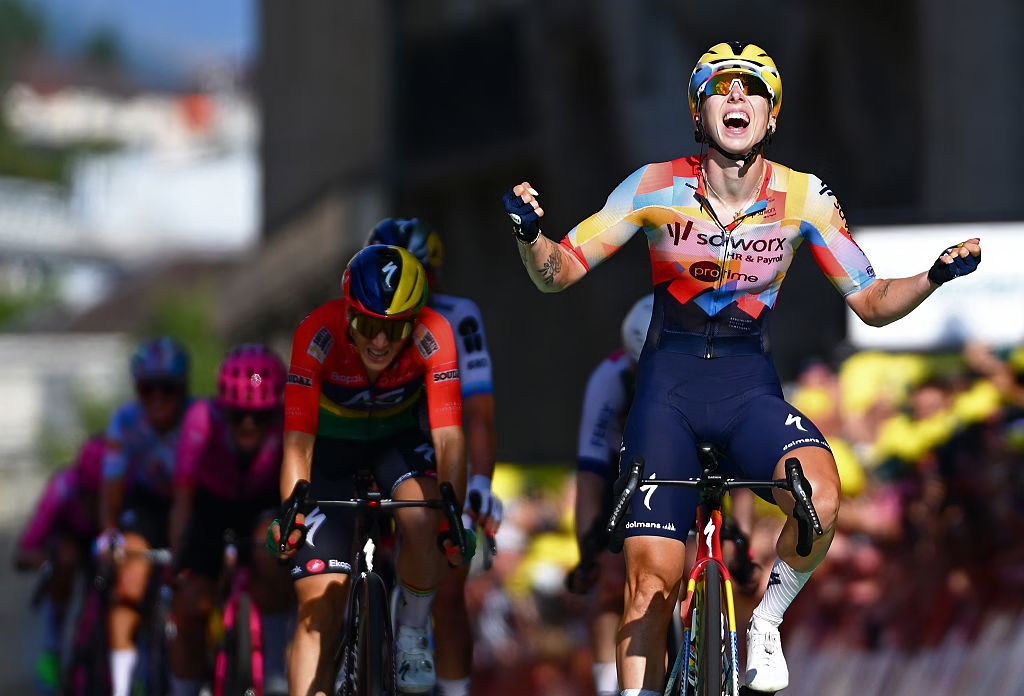
Wiebes immediately showed why the opening weekend belonged to her
The Tour started in Switzerland with a stage officially labelled flat but designed to ask more of the sprinters than a conventional finishing straight.
Wiebes answered emphatically.
On the uphill finish in Lausanne she survived the Côte Saint-François selection and accelerated clear to take both the Stage 1 victory and first yellow jersey. Only a small group reached the finish on her time, immediately making the result more revealing than a straightforward sprint win. It showed again how difficult it has become to classify Wiebes merely as a rider for flat finishes.
Stage 2 into Geneva was more conventional, although Riejanne Markus nearly removed the opportunity completely with a determined late attack. Markus survived until roughly 500 metres remaining, but once she was caught Wiebes finished the job again, beating Elisa Balsamo and Marianne Vos. The Stage 2 report left the Tour in a familiar-looking position: Wiebes in yellow, Wiebes already building green and SD Worx-Protime apparently in command of the opening phase.
The rest of the race quickly demonstrated how temporary that control would be. Wiebes would not win another stage, but that should not obscure how comprehensively she built the points classification. She kept collecting at intermediate sprints even when the route became too hard for her to contest stage finishes and eventually completed the Tour as the clear green jersey winner.
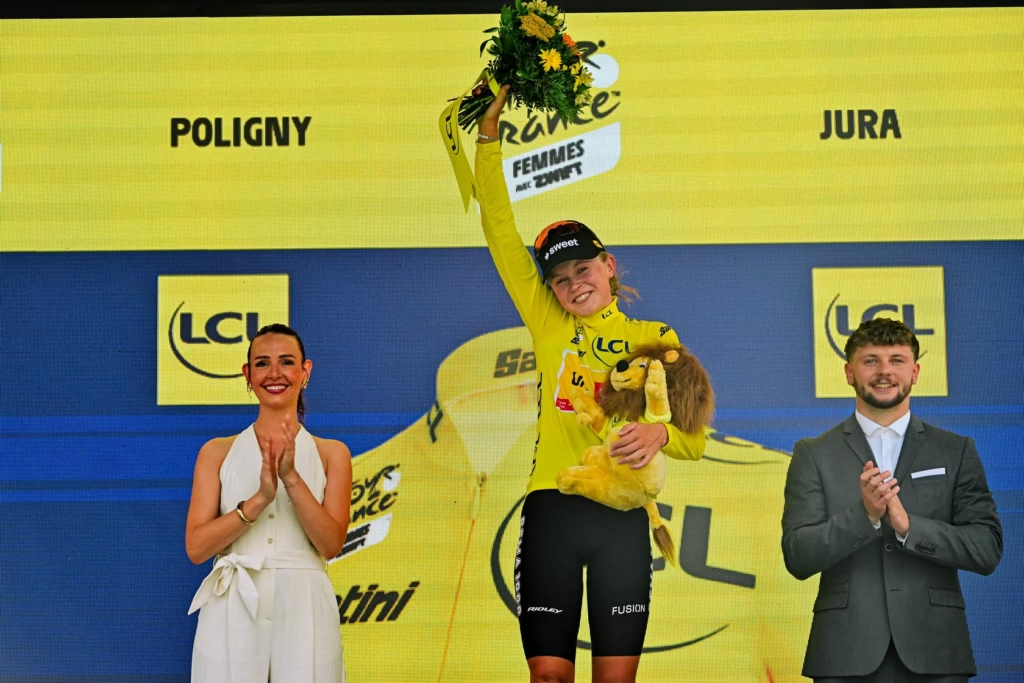
Haugset gave the Tour its first truly improbable moment
Stage 3 was supposed to start moving the race away from the sprinters and towards the attackers.
Nobody expected what Sigrid Ytterhus Haugset produced.
The Norwegian champion went clear around the Col de la Savine and spent the overwhelming majority of the remaining stage alone, producing an 88km solo victory into Poligny. Lotte Kopecky chased for much of the second half of the stage and at one point appeared capable of bringing the gap back, but Haugset somehow found enough to remain clear.
The Stage 3 report captured a victory which became much bigger than the yellow jersey it delivered. Haugset had turned what appeared to be a stage-hunting move into one of the defining performances of the whole Tour.
There was something particularly compelling about how unplanned it felt. Haugset had not ridden away from the field as an established Tour favourite executing a long-range GC strategy. She simply committed to the opportunity until the race behind could no longer undo it.
For a day, the entire Tour belonged to her.
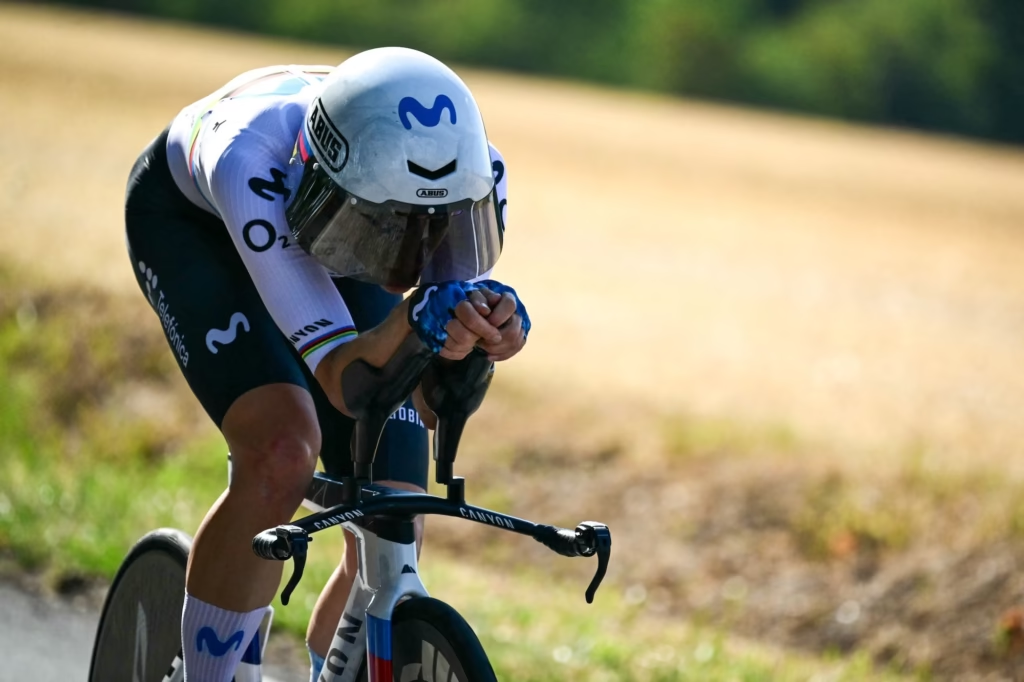 Photo Credit: Getty
Reusser’s Project Dijon worked
If Haugset’s victory had been gloriously unexpected, Marlen Reusser’s Stage 4 performance was almost the opposite.
Dijon had been targeted.
The 21km individual time trial from Gevrey-Chambertin was the stage where Reusser always had the clearest opportunity to place the Tour onto terrain that favoured her, and the plan worked almost perfectly. She won in Dijon and took yellow, with Vollering limiting her losses far better than most of the other GC contenders.
The Stage 4 race report represented the first major reordering of the genuine Tour favourites. Haugset’s yellow jersey adventure ended, while Reusser established the advantage she would try to defend through the hills and onto Ventoux.
It also exposed some important weaknesses elsewhere. Ferrand-Prévot lost heavily, while Niewiadoma-Phinney also conceded time to Vollering. Suddenly the Tour had a much more recognisable GC structure: the strongest time triallist in yellow, with the climbers forced to work out how they were going to recover the difference.
The question was whether Reusser could turn Project Dijon into Project Nice.
For several days, it looked possible.
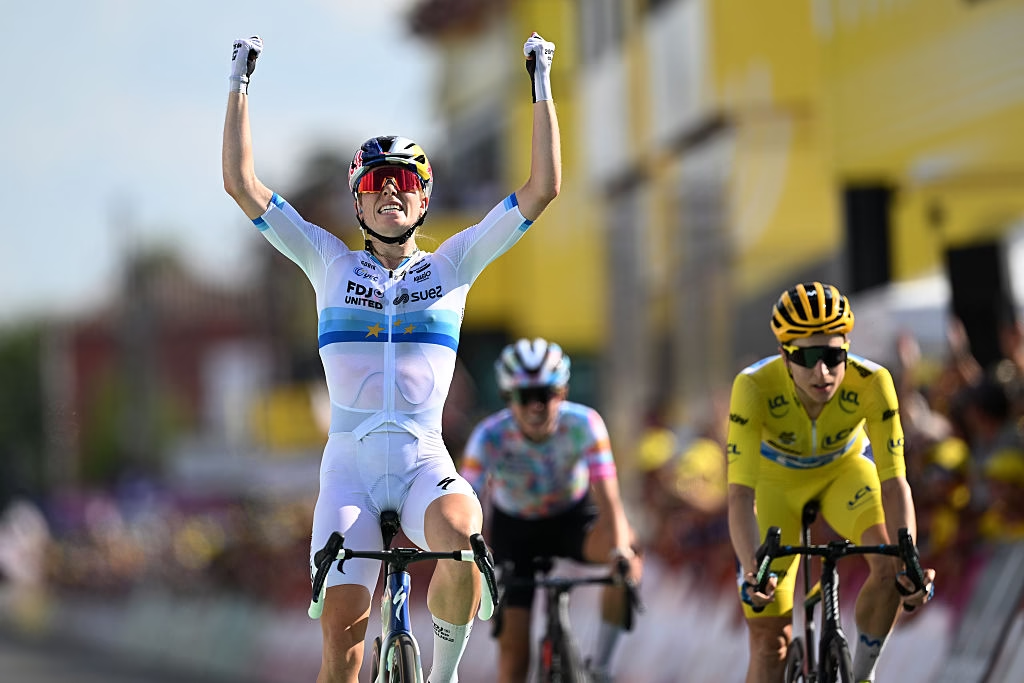 Photo Credit: Getty
Stage 5 separated the real contenders from the pre-race names
The road through the Beaujolais was where the GC stopped being theoretical.
Eight categorised climbs and almost 3,000 metres of ascent made Stage 5 considerably harder than its mid-race position suggested. The repeated climbing gradually stripped riders away until Reusser, Vollering and Niewiadoma-Phinney were left fighting for the stage.
Vollering repeatedly increased the pressure before winning the sprint in Belleville-en-Beaujolais, while Reusser did enough to retain yellow. The Stage 5 report mattered less for the small number of seconds that changed hands than for what it revealed about the emerging hierarchy.
Ferrand-Prévot was dropped as the climbing intensified, a much more serious warning than the time she had already conceded in Dijon. Other contenders also slipped away from the immediate fight, while Vollering and Niewiadoma-Phinney increasingly looked like the two riders capable of putting Reusser under sustained pressure.
The classifications after the stage reflected that narrowing. Reusser still had yellow, Vollering was only 12 seconds away and Niewiadoma-Phinney remained firmly in the race, while the Stage 5 GC and jersey picture showed just how much damage the day had done further down.
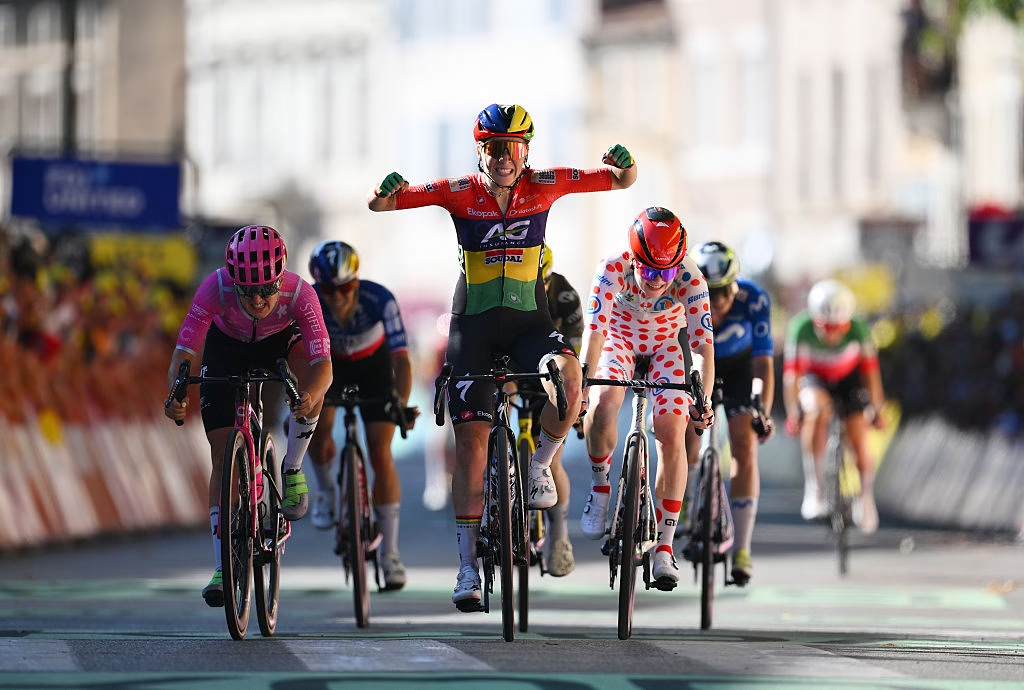 Photo Credit: Getty
Le Court-Pienaar gave the race one final breakaway story before Ventoux
The stage before Ventoux could easily have become conservative. The main GC contenders had every reason to save themselves for the following day and the race might simply have been allowed to drift towards the mountains.
Instead, Stage 6 produced another excellent tactical finish.
Kim Le Court-Pienaar suffered a mechanical on the descent from the penultimate climb, required a bike change and had to chase back towards a race that seemed to be moving away from her. AG Insurance-Soudal helped restore the situation before she bridged back into the decisive group and still had enough left to win the sprint in Tournon-sur-Rhône.
The Stage 6 report was a useful reminder that the Tour was not only a GC contest. Le Court-Pienaar’s overall ambitions had already taken damage, but that gave her the freedom to convert an awkward day into a stage win.
Longo Borghini also used the stage well, while Puck Pieterse continued methodically building the mountains classification. Reusser reached the eve of Ventoux still in yellow, 12 seconds ahead of Vollering and 1:17 ahead of Niewiadoma-Phinney.
Those numbers looked useful.
Ventoux made them almost irrelevant.
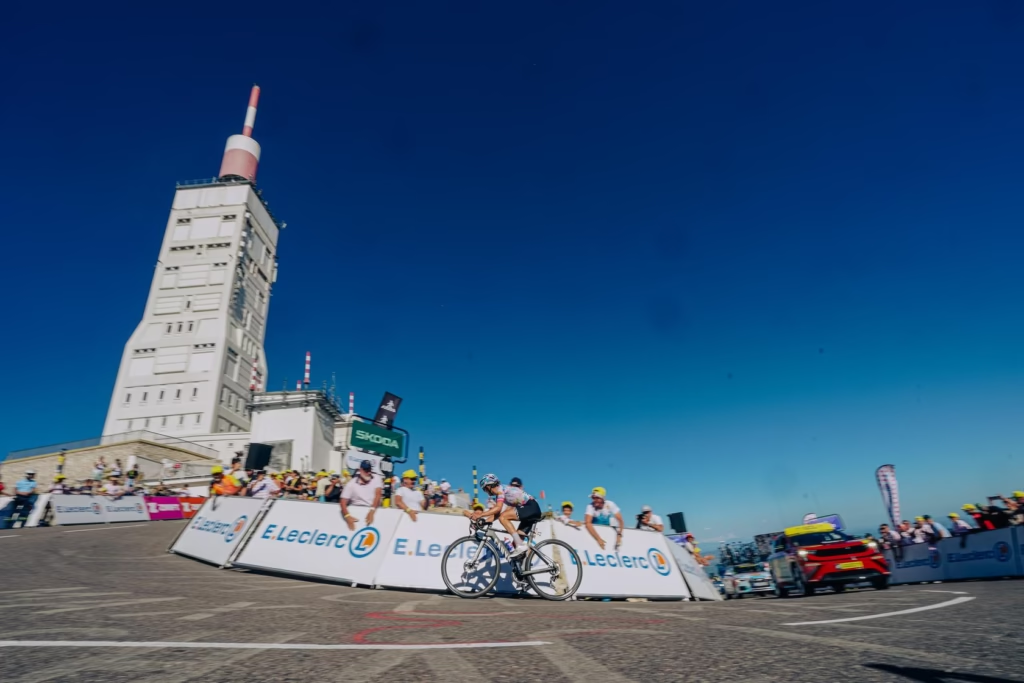 Photo Credit: A.S.O./Gaëtan Flamme
Niewiadoma-Phinney produced the tactical ride of the Tour
Stage 7 was the day everybody had identified when the route was announced.
The first modern Tour de France Femmes visit to Mont Ventoux delivered exactly the scale of GC upheaval expected, but not through a simple contest of who could climb fastest.
Niewiadoma-Phinney attacked with just over nine kilometres remaining. Instead of immediately committing to the chase, Vollering and Reusser became trapped in their own tactical problem. Vollering needed to take time from the yellow jersey; Reusser did not want to tow one of the strongest climbers in the race towards the summit.
Niewiadoma-Phinney exploited that hesitation perfectly.
The Stage 7 report recorded the biggest reversal of the race to that point. Niewiadoma-Phinney won alone, Vollering eventually attacked Reusser and finished 1:16 behind, while the Swiss rider lost still more.
Niewiadoma-Phinney had started the stage 1:17 from yellow and 1:05 behind Vollering. She finished it 15 seconds ahead of Vollering and 39 seconds ahead of Reusser.
The physical performance was excellent, but the timing was what made the attack so good. Niewiadoma-Phinney recognised a moment where the two riders behind had conflicting interests and committed before either had solved the problem.
It was the tactical ride of the Tour.
For one night, it looked as though it might also have been the ride that won it.
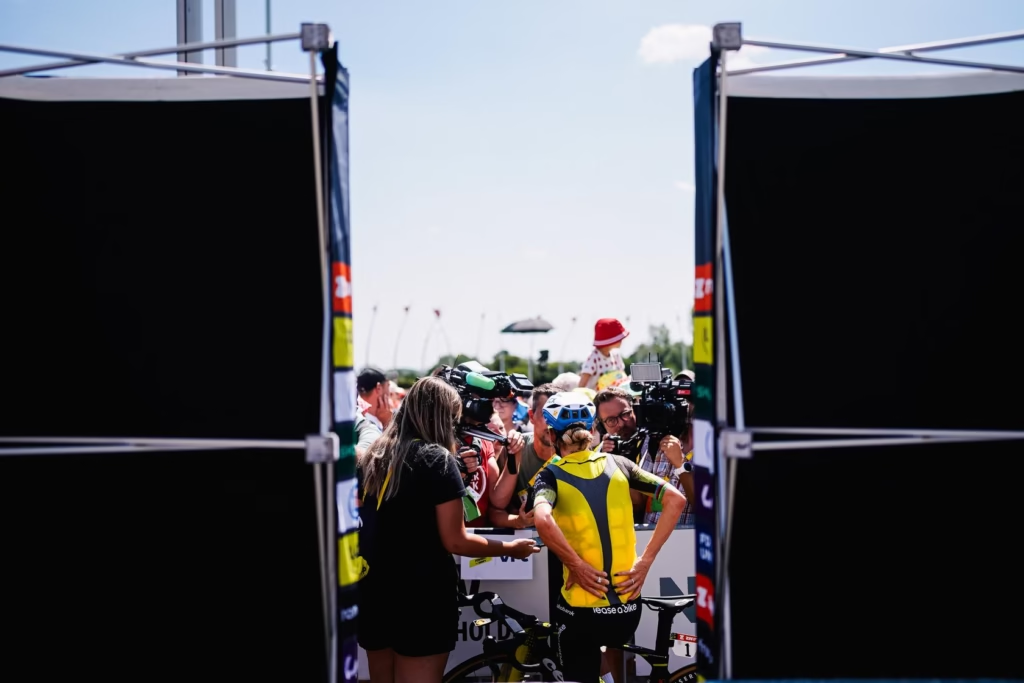 Photo Credit: A.S.O./Gaëtan Flamme
Ferrand-Prévot’s title defence ended before Nice
The defending champion’s race unravelled in stages.
Dijon put Ferrand-Prévot under pressure. Stage 5 effectively removed her from the realistic yellow jersey fight. Ventoux then confirmed just how far the 2026 race had moved away from the performances which had made her champion a year earlier.
She was dropped early on the final climb and finished 18th, 10:44 behind Niewiadoma-Phinney.
There was no justification for attaching a specific illness to those earlier performances without confirmation. What Team Visma | Lease a Bike did confirm the following morning was that Ferrand-Prévot was feeling unwell and, after consultation with the medical staff, would not start Stage 8.
Her Stage 8 DNS brought one of the biggest pre-race storylines to an abrupt end.
The contrast with 2025 could hardly have been greater. A year earlier the mountains were where Ferrand-Prévot had taken control of the Tour. This time they were where her title defence disappeared.

Stage 8 was supposed to be the sprint day
That expectation is what made Saturday’s result so important.
After Ventoux, the riders faced 171.9km from Sisteron to Nice on a stage officially classified as flat. There were obvious late climbs, but it still appeared to offer Wiebes one final realistic opportunity to add another sprint victory.
Instead it became the second decisive GC stage in 24 hours.
FDJ United-Suez hardened the finale and Vollering attacked above Nice. Niewiadoma-Phinney and Longo Borghini initially responded, but Vollering went again and committed once the separation appeared.
The Stage 8 report turned the Tour upside down again. Vollering won by 17 seconds and the difference in finish bonuses added another six seconds relative to third-placed Niewiadoma-Phinney.
A 15-second deficit became an eight-second lead.
That was the direct tactical opposite of Ventoux. On Friday, Vollering had waited too long. On Saturday, she stopped waiting for anybody.
It was the correction that put the Tour back into her hands.
 Photo Credit: Getty
The Gery incident made an already close Tour personal
Stage 8 also produced the race’s biggest controversy.
Niewiadoma-Phinney accused FDJ United-Suez rider Célia Gery of deliberately blocking her against the barriers while Vollering was being positioned for the decisive move. Canyon SRAM took the matter to the jury, but no sanction was issued.
That left the sporting result unchanged: Vollering eight seconds ahead, Niewiadoma-Phinney having lost yellow and one stage remaining.
The important distinction was that no official ruling established deliberate wrongdoing, while the available public footage did not conclusively settle the argument either. The competing accounts and jury outcome are covered in full in the Gery controversy piece.
The incident nevertheless changed the atmosphere. The final stage was already going to be aggressive because eight seconds was far too small to defend comfortably. Now Canyon SRAM arrived there after a dispute over the moment that had helped cost Niewiadoma-Phinney yellow.
Eight seconds made the final stage historic before it started
The modern Tour had never begun its final stage with first and second separated by so little.
The previous closest margin had been 27 seconds in 2024, although Vollering herself had started that final day 1:15 behind Niewiadoma-Phinney before reducing the Tour to four seconds on Alpe d’Huez.
In 2026 they began Stage 9 only eight seconds apart.
That symmetry was difficult to ignore. Two years earlier Vollering had been the challenger, attacking desperately to recover a deficit. This time Niewiadoma-Phinney had to find the time, with four ascents of the Col d’Èze on which to do it.
The Stage 9 preview made the arithmetic clear: Niewiadoma-Phinney could not simply assume that beating Vollering in a sprint would be enough. She needed either a physical gap or the right bonus-second combination.
The expectation was that the Tour could come down to one or two accelerations and another final calculation.
Vollering had other ideas.
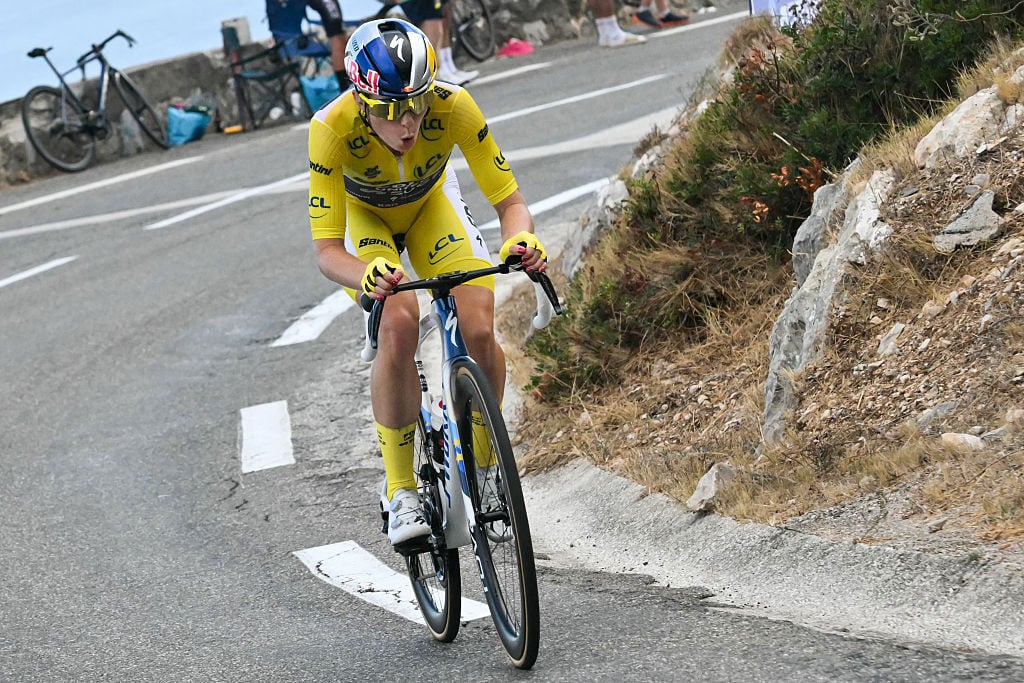 Photo Credit: Getty
The final stage removed the need for arithmetic
Stage 9 began aggressively enough, with UAE Team L’IMAD contributing to the pressure and Canyon SRAM trying to create the sort of race that could expose Vollering.
Reusser’s podium challenge disappeared early when she was dropped and then crashed on the descent, removing the third GC contender who might otherwise have complicated the duel between the first two.
By the final Col d’Èze, the Tour had reduced to exactly the contest expected.
Niewiadoma-Phinney attacked.
Vollering followed.
Then Vollering attacked back.
With roughly 800 metres remaining to the summit, the yellow jersey accelerated again and this time Niewiadoma-Phinney could not respond. What began as a relatively small gap over the top expanded on the descent and run towards Nice.
The Stage 9 race report provided an ending far more decisive than the overnight GC suggested. Vollering won by 1:04 from Paula Blasi and Niewiadoma-Phinney, with the finishing bonuses stretching her final overall advantage to 1:18.
For two days the Tour had been discussed in tiny calculations: 15 seconds, eight seconds, four-second bonus swings and whether Niewiadoma-Phinney could find nine seconds on the road.
Vollering rendered all of it irrelevant with one final attack.
Reusser deserved more than the final classification suggests
Reusser’s final day was brutal, but her influence on the race was much larger than the eventual result will show.
She had made Dijon one of the defining stages before the Tour even began and delivered precisely the performance required to take yellow. Through Stages 5 and 6 she then defended that advantage impressively on terrain which increasingly favoured the climbers behind.
Ventoux finally exposed the limits of that defence, but Reusser still left the mountain third overall and within 39 seconds of yellow.
Stage 9 was harsher. Once she was dropped and then crashed, the podium disappeared and Longo Borghini was able to move past her.
That ending should not obscure what Reusser had done to the race. Her time-trial advantage forced Vollering and Niewiadoma-Phinney to attack rather than simply mark one another, and that pressure was central to the tactical volatility of the middle stages.
Longo Borghini reached the podium by refusing to disappear
Elisa Longo Borghini rarely looked like the most likely overall winner, but she kept herself close enough for the race eventually to come back towards her.
Stage 5 hurt her. Stage 6 helped. She then finished third on Ventoux, second on Stage 8 and remained among the strongest riders on the final day while Reusser’s race unravelled.
That consistency turned into third overall.
UAE Team L’IMAD’s collective performance was just as notable. Paula Blasi emerged as one of the revelations of the race and finished second on Stage 9, while Dominika Włodarczyk remained high on GC and Maëva Squiban repeatedly gave the team another attacking option.
They did not win yellow, but their depth made them one of the defining teams of the Tour.
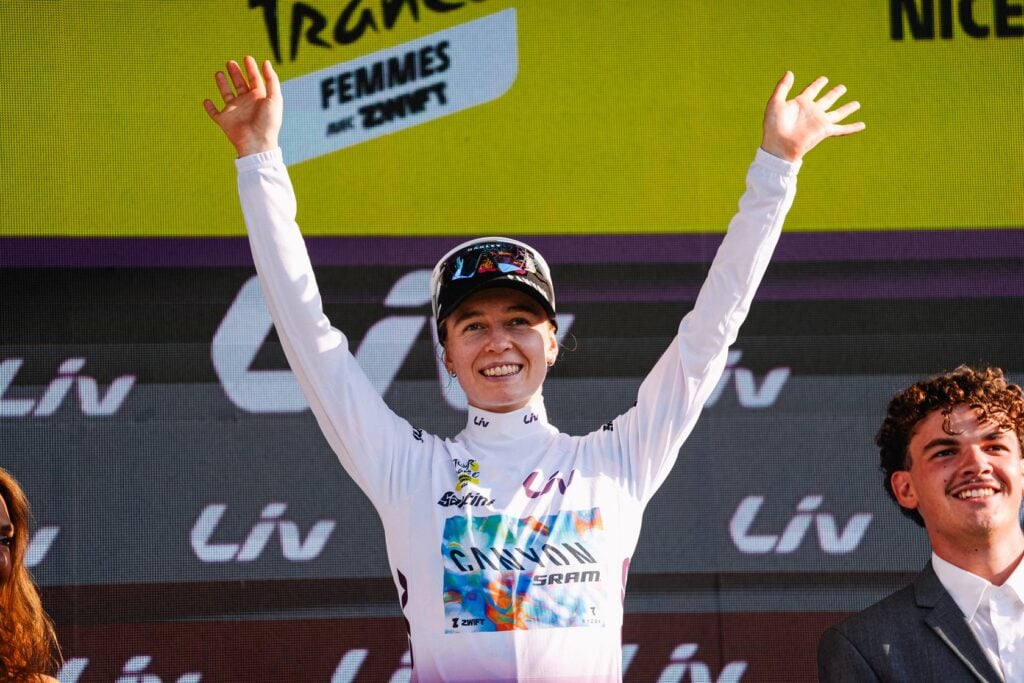
Niedermaier and Blasi made white part of the main race
The young rider classification was unusually relevant to the GC battle.
Antonia Niedermaier eventually won white for Canyon SRAM, but Paula Blasi remained close enough to ensure neither team could completely detach the classification from its wider tactics. Isabella Holmgren also produced one of the strongest rides of the final stage, adding another name to a young-rider contest which consistently intersected with the top 10 overall.
Niedermaier’s position mattered tactically because Canyon SRAM could use her to pressure FDJ United-Suez, but every aggressive move also carried some risk to her own classification.
Canyon ultimately lost yellow but still left Nice with Niewiadoma-Phinney second overall and Niedermaier in white.
The Tour de France Femmes jerseys guide explains how the four classifications operate, but in 2026 white was much more than a secondary contest taking place behind the main race.
Pieterse built the polka dots before the biggest mountains arrived
Puck Pieterse’s mountains classification victory was almost the opposite of Niewiadoma-Phinney’s Ventoux performance.
There was no single summit where she accumulated enough points to settle the competition. Pieterse started collecting early and kept doing it through the first two-thirds of the race.
She took control of the polka-dot jersey during the opening hilly stages and built enough of a margin that the GC contenders scoring heavily on Ventoux and around Nice could not bring her back.
It was a methodical way to win a jersey for a rider normally associated with explosive stage victories. The full scoring structure is covered in the Tour de France Femmes polka-dot jersey guide.
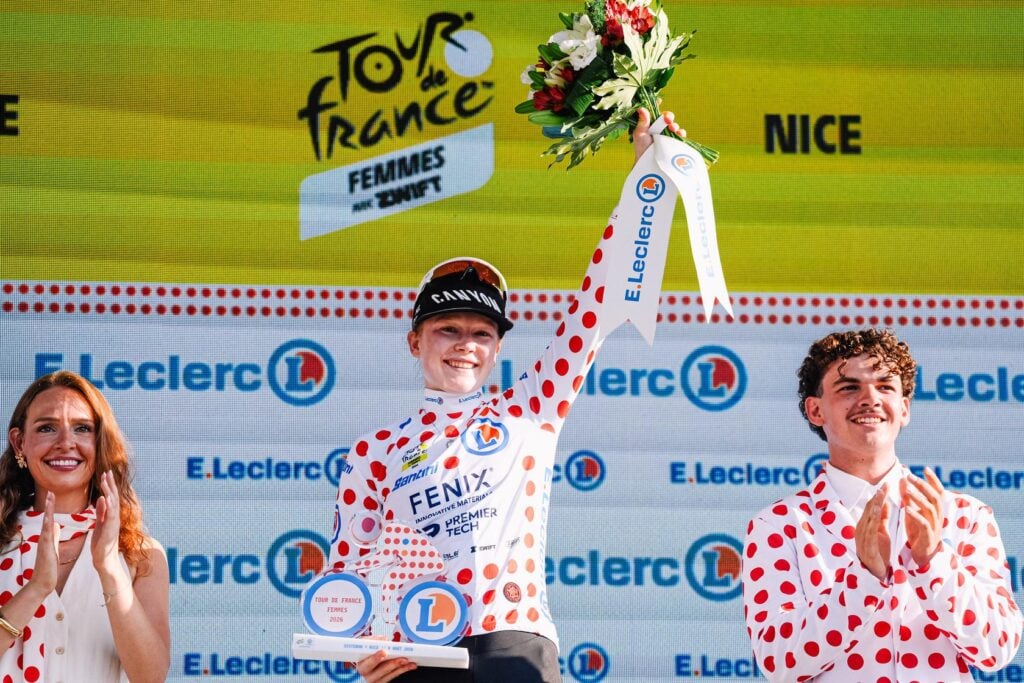 Photo Credit: A.S.O./Gaëtan Flamme
Five yellow jerseys explained why the race worked
The clearest summary of the 2026 Tour may simply be the list of riders who wore yellow.
Lorena Wiebes took it through sprinting.
Sigrid Ytterhus Haugset took it through an enormous solo attack.
Marlen Reusser took it through a time trial.
Kasia Niewiadoma-Phinney took it by attacking Mont Ventoux.
Demi Vollering took it with a late attack into Nice and then confirmed it by winning the final mountain stage.
Each change represented a different skill set being rewarded by the route rather than a random reshuffling caused by a breakaway with no wider consequence.
That is probably the strongest argument for the 2026 course. Ventoux was the headline feature, but the Tour did not depend on it alone. Dijon rewarded Reusser’s specialism. The Beaujolais exposed weaker GC positions. Stage 6 rewarded attacking. Stage 8 was considerably harder to control than its flat designation suggested. Nice then provided a genuine final GC stage rather than a ceremonial finish.
The route kept creating a new problem for whichever rider appeared to have solved the previous one.
The race Vollering won was not the race expected beforehand
Before the start, Vollering, Ferrand-Prévot, Reusser, Niewiadoma-Phinney and Longo Borghini all had obvious routes towards yellow.
Only some survived contact with the actual race.
Ferrand-Prévot never reached the climbing level required to defend her title and left before Stage 8. Reusser executed Dijon almost perfectly but could not transform her time-trial superiority into enough mountain resistance to survive the final weekend. Niewiadoma-Phinney appeared to have solved the Tour on Ventoux before losing it on a stage that looked comparatively harmless.
Vollering made mistakes too. Her hesitation on Ventoux was arguably the biggest tactical error made by any of the main contenders, but the difference was how quickly she corrected it. On Stage 8 she attacked before the obvious moment, and on Stage 9 she refused to reduce her race to defending eight seconds.
That adaptability is the central theme of how Demi Vollering won the 2026 Tour de France Femmes.
-
 Photo Credit: Getty
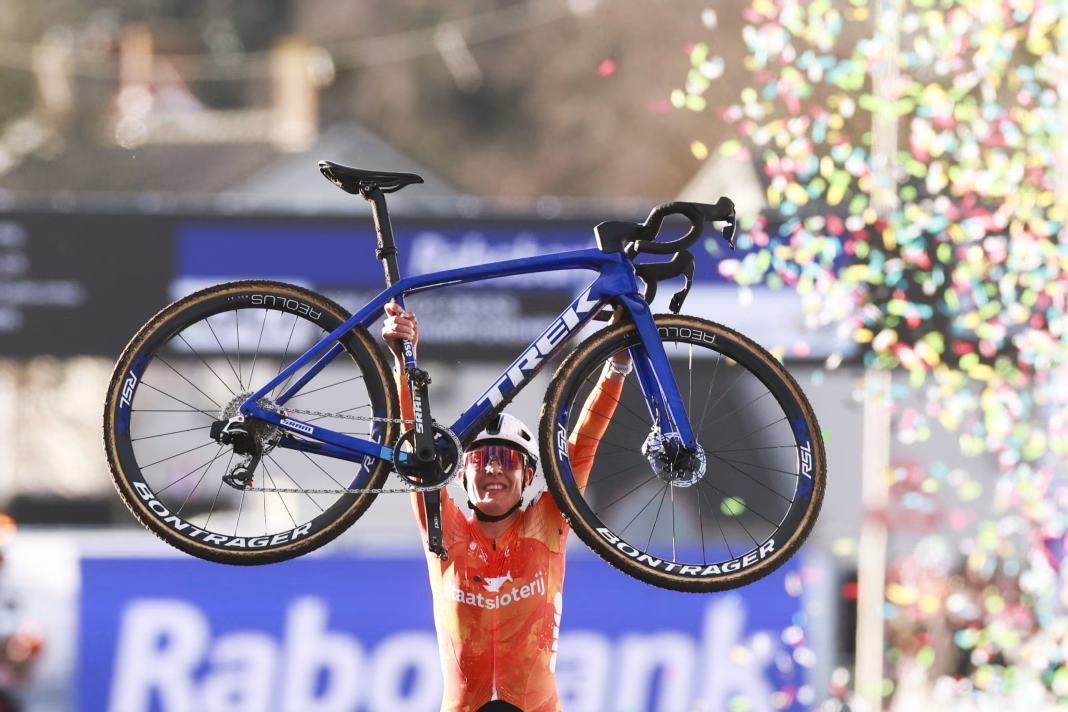

Tour de France Femmes 2026 final jersey winners
- Yellow jersey: Demi Vollering, FDJ United-Suez
- Green jersey: Lorena Wiebes, SD Worx-Protime
- Polka-dot jersey: Puck Pieterse, Fenix-Premier Tech
- White jersey: Antonia Niedermaier, Canyon SRAM
The four jerseys represented four quite different races. Vollering had to recover after losing control on Ventoux. Wiebes built green through early stage victories and consistent scoring. Pieterse constructed her mountains advantage before the biggest summit finishes. Niedermaier balanced her own GC ambitions with the demands of supporting Niewiadoma-Phinney.
There was no single team or tactical formula which dominated every competition.
That suited this Tour.
Every Tour de France Femmes 2026 stage report
For the full race story, stage by stage:
- Stage 1: Lorena Wiebes wins uphill Lausanne sprint to take yellow
- Stage 2: Lorena Wiebes wins again in Geneva after Markus caught late
- Stage 3: Sigrid Haugset wins from 88km solo to take yellow in Poligny
- Stage 4: Marlen Reusser wins Dijon time trial and takes yellow
- Stage 5: Demi Vollering wins in Belleville-en-Beaujolais after late GC attack
- Stage 6: Kim Le Court-Pienaar wins from eight-rider sprint in Tournon-sur-Rhône
- Stage 7: Kasia Niewiadoma-Phinney conquers Mont Ventoux to take yellow
- Stage 8: Demi Vollering wins in Nice and takes yellow after late attack
- Stage 9: Demi Vollering wins in yellow on Col d’Èze finale to seal second Tour title
The final margin of 1:18 makes Vollering’s victory look reasonably comfortable if the Tour is viewed only through the last classification.
The nine stages tell a completely different story.
She was behind Reusser after Dijon, beaten tactically by Niewiadoma-Phinney on Ventoux and without yellow entering Stage 8. Even on the final morning she had only eight seconds to protect. At several points, another rider appeared to have found the key to the race.
Vollering was simply the last one able to change it again.

