
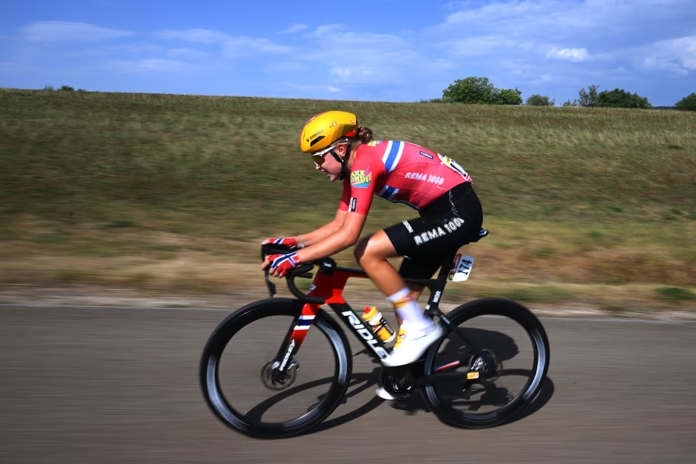
Sigrid Ytterhus Haugset won stage 3 of the 2026 Tour de France Femmes after an extraordinary 88.5-kilometre solo attack, taking both the stage victory and the yellow jersey in Poligny.
The Norwegian national champion attacked after a brutal opening section through the Jura, survived a long chase from Lotte Kopecky, then held off the GC group by enough to move into the overall lead. It was the longest winning solo move of the modern Tour de France Femmes avec Zwift era, surpassing Annemiek van Vleuten’s 62-kilometre ride to Le Markstein in 2022.
Haugset’s victory also made history for Norway. It was the first Norwegian stage win in the modern Tour de France Femmes avec Zwift and the first time a Norwegian rider has worn the yellow jersey in the race. Kopecky finished second at 1:23 after her own brave long-range pursuit, while Marianne Vos led home the reduced peloton at 2:48 to take third and the final bonus seconds.
A hilly day that became much more
Stage 3 took the riders 156.5 kilometres from Geneva to Poligny, beginning in Switzerland before crossing into France and heading into the Jura. On paper, it was a hilly stage that could have gone several ways. The sprinters had a chance if they survived the early climbs, the GC riders had terrain to test each other, and the attackers had enough elevation and tactical uncertainty to believe in the breakaway.
The route contained 2,500 metres of elevation gain, with the hardest climbing packed early. The Col de la Faucille, 11.4 kilometres at 6.3 per cent, arrived almost immediately after the official start and took the race above 1,000 metres. The Côte de Lajoux and Col de la Savine followed before the final categorised climb, the Côte de Chaux-Champagny, came inside the last 30 kilometres.
That structure made the stage difficult to control. The climbs arrived too early for the GC riders to simply wait for the finale, but the final third still offered enough road for a strong attacker or small group to stay away.
It became clear very quickly that this would not be a normal transition stage, especially after the wider Tour de France Femmes 2026 route had already suggested that this first road stage into France could be far more selective than a simple sprint day.
Vollering crashes before the race explodes
The first drama came early, when Demi Vollering and Magdeleine Vallieres were involved in a crash before the Col de la Faucille had properly taken hold of the race. Both got back up and chased back, but the incident immediately raised the tension in a peloton already preparing for the day’s hardest climb.
The Faucille did the first real damage. The pace was steady at first, but the final part of the climb hurt the sprinters badly. Lorena Wiebes, wearing yellow after back-to-back wins in Lausanne and Geneva, was dropped along with other fast finishers including Elisa Balsamo.
That changed the whole stage. SD Worx-Protime were suddenly forced to decide whether to chase for Wiebes or switch to Plan B. With the gap to the yellow jersey group stretching from 50 seconds to more than 2 minutes over the Côte de Lajoux, the race was already moving away from the rider who had dominated the opening weekend.
Puck Pieterse also used the climb to target the mountains classification, taking maximum points at the top of the Col de la Faucille ahead of Nikola Nosková, Liane Lippert, Haugset, Maëva Squiban and Sara Casasola.
Wiebes loses contact for good
By the time the race had crossed the Col de la Faucille and moved onto the high plateau, the Wiebes group was already in serious trouble. Elena Cecchini was with the yellow jersey, but the group was small and short of horsepower.
The main peloton, by contrast, had several teams with a reason to keep the pressure on. Lidl-Trek led into the Côte de Lajoux, knowing that a hard race would prevent Wiebes and Balsamo from returning. EF Education-Oatly and UAE Team L’IMAD also had incentives to keep the front moving because they had missed parts of the emerging attack.
The gap to Wiebes reached 2:40 at the top of the Côte de Lajoux and later grew beyond 4 minutes. Once that happened, the yellow jersey was effectively on the road. Wiebes would not contest the stage, and she would not keep the race lead.
That changed the tactical centre of the day. The battle was no longer about whether SD Worx-Protime could deliver another sprint. It became a fight between the attackers, Kopecky, the GC riders and the riders close enough overall to take yellow.
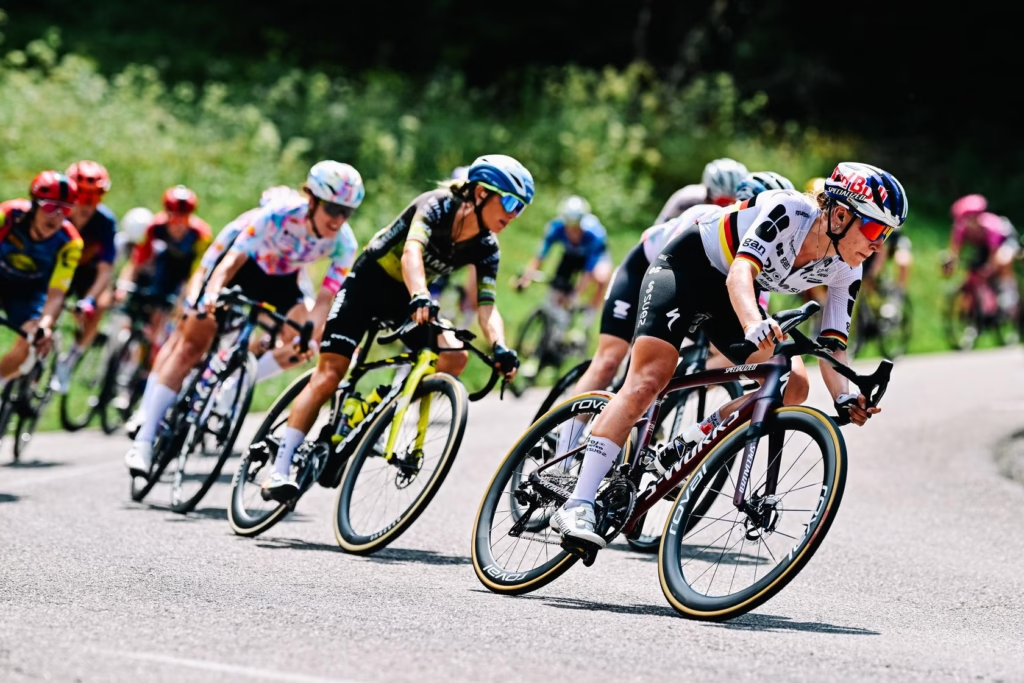 Photo Credit: A.S.O./Billy Ceusters
Brand lights the fuse
Lucinda Brand was the rider who opened the decisive attacking phase, going clear after the Côte de Lajoux. Her move forced others to respond and ensured that the race did not ease up in a way that might have helped Wiebes return.
A strong group soon formed at the front, including Femke de Vries, Célia Gery, Rosa Kloser, Kopecky, Nienke Vinke, Lippert, Loes Adegeest, Brand, Justine Ghekiere and Yara Kastelijn. Haugset then joined, giving Uno-X Mobility a rider in what had become the key move of the stage.
The presence of Kopecky and Vinke showed that SD Worx-Protime had pivoted from Wiebes to an attacking option. Lidl-Trek had both Brand and Adegeest, Movistar had Lippert, Fenix-Premier Tech had Kastelijn, AG Insurance-Soudal had Ghekiere and Team Visma | Lease a Bike had De Vries.
It was a move with quality, but it did not stay intact for long. The Col de la Savine was coming, and Haugset was about to turn the race into something very different.
Haugset goes alone on the Col de la Savine
On the Col de la Savine, Haugset moved clear as the rest of the breakaway was reeled back in by the bunch. The Norwegian national champion crested the climb first, taking the QOM points ahead of Pieterse, Solène Muller and Clémence Latimier.
At that moment, it still looked like a bold mid-race attack rather than the winning move. Haugset had a narrow advantage at the summit, and there were still more than 80 kilometres to race. Behind, the reduced peloton was close enough to bring everything back if the chase became organised.
But the chase did not settle. The bunch was reduced, Wiebes was far behind, teams had different priorities, and several riders were already thinking about the Dijon time trial on stage 4.
Haugset sensed the opportunity and kept riding. This was not a short raid to collect mountain points. It became a full solo commitment across the Jura.
Pieterse takes control of the mountains jersey
While Haugset was building the move that would define the stage, Pieterse was quietly securing the polka-dot jersey.
The Fenix-Premier Tech rider had taken maximum points on the Col de la Faucille and then added enough across the next climbs to move beyond Mahé and Nosková in the mountains classification. By the top of the Col de la Savine, Pieterse had effectively secured the jersey for the day, with only 2 points left on offer.
That was one of the important secondary stories of the stage. Mahé had worn the jersey after her aggressive ride in Lausanne, but stage 3’s harder climbing gave a different kind of rider the chance to take control. Pieterse’s sharpness on the climbs made her the strongest QOM contender on the day.
In a race where every jersey has already been contested aggressively, the mountains classification continued to produce real racing rather than passive collecting.
Kopecky launches a long chase
With 76 kilometres remaining, Kopecky attacked from the reduced peloton. The move gave SD Worx-Protime a new way to play the stage after Wiebes had been dropped. Rather than chase for a sprinter who was minutes behind, they could send the world champion up the road and force others to take responsibility.
Kopecky settled into a long solo pursuit of Haugset. At first, the gap was around 1:15 to 1:20. For a long stretch, it stayed there. Haugset was alone at the front, Kopecky was alone behind, and the peloton was losing ground.
At the intermediate sprint in Champagnole, Haugset took maximum points, with Kopecky second at 1:20. Lippert and Adegeest attacked from the bunch just before the sprint, but later sat up and returned to the peloton.
The stage was now stretched across the road: Haugset alone, Kopecky chasing, and the GC peloton behind trying to decide how seriously it needed to ride.
Heat, wind and a lack of chase cooperation
The conditions made Haugset’s ride even more impressive. It was 34°C on the road, and the later kilometres brought crosswinds and then headwinds as the riders moved towards the finish. A solo rider carrying a large advantage in those conditions is always exposed.
The peloton still failed to organise with the urgency needed to bring Haugset back. FDJ United-Suez and Team Visma | Lease a Bike contributed, but the chase was complicated by the coming time trial and by the number of teams with different goals.
With 50 kilometres remaining, Haugset had 1:20 on Kopecky and 4:45 on the peloton. At 40 kilometres, she still had around 1 minute on Kopecky and 4:30 on the bunch. The gap was shrinking, but not enough.
Haugset was not simply being ignored. She was being underestimated, and then gradually became too difficult to catch.
The yellow jersey comes into play
The bigger picture changed once Wiebes was out of the equation. Haugset had started the day 1:14 down on Wiebes, but the yellow jersey was far behind. The more important reference became Kim Le Court-Pienaar, who was only 14 seconds behind Wiebes and was still in the main peloton.
That meant Haugset needed to finish at least 1 minute ahead of Le Court-Pienaar to take yellow. For much of the final 50 kilometres, that looked possible. Then it looked likely. Then, inside the final 20 kilometres, it began to look almost certain because the GC group did not cooperate consistently enough.
Le Court-Pienaar knew the situation and tried to force the chase. Justine Ghekiere later pulled on her behalf, but the group repeatedly looked at each other. Canyon SRAM and Team Visma | Lease a Bike had numbers. FDJ had Vollering. UAE had riders nearby. But nobody wanted to do too much before the time trial.
The race lead was slipping away from the group behind.
GC riders attack on Chaux-Champagny
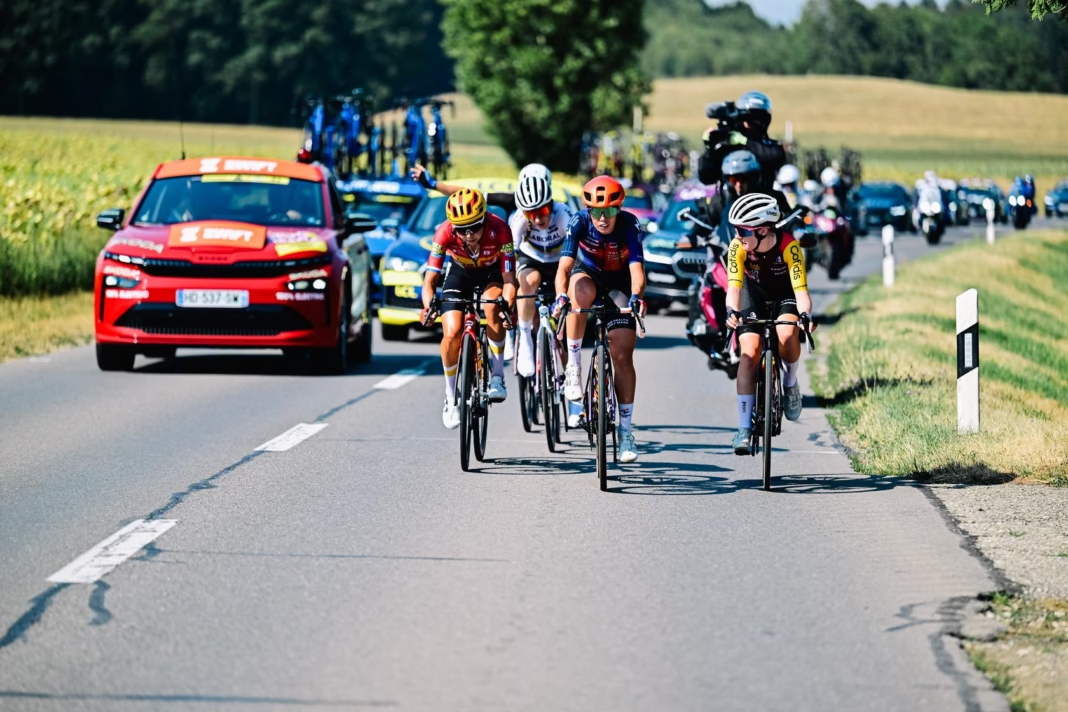
The final categorised climb, the Côte de Chaux-Champagny, briefly turned the stage into a GC fight. FDJ United-Suez hit the climb at high speed before Le Court-Pienaar accelerated, with Pauline Ferrand-Prévot, Femke de Vries, Vollering, Kasia Niewiadoma-Phinney, Antonia Niedermaier and Elisa Longo Borghini following.
Reusser and Pieterse managed to bridge back, but Célia Gery and Niamh Fisher-Black were caught in between. Behind, another group contained Vos, Blasi, Cédrine Kerbaol, Mavi García, Dominika Włodarczyk, Isabella Holmgren and others.
The favourite group had briefly split the race apart, but the cooperation was not there. Haugset still led by 2:30 over the summit of the climb, with Kopecky between her and the GC riders.
Haugset also took the bonus sprint at Chilly-sur-Salins, gaining 6 seconds, with Kopecky taking 4 and Le Court-Pienaar 2. Those seconds mattered in the yellow jersey calculation, which is why the Tour de France Femmes time bonuses have already become a visible part of the early GC fight, but the bigger story remained the road gap.
Kopecky closes, then cracks
Inside the final 20 kilometres, Kopecky looked as though she might still threaten Haugset. The Belgian reduced the gap to 30 seconds, then 20, then 15. Haugset was suffering, visibly fighting to stay aero and hold her rhythm.
But the final kilometres turned again. Kopecky had been chasing alone for more than an hour, and the effort began to tell. The gap went back out to 18 seconds with 8 kilometres remaining, then 30 seconds with 5 kilometres left.
From that point, Kopecky could not shut it down. Her ride was still enormous, and she would finish second after a huge solo chase, but Haugset had broken the pursuit.
Behind them, Vollering attacked again with Le Court-Pienaar on a sharp rise around 5 kilometres from the finish. The favourites split briefly, with Ferrand-Prévot caught behind, but the group came back together and sat up again.
That sealed it. Haugset was riding for the stage and yellow, and nobody behind had enough cohesion left to deny her.
Haugset makes history in Poligny
Haugset had time to savour the final kilometre. She smiled, kept riding hard, and crossed the line in Poligny to complete one of the great solo performances of the modern Tour de France Femmes.
Her 88.5-kilometre solo was a record for the Tour de France Femmes avec Zwift era, comfortably surpassing Van Vleuten’s 62-kilometre winning solo to Le Markstein in 2022. It was also Norway’s first stage victory in the modern race and the first Norwegian yellow jersey in the same era.
It was not a win taken from a short late attack or a small group sprint. It was a full-scale, race-changing ride that began before the final 90 kilometres and survived heat, wind, Kopecky’s pursuit and a late GC chase.
Uno-X Mobility had taken the men’s Tour de France yellow jersey earlier in the summer through Torstein Træen. Now, in the Tour de France Femmes, Haugset gave the team another yellow jersey moment, and this one came with a stage victory as well.
-
 Photo Credit: A.S.O./Billy Ceusters

Kopecky second, Vos wins the sprint behind
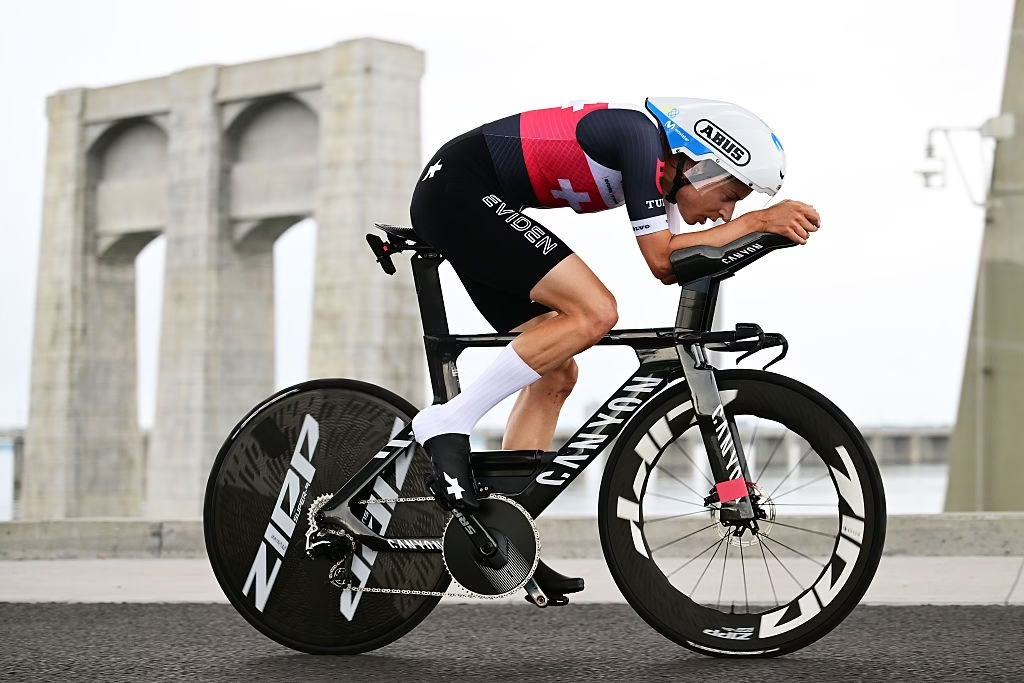
Kopecky finished second at 1:23, a brave result after committing to an enormous chase. It was not enough to catch Haugset, but it kept SD Worx-Protime in the day after Wiebes had lost contact early and showed that the team had options beyond sprint control.
Vos led home the peloton at 2:48, taking third place and the final 4 bonus seconds. That group also contained the main GC riders after the late accelerations had come back together.
The result reshaped the race far more than the stage placings alone. Wiebes lost yellow, Haugset took the lead, and the GC contenders showed both aggression and reluctance. There were attacks, but when sustained cooperation was required, the group hesitated.
That hesitation gave Haugset the space she needed.
A GC day before the time trial
Stage 3 was supposed to be dangerous, but it became more important than many teams might have expected. Wiebes losing contact on the Col de la Faucille changed the yellow jersey situation early. Haugset’s attack turned the stage into a long-distance pursuit. The Côte de Chaux-Champagny created a first real GC selection, even if the gaps did not hold.
Several contenders showed themselves. Le Court-Pienaar was alert to the yellow jersey opportunity. Vollering attacked twice. Ferrand-Prévot, De Vries, Niewiadoma-Phinney, Niedermaier and Longo Borghini were in the first split. Reusser and Pieterse had to bridge back, while Blasi, Vos, Kerbaol and others were just behind before the groups merged.
The race did not produce major GC gaps between the favourites in the end, but it did reveal shape and intent. It also showed how hard the Tour is going to be to control with seven-rider teams, heat, crosswinds and a time trial looming.
The Dijon time trial now arrives with a very different race situation from the one expected when the peloton rolled out of Geneva.
Haugset changes the race
This was the first stage of the 2026 Tour de France Femmes that fully broke away from the Wiebes pattern. The opening two days had been about whether teams could make the race hard enough to stop her. Stage 3 answered that question decisively. Yes, they could.
But the rider who gained most was not one of the obvious GC favourites. It was Haugset, who read the chaos, committed when the race was between phases, and then produced the ride of her career.
The Tour de France Femmes now has a Norwegian stage winner, a Norwegian yellow jersey wearer and a new benchmark for long-distance solo victories in the modern race.
In Poligny, the story was not a sprint, not a late punch and not a calculated GC raid. It was 88.5 kilometres alone, one rider against the race, and a yellow jersey won the hard way.
Tour de France Femmes 2026 stage 3 result
| Position | Rider | Team | Time/gap |
|---|---|---|---|
| 1 | Sigrid Haugset | Uno-X Mobility | 4:05:59 |
| 2 | Lotte Kopecky | Team SD Worx-Protime | +1:24 |
| 3 | Marianne Vos | Visma | Lease a Bike | +2:48 |
| 4 | Usoa Ostolaza | LABORAL Kutxa-Fundación Euskadi | +2:48 |
| 5 | Kim Le Court-Pienaar | AG Insurance-Soudal | +2:48 |
| 6 | Noemi Rüegg | EF Education-Oatly | +2:48 |
| 7 | Célia Gery | FDJ United-SUEZ | +2:48 |
| 8 | Cédrine Kerbaol | EF Education-Oatly | +2:48 |
| 9 | Malwina Mul | Cofidis Women Team | +2:48 |
| 10 | Mavi García Trinca Colonel | Liv AlUla Jayco | +2:48 |
Main photo credit: Getty

