

Sigrid Ytterhus Haugset became one of the central figures of Tour de France Femmes Stage 3 after committing to a long breakaway on the hilly road from Geneva to Poligny.
The Norwegian champion moved clear as the race crossed the Jura and built an advantage measured in minutes, forcing the peloton to reconsider what had initially looked like a manageable move. Lotte Kopecky eventually began closing from behind, but Haugset’s sustained ride ensured that the stage became far more complicated than a controlled contest between the general classification favourites.
For viewers encountering her name for the first time, the attack was entirely consistent with the rider Haugset has become. She is a strong time triallist, durable climber and proven long-range attacker whose biggest victories have come from committing early and maintaining a measured effort over difficult terrain.
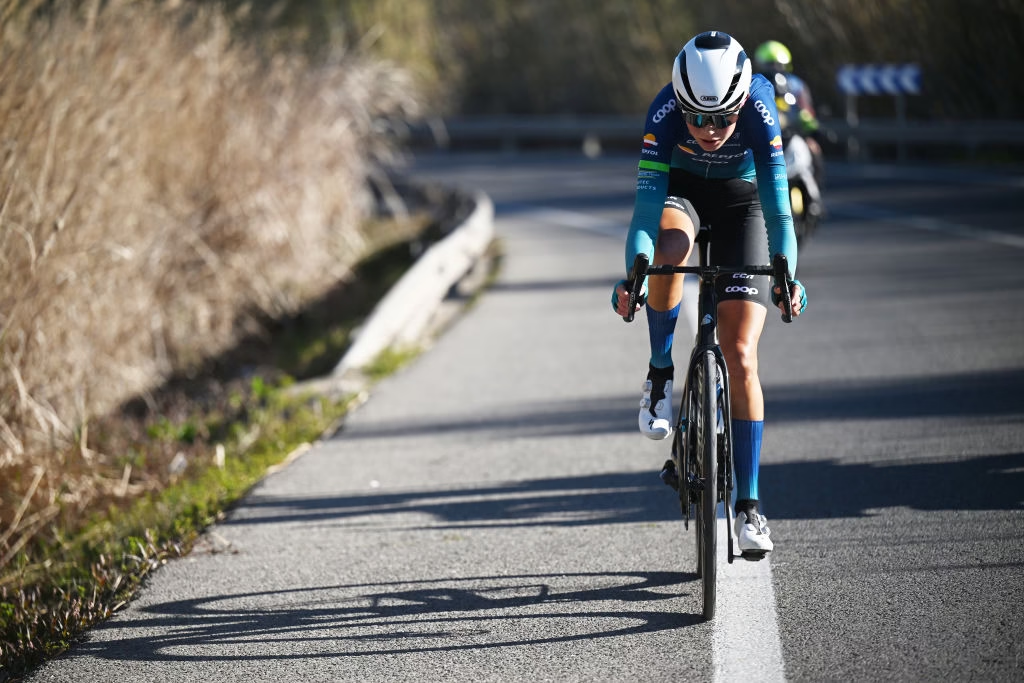
Sigrid Ytterhus Haugset rider profile
Full name: Sigrid Ytterhus Haugset
Nationality: Norwegian
Date of birth: 1 March 1999
Age: 27
Team: Uno-X Mobility
Rider type: All-rounder, time triallist and climbing domestique
Major result: 2026 Norwegian road race champion
Tour role: Climbing support with freedom to pursue stage opportunities
Haugset stepped up to Women’s WorldTour level with Uno-X Mobility for 2026 after four seasons with Team Coop-Repsol.
Her move was not based on one sudden breakthrough. It followed several years of steady development on hilly terrain, in stage races and against the clock. She had become one of Norway’s more dependable riders outside the established WorldTour structure, combining climbing endurance with the ability to sustain power on flatter and rolling roads.
The background to that move is covered in our report on Sigrid Ytterhus Haugset joining Uno-X Mobility.
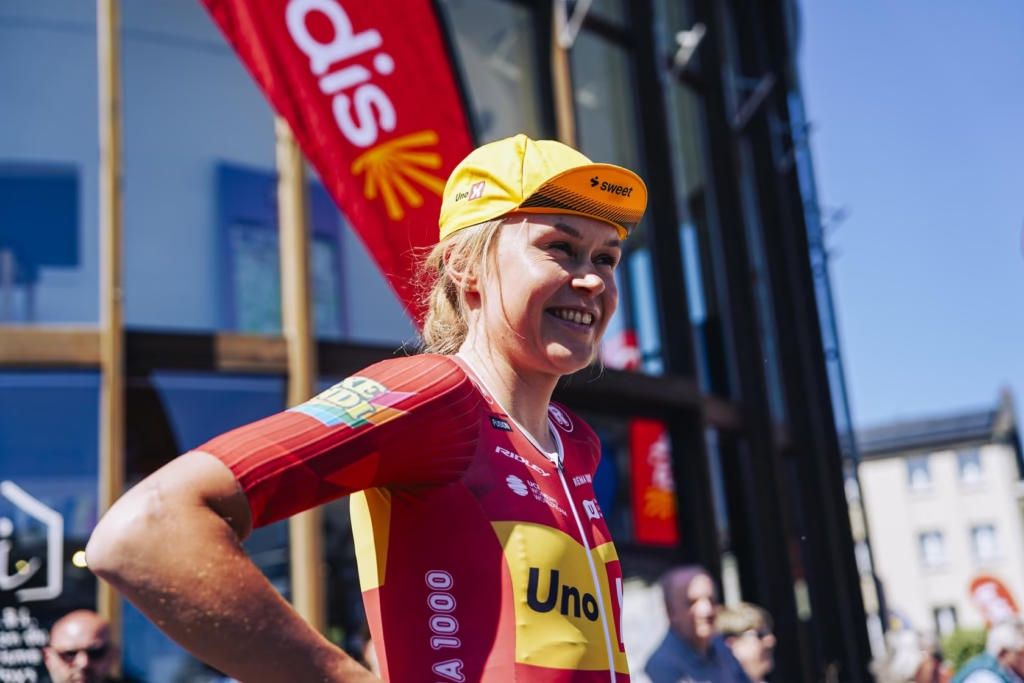 Photo Credit: A.S.O./Gaëtan Flamme
Why Uno-X brought Haugset to the Tour
Uno-X selected Haugset primarily as late climbing support for Katrine Aalerud, the team’s general classification leader.
That did not mean spending the entire Tour in a purely defensive role. The team identified her as a rider capable of pursuing her own result when the race situation allowed, particularly on stages where a strong breakaway could exploit hesitation between the leading teams.
Stage 3 provided exactly that opportunity.
The Col de la Faucille arrived almost immediately, making the opening phase too difficult for the sprinters’ teams to control comfortably. The later climbs and rolling roads towards Poligny then favoured a rider who could maintain a reliable tempo rather than relying on one explosive acceleration.
Haugset’s role within the complete Uno-X Mobility Tour de France Femmes squad was therefore built around two responsibilities. She was there to support Aalerud when the GC race became selective, but also to recognise the days when entering the breakaway offered the team a better route towards a major result.
Norwegian title showed her long-range strength
Haugset’s victory at the 2026 Norwegian road championships provides the clearest context for her Stage 3 attack.
She won the national title through a huge solo ride, moving clear early and spending most of the race alone at the front. Rather than waiting for a sprint or launching one carefully timed late attack, she committed to a prolonged effort and made the chasing group absorb the full cost of bringing her back.
They never did.
That performance earned Haugset the Norwegian champion’s jersey she is wearing at the Tour and established long-range attacking as more than an occasional tactical experiment.
Stage 3 followed the same broad pattern. Once Haugset had clear road, she settled into a controlled rhythm and relied on her ability to sustain power across changing terrain. The difference was the level of the opposition and the scale of the race unfolding behind her.
Winning alone in Norway proved she could complete a major move. Doing it at the Tour required her to resist some of the strongest riders and teams in women’s cycling.

Why the road to Poligny suited Haugset
The 156.5km route from Geneva to Poligny was officially classified as hilly, but its demands were more complex than that label suggested.
The Col de la Faucille provided 11.4km of sustained climbing inside the opening 24km. The Côte de Lajoux and Col de la Savine followed before a long rolling section towards the late Côte de Chaux-Champagny.
Haugset is not a pure mountain specialist expected to distance the Tour’s leading climbers on the steepest roads. Her advantage comes from combining enough climbing ability to survive the ascents with the power required to maintain speed between them.
A lighter climber may gain more on a steep section but struggle to defend the advantage across exposed roads. Haugset can settle into a time-trial position, regulate her effort and continue producing power long after the initial acceleration has ended.
That made her one of the riders suited to the scenario outlined in our Tour de France Femmes Stage 3 preview, where the opening mountain created the breakaway before the GC teams had decided how much they wanted to chase.
The peloton had reasons to hesitate
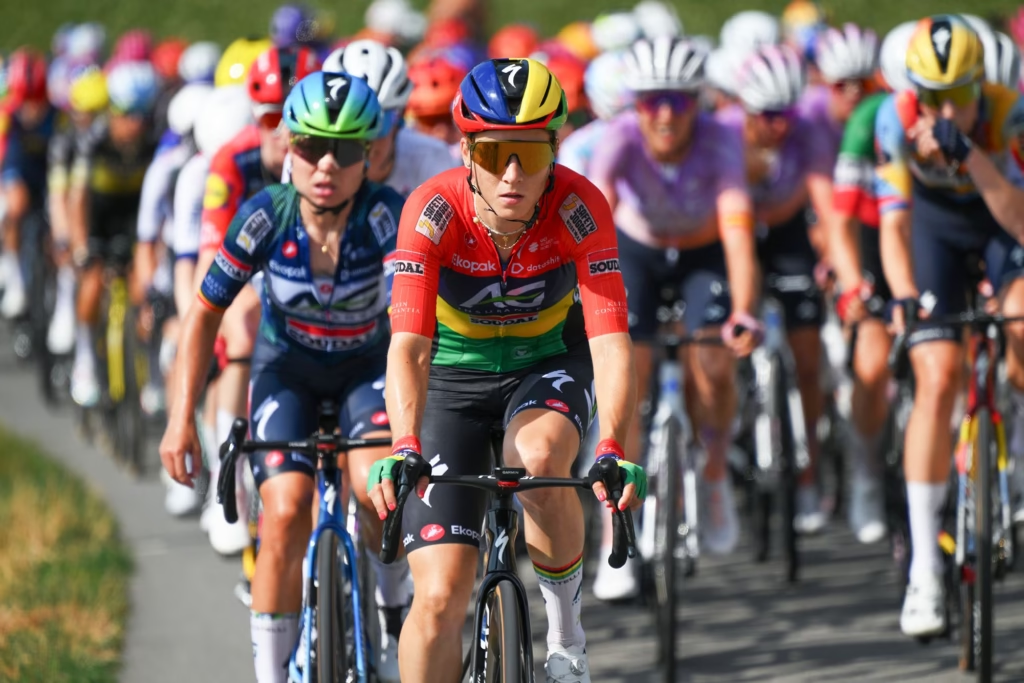
Haugset’s advantage was not built through strength alone. The tactical circumstances behind also worked in her favour.
SD Worx-Protime had to decide whether defending Lorena Wiebes’ yellow jersey justified a long pursuit across the Jura. The principal GC contenders were already thinking about Tuesday’s Dijon time trial, giving them little reason to spend their own energy chasing a rider who began the day without an immediate threat to the overall lead.
That hesitation allowed Haugset to turn a normal breakaway advantage into something much more dangerous.
The longer the gap remained substantial, the more complicated the chase became. Teams interested in the stage wanted assistance, but the squads focused on the general classification had no obligation to provide it. The riders protecting Wiebes faced a particularly difficult calculation because closing the move could require extensive work in intense heat.
Haugset exploited that conflict. She kept riding while the teams behind decided whose responsibility it was to stop her.
Lotte Kopecky transformed the chase
The situation changed once Kopecky began making serious progress from behind.
Kopecky is among the strongest rouleurs in the peloton and one of the few riders capable of reducing a large gap across rolling terrain without requiring a completely organised team chase.
Her pursuit turned the closing kilometres into a contest between two powerful riders with different race situations.
Haugset had already spent a long period alone, while Kopecky was carrying the speed of the chase but had used energy bridging away from the groups behind. Haugset could not afford to hesitate or begin saving herself for a sprint. Her best chance remained continuing the same measured effort that had created the advantage.
Whether or not a long attack survives, forcing a rider of Kopecky’s quality into a prolonged pursuit is evidence of the level Haugset produced.
A career shaped by persistence
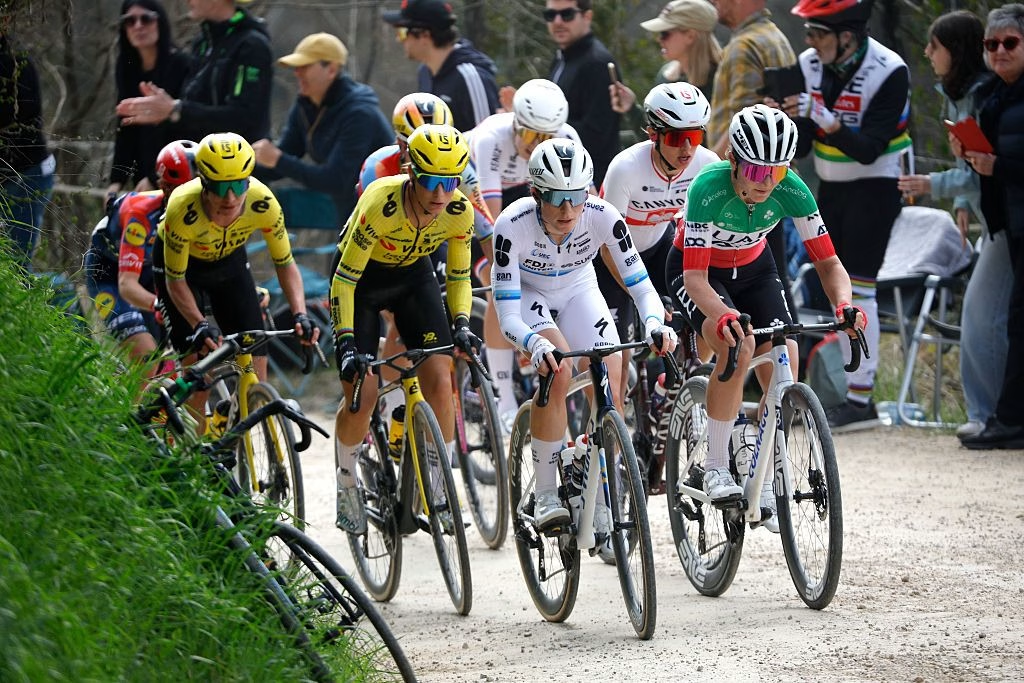
Haugset’s reputation for resilience was established well before her Tour debut.
At the 2025 Paris-Roubaix Femmes, she crashed with around 58km remaining but still completed the race. Subsequent examinations confirmed that she had ridden the final cobbled sectors and reached the finish with a fractured hip.
That incident should not be treated as something riders should be expected to reproduce. Continuing with a serious injury carries obvious medical risks. It nevertheless demonstrated the determination that Uno-X identified when adding her to its WorldTour squad.
The injury interrupted a promising spring in which Haugset had finished 11th at Dwars door Vlaanderen and shown that she could compete effectively on difficult one-day terrain.
Her recovery and return to the highest level are covered in our report on Haugset’s fractured hip after Paris-Roubaix Femmes.
What the Stage 3 breakaway changes
Haugset began the Tour as a valuable support rider rather than one of the widely discussed stage favourites.
Her performance on Stage 3 changes how the peloton will assess her freedom during the remainder of the race. Allowing the Norwegian champion several minutes on rolling or hilly terrain can no longer be treated as harmless.
Uno-X also gain another tactical option.
The team can continue protecting Aalerud for the general classification while using Haugset in breakaways that force stronger squads to chase. Her presence ahead can remove responsibility from the riders around the team leader and create a second route towards success on stages not suited to a conventional sprint.
That is the broader value of the move, regardless of the final result in Poligny.
The Tour de France Femmes breakaway specialists guide identified Stage 3 as one of the clearest opportunities for a powerful early group. Haugset showed why.
She is a Norwegian champion, a strong time triallist and a rider whose best performances have come through committing fully once the road opens ahead.
Stage 3 introduced her to a much wider Tour audience. Those who had followed her national championship victory or steady rise through the Norwegian teams will have recognised the same rider: alone at the front, maintaining her rhythm and making the peloton accept the full responsibility of catching her.

