Electric mini pumps are becoming a familiar sight in jersey pockets and saddle bags, but they are not all designed for the same job. The Silca Elettrico Ultimate prioritises repeated, fast inflation and precise pressure setting. The Topeak E-Booster Digital Mini puts similar digital convenience into a much lighter package. Both are rechargeable, both have a pressure display and both stop at a preset target. The real choice is how much battery capacity you need to carry.
At UK retailers checked for this comparison, the Silca was £129.99 at Tredz and the Topeak £89 at Sigma Sports, a £40.99 difference. Both product listings showed stock. These are live retail snapshots rather than permanent prices, and the gap may widen or narrow during sales. The two models here are specifically the Silca Ultimate and Topeak Digital Mini, not Silca’s smaller Micro or Topeak’s other electric inflators.
The comparison uses official specifications, UK product listings and independent published tests. ProCyclingUK has not tested the pumps against one another, and results from different reviewers are not presented as a controlled head-to-head test.
Silca Elettrico Ultimate vs Topeak E-Booster Digital Mini specifications
| Specification | Silca Elettrico Ultimate | Topeak E-Booster Digital Mini |
|---|---|---|
| UK price checked | £129.99, Tredz | £89.00, Sigma Sports |
| Claimed weight | 222g | 120g |
| Maximum pressure | 100psi | 120psi |
| Digital pressure setting | 3-100psi, automatic stop | Preset pressure, automatic stop |
| Gauge accuracy claim | Within 1% using hose | ±2psi |
| Battery | 11.1V, 600mAh | 7.4V, 500mAh |
| Claimed recharge | 25-60 minutes | About 45 minutes |
| Dimensions | 81 × 60 × 32mm | 72 × 54 × 34mm |
| Connection | USB-C, hose and valve accessories | USB-C, hose and valve accessories |
Silca’s higher weight is not an accident. The Ultimate is designed to keep inflating tyres after a smaller electric pump might need recharging. Topeak instead concentrates on fitting a pressure gauge, auto-stop and hose into a compact unit that is easier to carry on ordinary rides. Both can be useful, but it is worth deciding whether you are buying a puncture emergency tool or something that will replace a track pump for parts of your routine.
Size and weight matter more than the headline pressure
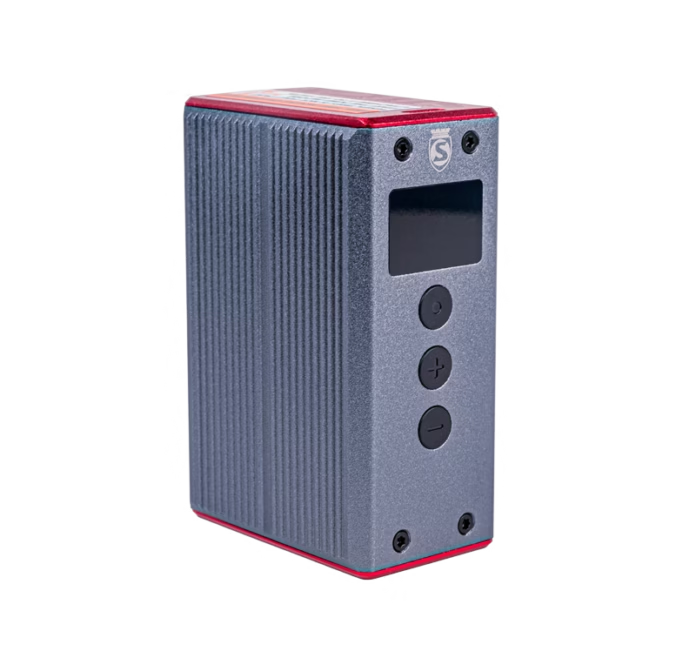
Silca claims 222g for the Ultimate and Topeak 120g for the Digital Mini, a substantial difference when both are intended to be carried on a bike. Their shapes matter too. The Silca is a wider, chunkier block with angular sides, while the Topeak is more compact. If you carry a spare tube, tyre levers, multitool and a pump in one small saddle bag, the extra volume can be more troublesome than the weight alone.
Independent measurements also show why manufacturers’ weights should be treated carefully. Cycling Weekly recorded about 239g for the Silca in its review, while road.cc listed 146g for the Topeak. Accessories, hoses, cases and measuring methods can change those figures. The consistent conclusion is that the Topeak is markedly easier to carry, not that every rider will save precisely 102g once both complete kits are packed.
 Photo Credit: Topeak
For an emergency inflator carried on a short road ride, Topeak’s smaller package makes more sense. The Silca can still fit in many tool bottles and saddle bags, but it is less appealing as something to forget about in a jersey pocket. For a holiday, race weekend or group ride where it may inflate several tyres, the balance changes. Extra battery capacity becomes an advantage instead of unnecessary weight.
Inflation speed and battery endurance
Silca says the Ultimate can provide inflation capacity equivalent to nine CO2 cartridges. That is a manufacturer comparison, not a guarantee of nine complete tyres at any pressure. Tyre volume, starting pressure and temperature all affect the number of useful fills. In independent testing, Cycling Weekly inflated a 700 × 30c road tyre to its chosen target in 22 seconds and recorded 13 inflations from one charge. Its 700 × 45c gravel tyre reached 35psi nine times. Those results make a strong case for the Ultimate’s capacity.
A separate Spanish test by Ciclismo a Fondo found six complete 28mm road tyre inflations to 6 bar and ten gravel tyre inflations to 2.5 bar from the Ultimate. That is not a contradiction: the test pressures, tyre volumes and methods differed. The results illustrate why an absolute ‘tyres per charge’ number is less helpful than knowing the tyre size and target pressure. Silca’s larger battery is consistently an advantage, but the amount of that advantage depends on the job.
Road.cc’s independent review of the Topeak found it straightforward to use and appreciated the hose and automatic stop, but criticised battery endurance relative to some cheaper rivals. It is a warning for anyone expecting the tiny Topeak to become a workshop pump. A quick puncture repair or pressure adjustment is one thing; repeatedly inflating several tyres after a group ride is another.
The Topeak is therefore better viewed as a lightweight roadside solution with some extra convenience. The Silca is closer to a travel pump that can handle routine pressure setting and several repairs. Neither should be assumed capable of seating every stubborn tubeless bead. A high-volume blast from a dedicated tubeless inflator may still be needed, depending on tyre and rim combination.
Pressure range, gauge accuracy and automatic stop
Both pumps let you choose a pressure and stop automatically. That is their shared advantage over basic electric units without a gauge: you can target a sensible pressure rather than guessing when to stop. The Silca operates from 3 to 100psi and claims accuracy within 1% when used with its hose. The Topeak reaches a claimed 120psi and specifies gauge accuracy of ±2psi. Those are manufacturer claims, not a laboratory comparison using one calibrated reference gauge.
For most modern road and gravel tyres, 100psi is already more than enough. Riders using unusually narrow tyres at very high pressure may need the Topeak’s 120psi ceiling, but the relevant tyre and rim maximums always take priority over a pump’s capability. The Silca’s precision setting is appealing for riders who adjust pressure between road and gravel surfaces, while the Topeak offers a similar preset-and-stop routine for less money.
There is also a practical distinction between a gauge showing a number and that number being perfectly accurate. Small hoses, valve connections and pressure changes as the pump stops can all influence the reading. If exact pressure is critical, compare with a reliable standalone gauge rather than assuming either device has been independently certified to the same standard.
Valves, hoses and heat
Both products support common bicycle valve types with the appropriate supplied connections. The hose is not an optional luxury for every setup. Electric inflators generate heat, particularly when filling from flat or working repeatedly. Topeak specifically warns users with resin-valved TPU inner tubes to use its extender hose to reduce the risk of heat damage. The same general caution applies to the Silca, and riders should follow the tube manufacturer’s instructions.
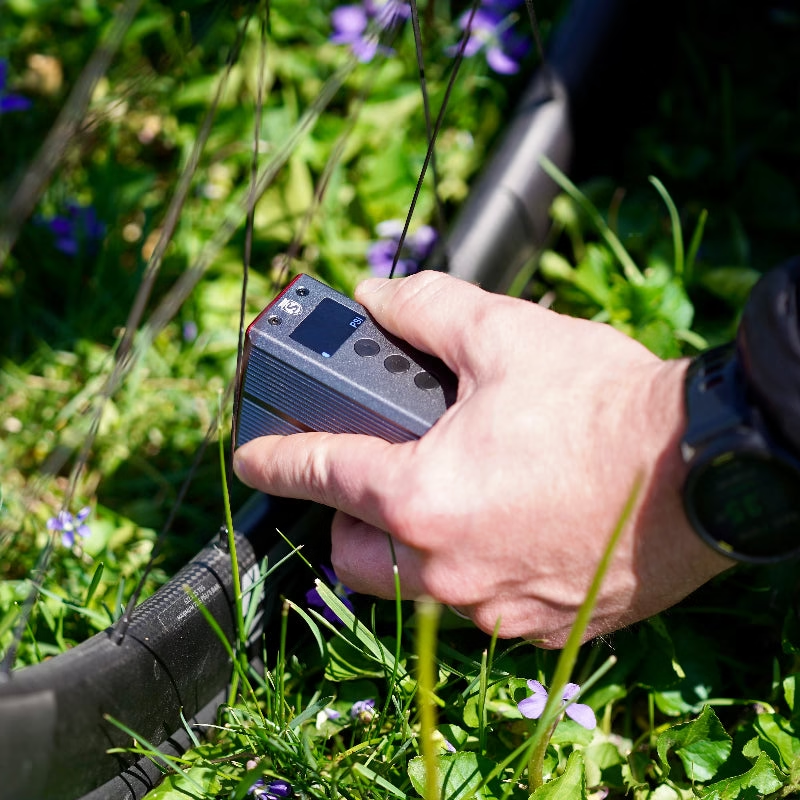 Photo Credit: Silca
Road.cc found that the Topeak was much easier to connect to some Presta valves with its hose and that certain valve arrangements were awkward without it. Cycling Weekly noted that the Silca became warm during repeated inflations, with the hose and valve area getting particularly hot. Those observations are useful because a pump that works quickly on a bench can be more awkward at the roadside when the valve is short, the wheel is muddy or your hands are cold.
Neither pump is a reason to ignore valve compatibility. Check the type of valve on your own wheels, the clearance around the valve and any special requirements for TPU tubes before buying. For a gravel bike with awkward deep rims or a disc wheel, the supplied hose may be the difference between a practical repair and a frustrating one.
Charging and reliability away from home
Both recharge by USB-C, with Silca claiming 25 to 60 minutes and Topeak around 45 minutes. Those figures depend on the charger and battery state. Silca’s capacity makes it more plausible to inflate tyres repeatedly during a weekend away without charging every evening. Topeak’s smaller battery encourages a different habit: recharge after use, and check its charge before leaving on a long ride.
Neither unit is immune to the central weakness of electric inflators: they depend on a charged battery and working electronics. A mechanical hand pump is slower but does not care how long it has sat in a tool bag. For remote rides, long-distance touring or events where a flat could leave you stranded, carrying a mechanical backup is sensible even if an electric pump is your preferred first option.
Noise is another shared compromise. These small compressors are loud, especially in quiet surroundings, and can vibrate strongly. The Silca’s larger motor and capacity do not make it a silent workshop tool. If you mainly want to check tyre pressure at home before every ride, a good track pump and gauge remain a simpler, often cheaper alternative.
What independent tests actually show
Cycling Weekly’s Silca review found exceptional speed and repeat inflation capacity, but marked it down for weight, bulk, noise and the 100psi ceiling. Ciclismo a Fondo’s separate tyre tests also supported the idea that the Ultimate is better suited to multiple fills than a minimal emergency device. Boundless reported positive longer-term use, alongside an occasional pressure-sensing quirk. These are different testing conditions, not identical measured results.
Road.cc’s Topeak test praised ease of use, the hose and automatic shut-off, but found battery life comparatively limited and noted the price relative to smaller rivals. The review’s measured weight also exceeded Topeak’s headline figure. Those observations make the trade-off unusually clear: the Topeak is not simply a cheaper Silca, and the Silca is not simply an overpriced Topeak. They are optimised for different priorities.
Which electric pump should you buy?
Choose the Topeak E-Booster Digital Mini if your priority is a light, compact pump for punctures and occasional pressure corrections. Its claimed 120psi limit, programmable display and hose cover the essentials, and at the checked £89 price it costs about £41 less. You will need to be more disciplined about charging, and it is not the best choice for repeated inflation of several tyres.
Choose the Silca Elettrico Ultimate if you want to inflate several tyres during a trip, help other riders on a group ride or use one rechargeable pump for regular pressure adjustments. Independent tests support its speed and high usable capacity. The cost is substantial extra weight and bulk, a 100psi ceiling and a higher purchase price. Those drawbacks are real, but so is the additional work it can perform.
Check the current Silca Elettrico Ultimate listing and Topeak E-Booster Digital Mini listing before ordering. Our separate Silca Ultimate review and Topeak Digital Mini review cover each product in more detail, while the four-model electric pump guide adds other alternatives.