
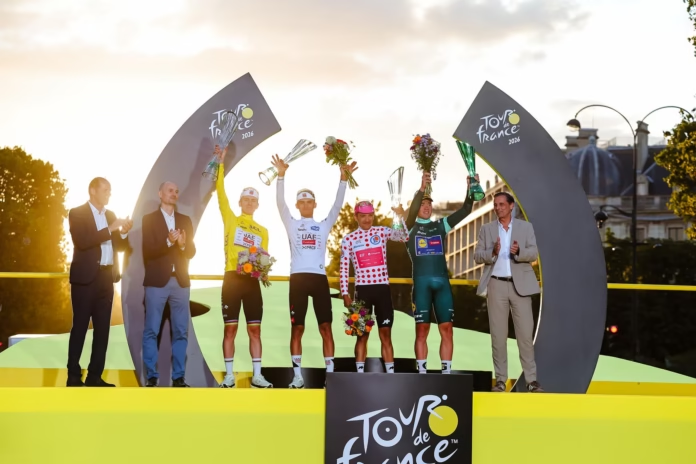
Tadej Pogačar won the 2026 Tour de France, reaching Paris with a final advantage of 6 minutes 26 seconds over Remco Evenepoel and becoming only the fifth rider in history to win the race five times.
Isaac del Toro completed the final podium at 9:42 and won the white jersey on his Tour debut, while Mads Pedersen took the green points jersey and Richard Carapaz completed a remarkable final week by winning the polka-dot mountains jersey. Lidl-Trek won the team classification after a race in which Mattias Skjelmose and Juan Ayuso both finished inside the top seven and Pedersen controlled green.
The final stage on Sunday 26 July was won by Mathieu van der Poel, who held off the sprinting peloton on the Champs-Élysées after attacking over Montmartre with Pogačar.
That brought the 2026 Tour to a fitting close. It began with Team Visma | Lease a Bike winning the unusual Barcelona team time trial and ended 21 stages later with Pogačar joining Jacques Anquetil, Eddy Merckx, Bernard Hinault and Miguel Induráin as a five-time Tour winner.
Tour de France 2026 classification winners
| Classification | Winner | Team |
|---|---|---|
| Yellow jersey, general classification | Tadej Pogačar | UAE Team Emirates-XRG |
| Green jersey, points classification | Mads Pedersen | Lidl-Trek |
| Polka-dot jersey, mountains classification | Richard Carapaz | EF Education-EasyPost |
| White jersey, best young rider | Isaac del Toro | UAE Team Emirates-XRG |
| Team classification | Lidl-Trek | Germany |
| Super Combativity award | Richard Carapaz | EF Education-EasyPost |
The four individual jersey competitions had effectively been settled before Paris. Pogačar held 6:26 over Evenepoel, Pedersen had an 82-point lead over Jasper Philipsen, Carapaz was 56 points clear of Pogačar in the mountains competition and del Toro led Paul Seixas by 2:14 in white after Stage 20.
Our GC and jerseys after Tour de France 2026 Stage 20 shows how little remained unresolved heading into Paris.
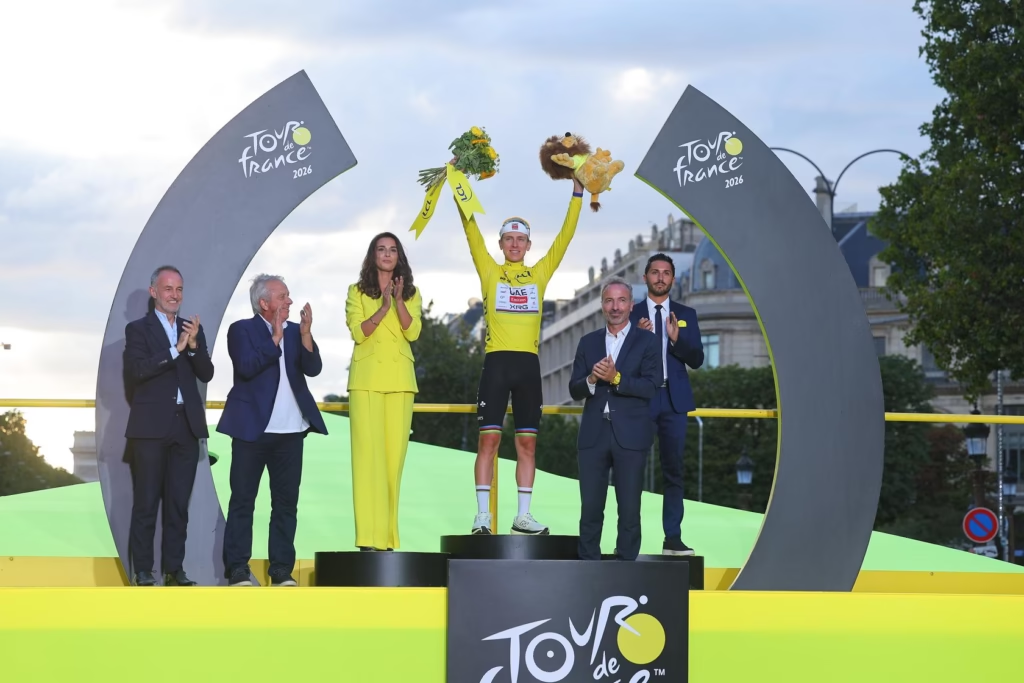
Tour de France 2026 final general classification
Pogačar’s final winning time was 73 hours, 56 minutes and 26 seconds.
The podium had effectively been settled on the final Alpine stage, with the GC times on Stage 21 taken before the first competitive passage of Montmartre. Pogačar therefore reached the finish with the same 6:26 lead over Evenepoel that he had held after Stage 20.
| Position | Rider | Team | Time/gap |
|---|---|---|---|
| 1 | Tadej Pogačar | UAE Team Emirates-XRG | 73:56:26 |
| 2 | Remco Evenepoel | Red Bull-Bora-hansgrohe | +6:26 |
| 3 | Isaac del Toro | UAE Team Emirates-XRG | +9:42 |
| 4 | Paul Seixas | Decathlon CMA CGM | +11:56 |
| 5 | Lenny Martinez | Bahrain Victorious | +13:02 |
| 6 | Mattias Skjelmose | Lidl-Trek | +14:59 |
| 7 | Juan Ayuso | Lidl-Trek | +17:48 |
| 8 | Richard Carapaz | EF Education-EasyPost | +20:00 |
| 9 | Tom Pidcock | Pinarello-Q36.5 Pro Cycling Team | +29:28 |
| 10 | Jordan Jegat | TotalEnergies | +33:21 |
The final podium is significant beyond Pogačar’s fifth victory. Evenepoel finished second after building his strongest final week of the race, while del Toro became a Tour podium finisher and white jersey winner at his first attempt.
Seixas finished fourth, only 2:14 behind del Toro in the young rider classification, while Lenny Martinez gave France a second rider inside the top five.
Tadej Pogačar wins his fifth Tour de France
Pogačar’s 2026 victory places him into one of the smallest clubs in cycling.
Only Anquetil, Merckx, Hinault and Induráin had previously won the Tour five times. Pogačar now joins them after victories in 2020, 2021, 2024, 2025 and 2026.
That inevitably moves the debate beyond whether he is the defining Tour rider of his generation. The more interesting question is where five victories place him historically alongside the riders who previously occupied the top of the all-time winners list.
Our feature on whether Tadej Pogačar is becoming the greatest Tour de France rider of all time looks at the case against Merckx, Hinault, Induráin and Anquetil.
The 2026 race strengthened that argument further. Pogačar won five stages across the Pyrenees, Massif Central, Vosges and Alps, then reached Paris with enough control that Stage 20 became as much about helping del Toro protect the podium as defending his own yellow jersey.
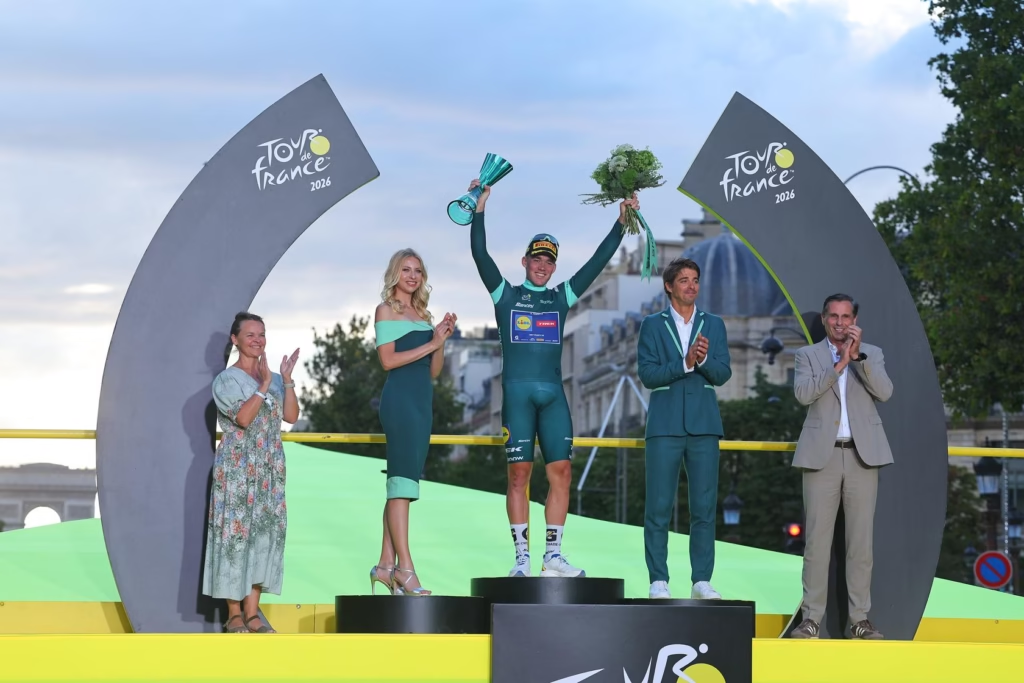
Mads Pedersen wins the green jersey
Mads Pedersen won the 2026 Tour de France points classification after one of the most varied green jersey campaigns of recent years.
He did not build the victory simply by beating the pure sprinters on flat stages. Pedersen scored through intermediate sprints, breakaways, reduced finishes and difficult days where rivals such as Philipsen could not collect as consistently.
The green jersey became a serious objective after his Stage 4 victory in Foix, when the race opened up through a breakaway and Pedersen converted the day into both a stage win and a large points haul.
Our early analysis asked whether Mads Pedersen could win green at the 2026 Tour. By the final week, the question had shifted to when he would make the competition mathematically safe.
Pedersen reached Stage 20 on 527 points, 82 ahead of Philipsen. That left too few points available in Paris for the jersey to change hands provided he finished.
The important part of his victory was his durability. Pedersen kept contesting intermediate sprints deep into the mountains, something that turned a close fight with faster sprinters into a comfortable final margin.
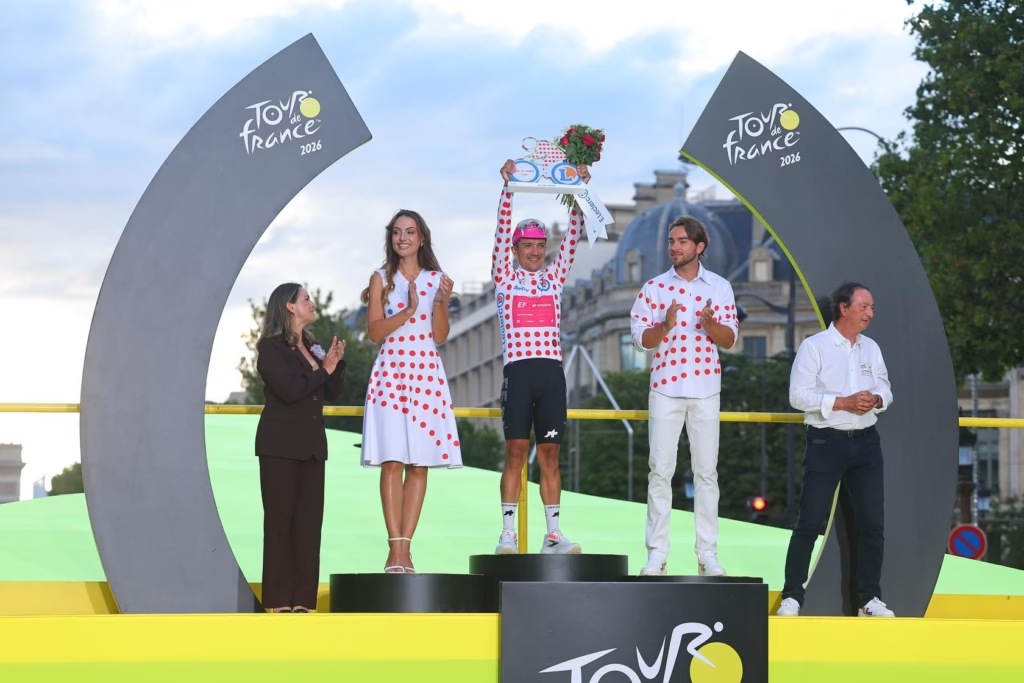
Richard Carapaz wins the polka-dot jersey
Richard Carapaz finished the Tour as King of the Mountains for the second time, adding the 2026 jersey to his 2024 victory.
The classification changed dramatically during the final Alpine block. Carapaz won Stage 18 at Orcières-Merlette, attacked again the following day and then turned Stage 20 into an all-day raid for mountain points.
He began that final mountain stage with only a narrow advantage but took maximum points across the Croix de Fer, Télégraphe and Galibier, eventually finishing with 156 points and an unassailable lead.
Our report on how Richard Carapaz mathematically secured the 2026 polka-dot jersey covers the points arithmetic from Stage 20.
That final week became much bigger than a classification win. Carapaz also won two stages, finished eighth overall and produced one of the most aggressive stretches of racing in the entire Tour.
The full picture is covered in Richard Carapaz: two stage wins and the polka-dot jersey in a Tour de France to remember.
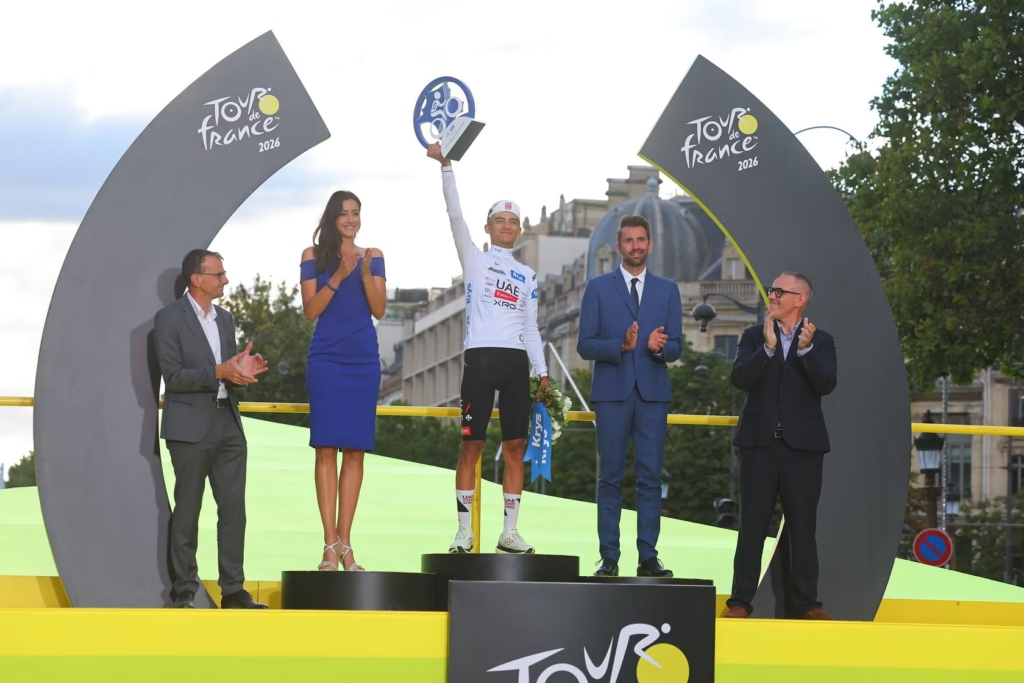
Isaac del Toro wins the white jersey
Isaac del Toro was one of the defining riders of the 2026 Tour.
The UAE Team Emirates-XRG rider finished third overall at 9:42, making him the clear winner of the young rider classification and putting him on the final Tour podium at his first attempt.
The white jersey fight remained close deep into the race. Del Toro entered Stage 20 only 24 seconds ahead of Seixas, meaning the final Alpine day containing the Croix de Fer, Télégraphe, Galibier and Sarenne still had the potential to overturn the competition.
Our preview of that final confrontation, Del Toro vs Seixas: 24 seconds heading into the final mountain stage, reflected how little separated them before the last decisive climbing day.
Del Toro then produced one of his strongest rides of the Tour. He stayed with Pogačar through the decisive section while Seixas lost 1:50 relative to him, stretching the final white jersey gap to 2:14.
The result meant UAE arrived in Paris with first and third overall as well as yellow and white.
Lidl-Trek wins the team classification
Lidl-Trek won the Tour de France 2026 team classification after building one of the deepest performances of the race.
Pedersen won green and Stage 4, while Skjelmose finished sixth overall and Ayuso seventh. That combination gave the team three riders capable of consistently contributing to the cumulative classification across the three weeks.
The team competition rewards depth rather than one dominant rider. Each team’s three best times count towards the daily total, so having multiple riders surviving near the front becomes increasingly important as the race reaches the mountains.
Lidl-Trek had already moved into a commanding position during the opening week. After Stage 6, they led the classification by more than 27 minutes, and their strength across Pedersen, Skjelmose, Ayuso and the rest of the squad allowed them to keep control all the way to Paris.
Richard Carapaz takes Super Combativity
Carapaz also ended the race as the Super Combatif, a fitting addition to his two stage wins and mountains jersey.
His final week made the case almost on its own.
He won Stage 18 at Orcières-Merlette after repeatedly attacking the breakaway on the final climb. He then spent the next two stages racing aggressively for mountain points before winning again on Stage 20 at Alpe d’Huez.
The result continued a recent trend of EF Education-EasyPost riders turning aggression into major Tour rewards rather than simply defending secondary GC positions.
For Carapaz personally, it completed a Tour containing two stage victories, polka dots, eighth overall and another overall combativity award.
Tour de France 2026 stage winners
The 2026 Tour contained 21 stages from Barcelona to Paris, beginning with an unusual team time trial and ending with Van der Poel surviving the sprinting peloton on the Champs-Élysées.
Pogačar was the most successful individual rider with five stage victories. Tim Merlier won three sprint stages, while Evenepoel, Carapaz and Van der Poel each won twice.
| Stage | Route | Winner |
|---|---|---|
| 1 | Barcelona to Barcelona, team time trial | Team Visma | Lease a Bike |
| 2 | Tarragona to Barcelona | Isaac del Toro |
| 3 | Granollers to Les Angles | Tadej Pogačar |
| 4 | Carcassonne to Foix | Mads Pedersen |
| 5 | Lannemezan to Pau | Olav Kooij |
| 6 | Pau to Gavarnie-Gèdre | Tadej Pogačar |
| 7 | Hagetmau to Bordeaux | Tim Merlier |
| 8 | Périgueux to Bergerac | Tim Merlier |
| 9 | Malemort to Ussel | Mathieu van der Poel |
| 10 | Aurillac to Le Lioran | Tadej Pogačar |
| 11 | Vichy to Nevers | Søren Wærenskjold |
| 12 | Circuit Nevers Magny-Cours to Chalon-sur-Saône | Tim Merlier |
| 13 | Dole to Belfort | Mauro Schmid |
| 14 | Mulhouse to Le Markstein Fellering | Tadej Pogačar |
| 15 | Champagnole to Plateau de Solaison | Remco Evenepoel |
| 16 | Évian-les-Bains to Thonon-les-Bains ITT | Remco Evenepoel |
| 17 | Chambéry to Voiron | Jasper Philipsen |
| 18 | Voiron to Orcières-Merlette | Richard Carapaz |
| 19 | Gap to Alpe d’Huez | Tadej Pogačar |
| 20 | Le Bourg-d’Oisans to Alpe d’Huez | Richard Carapaz |
| 21 | Paris, Champs-Élysées | Mathieu van der Poel |
Stage 1: Visma starts the Tour in yellow
The opening day requires some explanation because the Barcelona team time trial used an unusual format.
Team Visma | Lease a Bike won Stage 1, with Jonas Vingegaard the team’s first rider across the finish.
Unlike a traditional team time trial where one team time is applied uniformly, riders received individual times for the general classification. That allowed Vingegaard to take the first yellow jersey while Visma was officially recorded as the stage-winning team.
The format immediately created GC differences before the Tour had reached the first road stage.
Del Toro announces himself immediately on Stage 2
Isaac del Toro did not wait long to make his Tour debut memorable.
The Mexican won Stage 2 from Tarragona to Barcelona, immediately establishing himself as more than a rider expected to learn from Pogačar and the wider UAE structure.
That victory proved to be the beginning of a three-week GC campaign rather than an isolated stage result. Del Toro eventually reached Paris third overall and in the white jersey.
Pogačar was the dominant stage winner
Pogačar’s five victories came across several different parts of the race.
He won Stage 3 at Les Angles before producing the first huge GC blow on Stage 6 at Gavarnie-Gèdre, where the Tourmalet had already shredded the race before the final climb.
He added Le Lioran on Stage 10 and Le Markstein on Stage 14 before taking one of the defining victories of his Tour on Alpe d’Huez during Stage 19.
That final mountain victory strengthened both his fifth yellow jersey and the historical argument around his place among the Tour’s greatest riders.
By Stage 20, his own GC was effectively secure enough that UAE could devote significant attention to helping del Toro defend the final podium.
Tim Merlier was the most successful pure sprinter
Tim Merlier finished the Tour with three stage victories, more than any other pure sprinter.
He won in Bordeaux on Stage 7, followed it with another victory in Bergerac and completed the hat-trick on Stage 12 in Chalon-sur-Saône.
That did not translate into a green jersey challenge strong enough to beat Pedersen, largely because the points competition rewarded far more than finishing speed.
Pedersen’s ability to keep scoring on difficult terrain proved decisive.
Merlier’s Tour was simpler.
When the race produced a conventional sprint, he was repeatedly the fastest rider.
Remco Evenepoel’s final week secured second overall
Evenepoel’s Tour changed significantly during the final week.
He won Stage 15 at Plateau de Solaison and then dominated the Stage 16 individual time trial from Évian-les-Bains to Thonon-les-Bains.
Those back-to-back victories strengthened his position in the general classification and helped him emerge as the clear rider behind Pogačar once the race moved towards the Alps.
His final second place at 6:26 was accompanied by two stage victories, giving him a much stronger ending to the Tour than the opening fortnight had suggested might be possible.
Carapaz transformed his Tour in three Alpine days
Few riders changed the story of their Tour as dramatically as Carapaz.
Before Stage 18, his race had been aggressive without producing the defining result.
Then he attacked from the breakaway to win at Orcières-Merlette.
He followed that by fighting for the mountains classification on Stage 19 and then spent Stage 20 attacking over the Croix de Fer, Télégraphe and Galibier before eventually winning again at Alpe d’Huez.
Two victories, the polka-dot jersey and Super Combativity turned a solid Tour into one of the best three-week performances of his career.
-
 Photo Credit: A.S.O./Gaëtan Flamme
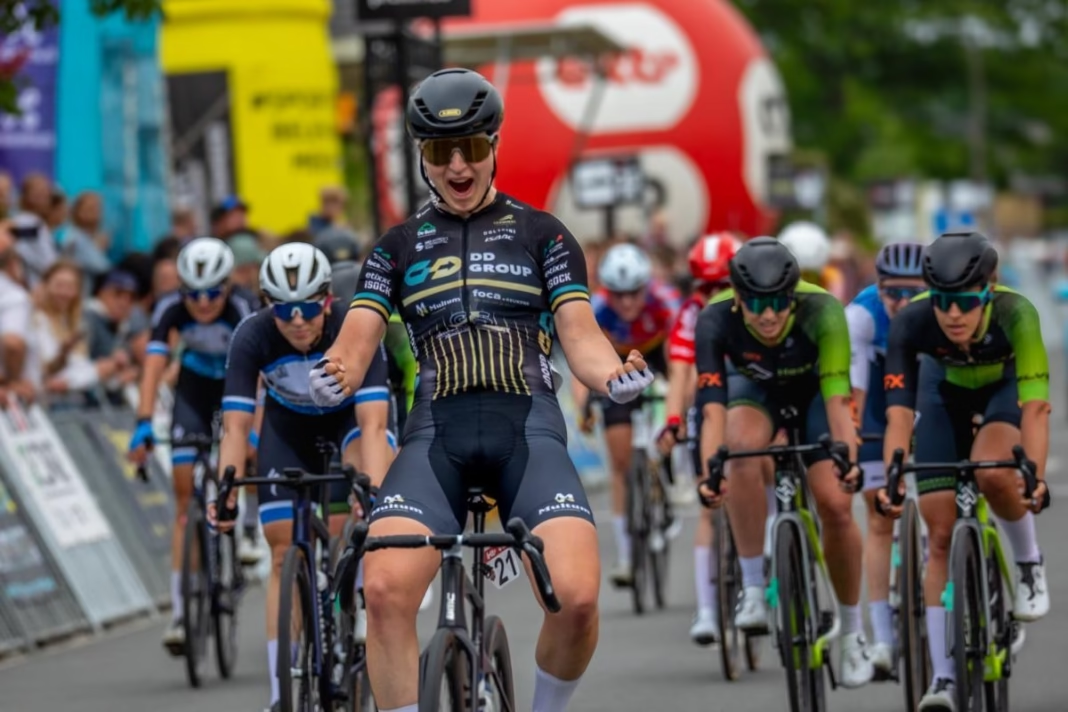
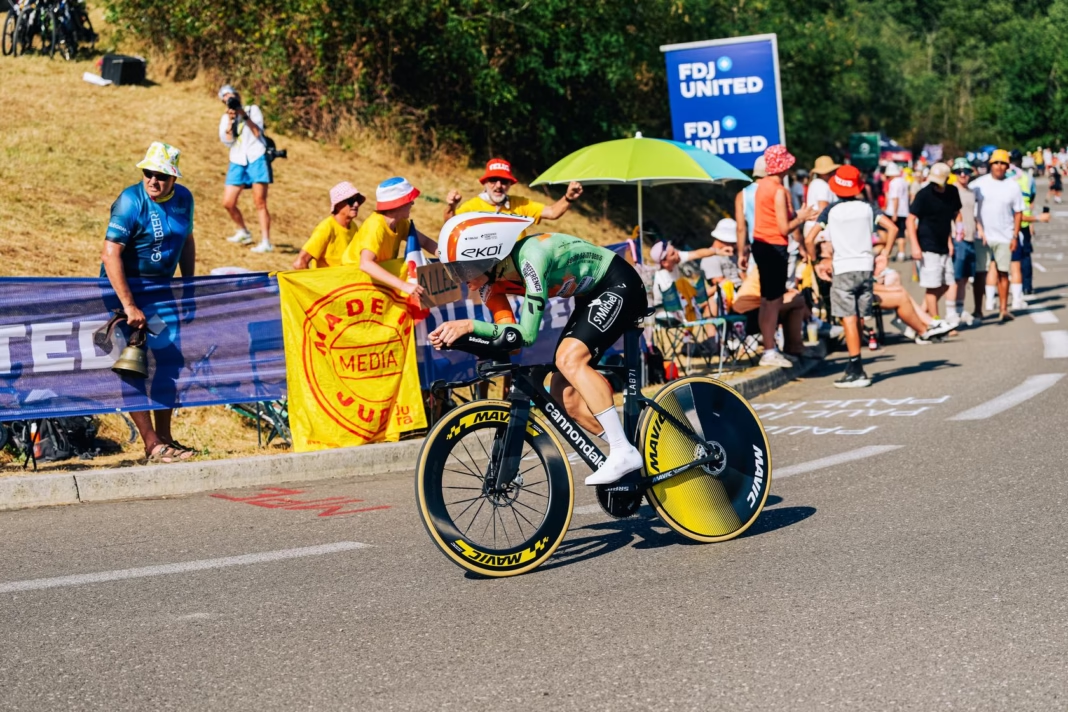

Mathieu van der Poel completes the Tour on the Champs-Élysées
Van der Poel won twice during the race, with his second victory providing the final image of the 2026 Tour.
Stage 21 had been shortened because emergency resources were needed in areas affected by wildfires, but the three Montmartre passages were retained. That turned the Paris finale into something much closer to a short Classic than the traditional ceremonial sprint stage.
Van der Poel attacked the final ascent with Pogačar, continued alone after the yellow jersey was caught and held off Philipsen and Pedersen by a tiny margin on the Champs-Élysées.
It gave him a fourth career Tour stage victory and completed another family connection, 44 years after Adrie van der Poel finished second on the same road.
The full context of the revised final stage is in our Tour de France 2026 Stage 21 preview.
Final Tour de France 2026 winners at a glance
Tour winner: Tadej Pogačar
Second overall: Remco Evenepoel, +6:26
Third overall: Isaac del Toro, +9:42
Green jersey: Mads Pedersen
Polka-dot jersey: Richard Carapaz
White jersey: Isaac del Toro
Team classification: Lidl-Trek
Super Combativity: Richard Carapaz
Most stage wins: Tadej Pogačar, five
Final stage winner: Mathieu van der Poel
Opening stage winner: Team Visma | Lease a Bike
Final winning time: 73:56:26
The 2026 Tour ultimately belongs to Pogačar, but the final classifications contain several stories that will remain useful long after the race itself.
Pedersen added a Tour green jersey through consistency rather than pure sprint dominance. Carapaz produced one of the strongest final weeks of his career. Del Toro finished on the Tour podium and won white at his first attempt. Evenepoel finished second after finding his best form late.
And Pogačar reached Paris with a fifth yellow jersey at 27, level with the four riders who had previously defined the ceiling of Tour de France success.

