
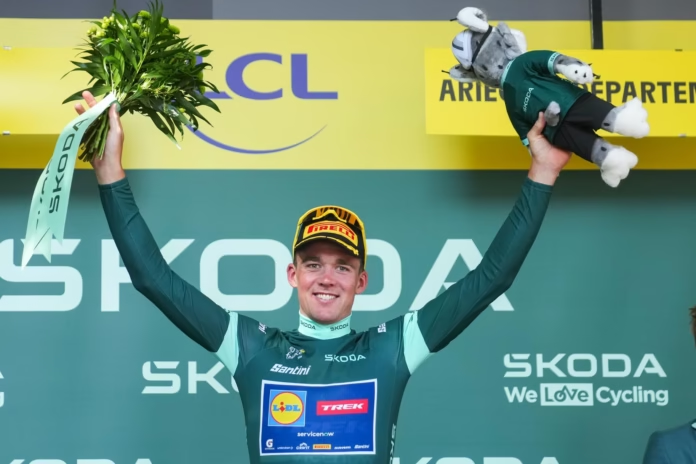
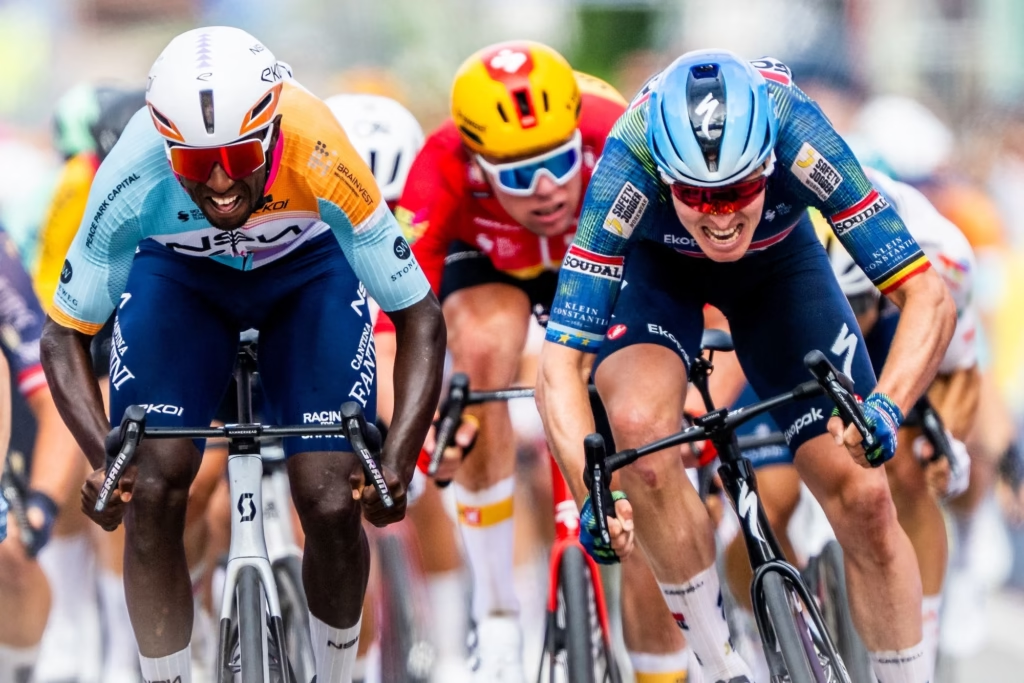
Mads Pedersen’s Tour de France green jersey bid moved from possible to very real on stage 4.
The Dane did not just win in Foix. He won from the kind of day that normally decides whether a versatile sprinter can turn the points classification into something more than a pure speed contest. Pedersen survived the climbs, rode the right breakaway, used Lidl-Trek’s numbers perfectly and finished the job ahead of teammate Quinn Simmons.
The stage also moved Torstein Træen into yellow, but for the green jersey race, Pedersen’s win may prove just as important. For the full stage story, see our Tour de France 2026 stage 4 report.
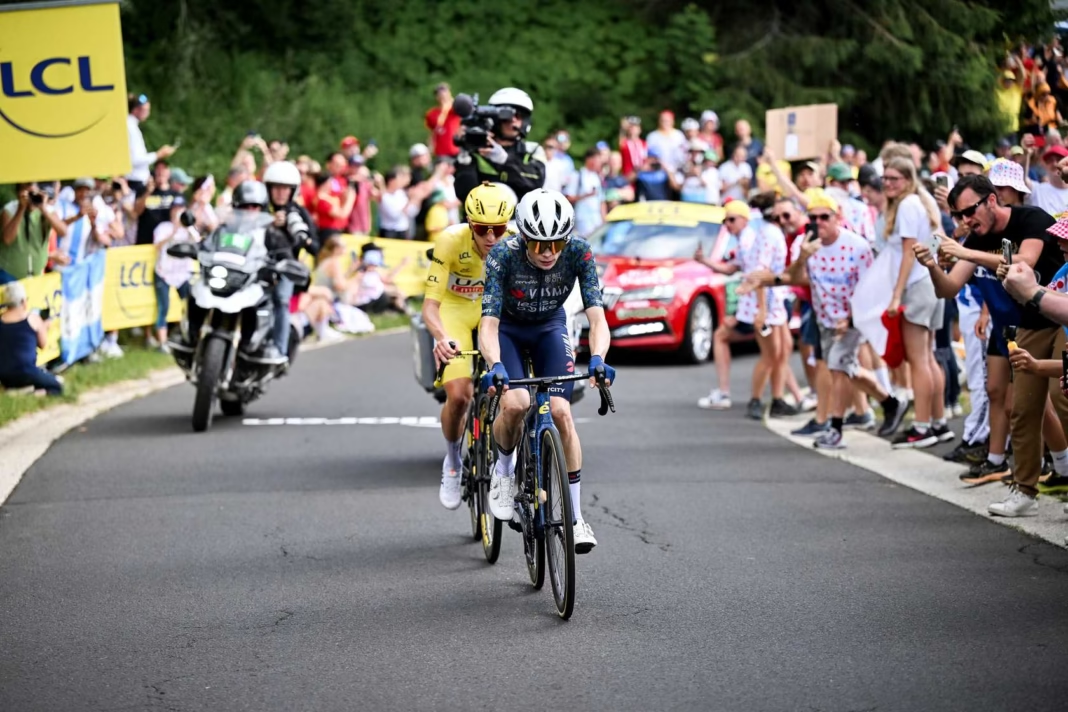
After stage 4, Pedersen leads the points classification on 103 points, with Tadej Pogačar second on 55 and Jonas Vingegaard third on 44. Among the riders more likely to contest green long-term, Biniam Girmay is on 39, Jasper Philipsen is on 30, and several pure sprinters are already under pressure before the race has even had a conventional bunch finish.
So can Pedersen win green? Yes. But only if the Tour stays messy enough for his range to matter, and only if he keeps scoring on the flat days as well as the hard ones.
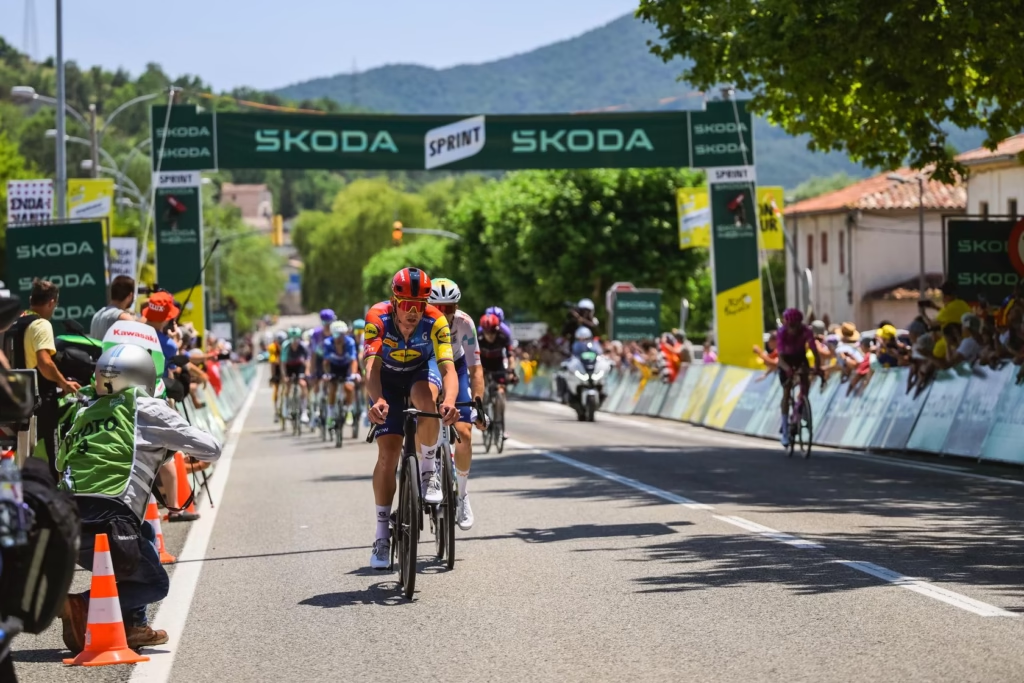 Photo Credit: A.S.O./Charly López
Quick answer: can Mads Pedersen win the green jersey?
Yes, Mads Pedersen can win the Tour de France 2026 green jersey. Stage 4 showed exactly why. He can score heavily on hilly days where pure sprinters are absent, he has the engine to survive selective stages, and Lidl-Trek have enough strength around him to shape the race.
The problem is that the Tour still has several high-value sprint stages, where riders such as Jasper Philipsen, Tim Merlier, Olav Kooij and Biniam Girmay can take large points hauls.
| Factor | What it means for Pedersen |
|---|---|
| Stage 4 win | Major early points gain |
| Current green jersey lead | Strong but not secure |
| Sprint speed | Good, but not always the fastest in a full bunch |
| Hard-day scoring | Major advantage |
| Team support | Very strong after Lidl-Trek’s stage 4 display |
| Main risk | Pure sprinters dominating flat stages |
| Verdict | Green is realistic, but not yet controlled |
Stage 4 was the perfect Pedersen points day
Pedersen’s best path to green was never about waiting for perfect bunch sprints. It was always about making the points race uncomfortable.
Stage 4 was exactly that kind of opportunity. The route from Carcassonne to Foix was too hard for the pure sprinters to control, but not hard enough to rule out a rider with Pedersen’s strength. Once the breakaway gained serious time, the stage became a green jersey opportunity disguised as a breakaway day.
That is why his win matters more than a normal stage victory. Pedersen did not simply take points from a sprint field. He took points on a day when many of his likely green jersey rivals were not in the conversation. That is the difference between winning stages and winning green.
It also confirmed why stage 4 had been identified as one of the more dangerous early breakaway days on the route. Our Tour de France 2026 stage 4 preview highlighted the difficulty of the finale, while our guide to the best breakaway stages at the Tour de France 2026 showed why Foix could become more than a simple transition day.
For a rider like Pedersen, that was the opening.
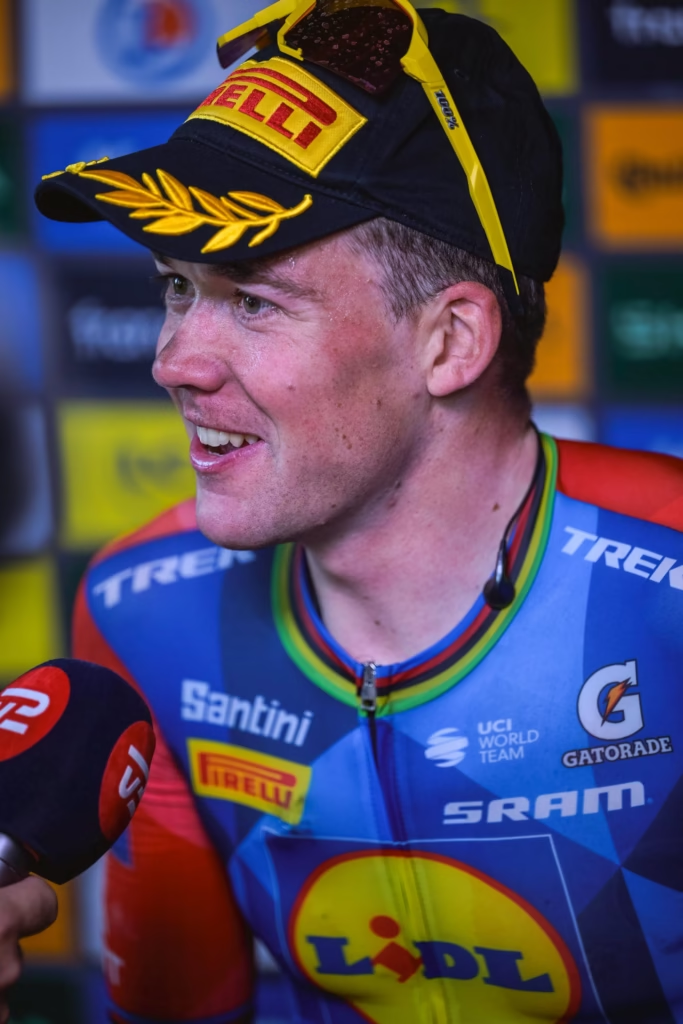 Photo Credit: A.S.O./Charly López
Why Pedersen’s profile fits this Tour
Pedersen is not a pure sprinter in the Philipsen or Merlier mould. He is a former world champion with a Classics engine, strong repeatability and the ability to survive climbs that remove heavier fast men from the race.
That makes him dangerous in a Tour with awkward sprint days, hilly transition stages and a route that keeps interrupting the sprinters’ rhythm. Our guide to Mads Pedersen at the Tour de France 2026 argued before the race that his green jersey challenge would be built around hard points rather than easy sprints. Stage 4 has already proved that theory.
The 2026 route still contains obvious sprint stages, including Pau, Bordeaux, Bergerac, Nevers, Chalon-sur-Saône, Voiron and Paris. But the route around those days is not soft. The Pyrenees arrive early, the Massif Central follows soon after, and the race keeps asking sprinters to recover, survive and reset.
That suits Pedersen more than a race with a long run of clean flat finishes. Our guide to the best sprint stages at the Tour de France 2026 breaks down how the points race is likely to be shaped by those flat opportunities, but Pedersen’s edge comes from the days in between.
The points lead is useful, but not decisive
A lead of 48 points over Pogačar and 64 points over Philipsen sounds significant, but the green jersey race can change quickly.
Flat stages carry large points at the finish. If a pure sprinter wins in Pau, then backs it up in Bordeaux or Bergerac, the gap can shrink fast. Pedersen cannot simply defend from here. He still needs to contest the bunch sprints, collect intermediate points and avoid letting one rival build momentum across several flat stages.
The current table is also slightly misleading because Pogačar and Vingegaard sit high in the points classification after the opening GC stages. They are unlikely to make green a primary objective. The real danger comes from riders who have not yet had their proper terrain.
That means Philipsen, Girmay, Merlier and Kooij remain dangerous even if they are behind. Pedersen has taken an early lead before their main sprint campaign has properly begun.
The wider points battle is covered in our Tour de France 2026 sprinters guide, where Pedersen’s versatility is set against the outright speed of the pure sprinters.
Stage 5 to Pau is immediately important
Stage 5 to Pau now becomes the first proper test of Pedersen’s green jersey credibility.
If he can finish in the top three or top five, he strengthens the idea that he can defend green across both hard and flat days. If Philipsen, Merlier or Kooij win and Pedersen is outside the main points, the race tightens quickly.
The stage is officially flat, but it includes a late category 3 climb, the Côte de Baleix. That is not enough to remove all the sprinters, but it could disrupt lead-out trains and create a more tiring run-in. That is exactly the kind of complication Pedersen will welcome.
For the live timings and viewing windows, see our Tour de France 2026 stage 5 live viewing and start time update. For the sporting preview, our stage 5 route guide explains why Pau should still favour the sprint teams.
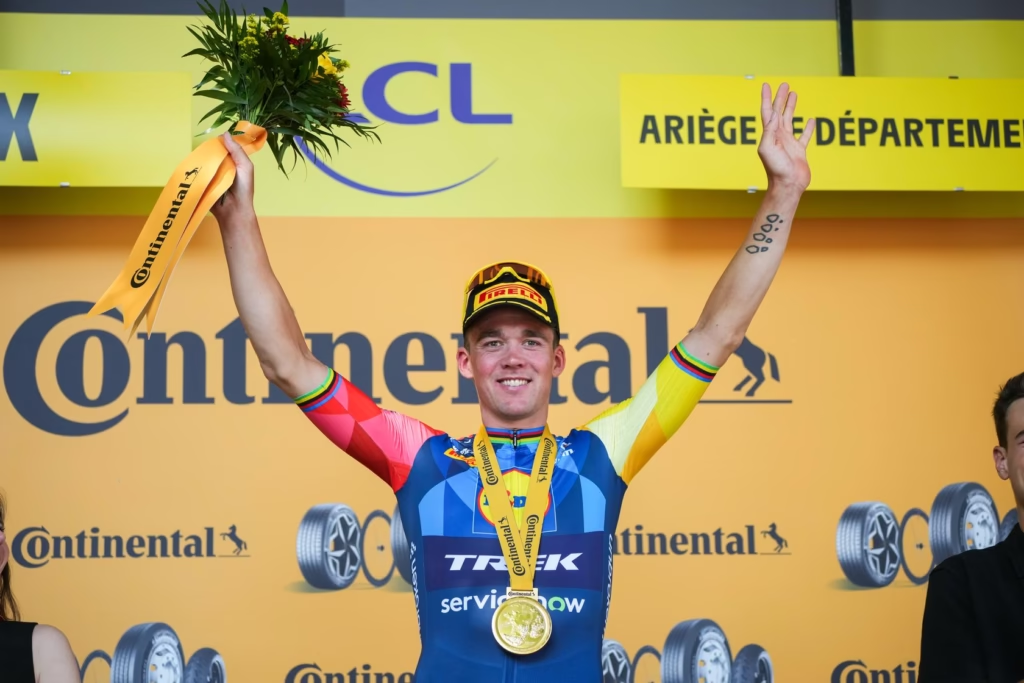 Photo Credit: A.S.O./Charly López
Lidl-Trek are now fully involved
One of the biggest conclusions from stage 4 is that Lidl-Trek are not just bringing Pedersen to the race. They are racing around him with clarity.
In Foix, they placed Pedersen, Simmons and Mathias Vacek in the decisive move. Simmons finished second, Vacek moved into the white jersey, and Pedersen took the stage and green. That is the kind of collective return that changes a team’s Tour.
The question now is how Lidl-Trek balance their priorities. They have Pedersen in green, Vacek in white, Juan Ayuso still relevant for the GC picture, and multiple riders capable of stage hunting. That is a strength, but it also creates choices.
If Pedersen is going to win green, he needs the team to commit. He needs support at intermediate sprints, protection through mountain days and lead-out help when flat stages arrive. Lidl-Trek looked strong enough on stage 4 to offer that, but the race will test whether green remains a central aim once the bigger GC days return.
The team’s wider Tour structure was already one of the most interesting in the race, as covered in our Tour de France 2026 team-by-team guide. Stage 4 showed why. Lidl-Trek have more than one way to influence this Tour.
The Philipsen problem
Pedersen’s biggest threat is still a pure sprinter who starts winning repeatedly.
Jasper Philipsen is the obvious danger. He has the top speed, the Tour pedigree and the kind of lead-out structure that can dominate flat finishes if Alpecin-Premier Tech find control. He does not need to score on the same range of days as Pedersen if he can win two or three big bunch sprints and stay active at intermediate sprints.
That is the central tension of the green jersey race. Pedersen wants the race to be broken, selective and awkward. Philipsen wants clean finishes, full lead-outs and high-speed control.
If the route becomes chaotic, Pedersen gains. If the sprint teams impose order, Philipsen and the pure fast men come back into the picture.
For a wider look at that rivalry, our Tour de France 2026 sprinters guide compares the main green jersey contenders, while our Jasper Philipsen at the Tour de France 2026 feature explains why Philipsen remains one of the most dangerous names despite the early deficit.
Girmay, Merlier and Kooij are still in it
Biniam Girmay’s position is interesting because he has some of Pedersen’s versatility. He can survive harder days better than many pure sprinters, and he has already shown in previous Tours that green can be won through consistency rather than just repeated stage wins.
Merlier and Kooij are different threats. They are more dependent on clean sprint chances, but they can take big points when the race comes together. If they begin winning from Pau onwards, Pedersen’s lead becomes less comfortable.
The current situation gives Pedersen the advantage, not certainty. He has scored first. Now the others need to respond.
The mountains could help Pedersen
The biggest advantage Pedersen has over many sprint rivals is that he should survive the Tour’s harder rhythm better.
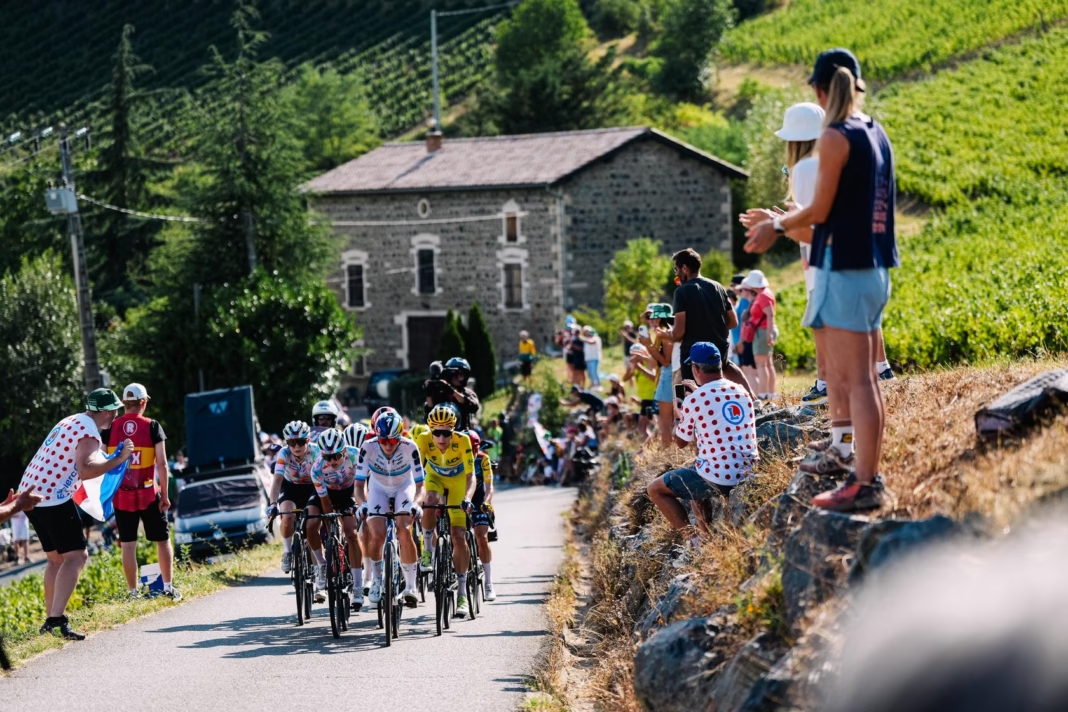
That matters because the green jersey is not won only in the first week. Riders have to get through the Pyrenees, the Massif Central, the Vosges, the Jura and the Alps. They have to avoid time cuts, recover from repeated climbing days and still be strong enough to sprint when the road finally flattens again.
Pedersen is not immune to the mountains, but he is usually better equipped for attritional racing than the heavier pure sprinters. If the Tour becomes a survival contest for the fast men, his chances improve.
The early mountain pressure begins properly on stage 6, with the Tourmalet and the summit finish at Gavarnie-Gèdre. Our Tour de France 2026 Pyrenees guide explains why that stage could be important not only for GC, but also for the sprinters trying to stay inside the race’s rhythm.
That is where Pedersen’s profile becomes so valuable. He does not need to be the fastest rider in the race if he is the fastest rider still scoring when the others are tired, isolated or absent.
The case for Pedersen winning green
The argument for Pedersen is strong.
He already has the jersey. He has a stage win. He has scored heavily on a day his sprint rivals could not use. He has a team that looked excellent on stage 4. He has the endurance to survive difficult terrain and the tactical intelligence to chase points from more than one type of stage.
He also has a route that gives him multiple ways to score. Pau, Bordeaux, Bergerac, Nevers and Chalon-sur-Saône are obvious targets, but the hilly stages to Ussel, Belfort and Voiron could be just as important if the pure sprinters struggle.
That is exactly how a Pedersen green jersey campaign has to work. It cannot rely on him beating every sprinter in a clean drag race. It has to be built through accumulation, opportunism and pressure.
-
 Photo Credit: A.S.O./Billy Ceusters
The case against Pedersen winning green
The case against him is just as clear.
There are still enough flat stages for a pure sprinter to build a major points total. Pedersen may score consistently, but if Philipsen or Merlier starts winning bunch sprints, the balance can shift quickly.
There is also the team question. Lidl-Trek are not a one-rider team at this Tour. If Ayuso’s GC challenge becomes more important, or if Vacek’s white jersey lead demands protection, Pedersen may not always get full resources. Green jersey campaigns are expensive. They require daily attention, not just one good stage.
Pedersen also has to avoid the trap of doing too much. Chasing intermediate sprints, joining breakaways, contesting finishes and surviving mountains can add up. Green is a jersey of consistency, but consistency burns energy.
Verdict: Pedersen can win green, but he has to keep attacking the competition
Pedersen can absolutely win the green jersey at the Tour de France 2026.
Stage 4 was not a lucky bonus. It was the clearest possible evidence of why this race can suit him. He can turn hard stages into points, he has the strength to race from the front, and he has already forced the pure sprinters into a chase.
But he cannot defend passively. The next sprint stages matter. Pau, Bordeaux and Bergerac will show whether he can score enough on conventional sprint terrain to make the hard-day advantage count.
The green jersey is now Pedersen’s to shape, not yet his to lose. If the Tour stays selective and Lidl-Trek keep backing him, he has a genuine path to Paris in green. If the pure sprinters take control of the flat stages, stage 4 may become the start of a battle rather than the decisive move.

