

Stage 5 of the Tour de France 2026 gives the sprinters their clearest chance of the race so far, with a 158.3km route from Lannemezan to Pau on Wednesday 8 July.
After four opening days shaped by a team time-trial, GC pressure, Pyrenean climbing and a successful breakaway to Foix, this is the first stage that should bring the fast men properly into the centre of the race. The route is officially listed as flat, although it still carries 1,600m of climbing and a late category 3 climb that could make the run-in more nervous than a simple drag race to the line.
For the full sporting breakdown, see our Tour de France 2026 stage 5 preview: Lannemezan to Pau. For a wider race overview, our Tour de France 2026 full route guide covers every stage in the 2026 route.
 Photo Credit: A.S.O./Thomas Maheux
Tour de France 2026 stage 5 start time
| Detail | Local time in France | UK time |
|---|---|---|
| Publicity caravan | 11:50 CEST | 10:50 BST |
| Neutralised start | 14:05 CEST | 13:05 BST |
| Intermediate sprint at Vic-en-Bigorre | 16:40-16:53 CEST | 15:40-15:53 BST |
| Côte de Baleix | 17:04-17:20 CEST | 16:04-16:20 BST |
| Expected finish in Pau | 17:37-17:56 CEST | 16:37-16:56 BST |
The official neutralised start is at 14:05 local time in Lannemezan, which is 13:05 BST for UK viewers. The finish in Pau is expected between 17:37 and 17:56 local time, or 16:37 and 16:56 BST, depending on the pace of the stage.
That gives UK viewers a useful afternoon window. Anyone watching from work or checking in late should aim to be live by around 15:40 BST for the intermediate sprint, or by 16:00 BST at the latest for the Côte de Baleix and sprint lead-out phase.
For the full race timing picture, use our Tour de France 2026 TV schedule and daily start times.
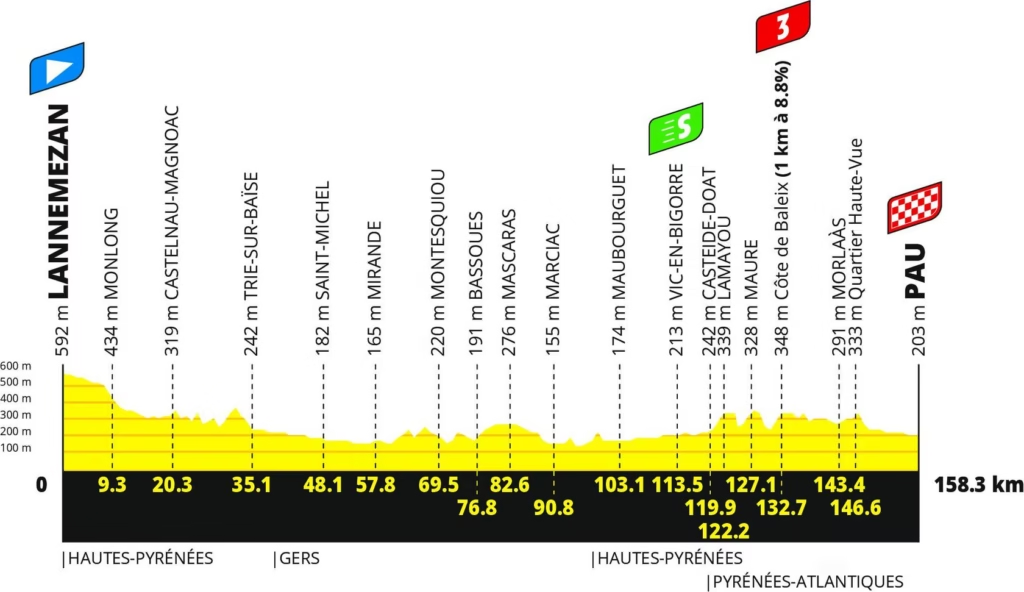
Tour de France 2026 stage 5 route
Stage 5 runs from Lannemezan to Pau over 158.3km. It is the first official flat stage of the race, but it is not completely featureless.
The peloton leaves the Hautes-Pyrénées, moves north and west through rolling roads, passes through Vic-en-Bigorre for the intermediate sprint, then tackles the late Côte de Baleix before the final approach into Pau. The Côte de Baleix is only 1km long, but at 8.8% it is steep enough to disrupt lead-out trains if the pace is high.
| Key point | Distance from start | Distance to finish | Expected UK time |
|---|---|---|---|
| Lannemezan | 0km | 158.3km | 13:05 BST |
| Vic-en-Bigorre intermediate sprint | 113.5km | 44.8km | 15:40-15:53 BST |
| Côte de Baleix | 132.7km | 25.6km | 16:04-16:20 BST |
| Pau finish | 158.3km | 0km | 16:37-16:56 BST |
The climb is the main complication. It is close enough to the finish to matter, but not hard enough on paper to stop the strongest sprint teams from regrouping. That should make it a day where the peloton wants control, but where attackers may still try to use the late ramp to disturb the expected bunch finish.
That mix of flat-stage expectation and late uncertainty is why stage 5 features in our guide to the best sprint stages at the Tour de France 2026.
How to watch stage 5 in the UK
Stage 5 is live in the UK on TNT Sports and HBO Max, with live coverage due to be on air before the race leaves Lannemezan. That means UK viewers should be able to follow the full stage, the intermediate sprint, the Côte de Baleix and the expected finish in Pau.
| UK option | Stage 5 coverage |
|---|---|
| TNT Sports | Live coverage |
| HBO Max | Live streaming through TNT Sports coverage |
| S4C | Not one of the seven free live stages |
| 5 | Free-to-air highlights at 7pm |
Stage 5 is not one of S4C’s seven free live stages, so the live UK option is TNT Sports or HBO Max. Free-to-air highlights are available on 5 at 7pm.
For the full UK broadcast picture, see our guide on how to watch Tour de France 2026 in the UK.
How to watch stage 5 around the world
| Country | Live TV / streaming |
|---|---|
| UK | TNT Sports, HBO Max |
| France | France Télévisions, Eurosport / Max |
| United States | Peacock |
| Canada | FloBikes |
| Australia | SBS, SBS On Demand |
For UK viewers, the cleanest live option is the paid TNT Sports and HBO Max route. For viewers in Australia, SBS remains the key free-to-air option, while US viewers can follow the full race through Peacock and Canadian viewers through FloBikes.
For a country-by-country breakdown, use our Tour de France 2026 live stream guide by country.
When should you tune in?
For the full stage, tune in from 13:05 BST, when the race starts in Lannemezan.
For the main sprint storyline, the best viewing window begins around 15:40 BST. That should include the intermediate sprint at Vic-en-Bigorre, where green jersey points are available, and the final 45km into Pau.
For the decisive part of the stage, tune in by 16:00 BST. That should catch the approach to the Côte de Baleix, the climb itself and the final regrouping before the sprint.
For viewers who only want the finish, the final 20 minutes should begin around 16:35 BST, but that is leaving it late. If crosswinds, crashes, splits or attacks happen on the late climb, the stage may already have been shaped before then.
| Viewer type | Best time to watch |
|---|---|
| Full-stage viewer | 13:05 BST |
| Green jersey viewer | 15:40 BST |
| Finale-only viewer | 16:00 BST |
| Sprint-only viewer | 16:35 BST, but risky |
| Highlights viewer | 19:00 BST on 5 |
Why stage 5 matters
Stage 5 matters because the sprinters have had to wait.
The Tour opened with a team time-trial in Barcelona, then moved into hillier terrain and the first mountain test at Les Angles. Stage 4 to Foix was taken by a breakaway, with Mads Pedersen winning and Torstein Træen moving into the yellow jersey. That means the pure sprinters arrive at stage 5 without a proper bunch sprint opportunity behind them.
For the full story of the previous day, see our Tour de France 2026 stage 4 report.
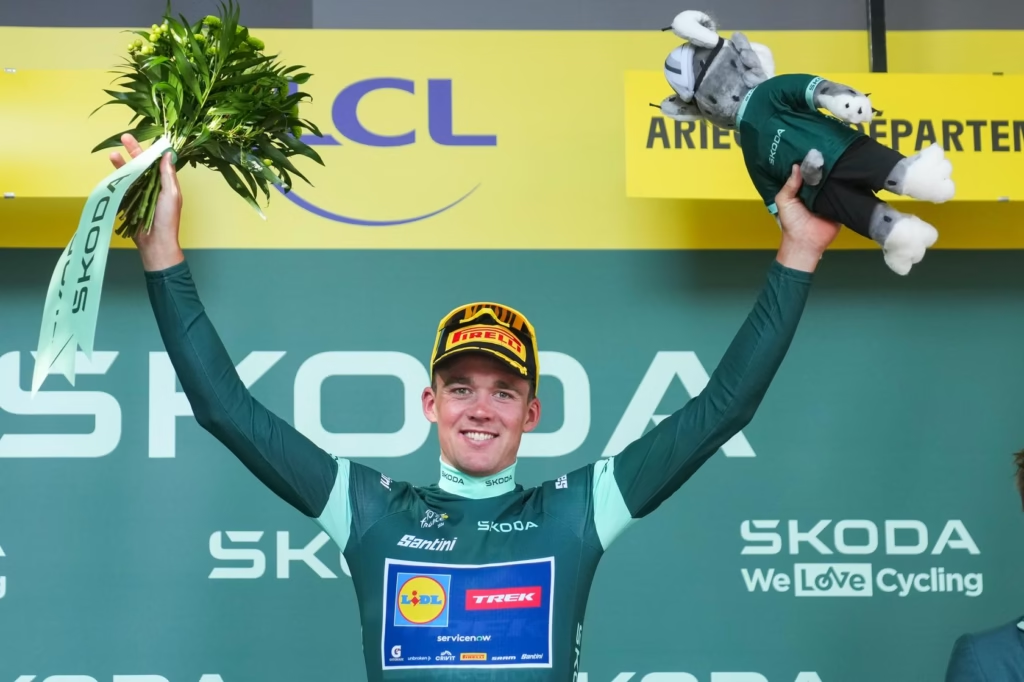
That raises the stakes in Pau. Jasper Philipsen, Tim Merlier, Olav Kooij, Biniam Girmay and the other fast men will see this as a day they cannot waste. Pedersen, already in green after his stage 4 win, has the chance to strengthen his points lead even further if he can contest another finish.
The sprint teams should have more motivation than the breakaway specialists. Stage 6 to Gavarnie-Gèdre brings the Tourmalet and a summit finish, so this is one of the few early days where the sprinters can realistically expect the race to come back together.
What to expect from the race
The early part of the stage should be controlled, but the composition of the breakaway will matter. If the move is small and contains no major threat to the points or general classification, the sprint teams should be comfortable.
The middle of the stage is where the chase will need to become more serious. The intermediate sprint at Vic-en-Bigorre offers important green jersey points, and the teams of the fast men will not want a breakaway collecting everything ahead of the peloton.
The Côte de Baleix then gives the stage its tactical sting. It is short, steep and positioned 25.6km from the finish. It is unlikely to drop every sprinter, but it could split lead-out trains, force teams to chase, or give a late attacker a platform.
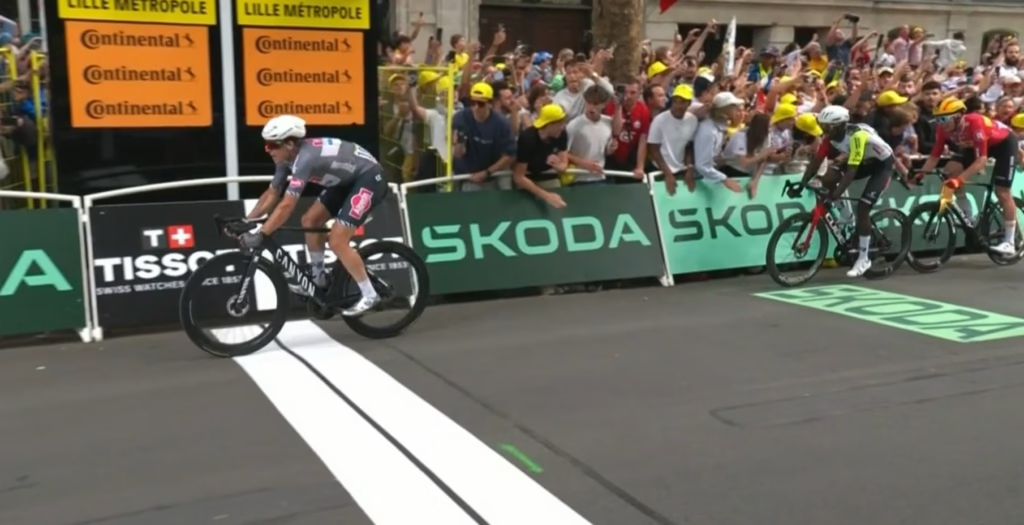
After that, the final run into Pau should favour organisation. If the sprint teams are together, the race should come down to positioning, timing and lead-out strength.
Who are the stage 5 favourites?
This should be one of the best early chances for the sprinters. Philipsen and Merlier will both see Pau as a major target, while Kooij, Girmay and Pedersen have strong cases depending on how the final 30km are raced.
Pedersen may not be the purest sprinter in the field, but the stage suits him if the finale becomes harder than expected. He has already shown form, he leads the points classification and the late climb should not worry him. For more on why the route works for him, see our guide to Mads Pedersen at the Tour de France 2026.
For the purer fast men, the main task is to survive Baleix with enough teammates still around them. The climb also keeps the door slightly open for a puncheur or late attacker. A move over the top would need hesitation behind, but after stage 4 showed what can happen when the peloton gives riders room, teams will be wary of letting the race drift.
The wider points battle is covered in our Tour de France 2026 sprinters guide, where Pedersen and Philipsen stand out as two of the major green jersey names.
-
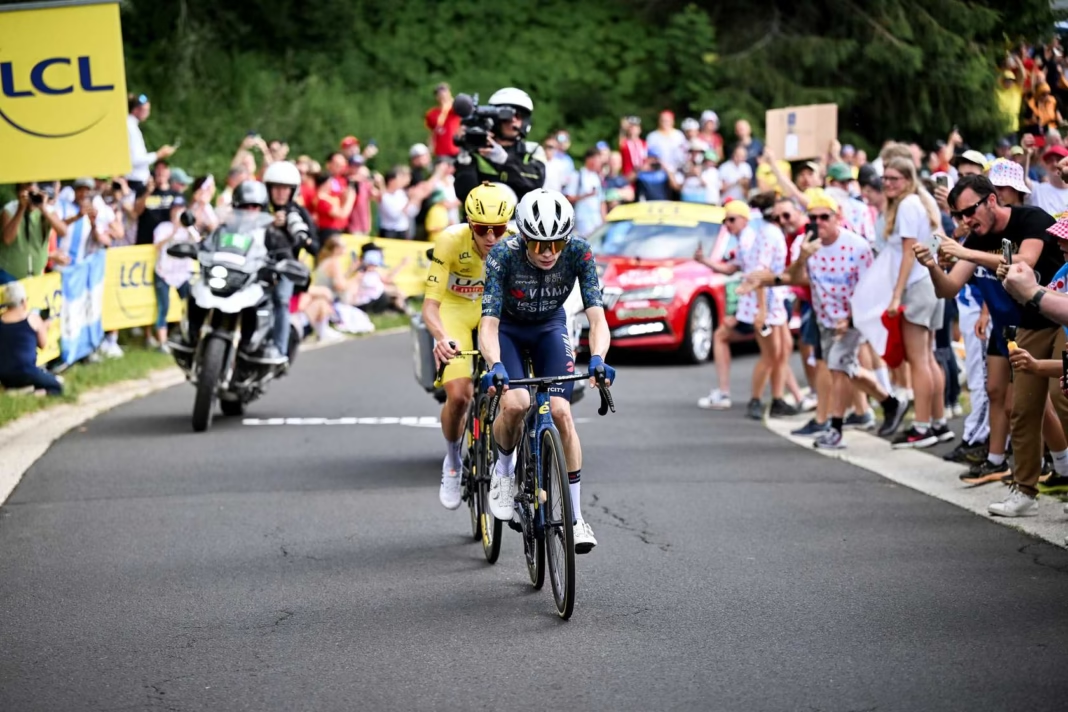
 Photo Credit: A.S.O./Billy Ceusters
What does stage 5 mean for the yellow jersey?
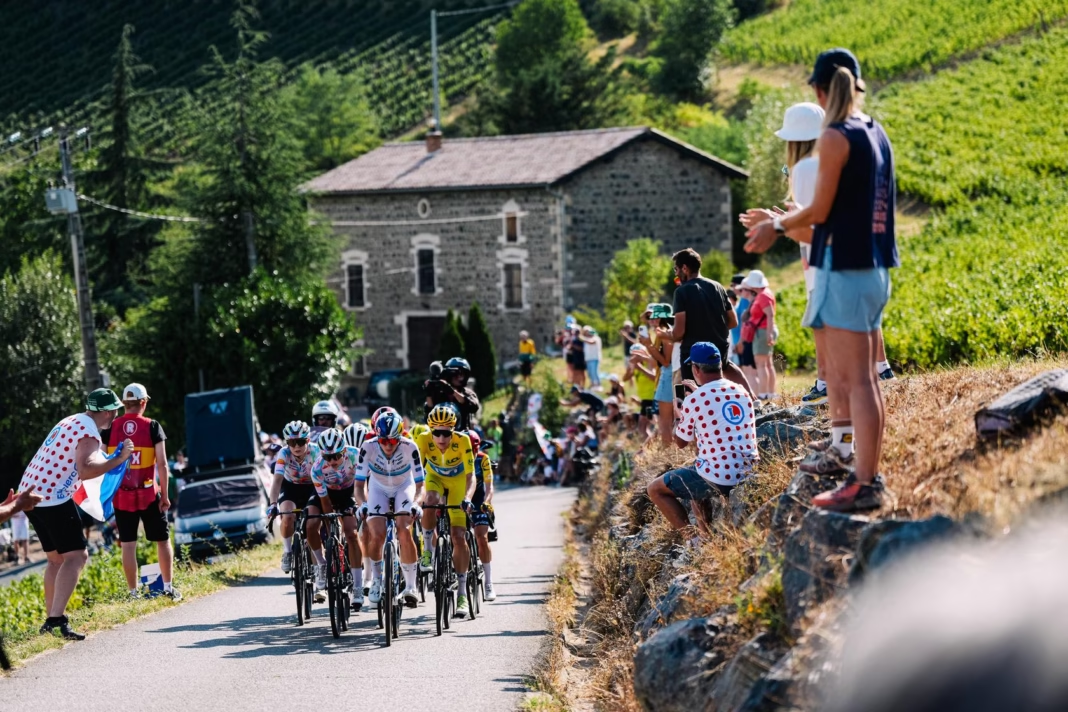
For yellow jersey Torstein Træen, stage 5 is mainly about staying safe. The stage should not be a GC battleground, but flat stages can still be stressful for race leaders. Crashes, splits, traffic islands, roundabouts and late positioning battles all matter when the sprint teams begin fighting for space.
For Tadej Pogačar, Jonas Vingegaard, Remco Evenepoel and the rest of the GC group, the target is similar. They will want a quiet day before the Tour returns to the mountains. None of the major favourites needs to make a move here, but all of them need to avoid losing time in avoidable trouble.
That makes stage 5 a different kind of danger day. It is not about climbs, attacks or long-range GC tactics. It is about concentration, positioning and avoiding mistakes before the race changes tone again.
What comes next after stage 5?
Stage 6 takes the race from Pau to Gavarnie-Gèdre, with the Tourmalet and a summit finish waiting in the Pyrenees. That is why stage 5 has a slightly unusual feel. The sprinters want their chance, the GC teams want calm, and nobody thinking about yellow will want to spend unnecessary energy before the next major mountain test.
The upcoming Pyrenean stage is one of the key early GC days in the race. It features in our Tour de France 2026 Pyrenees guide and our ranking of the Tour de France 2026 mountain stages by difficulty.
Stage 5 should belong to the sprinters. But with the Côte de Baleix late on, the points competition in play and the Tourmalet waiting the next day, it still has enough tension to be worth watching before the final kilometre.

