
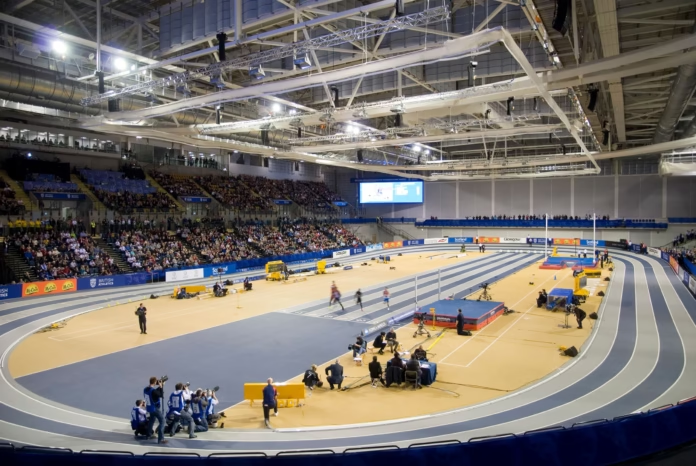
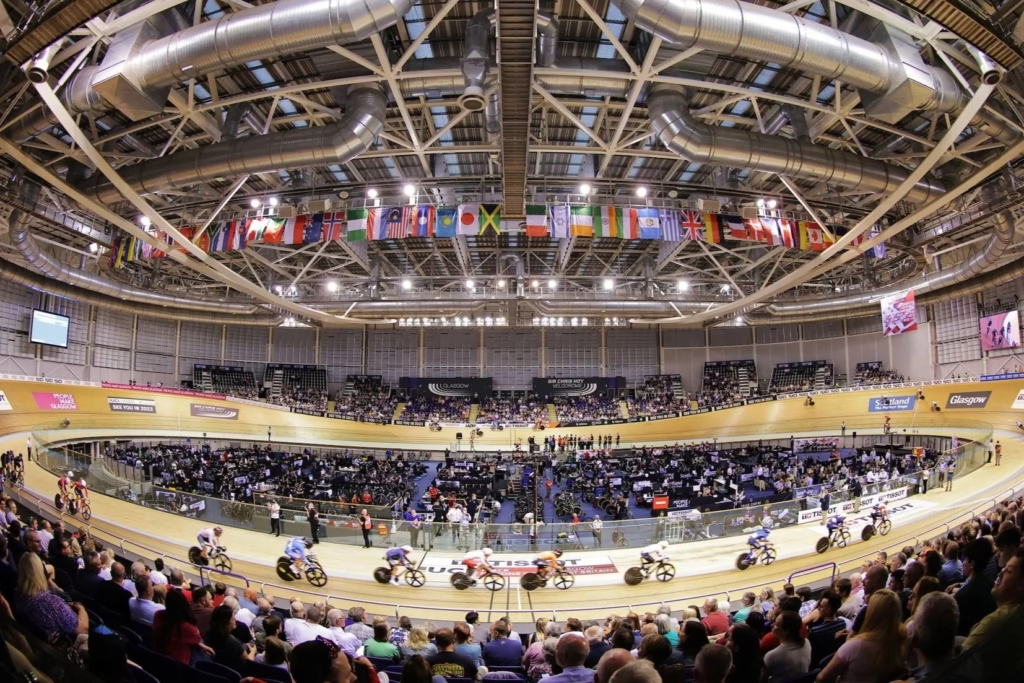
Track cycling at the Glasgow 2026 Commonwealth Games takes place from Thursday 30 July to Sunday 2 August at the Sir Chris Hoy Velodrome.
UK viewers can watch every competition session live through HBO Max, with extensive coverage also shown on TNT Sports’ television channels. The Games are not receiving the traditional blanket BBC coverage in 2026.
Free-to-air viewers can instead watch extended daily highlights on 5, but anyone wanting to follow complete qualifying and medal sessions live will need HBO Max or TNT Sports.
The four-day programme contains 26 medal events across track cycling and Para track cycling. Sprint, keirin, pursuit, scratch and points races are all included, while the elimination race makes its Commonwealth Games debut for both men and women.
Glasgow 2026 track cycling details
| Detail | Information |
|---|---|
| Dates | Thursday 30 July to Sunday 2 August 2026 |
| Venue | Sir Chris Hoy Velodrome, Glasgow |
| UK live streaming | HBO Max |
| UK television | TNT Sports |
| Free-to-air coverage | Extended daily highlights on 5 |
| Medal events | 26 across track and Para track cycling |
| Time zone | British Summer Time |
| Road and mountain bike events | Not included |
Track cycling is the only cycling discipline included in the reduced Glasgow 2026 programme. There are no Commonwealth road races, road time trials or mountain bike competitions this year.
Every cycling medal will therefore be decided inside the velodrome.
How can I watch Commonwealth Games track cycling in the UK?
Every Glasgow 2026 track cycling session will be available live through HBO Max. TNT Sports will also carry extensive linear television coverage, while 5 will provide free-to-air daily highlights.
Warner Bros. Discovery holds the exclusive UK live television and digital rights. Its coverage includes more than 600 hours across the Games, with every sport and event available through HBO Max.
Glasgow 2026 is included with every HBO Max subscription tier, including the Basic with Ads plan.
TNT Sports is operating dedicated Commonwealth Games television coverage, although the precise linear channel used for cycling may depend on other events taking place at the same time.
HBO Max should therefore be the most reliable option for viewers who want a specific qualifying round or complete track session rather than a wider programme moving between sports.
Is the Commonwealth Games on the BBC?
The BBC is not the principal live English-language broadcaster for Glasgow 2026.
That represents a major change from previous Commonwealth Games, when viewers could switch between extensive BBC television coverage and multiple digital streams.
The main UK options for 2026 are:
| Viewing option | Coverage |
|---|---|
| HBO Max | Every event live and available through dedicated streams |
| TNT Sports | Extensive live television coverage |
| 5 | Extended free-to-air daily highlights |
| Glasgow 2026 platforms | Schedule, results, clips and live updates |
The agreement with 5 covers highlights rather than complete live track sessions.
Viewers relying entirely on free-to-air television may therefore miss qualifying rounds and some of the tactical development leading into the medal finals.
What time does track cycling start?
Glasgow 2026 uses morning and afternoon or evening sessions across all four days.
The detailed timings vary by day and event, so viewers should check the official daily schedule before each session. Qualification rounds can begin several hours before the corresponding medal finals.
All listed Glasgow times are British Summer Time. UK viewers do not need to convert them.
| Date | Main focus |
|---|---|
| Thursday 30 July | Team events and opening medals |
| Friday 31 July | Individual pursuits, keirin and elimination |
| Saturday 1 August | Sprint rounds, time trials and bunch races |
| Sunday 2 August | Sprint, keirin, points and remaining Para finals |
The session format matters because track tournaments often unfold across more than one programme. A rider can qualify in the morning, return for a semi-final later and contest the final the following day.
Track cycling schedule for Thursday 30 July
The opening day is centred on team events and the first Para track cycling medals.
The programme includes competition across events such as:
- Men’s team sprint
- Women’s team sprint
- Men’s team pursuit
- Women’s team pursuit
- Women’s tandem sprint
- Women’s C4-5 individual pursuit
The team pursuits should provide one of the clearest examples of how Commonwealth racing differs from the Olympics.
Riders who normally compete together for Great Britain are separated between England, Scotland and Wales. Each nation must construct its own team rather than selecting from the entire British programme.
That should reduce the strength of some combinations but create less predictable races and direct rivalries between regular Great Britain teammates.
The venue has already staged major international pursuit racing, including Great Britain’s women’s team pursuit world title in Glasgow.
Track cycling schedule for Friday 31 July
Friday brings more individual sprint and endurance racing.
Events across the programme include:
- Men’s keirin
- Women’s sprint
- Men’s individual pursuit
- Women’s individual pursuit
- Men’s elimination race
- Women’s scratch race
- Men’s tandem kilometre time trial
- Men’s C1-3 kilometre time trial
The elimination race should be one of the most accessible events for first-time viewers.
The last rider across the line on each designated elimination lap is removed. The race continues until only two riders remain, with those final competitors sprinting for gold.
It rewards positioning and awareness as much as endurance. A strong rider can be eliminated early by becoming boxed in, moving too late or misjudging the finish line.
Track cycling schedule for Saturday 1 August
Saturday includes several of the most familiar sprint and time-trial events.
The programme features competition across:
- Men’s sprint
- Women’s keirin
- Men’s kilometre time trial
- Women’s kilometre time trial
- Men’s scratch race
- Women’s points race
- Women’s tandem kilometre time trial
- Men’s tandem sprint
The kilometre time trials are among the simplest events to understand.
Each rider or tandem starts alone and completes 1,000 metres against the clock. There is no drafting or opponent to mark. The fastest time wins.
The women’s time trial now uses the same 1km distance as the men’s event. The women’s team sprint has also moved to a three-rider format, matching the men’s competition.
Track cycling schedule for Sunday 2 August
The final day completes the remaining sprint, keirin, endurance and Para track competitions.
The schedule includes events such as:
- Men’s sprint
- Women’s keirin
- Men’s points race
- Women’s elimination race
- Men’s tandem sprint
- Men’s C1-3 individual pursuit
- Women’s C4-5 kilometre time trial
Sunday should contain some of the most recognisable head-to-head sprint racing of the Games.
The individual sprint develops through qualifying, match rounds and repechages before the medal contests. Viewers joining only for the final session may therefore benefit from checking how each rider progressed earlier in the tournament.
Which British riders should viewers watch?
There is no Team GB at the Commonwealth Games.
British riders compete separately for England, Scotland, Wales, Northern Ireland and other eligible Home Nations or territories.
That creates unusual rivalries because riders who normally train together and represent Great Britain become direct opponents.
Emma Finucane leads the Welsh sprint challenge
Emma Finucane is the leading Welsh rider to watch.
The Olympic and world champion is one of the fastest track sprinters in the world and should challenge across the individual sprint, keirin, team sprint and kilometre time trial.
Her acceleration makes her particularly dangerous in the individual sprint, where riders spend the opening laps attempting to control position before launching a high-speed final effort.
Finucane is joined in the Welsh selection by:
- Anna Morris
- Carys Lloyd
- Ciara Oliva
- Jessica Roberts
- Ioan Hepburn
- Jonah Jenkins
- Lewis Oliva
- Para rider James Ball
Morris and Roberts give Wales established endurance quality, while Carys Lloyd is among the younger riders capable of using Glasgow as an important step towards future Olympic Games.
Finucane previously formed part of the Great Britain sprint squad selected for the Paris Olympics. Glasgow places her in a very different structure, where Wales must compete without England’s sprint depth.
Matthew Richardson is England’s headline sprinter
Matthew Richardson will represent England after previously winning Commonwealth titles for Australia.
He took individual and team sprint gold at Birmingham 2022 and now attempts to win Commonwealth medals in different national colours.
Richardson is a leading contender in:
- Individual sprint
- Keirin
- Team sprint
- Kilometre time trial
England’s men’s sprint group also includes riders such as Hamish Turnbull, Joe Truman and Harry Ledingham-Horn.
Turnbull and Truman were part of England’s silver medal-winning team sprint squad in Birmingham. Their presence gives England one of the deepest sprint selections in Glasgow.
Richardson’s switch also creates one of the Games’ most interesting sporting stories. Riders who previously competed alongside him for Australia must now attempt to prevent him winning for England.
Scotland begins a new era without Katie Archibald
Katie Archibald had been expected to become one of the leading home figures at the Sir Chris Hoy Velodrome.
She will not compete after announcing her retirement from professional cycling in May 2026.
The Olympic champion said her mind and body were telling her it was time to stop, ending a career containing Olympic, world, European and Commonwealth titles. Her absence removes Scotland’s most decorated endurance rider and changes the shape of the home team.
The background to her decision is covered in Katie Archibald’s retirement from professional cycling.
Scotland must now rely more heavily on Neah Evans, Mark Stewart and its emerging track riders.
Archibald should still remain a major part of the atmosphere around the competition. Her career is closely connected to the Glasgow velodrome, even though she will not receive the racing farewell that had once appeared likely.
Neah Evans carries Scotland’s endurance hopes
Neah Evans is one of Scotland’s strongest medal prospects.
The Olympic medallist and former world champion is capable of competing in the individual pursuit but is particularly dangerous in bunch endurance events.
Her sustained power allows her to attack, gain laps and remain competitive in intermediate sprints. That makes the points race an obvious target.
Riders score through designated sprints and by gaining laps on the main field. The first rider across the line at the end is therefore not necessarily the winner.
Evans can also strengthen Scotland in the team pursuit, although the Home Nations format prevents the country from using the complete British combination seen at World Championships and Olympic Games.
Mark Stewart can make the endurance races unpredictable
Mark Stewart won the Commonwealth Games points race in 2018 and remains one of Scotland’s most experienced track cyclists.
His racing style is based around aggression rather than waiting for a final sprint.
Stewart regularly attempts to gain laps, create long attacks or force the field to chase. That makes him dangerous in the points race, scratch race and elimination race.
He also knows the Glasgow velodrome and should receive one of the strongest reactions from the home crowd.
With Archibald no longer racing, Stewart and Evans become particularly important to Scotland’s hopes of controlling the tactical endurance events.
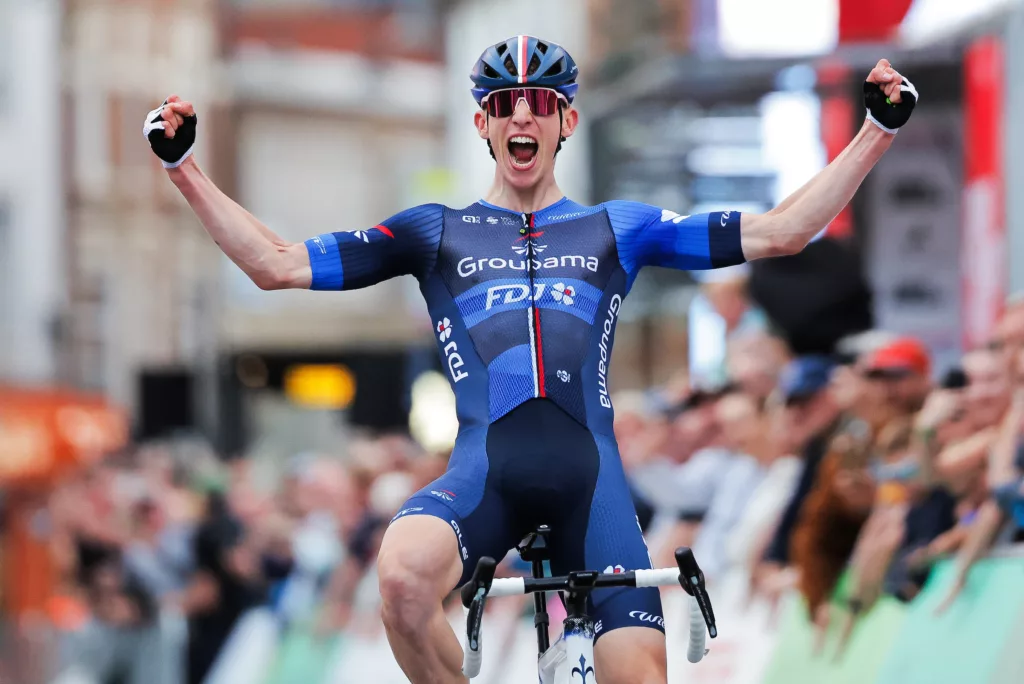 Photo Credit: Alex Whitehead/SWpix.com
Lewis Askey swaps the road for the velodrome
Lewis Askey will be one of the most recognisable Scottish names for viewers arriving from the Tour de France.
The NSN Cycling Team rider has been competing on the road but retains a track endurance background.
His road strength should transfer well to the scratch and points races, where repeated efforts and the ability to sustain attacks matter. He can also contribute to Scotland’s team pursuit options.
Askey may not possess the same recent specialist preparation as riders focused entirely on the track. His engine, positioning and race awareness still make him a valuable member of the Scottish selection.
Lauren Bell leads the Scottish women’s sprint group
Lauren Bell carries Scotland’s leading hopes in the women’s sprint events.
She has competed across sprint and keirin at World Championship level and arrives with several British titles.
Finucane begins as the more established international favourite, but Commonwealth racing gives Bell a direct opportunity that does not exist when both riders are part of the wider British programme.
She is also central to Scotland’s women’s team sprint prospects, where the split between the Home Nations creates opportunities for less established combinations to reach the medals.
Neil Fachie and Fin Graham headline the Para riders
Glasgow 2026 integrates Para track cycling into the main velodrome programme.
Neil Fachie is one of Scotland’s most successful Commonwealth and Paralympic cyclists. The visually impaired rider competes on a tandem with a sighted pilot and has won multiple Paralympic, world and Commonwealth titles.
Fin Graham is another leading Scottish contender in the C1-3 category.
The event uses a factored system to allow athletes from different eligible classifications to compete for the same medal.
England’s Para selection includes Kadeena Cox, while James Ball provides Wales with a leading tandem medal contender.
Jack Carlin will not race in Glasgow
Another familiar Scottish sprint name missing from the start list is Jack Carlin.
Carlin retired after more than a decade at the top level, having won multiple Olympic and World Championship medals for Great Britain. He has since remained involved in promoting Scottish sport and the Glasgow Commonwealth Games.
His departure leaves a significant space in the Scottish sprint programme, particularly when England can field Richardson, Turnbull and Truman.
The full story of his career is covered in Jack Carlin’s retirement from track cycling.
Which international riders are likely to challenge?
Australia traditionally provides the strongest overall opposition to the British Home Nations in Commonwealth track cycling.
Its squad should contend across both sprint and endurance events, even after losing Richardson to England.
Canada and New Zealand are also capable of challenging for team pursuit and individual endurance medals. Malaysia have a strong sprint and keirin tradition, while Trinidad and Tobago regularly produce riders able to trouble the larger cycling nations.
The field is not identical to an Olympic Games because major powers including the Netherlands, France, Germany, Italy, Denmark and Japan are absent.
That does not make the racing straightforward.
Australia, England, Scotland and Wales all possess world-level riders, while smaller Commonwealth nations often concentrate their resources around specific sprint or Para events.
Australian endurance riders are particularly dangerous. Georgia Baker, for example, has built a successful career across road and track, including Commonwealth titles in the team pursuit and points race. Her background is covered in the Georgia Baker rider profile.
How is Commonwealth track cycling different from the Olympics?
The bicycles, velodrome and fundamental rules are the same. The national structure and event programme are not.
Great Britain is divided
At the Olympics, British riders compete together as Great Britain.
At the Commonwealth Games they represent England, Scotland, Wales, Northern Ireland or another eligible nation.
This has its greatest effect on team events.
A British Olympic team pursuit or team sprint squad may contain riders from several Home Nations. Those athletes are separated in Glasgow, forcing each country to build its own combination.
That generally weakens the teams compared with the Olympic version but creates more medal opportunities and less predictable racing.
The programme contains different events
The Olympic track programme includes:
- Individual sprint
- Team sprint
- Keirin
- Team pursuit
- Madison
- Omnium
Glasgow’s Commonwealth programme includes several traditional standalone disciplines:
- Individual pursuit
- Kilometre time trial
- Scratch race
- Points race
- Elimination race
There is no omnium or madison at Glasgow 2026.
Instead of combining several disciplines into one omnium classification, the Commonwealth Games awards separate medals across more individual race formats.
The individual pursuit returns to prominence
The individual pursuit is no longer an Olympic medal event but remains part of the Commonwealth programme.
Two riders start on opposite sides of the track and attempt to record the fastest time. In a head-to-head medal final, the race can also end if one rider physically catches the other.
It rewards sustained power, controlled pacing and the ability to hold the most efficient line around the track.
For riders such as Anna Morris and Neah Evans, it provides a separate medal opportunity that does not exist at the Olympics.
Scratch and points races award their own medals
At the Olympics, scratch and points racing appear as parts of the omnium.
At the Commonwealth Games they are standalone medal events.
A rider can specialise in one discipline without needing to remain competitive across an entire multi-event competition.
The addition of the elimination race creates another separate endurance title and should particularly suit riders with strong positioning and tactical awareness.
Several major nations are absent
The Olympics bring together the leading riders from every part of the world.
The Commonwealth field is restricted to eligible nations and territories. There are no Dutch, French, German, Italian or Japanese teams.
That changes the competitive balance, especially in the endurance events.
It provides greater opportunities for the British Home Nations and Australia while also allowing riders from smaller Commonwealth teams to reach rounds that might be harder to access at a World Championship.
What are the easiest track events for beginners to follow?
Individual sprint
Two riders race head-to-head.
The opening laps can be slow and tactical as each attempts to force the other into the lead. The final acceleration then produces a direct race to the line.
Keirin
A group follows a pacing motorcycle before it leaves the track.
The riders then sprint over the final laps, often reaching some of the highest speeds seen in track cycling.
Team sprint
Teams race against the clock.
One rider leads each lap before pulling away, leaving the final rider to complete the effort alone. The fastest overall time wins.
Team pursuit
Two four-rider teams start on opposite sides of the track.
The finishing time is normally taken from the third rider, meaning the team must balance outright speed with staying together.
Individual pursuit
Two riders begin on opposite sides and race against the clock.
The winner records the faster time or catches the opponent.
Scratch race
This is the closest track equivalent to a conventional road race.
The first rider across the line after the full distance wins, although gaining a lap on the field places a rider ahead of anyone remaining on the original lap.
Points race
Riders score at intermediate sprints and receive large rewards for gaining laps.
The rider with the highest points total wins, regardless of who crosses the final finish line first.
Welsh rider Eluned King won Commonwealth Games bronze in the points race in 2022, illustrating how the discipline can reward tactical riders from the Home Nations.
Elimination race
The last rider across the line on designated laps is removed.
The process continues until only two competitors remain for the final sprint.
Why the Sir Chris Hoy Velodrome matters
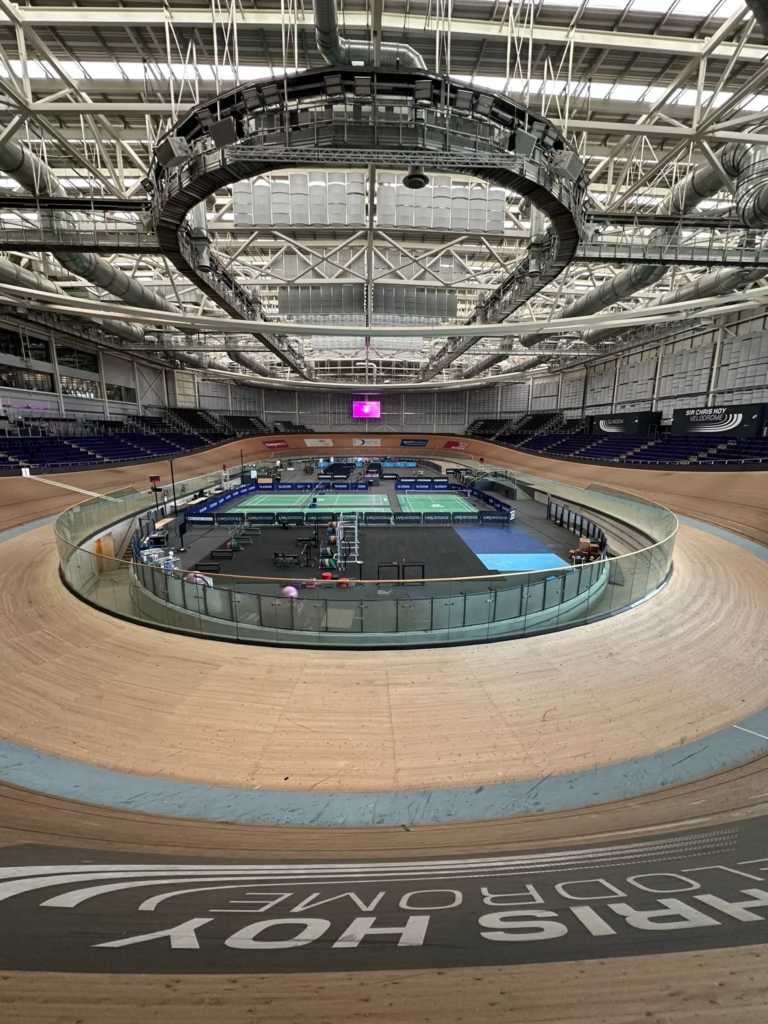
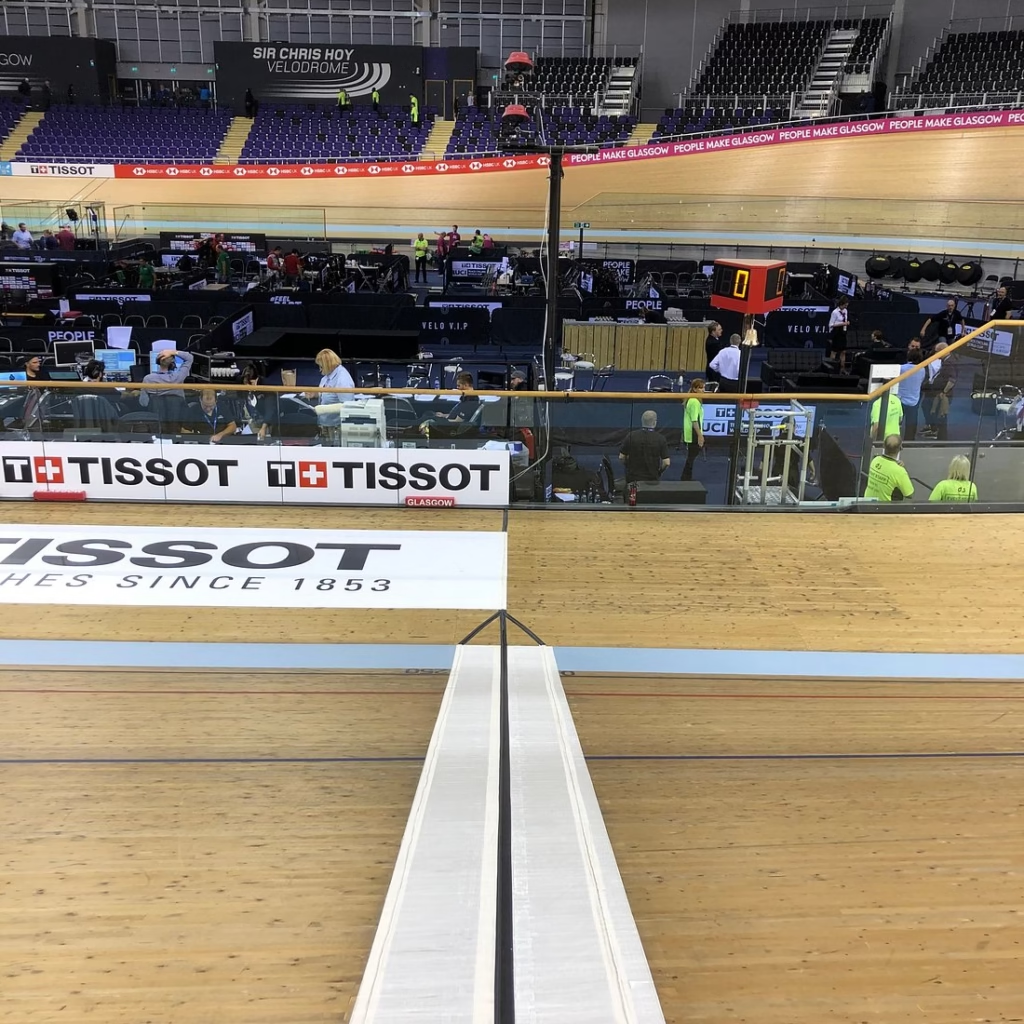
The venue was built for the Glasgow 2014 Commonwealth Games and is named after Scotland’s six-time Olympic champion Sir Chris Hoy.
It contains a 250-metre indoor wooden track matching the standard used for Olympic Games and World Championships.
The steep banking allows riders to maintain high speeds through the bends. It can look intimidating to new viewers, but the riders remain stable because of their speed and the forces generated through the turn.
The venue has already hosted Commonwealth Games, European Championships and the 2023 Cycling World Championships.
Several Scottish competitors have trained or raced there throughout their careers, giving the home team familiarity with the track and its atmosphere.
Anyone inspired to try the discipline can also use the guide to UK velodromes and getting started with track cycling to find indoor and outdoor tracks around the country.
Can you still buy track cycling tickets?
Availability is likely to be limited because the Sir Chris Hoy Velodrome is one of the smaller and most popular venues at the Games.
Returned tickets or additional allocations may still appear through the official Glasgow 2026 ticket platform.
Morning sessions are generally more likely to have availability than later programmes containing several medal finals.
Anyone buying tickets should check the exact event list rather than relying only on the session time. Some morning sessions include timed medal events, while others are predominantly qualifying.
Which track cycling session is best to watch?
The best session depends on the type of racing preferred.
| Preference | Best day |
|---|---|
| Team pursuit and team sprint | Thursday 30 July |
| Individual pursuits and elimination | Friday 31 July |
| Time trials and bunch endurance races | Saturday 1 August |
| Sprint and keirin finals | Sunday 2 August |
| Scottish endurance hopes | Sessions featuring Evans or Stewart |
| Welsh sprint medals | Finucane’s sprint and keirin sessions |
| Para track cycling | Events spread across all four days |
Sunday should contain some of the most recognisable sprint finals.
Friday and Saturday may offer more tactical variety through the pursuits, scratch, points and elimination races.
The elimination events should be particularly useful for casual viewers because the jeopardy is immediate and easy to follow.
-
 Photo Credit: quentinphotographiebe
 -
 Photo Credit: Getty
How to follow the cycling without a subscription
Viewers without TNT Sports or HBO Max will not receive every track session live.
The main alternatives are:
- Watch the extended daily highlights on 5
- Follow results through the Glasgow 2026 website
- Use the official Games live blog and social channels
- Follow Team England, Team Scotland and Team Wales updates
- Watch clips published by the official broadcasters
The drawback is that highlights may omit qualification rounds and parts of longer tactical races.
Track cycling tournaments develop across several sessions. Anyone following one particular rider or event will receive the clearest coverage through the dedicated HBO Max stream.
Glasgow 2026 track cycling outlook
The Commonwealth track programme should produce a strong British medal total, but not one unified British team.
England possess the deepest men’s sprint group through Richardson, Turnbull and Truman. Wales have the leading individual British sprint star in Finucane, while Scotland’s best opportunities should come through Evans, Stewart and its developing endurance riders.
Australia should prevent the competition becoming a series of Home Nation championships. Canada, New Zealand, Malaysia and Trinidad and Tobago can also challenge in selected disciplines.
Archibald and Carlin will be notable absences from a home Glasgow Games, but their retirements create opportunities for the next generation of Scottish riders.
The separation of Great Britain produces weaker team combinations but stronger individual rivalries. Riders who normally share coaches, training sessions and international team meetings will compete in different colours inside the same familiar velodrome.
That is the clearest distinction between Glasgow 2026 and the Olympics.
The Olympic track programme asks whether Great Britain can beat the rest of the world.
The Commonwealth Games asks which part of Britain is strongest, while Australia and the rest of the Commonwealth attempt to beat all of them.

