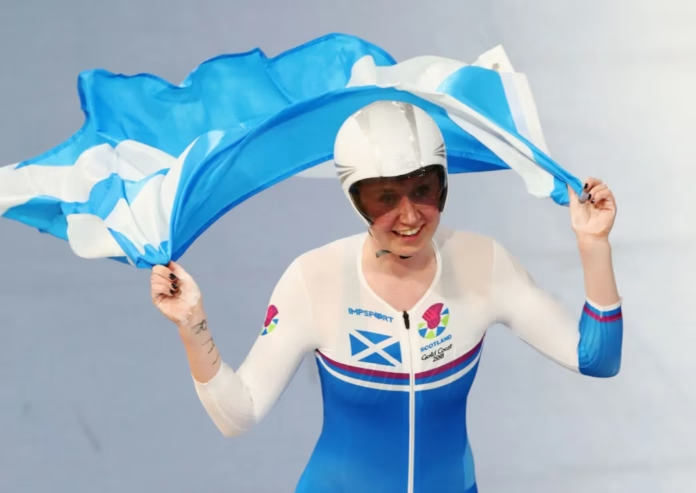
Katie Archibald has announced her retirement from professional cycling, bringing one of Britain’s most decorated track careers to an end after almost 13 years with the Great Britain Cycling Team.
The Scottish rider, a two-time Olympic champion, seven-time world champion and 21-time European champion, confirmed the decision in a personal statement. Archibald said there was “nothing more” she wanted to achieve in cycling, and that she was now ready to close the competitive chapter of her life.
Archibald calls time on elite racing career
Archibald framed the decision as one made from a place of peace rather than regret. Her statement reflected on the scale of what cycling had given her, but also on the feeling that the time had come to step away.
“My first coach, Allister Watson, made me believe I could be a good cyclist,” Archibald wrote. “I’ll never be sure why he did that, but I’ve been checking if he was right for a decade and a half now.”
“I’ve been Olympic champion twice, world champion seven times, and in 2016 discovered I can leg press with one leg what my dad presses with two. There’s nothing more I want to achieve, and so today I’m announcing the end of my professional career.”
That line captures both the scale of Archibald’s career and the tone of her goodbye. She retires not as a rider pushed away by lack of form or lack of ambition, but as one who has reached the point where the sport no longer needs to define the next part of her life.

One of Britain’s defining track riders
Archibald’s career has been one of the central stories of British track cycling over the last decade. She won Olympic gold in the team pursuit at Rio 2016, then added a second Olympic title in the Madison alongside Laura Kenny at Tokyo 2020. She also won Olympic silver in the team pursuit in Tokyo.
Her wider medal record is extraordinary. Across Olympic, world, European and Commonwealth competition, Archibald became one of the most successful British riders in women’s cycling, with a career that reached far beyond one Olympic cycle.
Yet her influence was never limited to results. Archibald became one of the riders who helped shape the identity of the Great Britain endurance squad, bringing tactical intelligence, resilience and a sharp public voice to a programme often measured only by medal counts.
“I feel dizzy when I look at everything cycling’s given me,” she wrote. “I can’t imagine a future where I don’t see myself as ‘cyclist’.”
She added that cycling had allowed her to be more than an athlete alone.
“I’ve also gotten to be a daughter and a sister on the bike, for how it brings my family together. I’ve gotten to be a dreamer, for the goals it’s let me chase. I’ve even gotten to be a protagonist in a few bike races, perhaps an antagonist in a few others. I’ve been a pupil, a teacher, and most vitally of all, I’ve been a member of a team.”
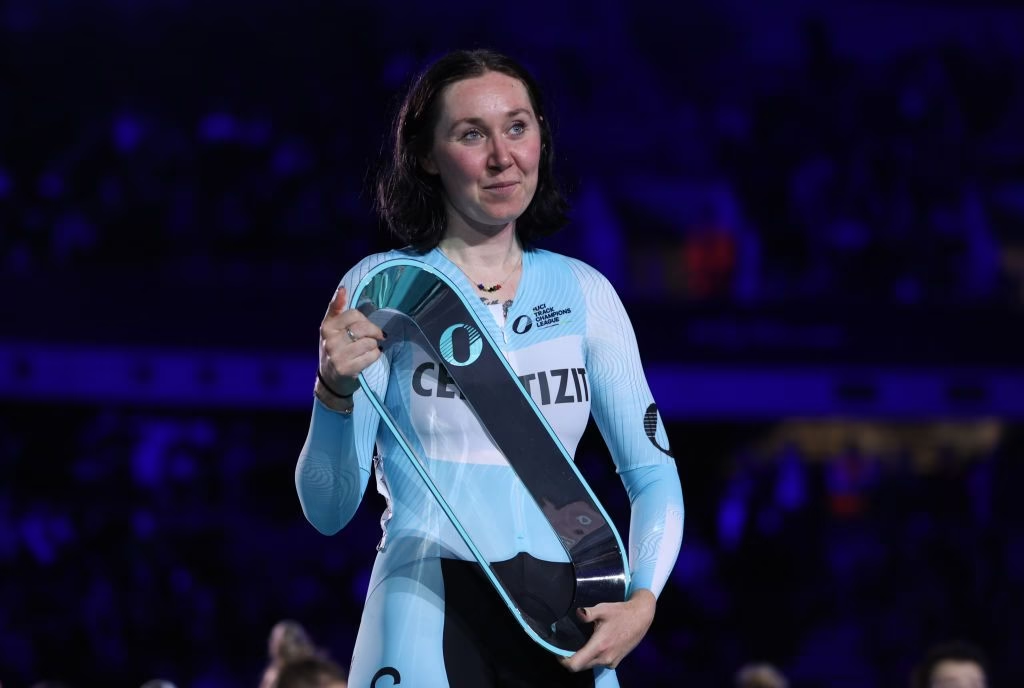
Nearly 13 years with Great Britain
Archibald paid tribute to the Great Britain Cycling Team, UK Sport and National Lottery players, saying her time in the programme had shaped far more than her sporting career.
“Spending almost 13 years with the Great Britain Cycling Team has fundamentally shaped who I am today,” she wrote. “The team has encouraged me to be open to new ideas, driven to do things the right way, and left me well versed on how much further we travel when we go together.”
“It’s also without question that I owe my career as a female track cyclist to UK Sport and to National Lottery players. I would have never gotten so high without your springboard: thank you.”
Archibald also thanked a long list of coaches, support staff and teammates, including her first coach Allister Watson and the many people who guided her through the British Cycling system. The tone was personal throughout, less a formal retirement note than a wider reflection on the network of people who had held her career together.
That part of the statement also spoke to a wider truth about elite cycling. Individual riders stand on podiums, but careers like Archibald’s are built through long-term structures, funding, coaching and a team environment that can turn talent into repeatable performance.

No home Commonwealth Games farewell
Archibald had been expected to race for Scotland at the 2026 Commonwealth Games in Glasgow, but confirmed that she will not take part. She apologised for the timing of the decision and acknowledged the emotional weight of stepping away before a home Games.
“Beyond all the thank yous, I also want to say I’m sorry about the timing of this, and sorry that I won’t be competing at our home Commonwealth Games,” she wrote. “I was desperate to make it to that startline, but my mind and my body are saying no.”
She added that it was now time for the next Scottish riders to take their opportunity.
“It’s time for the next generation to shine, and they’re a group of riders that are really, really capable of making Scotland proud.”
That part of the statement underlines why the decision will land heavily in Scottish cycling. Archibald would have been one of the major names of a home Games, but her choice to step away now suggests the decision had moved beyond race targets.
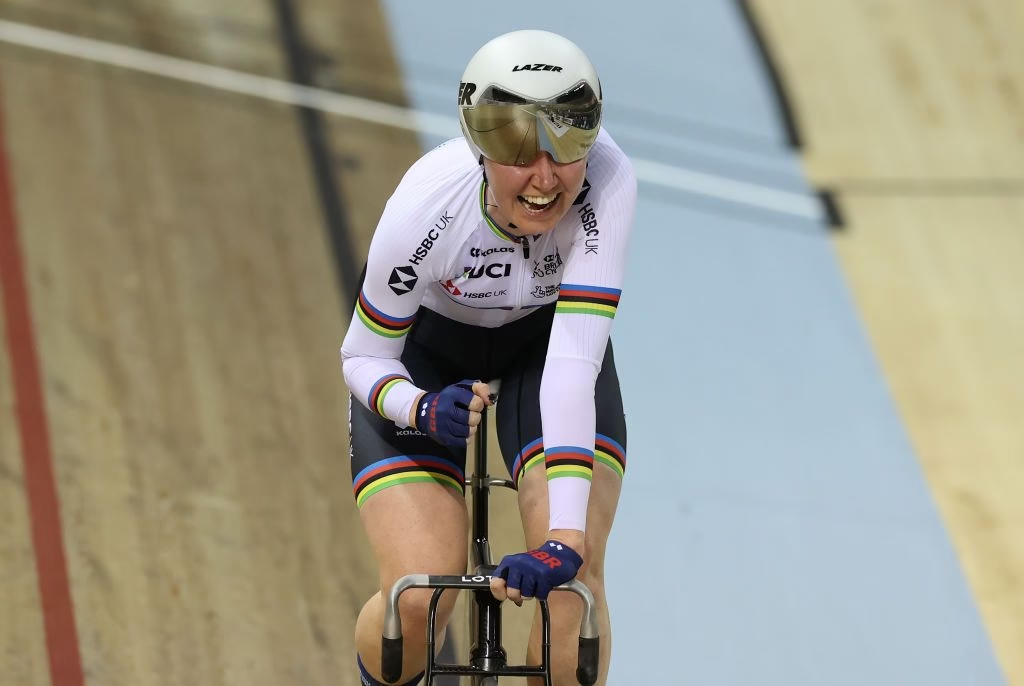
A new life beyond cycling
Archibald has recently begun training as a nurse, something that has become an important part of her next chapter. In her public statement, she shared an image of a student nurse name badge, a quiet but clear signal of the direction her life is now taking.
Her retirement is not being presented as a rejection of cycling, but as an acceptance that her life has expanded beyond the track. Archibald made clear that the sport will remain part of who she is, even if competition no longer defines her day-to-day identity.
Her final thanks went beyond coaches, teammates and family to the wider cycling community.
“You’re part of what makes sport so special: the communities it helps build,” she wrote. “I might have raced against you at track league or at a world championships, we might have ridden the chainy together or the morning commute, we may both have joined the same club or we may have never met. Whatever it is, I’m genuinely grateful that we share this thing called bikes.”
It is a fitting way for Archibald to leave. Her career was decorated by medals, but also by a sense of connection to the wider culture of the sport, from club riding to Olympic finals. That same connection is part of what continues to make women’s cycling more than a set of results, records and championships.
Archibald leaves track cycling as one of Britain’s greats, with two Olympic titles, seven world titles, a record-breaking European championship legacy and a career that helped define an era of British endurance racing.