
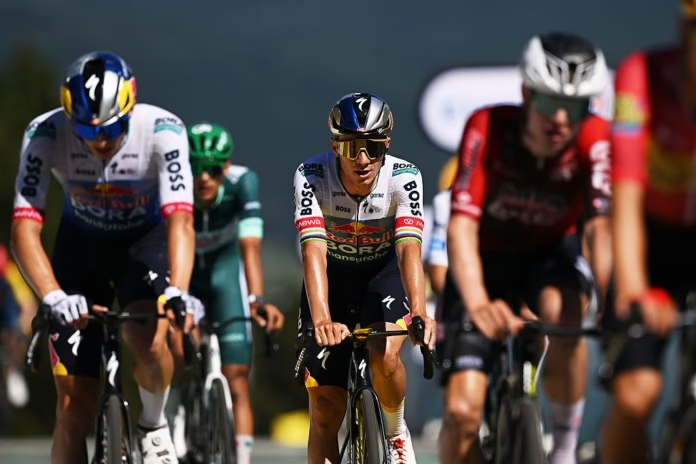
The Tour de France heat protocol is the set of UCI and race-organiser measures used when extreme temperatures create a risk to rider health, race staff, spectators and the safe running of the stage.
In simple terms, it allows the race to adapt. That can mean extra water, more ice, additional feeding opportunities, altered rules around musettes, more support motorbikes, shaded start areas, route changes, neutralised sections, altered start times or, in the most serious cases, stage cancellation.
The issue has become central to the 2026 Tour de France after the race moved through severe heat in southern France. It is especially relevant around the first Pyrenean block, with stage 6 from Pau to Gavarnie-Gèdre bringing the Col d’Aspin, Col du Tourmalet and a summit finish in high temperatures. Our Tour de France 2026 stage 6 live viewing and start time update explains the timings for that mountain stage, while the wider route context is covered in our Tour de France 2026 full route guide.
Quick answer: what is the Tour de France heat protocol?
The Tour de France heat protocol is a rider-safety process based on the UCI’s High Temperature Protocol and wider Extreme Weather Protocol. It uses weather data, including heat stress measures, to assess risk and decide whether extra cooling, feeding, timing changes, route changes, neutralisations or cancellations are needed.
| Question | Answer |
|---|---|
| What is the heat protocol? | A UCI safety process for racing in high temperatures |
| Who applies it? | UCI commissaires, race organiser, teams, riders’ representatives and relevant authorities |
| What can change? | Feed zones, start times, neutralised sections, stage length or even cancellation |
| Why extra feeds? | Riders need more bottles, ice and cooling support in extreme heat |
| Can a stage be stopped? | Yes, if conditions become unsafe |
| What is WBGT? | A heat-stress measure that includes temperature, humidity, sunlight and wind |
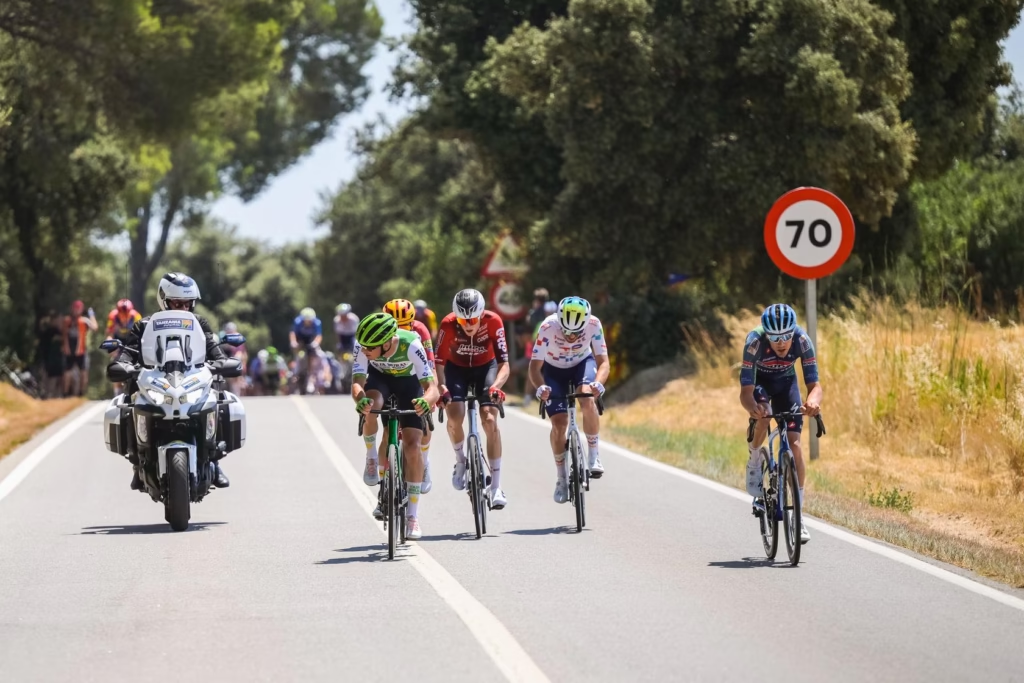 Photo Credit: A.S.O./Charly López
Why is the Tour de France using extra feeds?
Riders are getting extra feeds because extreme heat increases the risk of dehydration, overheating and performance collapse.
Under normal race rules, feeding is tightly controlled. Riders can receive bottles and food from team staff in designated zones, from team cars under certain conditions, or from neutral support. On hot stages, that may not be enough.
This is not about giving riders an unfair sporting advantage. It is about keeping them cool enough and hydrated enough to race safely. A rider may need one bottle to drink, another to pour over the head, another before the next climb and an ice sock to help manage body temperature. In extreme heat, that demand can arrive far more quickly than on a normal stage.
The effects become even more important on mountain days. Stage 6 is a good example because the race goes over the Aspin and Tourmalet before the summit finish at Gavarnie-Gèdre. Our Tour de France 2026 stage 6 preview breaks down why that combination of climbing, distance and heat makes the day so difficult.
What are musettes?
A musette is a small shoulder bag used to hand food and drinks to riders during a race.
In normal feed zones, team staff stand by the roadside holding musettes. A rider grabs the strap, puts the bag over a shoulder, empties it while riding, then discards it safely. A musette can contain bottles, gels, bars, rice cakes, ice, cooling products or other race food.
In extreme heat, musettes become more useful because they can carry multiple bottles at once. One bottle might be used for drinking. Another might go over the head or back. A third might be saved for the next few kilometres or passed to a teammate. That is why allowing musettes in bottle-only zones matters.
It turns one hand-up into a larger cooling and hydration opportunity.
What is the UCI High Temperature Protocol?
The UCI High Temperature Protocol is the cycling rule framework used to assess whether heat is creating a serious health risk during road races.
It sits alongside the wider Extreme Weather Protocol, which is used for conditions such as storms, snow, heavy rain, strong wind, poor air quality and dangerous heat. The aim is to move decisions away from guesswork and towards a structured process involving race officials, organisers, team representatives, riders and relevant authorities.
The most important point is that the protocol is flexible. It does not say that one fixed temperature always means one fixed outcome. Instead, it considers the overall risk and then allows the race to apply measures that fit the conditions.
Those measures can be small, such as more bottles and ice. They can also be major, such as changing the route, neutralising part of a stage, altering the start time or cancelling the stage if the risk becomes too high.
What is WBGT and why does it matter?
WBGT stands for Wet Bulb Globe Temperature. It is a heat-stress measure that looks beyond the standard air temperature shown on a weather app.
That matters because 35°C in dry shade is not the same as 35°C on an exposed climb with humidity, direct sun, radiated heat from the road and little wind. Riders feel heat through the full race environment, not just the official air temperature.
| Factor | Why it matters in cycling |
|---|---|
| Air temperature | Basic heat load on the body |
| Humidity | Makes sweating less effective |
| Direct sunlight | Raises heat stress on exposed roads |
| Wind | Can help cooling, or disappear on slow climbs |
| Radiated heat | Road surfaces can reflect and store heat |
This is why heat risk can be especially high in valleys, on exposed climbs, in towns with retained road heat, or on slow mountain sections where there is less airflow over the rider’s body.
Can the Tour de France be shortened or stopped because of heat?
Yes. A Tour de France stage can be shortened, altered, neutralised or cancelled because of extreme heat if conditions are considered unsafe.
That does not mean a hot stage is automatically cancelled. The Tour has always been raced in summer, and riders are used to heat. The question is whether the combination of temperature, humidity, sunlight, route profile, rider workload, spectator safety and emergency service cover makes the stage unsafe to run as planned.
There are also two different safety layers. The race has its own sporting procedures, through the UCI, commissaires and organiser. Public authorities can also become involved because the Tour is not only a bike race. It is a major public event with crowds, road closures, emergency services, police, marshals, volunteers and local communities.
A stage might be changed because riders are at risk. It might also be changed because spectators cannot safely stand for hours on exposed roads, because emergency services are stretched, or because the race convoy cannot operate safely.
What could the race change during a heatwave?
| Measure | What it means |
|---|---|
| Extra feeding | More chances to take bottles, food and ice |
| More water motorbikes | Neutral support can supply extra bottles |
| Musettes in bottle zones | Riders can collect several bottles at once |
| More ice | Teams can use more cooling before and during the stage |
| Shaded start areas | Reduces heat load before racing starts |
| Earlier start | Avoids the hottest part of the afternoon |
| Route change | Removes unsafe or exposed sections |
| Neutralisation | Riders cover a section without racing |
| Shortened stage | Race starts later on the route or removes distance |
| Cancellation | Stage does not take place if risk is too high |
Those changes do not all mean the race has become less serious. Often, they are what allow the race to continue. Extra feeds, ice and neutral support can protect rider health while still preserving the sporting contest on the road.
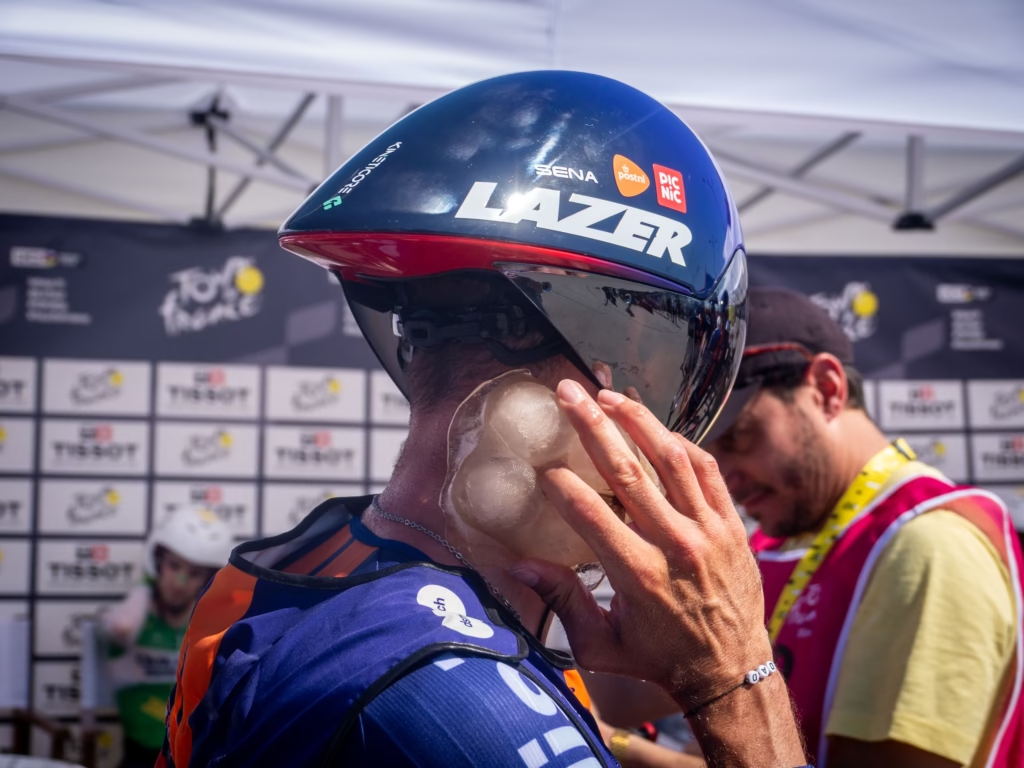
What are ice vests?
Ice vests are cooling garments worn before the race or during warm-up.
They help keep a rider’s core temperature lower before the effort starts. This is especially important before time trials, mountain stages or hot starts, where a rider can already be overheating before the flag drops.
Riders often wear them while warming up on the turbo trainer, sitting on the team bus step, waiting at the start area or preparing for a time trial. They are not a magic performance tool. They are a way to delay overheating.
That matters because a rider who starts a hot stage already too warm is fighting the conditions before the race has even begun.
What are ice socks?
Ice socks are small, soft tubes or pouches filled with ice. Riders place them down the back of the jersey, around the neck or between the shoulder blades.
They are simple but effective. The ice cools the skin, the meltwater helps remove heat, and the rider gets a short period of relief from rising body temperature.
Ice socks have also created equipment-rule questions, especially in time trials, because anything placed inside a skinsuit or jersey can affect shape and aerodynamics. On normal road stages, though, they are mainly seen as a cooling tool. That is why viewers may see riders repeatedly reaching behind the neck or carrying visible bulges under the jersey during hot stages.
 Photo Credit: Getty
Why does heat change mountain stages?
Heat changes mountain stages because climbing already pushes riders close to their limit, and high temperatures reduce the body’s ability to control core temperature.
On a climb, riders travel more slowly. That means less airflow over the body. Less airflow means sweat evaporates less effectively. The rider is producing huge power, but the cooling effect of speed is lower than it would be on the flat.
The result is a different kind of fatigue.
| Heat effect | What it does to a mountain stage |
|---|---|
| More sweating | Increases fluid and salt loss |
| Higher core temperature | Reduces sustainable power |
| Slower climbing speeds | Less cooling from airflow |
| More bottle demand | Makes team support more important |
| Greater stomach stress | Riders may struggle to eat and drink enough |
| Harder recovery | Heat load carries into the next stage |
| More time-cut pressure | Dropped riders can lose time faster |
That is why a hot mountain stage is not just a normal mountain stage with worse weather. It can change tactics, pacing and survival.
For the 2026 race, that is especially relevant in the Pyrenees. Our Tour de France 2026 Pyrenees guide explains where the early mountain block can shape the race, while our ranking of the Tour de France 2026 mountain stages by difficulty shows how stage 6 fits into the wider climbing hierarchy.
Why extra feeds matter more on climbs
Extra feeds matter more on climbs because riders cannot easily drop back to cars whenever they want.
When the peloton is climbing, team cars may be held behind dropped riders, narrow roads or race groups. A leader who needs a bottle may not have immediate access to the car. That is why fixed feed zones, neutral support motorbikes and musette hand-ups become so important.
In extreme heat, one rider might need several cooling inputs over a single climb: a drink bottle, a bottle to pour over the head, an ice sock, a gel, and another bottle before the next descent.
Allowing musettes in bottle-only zones helps solve that problem. It means a rider can collect several items in one hand-up rather than relying on repeated support in a chaotic mountain convoy.
Does heat help breakaways or GC favourites?
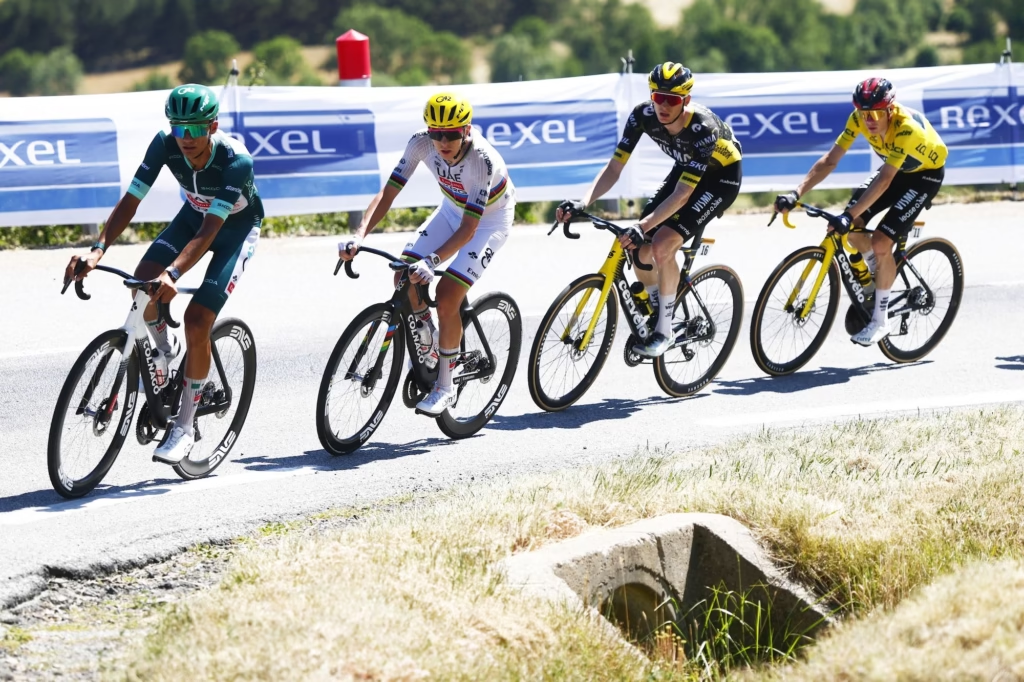
It can help either, depending on how the stage is raced.
A breakaway can benefit if the peloton does not want to chase hard in extreme heat. If the GC teams choose controlled tempo over aggression, riders up the road may gain a bigger margin.
But heat can also destroy a breakaway. Riders in a small group have less shelter, fewer teammates and more direct exposure. If they misjudge hydration or effort, they can crack quickly.
For GC favourites, heat makes pacing more important. A rider who looks explosive in cooler conditions may need to be more careful. Long climbs become a test of heat management as much as raw watts.
That is one reason hot stages can favour well-organised teams. Domestiques who can collect bottles, carry ice and position a leader become even more valuable. Our guide to how Tour de France teams work explains why support riders matter so much, while our explainer on what a breakaway is in the Tour de France covers how the race up the road can be shaped by team priorities behind.
Why heat affects recovery between stages
The impact of heat does not end at the finish line.
A rider who spends five hours racing in extreme temperatures has to cool down, rehydrate, eat, recover and sleep before the next stage. If the body stays hot for too long, recovery becomes harder. Dehydration can also make it more difficult to replace fluids and prepare properly for the next day.
That is why hot stages can echo through the race. A rider might survive the day itself but pay for it 24 or 48 hours later. The same applies to domestiques, who may spend the whole day fetching bottles, riding in the wind and protecting team leaders.
Our guide to how Tour de France riders recover between stages explains how teams try to manage that post-stage window.
Why fans are affected too
The heat protocol is not only about riders.
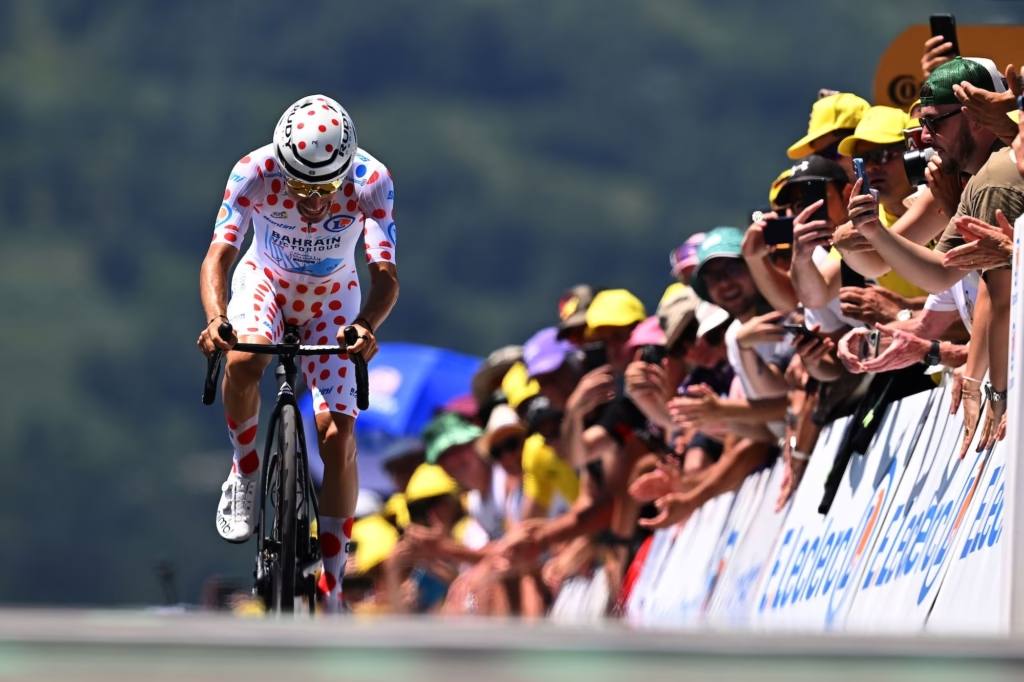
The Tour de France brings huge crowds to exposed roads, often with long waits before the riders arrive. Spectators may stand for hours on climbs or behind barriers with limited shade. Volunteers, police, marshals, medics and media staff also work in the same conditions.
That is why local authorities matter. If emergency services cannot safely support both the public and the race, a stage can become a wider public safety issue.
Fans on hot stages should treat the day like an endurance event of their own: shade where possible, water before feeling thirsty, a hat, sunscreen, and a realistic plan for getting away after the race.
Is extreme heat becoming a bigger Tour de France issue?
Yes. Heat has always been part of the Tour, but the scale and frequency of extreme temperatures are changing the way the race has to operate.
The Tour has long been raced in July, through southern France, exposed valleys and high mountains. But temperatures above 40°C create a different set of risks. Roads radiate heat, riders struggle to cool themselves, and spectators can be exposed for long periods.
That is why the heat protocol is not a minor rule detail. It is becoming part of modern race management, along with time limits, race jury decisions, safety rules and medical controls. For more on how the race can remove riders who finish too far behind, see our guide to how Tour de France time cuts work. For the disciplinary side of race management, see our explainer on Tour de France 2026 penalties and yellow cards.
-
 Photo Credit: A.S.O./Billy Ceusters
What should viewers look for during hot stages?
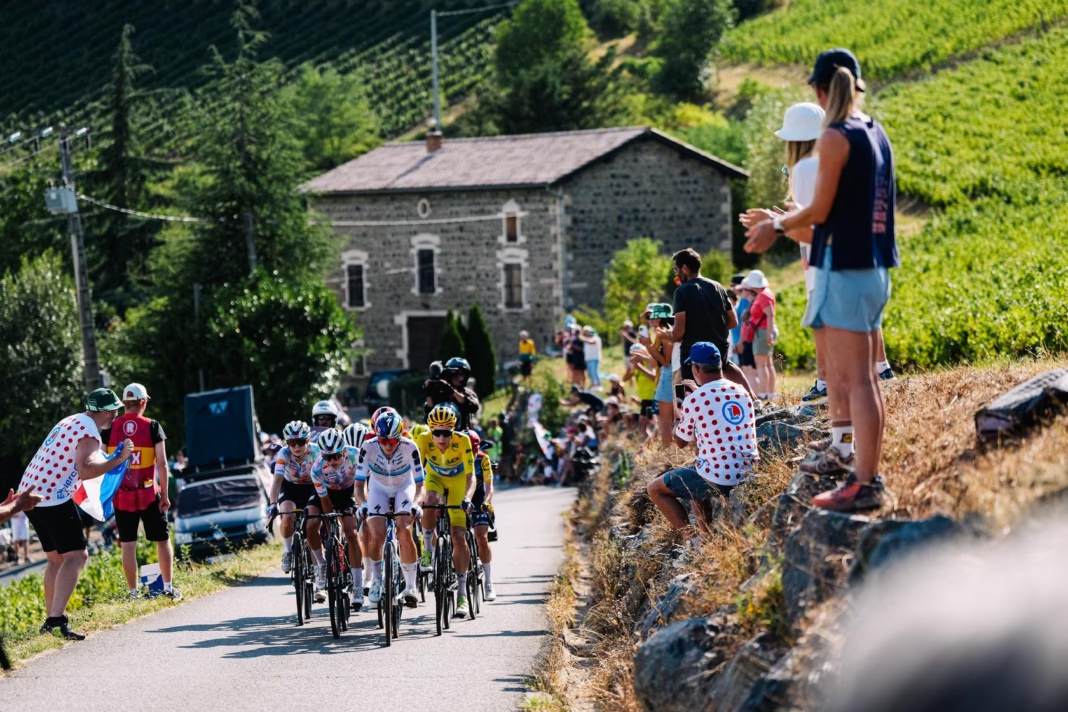
Viewers can often see the heat protocol in action during the broadcast.
| What you see | What it means |
|---|---|
| Riders pouring bottles over themselves | Cooling, not just drinking |
| Domestiques carrying many bottles | Team leaders need constant supply |
| Ice socks down jerseys | Direct cooling on neck and back |
| Riders in ice vests before the start | Pre-cooling before effort |
| Extra motorbikes with bottles | Added neutral hydration support |
| Musettes in climbing zones | More bottles handed up at once |
| Slower tempo on climbs | Teams managing heat load |
| Riders dropping suddenly | Heat can cause rapid collapse |
A hot Tour stage is often less predictable than the profile suggests. The strongest rider may still win, but the way the race gets there can be more cautious, more attritional and more dependent on team support.
FAQs
What is the Tour de France heat protocol?
It is the set of UCI and organiser measures used to reduce health risks when stages are raced in extreme temperatures. It can involve extra feeds, more ice, more water motorbikes, shaded areas, altered timings, route changes, neutralisations or cancellation.
Can the Tour de France be stopped because of heat?
Yes. A stage can be altered, neutralised, shortened or cancelled if heat creates unsafe conditions for riders, staff, spectators or emergency services.
Why are riders allowed extra feeds in hot weather?
Riders need more fluid and cooling support in extreme heat. Extra feeds help teams provide more bottles, ice and musettes so riders can drink, cool themselves and avoid dangerous dehydration.
What are ice vests?
Ice vests are cooling garments worn before racing or during warm-up to help keep core temperature down before the stage begins.
What are ice socks?
Ice socks are small ice-filled pouches placed inside or under a jersey, often around the back or neck, to cool the rider during a hot stage.
What is a musette?
A musette is a small feed bag handed to a rider during a race. It can contain bottles, gels, bars, rice cakes, ice or other supplies.
Why does heat change mountain stages?
Heat makes climbing harder because riders produce high power at low speed, with less airflow to cool the body. They sweat more, need more bottles, recover worse and can lose power quickly if they overheat.
Does the heat protocol automatically cancel a stage?
No. The protocol is a decision-making process. It helps officials and organisers assess risk and choose countermeasures. Cancellation is possible, but it is not automatic.

