

Tour de France stage 17 looks like a sprint day. It is officially classified as flat, finishes in Voiron and comes immediately before three consecutive Alpine stages.
That should make the calculation simple. The surviving sprint teams chase the breakaway, organise their lead-outs and contest one final bunch finish before Paris.
The reality is more complicated.
The 174.7km route from Chambéry contains approximately 2,200 metres of climbing, with the hardest terrain packed into an unsettled opening 60km. The sprint teams are tired, several squads are depleted and the general classification teams have little interest in spending energy controlling a harmless breakaway before the Alps.
Stage 17 is the sprinters’ last obvious opportunity before Paris. It may also be the best remaining chance for powerful breakaway riders who cannot expect to win at Orcières-Merlette or on Alpe d’Huez.
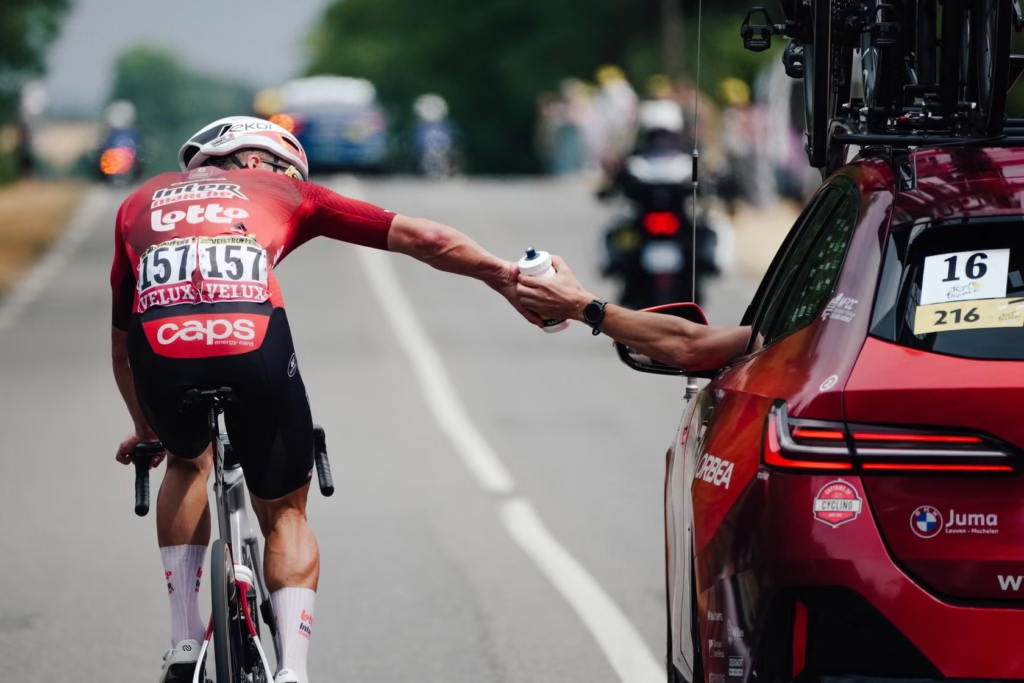 Photo Credit: A.S.O./Thomas Maheux
Is Tour de France stage 17 a sprint stage?
Stage 17 is a sprint stage on paper, but a reduced bunch finish or successful breakaway is more plausible than a perfectly controlled full-peloton sprint.
The official flat classification hides a route that begins with repeated climbing around Chambéry. The Col des Prés and Col de Couz are followed by faster roads towards Voiron, but the early terrain gives strong attackers a clear opportunity to establish a large breakaway before the sprinters’ teams have taken control.
There is also a final complication close to the finish. A rise of approximately 2.5km at 3.5% begins around six kilometres from the line. It should not eliminate riders such as Mads Pedersen, Olav Kooij, Jasper Philipsen or Biniam Girmay through gradient alone, but it can disrupt the lead-outs and create space for a late attack.
The full profile, contenders and likely race scenarios are covered in the Tour de France 2026 stage 17 preview.
UK start times, estimated climb timings and the expected finish window are available in the stage 17 live viewing and start time update.
Tour de France stage 17 profile at a glance
| Detail | Information |
|---|---|
| Date | Wednesday 22 July 2026 |
| Start | Chambéry |
| Finish | Voiron |
| Distance | 174.7km |
| Official classification | Flat |
| Total climbing | Approximately 2,200 metres |
| Main route difficulty | Hilly opening 60km |
| Final complication | 2.5km rise at approximately 3.5% |
| Most likely result | Reduced bunch sprint or strong breakaway |
| UK start time | 12:20 BST |
| Expected UK finish | 16:18-16:39 BST |
The route was already identified as one of the strangest sprint opportunities in ProCyclingUK’s Tour de France 2026 sprint stages ranked.
Stage 17 ranked only sixth among the seven officially flat stages because its position in the final week makes it much less predictable than earlier finishes in Bordeaux, Bergerac or Chalon-sur-Saône.
Why this is the sprinters’ last real chance before Paris
Stages 18, 19 and 20 all finish in the mountains.
Stage 18 takes the race to Orcières-Merlette before two consecutive finishes on Alpe d’Huez. None offers a realistic route towards a bunch sprint.
That leaves Paris, but even the final stage is no longer the completely predictable Champs-Élysées procession it once was. The inclusion of the Montmartre circuit gives classics riders and puncheurs several opportunities to attack before the race returns to the traditional finish.
The full shape of the final week is covered in the Tour de France 2026 full route guide.
For Pedersen, Kooij, Philipsen, Tim Merlier and Girmay, Voiron is the last day on which their teams can realistically begin with a conventional sprint plan.
Paris may still finish with a bunch sprint, but it is no longer safe enough to be treated as a guaranteed second opportunity.
The opening hour could take control away from the sprinters
The first 60km are the key to stage 17.
Teams without a leading sprinter know they cannot wait for the flatter second half of the route. They need to place riders in the breakaway while the climbs still provide enough terrain to create separation.
Mathieu van der Poel, Kasper Asgreen, Quinn Simmons, Jasper Stuyven, Matej Mohorič and Mauro Schmid are among the riders capable of using that opening section.
A three-rider breakaway would suit the sprint teams. It would be straightforward to monitor and should be caught on the faster roads before Voiron.
A group of ten or 15 powerful riders would create a completely different stage. If several major teams are represented, responsibility for the chase immediately becomes unclear.
Stage 17 also ranks highly in the broader guide to the best Tour de France 2026 route days for breakaways. The hilly start, final-week fatigue and lack of interest from the GC teams all increase the escape’s chances.
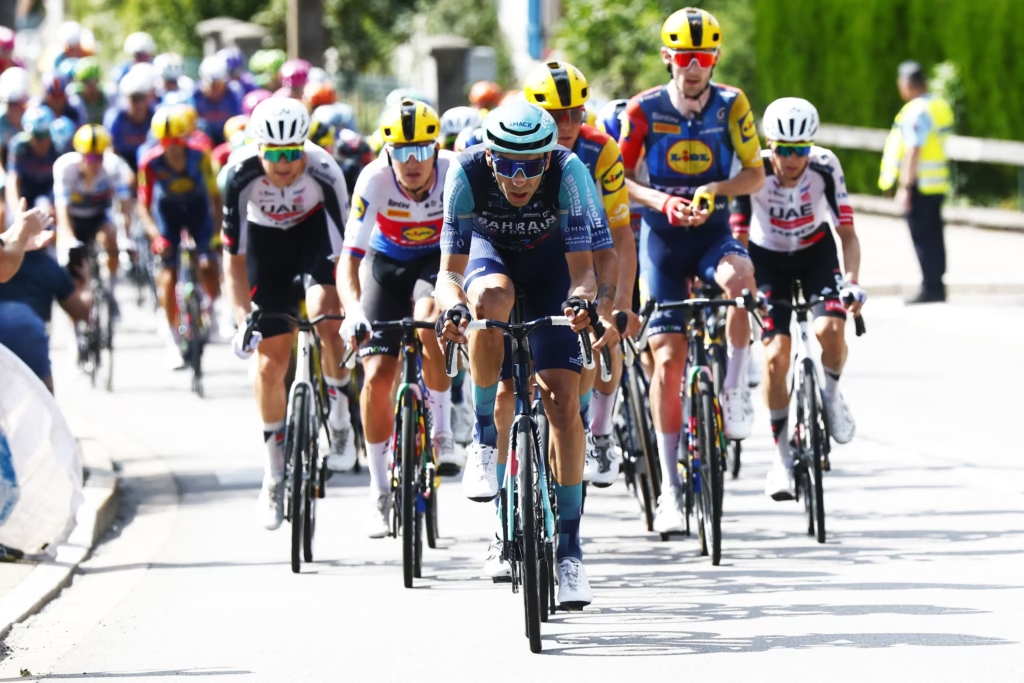 Photo Credit: Getty
Tired sprint teams cannot control the race like they did in week one
A bunch sprint is not created by the profile alone. It requires several teams to commit riders to the chase for much of the stage.
That becomes harder in the third week.
Lead-out riders have spent more than two weeks protecting their sprinters, fighting for position and surviving the Pyrenees, Massif Central, Vosges and Jura. Some are carrying injuries. Others are simply fatigued. Several riders who would normally contribute to the chase are no longer in the race.
The surviving teams also have competing priorities.
Lidl-Trek have a clear reason to work for Pedersen, but Juan Ayuso and Mattias Skjelmose remain involved in the general classification. The team cannot use every available rider to control the breakaway while its GC contenders require protection.
Decathlon CMA CGM can chase for Kooij, but Paul Seixas is fourth overall and only 20 seconds from the podium. Several teammates will need to remain near him during the fast opening and nervous final kilometres.
Alpecin-Premier Tech can work for Philipsen, but Van der Poel gives the team another route towards the stage. If he joins the breakaway, Alpecin immediately have less reason to help Lidl-Trek or Decathlon close it down.
NSN Cycling Team may contribute for Girmay, but they are unlikely to carry the entire chase.
Everyone with a sprinter wants the breakaway caught. Nobody wants to spend five riders creating a finish for their rivals.
GC teams will welcome a harmless breakaway
The general classification teams have almost no incentive to help the sprint squads.
Tadej Pogačar leads Remco Evenepoel by 4:32 after the Stage 16 time trial. Isaac del Toro and Seixas are separated by only 20 seconds in the fight for third, while Ayuso, Skjelmose, Lenny Martinez and Tom Pidcock are all preparing for the final mountain sequence.
The complete classification picture is available in GC and jerseys after Tour de France 2026 stage 16.
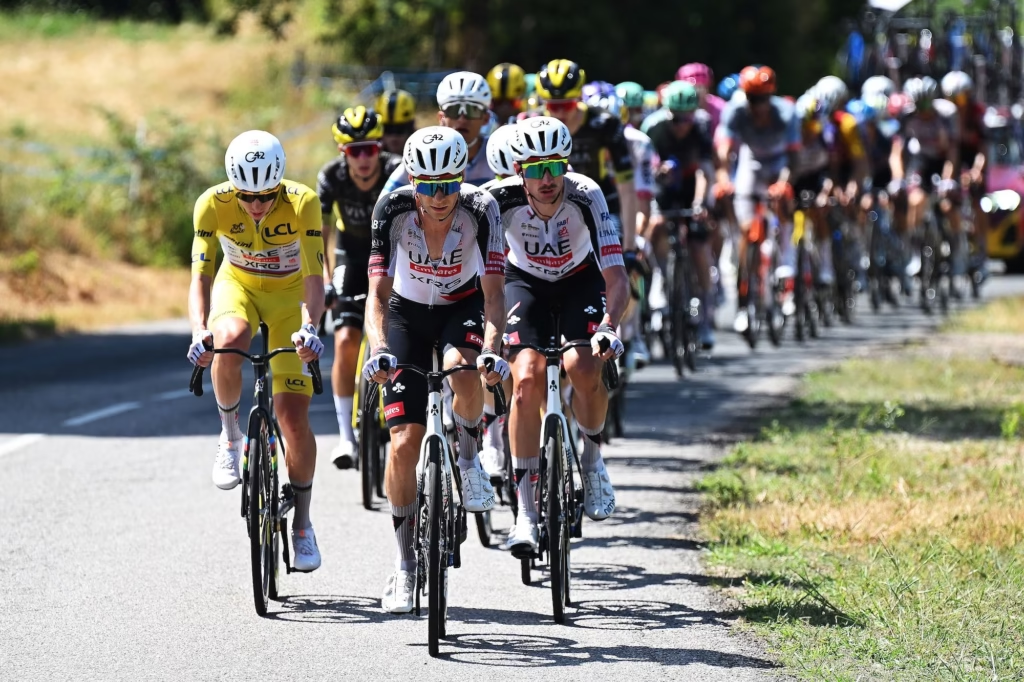
UAE Team Emirates-XRG will want a safe day, but that does not mean chasing for a sprint. A breakaway made up of riders more than an hour behind Pogačar would remove the pressure to contest the stage and allow UAE to ride at a manageable pace.
Red Bull-Bora-Hansgrohe have even less reason to work after losing Florian Lipowitz during the time trial. Their priority is protecting Evenepoel before Orcières-Merlette and Alpe d’Huez.
The same applies to the teams protecting Del Toro, Seixas, Ayuso, Skjelmose, Martinez and Pidcock.
The GC squads will police dangerous splits and riders close enough to threaten the top 10. They are unlikely to care whether a group of stage hunters reaches Voiron.
Breakaway riders know their opportunities are disappearing
Stage hunters can read the remaining route as clearly as the sprinters.
The next three days belong to climbers and GC riders. Paris offers an opportunity for classics specialists because of Montmartre, but an ordinary breakaway is unlikely to be given much freedom on the final stage.
Stage 17 is therefore the last broad opportunity for rouleurs, puncheurs and fast breakaway riders who cannot realistically win on Alpe d’Huez.
That should increase the quality of the escape.
Riders are not simply attacking because the stage looks vaguely suitable. For some teams, this is effectively their final chance to rescue the Tour with a stage victory.
Schmid has already demonstrated what can happen when the right move forms. He won Tour de France stage 13 in Belfort after a huge breakaway gained more than seven minutes on the peloton.
Van der Poel, Asgreen, Simmons, Stuyven and Mohorič all have the strength to contribute in a high-quality group across the flatter second half.
The danger for the peloton is not necessarily one outstanding attacker. It is a breakaway containing eight or ten riders who can continue sharing the work until the final kilometres.
The green jersey gives Lidl-Trek a reason to chase
Pedersen’s green jersey may be the single biggest factor pushing stage 17 towards a sprint.
He leads Philipsen by 31 points and Girmay by 56. The intermediate sprint and stage finish provide another major opportunity to strengthen that advantage before the Alps.
The calculations behind his campaign are covered in can Mads Pedersen win green at the Tour de France 2026?.
Allowing a breakaway to take the available points would not be disastrous for Pedersen because it would also prevent Philipsen and Girmay from scoring heavily.
Lidl-Trek may still prefer to control the race because Pedersen is one of the strongest favourites for the stage. The climbing should suit him better than several pure sprinters, while the final rise may remove some of his faster rivals or weaken their lead-outs.
There is a difference between chasing for the green jersey and chasing for the stage victory.
If the breakaway absorbs all the points, Pedersen’s lead remains largely protected. Lidl-Trek must therefore decide how much energy a possible stage win is worth before three difficult days supporting Ayuso and Skjelmose.
The final rise could disrupt the lead-outs
Even if the sprint teams catch the breakaway, the final kilometres are not completely straightforward.
The rise beginning around six kilometres from the finish should not drop Pedersen, Kooij, Philipsen or Girmay through gradient alone. Its position is more important than its average.
A rider such as Van der Poel, Schmid or Dorian Godon can attack near the bottom and force the peloton into a maximum effort. Lead-out riders may be required to chase rather than position their sprinters. Teams already reduced to three or four useful riders could lose their organisation completely.
Pedersen should be one of the riders least concerned by that scenario. He can survive a hard pace and still produce a long sprint.
Girmay could also benefit from a reduced and disorganised group. His chances improve if the finish becomes more about resilience and positioning than pure top speed.
Kooij, Philipsen and Merlier may prefer a steadier approach. They should survive the climb, but repeated attacks could leave them isolated before the final kilometre.
For newer viewers, the bunch sprint explainer covers how a disrupted lead-out can completely reshape the final kilometre.
Who will win today’s Tour de France stage?
Pedersen is the safest favourite because almost every plausible stage 17 scenario suits him.
He can win a conventional sprint, survive the final rise and compete from a reduced group. Lidl-Trek also have a reason to maintain some control because of the green jersey.
Kooij may be the quickest rider if Decathlon deliver him into a clean sprint. Philipsen has similar outright speed and the tactical advantage of Van der Poel, who can attack while the Belgian waits behind.
Merlier remains the clearest pure-speed threat. He has already won three stages of the 2026 Tour, including the stage 12 sprint in Chalon-sur-Saône.
His victories came on cleaner sprint stages than the road to Voiron. The question is whether Merlier and his remaining Soudal Quick-Step support can survive the repeated early climbing and reach the final kilometre in a useful position.
Girmay becomes more dangerous if the final rise reduces the group. Van der Poel and Schmid are the leading alternatives if the stage moves away from the traditional sprinters.
The wider hierarchy is covered in the best sprinters at the Tour de France 2026.
Stage 17 favourites
Leading sprint favourites
- Mads Pedersen
- Olav Kooij
- Jasper Philipsen
- Tim Merlier
- Biniam Girmay
Reduced-finish and late-attack options
- Mathieu van der Poel
- Mauro Schmid
- Dorian Godon
- Søren Wærenskjold
Breakaway candidates
- Kasper Asgreen
- Quinn Simmons
- Jasper Stuyven
- Matej Mohorič
- Victor Campenaerts
- Filippo Ganna
- Julian Alaphilippe
- Toms Skujiņš
-
 Photo Credit: A.S.O./Gaëtan Flamme
Will stage 17 end in a bunch sprint?
A sprint remains the slightly more likely result, but it should not be treated as inevitable.
The final 35km favour the peloton. The surviving sprinters have very few opportunities left. Lidl-Trek, Decathlon CMA CGM, Alpecin-Premier Tech, NSN Cycling Team and Soudal Quick-Step all have reasons to contribute at some point.
The problem is whether they can agree on how much each team should do.
A small breakaway should be caught. A large group filled with classics riders may not be.
The race could also reach the final rise with the escape almost caught, creating the most chaotic scenario. Teams would need to decide whether to continue the pursuit, launch a counterattack or protect their sprinter for a finish that may never happen.
Verdict: the last real sprint chance, but not a guaranteed sprint
Stage 17 is the sprinters’ last obvious chance before Paris.
The three Alpine stages that follow offer nothing to the fast riders, while the Montmartre circuit makes the final stage more complicated than the traditional Champs-Élysées sprint.
That urgency should produce a serious chase.
It may not produce complete control.
The hilly opening allows a powerful breakaway to form. Sprint teams are tired and depleted. GC teams want a safe day. Breakaway riders know their remaining opportunities are disappearing.
A reduced bunch sprint remains the most likely result, with Pedersen the rider best suited to the route.
A large and committed breakaway is the clearest way to deny him.

